Ella Petrenko was 26 years old when she founded the NGO Bilozerka Center for Regional Development. What began as an after-work passion project in her home village of Shyroka Balka, Kherson Oblast, has grown into a full-fledged organization with a team of 30 employees and volunteers dedicated to empowering local communities.
“I was born in a village, studied in Kherson, but I always wanted children in villages to have access to cultural and sports opportunities,” said Petrenko. “That’s why I eventually returned to work in the village.”
Her inspiration came from youth workers and civic activists she met in Poland, Denmark, and Sakartvelo. From the very beginning, her organization has intentionally focused on rural communities. “It’s not that we purposely ignore the city of Kherson,” she explained. “It’s just that rural communities are our focus.”
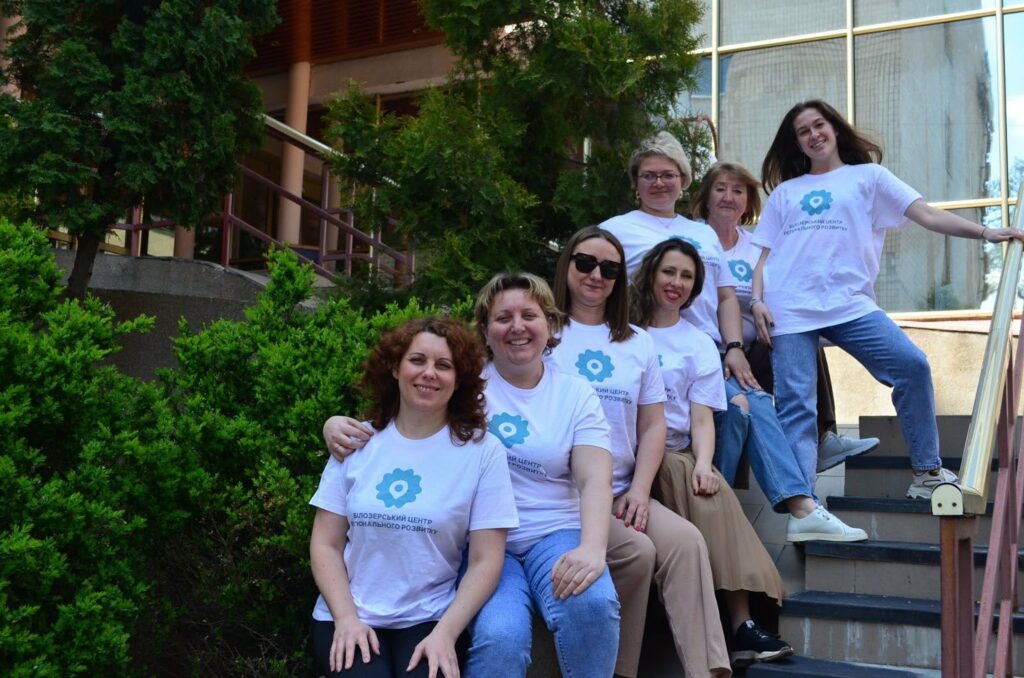
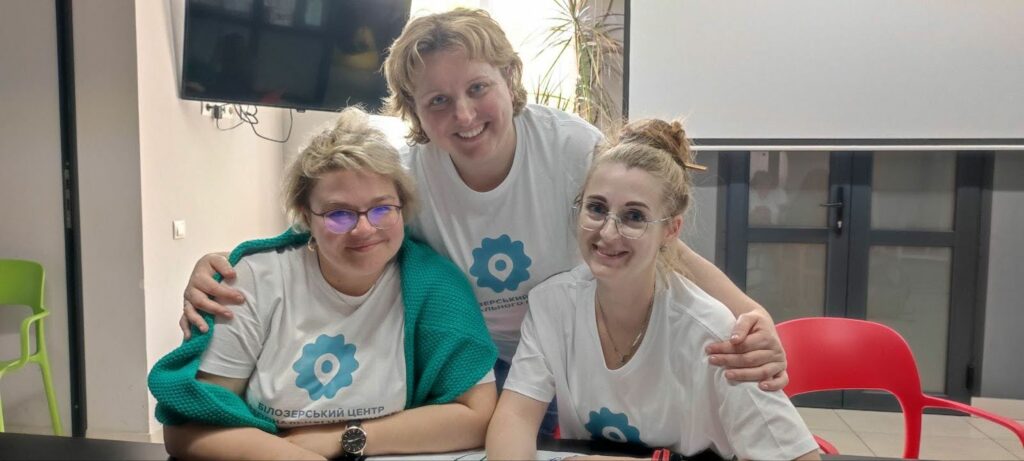
Ella Petrenko and the staff at Bilozerka Center
The Bilozerka Center began with youth projects and educational programs. Over the years, it has expanded to support democracy development, environmental awareness, and civic participation. When Russia launched its full-scale invasion, the work of the NGO shifted dramatically. “After Feb. 24, we had to reorganize completely,” she said. “For the first time, we started distributing humanitarian aid.”
When the full-scale invasion began in 2022 and Russian forces occupied Kherson Oblast, the NGO had to adapt quickly. During the occupation, they were quietly delivering humanitarian aid.
Though Petrenko had always juggled her NGO work with a job at the Migration Service, she made a big decision in 2024 and resigned to focus on the Bilozerka Center full-time.
“That shift was a turning point for me,” she explained. “I realized that doing good work is not enough—you have to do it efficiently and sustainably.”
As the team grew and the projects expanded, so did the operational challenges. Without strong internal systems, burnout set in. “We never had written internal policies,” she said. “We always worked based on trust and intuition. But now, with a larger team and more stress, that’s not enough.”
That’s when she discovered the Sylnishi (Stronger) grant—part of Razom’s effort to build the organizational capacity of its grantee partners.
“Before, we had support from Razom for specific projects,” she said. “But the Sylnishi grant gave us something more important—support for internal growth. That’s what we were lacking.”
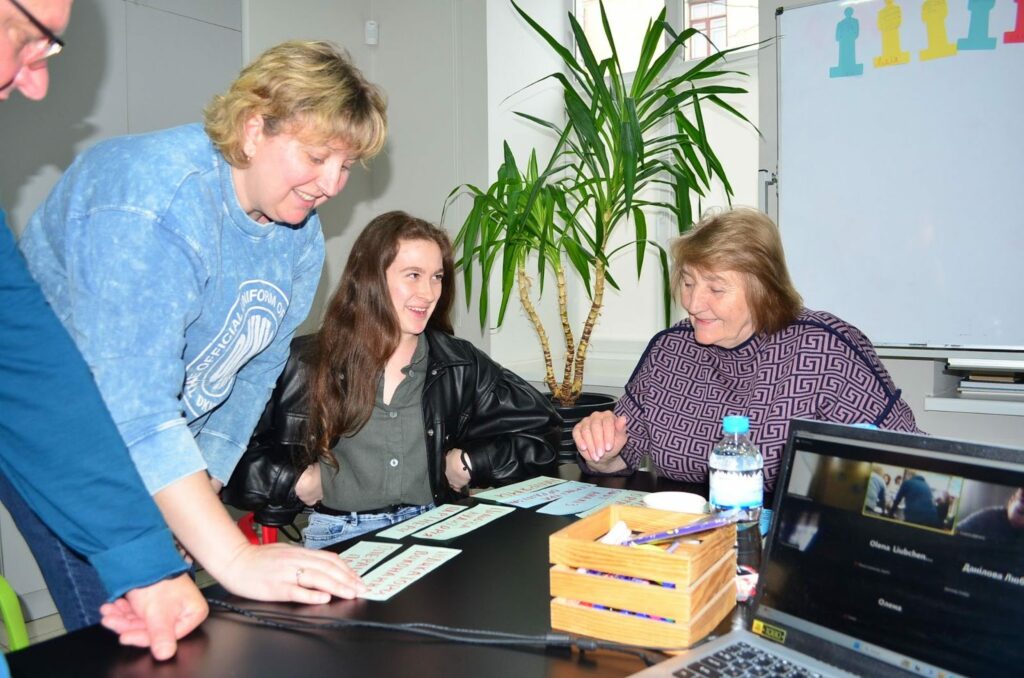
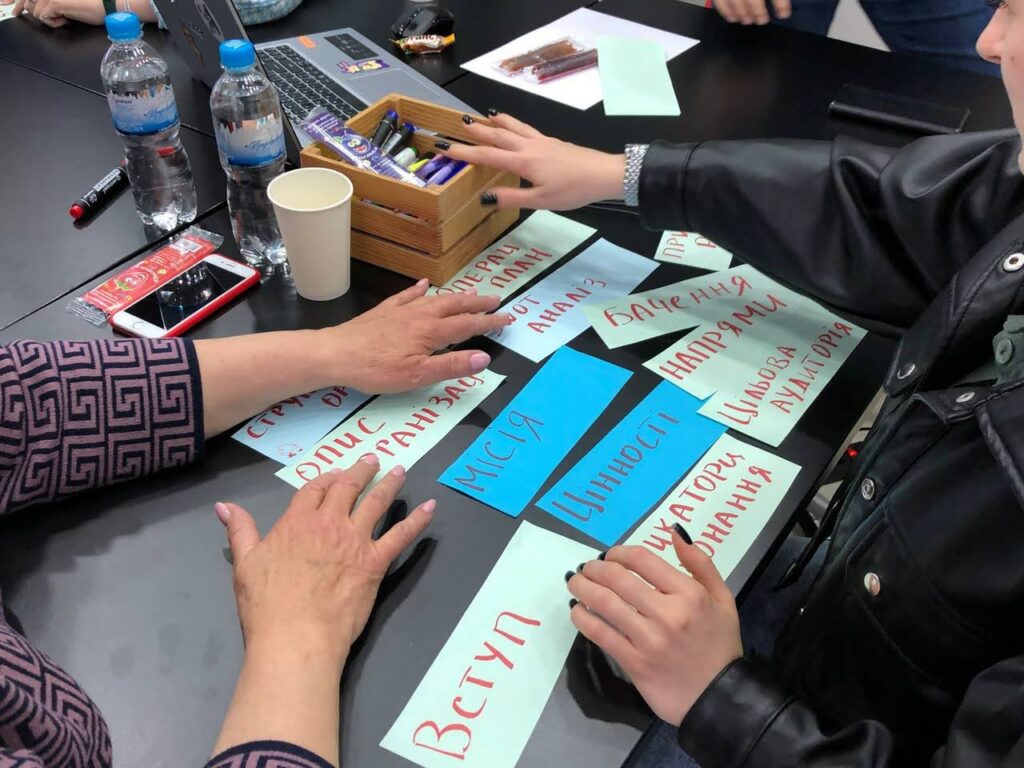
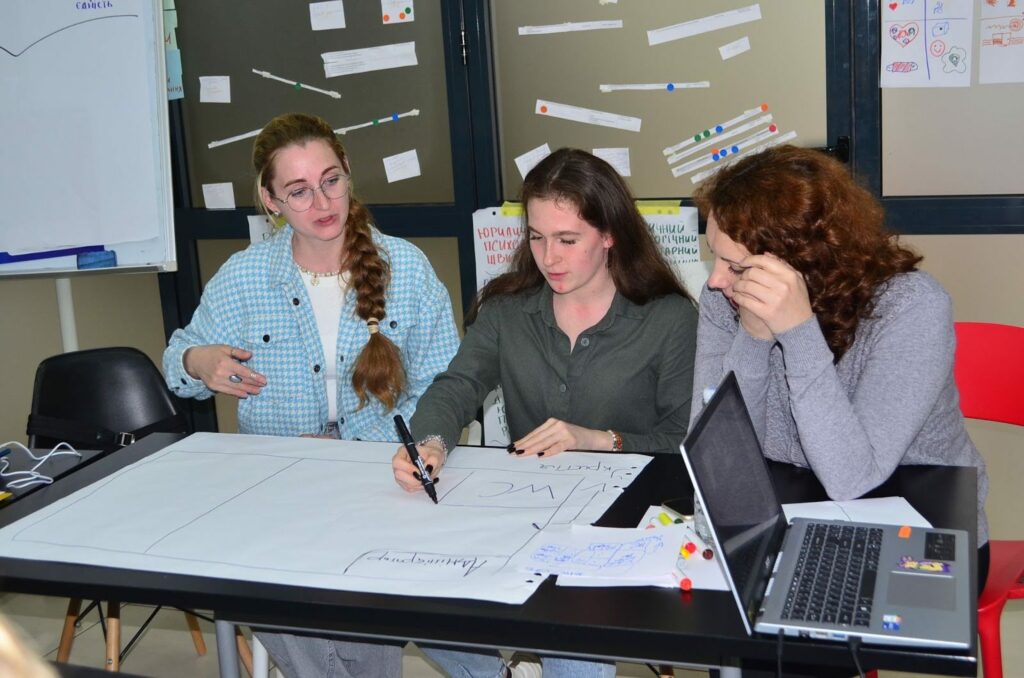
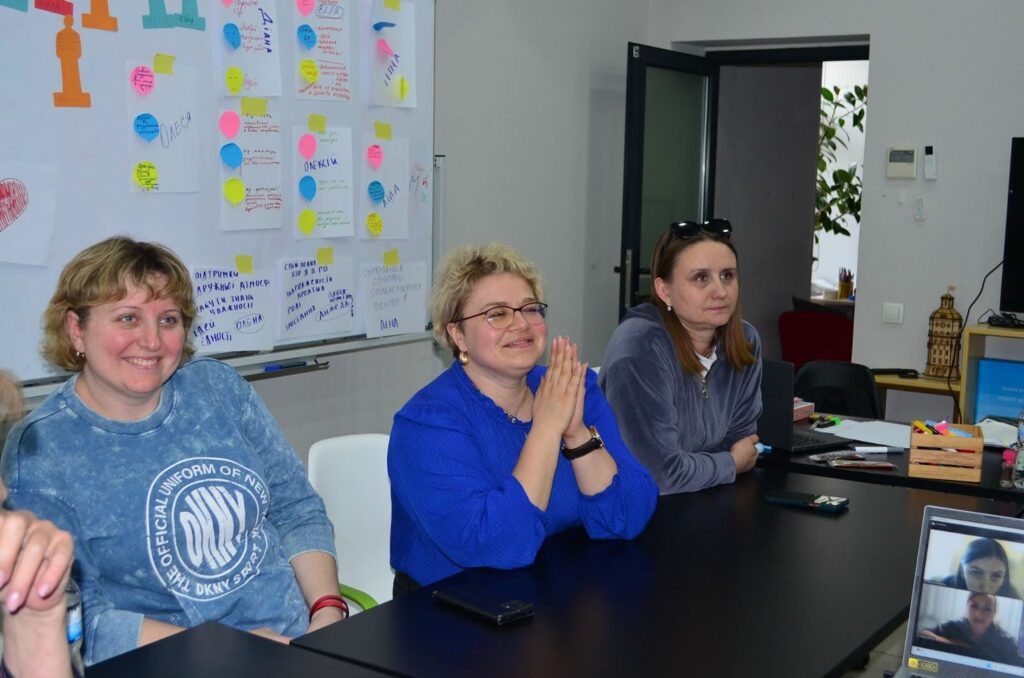
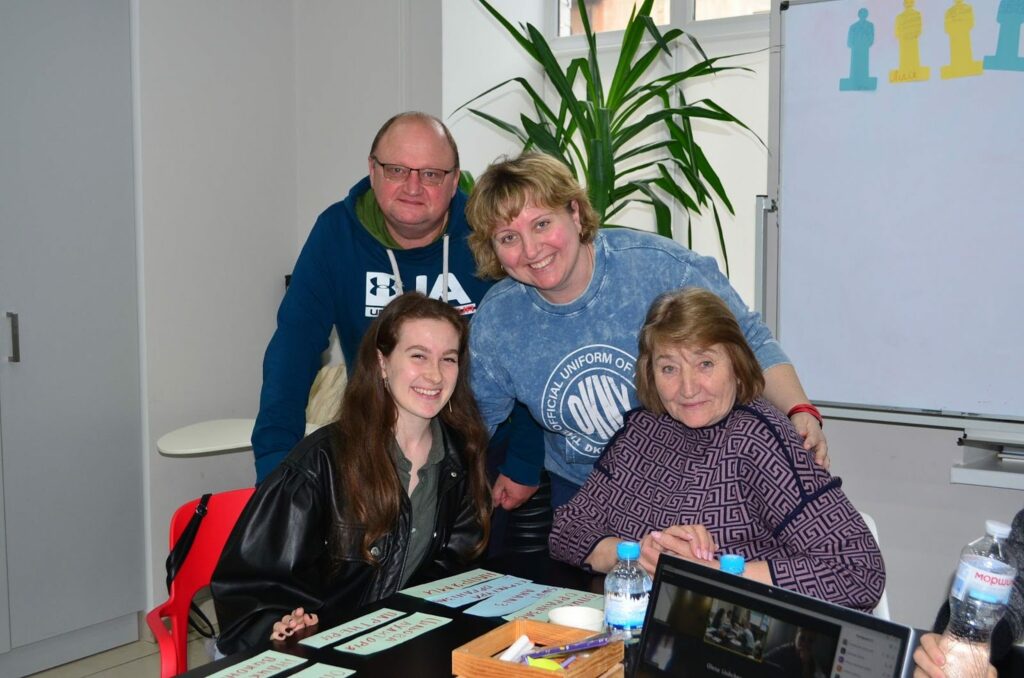
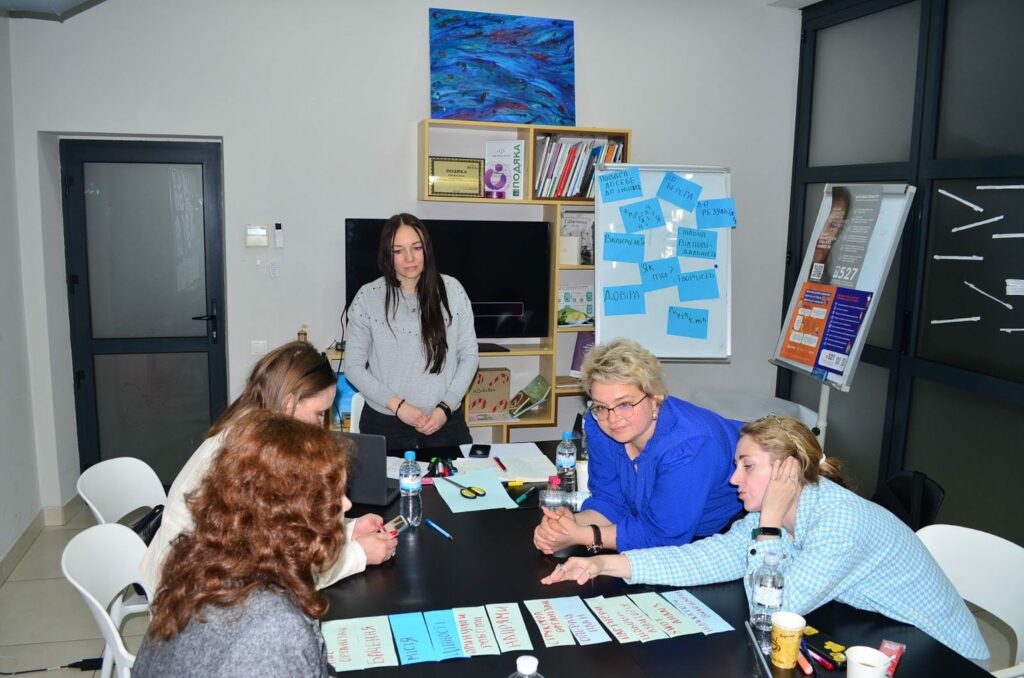
Bilozerka Center startegic planning session moments
Through Sylnishi, the Bilozerka Center received both funding and mentorship to strengthen its strategy, fundraising, and internal communications. They reviewed their mission and goals, developed clear operational policies, and began crafting a strategy for the next three years.
“For the first time in ten years, we sat down as a team and asked ourselves who we are, what our goals are, and what we want to change in our communities,” Petrenko said. “It helped us slow down and reflect.”
One of the biggest takeaways was the importance of staff wellbeing. “We work with communities in crisis every day—violence, trauma, displacement,” she said. “But we hadn’t created any internal support systems for our team.”
With the Sylnishi support, they organized team retreats and introduced mental health resources. “Burnout was a real threat,” she admitted. “Now, we’re trying to build a healthier workplace culture.”
The grant also helped them design a new fundraising strategy. Petrenko acknowledged that previously they relied heavily on a few donors. “We want to diversify, build resilience, and engage more with the communities we serve,” she said.
Despite the challenges, Petrenko remains deeply motivated. Her hope for Ukraine’s future is rooted in the grassroots.
“I see how change starts in small communities,” she said. “It’s not just about big reforms in Kyiv. It’s about what we do in Bilozerka, in small towns and villages, every day.”
She believes that supporting local NGOs isn’t just about charity—it’s a long-term investment in Ukraine’s democratic future. “We’re the ones working with people face-to-face. We know their stories, their needs, their strengths.”
For Petrenko, civic activism is more than a job. It’s a calling.
“I don’t need to motivate myself to keep going,” she said. “When you’re surrounded by people who believe in the same things, who do their work from the heart—it gives you energy.”
Looking ahead, she hopes more organizations can access support like Sylnishi.
“These grants are about more than money,” she said. “They give us time to reflect, to grow, and to build organizations that will be here for the long run.”
With your support, Ukrainian grassroots organizations grow stronger, boosting their impact.