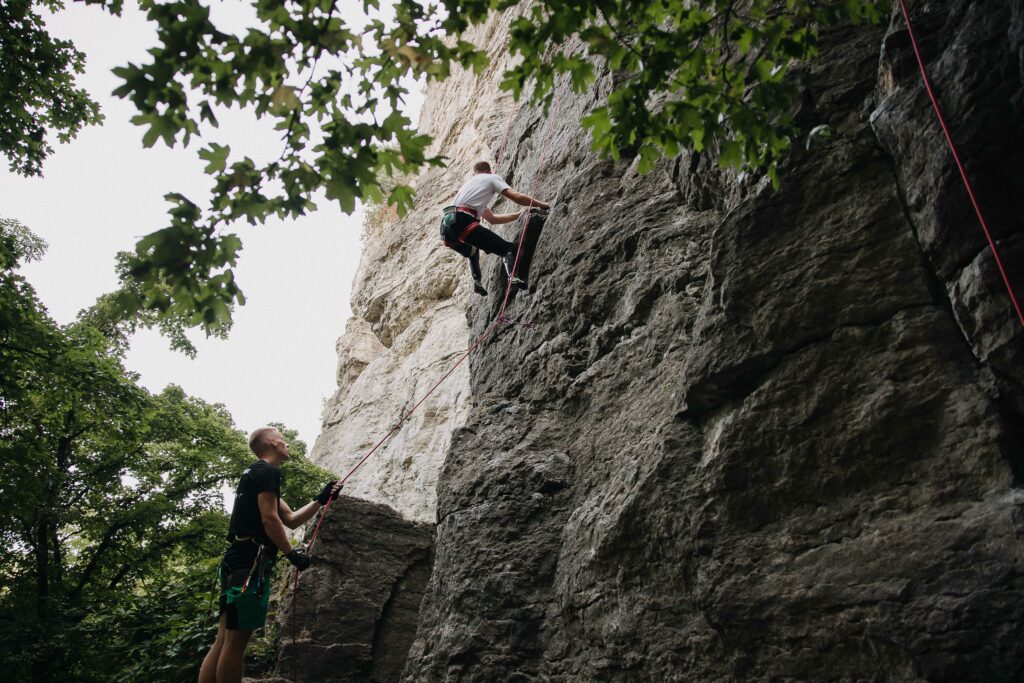

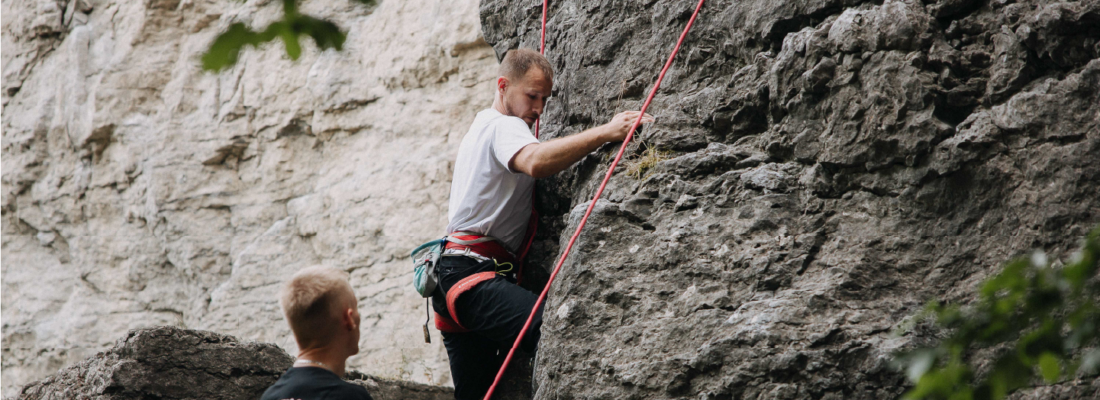
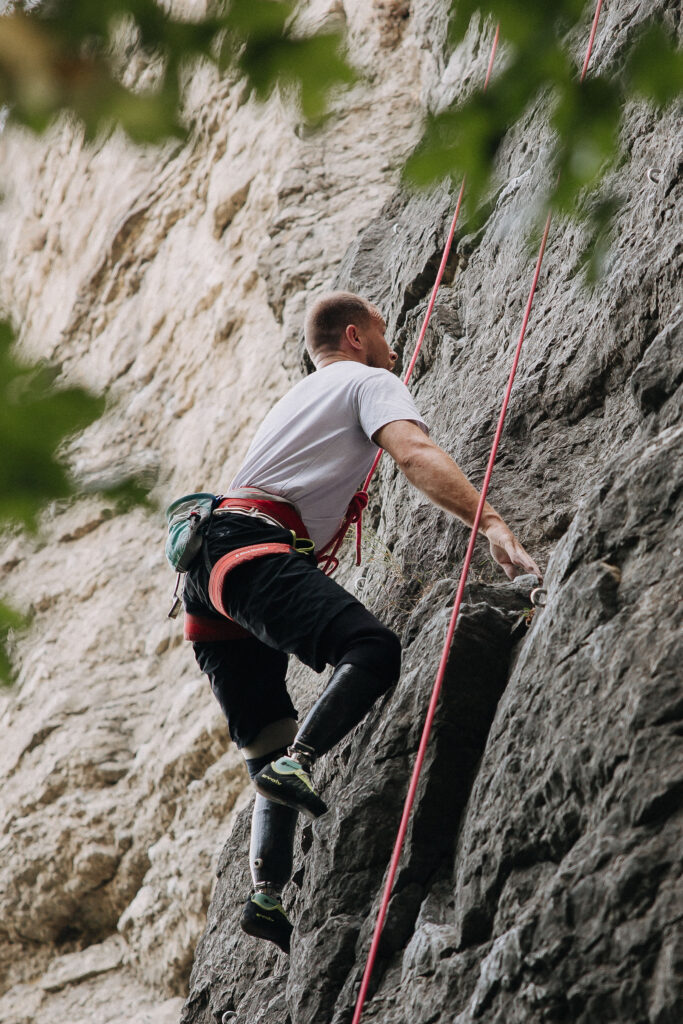
Before Russia’s full-scale invasion of Ukraine, Oleksandr Zhovnenko loved the mountains and rock climbing. After a serious injury on the front lines, he lost both legs but did not give up the activity he loved. At an adaptive climbing training camp supported by Razom, Oleksandr tried special prosthetic feet designed to help people with amputations climb rocks for the first time.
Today, he is also the captain of Ukraine’s national para ice hockey team. We spoke with Oleksandr about recovering after an injury, the support of the veteran community, and his plans to climb mountains again.
I started talking to guys who had already gone through the process of getting prosthetics
Oleksandr Zhovnenko, veteran of the Russian–Ukrainian War
From Injury to Para Ice Hockey
“No one prepares you for disability. You don’t think, ‘I’m going to serve in the military, but what if I lose a leg or something else happens? How will I live?’” Oleksandr says.
Before Russia’s full-scale invasion, he organized trips around the world and later worked in IT. After the birth of his first child, Oleksandr joined the military and became a drone operator with the Azov Brigade, part of Ukraine’s National Guard.
During his service, a Russian artillery shell hit the dugout where Oleksandr was resting before his next shift.
“After the explosion, the dugout caught fire almost immediately. I got up to run out but fell right away. My right leg was hanging on by bits of skin and clothing. I applied a tourniquet immediately. Everything inside the dugout burned. Two of us suffered shrapnel wounds. Everyone survived,” he recalls.
About a week and a half later, doctors amputated Oleksandr’s other leg in Lviv. While still receiving treatment and using a wheelchair, he began attending para ice hockey training sessions.
Other veterans became an important source of support. They had already received prosthetics, returned to work, and found ways to rebuild their lives after injury.
“I was still in the hospital, going through doctors’ appointments and surgeries. Almost immediately, I started talking to guys who had already gone through the process of getting prosthetics. They had their own lives and jobs. I think that helped me avoid falling into depression. I saw that life could still be okay,” Oleksandr says.
Today, he is the captain of Ukraine’s national para ice hockey team. Along with giving motivational speeches, he keeps the team’s spirits up by dancing. In August, the Ukrainian team defeated Great Britain 4–0. The Ukrainian national team has been around for only one year, while the British team has been around for 10 years.
Moving Forward and Climbing Higher
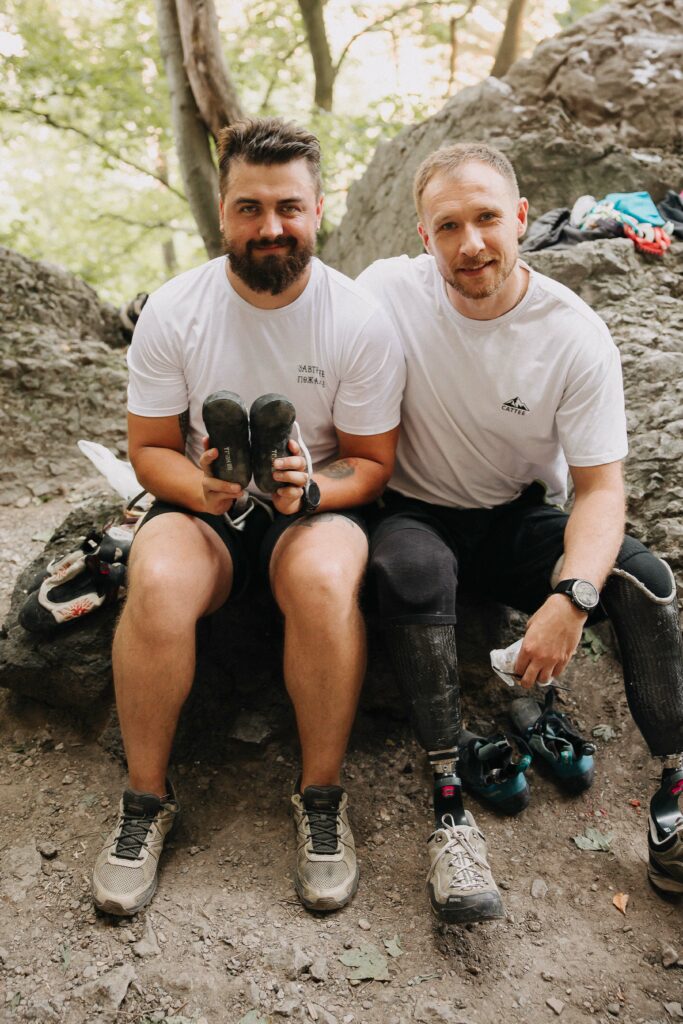
Before the full-scale invasion, Oleksandr loved hiking in the mountains and later took up rock climbing. After his amputations, he returned to climbing at an adaptive climbing training camp, where he tried special prosthetic feet designed for the climbing.
“I had seen people with prosthetics climbing at a pretty high level. The American coaches brought special feet designed for rock climbing. I could feel how much more comfortable they were than the ones I use for walking. I even thought about whether I could make something similar myself using my old prosthesis,” he says.
For Oleksandr, the camp was a chance to see what he could do with the new equipment. For the other participants, it was an opportunity to try adaptive climbing with guidance from experienced coaches.
Building Skills and Creating Opportunities for Other Veterans
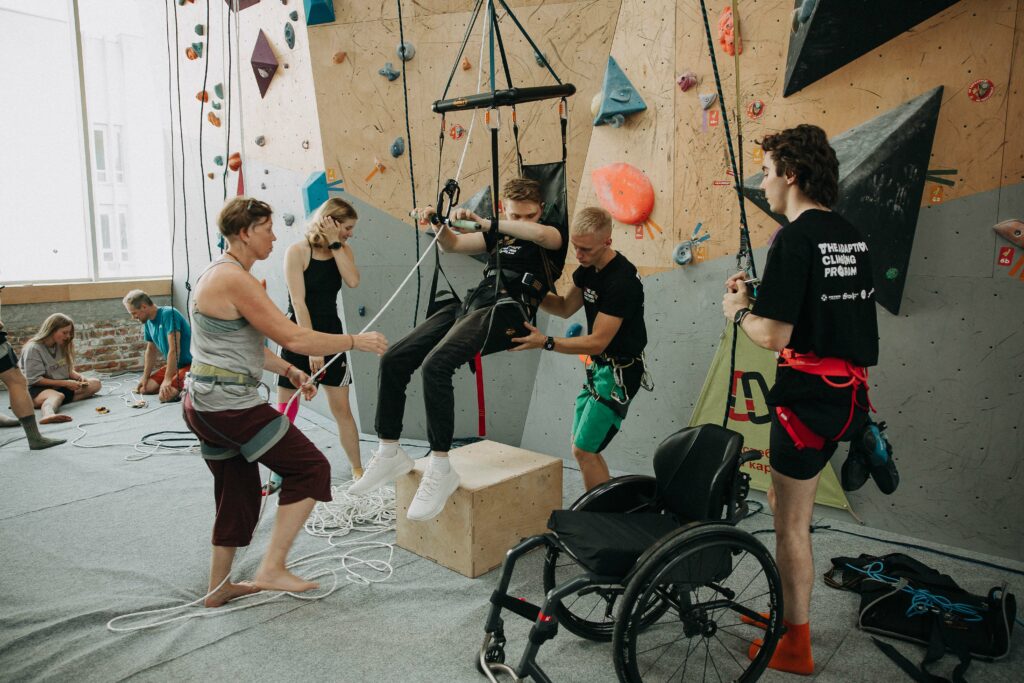
The five-day training camp brought together nine veterans and 12 coaches. Participants trained at an indoor climbing gym in Ivano-Frankivsk before moving on to natural rock formations in Kamianets-Podilskyi.
Razom supported the project in partnership with the Ukrainian NGO Veterans Civilian Petros, the Second Breath Charitable Foundation, and Paradox Sports, a U.S.-based organization from Colorado.
The camp was about more than giving veterans a chance to try adaptive climbing. Another key goal was to train Ukrainian coaches who can use these skills in their future work with people with different disabilities.
The coaches learned how to use specialized climbing prosthetics for people who have had a leg amputated, as well as safety systems for climbers with paralysis. The American partners also provided specialized equipment worth $10,000.
But adaptive climbing takes more than the right equipment. Coaches need to know how to adapt climbing techniques to each person’s needs and make sure every training session is safe. The Paradox Sports coaches shared their experience and practical skills with their Ukrainian colleagues.
With Razom’s support, the project is helping Ukraine develop not only adaptive sports programs but also a community of trained coaches who can make sports more accessible to veterans and other people with disabilities.
Now I don’t pay attention to my prosthetics.
Oleksandr Zhovnenko, veteran of the Russian–Ukrainian War
New Summits Ahead
For Oleksandr, one important sign of recovery is feeling confident in everyday life again.
“Now I don’t pay attention to my prosthetics. And the most important thing is that my loved ones can forget I have them, too. They don’t have to think about it. It feels good to have regained my ability to do things and to know that the people around me don’t have to worry about me,” he says.
Before his injury, Oleksandr dreamed of climbing the Tatras. Now, he is planning that climb again. Special equipment, support from friends, and his experience returning to rock climbing have helped him see that this goal is still within reach.
“The Tatras have terrain and shapes similar to the Alps and even the Himalayas, but they aren’t as high. That means you can practice your climbing techniques there. Now I can see that it’s possible. I already have a circle of friends and people I know who can support me and help me. It feels like there’s still so much ahead,” Oleksandr says.
Oleksandr’s story shows that recovery is about more than medical treatment and prosthetics. It is also about returning to the activities you love, finding a community of people who understand your experience, and being able to plan for the future again.
By supporting initiatives like this, Razom helps veterans discover new opportunities and gives Ukrainian coaches the knowledge and tools they need to work with people with disabilities. What starts with one training camp can open up new possibilities for many people across Ukraine.