
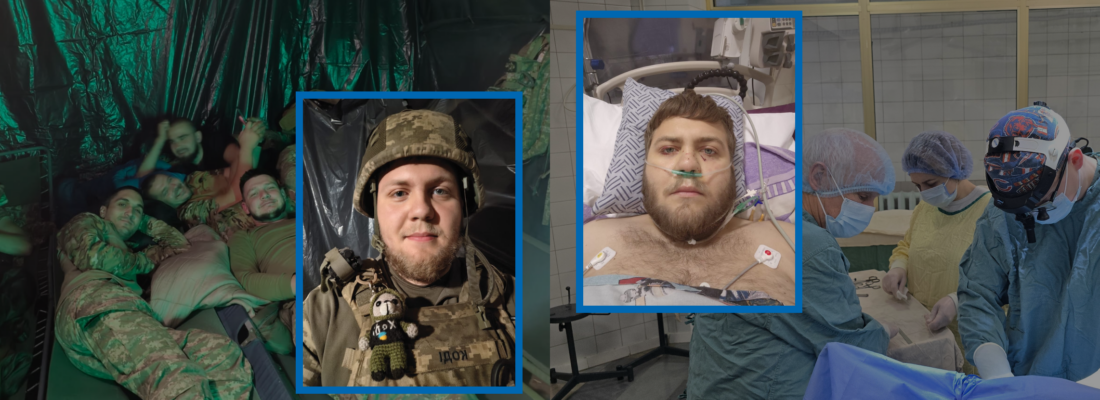
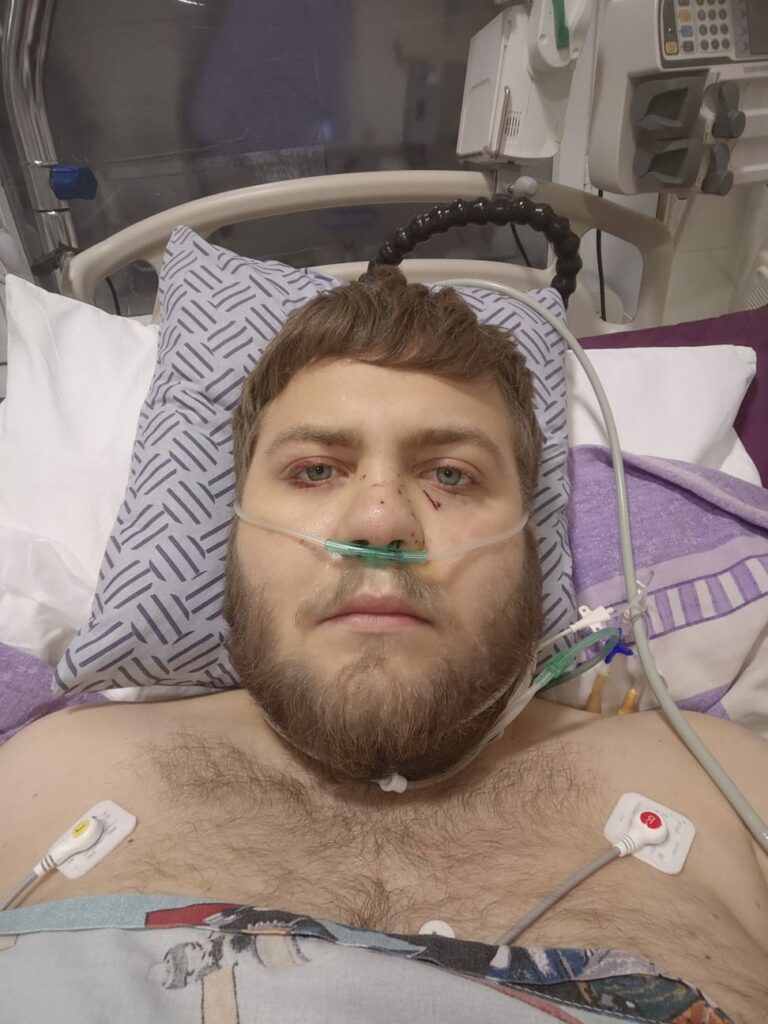
An FPV drone attack left 23-year-old Ukrainian servicemember Oleksii with a devastating leg injury. One of his fellow soldiers was killed, and others were seriously wounded. For Oleksii, the question was not only whether he would survive, but whether he would ever walk again.
What followed was months of treatment across three hospitals and an extraordinary collaboration between Ukrainian and American surgeons working side by side through Razom’s Co-Pilot Project. Together, they fought to save his leg, giving him the chance to return to the life he had been planning before the attack.
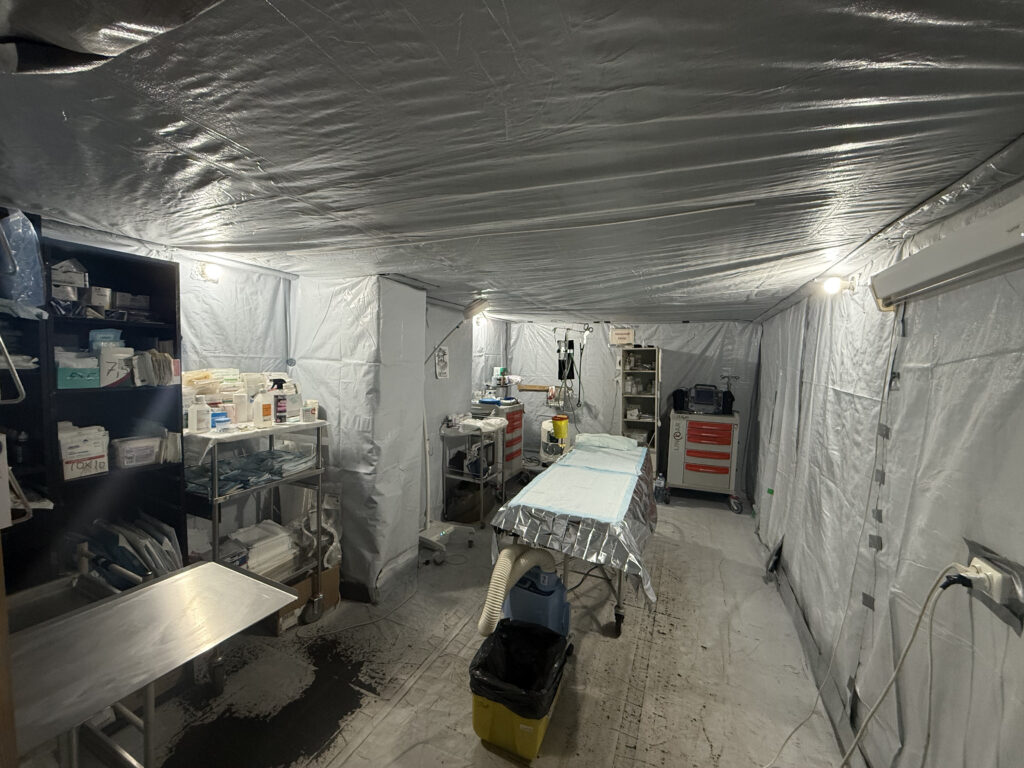
DNIPRO, Ukraine — “My future mother-in-law was supposed to visit on Sunday,” Oleksii says with a smile, his tone as relaxed as if we were sitting in a sunlit kitchen sipping tea, rather than in the intensive care unit of Mechnikov Hospital.
In a few moments, he will describe open fractures, serious infections, dozens of operations, and months of rehabilitation. But first, he wants to talk about his wedding.
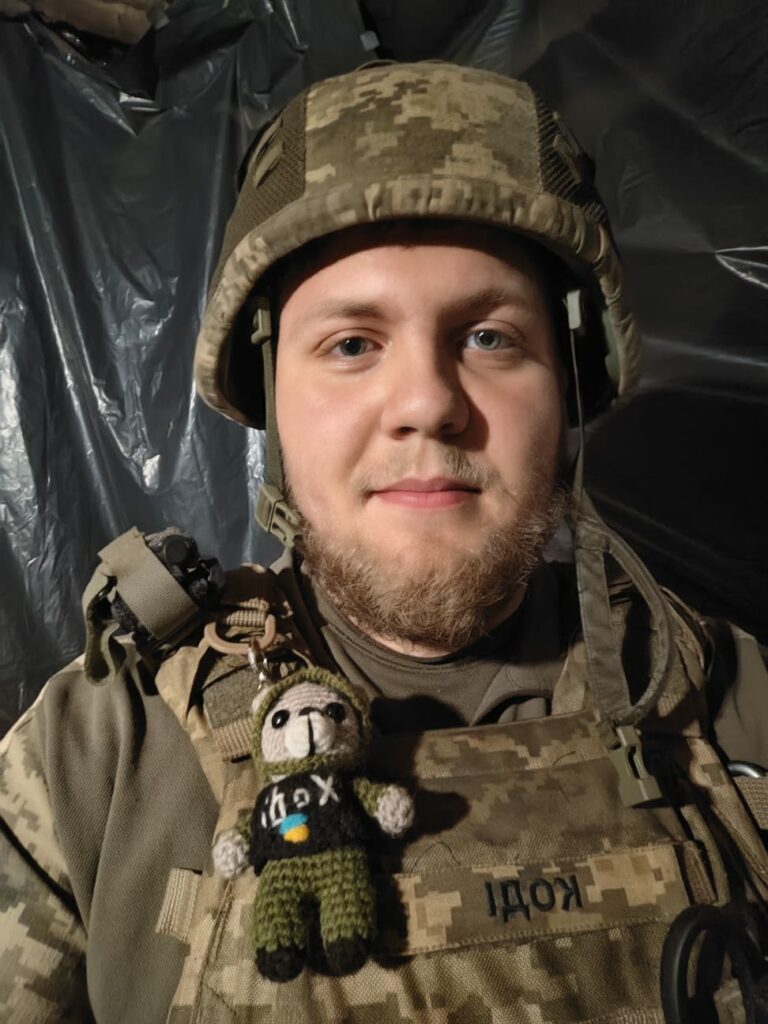
Oleksii was born in Cherkasy and lost his father when he was young. His mother raised three children in a small apartment in Kryvyi Rih. After trade school, he planned to work as an electrician at the local water utility. But a bureaucracy issue with his official residence registration brought him to a military enlistment office instead.
“Well, what else was I going to do?” he says with a shrug.
He entered compulsory military service at 19 and became a signalman—the person his fellow soldiers relied on when communications failed or battlefield maps needed updating.
By early 2024, Oleksii had been deployed to a combat brigade on the Lyman front. He later served in the Donbas and Sumy regions.
It was between rotations that he met his fiancée. The parents of one of his squad mates often brought homemade meals to the unit, and during one of those visits, Oleksii met their daughter. Ask when the friendship became something more, and he grins: “Now, everything is heading straight toward a wedding.”
He talks about it as though the celebration is just around the corner—even as artillery rumbles outside the hospital and metal fixation pins extend from his injured leg.
The Day Everything Changed
Oleksii and his unit were returning from an assignment. The road was familiar, and they thought the most dangerous part of the journey was behind them.
“Two FPV drones were waiting for us on the road,” Oleksii recalls. “An ambush.”
One drone hovered ahead while another chased their vehicle from behind. His teammate opened fire as they moved. Then came the explosion.
The vehicle slammed to a halt, and the men scrambled out onto the road. Oleksii tried to jump clear, but his right leg collapsed beneath him. “I thought I’d just taken a piece of shrapnel.” He tried to stand up again, but nothing worked. The blast had shattered a large section of bone.
Despite the shock, Oleksii managed to apply a tourniquet himself. Doctors later told him that the fragments had narrowly missed his main artery. That small margin made it possible to consider saving the leg.
Oleksii quickly turns the conversation away from himself. Instead, he lists the rest of his crew: one teammate died at the scene, another lost three fingers, and a third suffered a severe concussion.
“One guy is already back on active duty,” Oleksii says briefly. “The others are still recovering.”
What followed was a blur of evacuation points soaked in pain and high-dose painkillers: a frontline stabilization point in the Zaporizhzhia region, then a military hospital, external fixators, and finally, the intensive care unit at Mechnikov Hospital in Dnipro, one of Ukraine’s leading trauma centers for critically wounded soldiers.
Choosing to Fight for the Leg
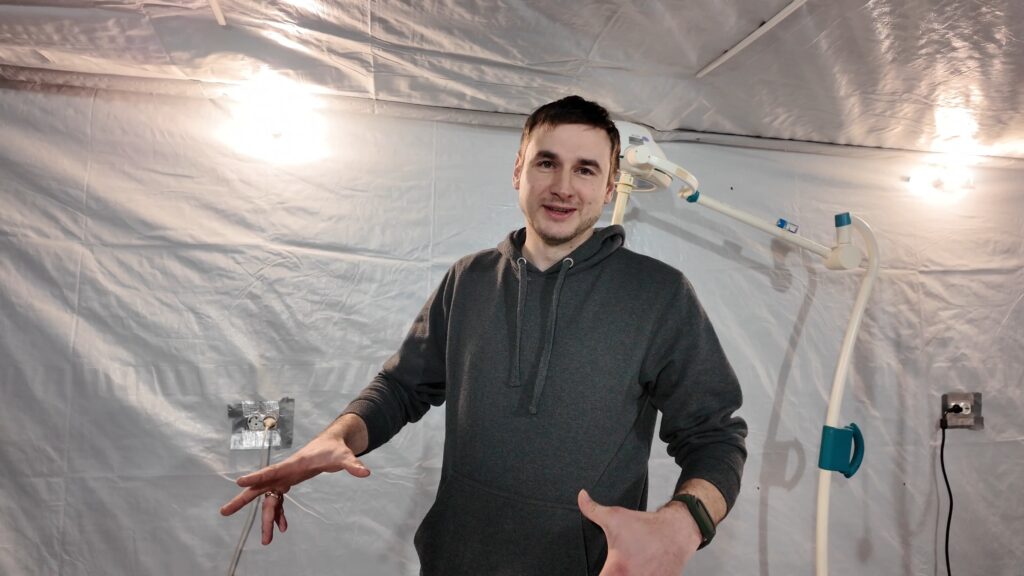
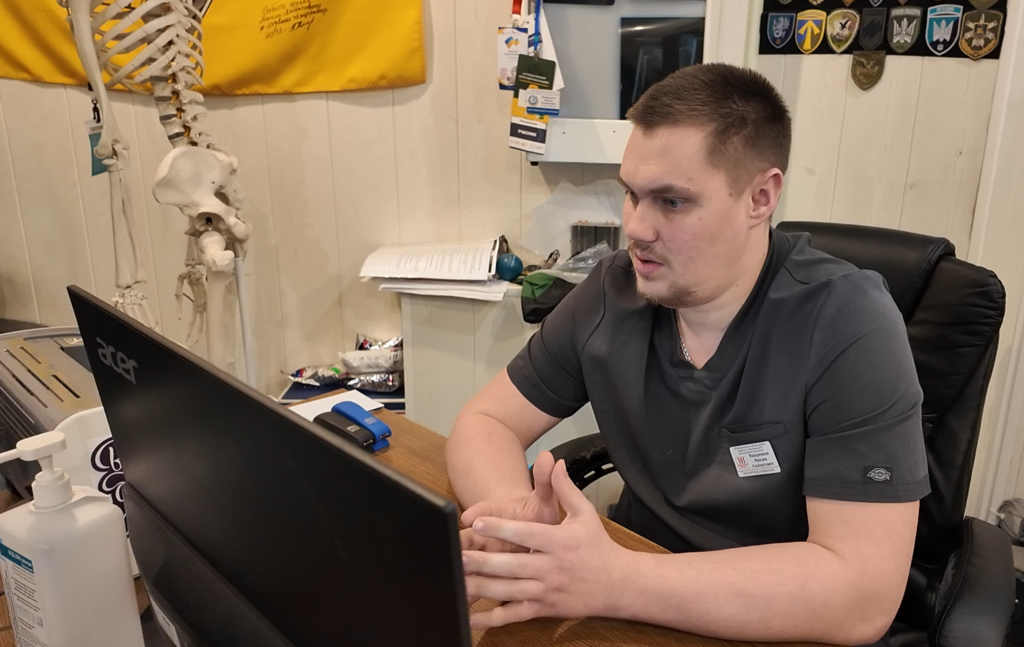
“I remember Oleksii very clearly,” says orthopedic trauma surgeon Dr. Maksym Makarenko. Thousands of patients with blast injuries have passed through his operating room, but Oleksii’s case stood out.
“Patients with this level of damage often also have serious polytrauma—head injuries, collapsed lungs, or abdominal damage,” Dr. Makarenko explains. “In Oleksii’s case, the destruction was concentrated in his leg. The rest of his body was stable enough that we could fight to save the limb, rather than amputating it to save his life.”
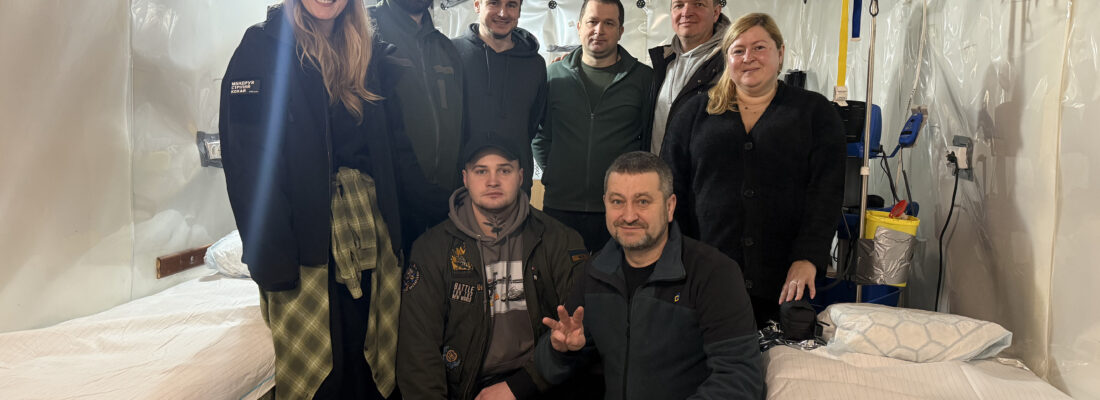
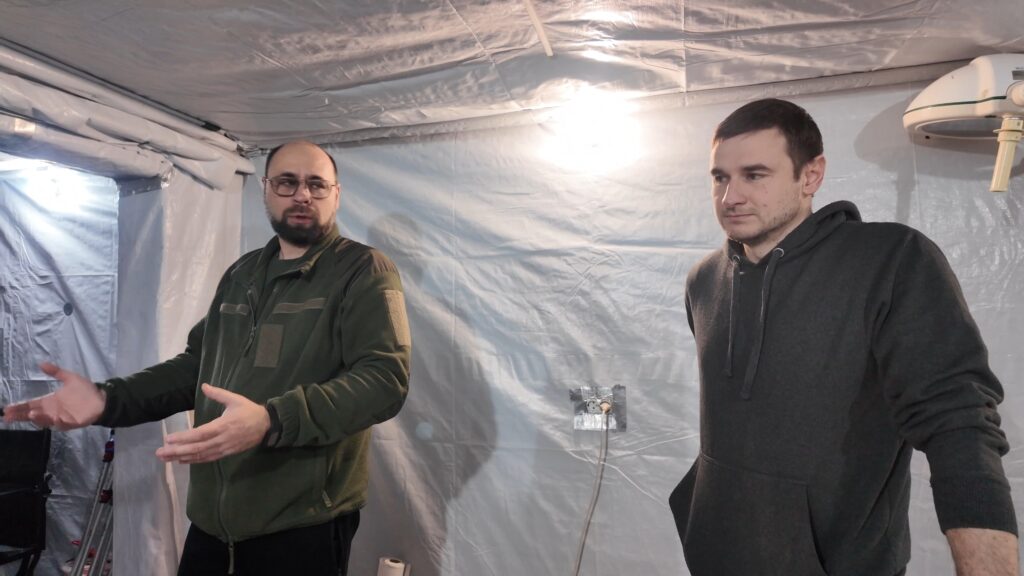
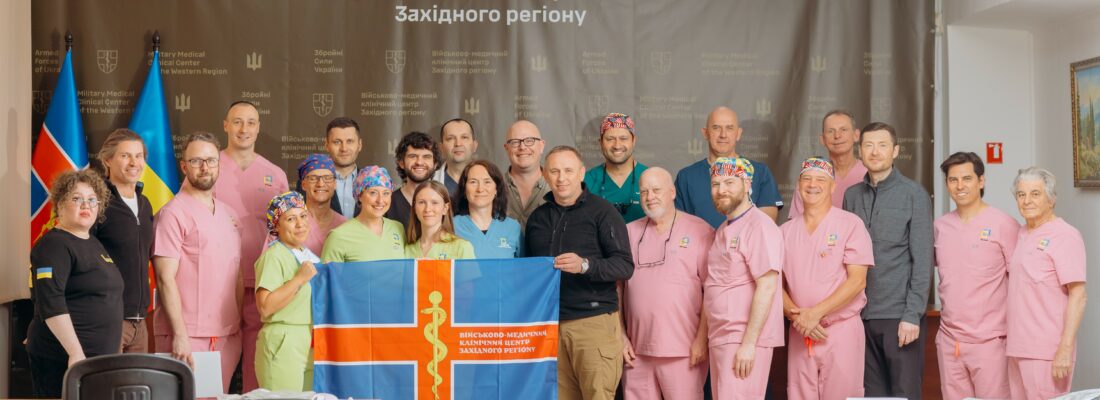
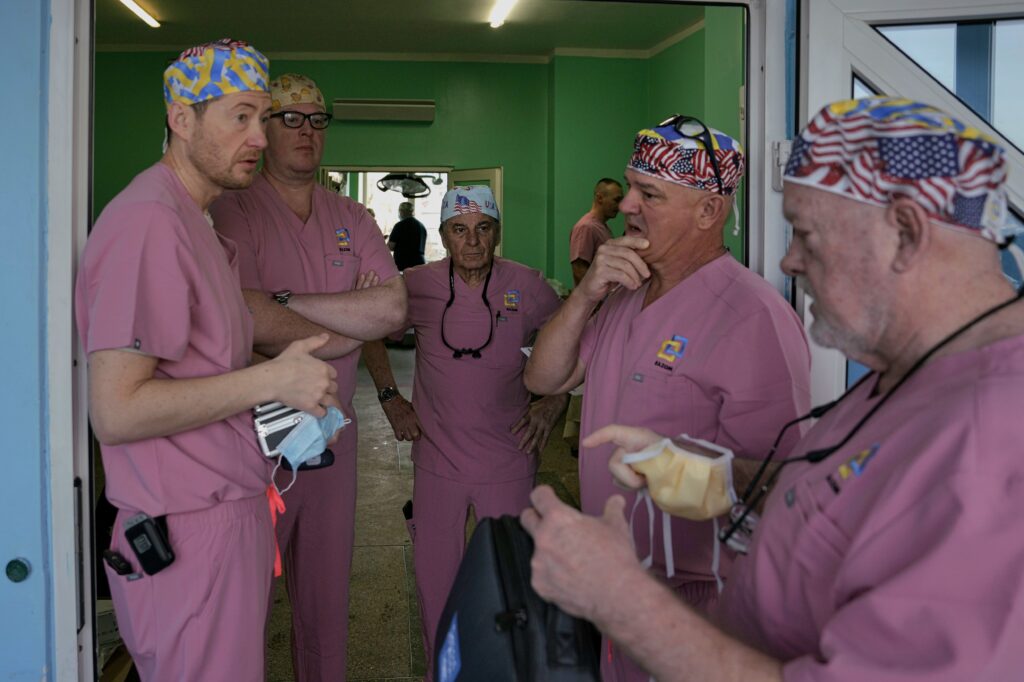
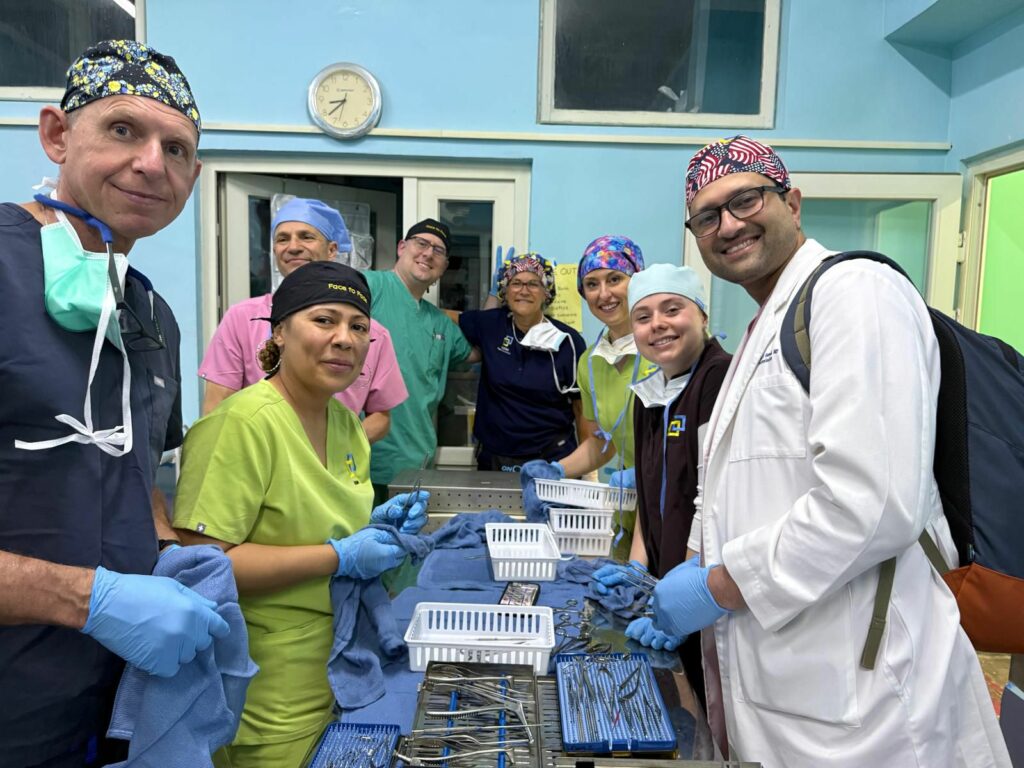
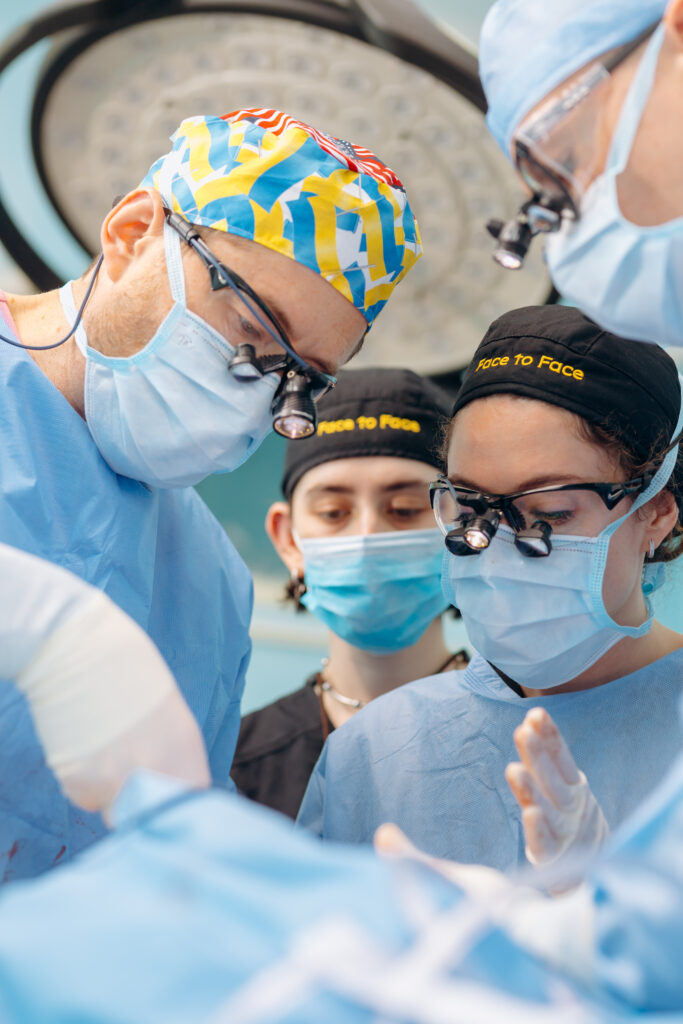
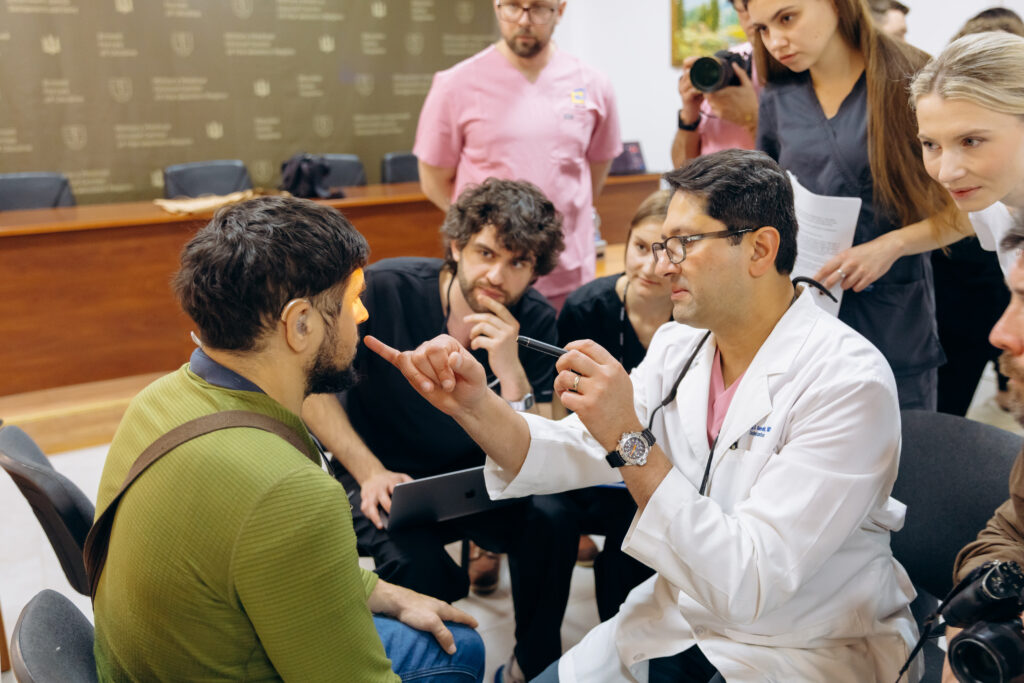
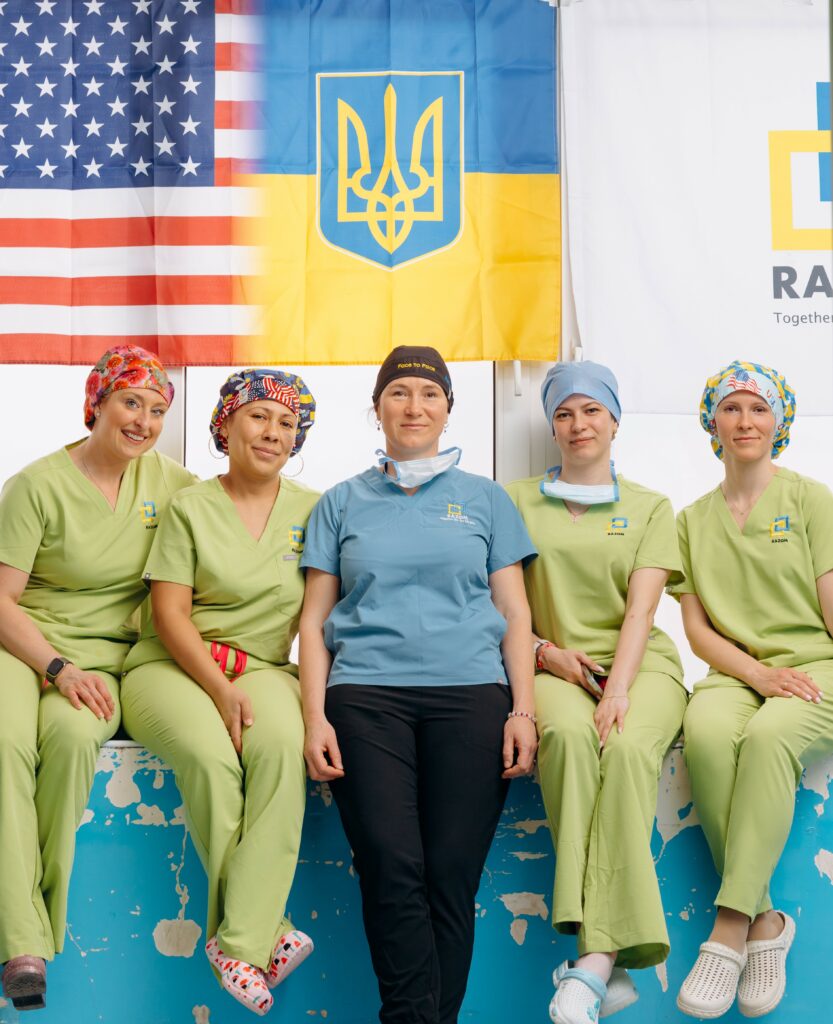
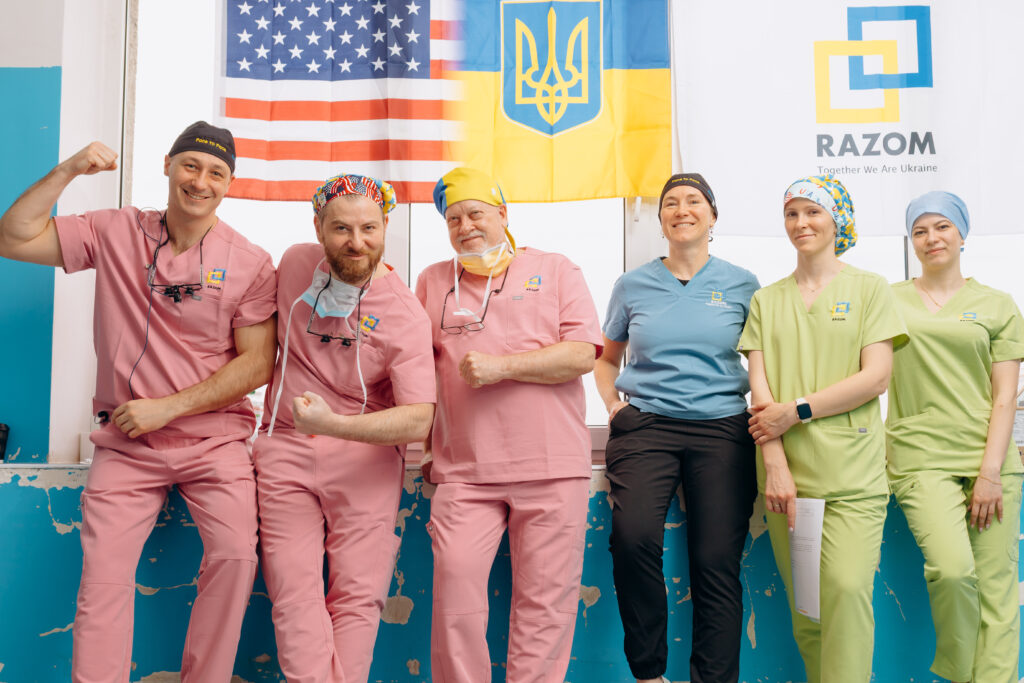
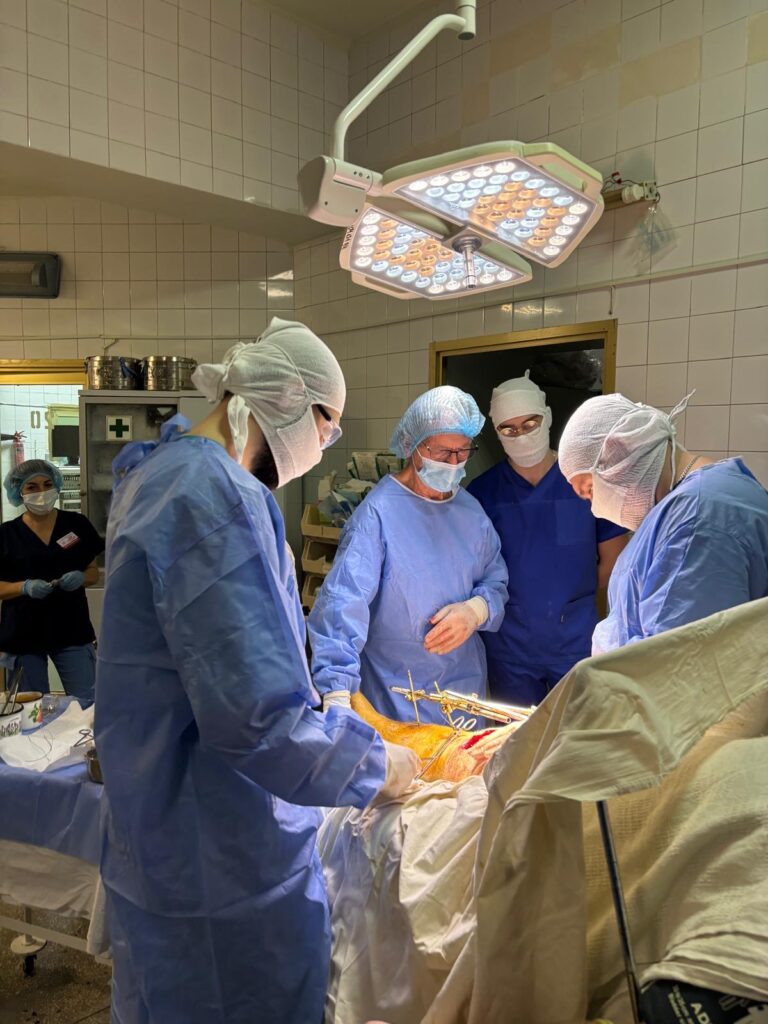
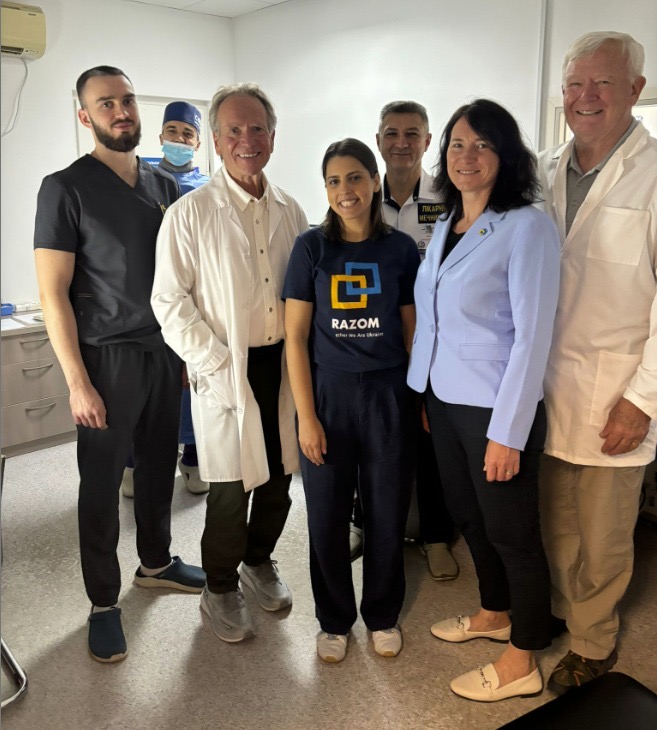
Around this time, an American medical delegation arrived at Mechnikov through Razom’s Co-Pilot Project. Dr. Makarenko was joined in the operating room by Dr. Craig Silverton, an American orthopedic surgeon experienced in treating combat injuries.
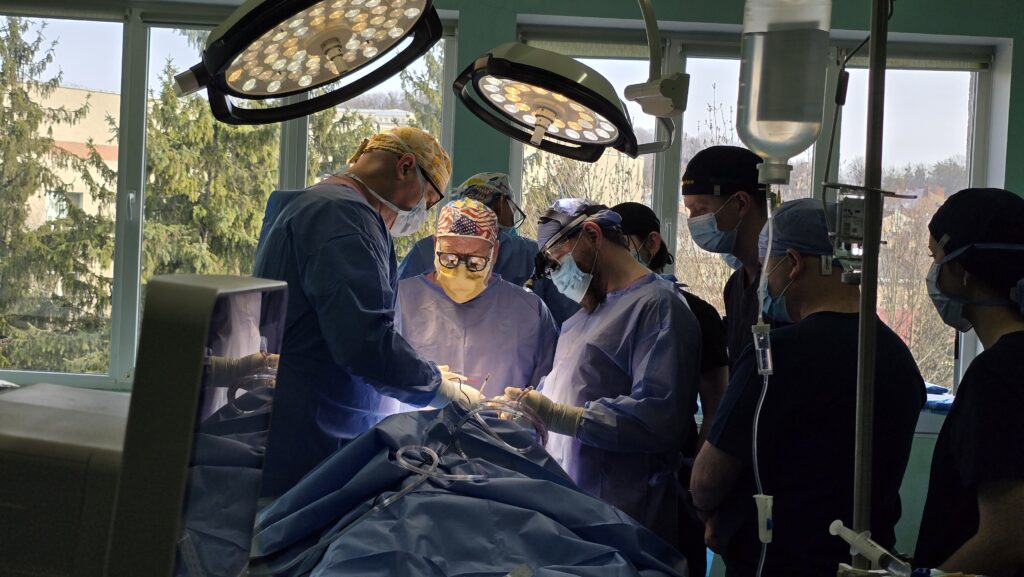
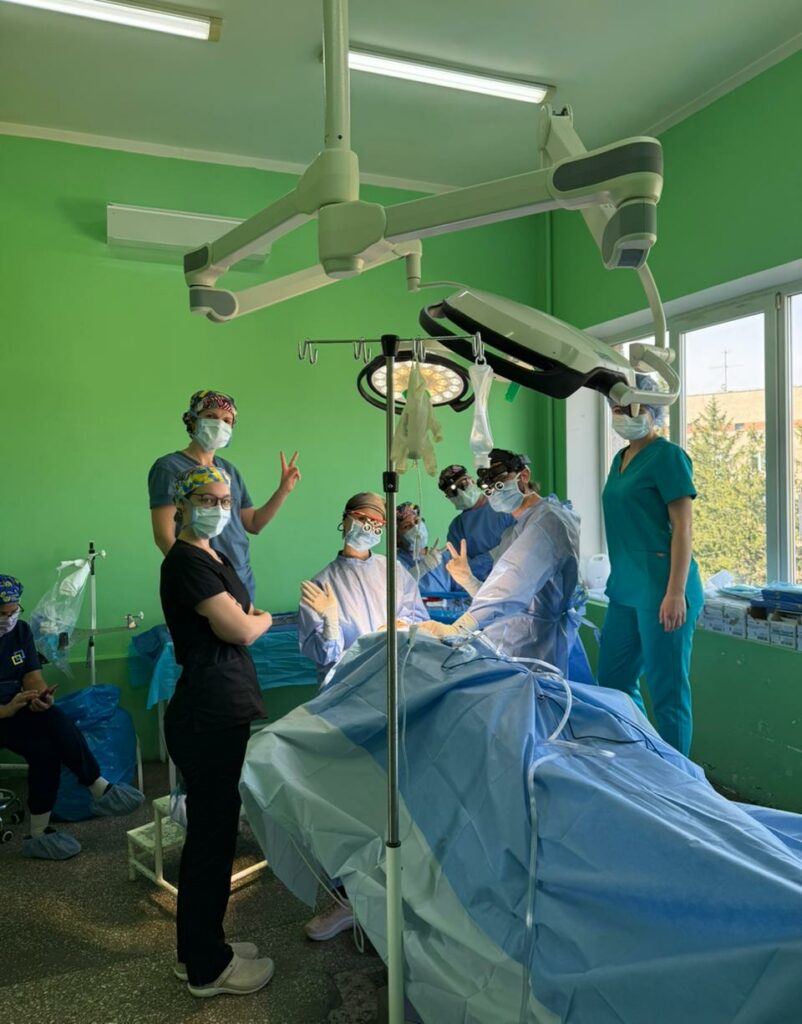
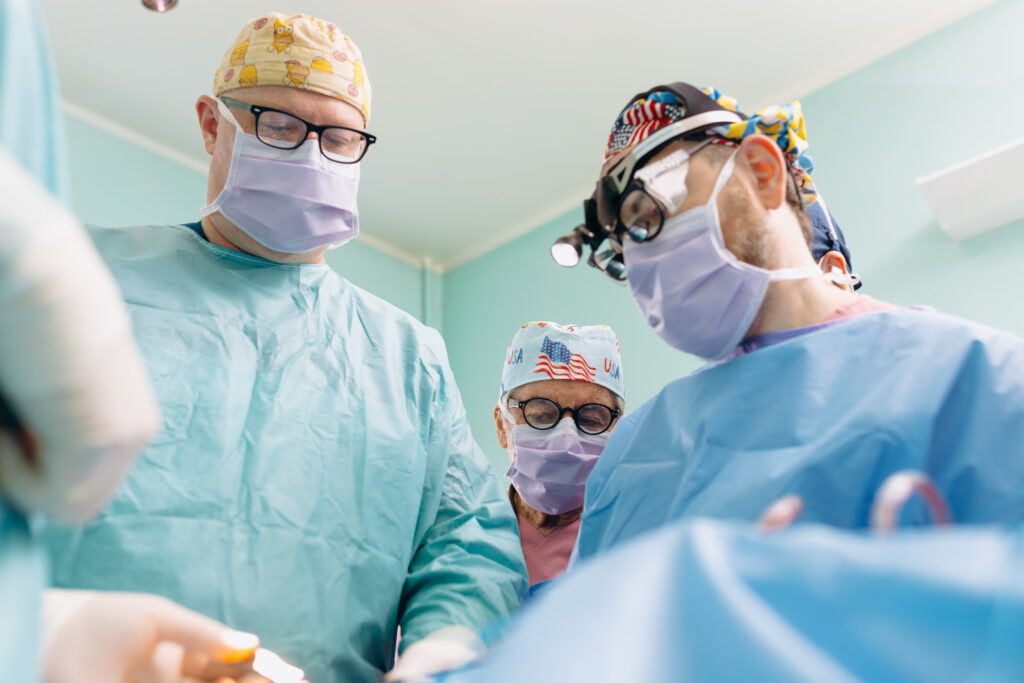
The Ukrainian and American surgeons worked together through several procedures. They removed dead and infected tissue and placed an antibiotic cement spacer into the gap left by the missing bone. The spacer helped control infection while preparing the leg for future reconstruction.
Once Oleksii’s was stable, he was transferred to a hospital in Vinnytsia,freeing an intensive care bed at Mechnikov for newly wounded patients arriving hourly from the front.
Before he left, Oleksii and Dr. Makarenko exchanged phone numbers. Each week, Oleksii sent the surgeon X-rays, lab results, and photographs of his wound dressings through VIber. When doctors in Vinnytsia began discussing the possibility of sending him abroad for treatment, Oleksii contacted Dr. Makarenko.
“If you trust us, come back, the surgeon told him “We’ll be working with the American team again soon.”
“I’m coming to you,” Oleksii replied.
A Transatlantic Surgical Team
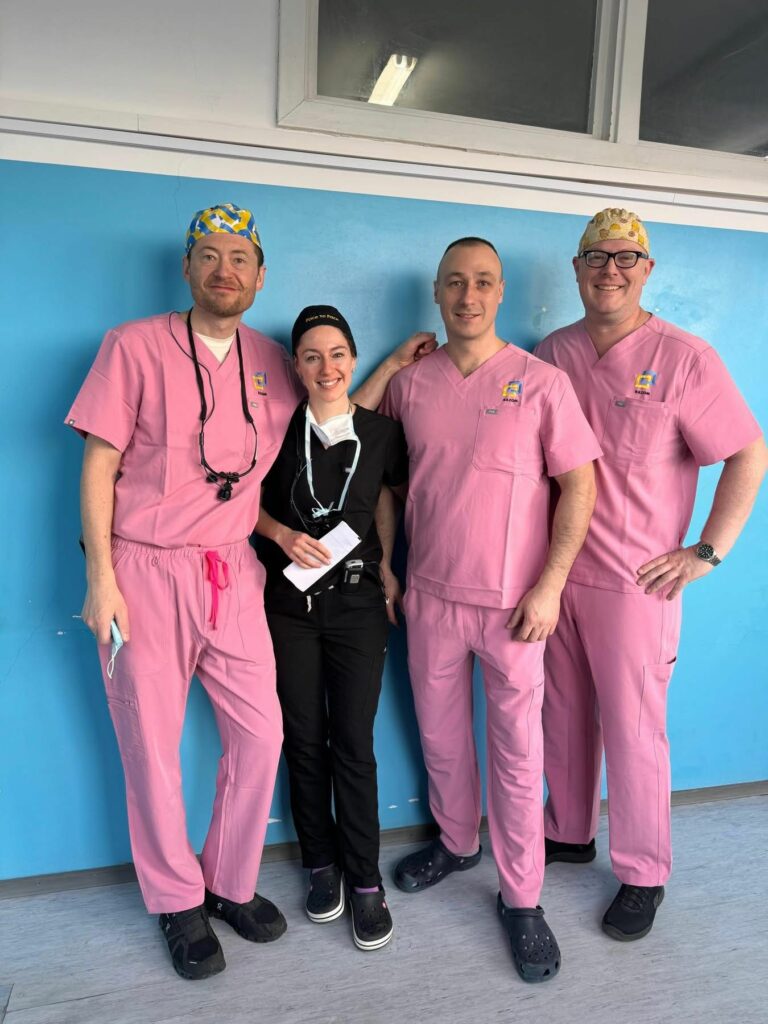
A few weeks later, Oleksii was back in Dnipro. This time, Dr. Makarenko was joined by Dr. Roman Hayda, an American orthopedic surgeon and U.S. Army veteran of Ukrainian descent. Dr. Hayda’s parents migrated to the U.S. after World War II and raised him with a strong connection to his Ukrainian heritage. He went on to treat combat injuries during decades of military service, including in Iraq and Afghanistan.
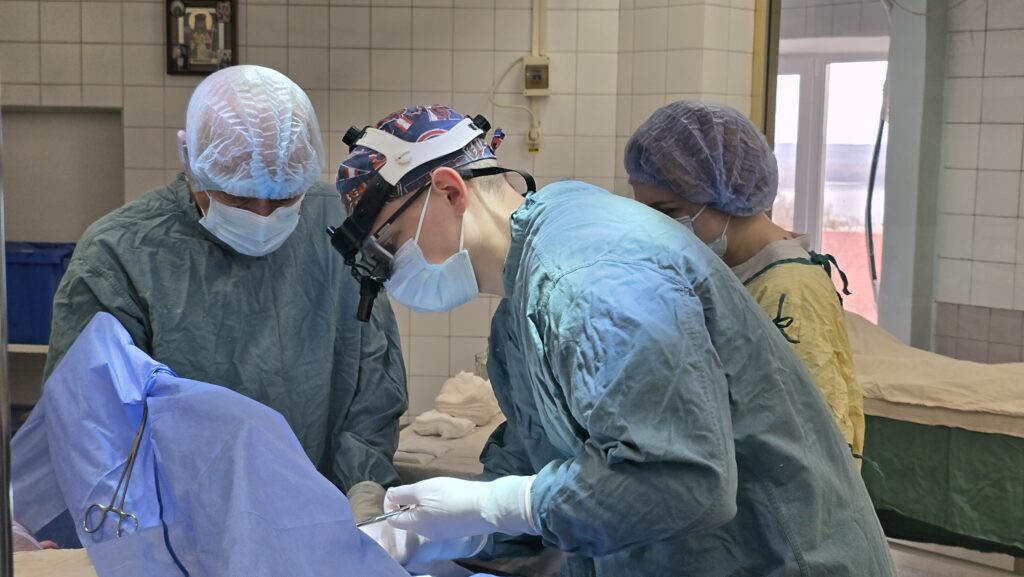
“Given my heritage, military background, and experience with battle injuries, I simply couldn’t stay away,” says Dr. Hayda. Yet, he shies away from the word “mission,” careful not to describe his work in Ukraine as one-directional assistance
“I come to work alongside them, not to lecture,” he says. “Ukrainian doctors today possess a unique level of trauma experience found nowhere else in the world. We learn from each other.”
The night before Oleksii’s surgery, Dr. Makarenko and Dr. Hayda spent hours studying his x-rays and discussing possible approaches. There were no visiting experts on one side and local doctors on the other—only one surgical team trying to solve an extraordinarily difficult problem.
“Surgeries like this always carry immense uncertainty,” Dr. Hayda says. “Our job is to exhaust every option so the patient gets a real shot at returning to a normal life.”
Oleksii’s bone loss was severe. He had already endured infection, and further complications remained possible. No one could promise that the reconstruction would succeed.
“We worked toward this day for months,” Dr. Makarenko says. “More than anything, we wanted to give Oleksii the chance to stand on his own feet again.”
Photos of Everyone Else
Several months after the surgery, Oleksii’s leg has been saved. His recovery is not over, but he is making steady progress and now walks with one crutch.
“A surgeon’s greatest joy isn’t when the operation ends,” Dr. Makarenko smiles. “It’s when the patient takes their very first steps. That’s the moment you realize what all the work was for.”
For Dr. Hayda, Oleksii’s story reflects what the Co-Pilot Project is meant to be: not charity flowing in one direction, but a genuine partnership. American surgeons contribute techniques developed through decades of military medicine, while Ukrainian doctors bring unmatched experience treating large numbers of complex wartime injuries . Together, they are finding better ways to care for patients in Ukraine and beyond.
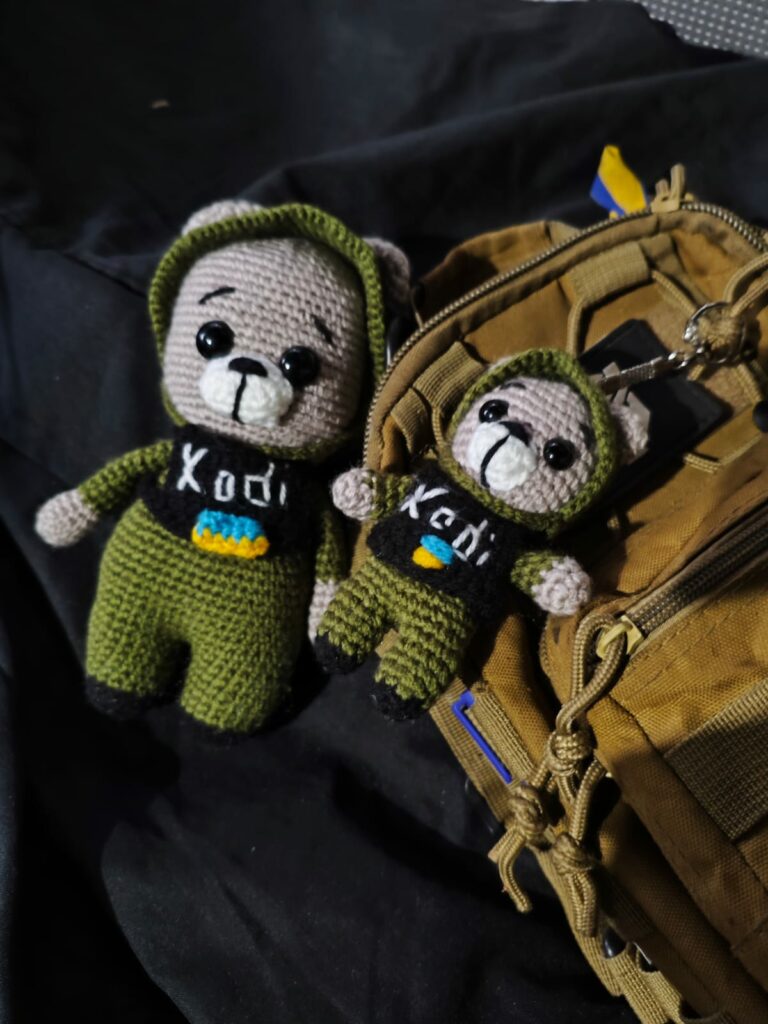
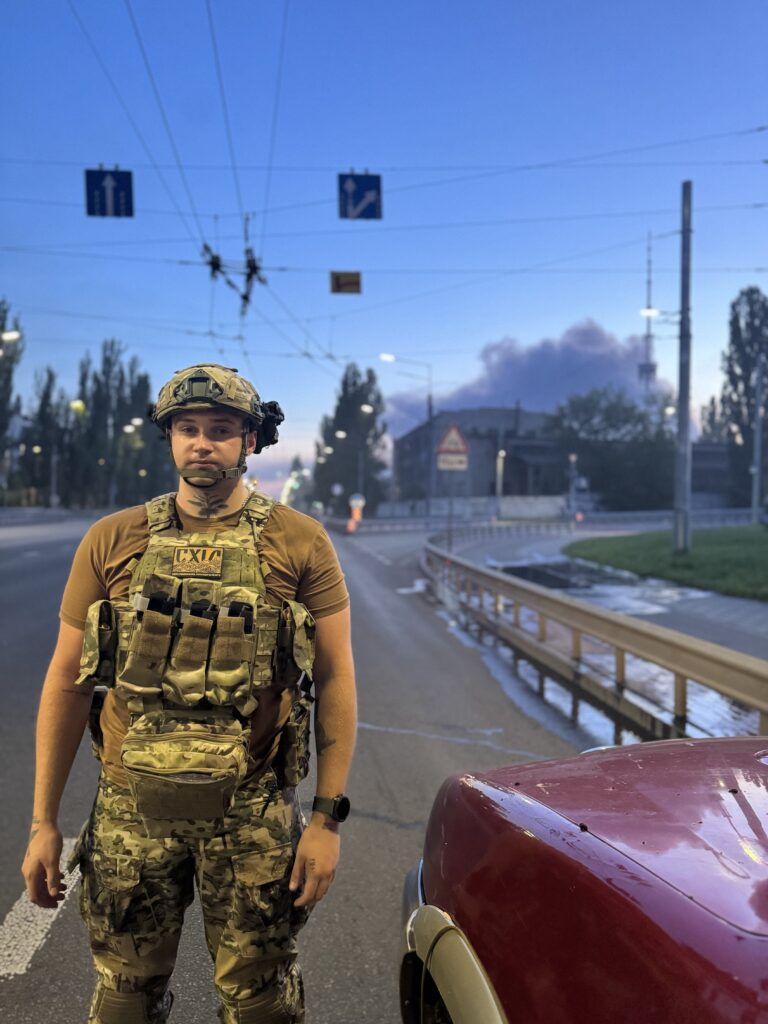
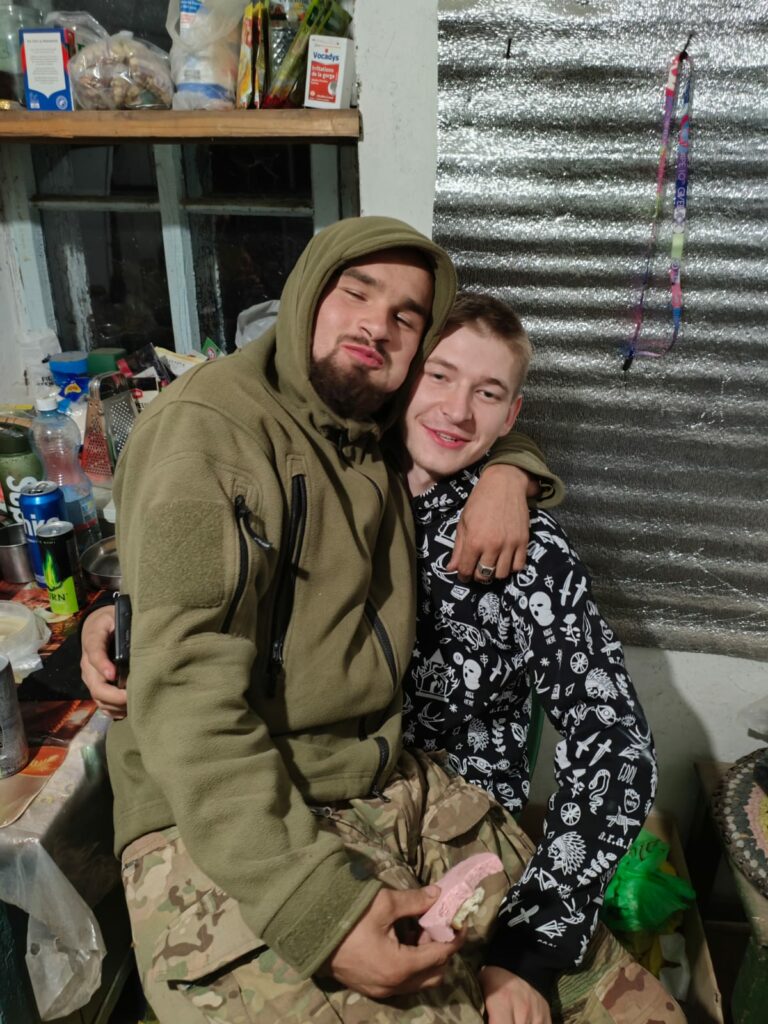
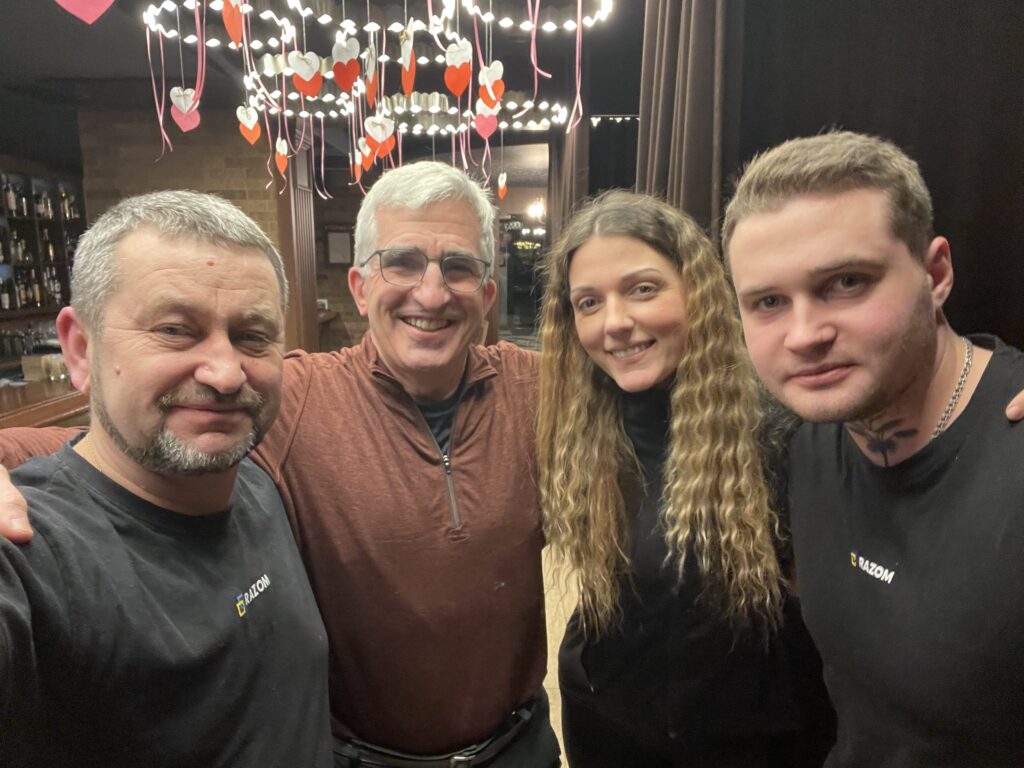
As we prepared to leave, we asked Oleksii whether he could share a few photos for this story. Without hesitation, he replied: “I have photos with my unit mates. I’ll send those.”
Not photos of himself. Photos of people who served beside him.
Throughout hours of conversation, Oleksii never complained about his pain or his circumstances. He spoke about his unit, his mother, his fiancée, the doctors who treated him in three different cities, and Nastya—a nurse who once surprised him in the ward with a homemade apple strudel.
Then his thoughts returned to his future mother-in-law and the wedding ahead. The months of intense effort by surgeons from two continents were never only about repairing bone and muscle. They were about helping a 23-year-old man reclaim the life the war nearly took from him – and giving him the chance to stand on his own two feet on his wedding day.