
Despite the war, air raid sirens, and constant challenges, Ukrainian children continue to learn, explore the world, and achieve remarkable success. That is why Razom has long supported educational initiatives that help students develop their talents and discover new opportunities for growth and learning.
Over the past several months, Razom has supported several mathematics-focused projects for children across Ukraine, including the “Cyfryata” Olympiad, the Yulia Zdanovska All-Ukrainian Mathematics Olympiad for Grades 5–7, and the family competition “Mathematical Nest.” These events brought together hundreds of participants from different regions of the country, giving children the opportunity not only to demonstrate their knowledge but also to feel part of a larger community of like-minded peers.
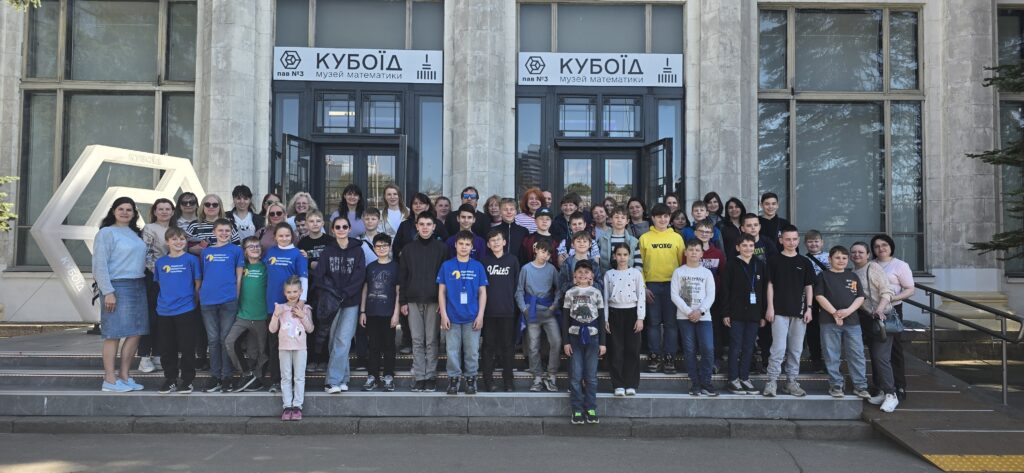
First Steps into the World of Mathematics
For many students, the “Cyfryata” Olympiad is their first introduction to the world of mathematical competitions. It helps children discover that mathematics is not only about formulas learned in school, but also about creativity, logic, and finding innovative solutions.
Such initiatives are especially important during wartime, when many children study remotely and have fewer opportunities for in-person interaction and extracurricular activities.
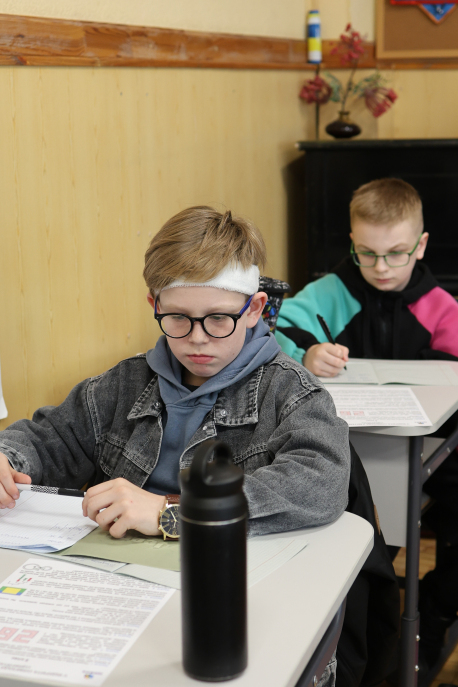
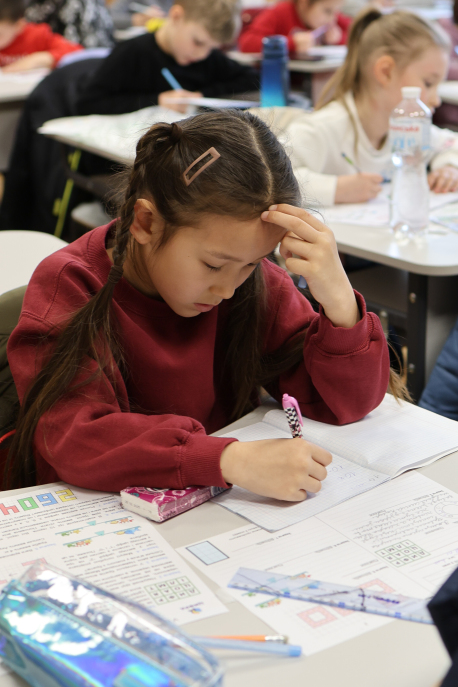
An Olympiad That Continues Yulia Zdanovska’s Legacy
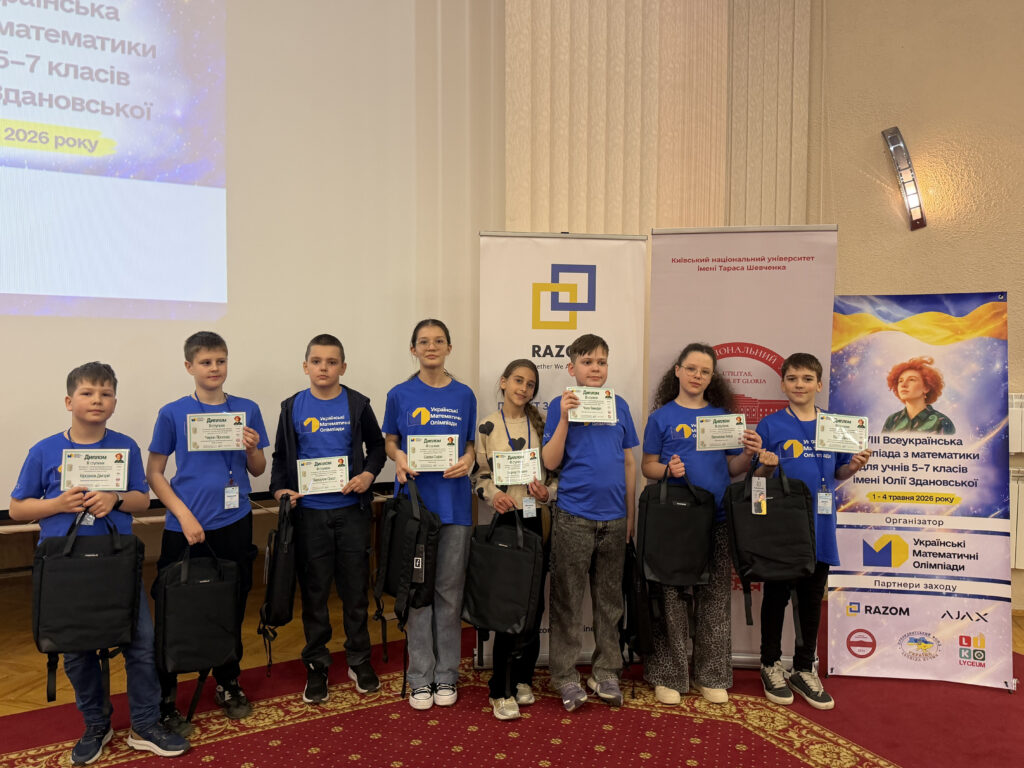
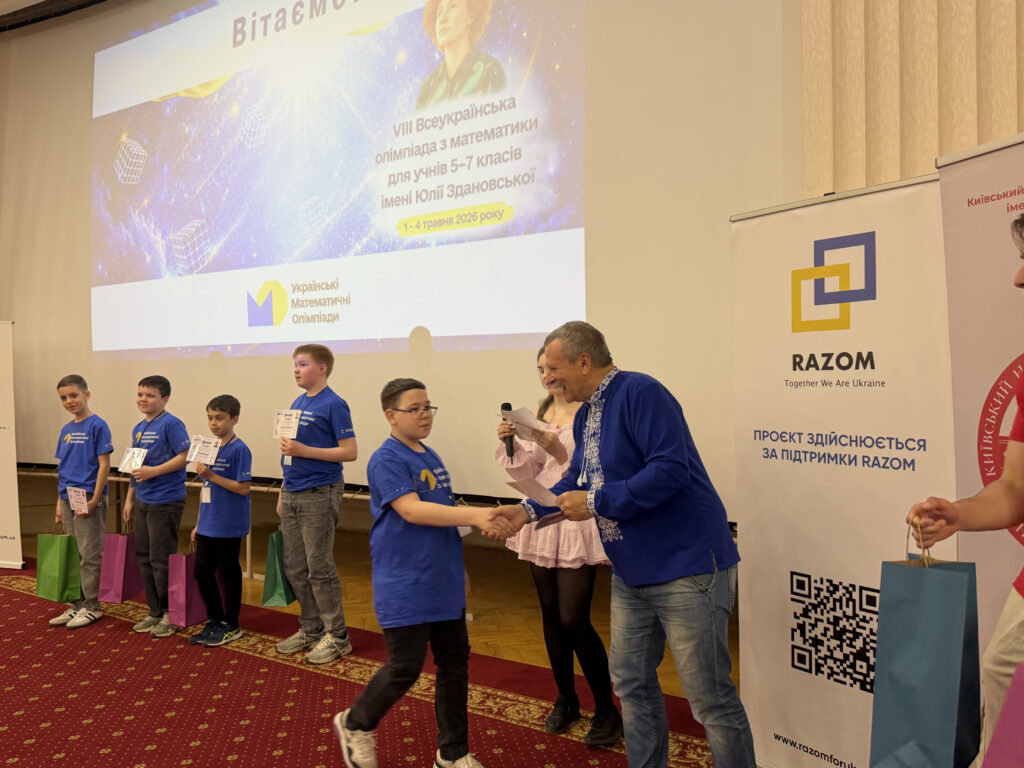
Among the projects supported by Razom, a special place belongs to the Yulia Zdanovska All-Ukrainian Mathematics Olympiad, named in honor of the talented Ukrainian mathematician and volunteer whose life was tragically taken by a Russian missile strike in 2022.
Today, her name inspires a new generation of Ukrainian children to learn, set ambitious goals, and believe in their own potential. This year, the Olympiad brought together 93 young mathematicians from across Ukraine.
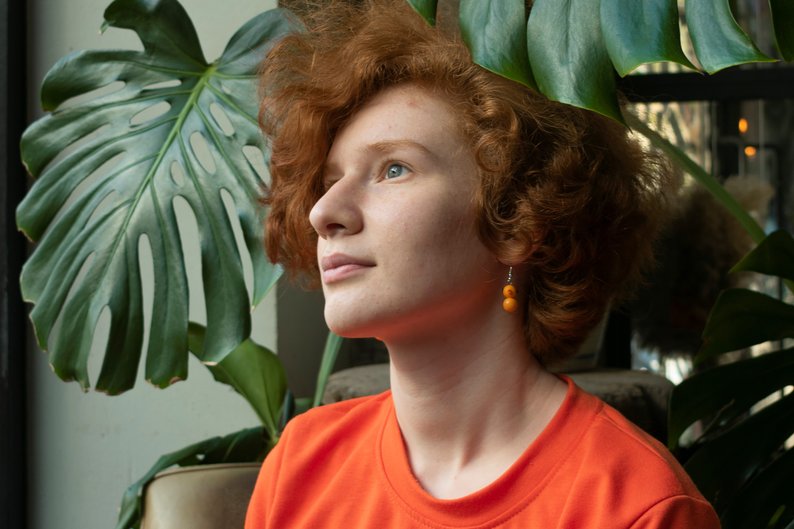
Among them was Karolina Petrushova from Kramatorsk, the only participant representing Donetsk Oblast. For children from frontline regions, where education often takes place remotely, such a trip means much more than simply participating in a competition.
“Before traveling to Kyiv, I was very nervous, but at the same time excited about the opportunity to attend such an Olympiad. What I remember most was the atmosphere, because children from different cities across Ukraine gathered there, all sharing a love for mathematics. It was exciting to talk with them and solve problems together,” Karolina recalls.
Like many children in Kramatorsk, Karolina studies remotely. Her trip to Kyiv gave her not only the chance to participate in the Olympiad, but also to visit the capital, explore the Museum of Mathematics, and meet peers who share her passion.
“I enjoyed both the Olympiad and Kyiv. I came home with many new impressions and even more motivation to continue studying mathematics. I sincerely thank the organizers, partners, and everyone who supports talented children in Ukraine and creates opportunities like these for us,” Karolina wrote after returning home.
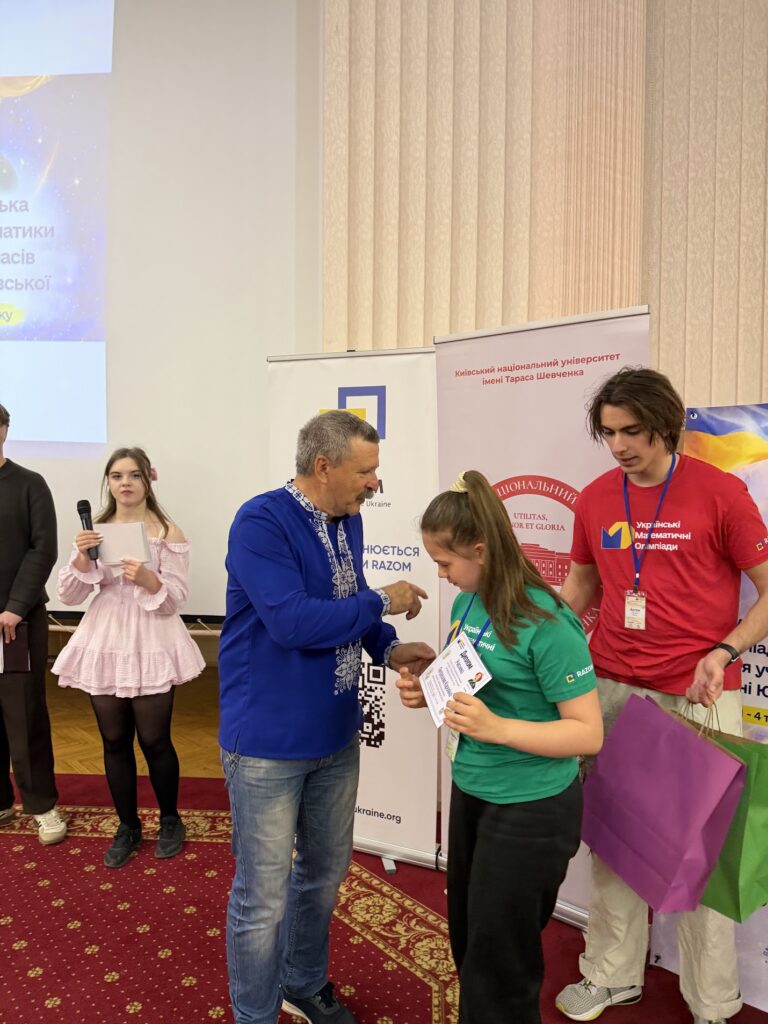
Another participant was Bohdan Zavhorodskyi from Kherson. For children living in a city that endures daily Russian attacks, even the journey to Kyiv can be challenging.
Yet Bohdan remembers the trip with the resilience and optimism that characterize so many Ukrainian children:
“We got there just fine. The Shahed drones didn’t stop us.”
For him, the most valuable part of the experience was meeting children from different parts of Ukraine and feeling connected to a broader mathematical community. He already plans to participate again next year.
His mother also emphasized that events like these are important not only for education but also for building connections among children from different regions of the country.
“We are deeply grateful to all the donors and supporters who contributed to this wonderful Olympiad and made it possible for children from across Ukraine to come together. We learned so much, gained valuable experience, and are returning home with a large circle of new friends.”
When Mathematics Becomes a Family Affair
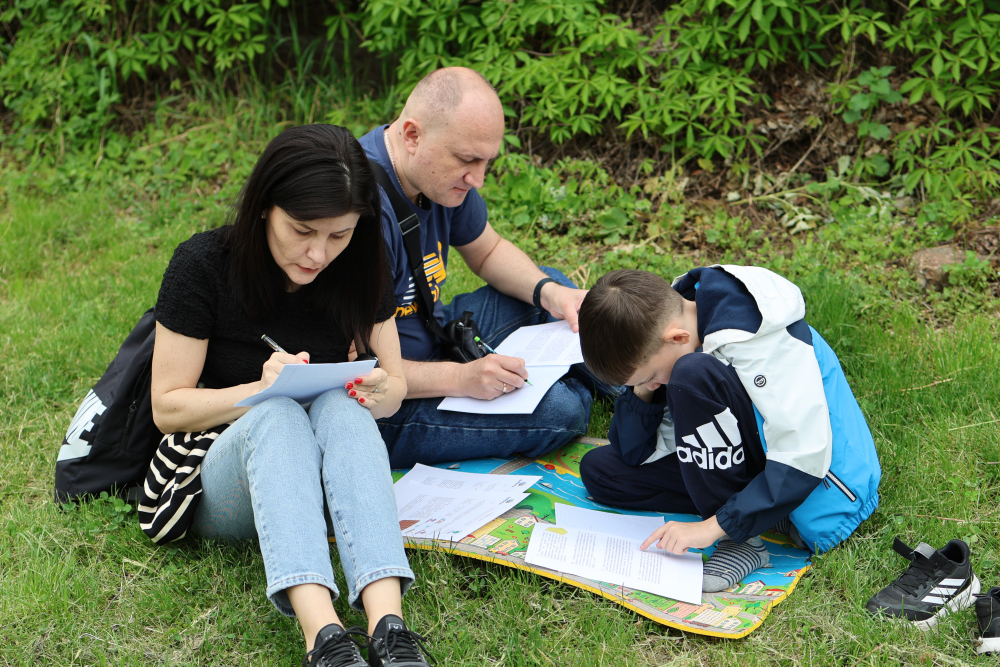
Another project supported by Razom was the “Mathematical Nest” competition. For more than ten years, it has brought together children, parents, and entire families through a shared love of mathematics.
Unlike traditional Olympiads, “Mathematical Nest” is built around collaboration and collective problem-solving. This format helps foster a culture of learning not only among children but also within families and local communities.
Education as an Investment in Ukraine’s Recovery
Each of these initiatives serves a different audience and follows a unique format, but they all share a common goal: helping children realize their potential regardless of where they live or the challenges they face.
For participants, these experiences provide new friendships, inspiration, confidence, and the understanding that even during wartime, knowledge, talent, and perseverance remain powerful assets.
By investing in education today, we are investing in the future scientists, engineers, teachers, entrepreneurs, and leaders who will rebuild Ukraine tomorrow.