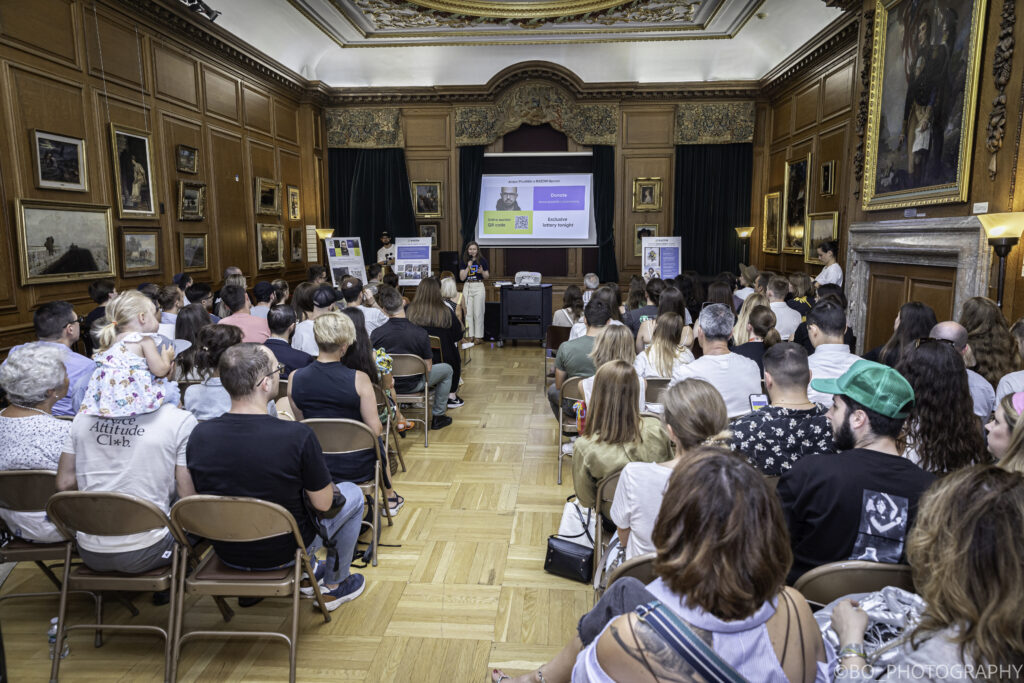
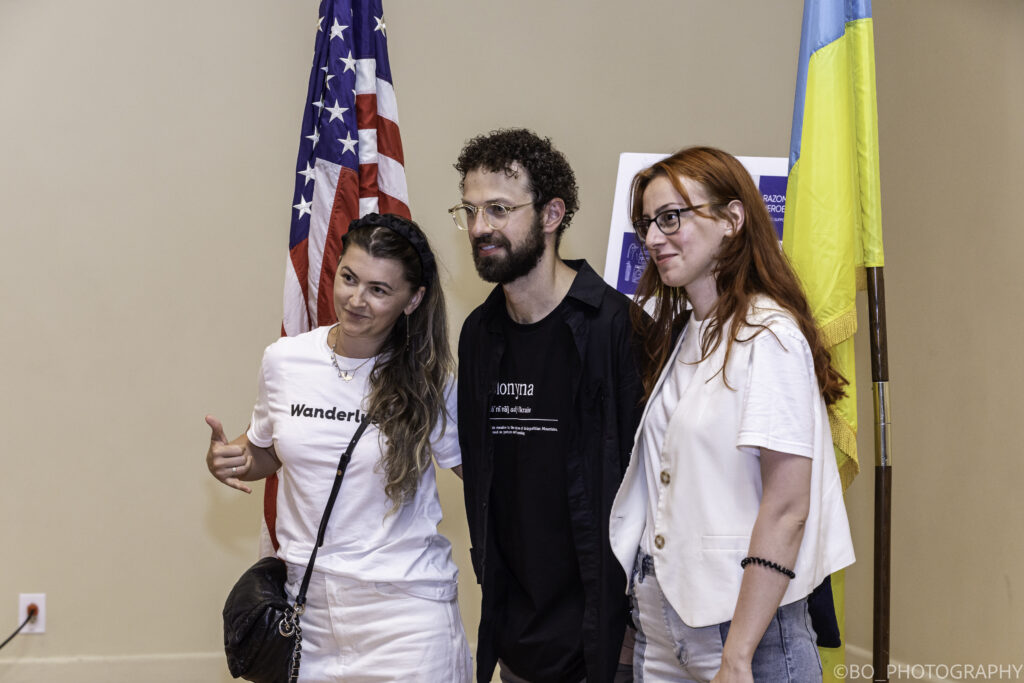
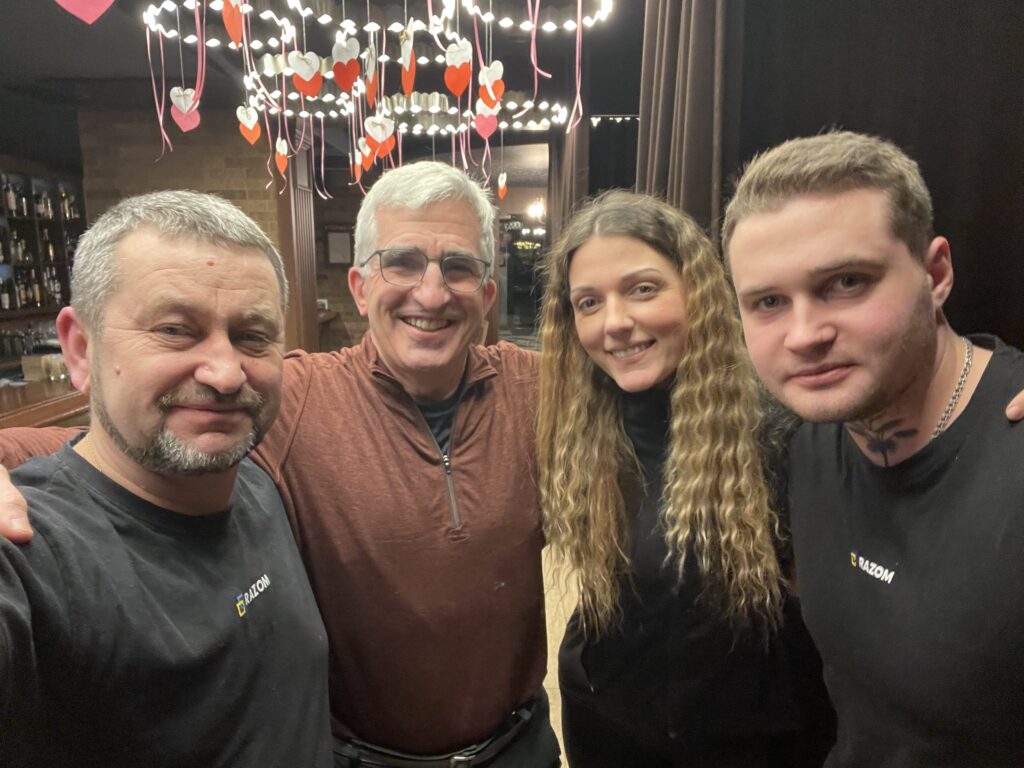
Razom together with the famous Ukrainian travel blogger Anton Ptushkin, held a fundraiser in the United States to purchase 10 mobile bath and laundry complexes for the defenders of Ukraine on the front lines.
The fundraiser included two charity meetings with Anton Ptushkin in New York, which drew over 300 attendees, as well as an online auction where people could purchase valuable commemorative items to support the defenders of Ukraine.
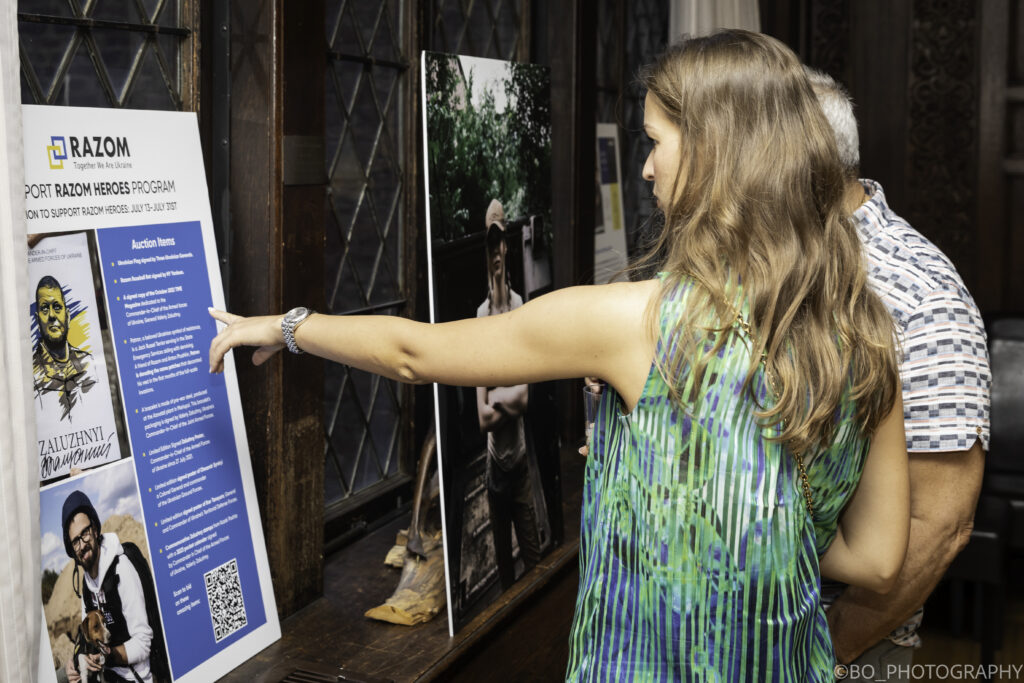
Some of the items up for auction included:
A flag with the signatures of three Ukrainian generals — Zaluzhny, Syrsky, and Pavlyuk — which sold for $6,900.
A copy of Time magazine with Valery Zaluzhny on the cover and his autograph, which sold for $5,600.
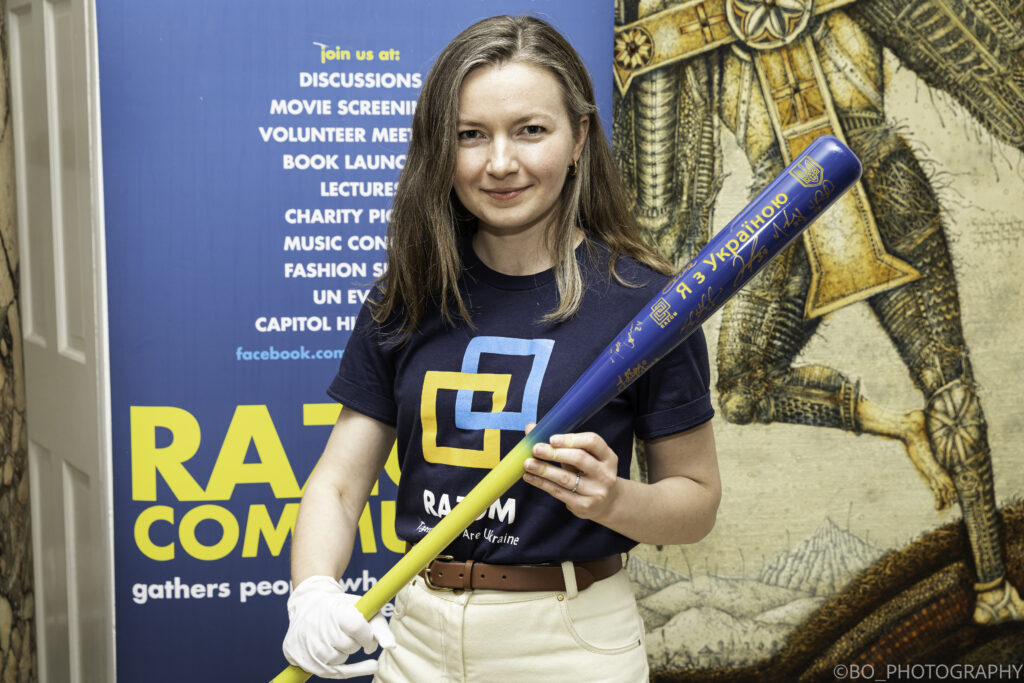
A baseball bat signed by members of the New York Yankees baseball team, which sold for $3,700.
A bracelet with the “Azovstal” logo and the signature of the Commander-in-Chief of the Armed Forces, which sold for $2,600.
Chevrons with the image of Patron the Dog, the hero dog who helped detect landmines in Ukraine, which sold for $3,700.
“Before I came to the United States, I tried to raise funds for one bath and laundry complex through my social media in Ukraine,” said Anton Ptushkin. “I was surprised to raise the money we needed in just two hours, and I raised the money for the second complex just within a day. This showed me that Ukrainians are willing to donate to humanitarian items for the military. However, people in Ukraine are also willing to donate to weapons and drones, while American people are more cautious about donating to these things and prefer to donate to humanitarian items. This is why I decided to try to raise money for mobile bath and laundry complexes in the United States. We did our first fundraiser and it was a success, so we decided to continue.”
Ptushkin also said that he chose New York as the starting point for the fundraiser because there is a large Ukrainian diaspora in the city. Jason Birchard, an owner of famous New York restaurant Veselka, generously donated $20,000 from his Stand With Ukraine Fund to the event.
Overall, the fundraiser raised $200,000, which will be used to purchase 10 mobile bath and laundry complexes. The showers are currently being manufactured near Kyiv and will soon be delivered to the front lines.
“It’s great to see that people from all over the world are coming together to support Ukraine,” said Olya Yarichkivska, one of the founders of the Razom foundation and the head of the Razom Heroes program in the United States.
“The money raised from this fundraiser will provide our defenders with much-needed bathing and laundry facilities, which are essential in this hot weather. We will continue to do everything we can to support Ukraine and its defenders.”
The Razom Heroes program is one of the many initiatives of the Razom foundation and the “Together for Ukraine” non-profit that are providing vital assistance to the defenders of Ukraine.
The program has already provided the frontline with over 130,000 tactical first aid kits, 3,000 combat medic backpacks, 100 pickup trucks/evacuation vehicles, 2,000 drones, walkie-talkies, repeaters, generators, starlinks, and other essential items for victory.
We are grateful for your interest in our work here at Razom for Ukraine. Please refer to our frequently asked questions below for information you are seeking about our mission delivery and/or how to get involved. If you don’t see your question answered on this page, please contact us with your inquiry at info@razomforukraine.org. Thank you!
How can one volunteer for Razom?
Razom for Ukraine was built on the dedication of hundreds of volunteers working together toward a common goal. As we grow, we continue to seek volunteers to support our various projects and initiatives. If you’re interested in volunteering, please fill out this form. While we cannot promise immediate placement, we’ll reach out as soon as new volunteer requests emerge from our teams. You can also email volunteering@razomforukraine.org.
In the meantime, you don’t have to wait for us; there are already opportunities to support Ukraine today:
Participate in information events and advocate for Ukraine on social media. Follow us on Facebook, Instagram, Twitter, LinkedIn to stay updated on the latest initiatives, and subscribe to our e-newsletter for news on how you can support Ukraine in your community and beyond.
Initiate a third-party fundraiser on behalf of Razom and feel free to be as creative as possible. People have started personal fundraisers for Razom on social media, hosted charity concerts, poetry readings, and evenings dedicated to supporting Ukraine’s cause.
How can one get help for Ukrainian service members?
Razom provides life-saving support to those doing the valiant work of safeguarding lives in wartime. While our organization may not directly provide the type of help you’re looking for, we encourage you to visit this page for resources and information that may guide you to the appropriate channels for your needs.
How can one get help for medical institutions?
For detailed information on how to properly apply for aid for medical institutions across Ukraine from Razom, please go to the link.
How can one get (personal) humanitarian aid?
Under the current circumstances, the efforts and attention of Razom are focused on supporting first responders and medics, medical facilities, and field hospitals, as well as advocating for Ukrainian victory. We also support Ukrainian non-governmental organizations (NGOs) providing aid in their communities.
If you are a newly arrived refugee from Ukraine to New York (USA), Razom does have an online resource – our Refugee Infohub – to guide you through obtaining services and assistance.
If you are in Ukraine or another part of the U.S., we recommend reaching out to other local organizations that provide personal aid.
How can a nonprofit/organization get grants/help from Razom?
Our grant-making program, Razom’s Relief works to foster a resilient and sustainable recovery that ensures the competitiveness of the Ukrainian economy and opportunities for those living in Ukraine. We do this via strategic investment into Ukrainian community initiatives.
The main areas of focus are:
Investing in development of Ukrainian Civil Society organizations
Providing educational and leadership development opportunities for children and youth, with a focus on STEM.
Ensuring competitiveness within the Ukrainian economy by getting people back to work with the necessary skills
Providing opportunities for veterans and women to join the workforce
Ensuring recovery via projects in water and green energy space
We are working on finalizing our new mandate and will share it soon. In the meantime, you can leave information about your organization here. Or apply for organizational development grant or mentorship here.
Can you share our fundraising page with your audience?
Razom’s mission delivery currently focuses on five program areas: Heroes, Health, Relief, Advocacy and Connect, for which we actively fundraise and which allows us to remain a sustainable nonprofit organization. Because of this we can’t support fundraising for other organizations and are not a platform for other organizations’ fundraising efforts.
How can we partner?
Please send your inquiry to our email: info@razomforukraine.org and our team will get in touch with you at the earliest possible time.
Philanthropic support is critical in fulfilling Razom’s mission and we are very grateful to our generous donors. Razom, Inc. is a U.S. 501(c)(3) organization with EIN # 46-4604398. Donations and gifts are deductible to the full extent allowable under IRS regulations and can be made online at our dedicated page: https://www.razomforukraine.org/donate/.
I am interested in working at Razom – do you have any opportunities?
To learn about career and internship opportunities, please visit our website.
Do you accept clothing donations, etc?
At this time we don’t accept in-kind donations in other forms than medical equipment and supplies or non-military aid to Ukrainian first responders and front line personnel.
We advise you to check with your local church or community center whether they can distribute some items directly.
Do you offer United for Ukraine (U4U) Sponsorship?
Razom does not provide sponsorship and should not be referenced as a sponsoring organization on the USCIS visa form. However, Ukrainians can connect with a sponsor using the following website: https://ukraine.welcome.us/connect.
ПОШИРЕНІ ЗАПИТАННЯ
Ми щиро вдячні за Ваш інтерес до нашої роботи в Razom for Ukraine. Будь ласка, ознайомтеся з відповідями на часті запитання нижче, щоб дізнатися більше про нашу місію та способи долучення. Якщо Ви не знайдете відповіді на своє запитання, будь ласка, звертайтеся до нас за електронною адресою info@razomforukraine.org. Дякуємо!
Як можна стати волонтером Razom?
Razom for Ukraine була заснована завдяки відданості сотень волонтерів, які працювали разом заради спільної мети. Ми продовжуємо шукати волонтерів для підтримки наших різних проєктів та ініціатив. Якщо ви зацікавлені у волонтерстві, будь ласка, заповніть цю форму. Хоча ми не можемо гарантувати миттєве залучення, ми зв’яжемося з вами, як тільки виникне потреба в нових волонтерах. Ви також можете написати на volunteering@razomforukraine.org.
Тим часом ви можете підтримати Україну вже сьогодні:
Брати участь в інформаційних заходах та підтримувати Україну в соціальних мережах. Слідкуйте за нами у Facebook, Instagram, Twitter, LinkedIn та підпишіться на нашу електронну розсилку, щоб отримувати новини про те, як ви можете допомогти Україні.
Приєднуйтесь до нашої мережі адвокації та звертайтеся до своїх обраних представників.
Відвідуйте мітинги та акції протесту у своєму місті; звертайтеся до наших партнерів Svitanok або Klych для більш детальної інформації.
Підтримуйте відповідні петиції та/або бойкотуйте компанії, що продовжують працювати в росії.
Відвідуйте заходи, які підтримує Razom.
Подайте заявку на стажування в Razom.
Організуйте сторонній фандрейзер на користь Razom. Люди вже започаткували особисті збори коштів у соціальних мережах, проводили благодійні концерти, поетичні читання та вечори на підтримку України.
Як можна допомогти українським військовим?
Razom надає життєво необхідну підтримку тим, хто здійснює героїчну роботу зі збереження життів під час війни. Хоча наша організація може не надавати саме ту допомогу, яку ви шукаєте, ми рекомендуємо відвідати цю сторінку для отримання ресурсів та інформації.
Як можна отримати допомогу для медичних установ?
Для детальної інформації про те, як правильно подати заявку на допомогу для медичних установ по всій Україні від Razom, будь ласка, перейдіть за цим посиланням.
Як можна отримати (особисту) гуманітарну допомогу?
На даний момент Razom зосереджує свої зусилля на підтримці медиків, медичних закладів та мобільних шпиталів, а також на адвокації перемоги України. Ми також підтримуємо українські неурядові організації (НУО), що надають допомогу в своїх громадах.
Якщо ви нещодавно прибули як біженець з України до Нью-Йорка (США), Razom має онлайн ресурс — Refugee Infohub, щоб допомогти вам з отриманням послуг та допомоги.
Як неприбуткова організація може отримати гранти/допомогу від Razom?
Наша грантова програма Razom’s Relief спрямована на стійке відновлення України через стратегічні інвестиції в ініціативи українських громад.
Основні напрями:
Інвестування у розвиток громадянського суспільства в Україні.
Освіта та лідерство для дітей та молоді, з акцентом на STEM.
Підтримка конкурентоспроможності економіки України.
Підтримка ветеранів та жінок у працевлаштуванні.
Проєкти у сфері водопостачання та зеленої енергетики.
Як можна партнерувати з Razom?
Будь ласка, надсилайте ваші запити на info@razomforukraine.org, і наша команда зв’яжеться з вами якомога швидше.
In acknowledgement of all the hard work volunteers, supporters, partners, and donors have put into Razom’s Emergency Response for almost five straight months now, we’ve put together an Impact Report. We’re making history together, #Razom, and we wouldn’t be able to do it any other way. So take a look, read it, share it, and help us continue this great work for Ukraine.
Ten years ago, the first Razom surgical mission brought together Ukrainian and international doctors for the first time. Since then, what started as a small initiative has grown into a community of medical professionals who continue to learn from each other, share knowledge, and work together to improve surgical care in Ukraine.
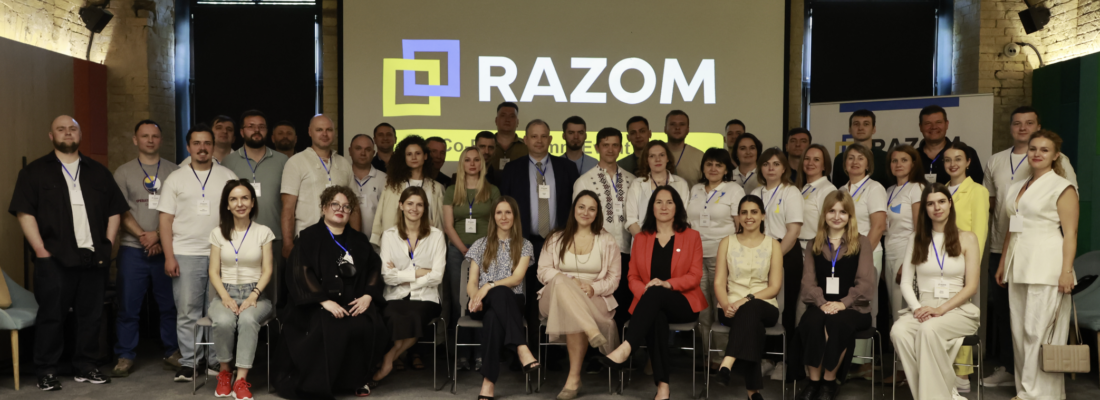
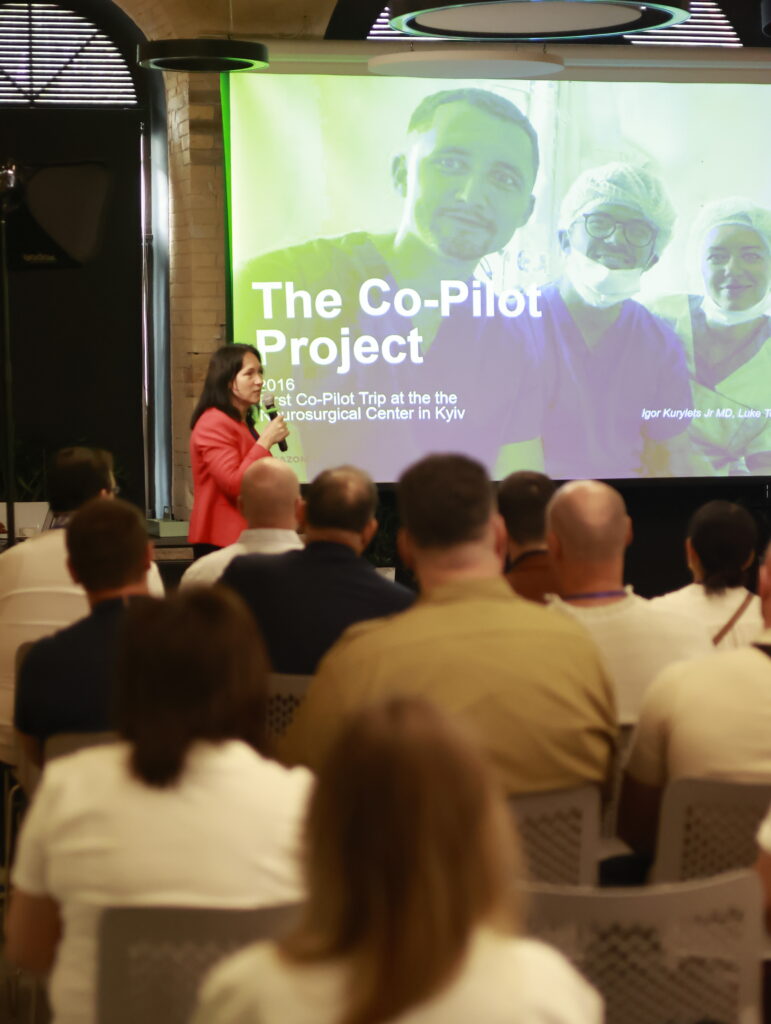
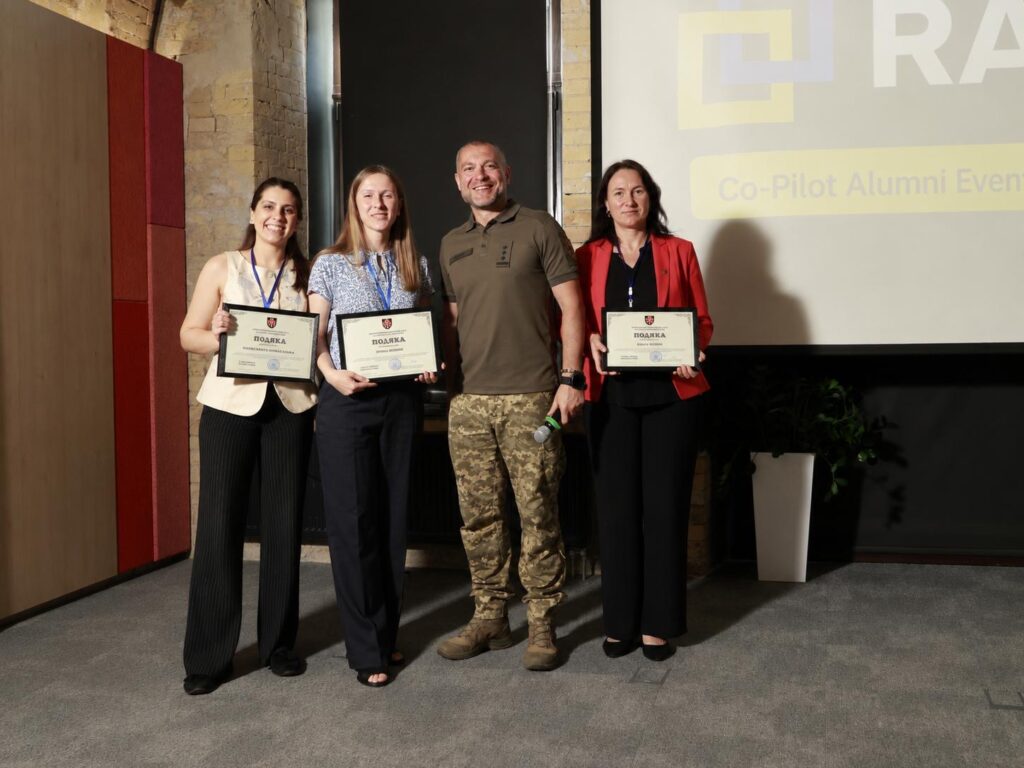
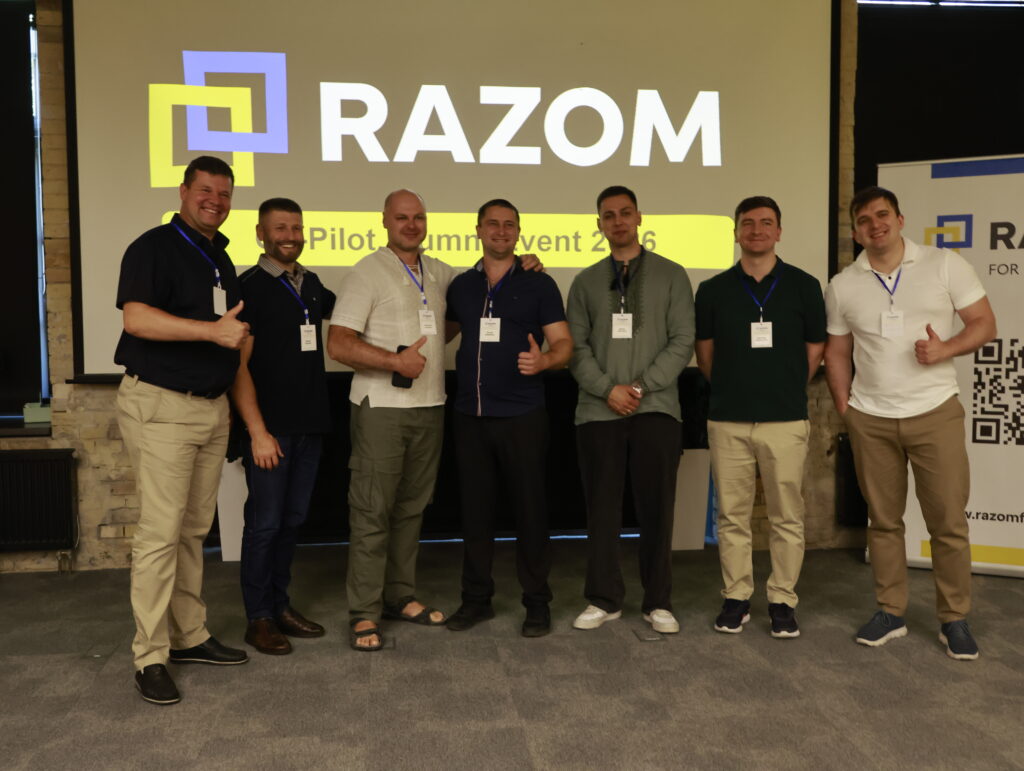
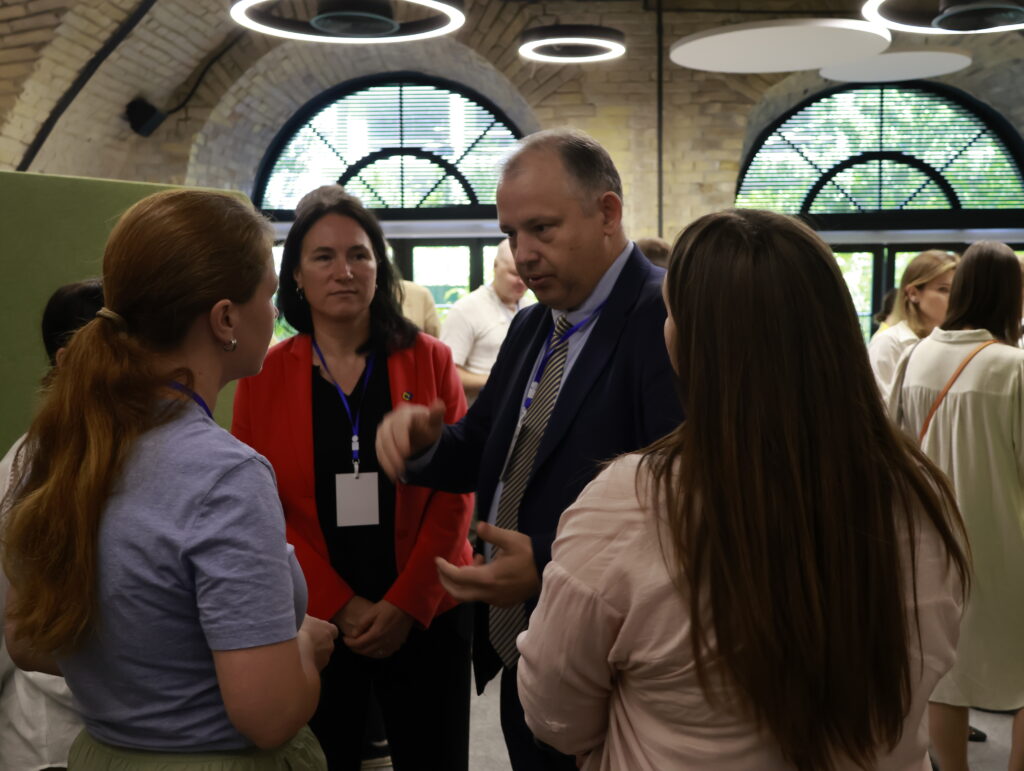
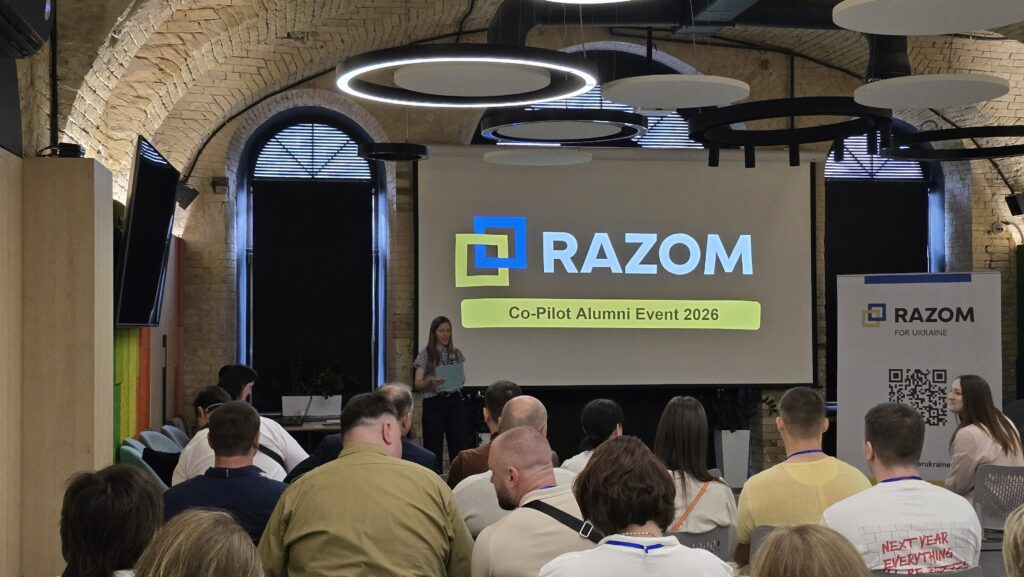
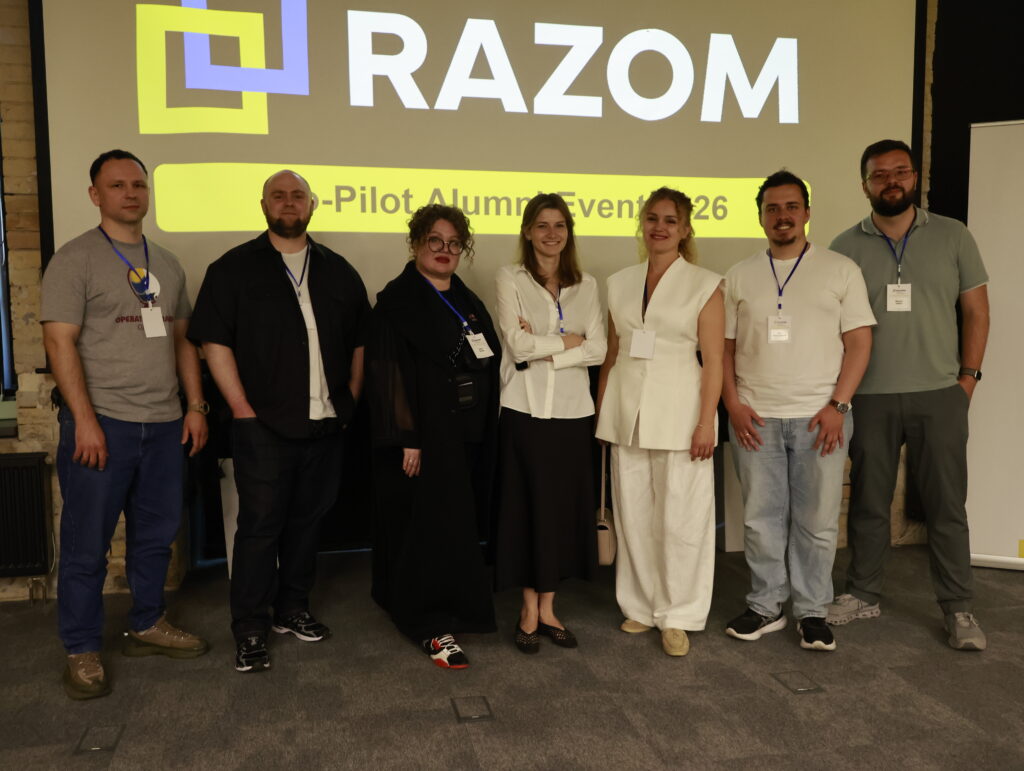
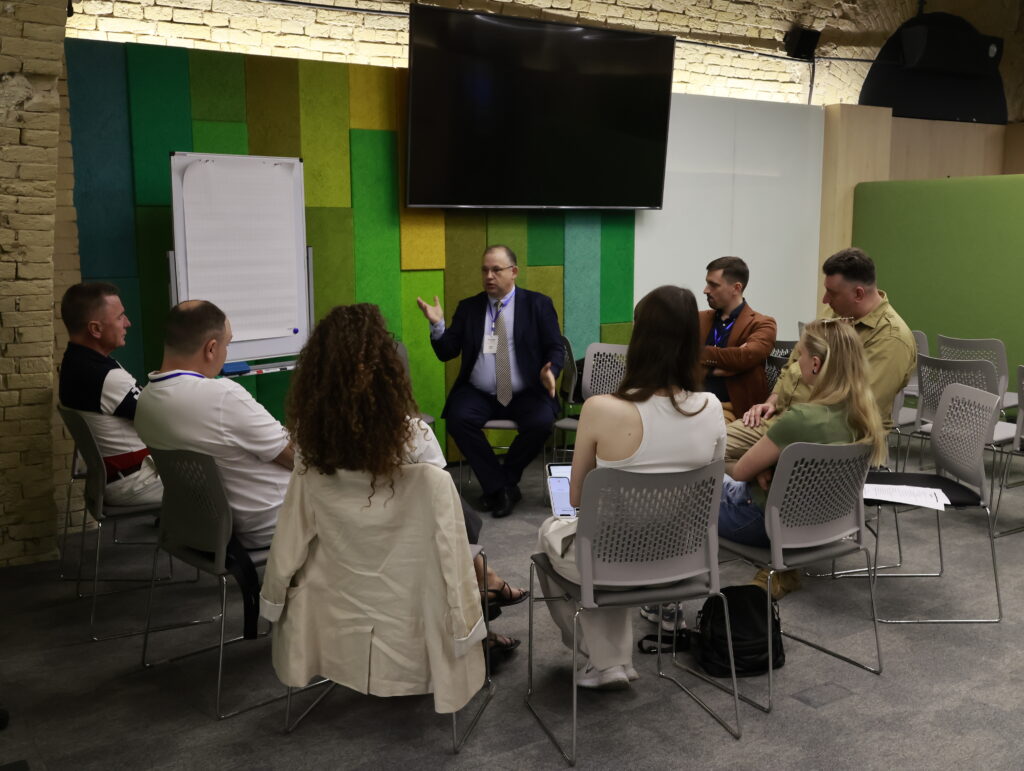
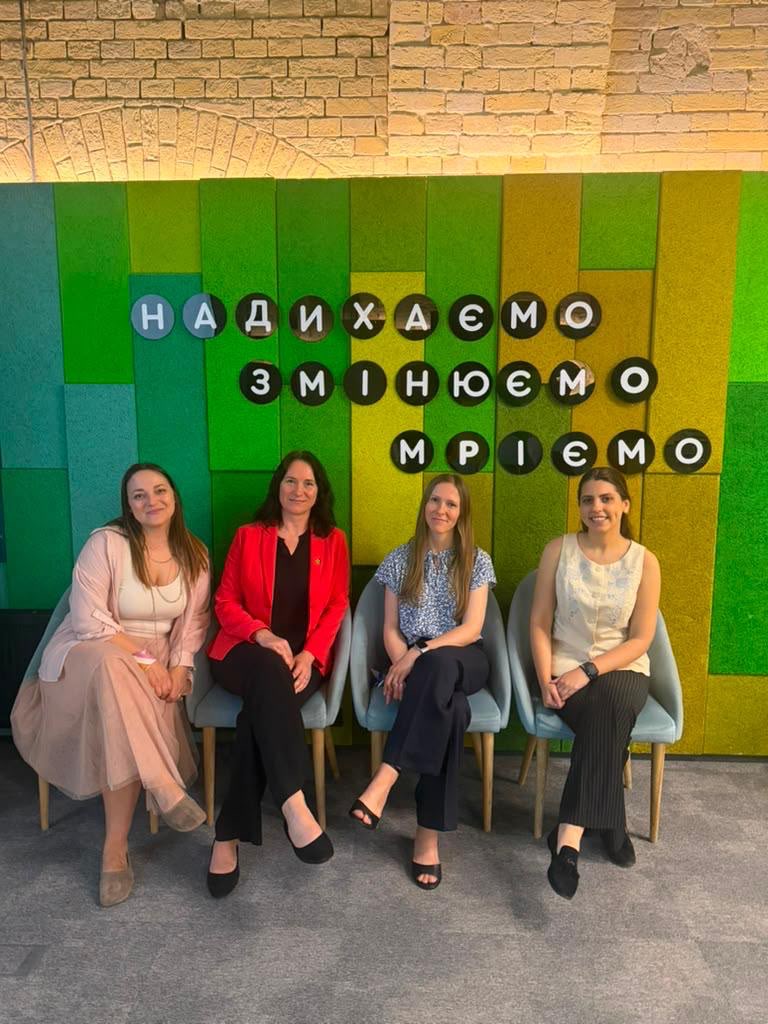
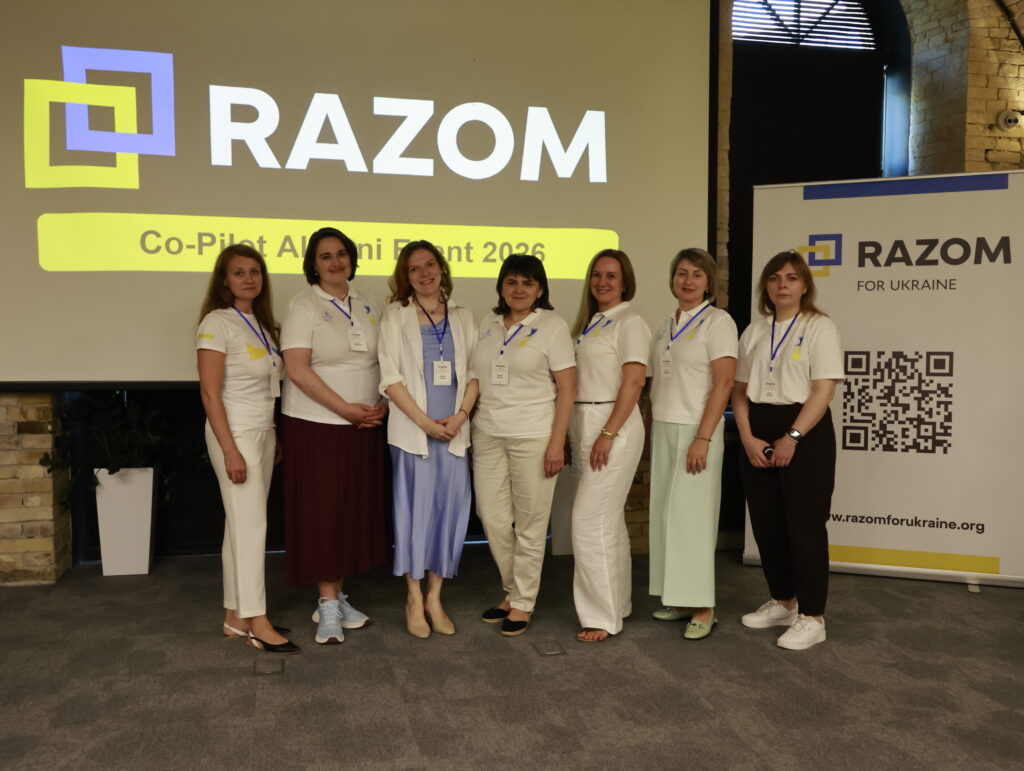
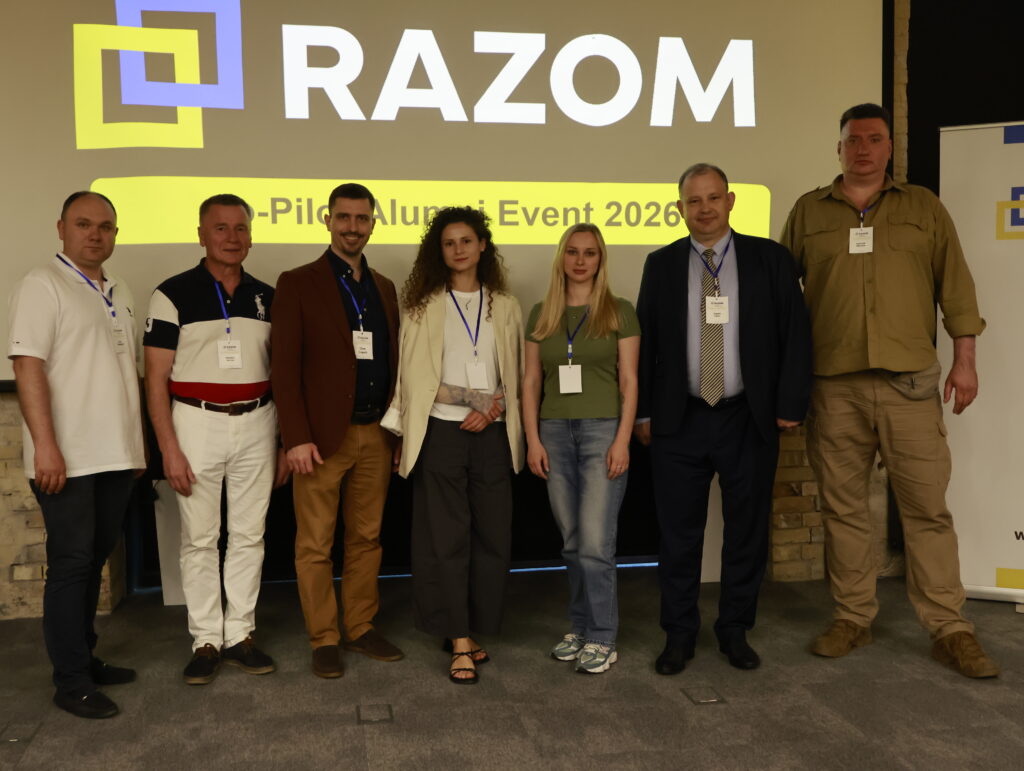
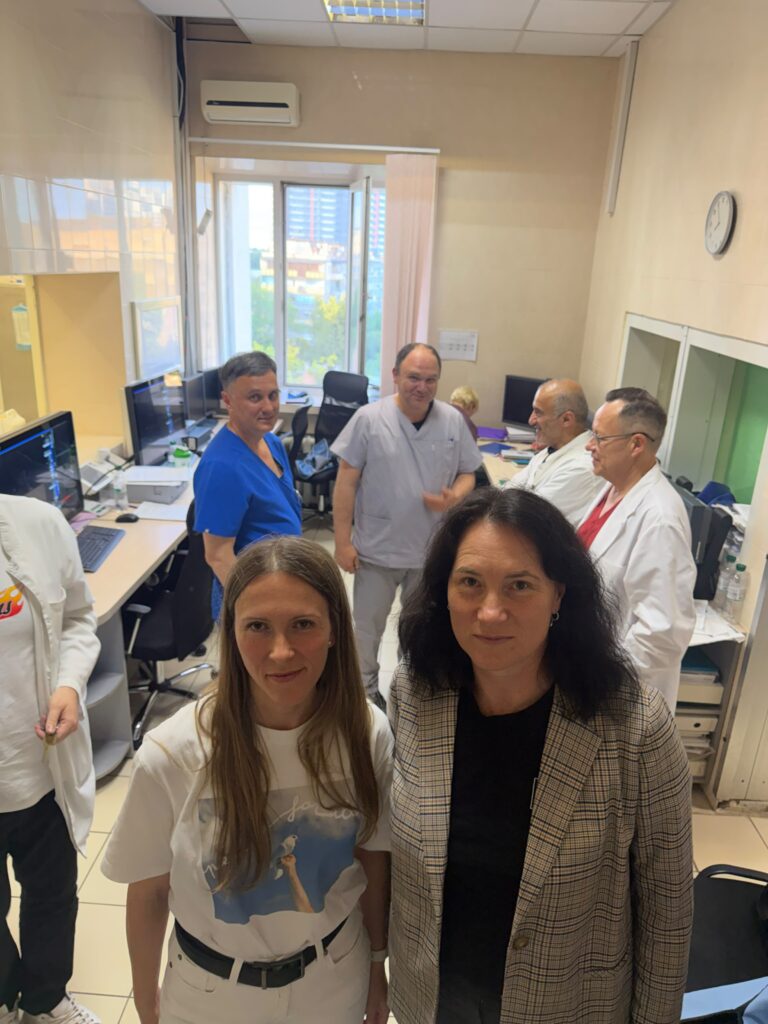
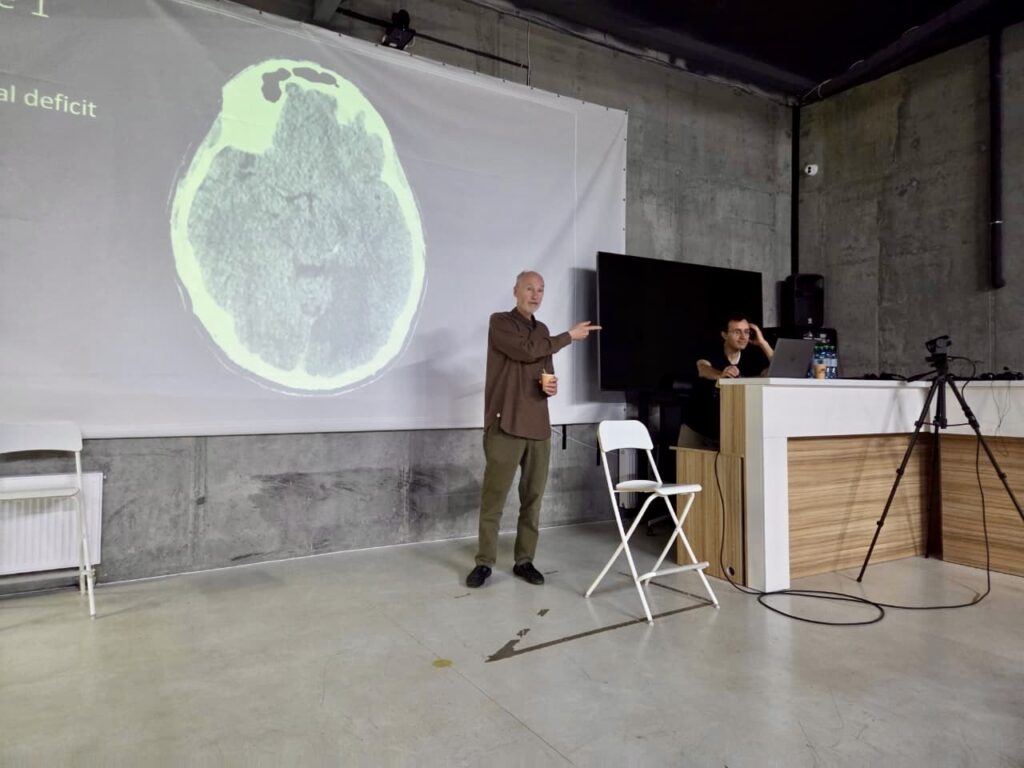
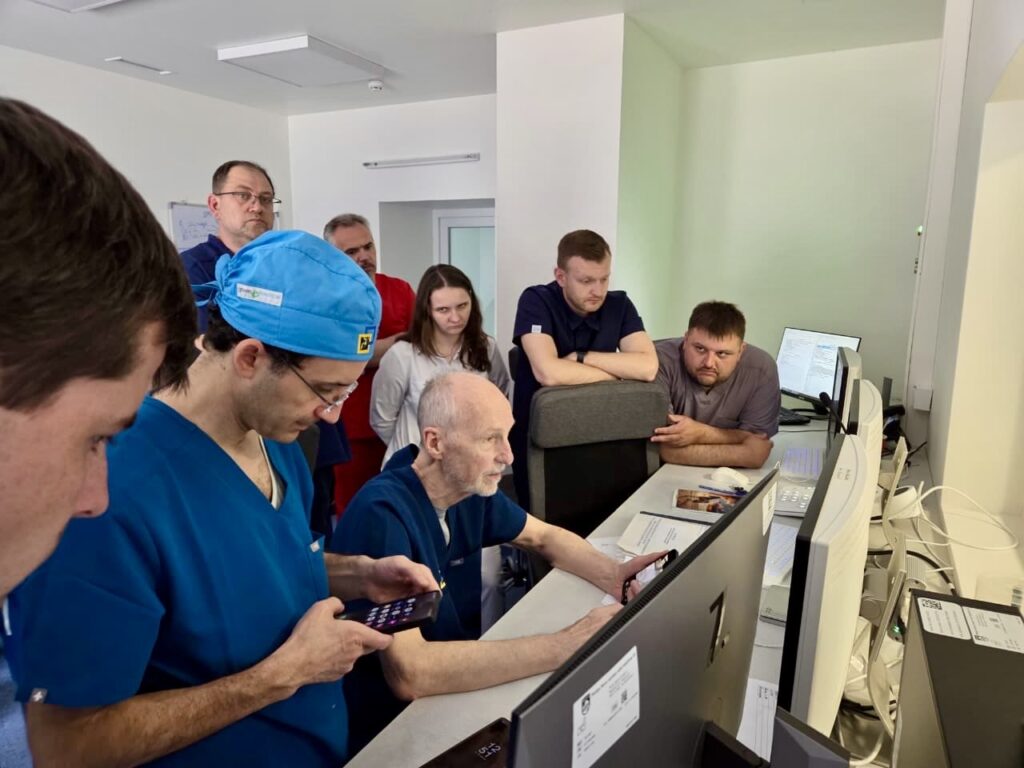
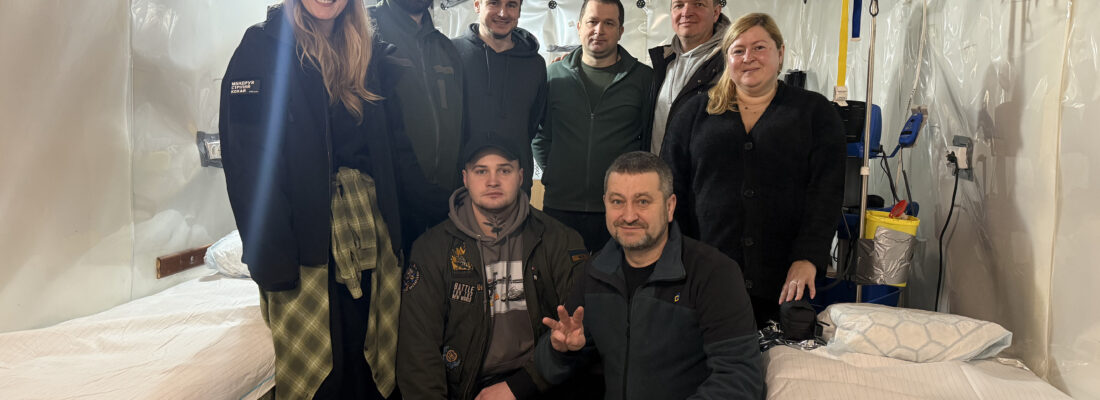
This June, the Razom team brought together more than 70 Ukrainian medical professionals in Kyiv — doctors, surgeons, nurses, and partners from across Ukraine — for the Co-Pilot Alumni gathering.
“Our mission is to strengthen Ukraine’s healthcare system by sharing knowledge, supporting medical education, and building strong international partnerships. Through this work, Ukrainian medical professionals gain access to global expertise, while Ukraine’s experience continues to contribute to the future of medicine worldwide,” said Yuliia Shama, Head of the Razom Health Co-Pilot project.
In Ukraine, strengthening civilian-military healthcare cooperation is essential. It requires trust, coordination, and sustained joint effort. Over the past decade, we’ve worked alongside these professionals through medical missions, training, conferences, observerships and operating rooms in both Ukraine and the United States. We have focused on improving surgical care for patients with complex war-injuries by supporting critical specialities including neurosurgery, orthopedics, facial plastic surgery, trauma, and nursing.
Today, that collaboration has evolved into something even more meaningful: a true partnership built on reciprocal learning, where knowledge flows in both directions.
“It is a ripple effect: by saving Ukraine, the world is also saving itself. The United States and international partners, especially Razom, provide Ukrainian surgeons with expertise, knowledge, and support. At the same time, Ukrainian doctors save lives every day in the most challenging conditions of war, creating unique clinical experience that will return to the global medical community through new approaches, knowledge, and standards that can help save patients around the world,” emphasized Dr. Andriy Sirko, the head of neurosurgery at Mechnikov Hospital in Dnipro, Ukraine.
Tetiana Pavlychuk, oral and maxillofacial surgeon, began working with Razom during the Face the Future mission in Ivano-Frankivsk four years ago. Since then, she has collaborated with the team on strengthening military trauma care in Ukraine. Looking back on the early days of the full-scale invasion, she reflects on how Razom and its network of American experts helped transform clinical practice and supported the development of Ukraine’s national military trauma protocol.
“When the full-scale war started, it was a huge challenge for our medical community. We had never seen these types of injuries before. We began looking for partners, and step by step, we built those relationships. Our international colleagues came to Ukraine, and we traveled to the United States for courses and training. We brought that knowledge back to Ukraine and introduced new approaches that had never existed before.” said Tetiana.
Learning from Ukrainian Leaders
The Alumni event brought together medical professionals to reconnect, exchange best practices, and discuss the future of Ukrainian surgical care. Key topics focused on training the next generation of physicians and the impact of international collaboration.The event featured presentations from Ukrainian experts, as well as specialty working sessions focused on shared challenges and future priorities. Speakers included:
Dr. Victoria Kovach – Leadership in Context
Dr. Oksana Popova – American College of Surgeons: Ukrainian Perspective
Dr. Andrii Sirko – From wartime experience to global standards: How Ukrainian and USA team are changing global standards to the treatment of brain injuries,
Dr. Yuriy Demyan – How international partnership helps save limbs in Ukraine
Dr. Tetiana Pavlychuk – Reconstructive and restorative interventions in patients with facial injuries
Natalia Ruzhylo, Deputy Medical Director for Nursing – The profession that keeps the system going: how nursing changed during the war and whether systemic changes are possible in these conditions.
From Presentations to Working Groups
While the presentations inspired participants, the specialty working groups transformed those ideas into concrete plans for the future.
Neurosurgeons discussed implementing modern endovascular and hybrid surgical techniques, developing Ukrainian clinical protocols informed by wartime experience, and strengthening military-civilian cooperation through formal referral pathways and multidisciplinary collaboration.
Orthopedic surgeons emphasized that Ukraine’s wartime experience has become one of its greatest strengths. The discussions focused on translating individual expertise into lasting system-wide improvements through standardized treatment protocols, mentoring young physicians, stronger professional associations, and better patient pathways.
The facial reconstruction working group identified workforce shortages, national treatment standards, multidisciplinary care, and improved access to rehabilitation and facial prosthetics as critical priorities for the years ahead.
Nursing leaders highlighted the urgent need for safe staffing standards, stronger legal recognition of the nursing profession, expanded educational opportunities, improved compensation, and greater professional autonomy to build a resilient healthcare workforce.
Even though each specialty faced unique challenges, every group arrived at a similar conclusion: the future of Ukrainian healthcare depends not only on clinical excellence but on building stronger systems, investing in people, and continuing to collaborate across institutions and disciplines.
“I want to highlight our Ukrainian doctors and nurses who, despite the challenges of war and limited resources, continue to grow, adapt, and find new ways to care for their patients. But what is most inspiring is the community they are building” said Iryna Matsiuk, Co-Pilot Project Coordinator.
Natalia Rhyzhylo, who spoke about the changing role of nurses in Ukraine, commented on the importance of the support Ukraine receives from the Razom community.
“As long as we have this support, we know we are not standing alone. The strength of this global community — especially our partners in the United States — gives Ukraine the ability to keep moving forward. We are stronger because we know we have people standing with us,” said Natalia Ruzhylo, Deputy Medical Director for Nursing at Ivano-Frankivsk Regional Clinical Hospital and Director of the Pre-Carpathian School of Nursing.
Measuring the Impact
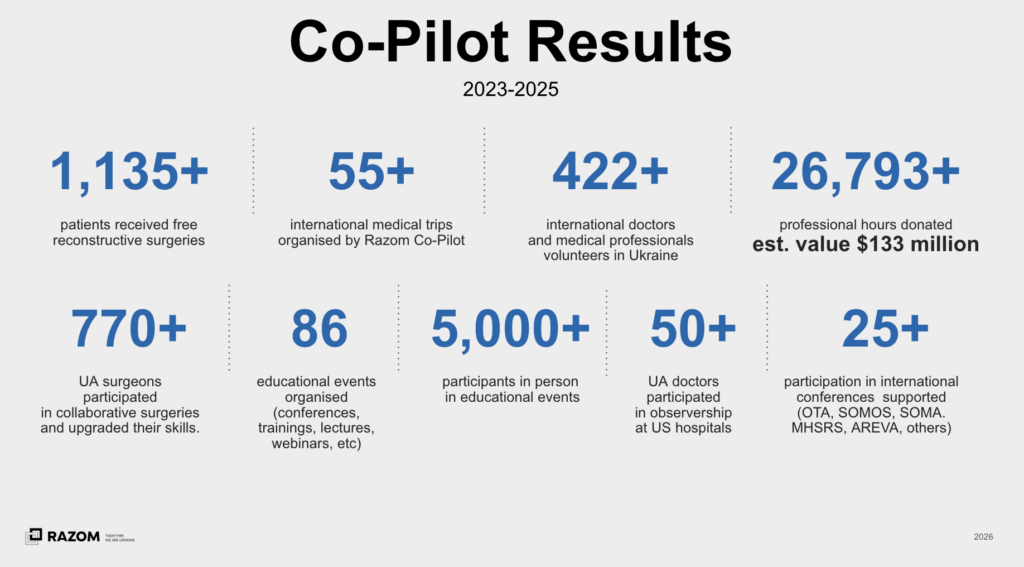
Over the years, more than 300 North American medical volunteers have joined Razom Co-Pilot missions in Ukraine, more than 500 Ukrainian doctors & nurses have participated in programs, and thousands of medical professionals have gained access to training, education, and international exchange opportunities.
Feedback from the Alumni gathering demonstrated the strength of these professional relationships. More than 92% of participants established new cross-sector professional connections, and the same percentage reported having concrete plans for future collaboration. Additionally, more than 84% shared that the working group discussions closely reflected the realities of their clinical practice.
“It was a warm gathering that brought together people we have worked with for many years. It reminded me of hosting a big birthday celebration, where you get to introduce the people you appreciate most, knowing they will connect over their commitment to treating patients with war injuries.” said Alex Domaradsky, Co-Pilot Project Manager.
But the greatest achievement cannot be measured in numbers — it is the people. Ukrainian medical professionals who are now becoming educators, instructors, innovators, and leaders of change in their hospitals and professional communities. This is how lasting change happens.
From June 15–19, Pittsburgh became a gathering place for some of the world’s leading animation scholars, artists, and filmmakers during the 37th Annual Conference of the Society for Animation Studies (SAS). Supported by Razom, Ukrainian animators joined the international conversation to showcase their work, share their experiences of creating during wartime, and introduce global audiences to a vibrant animation industry that continues to thrive despite Russia’s full-scale invasion.
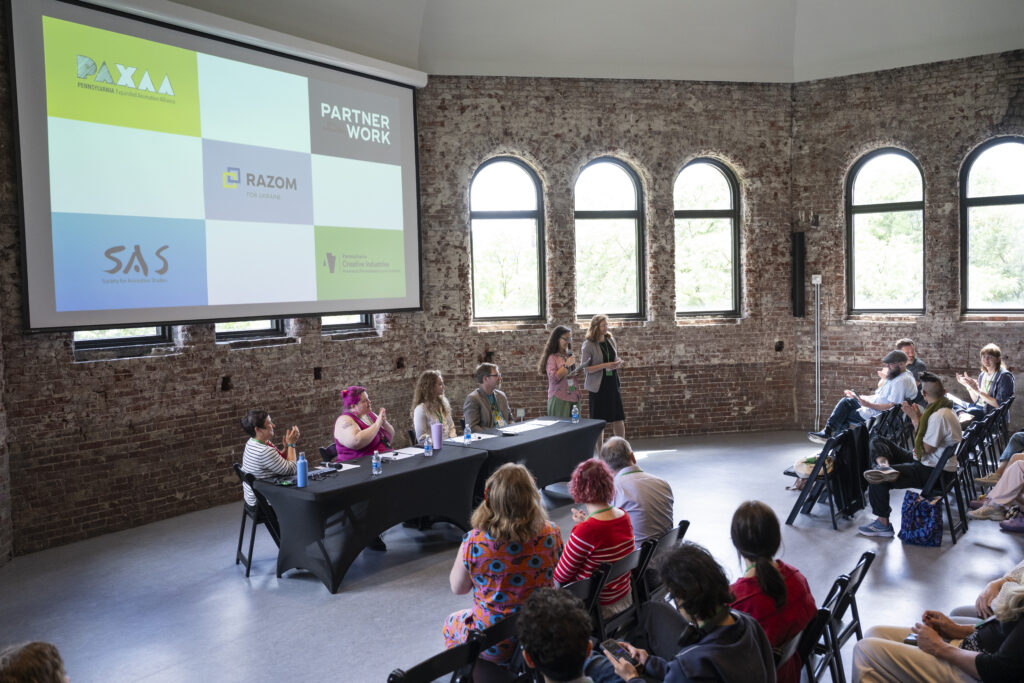
Organized by the Pennsylvania Expanded Animation Alliance (PA-XAA) and the Society for Animation Studies, the conference brought together more than 100 researchers, artists, and industry professionals to explore animation as a medium for storytelling, memory, trauma, and human connection.
Bringing Ukrainian Stories to International Audiences
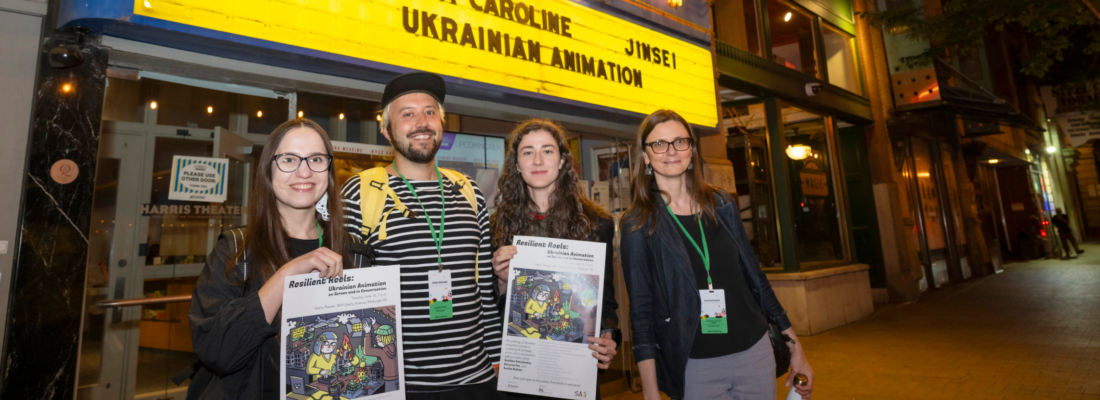
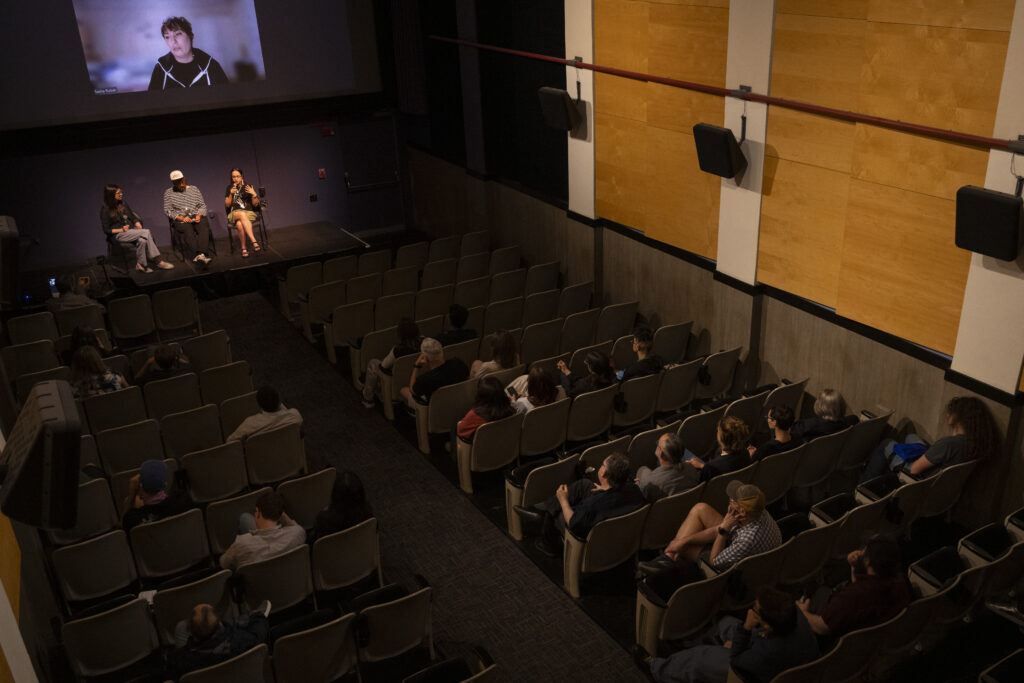
One of the conference highlights was “Resilient Reels: Ukrainian Animation on Screen and In Conversation,” held on June 16 at Pittsburgh’s Harris Theater.
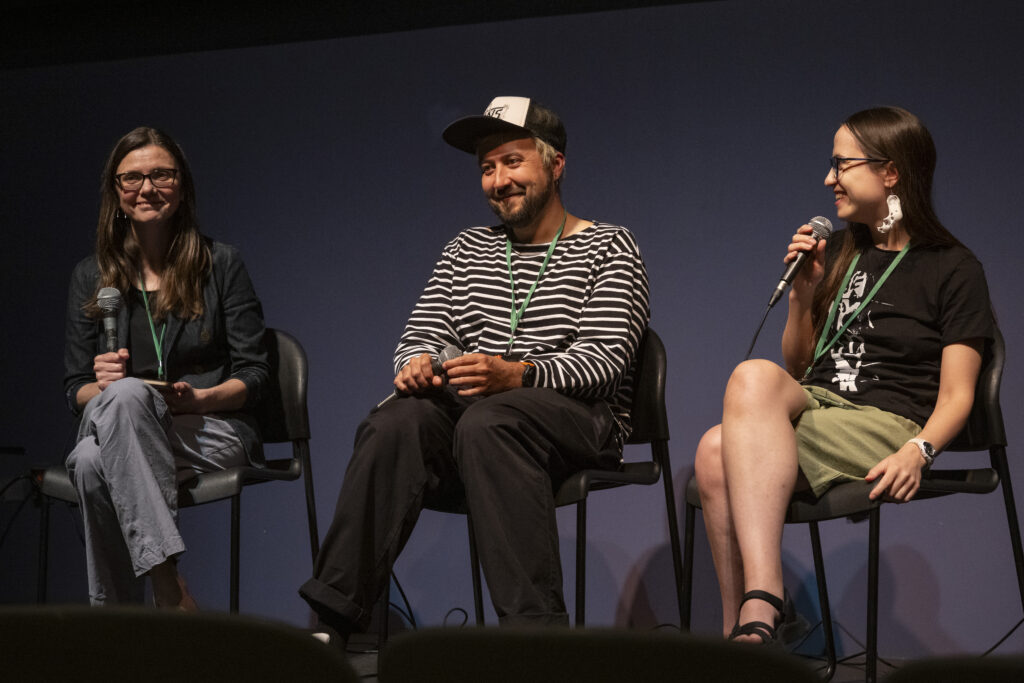
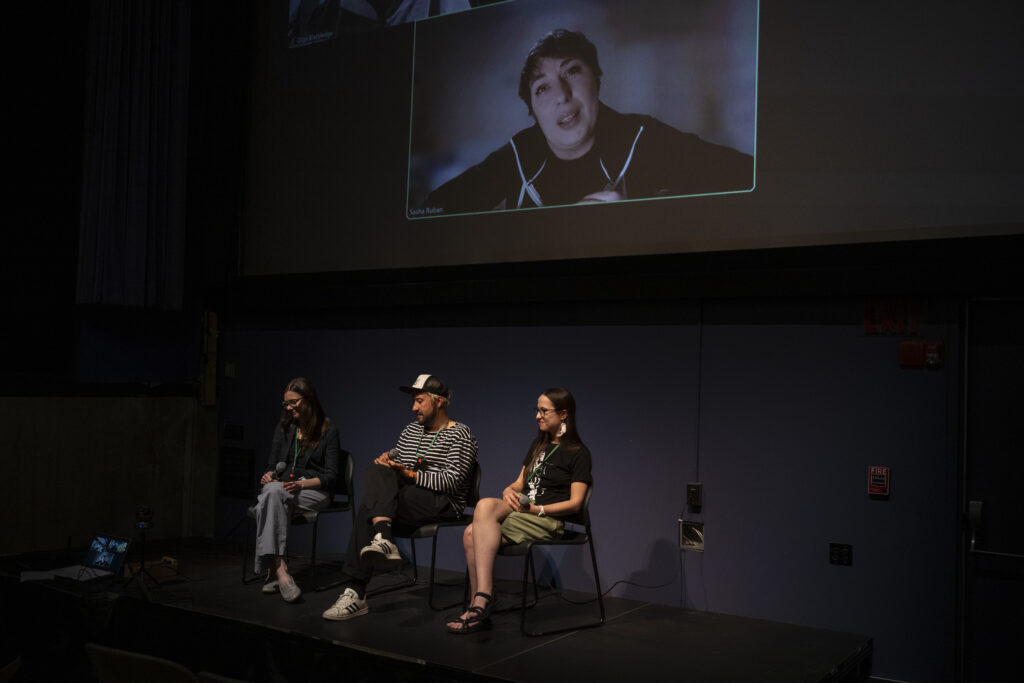
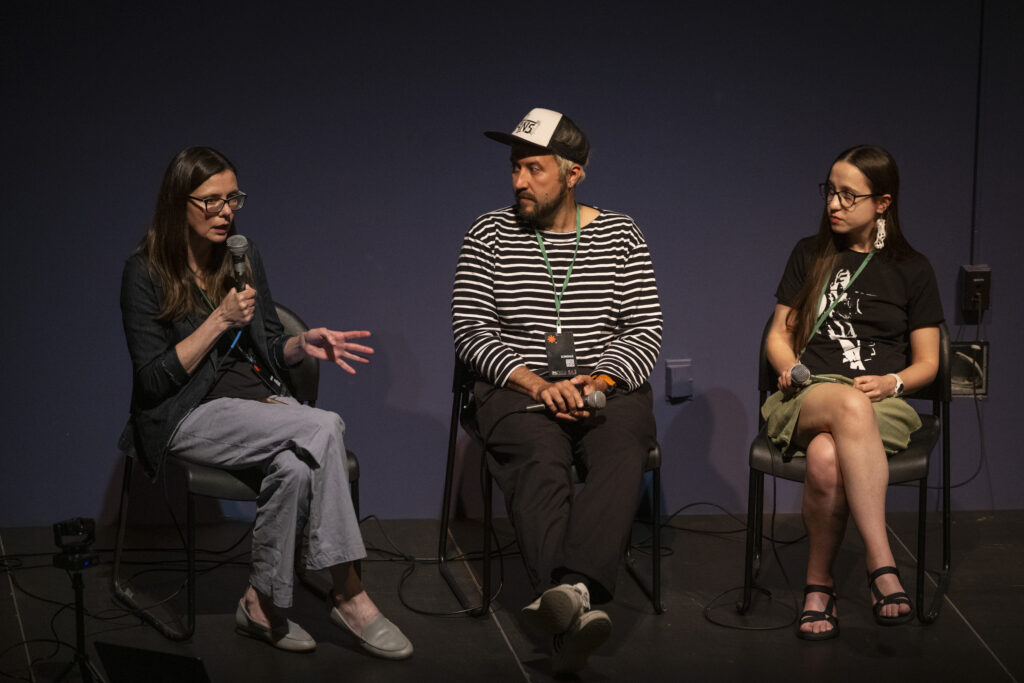
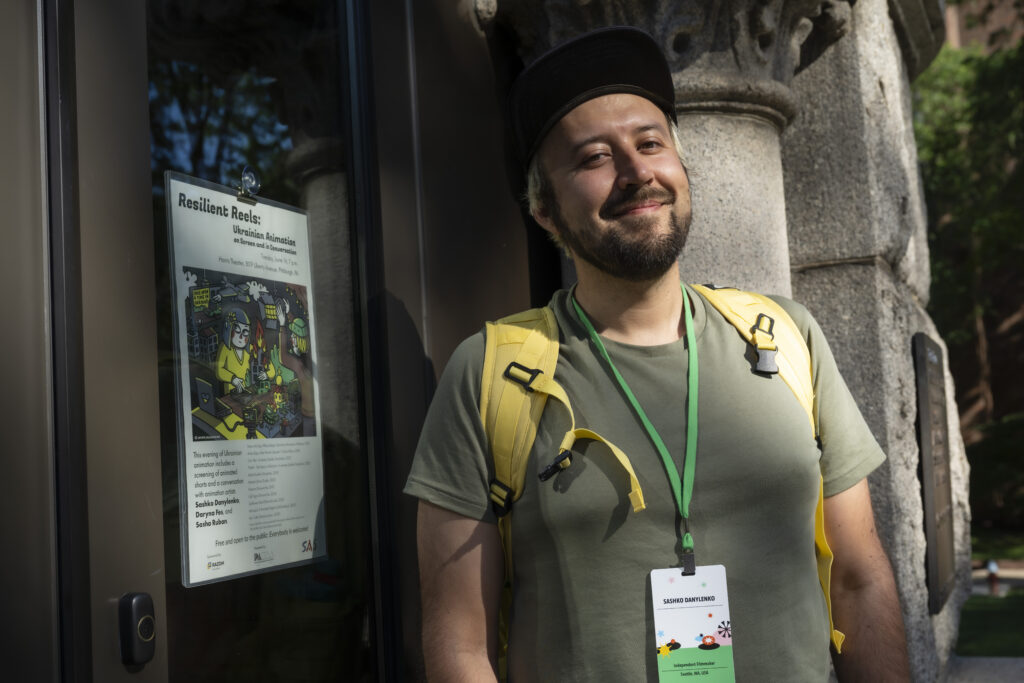
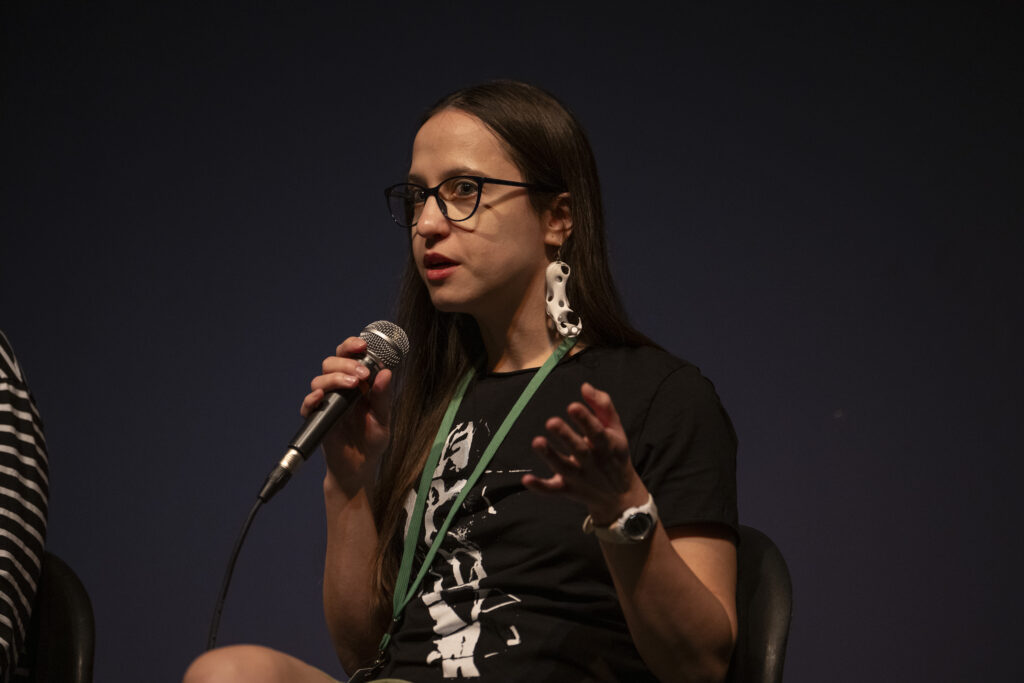
The evening featured a curated screening of contemporary Ukrainian animated films, followed by a discussion with acclaimed Ukrainian animation directors and animation artists Sashko Danylenko, Daryna Fes, and Sasha Ruban, who joined online from Ukraine.
The conversation explored what it means to create art during war — from documenting national trauma and preserving childhood in times of violence to building an animation industry under extraordinary circumstances.
More importantly, it gave audiences the opportunity to hear directly from Ukrainian artists.
Many attendees remarked that meeting Ukrainian filmmakers in person added an entirely new dimension to the films they had just watched. Others said the discussion helped them better understand both the realities of Russia’s war against Ukraine and the resilience of Ukraine’s creative community.
Art That Continues Beyond the Screen
The conference coincided with The Animate Experience, an exhibition presented by the Pennsylvania Expanded Animation Alliance, The Children’s Museum of Pittsburgh, and the Society for Animation Studies at Pittsburgh MuseumLab.
Among the featured artists was Razom Cinema grantee Daryna Fes, whose multimedia works were included in the exhibition. She attended the opening in person, introducing visitors to her work and engaging in conversations about contemporary Ukrainian art.
Visitors continued discussing her VR installation, Spheres, throughout the conference, making it one of the exhibition’s memorable works.
More Than Filmmakers — Cultural Ambassadors
For the Ukrainian delegation, the conference was about much more than presenting films.
“Our small Ukrainian team not only enjoyed the event as visitors but also advocated for Ukraine — you simply cannot be anyone but an ambassador at international events,” said director Sashko Danylenko. “Stand out, spread the word, fight russian narratives and propaganda, fill in the blanks, and most importantly, build empathy.”
Danylenko also noted that scheduling the Ukrainian screening at the beginning of the conference helped spark conversations that continued throughout the week, creating opportunities to connect with scholars, educators, and fellow artists.
For Daryna Fes, the event demonstrated how animation can foster meaningful dialogue.
“Many attendees were curious about the situation in Ukraine, and I believe events like this — screenings of Ukrainian animation, Q&As, and informal conversations — help people better understand what’s happening in Ukraine. Alongside traditional animation, the festival also embraced a more artistic dimension, offering both the platform and the technical setup to show even technically demanding works. “
Why Representation Matters
For the conference organizers, introducing Ukrainian animation to an international academic audience was a long-term investment.
While Ukrainian animation remains underrepresented globally, professors and researchers attending the conference help shape future film and animation curricula. Increasing their familiarity with Ukrainian works means more students around the world may encounter Ukrainian stories in classrooms for years to come.
The event also extended beyond the conference itself. By hosting the screening in a public cinema rather than inside the conference venue, organizers welcomed members of the Pittsburgh community, creating another opportunity to raise awareness about Ukraine through culture.
Building Connections Through Culture
Throughout the week, conversations continued well beyond scheduled panels.
Audience members praised the diversity of Ukrainian animation, discussed their favorite films with the filmmakers, and asked thoughtful questions about working during wartime. Others expressed appreciation for hearing multiple perspectives from artists living through the same historical moment.
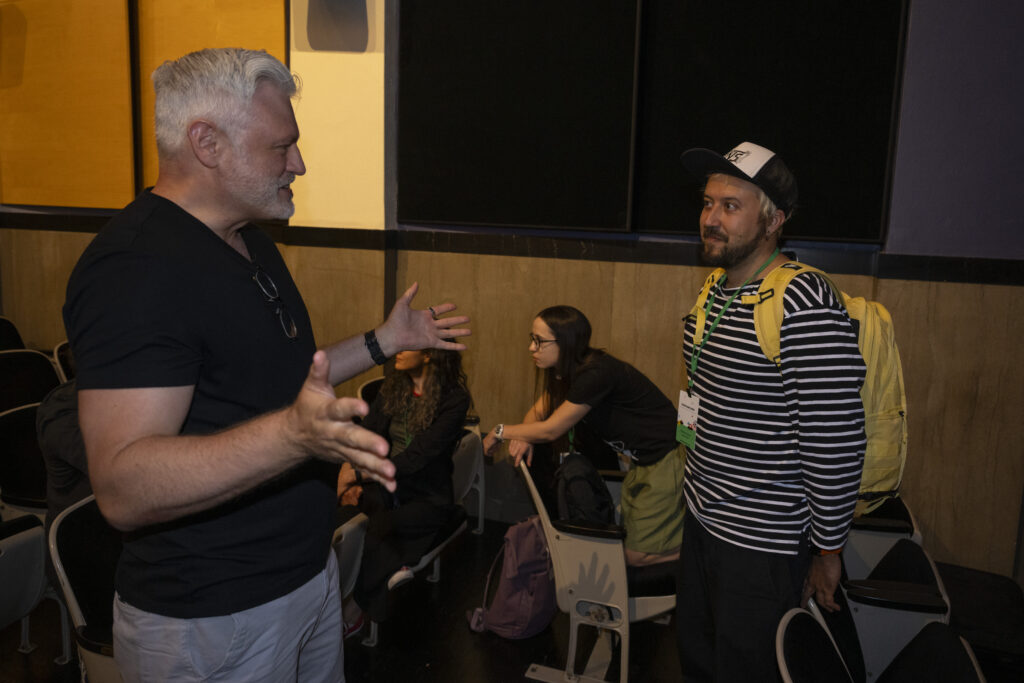
One particularly memorable interaction came after the screening, when an audience member approached Sashko Danylenko to share that he had long admired his work and could hardly believe they were finally meeting in person.
These are the connections that cultural exchange makes possible — especially in spaces like SAS creates.
“Academic community is important in this regard, because instructors who teach courses on film and animation, make choices which works they include in their syllabi, and their familiarization with Ukrainian animation can potentially result in Ukrainian animated films being seen by their students in the future.” — noted the conference organizers.
By supporting Ukrainian artists at international eventslike the Society for Animation Studies conference, Razom helps ensure that Ukrainian voices are not only heard — they become part of the global cultural conversation.
Because culture is more than art. It is memory, identity, and a powerful way to build understanding across borders.
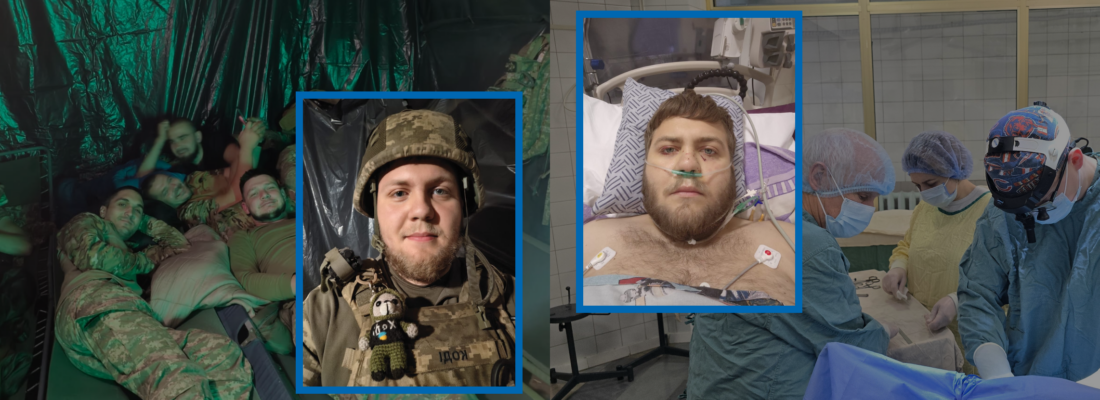
An FPV drone attack left 23-year-old Ukrainian servicemember Oleksii with a devastating leg injury. One of his fellow soldiers was killed, and others were seriously wounded. For Oleksii, the question was not only whether he would survive, but whether he would ever walk again.
What followed was months of treatment across three hospitals and an extraordinary collaboration between Ukrainian and American surgeons working side by side through Razom’s Co-Pilot Project. Together, they fought to save his leg, giving him the chance to return to the life he had been planning before the attack.
DNIPRO, Ukraine — “My future mother-in-law was supposed to visit on Sunday,” Oleksii says with a smile, his tone as relaxed as if we were sitting in a sunlit kitchen sipping tea, rather than in the intensive care unit of Mechnikov Hospital.
In a few moments, he will describe open fractures, serious infections, dozens of operations, and months of rehabilitation. But first, he wants to talk about his wedding.
Oleksii was born in Cherkasy and lost his father when he was young. His mother raised three children in a small apartment in Kryvyi Rih. After trade school, he planned to work as an electrician at the local water utility. But a bureaucracy issue with his official residence registration brought him to a military enlistment office instead.
“Well, what else was I going to do?” he says with a shrug.
He entered compulsory military service at 19 and became a signalman—the person his fellow soldiers relied on when communications failed or battlefield maps needed updating.
By early 2024, Oleksii had been deployed to a combat brigade on the Lyman front. He later served in the Donbas and Sumy regions.
It was between rotations that he met his fiancée. The parents of one of his squad mates often brought homemade meals to the unit, and during one of those visits, Oleksii met their daughter. Ask when the friendship became something more, and he grins: “Now, everything is heading straight toward a wedding.”
He talks about it as though the celebration is just around the corner—even as artillery rumbles outside the hospital and metal fixation pins extend from his injured leg.
The Day Everything Changed
Oleksii and his unit were returning from an assignment. The road was familiar, and they thought the most dangerous part of the journey was behind them.
“Two FPV drones were waiting for us on the road,” Oleksii recalls. “An ambush.”
One drone hovered ahead while another chased their vehicle from behind. His teammate opened fire as they moved. Then came the explosion.
The vehicle slammed to a halt, and the men scrambled out onto the road. Oleksii tried to jump clear, but his right leg collapsed beneath him. “I thought I’d just taken a piece of shrapnel.” He tried to stand up again, but nothing worked. The blast had shattered a large section of bone.
Despite the shock, Oleksii managed to apply a tourniquet himself. Doctors later told him that the fragments had narrowly missed his main artery. That small margin made it possible to consider saving the leg.
Oleksii quickly turns the conversation away from himself. Instead, he lists the rest of his crew: one teammate died at the scene, another lost three fingers, and a third suffered a severe concussion.
“One guy is already back on active duty,” Oleksii says briefly. “The others are still recovering.”
What followed was a blur of evacuation points soaked in pain and high-dose painkillers: a frontline stabilization point in the Zaporizhzhia region, then a military hospital, external fixators, and finally, the intensive care unit at Mechnikov Hospital in Dnipro, one of Ukraine’s leading trauma centers for critically wounded soldiers.
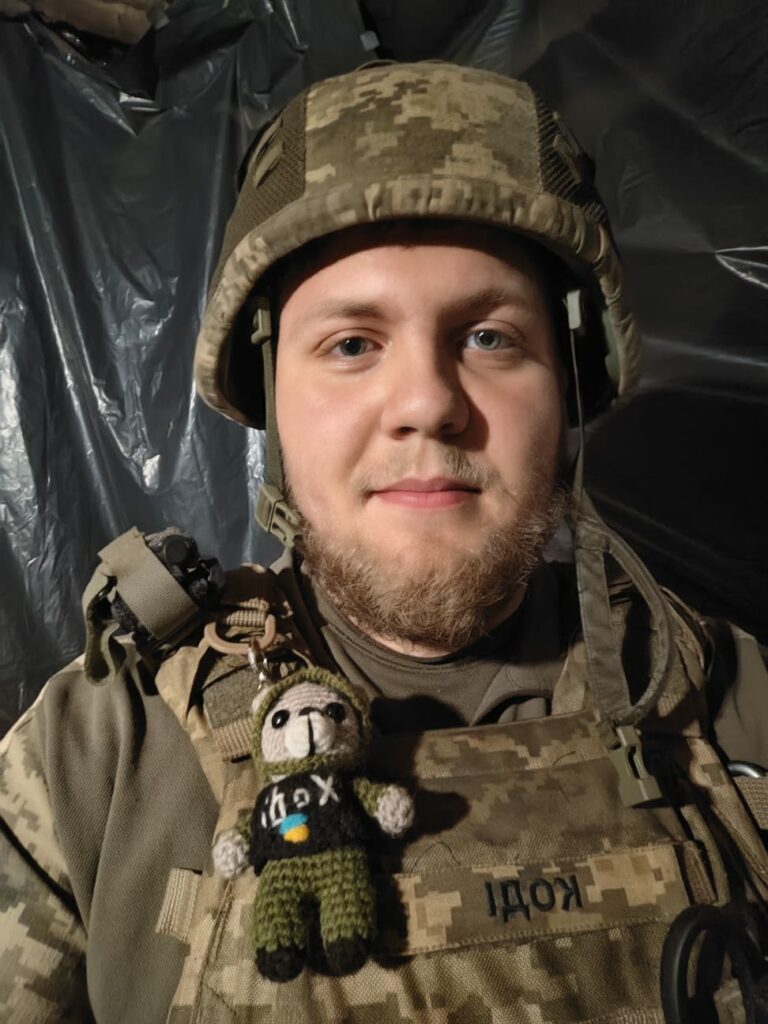
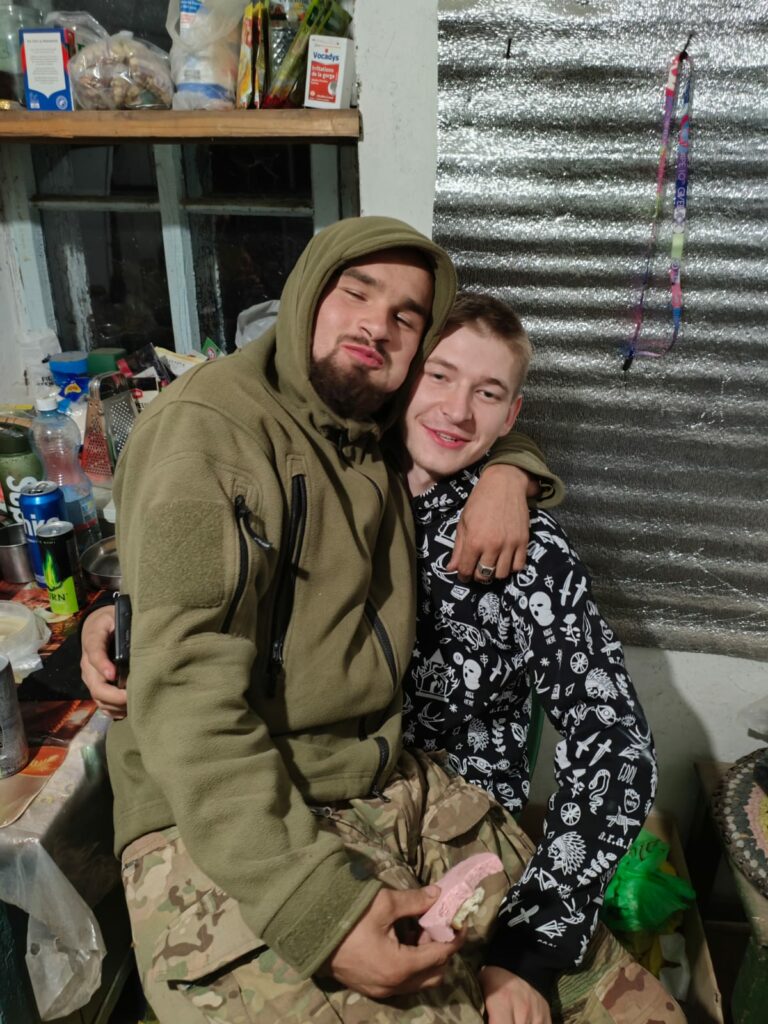
Pictured are my brothers-in-arms, Sanya “Patrick” and Yura “Zhuk.” During that mission, Sanya was killed, effectively saving my life.
Choosing to Fight for the Leg
“I remember Oleksii very clearly,” says orthopedic trauma surgeon Dr. Maksym Makarenko. Thousands of patients with blast injuries have passed through his operating room, but Oleksii’s case stood out.
“Patients with this level of damage often also have serious polytrauma—head injuries, collapsed lungs, or abdominal damage,” Dr. Makarenko explains. “In Oleksii’s case, the destruction was concentrated in his leg. The rest of his body was stable enough that we could fight to save the limb, rather than amputating it to save his life.”
Around this time, an American medical delegation arrived at Mechnikov through Razom’s Co-Pilot Project. Dr. Makarenko was joined in the operating room by Dr. Craig Silverton, an American orthopedic surgeon experienced in treating combat injuries.
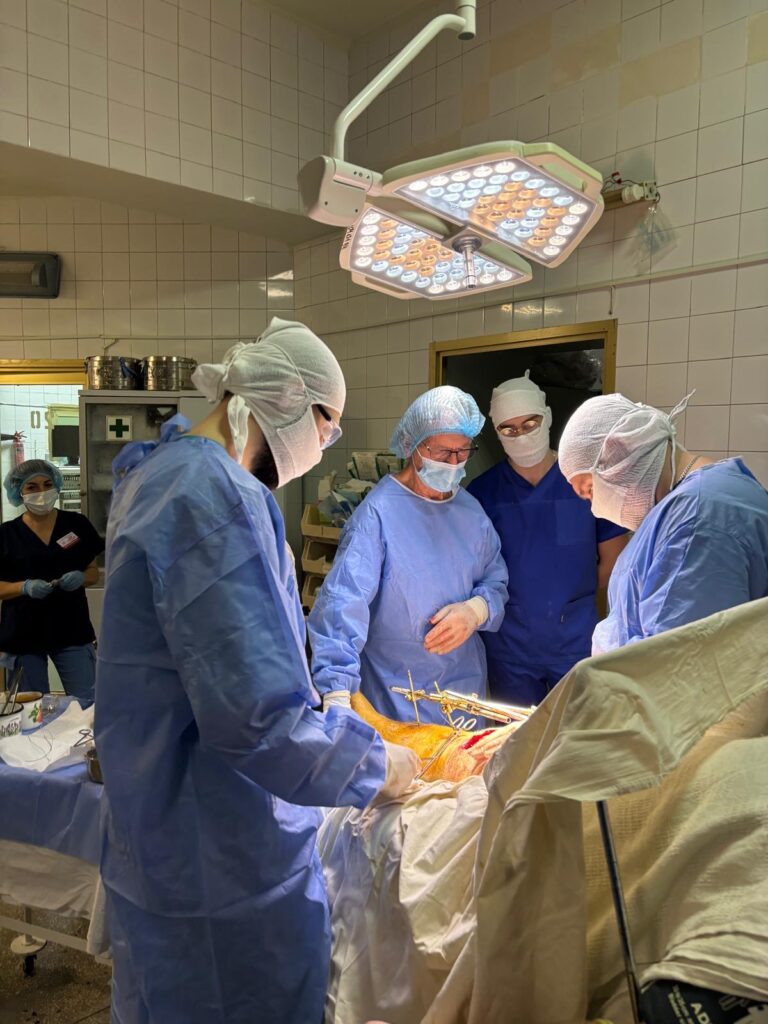
The Ukrainian and American surgeons worked together through several procedures. They removed dead and infected tissue and placed an antibiotic cement spacer into the gap left by the missing bone. The spacer helped control infection while preparing the leg for future reconstruction.
Once Oleksii’s was stable, he was transferred to a hospital in Vinnytsia,freeing an intensive care bed at Mechnikov for newly wounded patients arriving hourly from the front.
Before he left, Oleksii and Dr. Makarenko exchanged phone numbers. Each week, Oleksii sent the surgeon X-rays, lab results, and photographs of his wound dressings through VIber. When doctors in Vinnytsia began discussing the possibility of sending him abroad for treatment, Oleksii contacted Dr. Makarenko.
“If you trust us, come back, the surgeon told him “We’ll be working with the American team again soon.”
“I’m coming to you,” Oleksii replied.
Dr. Makarenko
A Transatlantic Surgical Team
A few weeks later, Oleksii was back in Dnipro. This time, Dr. Makarenko was joined by Dr. Roman Hayda, an American orthopedic surgeon and U.S. Army veteran of Ukrainian descent. Dr. Hayda’s parents migrated to the U.S. after World War II and raised him with a strong connection to his Ukrainian heritage. He went on to treat combat injuries during decades of military service, including in Iraq and Afghanistan.
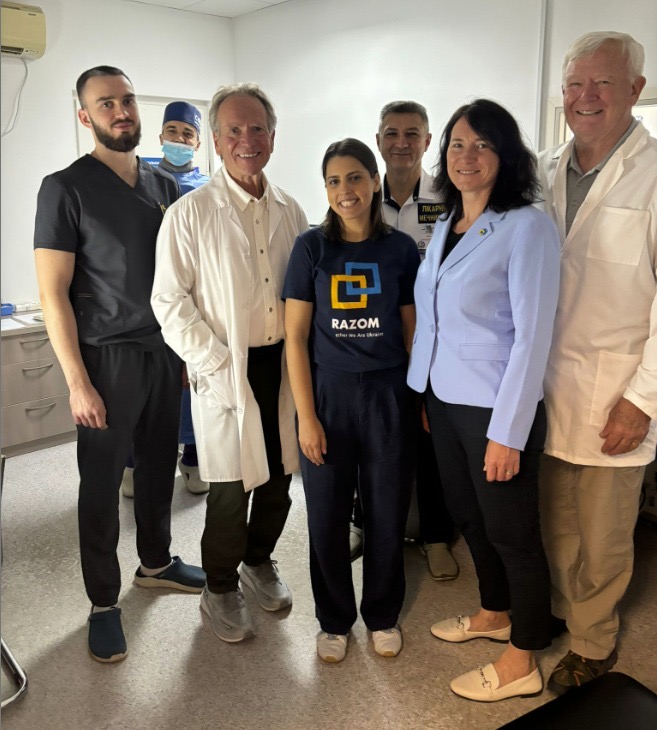
The Razom team and Dr. Roman Hayda
“Given my heritage, military background, and experience with battle injuries, I simply couldn’t stay away,” says Dr. Hayda. Yet, he shies away from the word “mission,” careful not to describe his work in Ukraine as one-directional assistance
“I come to work alongside them, not to lecture,” he says. “Ukrainian doctors today possess a unique level of trauma experience found nowhere else in the world. We learn from each other.”
The night before Oleksii’s surgery, Dr. Makarenko and Dr. Hayda spent hours studying his x-rays and discussing possible approaches. There were no visiting experts on one side and local doctors on the other—only one surgical team trying to solve an extraordinarily difficult problem.
“Surgeries like this always carry immense uncertainty,” Dr. Hayda says. “Our job is to exhaust every option so the patient gets a real shot at returning to a normal life.”
Oleksii’s bone loss was severe. He had already endured infection, and further complications remained possible. No one could promise that the reconstruction would succeed.
“We worked toward this day for months,” Dr. Makarenko says. “More than anything, we wanted to give Oleksii the chance to stand on his own feet again.”
Oleksii at the Zaporizhzhia Military Hospital
Photos of Everyone Else
Several months after the surgery, Oleksii’s leg has been saved. His recovery is not over, but he is making steady progress and now walks with one crutch.
“A surgeon’s greatest joy isn’t when the operation ends,” Dr. Makarenko smiles. “It’s when the patient takes their very first steps. That’s the moment you realize what all the work was for.”
For Dr. Hayda, Oleksii’s story reflects what the Co-Pilot Project is meant to be: not charity flowing in one direction, but a genuine partnership. American surgeons contribute techniques developed through decades of military medicine, while Ukrainian doctors bring unmatched experience treating large numbers of complex wartime injuries . Together, they are finding better ways to care for patients in Ukraine and beyond.
As we prepared to leave, we asked Oleksii whether he could share a few photos for this story. Without hesitation, he replied: “I have photos with my unit mates. I’ll send those.”
Not photos of himself. Photos of people who served beside him.
Throughout hours of conversation, Oleksii never complained about his pain or his circumstances. He spoke about his unit, his mother, his fiancée, the doctors who treated him in three different cities, and Nastya—a nurse who once surprised him in the ward with a homemade apple strudel.
Then his thoughts returned to his future mother-in-law and the wedding ahead. The months of intense effort by surgeons from two continents were never only about repairing bone and muscle. They were about helping a 23-year-old man reclaim the life the war nearly took from him – and giving him the chance to stand on his own two feet on his wedding day.
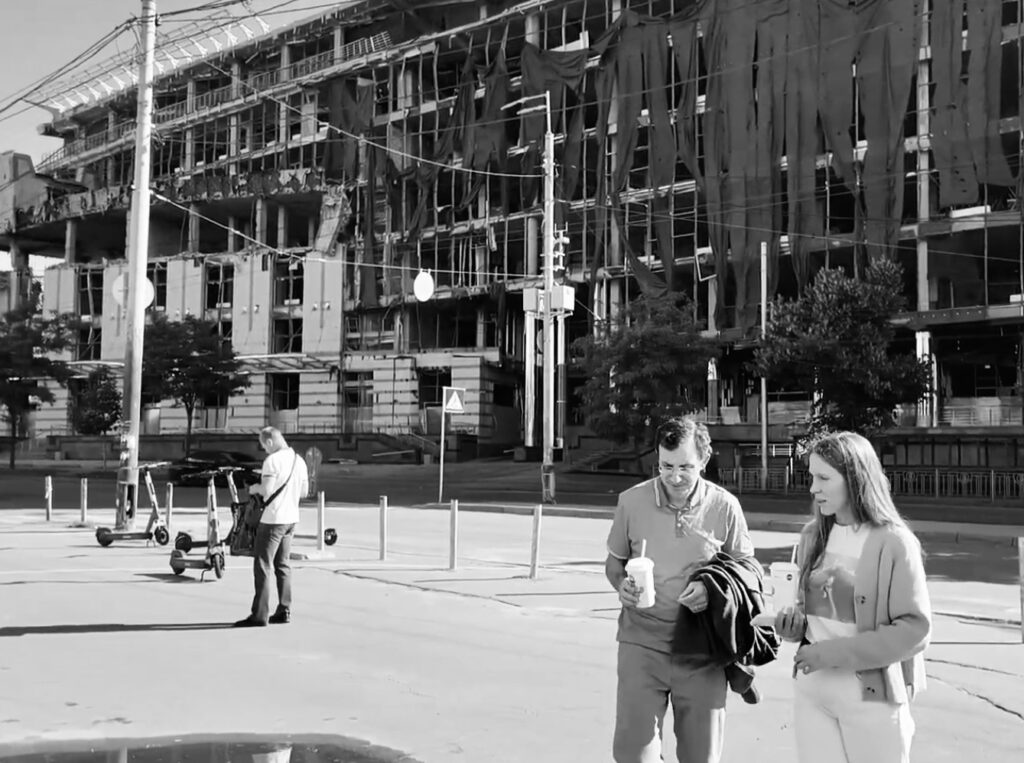
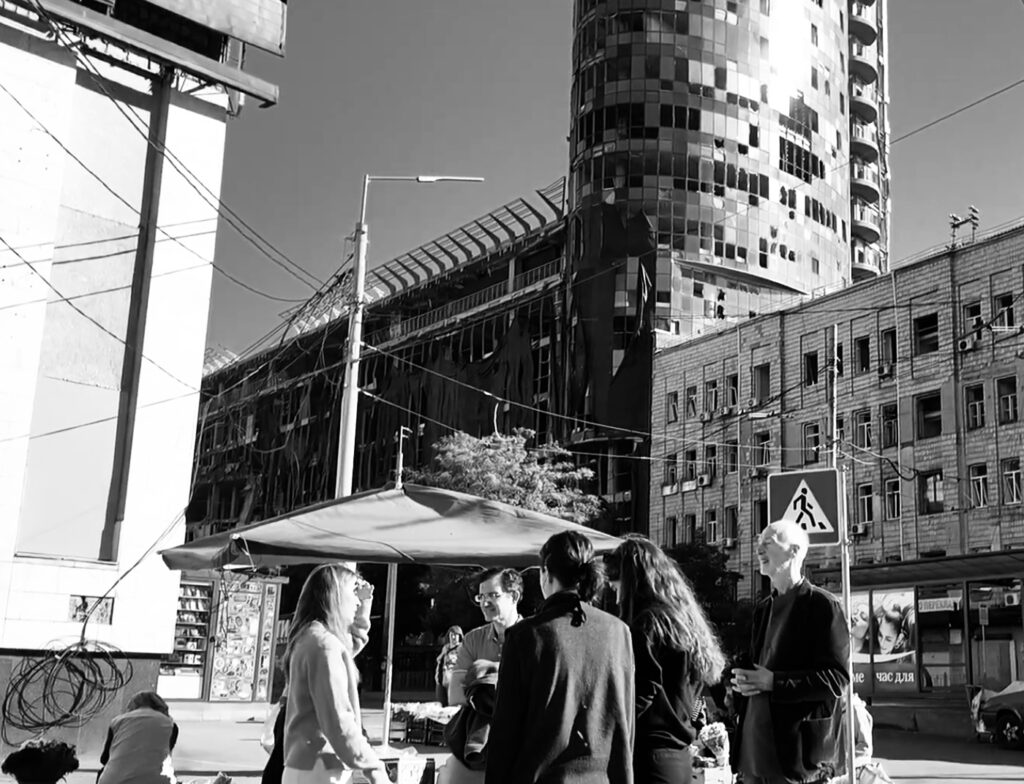
Just one day after the large-scale attack on Kyiv, the medical team witnessed the aftermath of russian strikes firsthand, including the area around the Lukianivska metro station. It was the beginning of another surgical mission. Yet beyond the destroyed buildings, the American doctors saw something that inspires them to return to Ukraine time and again — the extraordinary resilience of the Ukrainian people.
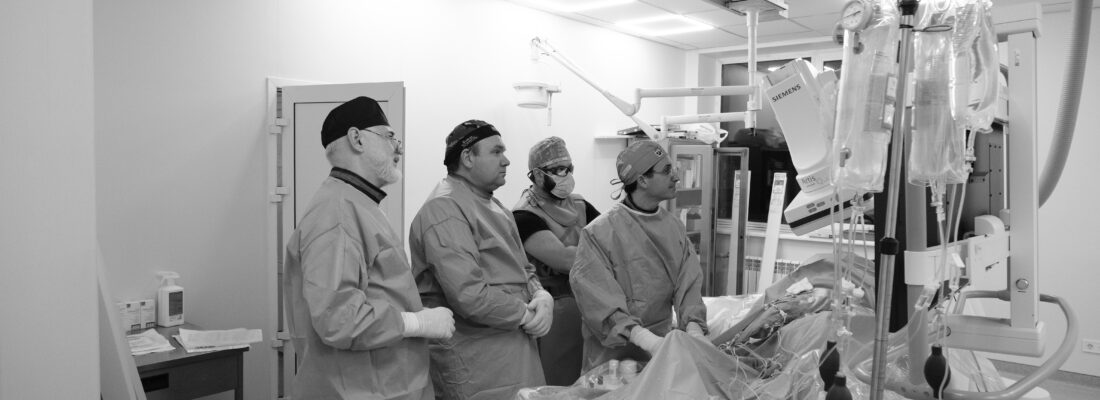
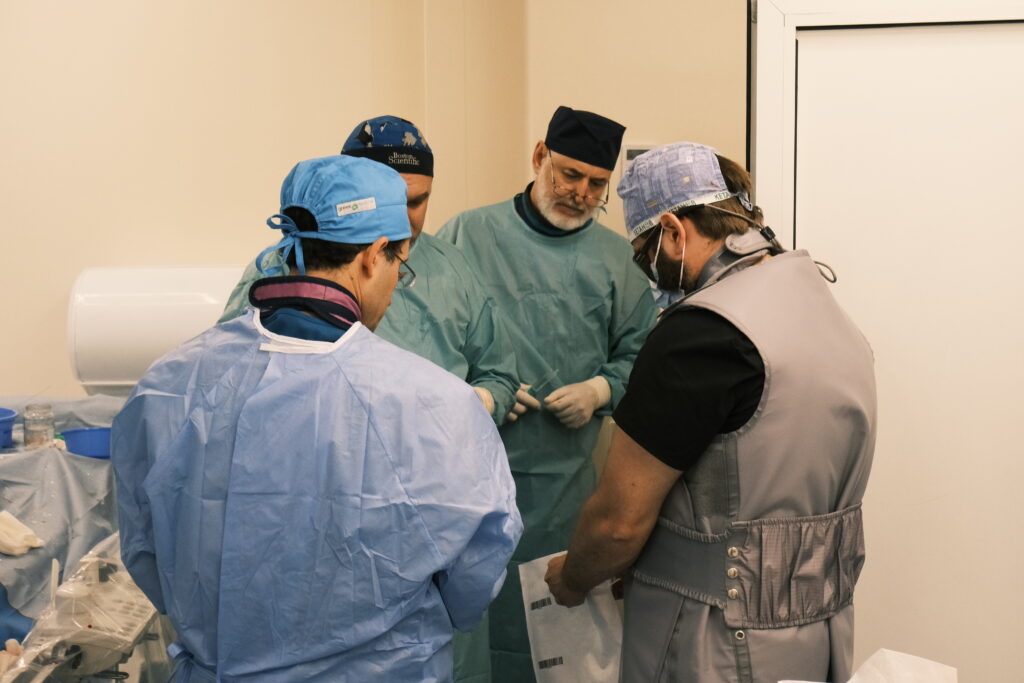
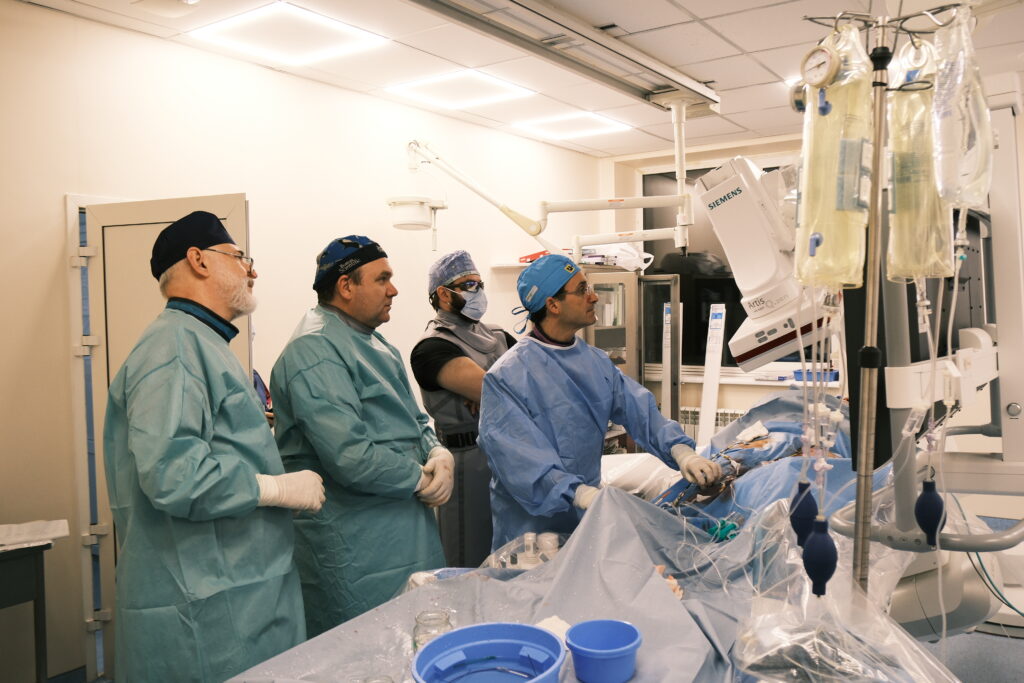
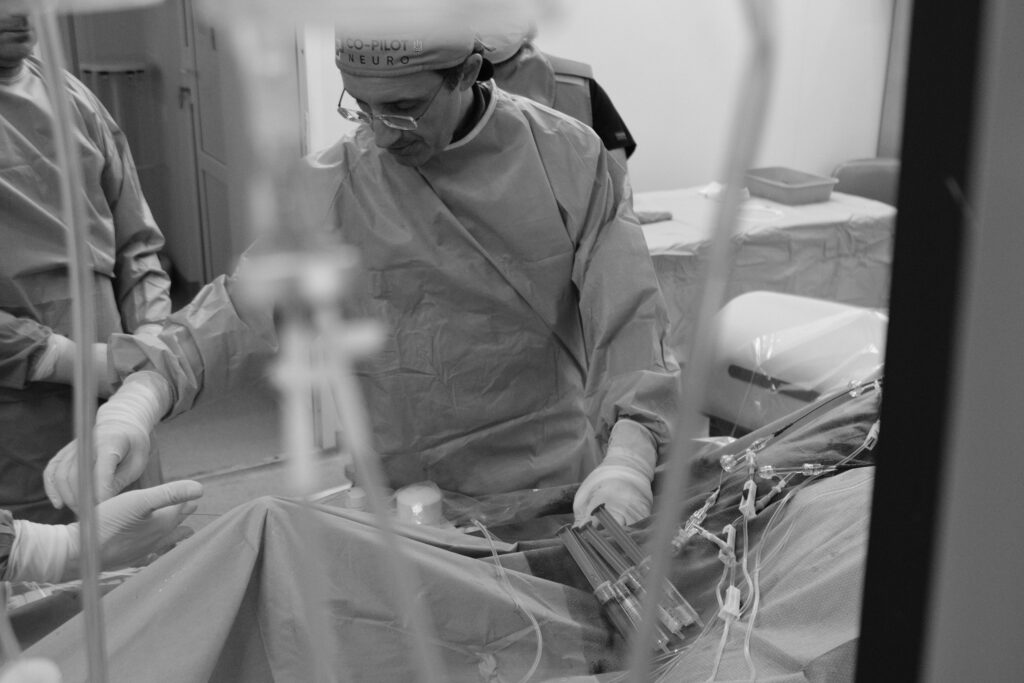
Razom for Ukraine organized the international CO-PILOT NEURO neurosurgical mission, which took place on June 12–20 in Kyiv, Dnipro, and Lviv. Over nine days, Ukrainian and American specialists jointly performed 37 free, high-tech surgeries for patients at four medical institutions.
Leading U.S. interventional neuroradiologists and neurosurgeons Dr. Maxim Shapiro and Dr. Kim Nelson traveled to Ukraine to take part in the mission. Working alongside Ukrainian medical teams, they performed some of the most complex endovascular procedures while sharing their expertise directly in the operating room.
A key focus of the mission was the exchange of surgical knowledge between American and Ukrainian neurosurgeons. The program covered three cities — Kyiv, Dnipro, and Lviv — where U.S. and Ukrainian doctors worked side by side to provide care for patients with the most complex cerebrovascular conditions.
“This is what true systemic change looks like — the very change we aim to achieve by organizing our surgical missions. We receive not only support from American doctors, but also valuable knowledge that remains in Ukraine and continues to strengthen our healthcare system after each mission concludes,” said Yuliia Shama, Head of the Razom Health Co-Pilot project.
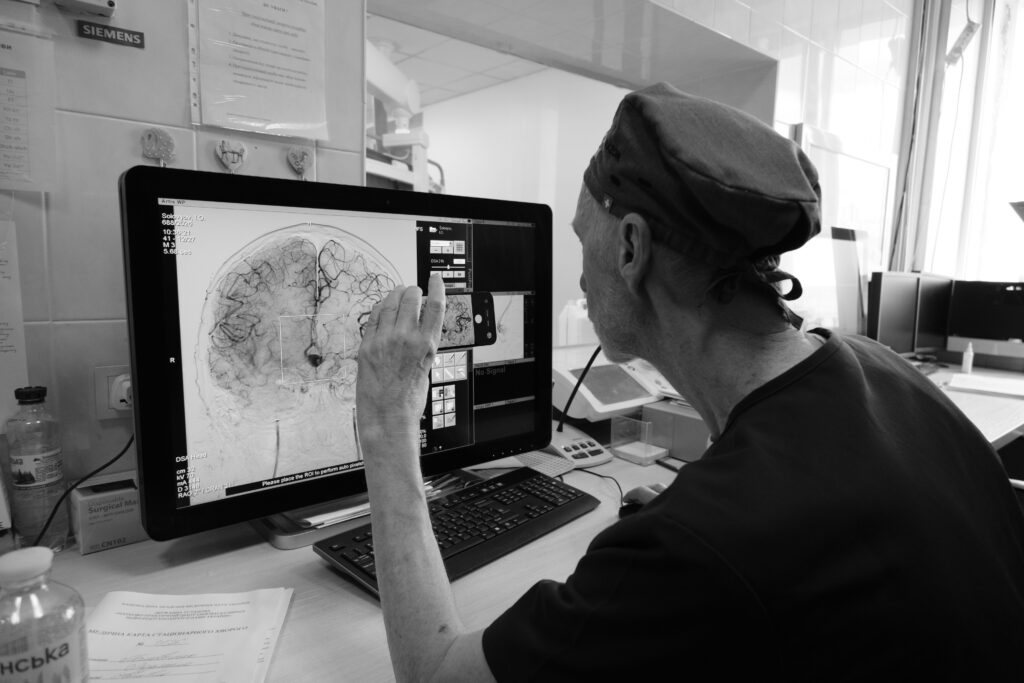
During the mission, doctors performed a wide range of complex neurointerventional procedures, including treatment of cerebral aneurysms, arteriovenous malformations, dural arteriovenous fistulas, venous sinus recanalization and stenting, as well as interventions for traumatic vascular injuries of the head and neck. Patients from various regions of Ukraine, including both civilian and military patients, received specialized care.
In Dnipro, the team worked at the Mechnikov Dnipropetrovsk Regional Clinical Hospital, where 12 complex neurointerventional procedures were performed in just three days. During the mission, doctors spent hours in operating rooms, carrying out advanced interventions while simultaneously providing continuous emergency care, including treatment for patients with ischemic stroke.
“We worked from morning until night, putting all our energy, knowledge, and inspiration into solving highly complex and unusual medical challenges. It was a true team effort, and we all worked together toward one goal — saving Ukrainian lives and improving the quality of medical care in Ukraine,” said neurosurgeon Yurii Cherednichenko.
Throughout the mission, Dr. Maxim Shapiro and Dr. Kim Nelson worked alongside Ukrainian neurosurgeons as part of CO-PILOT NEURO. This collaborative approach enabled Ukrainian specialists to gain hands-on experience with modern endovascular treatment techniques and exchange knowledge while managing complex clinical cases.
The final stage of the mission took place in Lviv, where, alongside surgical procedures, a lecture titled “Modern Aspects of Endovascular Treatment of Central Nervous System Pathologies” was held. The educational session was attended by 26 Ukrainian physicians. The training program was also organized by Razom for Ukraine, as strengthening the professional skills of Ukrainian medical workers remains one of the organization’s key priorities in supporting the country’s healthcare system.
Despite air raid alerts and new attacks, the mission continued. Teams traveling to Ukraine do not abandon their plans — they know their assistance is needed. It is the resilience and courage of Ukrainians that gives them the strength to continue.
Our team visited a stabilization point near the front line — less than 20 kilometers from active combat zones. This is where wounded soldiers are brought after evacuation, and where medics work in a reality where only minutes often stand between life and death. We spoke with a surgeon, an anesthesiologist, and the medical team working there every day about what a stabilization point really looks like from the inside, why time remains the greatest challenge of this war, how telemedicine is saving lives under fire, and what the phrase “the golden hour” truly means on the modern battlefield.
Time That Does Not Exist: Evacuation and the Limits of Medicine
A stabilization point in war is not a hospital in the usual sense, nor simply an intermediate link between the battlefield and a hospital. It is a place where medicine functions under conditions in which time has already been lost — or nearly lost — and decisions must be made faster than normal human psychology allows. It is here that a wounded soldier who has been evacuated from the battlefield first reaches a team capable not only of stopping critical bleeding or relieving pain, but of stabilizing the patient enough to survive the next stage — transport, surgery, hospitalization, rehabilitation.
Anesthesiologist Dmytro, who works at a stabilization point, speaks about his work without romanticizing it. There is no pathos in his words, although the reality he describes is stronger than any pathos. What troubles him most is not the complexity of injuries or the exhaustion of the team, but the fact that sometimes wounded soldiers cannot be evacuated from the battlefield in time. “The thing that upsets me the most is the inability to evacuate a wounded person from the battlefield in time,” he explains. “We know the person is wounded, we are ready, we have the conditions necessary to provide care, but sometimes evacuation from the battlefield either takes a very long time or does not happen at all.”
Military medicine often speaks about the “golden hour” — the critical period after injury during which the chance of survival is highest. But in this war, especially on certain sections of the front line, that formula does not always work. The doctor describes it almost bitterly: “As they say — the golden hour. For us, it’s a golden week.” There were cases when wounded soldiers remained in positions for too long, while medics could support them only remotely: dropping antibiotics by drone, consulting on what medications to administer, how to dilute them, what to do until evacuation became possible.
This is where one of the key realities of modern frontline medicine becomes visible: the problem is not always the absence of specialists, medications, or skills. Very often, the problem is that between the wounded soldier and the doctor lies the battlefield itself — drones, artillery, destroyed roads, weather, the absence of safe evacuation routes, and constant danger for evacuation teams. That is why a stabilization point works not only with the wounded body, but also with the consequences of delays that medicine itself cannot control.
Under these conditions, telemedicine stops being a modern buzzword from presentations and becomes a practical survival tool. Doctors consult combat medics and soldiers remotely, sometimes effectively directing care in real time. “We called and explained what to do: how to bandage, where to apply pressure, where to pack the wound,” recalls surgeon Yevhen. In one case, according to him, remote guidance made it possible to remove tourniquets, control bleeding, and save a limb. This does not replace evacuation and does not eliminate the need for surgery, but sometimes such remote support gives a person a chance to survive until help arrives.
Working at the Edge: Stabilization, Decisions, and Responsibility
When the wounded finally arrive at the stabilization point, the team must act quickly, but not mechanically. Stabilization is not a chaotic set of actions, nor an automatic process of “stitching someone up and sending them onward.” It is a complex process in which every step depends on the patient’s condition: whether the person is in shock, hypothermic, suffering from massive blood loss, whether blood pressure is stable, whether the body can tolerate intervention. “A soldier arrives soaked, cold, without pain management. He has to be undressed, laid down, dried off, warmed up, provided with anesthesiology support, stabilized in terms of blood pressure and other indicators. Only then can the surgical team work safely,” explains surgeon Yevhen.
That is why the amount of time spent at a stabilization point cannot fit into a single chart. If the patient is relatively stable, treatment may take 15–20 minutes. If the condition is severe, doctors may work for two or three hours. To civilians, that may sound like a long time, but for frontline medicine it is sometimes the only opportunity not to lose the patient before reaching the hospital. “Medicine is not always two plus two,” says the surgeon. “Everything depends on the patient’s condition, the extent of the injury, the amount of care required, and the stabilization measures needed.”
A particularly difficult topic is amputations and severe limb injuries. According to the doctor, stabilization points are not places for “planned” amputations in the hospital sense. If a limb is nonviable, the team does not attempt to make a final decision in conditions where not all capabilities are available. Their task is to stabilize the patient, avoid worsening the condition, preserve whatever may matter for future surgical work and prosthetics, and transfer the patient to the next level of care. “The hospital shapes the residual limb in a way that is more adapted for prosthetics,” explains Yevhen. “If we see that the limb is nonviable, we do not remove the tourniquet, we perform surgical debridement, stabilize the patient, and prepare them for transport.”
This is important to understand: a stabilization point is not a place of “final treatment.” It is a place where a wounded person must be moved from a state of catastrophe into a condition in which transport becomes possible. The patient’s story is not completed there — they are given a chance for it to continue. In this sense, the anesthesiologist’s role is one of the central ones: not simply “administering anesthesia,” but guiding the patient through the most dangerous interval — between uncontrolled post-traumatic condition and the possibility of surgical intervention.
War constantly destroys any sterile image of medicine. Patients may arrive on ATVs, improvised stretchers, covered in mud, soaked, freezing, after prolonged periods in frontline positions. The doctor recalls cases when a wounded soldier essentially “flew into” the stabilization point in a condition where only the eyes were visible, while everything else — mud, clothing, blood, exhaustion — blended together. The team cuts away clothing, pulls the person out, evaluates the condition, and starts working. This is the daily reality in which stabilization points exist: not under ideal protocols, but under the conditions of war, where every case brings a different scenario.
Impact and Systemic Change: From Experience to Standards
Despite this, medics speak not only about survival, but also about development. One of the recurring requests in these conversations is for more opportunities for training, professional exchange, conferences, workshops, and courses. This is not a “bonus” or abstract self-education. For people who work every day with the harshest consequences of war, development means better decisions, fewer mistakes, faster responses, and a greater chance of survival for patients. The conversation directly mentions the need for funding conferences, courses, visiting workshops, and exchanges with specialists.
Already in Ukraine, several educational initiatives are being launched or discussed: the ASET course, the future implementation of ATLS, work related to infection control, and educational initiatives connected to Razom Health. It is separately emphasized that infections in hospitals have become such a serious problem that they require an entire direction of work on their own. This is another indication that frontline medicine does not end at stabilization. A wounded person moves through a long chain, and the quality of every stage affects the outcome: from first aid at the position to evacuation, stabilization points, hospitals, infection control, rehabilitation, and return to life.
In this context, the Razom Heroes program plays a key role, working not with isolated cases but with the system as a whole. This includes the training of combat medics and instructors, equipping units, developing educational programs, and creating conditions in which frontline experience does not remain at the level of isolated stories, but is transformed into standards. It is through programs like these that a connection is formed between the reality of stabilization points and long-term systemic change: implementation of training courses, development of telemedicine, support for instructor programs, systematization of knowledge, and transfer of that knowledge to other units.
A stabilization point is a place where medicine looks least like a beautiful story and most like a struggle against time. Not everyone can always be saved there. It is not always possible to do what the doctor knows and is capable of doing, because sometimes the patient simply cannot arrive in time. Here, the “golden hour” can turn into days of waiting, while telemedicine becomes a temporary bridge between the battlefield and the physician. But it is here that the most important thing becomes visible: Ukrainian military medicine is not simply reacting to war — it is learning, adapting, creating new practices, and trying to turn the experience of every injury into knowledge that will help save the next patient.
And perhaps the most accurate way to describe the work of a stabilization point is not through heroic language, but in very practical terms: it is a place where people are given a chance to reach the next opportunity. To the hospital. To surgery. To a prosthetic. To rehabilitation. To life after injury.
That is why the main question for this system is not only how many medics work at stabilization points or what equipment they have. The main question is how to ensure that wounded soldiers reach them sooner, how to give doctors more time, how to make telemedicine systematic, how to make training continuous, and how to ensure that frontline experience is not lost in isolated stories, but transformed into standards.
Because in war, medicine often begins not when the patient reaches the operating table. It begins much earlier — at the moment when someone manages to bring them out alive.
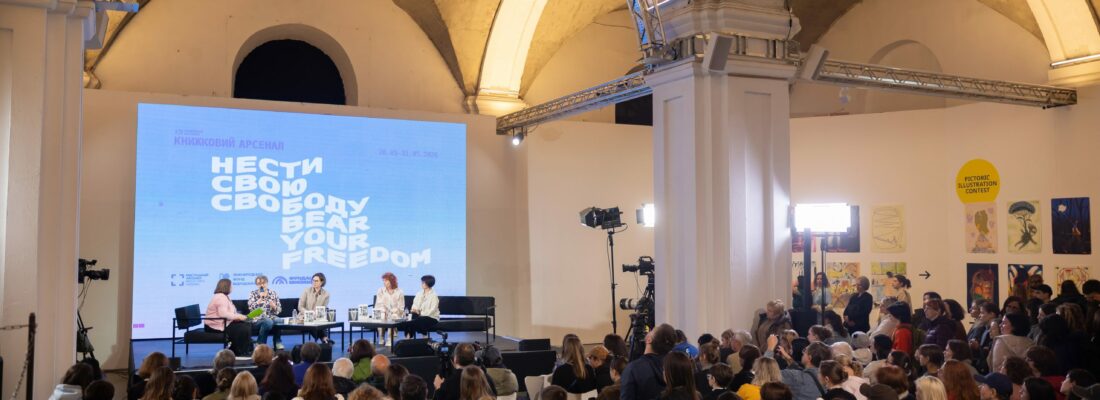
This is Kateryna Kazimirova, Razom Literature Program Lead, and I want to take you with me to Kyiv, where last week of May, under skies that couldn’t decide between sirens and the heavy bloom of peonies, one of the most important literary events in the world took place.
But first, let me tell you why I’m the one writing this letter.
Growing up in Donetsk, I was fortunate to be surrounded by books, the people who wrote them, and brilliant teachers who introduced me to both. I went to study literary theory, later taught it, built a life inside Ukrainian literature, and took for granted that this world mattered beyond its own borders. Then, in 2014, Russia occupied my home and succeeded not only in seizing territory, but in imposing its fiction – about Donbas, about Ukraine, about who belonged where. I watched it happen with two kinds of grief: the obvious one, along with a quieter realization that Ukraine’s writers, the people I considered heroes, were unknown outside my world.
Why did so few people know the writers who had shaped me? How could a nation with such a rich literary tradition remain so invisible abroad? Most importantly, in light of all that happened, how are we going to change that?
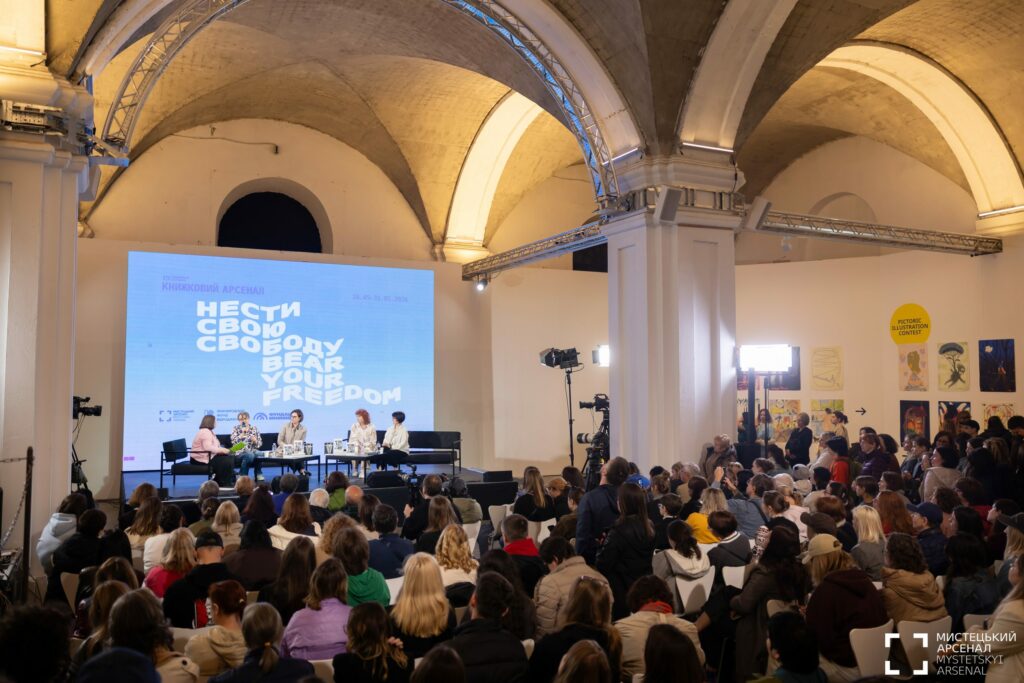
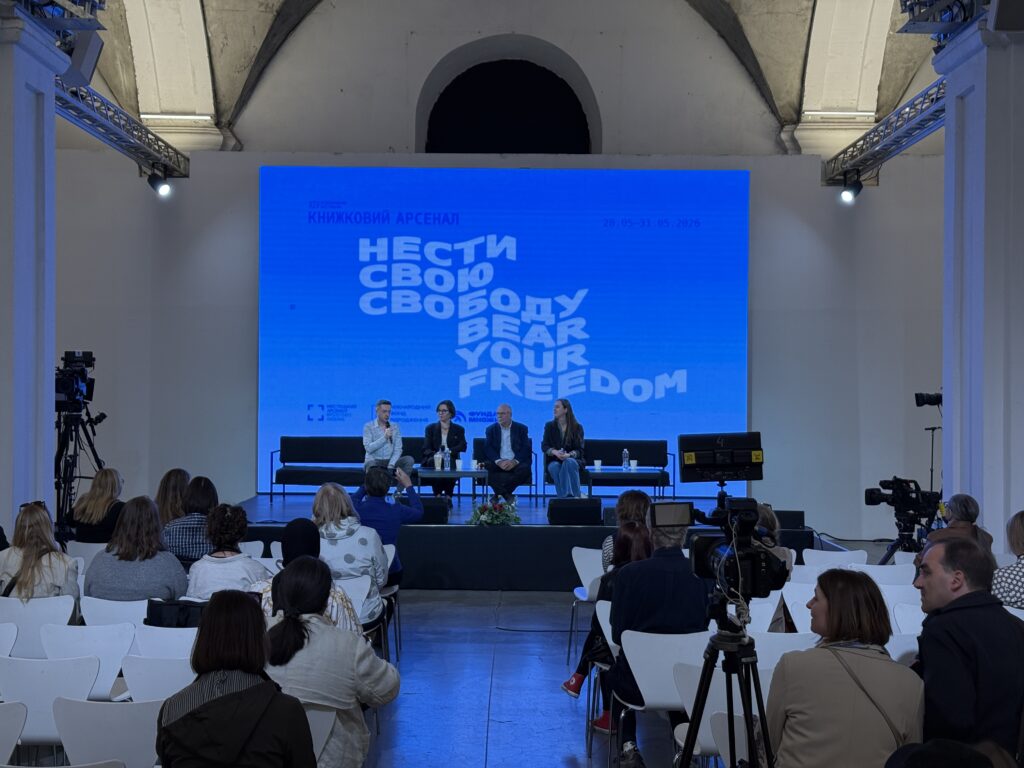
For the last decade, already in Kyiv, I had been trying to do my part by running a literary journal, and creating innovative tools to promote Ukrainian culture like Chapter Ukraine. Now I have joined Razom to expand our shared mission of helping the world discover Ukrainian literature. This year, I came back to Arsenal on behalf of Razom to participate in the festival and organize a panel on one of the questions I think about most: what actually stands between Ukrainian books and anglophone readers?
An Arsenal of a Different Kind
When I call it the best literary festival in the world, this is not only my sentiment. In 2019, Book Arsenal was recognized as the world’s best literary festival of the year at the International Publishing Industry Excellence Awards organized by the London Book Fair. It has been running annually since 2012, skipping only twice: during the pandemic outbreak and the year of the full-scale invasion. It came back in 2023, grew to 35,000 visitors in 2024, and, like Ukraine, is stronger every year since.
Why “Arsenal”? The building where the festival takes place was originally built in 1783 by imperial decree as a weapons depot – a fortress-like structure with walls six feet thick, covering nearly twenty-five acres in the heart of Kyiv. But the ground it stands on is older than that: the site was a 16th-century convent, whose most prominent patron was the mother of Hetman Ivan Mazepa – the Ukrainian leader who defied Peter I and became a lasting symbol of resistance to Russian rule. The empire demolished the convent and built an arsenal in its place. Ukrainians eventually took the arsenal back and filled it with books instead.
My own Arsenal story started in 2015, when I fled Donetsk to Kyiv and found, once again, what I had lost: a community of booklovers and cultural professionals that felt like home. In the years when I wasn’t working in culture full-time, I would take a week off work just for the festival, spending days discovering new books, listening to authors, panel discussions, and then finding friends in the garden as the evening came, reading poetry to each other and talking for hours.
This one week of the year, everyone comes, no matter where the last twelve months have scattered us. We synchronize our clocks, make plans, and simply be together. But the magnetism runs deeper. Arsenal is one of those rare places where you feel fully alive – concentrated, meaningful, part of something larger than yourself. Where the line between past and present dissolves, and you can feel the full weight of a cultural tradition that has been carried across generations and is still being carried, right now, by the people standing next to you. You listen to one of the sharpest minds alive give a talk that rearranges something in your thinking, then meet them in the coffee queue twenty minutes later and talk like old friends. Where else does that happen?
And underneath all of it is the simple act of being here. Of having made it through another year. Once you have been part of the world of Arsenal, something in you keeps returning to it, the way you return to a place that has known you at your best.
Bear Your Freedom
Each year Arsenal has a theme. This year it was Bear Your Freedom, curated by Maksym Butkevych – journalist, human rights activist, former POW, who spent 913 days in Russian captivity before being released in October 2024. Razom supports his initiative Principle of Hope, which develops materials supporting the psychological recovery of returning prisoners, and separate guidance helping soldiers understand how to preserve their lives in captivity.
His central argument: freedom and responsibility are inseparable – “siamese twins” and the greater danger is not that freedom is taken from us, but that we surrender it willingly, trading it for comfort or the illusion of stability. For Butkevych, freedom is never only about oneself, but about those beside us, the ability to build the future together and defend it together: “Perhaps this is Ukraine’s new mission today: not only to fight for freedom, but to help the world rediscover its value.”
One more topic within this theme was the fragility of heroism. Writers and soldiers Artem Chapeye and Artur Dron put it plainly: a hero is not someone without fear or exhaustion, but someone who keeps moving despite both. As Dron said, society creates “bronze” heroes out of convenience, so everyone else can watch from the sidelines and feel absolved. The real call is to see the person behind the symbol, recognize their needs, and act – because bearing freedom together means no one should carry it alone.
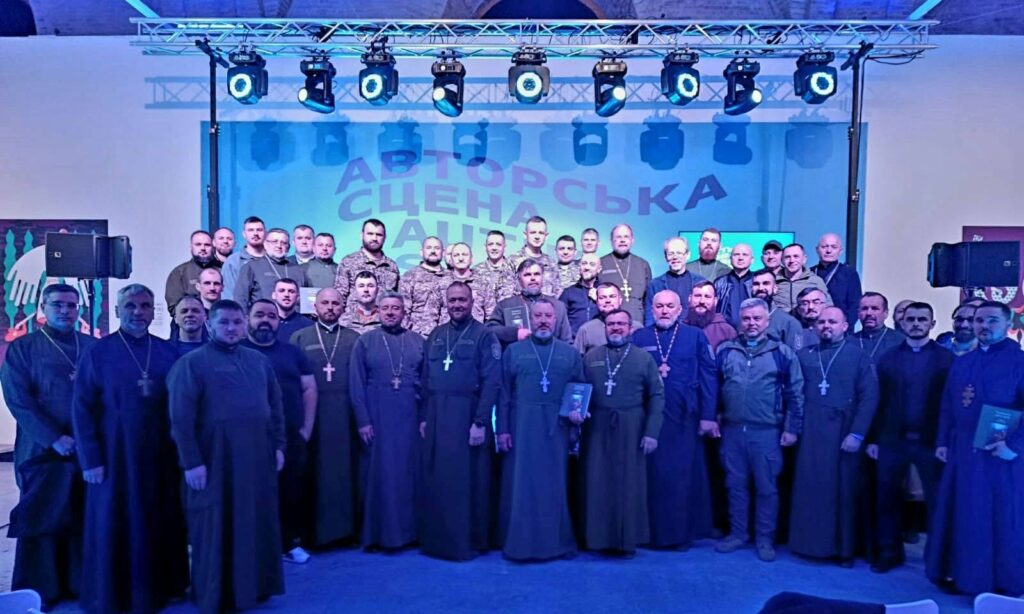
On the day of our panel, I arrived early, before the festival opened to the public. Walking through one of the pavilions, I came across the room full of military chaplains – still, present, sacred. Later that day, one of them presented a new book titled Care for the Spirit. And then, watching the main stage fill for readings by soldier-writers, and the lines snaking through the courtyard for their book signing, I realized that combatant literature is no longer a niche: it is the mainstream. It is simply the most honest account of the life Ukrainians are living now.
The Highest Form of Communication
Arsenal’s Writers’ Program, curated by writer and soldier Andriy Lyubka, opened with a deceptively simple question: What do we actually know about our neighbors? We share borders with Slovakia, Romania, Hungary, and can barely name five of their writers. When knowledge is scarce, stereotypes fill the gap. For a country that cannot afford adversaries on two fronts, genuine neighborliness is a question of survival.
Among the writers on the Arsenal main stage was Polish Nobel laureate Olga Tokarczuk, who argued that Central European identity is defined not by stable borders but by their absence – by fluidity, fragmentation, a world that keeps shifting underfoot. It is precisely this instability, she said, that produces writers who cannot rely on realism alone, and it is this shared inheritance that connects Ukraine to its neighbors more deeply than any political agreement.
Tokarczuk had something important to say about the power of literature itself: humans are narrative creatures who understand the world through stories, not facts. Literature is the highest form of communication: it reaches where information cannot, using metaphor and symbol to convey truths. In times of war and propaganda, literature is the clean breath; it forces a reckoning with complexity, protects identity the way a magnetic field protects against external force. She reminded the audience that Poland survived 123 years without a state, through language and culture alone.
Fieldwork in Ukrainian Sex
Among 240 events that Arsenal hosted across four days were poetry readings that moved to bomb shelters mid-session, a Theatre of Veterans, workshops, music, slam poetry, mile-long signing queues, and in the evenings wild dancing under folk and electronic beats. But one of the most attended was a conversation marking the 30th anniversary of Oksana Zabuzhko’s Fieldwork in Ukrainian Sex with Maria Genkin, Razom’s Board Co-Chair, among the speakers.
The book follows a Ukrainian woman writer navigating love, identity, and the weight of post-Soviet womanhood. Publishers at the time genuinely doubted that a Ukrainian-language novel could sell. But it became the first national bestseller of its kind, went through at least seventeen editions, 25 languages, and opened the doors for an entire generation of writers.
Thirty years later, teenage girls return to it as a psychotherapeutic text. Elif Batuman cited it as the book that made her reconsider Russian literature’s colonial hold. Zabuzhko said she no longer owns it – it has become something collective. And in the context of the war, the conversation kept returning to one idea: when a culture is known, and its books are read, a nation becomes harder to kill.
Three Percent Ceiling: Razom’s Way to Break It
Despite the impact of books like Zabuzhko’s across borders, did you know that only 3% of books published in the American market are translated from other languages, all other languages combined? The anglophone market is the hardest literary market in the world to break into. And yet it is the one that matters most for global visibility.
That is why at Book Arsenal, Razom brought together on the main stage a panel of people who know this market from the inside. Emma Shercliffe – a UK literary agent who has sold more Ukrainian titles to British and American publishers than almost anyone – opened by dispelling a persistent myth: people are not tired of the Ukrainian theme. One of her Ukrainian authors is currently her best-selling title. The appetite is real, extending well beyond war narratives into fiction, history, culture. Emma was unambiguous about the quality: the level of intellectual thought in Ukrainian literature, she said, is deeply stimulating, and Ukraine’s top authors hold their own against any international writers. Visibility is no longer the main problem. What remains: the near-absence of agents, the need to be strategic about which publishers you sell rights to, and a grant system that remains practically inaccessible to the larger publishers who could do the most with a book.
Maria Genkin added a pattern she keeps seeing: selling rights to the wrong American publishers – a major new novel going to an academic press that will never invest in promotion. The book comes out, nobody notices, and everyone concludes Ukrainian literature doesn’t sell. Her point was direct: do not sell global rights to a single publisher. Some of those publishers aren’t even eligible for major literary awards, which means no long or shortlisting, no reviews, no bookstore purchases, no second life for the book. Razom’s role is to act as a mediator, helping authors and publishers navigate this complicated market.
Andriy Kurkov, Ukraine’s most internationally bestselling author, drew the distinction that the UK and US markets operate by entirely different rules. The American market is its own thing – more closed, slower to warm up. Kurkov knew this firsthand: his first attempt in 2001 failed not because of the books, but because the publisher did nothing. If a publisher isn’t investing in promotion, books don’t reach shelves. If books don’t reach shelves, nobody finds them. The logic is circular and self-defeating, and it has nothing to do with the quality of the writing. His second attempt in 2018 worked: “The goal is always to arrive and stay. And if you’ve got in and stayed, that’s already a great victory.”
I concluded with what I see as the core problem: the absence of a self-sustaining infrastructure where every part of the system does its job. The real question is delivery: how does a great Ukrainian book actually get onto bookstore and library shelves, and stay there? Here is what Razom is doing about it. We invest in translators as a profession through mentorships, the new Razom Translation Award, and partnerships with leading literary translation institutions in the US and UK. We offer translation grants that are accessible to larger publishers precisely because we don’t require a book to be completed and published within a single year – the constraint that makes most grant programs unworkable for major presses. To date, we have supported eight books; several high-profile titles are coming from major presses in 2027 that would not exist without Razom’s involvement. We also support promotion and, this year, editing – unique among grant programs. And through Chapter Ukraine, we build communities of readers in libraries, universities, and grassroots organizations who advocate for Ukrainian books from the ground up.
Every literary tradition that reached the world stage arrived with a new artistry and language for it – one that captured a reality the world hadn’t yet found words for. The stream eventually broke through its geographical borders and became universal. Ukrainian literature has already formed that language: raw honesty, fragile heroism, self-reliance, a direct way of looking at what most literature looks away from. The current is moving. Is the American reader ready to meet it?
P.S. As I am finishing this letter, the news came in: Russia struck the Kyiv Pechersk Lavra – the 11th-century cathedral that is a UNESCO World Heritage site – setting its roof on fire while monks and rescue workers formed human chains to save the icons. As firefighters were still battling the blaze, a second strike hit Mystetskyi Arsenal, the building where Book Arsenal takes place. The Dovzhenko National Film Studio was also hit, destroying Ukraine’s largest and oldest costume collection, 100,000 garments, gone. Once again, Russian aggression deliberately strikes Ukraine’s cultural heritage.
Razom for Ukraine: Patriot Production License for Ukraine Will Save Lives and Help End the War
Washington, D.C., July 8, 2026 — Today, President Trump announced that the United States will authorize licensed production of Patriot interceptors in Ukraine—a landmark decision that will save lives, strengthen U.S. interests, and help bring Russia’s war to an end.
“President Trump stands on the right side of history. He stands with the winners. And this is a win-win for both Ukraine and the United States,” said Melinda Haring, Senior Advisor at Razom for Ukraine. “Licensed production will allow Ukraine to better defend its people without drawing down existing U.S. stockpiles.”
“Russia is losing on the battlefield and sustaining increasingly humiliating deep strikes against the oil infrastructure that fuels its war machine. Putin’s remaining tool is terror: ballistic missile strikes on Ukrainian cities designed to kill civilians and break the country’s will.”
While producing Patriots would give Ukraine a strong shield for tomorrow, it also needs ammunition for tonight. A sustained, uninterrupted flow of interceptors through existing programs is crucial to fulfill an urgent need for air defense to protect civilians in Ukraine as Russia attacks their homes on a daily basis.
“Ukrainians are winners. They have repeatedly demonstrated their ingenuity and ability to rapidly master advanced technologies under wartime conditions. We urge President Trump and his administration to immediately implement the licensing agreement, and maintain the flow of existing Patriot interceptors to Ukraine while domestic production ramps up,” said Melinda Haring.
###
Razom for Ukraine is a U.S. nonprofit providing medical and humanitarian aid to Ukraine and a leading advocate for continued U.S. assistance to Ukraine. For more information or to request an interview, please contact: Ostap Yarysh, Media Advisor at Razom for Ukraine ostap.yarysh@razom.org
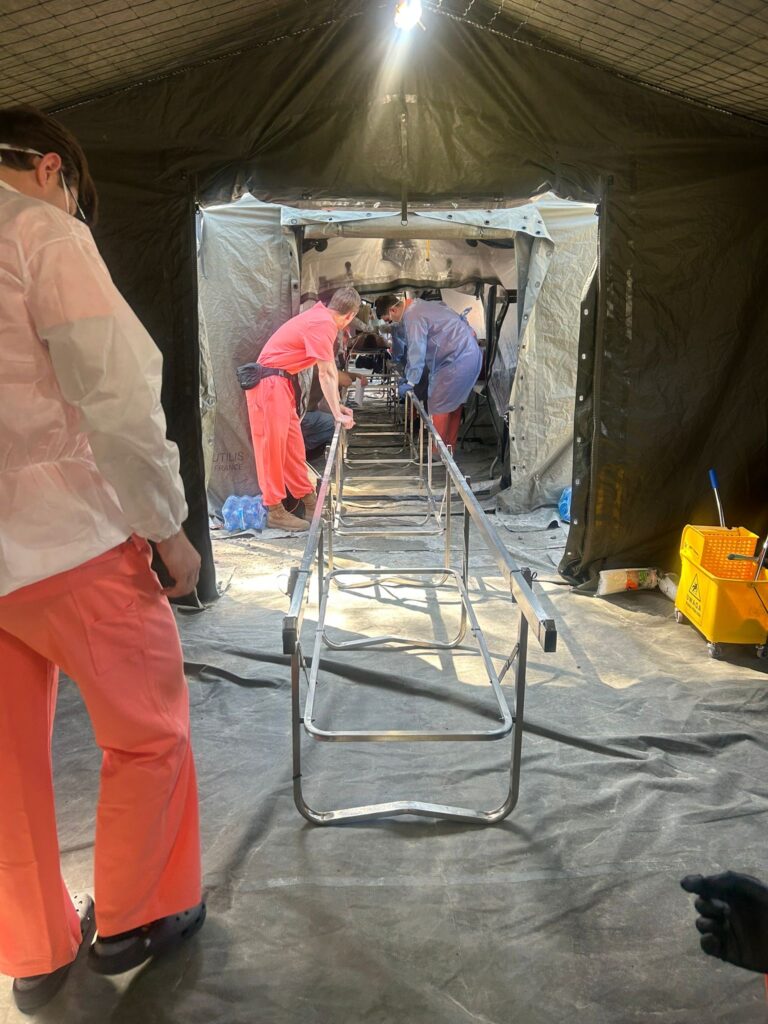
Razom for Ukraine, a leading U.S.-based nonprofit organization focusing on Ukraine, has officially launched Infection Prevention project TDAC(Trauma Decontamination and Antimicrobial Resistance Containment), also known as Operation Wallaby. The first-of-its-kind initiative in Ukraine focused on reducing the spread of drug-resistant bacteria that can no longer be treated with standard antibiotics (multidrug-resistant organisms, or MDROs). The goal is to improve outcomes for wounded patients and reduce severe, life-threatening infection complications.
The project is implemented in partnership with the Public Health Center of the Ministry of Health of Ukraine and the Institute of Molecular Biology and Genetics of the National Academy of Sciences of Ukraine, with advocacy from frontline clinicians involved in pre-hospital care. It targets a critical gap in the route from the frontline to the hospital — preventing bacteria from spreading during handoffs between care teams before a patient ever reaches a hospital ward.
Why this matters for Ukraine and beyond
Wounded patients rarely go directly to a hospital. Along the way, they pass through multiple points of care — and each transfer can increase exposure to drug-resistant bacteria. These infections can severely complicate recovery and become life-threatening.
The scale of this risk is compounded by the length of Ukraine’s evacuation chains. Infection risk rises significantly at the end of a prolonged trauma evacuation pathway, with considerable regional variation, according to research by Hailie Uren published in The Lancet Infectious Diseases (2025). The longer a wounded patient remains in transit, the greater the opportunity for infection to take hold.
This is no longer solely a Ukrainian health challenge. As wounded patients are evacuated to hospitals across Europe for specialized care, drug-resistant bacteria travel with them — placing pressure on health systems far beyond the frontline. European hospitals are already encountering these infections among war-wounded patients, making early intervention an urgent international priority.
“Antimicrobial resistance could cost as many lives as cancer by 2050, according to the UK Government’s Review. Resistant bacteria do not stop at the Ukrainian border. It is an early warning for every health system worldwide. That is why launching the Infection Prevention Project is so important,” said Dan Solchanyk, Razom Health Program Director .
How it works
Ukrainian scientists and clinicians, led by Hailie Uren, are working alongside clinical partners to investigate where and how drug-resistant bacteria enter the evacuation chain. Based on this work, Ukraine will introduce standardized practices focused on early decontamination and stopping bacteria from spreading between handoffs.
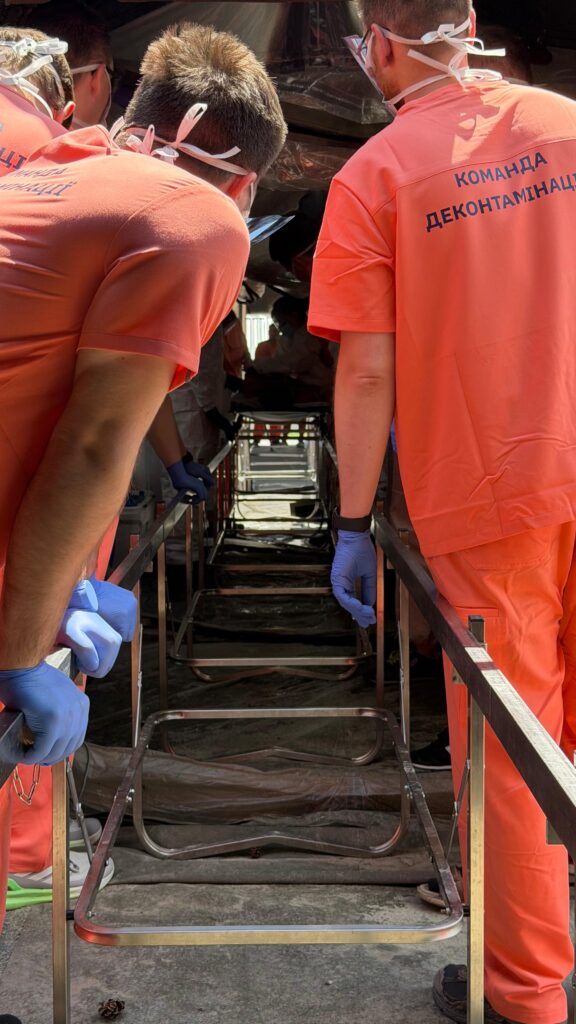
The project unfolds in three stages. The team is currently screening war-wounded patients across the evacuation chain — from casualty collection points through forward surgical units (Role 2) and hospitals (Role 3) — mapping where bacterial contamination occurs. Later in 2026, those findings will guide the creation of dedicated decontamination units to stop bacteria from entering clinical environments. By 2027, the full programme will be rolled out based on the evidence gathered.
“With a high proportion of multidrug-resistant organisms (MDROs) not responsive to last-line antibiotics among war-wounded patients, early intervention through this project is critical to preventing infection before patients reach a hospital,” said Hailie Uren, Project Lead and Principal Investigator from Razom and UPHC.
The approach is grounded in U.S. military medicine and informed by expert consultation, adapted to prolonged evacuation chains and wartime conditions in Ukraine.
Stopping infections early reduces the need to prescribe antibiotics without knowing which bacteria are present (broad-spectrum empirical use) — helping slow the development of antimicrobial resistance and protecting the wider health system.
For more information, please contact anna.hryniv@razomforukraine.org
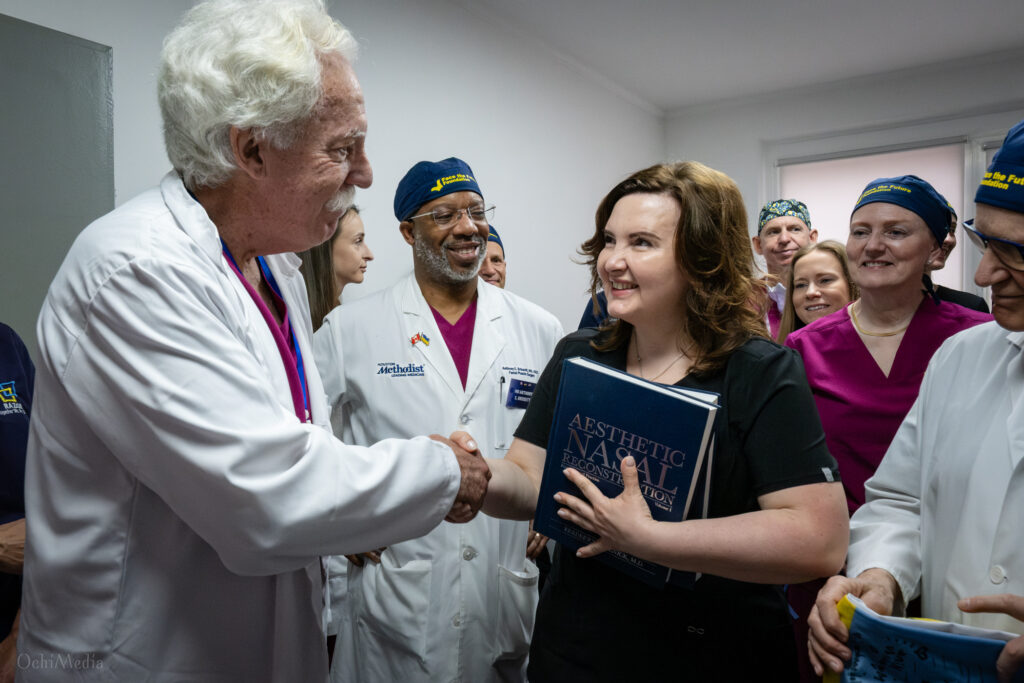
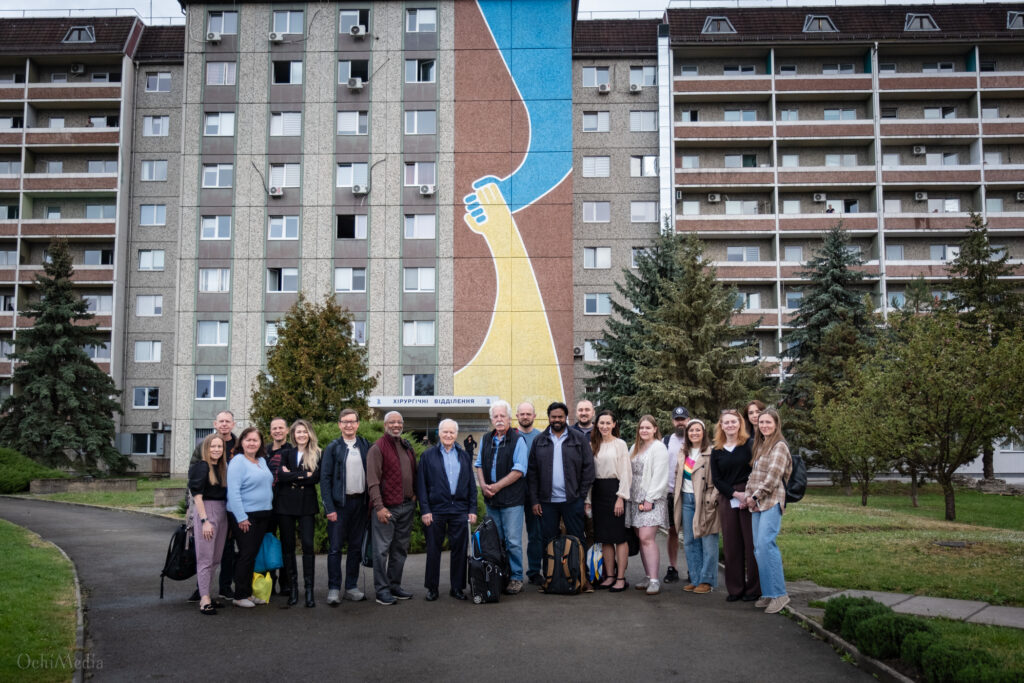
In May 2026, Ivano-Frankivsk hosted the seventh international medical mission “Face the Future,” organized by Razom for Ukraine. Surgeons from Canada, the United States, and Ukraine carried out 68 surgical procedures on 24 patients with severe facial injuries.
At the center of every mission is a person — and a very personal dream. For Andrii from Ivano-Frankivsk, it was simply being able to breathe again. For Roman from Khotyn, it was restoring his facial structure after captivity. For Mykhailo from Stryi it was removing a scar and correcting a nose fractured in an FPV drone strike.
Different stories, but one shared path to recovery. All three were among 24 patients treated in Ivano-Frankivsk during the seventh“Face the Future” mission organized by Razom for Ukraine.
(Photo: Tatyana Bessmertnaya)
Dozens of surgeries in just a few days
From May 3 to 8, the Ivano-Frankivsk Regional Clinical Hospital became a center of intensive surgical work. Teams from Canada, the United States, and Ukraine performed 68 surgical procedures on patients with severe facial trauma — both military and civilian.
“This time, 13 specialists from North America joined Ukrainian colleagues. The team included six surgeons and seven nurses from Canada and the United States, five of whom have Ukrainian roots,” said Peter Adamson, President and Founder, Face the Future Foundation.
(Photo: Tatyana Bessmertnaya)
Razom as a core partner of the mission
Beyond the operating room, Razom plays a key role in making the mission possible. The organization handles logistics, coordination, and part of the medical supplies, allowing doctors to focus entirely on patient care.
“Razom is a bridge between North America and Ukraine. We take care of all on-site coordination — logistics, organization, and communication with the hospital. This allows doctors to focus on patients and reduces the burden on the hospital,” said Iryna Matsiuk, Razom Coordinator in Ukraine.
This was also confirmed by Natalia Komashko, the Ukrainian lead of the mission and an otolaryngologist:
“I am especially proud of our Ukrainian team, whose work begins long before the international teams arrive and continues long after they leave. We are sincerely grateful to Razom for Ukraine – not only for helping bring expert teams to Ukraine, but also for providing essential medical supplies that significantly strengthen our hospital’s capacity to deliver care”
Partnership that restores quality of life
These missions are made possible through close cooperation between doctors, bioengineers, and volunteers working toward one shared goal — restoring function and quality of life for patients in even the most complex cases.
The program is implemented by Razom for Ukraine, Face the Future Foundation, Still Strong, and the Charitable Foundation “Patients of Ukraine,” in partnership with the Ivano-Frankivsk Regional Clinical Hospital and with support from Materialise.
“I am deeply grateful to everyone involved. They are doing important work and providing real support, and I am thankful that such help and missions exist,” said patient Mykhailo Vovchyna.
How international missions transform Ukrainian surgery
While the types of injuries remain largely similar from mission to mission, the capacity of Ukrainian medical teams continues to grow significantly. This was emphasized by Anthony Brissett, a U.S. surgeon and medical director of the Face the Future mission, who has taken part in the program four times.
“Doctors and nurses are becoming better prepared and expanding their skills. This is reflected in the complex procedures we performed this week, including cases involving leading international experts in nasal reconstruction. This is the level of care Ukrainians deserve,” he said.
The mission is part of a broader long-term effort that goes beyond individual operations. It is not only about treating patients with the most severe injuries, but also about strengthening surgical capacity in Ukraine. Ukrainian doctors, anesthesiologists, and nurses work side by side with international teams, gaining experience and taking on increasingly complex cases. According to Razom Health Co-Pilot Project Lead Yuliia Shama:
“Over the past 3 years, Razom’s medical missions have helped provide life-changing surgeries to more than a thousand patients with complex injuries. Through the Co-Pilot Project, we are strengthening Ukraine’s long-term surgical capacity by training specialized surgeons, expanding international partnerships, and advancing modern reconstructive care so that critical expertise remains and grows in Ukraine.”
Training and knowledge exchange
Alongside the procedures, more than 200 nursing leaders from across Ukraine gathered for the VII International Nursing Symposium. Half of the presentations were delivered by international speakers, and half by Ukrainian nursing professionals. The symposium was supported by Razom for Ukraine, marking an important step in strengthening nursing education and professional development in Ukraine. The hospital also received simulation trainers for hands-on training, provided by Razom.
In addition, the VII Symposium on Reconstructive Surgery of the Head and Neck was held in Ivano-Frankivsk as part of the Face the Future Ukraine mission. A key highlight was the visit of Frederick J. Menick, one of the world’s leading experts in nasal reconstruction. He delivered lectures and hands-on sessions, sharing advanced approaches to complex reconstruction and clinical decision-making in surgery.
The humanitarian program “Face the Future Ukraine” was founded by Face the Future Foundation, Razom for Ukraine, and Still Strong to provide free reconstructive surgeries to Ukrainian patients and train Ukrainian surgeons. It is implemented in partnership with the Regional Clinical Hospital of the Ivano-Frankivsk Regional Council, Healing The Children North East, Materialise, the CF “Patients of Ukraine”
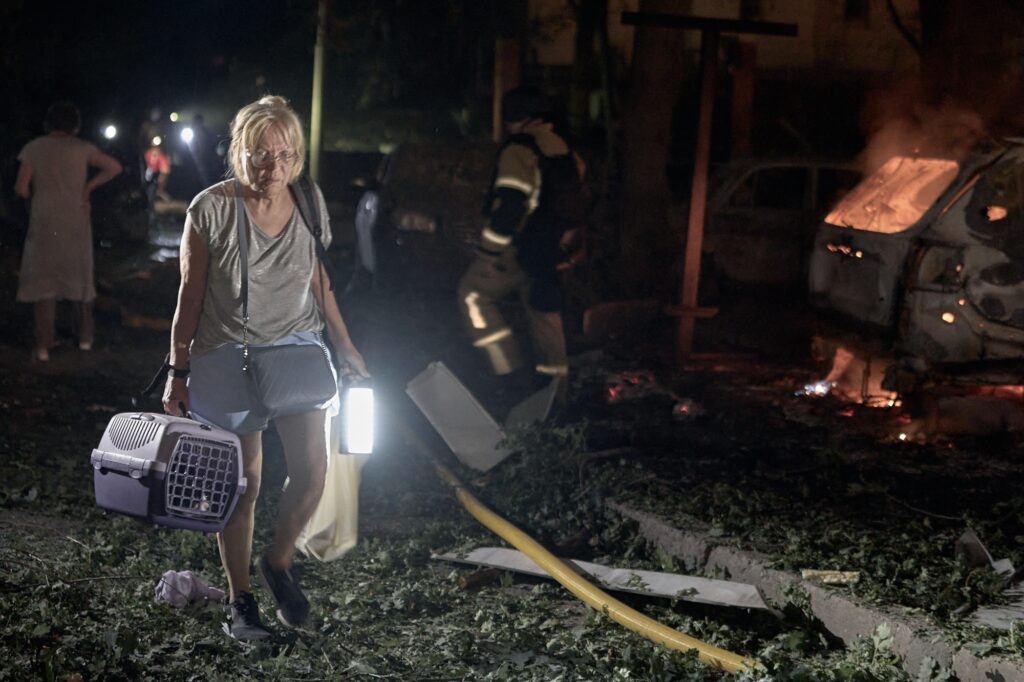
In Ukraine, war does not only come through the front line. It shows in the stairwells blackened by fire, children carried to shelters at night, medics saving neighbors even when their own emergency stations are damaged, artists returning to homes that no longer exist.
Photo: Libkos 02/07/2026
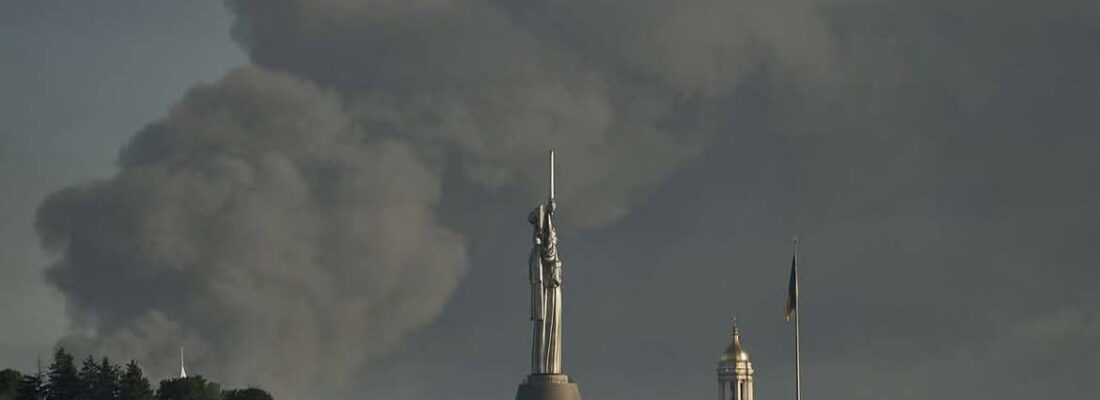
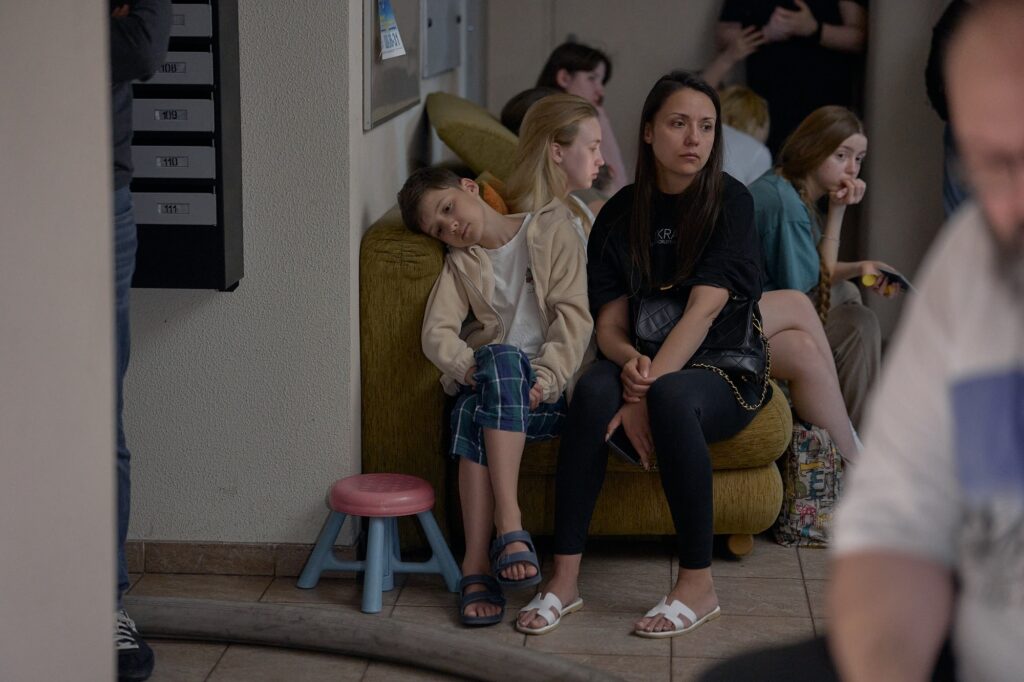
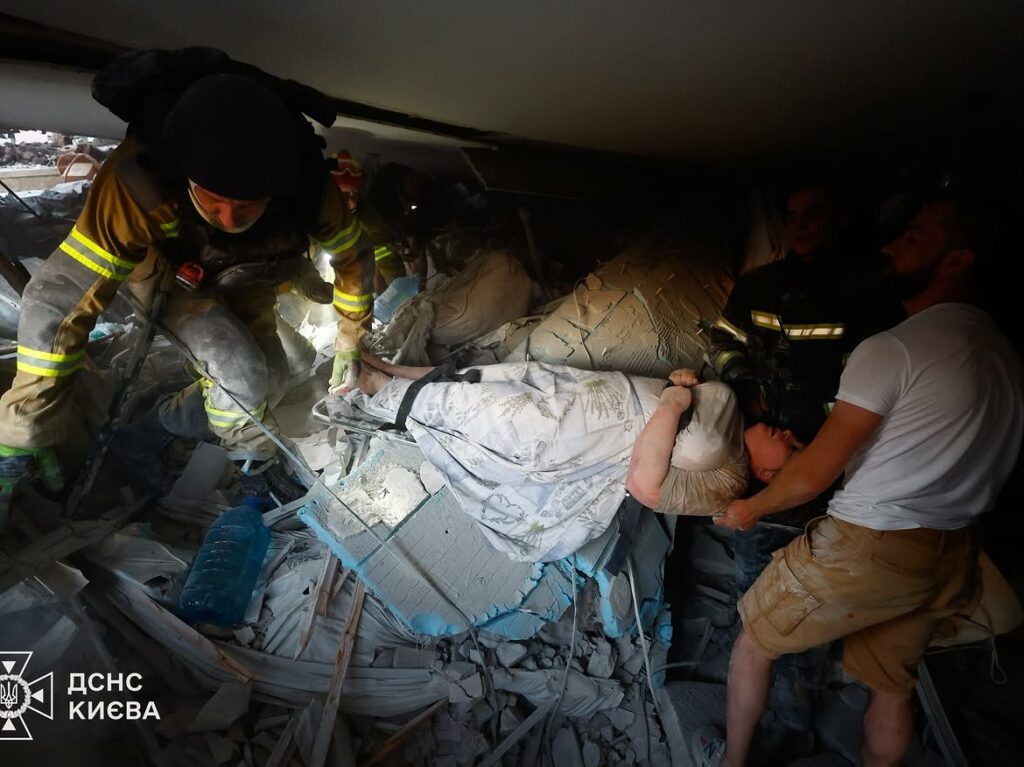
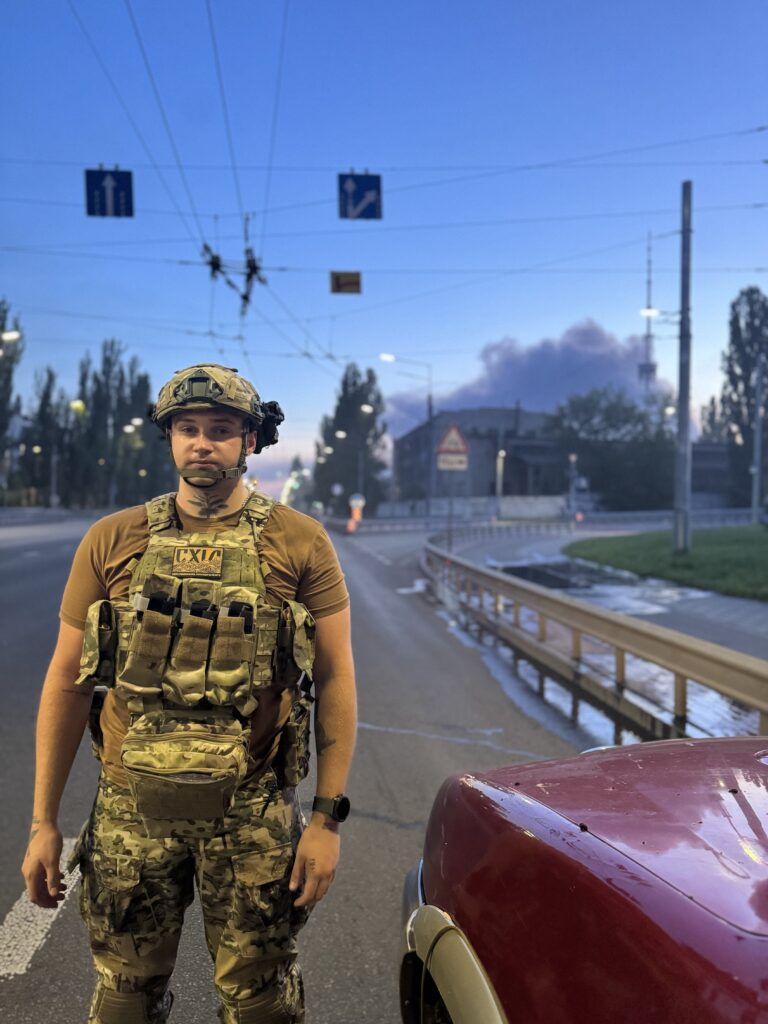
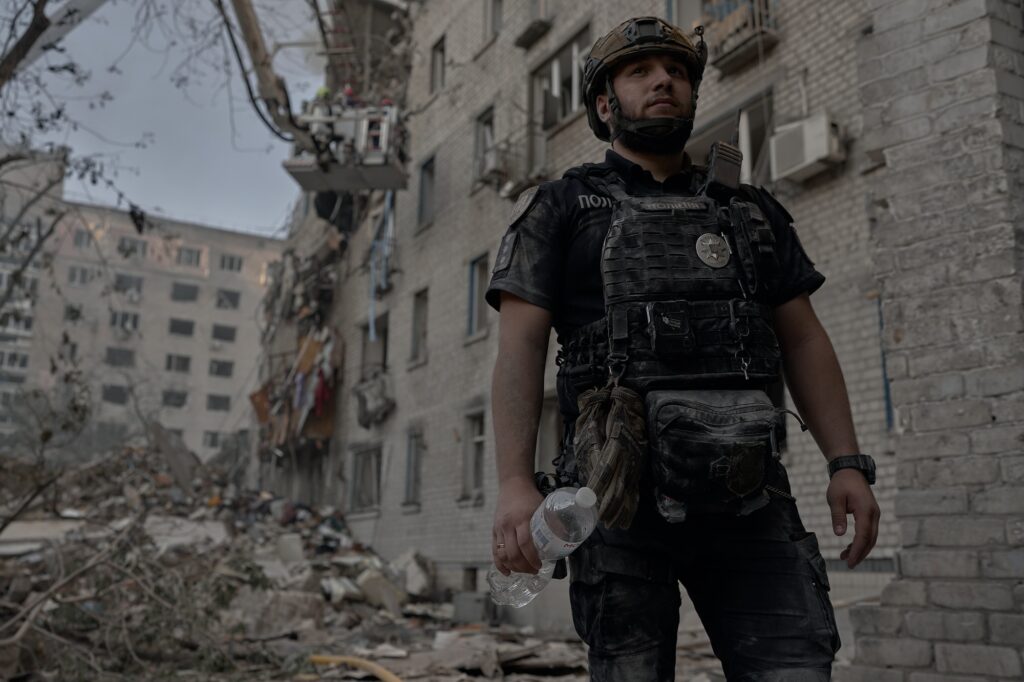
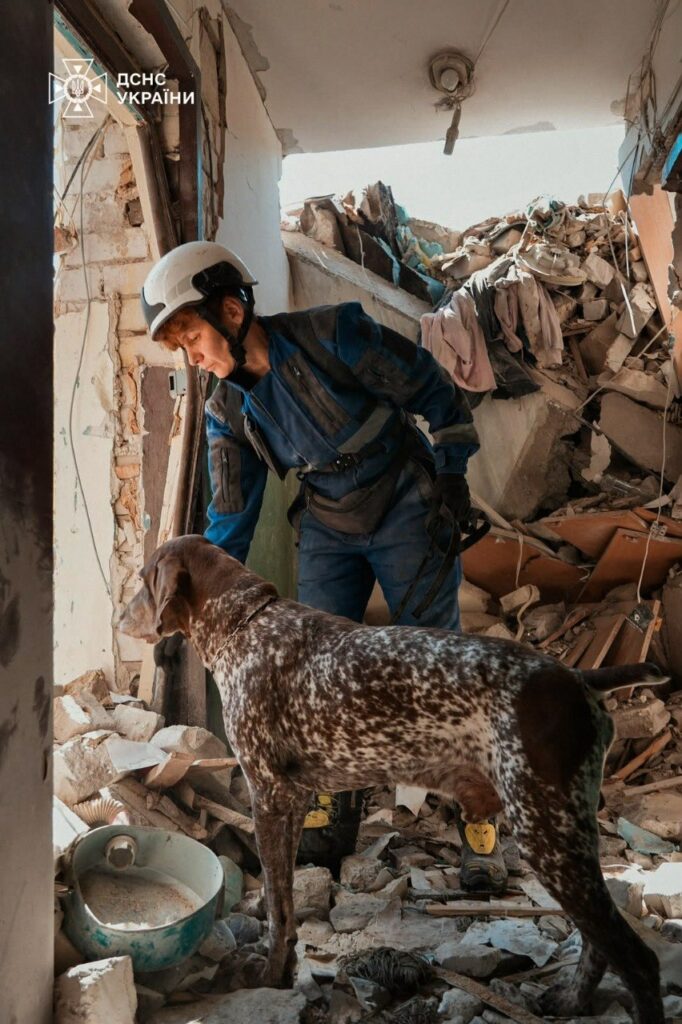
On the night of July 2, Kyiv once again woke up to explosions. People rushed into metro stations, basements, and hallways. They hid their children, called loved ones, and waited for news from neighborhoods where buildings were burning and rescuers were already at work.
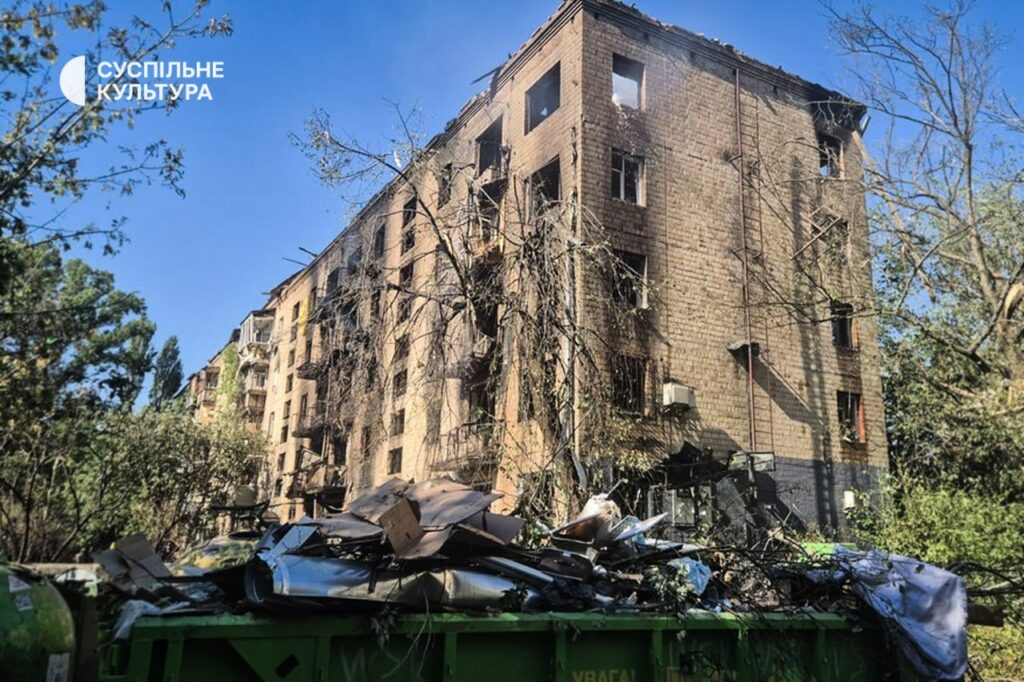
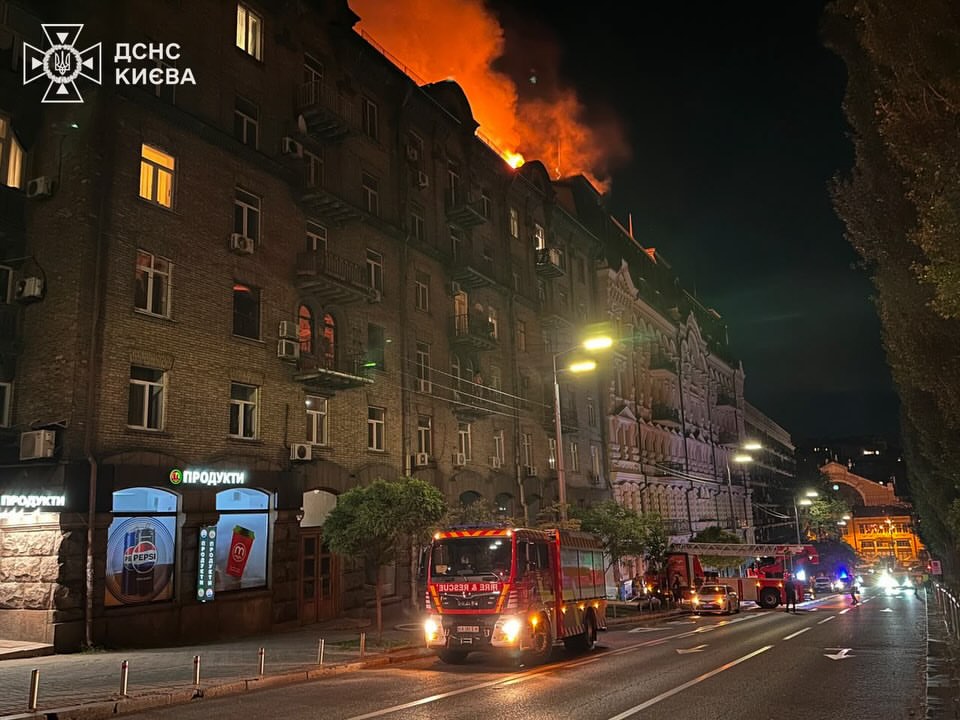
It was one of the largest combined attacks on the capital: missiles and drones struck the city in waves. Nearly 20 people were killed and dozens were injured. Among those hurt were children, residents of apartment buildings, and emergency medical workers. Homes, cars, medical infrastructure, historic buildings, and places connected to Ukrainian culture were damaged.
Photo: Libkos 02/07/2026
In Kyiv’s Shevchenkivskyi district, the apartment of cultural manager Iryna Plekhova, director of the Lira cinema, and filmmaker and screenwriter Oleh Chornyi burned down. Their building is historic, long connected to workers of the Oleksandr Dovzhenko Film Studio and their families. Two sections of the building burned completely. During the evacuation, Iryna and Oleh helped two elderly neighbors get out.
The home of filmmaker Iryna Tsilyk was damaged for the sixth time. The courtyard of Vadym Miskyi, program director at Detector Media, was also hit. These were not only damaged walls. They were places where people lived, created, preserved memories, and built Ukraine’s cultural life.
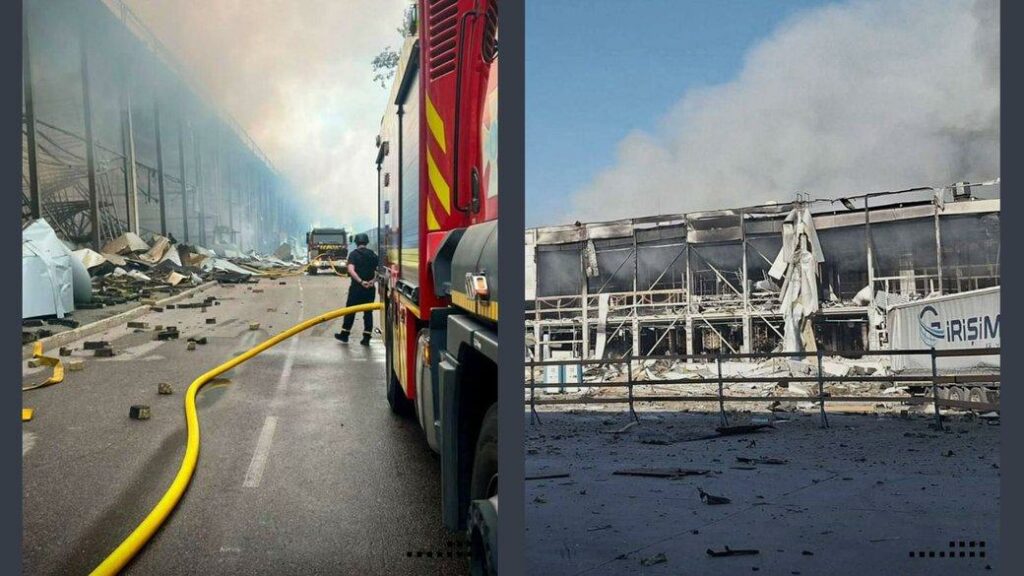
On this same day, the attack destroyed the central storage facility of the BookChef publishing house that held nearly 800 thousand books.
Civilian emergency medicine also came under attack. In Kyiv, an emergency medical station was damaged. Ambulance workers — medics and drivers — were injured, and ambulances were damaged. The people who are first to rush toward danger to save others became victims of the attack themselves.
Kyiv was not alone. Communities in the Zaporizhzhia region endured hundreds of strikes in a single day, including FPV drone attacks. In Kharkiv and the surrounding region, civilians were killed, including a 15-year-old boy, and dozens of people were injured. In the Dnipro region, drones damaged homes, cars, gas stations, and other civilian infrastructure.
On nights like this, the work of those who arrive first becomes especially visible: the State Emergency Service of Ukraine, police, medics, volunteer teams, and rapid response groups.
That night, Matviy Suslov, Razom’s Tactical Medicine Project Manager, worked in Kyiv alongside these response teams. They helped move people rescued from the rubble to safer areas and provided first aid to civilians.
“The shelling was so dense and massive that we had to move in small leaps, hide in underpasses, or quickly leave dangerous areas by car,” Matviy said. Near Lukianivka, after one of the explosions, the car doors jammed. “We were lucky the door issue was resolved quickly”.
Matvii Suslov
Kyiv Police Photo: Libkos 02/07/2026
What stayed with him most was a couple who approached and asked what had happened to their home. Their building was burning. In their eyes, he saw confusion, grief, and the disbelief of people trying to understand how life could change in a single moment.
Matvii also emphasized the work of the State Emergency Service and the police at the strike sites. For the Razom team, it was another reminder of why it is so important to strengthen the institutions that are first to stand beside people after an attack: through prehospital care training, essential medical supplies, and the ability to respond in the first critical minutes.
In moments like these, this work is not abstract. It is about real skills, real people, and real lives — Ukrainians and visitors to the country — that can be saved when help arrives in time.
Russia continues to strike civilians, children, medics, cultural workers, and families in their own homes. Ukraine continues to endure because people keep showing up for one another, even after the darkest nights.