
On the night of June 15, Russia launched one of its largest attacks in recent months.
More than 70 missiles and 611 Russian-Iranian drones were fired across Ukraine, with over 60 missiles targeting Kyiv.
The attack once again claimed civilian lives and caused extensive damage to residential neighborhoods and civilian infrastructure. But its consequences extend far beyond physical destruction.
An Attack on the Heart of Ukraine’s Faith, Culture, and History
That same night, Russia struck something that cannot be quickly rebuilt or replaced.
Ukraine’s cultural heritage came under attack.
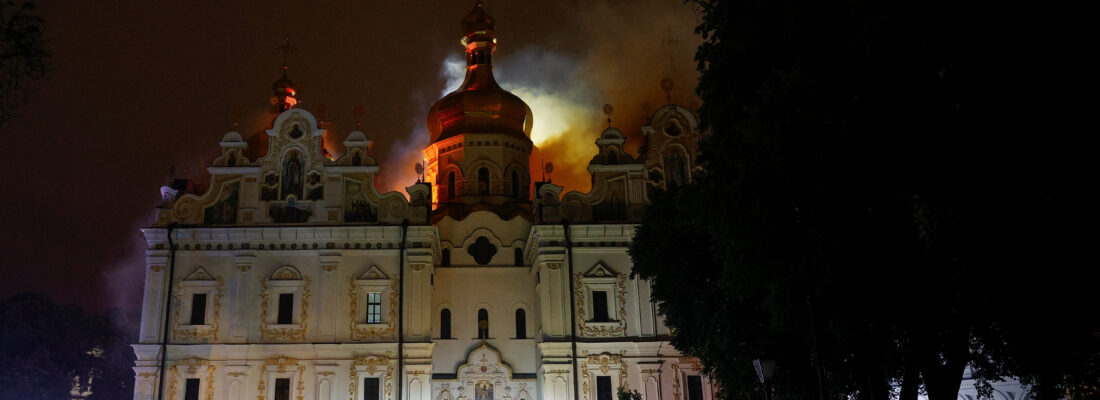
One of the most painful symbols of this assault was the Kyiv-Pechersk Lavra.
Founded in 1051, the Lavra is one of Europe’s oldest monastic complexes and a UNESCO World Heritage Site. For nearly a thousand years, it has remained a spiritual, historical, and cultural center of Ukraine.
For millions of Ukrainians, the Kyiv-Pechersk Lavra is far more than an architectural landmark. Generations have come here to pray, seek comfort, celebrate life’s milestones, and preserve a connection to their history. The site houses sacred relics, manuscripts, religious artworks, and centuries of cultural memory.
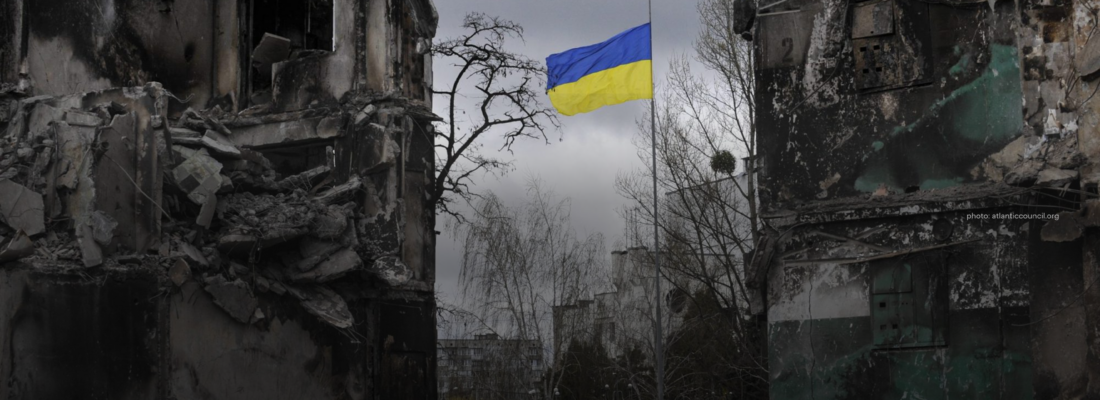
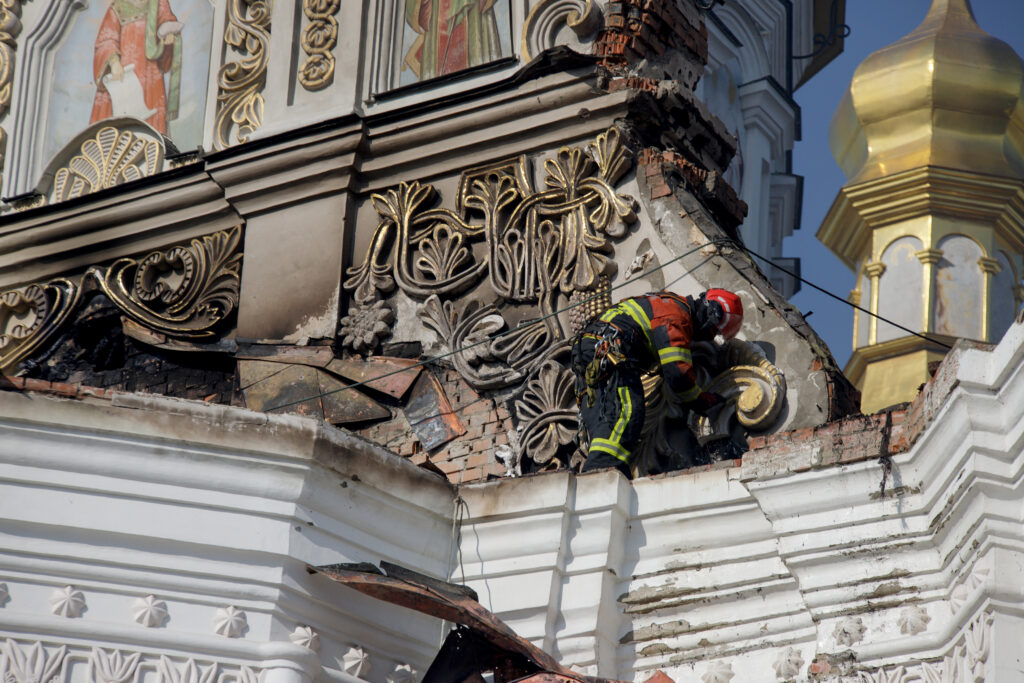
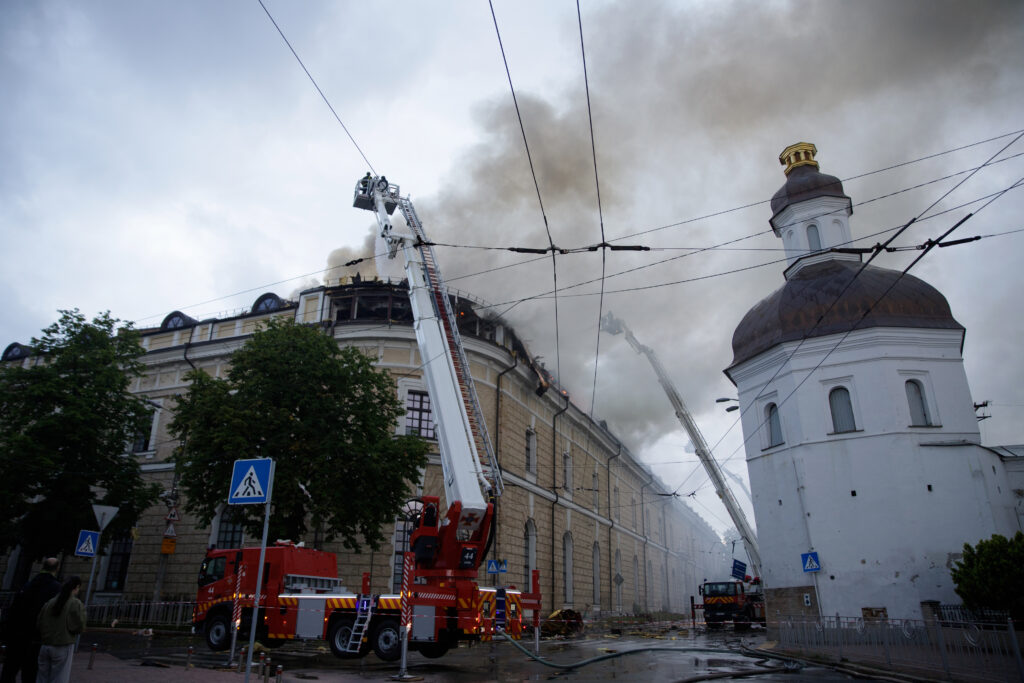
As a result of Russia’s attack, parts of the Lavra complex were damaged, and a fire broke out in the Dormition Cathedral.
“Once again, we see these barbaric acts committed by Russians, for whom nothing is sacred. It is horrifying that while calling themselves Christians, they strike at the very heart of our people. Once again, this reveals exactly who we are dealing with,” said the Vicar of the Kyiv-Pechersk Lavra following the attack.
The damage to the Lavra serves as another reminder that this war is not only directed against Ukrainian cities and communities.
It is directed against Ukrainian identity itself.
Culture Under Fire
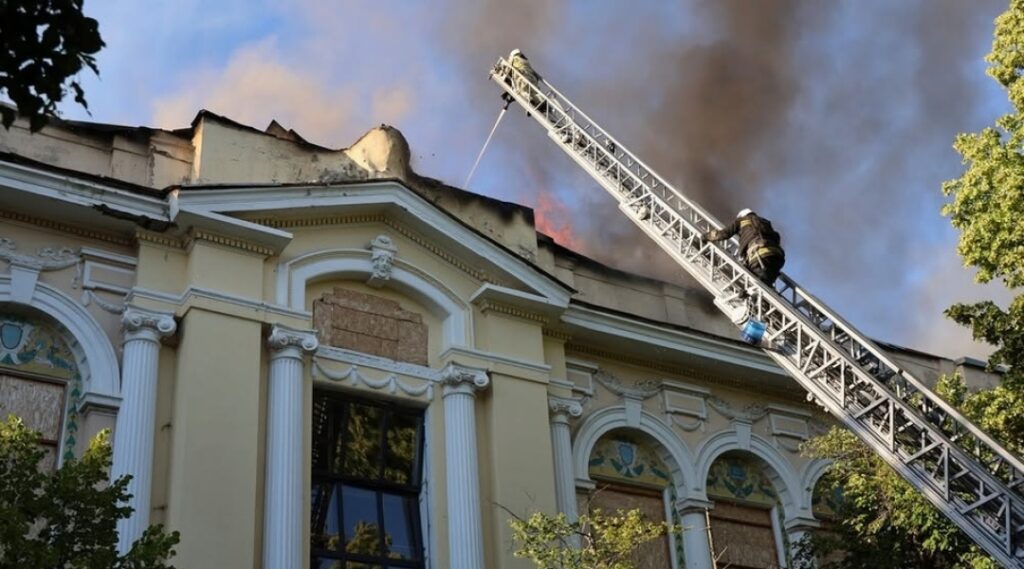
During the same attack, Russia damaged Mystetskyi Arsenal, one of Ukraine’s most important cultural institutions. The Arsenal hosts international exhibitions, educational programs, major artistic initiatives, and the country’s largest annual book festival.
Reflecting on the attack, Mystetskyi Arsenal Director General Olesia Ostrovska-Liuta drew a striking historical parallel:
“It is remarkable that the Russian drone struck the exact same location that was hit by a Nazi bomb during World War II. It is some kind of mystical coincidence — perhaps the souls of aggressors united?”
Russian strikes also damaged the Oleksandr Dovzhenko National Film Studio, the birthplace of Ukrainian cinema.
According to the studio’s officials, its primary costume archive was destroyed. Approximately 100,000 costumes and priceless archival materials documenting decades of Ukrainian film history were lost.
“Costumes from such iconic films as Shadows of Forgotten Ancestors, The Lost Letter, and Bohdan Khmelnytsky were stored here. Now this building has been completely destroyed — there is practically nothing left,” said studio director Andriy Donchyk.
Other cultural institutions damaged during the attack include the Kharkiv Art Museum and the House of Organ and Chamber Music in Dnipro.
And all of this happened in a single night.
Since the beginning of the full-scale invasion, Russia has systematically targeted Ukraine’s cultural heritage. According to Ukraine’s Ministry of Culture, as of May 2026, 1,783 cultural heritage sites and 2,540 cultural infrastructure facilities have been damaged or destroyed across the country.
UNESCO has independently verified damage to at least 534 cultural sites, including museums, libraries, historic landmarks, archaeological sites, and more than 150 religious buildings.
These figures reveal a disturbing reality: Russia is waging war not only against Ukraine’s cities and communities, but also against its historical memory, culture, and identity.
They Came to the Rescue
That same night, Russia once again demonstrated its complete disregard for human life.
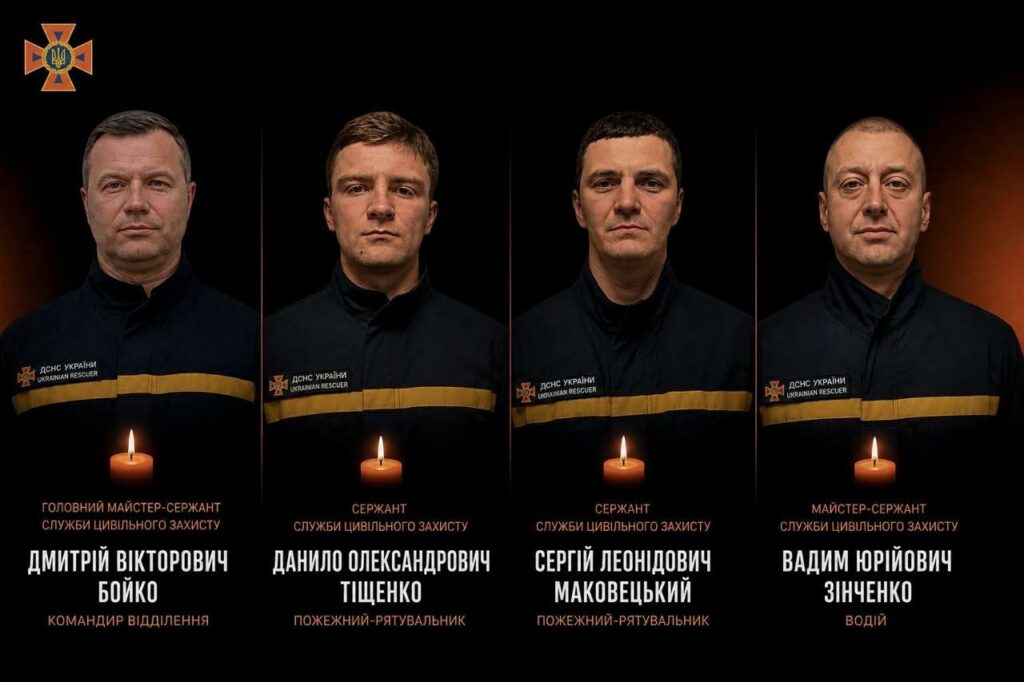
In Kharkiv, five emergency responders from Ukraine’s State Emergency Service (DSNS) were killed.
After an initial strike on a civilian industrial facility, emergency crews arrived to assist victims and assess the damage.
They were doing what they have done every day since the start of the full-scale invasion: searching for survivors, helping the wounded, extinguishing fires, and protecting communities.
After receiving warnings of a possible second strike, the rescuers left the facility and moved to another location, following safety protocols.
Moments later, a second missile struck near where they had gathered.
Five emergency responders were killed instantly.
Several others were injured.
“One of the missiles struck approximately 30 meters from the rescuers, who had managed to leave the facility and were standing in a wooded area near the fence. Unfortunately, the missile struck directly at those who save lives,” said Bohdan Hladkykh, Director of Kharkiv’s Department of Emergency Situations.
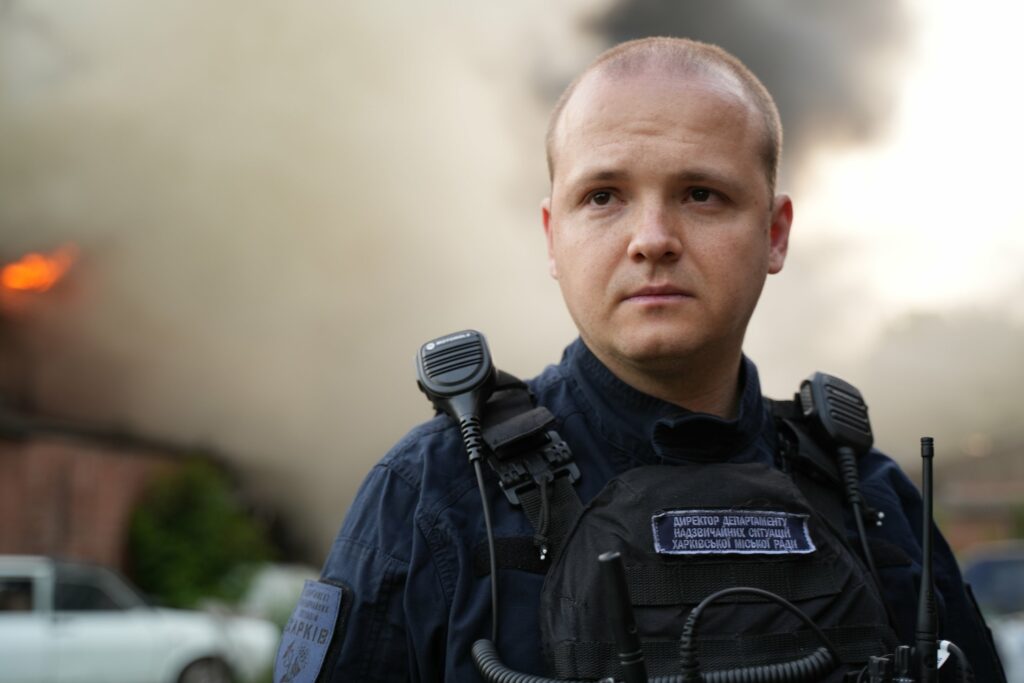
These men were not soldiers. They were not engaged in combat. They had come to save civilian lives.
Russia’s double-tap strikes have become one of the most dangerous and deliberate tactics of this war. After an initial attack, emergency responders, medics, and rescue crews arrive at the scene. A second strike then follows.
The targets are the people helping others.
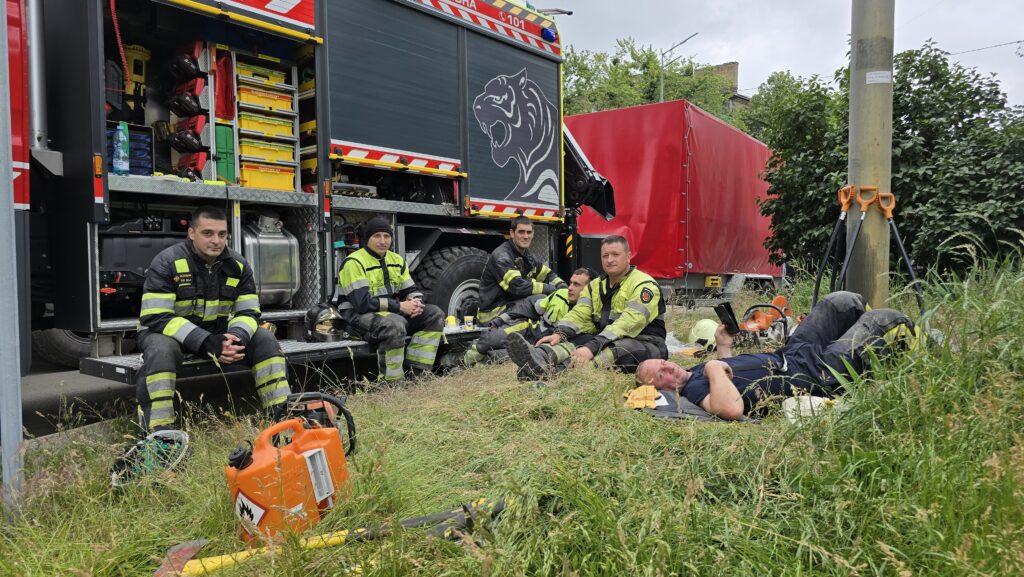
Since the first day of the full-scale invasion, Razom has supported emergency responders, firefighters, medics, and rescue teams across Ukraine. They are often the first to arrive after an attack and the last to leave once the rescue operation is complete.
Their service is a service to life itself.
That is why the deaths of these five rescuers in Kharkiv represent a tragedy not only for their families and colleagues, but for all of Ukraine.
The Goal Is Not Only Destruction
When emergency responders are killed while trying to save others, it is an attack on humaneness.
When the Kyiv-Pechersk Lavra is damaged, it is an attack on spiritual heritage.
When film archives are destroyed and museums are struck, it is an attack on cultural memory.
All of these acts are part of a larger pattern.
Since the beginning of the full-scale invasion, Russia has damaged or destroyed hundreds of religious and cultural sites across Ukraine. Churches, museums, theaters, libraries, archives, and historic landmarks have all come under attack.
These are not accidental losses.
They are not unavoidable consequences of war.
They are systematic attacks on the foundations of Ukrainian identity and resilience.
When humaneness, culture and faith are targeted, the goal is not simply destruction.
The goal is erasure.
Why This Matters to All of Us
Cultural heritage does not belong to one nation alone.
When a UNESCO World Heritage Site is damaged, when museum collections are destroyed, or when irreplaceable archives are lost, humanity loses a part of its shared history.
That is why protecting Ukrainian culture is not solely a Ukrainian issue.
It is a matter of preserving memory, history, and values that transcend borders.
At Razom, we work every day to ensure that Ukrainian stories continue to be seen, heard, and understood around the world. We document attacks on Ukrainian culture, amplify the voices of those defending their communities, and ensure that the world does not look away from efforts to erase an entire nation’s heritage.
Today, we honor the memory of the five DSNS rescuers who lost their lives while serving others.
We also remind the world of the churches, museums, archives, and cultural institutions that Russia continues to attack.
Ukraine continues to resist.
And as long as there are people saving lives, preserving culture, and telling the truth, Ukraine can never be erased.