

Razom’s Aid Glossary is a guide to the equipment we help provide—from portable power stations and generators to medical supplies and protective technologies. Each entry explains what an item is, how it works, and why it matters to those relying on it.
Through this glossary, we invite you to take a closer look at the practical solutions your generosity helps put into action across Ukraine.
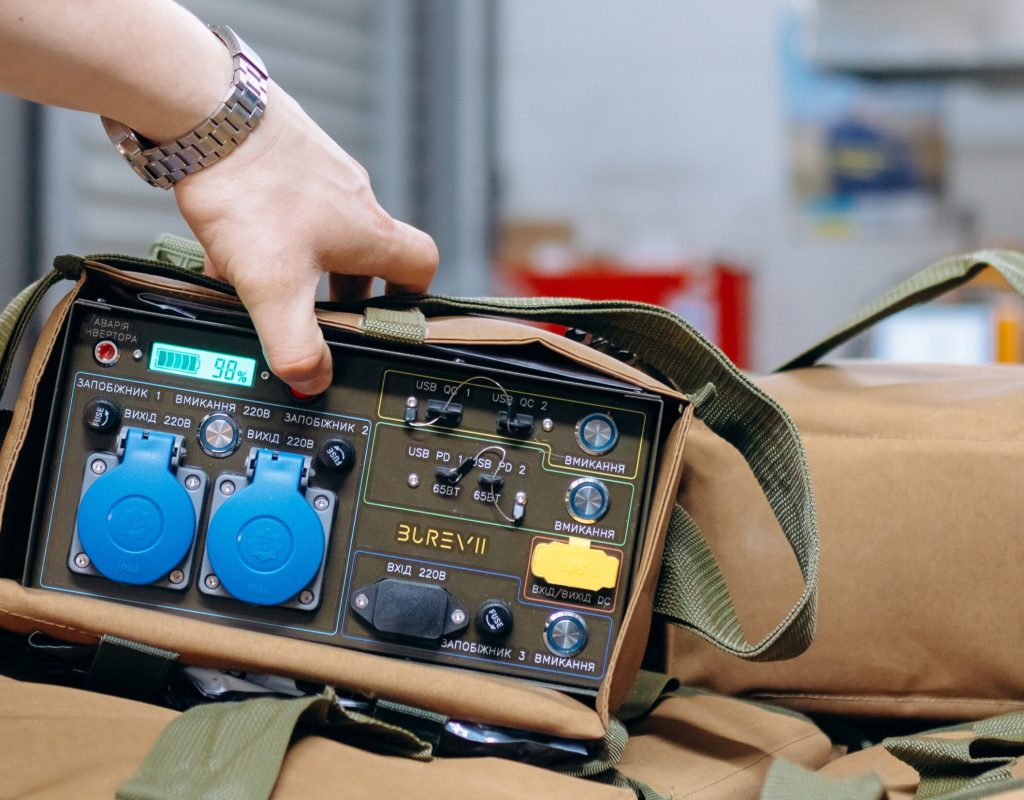
Burevii M5 та M7 — Specialized Portable Power Stations for Ukrainian Defenders
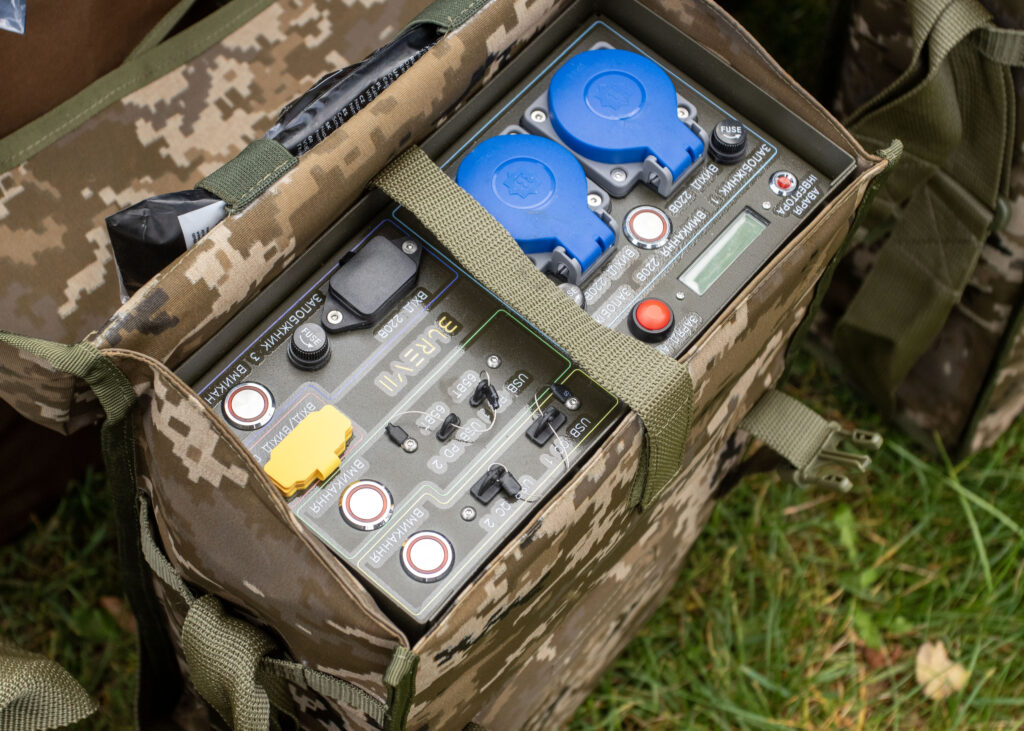
These Ukrainian-made portable power stations are specifically designed to meet the needs of military personnel. Unlike standard consumer power stations, they are built to withstand demanding field conditions.
What can they power: Radios, phones, tablets, laptops, electric kettles, Starlink terminals, certain medical devices, and blood storage equipment — provided the devices’ power requirements and connections are compatible with the station.
Why are these power stations particularly useful for Ukrainian defenders?
• Rugged, protective casing designed to withstand demanding operating conditions.
• Enhanced resistance to field conditions, including moisture.
• Easy to transport: Each station comes with a carrying bag or backpack, making it easier to move the equipment between locations.
• Power for multiple devices: They can supply electricity to several compatible devices simultaneously.
• No fuel or exhaust emissions: They operate without fuel and produce no exhaust fumes.
Real-world example: A medical evacuation team is moving between locations. They can carry the power station in its dedicated bag and quickly set up backup power for communication equipment and compatible medical devices.
EcoFlow, Altek, BLUETTI, and Other Portable Power Stations — Reliable Power for Medical Stabilization Points, Schools, and Community Organizations

Imagine a large power bank, but instead of charging just one phone, it can supply electricity to multiple devices, even when the main power grid is down.
What can they power: Lighting, laptops, projectors, communication devices, chargers, certain medical equipment, and other compatible devices.
How does this work at a medical stabilization point?
During a power outage, medical teams can connect lighting, a laptop, and other equipment compatible with the power station’s capacity. This allows them to maintain essential functions while the main power supply is unavailable.

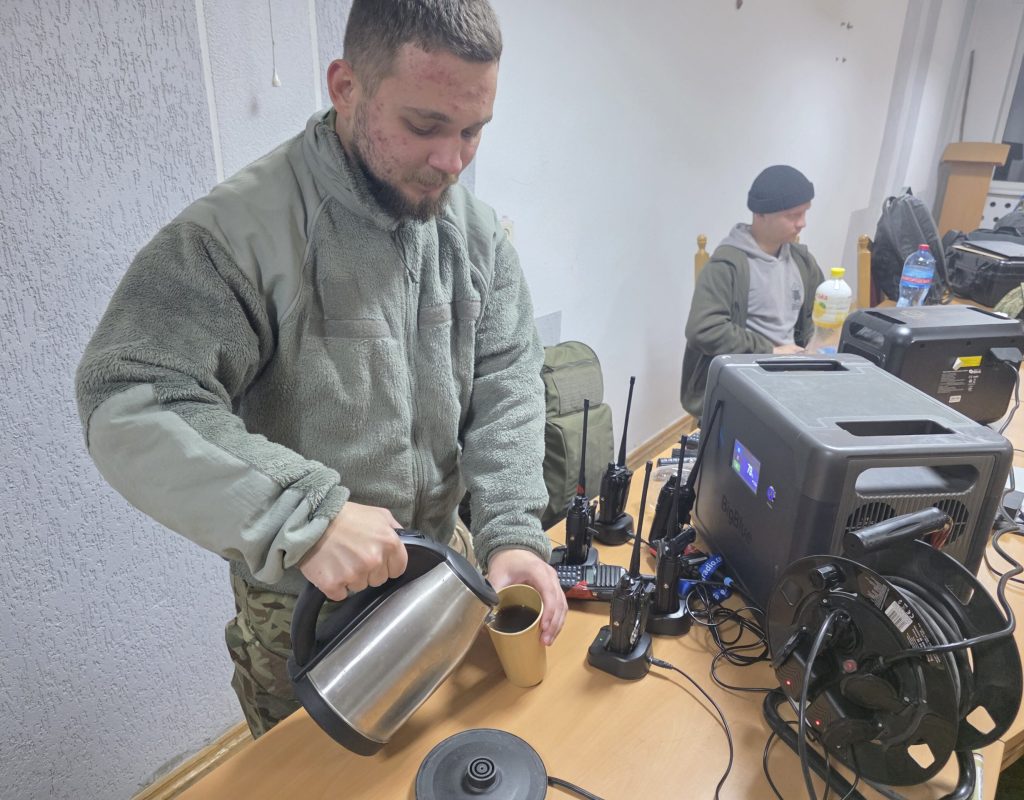
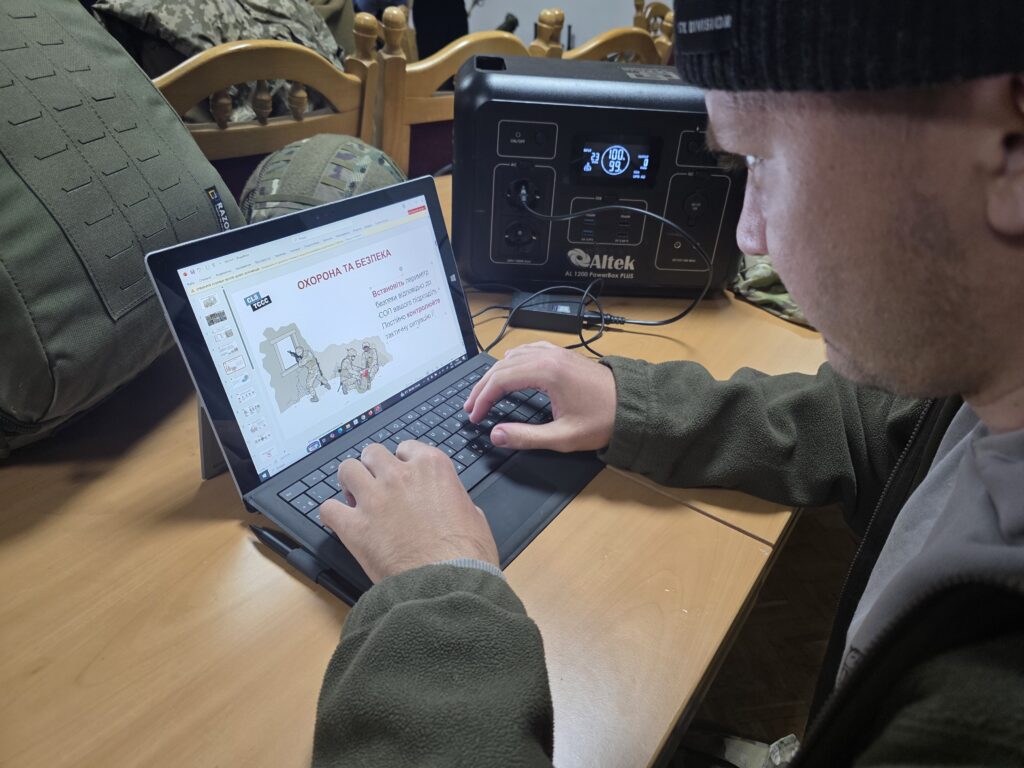
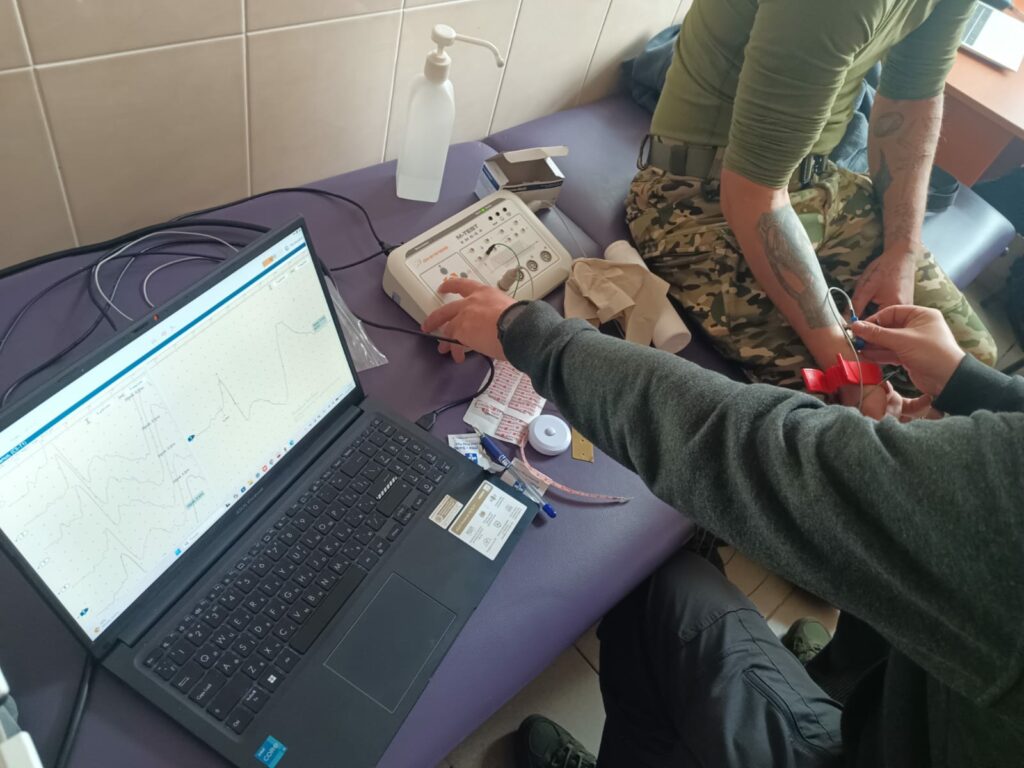
A portable power station cannot fully replace the main power grid, but it can help keep classes running and provide essential power for life-saving medical equipment during outages.
How do power stations help children continue learning?
When a school loses power, the lights go out, computers and projectors shut down, and internet equipment stops working. This disrupts classroom learning and can bring online lessons to a complete halt.
A portable power station can keep the lights on, power a teacher’s laptop, and maintain an internet connection. This allows children to continue learning even during power outages.
2.5–3 kW Inverter Generators — When Power Is Needed for Extended Periods
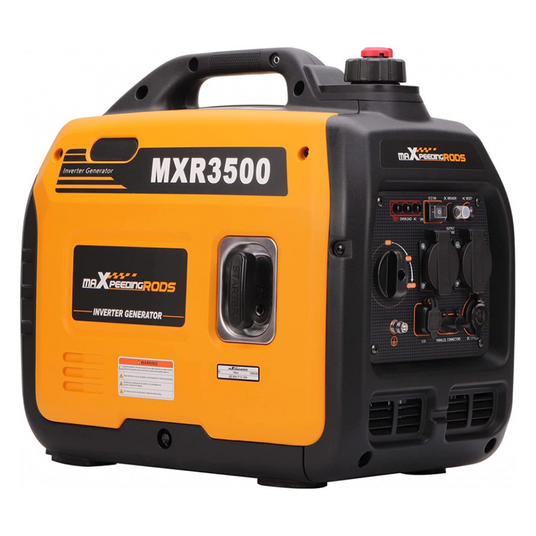
Unlike a portable power station, a generator does not simply store electricity — it produces power as long as it has fuel.
What can it power: Lighting, compatible equipment, and the charging of batteries and portable power stations.
Real-world example: A medical stabilization point operates for an extended period without access to the main power grid.
The generator can recharge portable power stations and supply electricity to some of the equipment. When the generator is turned off, the charged power stations continue providing backup power.
Generators must always be operated outdoors, at a safe distance from buildings, because of the risk of carbon monoxide poisoning.
A generator does more than help people get through a few hours without electricity. It can keep essential equipment running for extended periods, as long as fuel is available.
Generators — The Primary Source of Electricity for Villages Without Power
In Ukraine, some villages have been without access to the main power grid since 2022 or 2024. For residents of these communities, a generator is not just a temporary solution for a few hours — it is their primary source of electricity.
How are generators used:
• Provide lighting for homes.
• Charge phones so people can stay connected.
• Power refrigerators to store food and medicine.
• Support the operation of humanitarian aid centers and medical facilities.
• Allow laptops to be charged and internet connections to be maintained so children can continue learning.
Real-world example:
A village has been without electricity for more than two years. Without a generator, residents cannot use everyday electrical appliances. To charge a phone, run a refrigerator, or enable children to attend online classes, they need to start a generator.
A generator produces electricity as long as it has fuel. Once the fuel runs out, the power supply stops again.
Important: A 2.5–3 kW generator cannot supply electricity to an entire village. These generators are designed to power individual homes, buildings, or small facilities, provided their electrical demand is within the generator’s capacity.
Industrial Generators — Life-Saving Backup Power
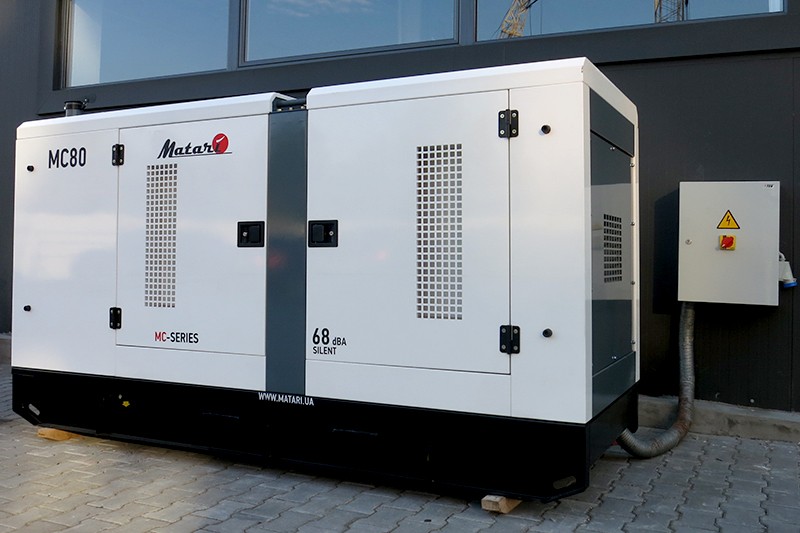
High-capacity generators designed to supply electricity to essential hospital systems. Unlike small portable generators, they can handle significantly greater electrical loads.
What Can They Power?
● Operating rooms and medical lighting.
● Mechanical ventilators.
● Intensive care unit (ICU) equipment.
● Patient monitors and other life-sustaining medical devices.
● Refrigeration equipment for storing medicines and blood products.
● Other critical hospital systems.
● Water supply and wastewater treatment facilities during blackouts.
● School operations and heating systems.
● Other critical infrastructure.
The specific equipment and systems that can be powered depend on the generator’s capacity and the facility’s backup power configuration.
How Are They Used?
A surgical procedure is underway, or medical staff are treating a critically ill patient in an intensive care unit. Suddenly, the power goes out.
Without backup power, life-sustaining medical equipment could stop working. For a patient on a ventilator or undergoing complex surgery, such an interruption could be fatal.
A generator provides backup electricity, allowing medical teams to continue treating patients, performing surgeries, and saving lives even during prolonged power outages.
Real-World Impact:
Generators delivered by Razom to Ukrainian hospitals several years ago continue to make a difference today. This equipment is not a one-time solution — it can serve for years, helping hospitals maintain essential medical services during energy crises.

These are compact, portable batteries that are easy to carry.
What can they charge: Phones, small flashlights, and other low-power electronic devices.
Real-world example: A humanitarian aid volunteer travels to a community without electricity.
The phone is essential for communication, navigation, and coordinating aid efforts. A power bank allows the volunteer to charge it without access to an electrical outlet.
A standard power bank can recharge a smartphone several times, but it cannot power an electric kettle, refrigerator, or high-powered medical equipment.
Even a small portable battery can help people stay connected.
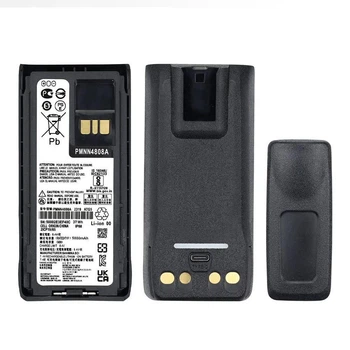
These are replacement batteries designed for specific devices that can be quickly swapped out when they run out of power.
What can they power: Radios, flashlights, certain portable medical devices, and other equipment that uses compatible batteries.
Real-world example: A medical team uses portable radios to coordinate an evacuation. When one battery runs out, they simply replace it with a fully charged one. There’s no need to wait for the radio to recharge.
MEDICAL AID
STABNET
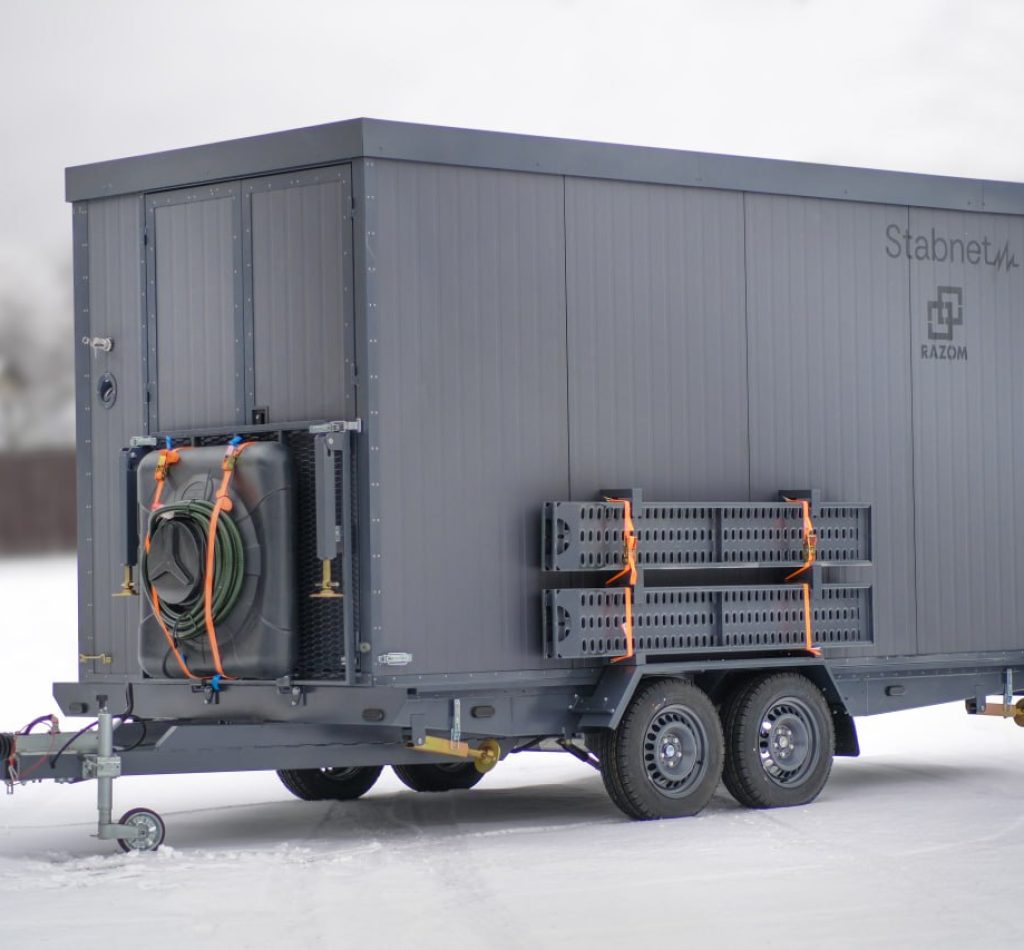
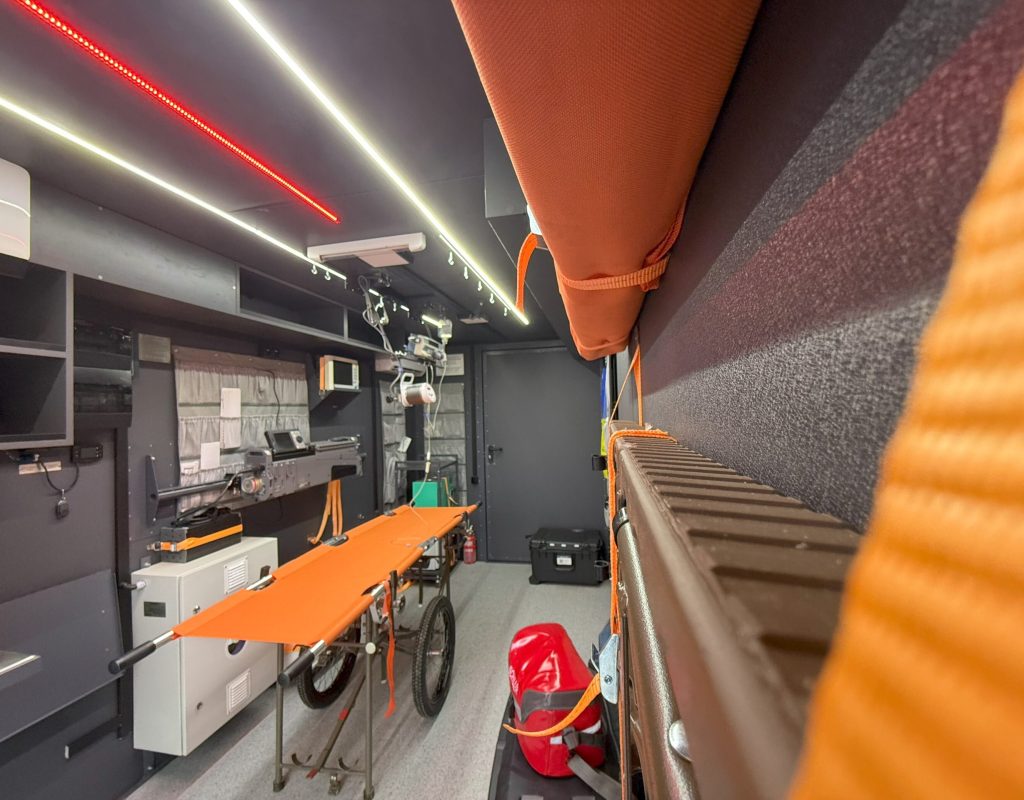
STABNET is a mobile medical stabilization unit designed to provide emergency medical care in combat conditions. Manufactured in Ukraine, it features specialized equipment, including autonomous systems and a dual-generator setup that enables round-the-clock operation.
STABNET allows medical teams to provide critical care to severely wounded service members, helping reduce the risk of amputations and improve their chances of survival.
How Does It Work in Practice?
Instead of waiting for a lengthy evacuation to a hospital, a wounded service member can receive essential medical care at a fully equipped mobile stabilization unit. Here, medical teams can monitor vital signs, support breathing, control bleeding, and stabilize the patient before further evacuation.
These mobile units help reduce the time it takes to receive critical medical care, improving wounded service members’ chances of survival.
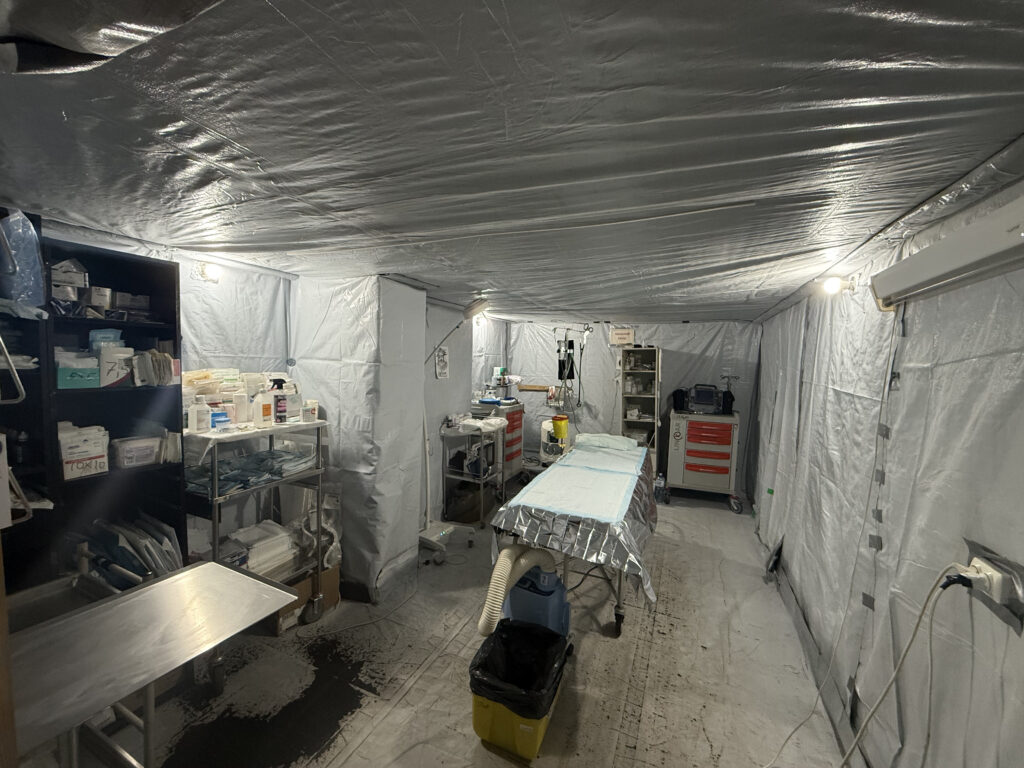
A mobile medical care facility that provides emergency treatment in extreme conditions, including wartime. These stabilization points are equipped with essential emergency medical supplies and equipment, including IV infusion systems, respiratory support equipment, medications, and tools for initial treatment.
These facilities play a critical role in saving lives during wartime. They are established as close to the front line as possible and can be located either above ground or underground.
How Does It Work in Practice?
A wounded service member is evacuated to a medical stabilization point, where the medical team assesses their condition, controls life-threatening bleeding, supports breathing, and performs essential stabilization procedures.
The medical team’s priority is to provide emergency care and prepare the patient for the next stage of treatment.
To do this, medical teams need medical instruments, consumable supplies, lighting, patient monitoring equipment, and a reliable power supply.
Portable power stations, generators, and other compatible equipment help maintain lighting, communications, and the operation of essential medical devices during power outages.
Razom supports Ukrainian medical teams by providing medical equipment and backup power solutions that can be used at stabilization points.
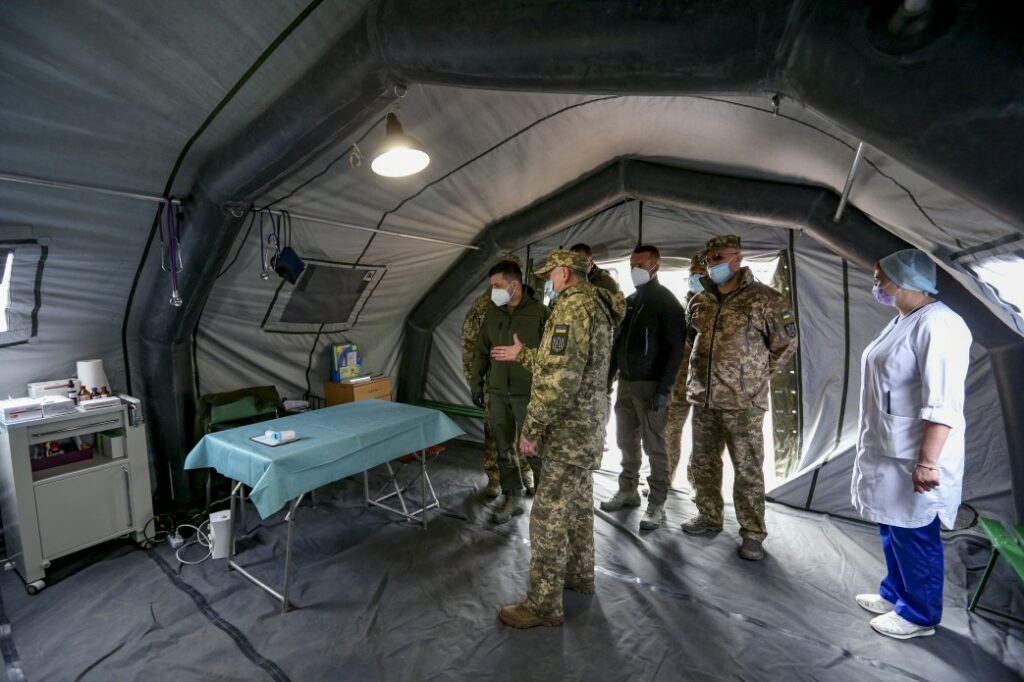
A medical facility equipped with highly mobile medical equipment to provide care to military personnel during combat operations. It enables rapid and effective treatment, particularly when wounded service members need immediate stabilization.
A mobile field hospital can be located approximately 20–30 km (12–19 miles) from the combat zone, allowing medical teams to provide care sooner and improve patients’ chances of survival.
How Does It Work in Practice?
It is not always possible to transport a wounded service member to a permanent hospital quickly. A mobile field hospital makes it possible to provide medical care closer to the areas where it is needed most.
In a specially equipped facility, medical teams can perform essential procedures, stabilize patients, and prepare them for further treatment.
Operating a mobile field hospital requires medical equipment, instruments, consumable supplies, reliable power systems, and communication devices.
Razom works to strengthen Ukraine’s healthcare system by providing essential medical equipment, supporting medical teams, and training healthcare professionals.
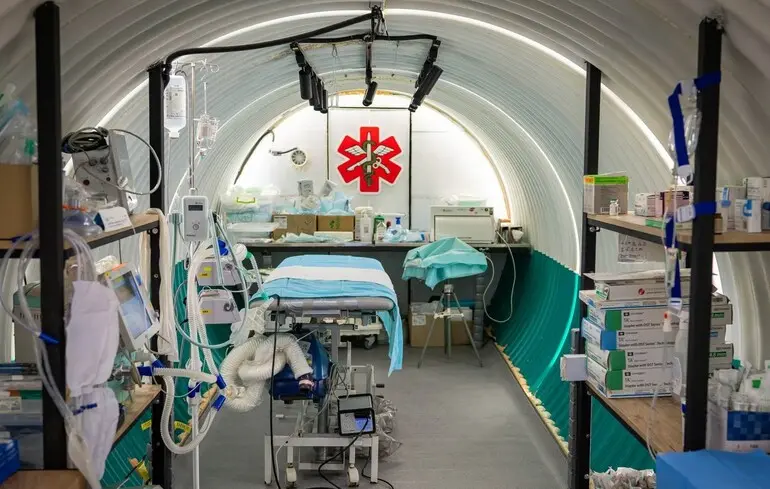
A specialized medical facility that provides initial medical care and stabilizes wounded service members. It includes operating rooms, intensive care units, workspaces, and a dedicated rest area for medical personnel.
Underground field hospitals are critical for saving the lives of wounded service members. They can be located close to the front line, allowing medical teams to provide essential care in a more protected environment.
How Does It Work in Practice?
With the constant threat of shelling, medical teams need facilities where they can treat patients while minimizing risks to both staff and patients.
Underground field hospitals can include operating rooms, intensive care units, staff facilities, and equipment for emergency medical treatment.
However, even a protected medical facility cannot function effectively without electricity, lighting, ventilation, and life-sustaining medical equipment.
Supporting these facilities may involve providing backup power systems, medical equipment, and other critical resources.
Such solutions help create the conditions medical teams need to continue delivering essential care, even under extremely challenging circumstances.
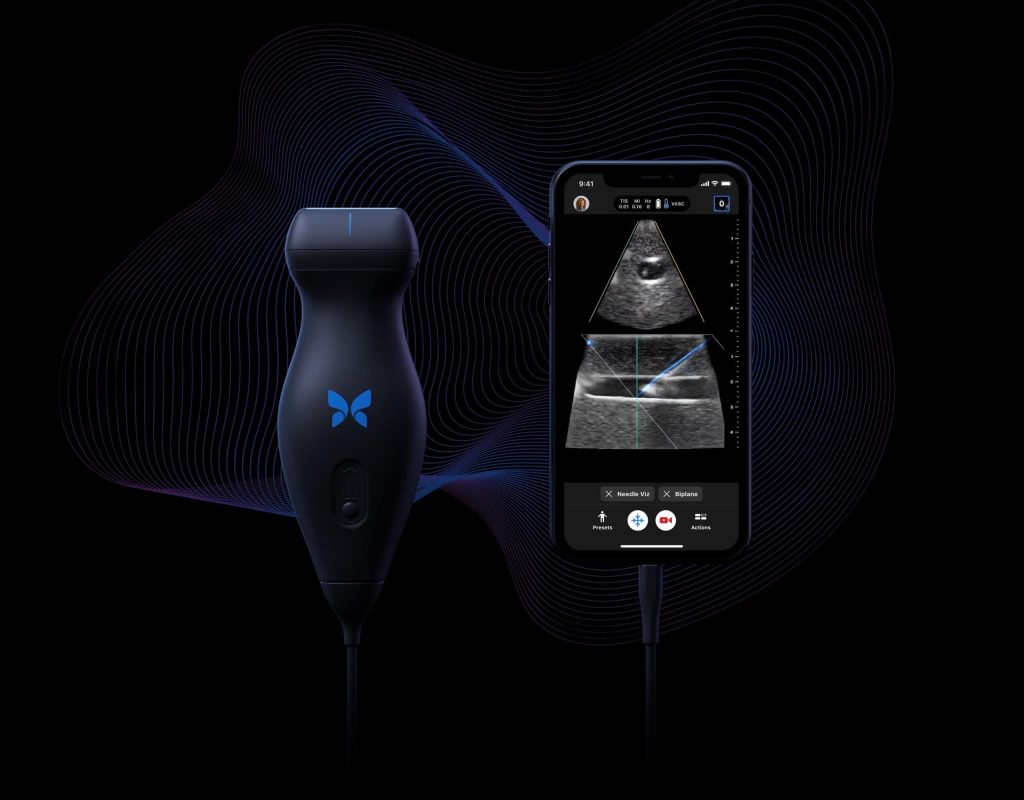
Butterfly is a compact, portable ultrasound device that allows medical professionals to examine patients without the need for large, stationary equipment.
The device consists of a small ultrasound probe that connects to a compatible smartphone or tablet. Images of internal organs are displayed directly on the screen.
Unlike traditional ultrasound machines, Butterfly uses a single, versatile probe for different types of examinations. Its compact design makes it suitable for use in hospitals, medical stabilization points, and field settings.
What Can It Detect?
Internal bleeding — including signs of fluid accumulation following an injury.
Pneumothorax — a dangerous buildup of air between the lung and the chest wall.
Fluid around the heart — a potentially life-threatening condition.
Internal organ injuries and abnormalities — within the diagnostic capabilities of ultrasound imaging.
Heart and lung problems — allowing medical teams to quickly assess a patient’s condition.
How Does It Work in Practice?
A wounded service member arrives at a medical stabilization point. There may be no visible signs of severe bleeding, but the patient’s condition is deteriorating.
A medical professional uses the Butterfly iQ to perform an ultrasound examination right at the patient’s bedside, looking for signs of internal bleeding.
This helps the medical team assess the severity of the patient’s condition more quickly, prioritize necessary interventions, and make informed decisions about further evacuation or treatment.
In challenging environments where a comprehensive examination at a hospital may not be possible, portable ultrasound becomes an essential tool for medical teams.
Razom was among the partners supporting the development of POCUS (Point-of-Care Ultrasound) — ultrasound imaging performed directly where patients receive care.
In 2023, Razom purchased 400 Butterfly ultrasound devices with tablets and supported training for healthcare professionals on how to use them.
This support helped pave the way for the broader adoption of portable ultrasound technology in Ukrainian healthcare, particularly in emergency medical settings.
With these tools, medical professionals can identify potentially life-threatening conditions more quickly, including signs of internal bleeding, pneumothorax, and fluid accumulation around the heart.
CRITICAL INFRASTRUCTURE
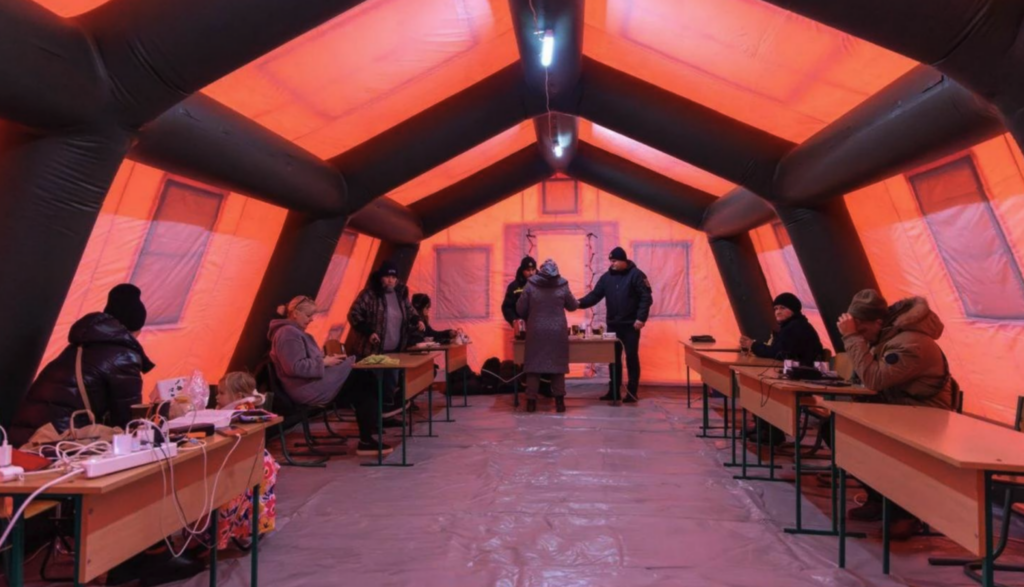
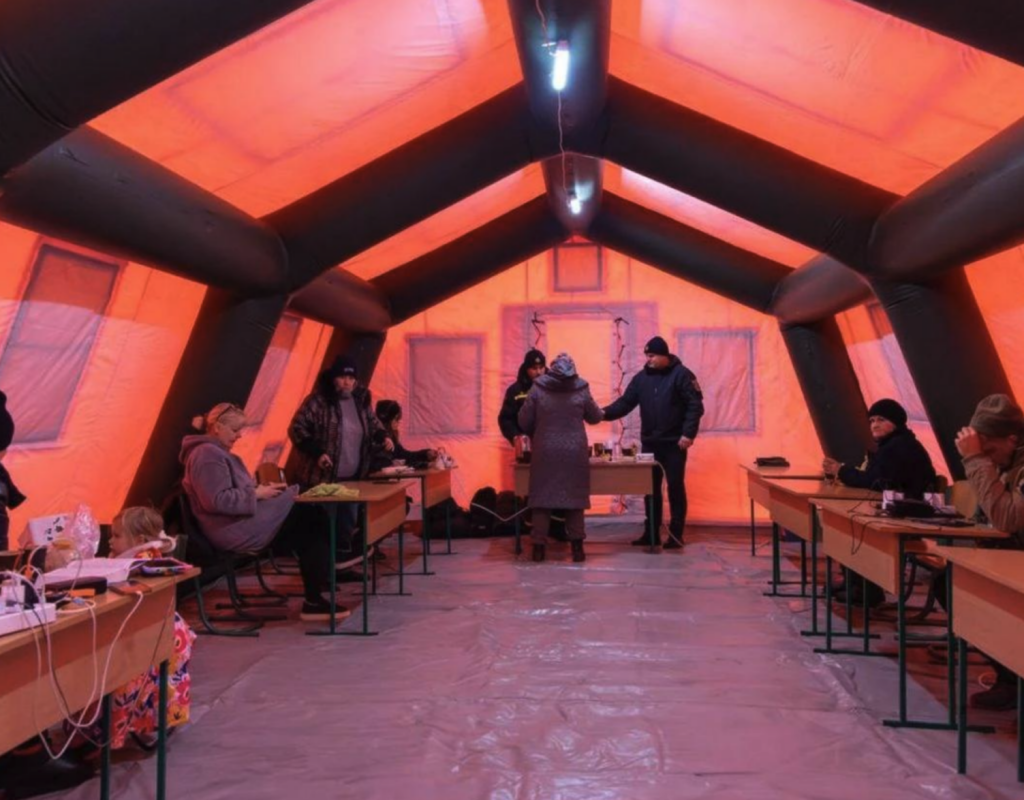
Temporary mobile aid stations that can be quickly set up near residential buildings following Russian attacks, when residents are left without electricity, heating, or water. These tents provide a place where people can warm up, charge their phones, enjoy a cup of hot tea, and receive essential assistance.
How Does It Work in Practice?
Following a Russian attack, a residential neighborhood is left without electricity or heating. Temperatures inside apartments gradually drop, phones run out of battery, and residents have no idea when essential utilities will be restored.
A Resilience Tent is set up near the affected buildings. People can come here to warm up, charge their phones, contact loved ones, and receive basic assistance.
These aid stations are especially important for older adults, families with young children, and other residents who may struggle to remain in cold homes for extended periods.
Razom Provided a Resilience Tent to the State Emergency Service of Ukraine (SESU) in Kryvyi Rih
This mobile aid station is designed for rapid deployment in areas where Russian attacks have left residents without electricity, heating, or access to essential services.
The tent enables emergency responders to set up a temporary support space where residents can warm up, receive essential assistance, and, when the necessary equipment is available, charge their phones and stay connected with loved ones.
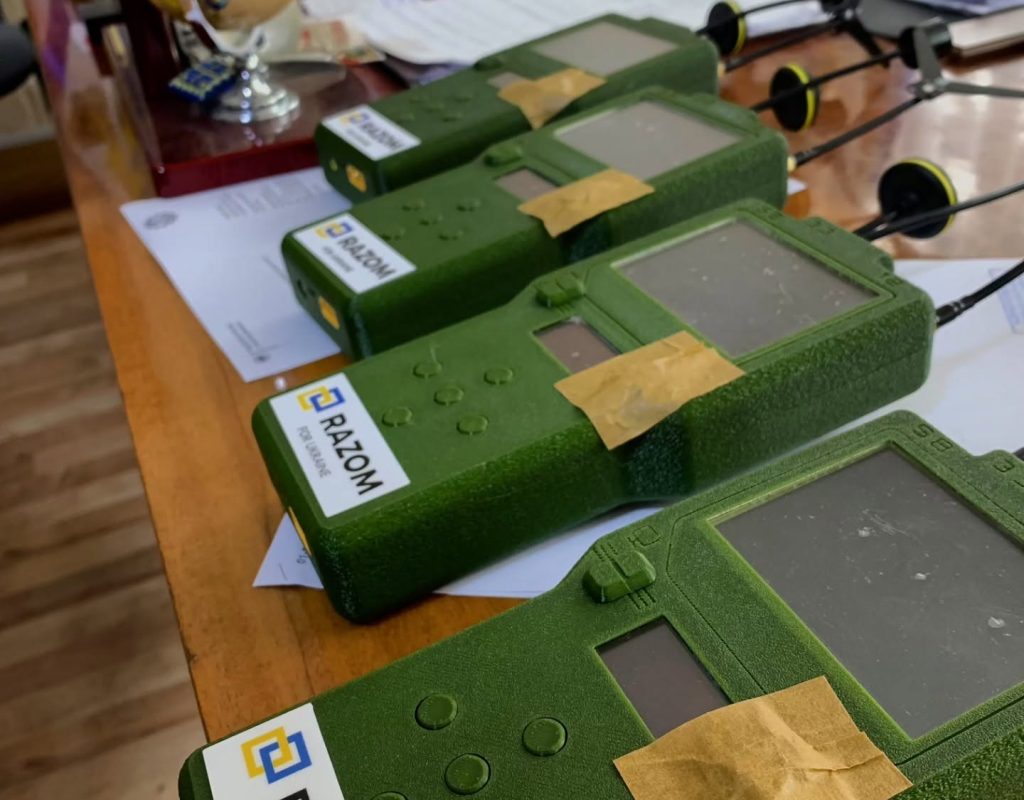
Specialized devices that help detect nearby drones and provide early warnings of potential threats.
Most portable drone detectors work similarly to radio receivers: they analyze signals that drones use to communicate with their operators or transmit video.
When a device detects a recognizable signal, it can alert the user through a sound, vibration, or an on-screen notification.
Important: A drone detector does not shoot down drones or guarantee the detection of every unmanned aerial vehicle (UAV). Its primary purpose is to provide additional time to respond to a potential threat.
Who Needs Drone Detectors?
State Emergency Service of Ukraine (SESU) responders — when responding to the aftermath of attacks and managing emergencies.
Medical personnel and evacuation teams — when transporting patients and providing medical assistance.
Utility workers — when repairing damaged networks and restoring essential infrastructure.
Social workers and volunteers — when delivering humanitarian aid and supporting residents of frontline communities.
How Does It Work in Practice?
Imagine a utility repair crew traveling to a community in the Kherson region to restore its water supply. Even routine repair work can be dangerous due to the constant threat of Russian drone attacks.
A portable drone detector can identify certain signals associated with nearby drones. If the device detects a potential threat, workers receive an alert, giving them an opportunity to take safety precautions more quickly.
A detector cannot eliminate the danger, but it provides an additional tool to help people protect themselves.
With financial support from Razom, the Ukrainian charitable foundation Obiednannia delivered 52 Ukrainian-made Dzyga drone detectors to the Kherson region.
These devices are designed to detect signals emitted by drones.
The equipment helps improve the safety of firefighters, medical personnel, utility workers, social service providers, and evacuation teams who continue serving communities under the constant threat of Russian attacks.
When selecting the equipment, the Razom team considered testing results from specialists as well as feedback from users.
This initiative demonstrates how humanitarian assistance can adapt to emerging threats and the real needs of frontline communities.