Caring for the Country by Caring for its People: Lessons from the Razom z Toboyu Forum in Bucha

In October 2025, the city of Bucha became a place of collective listening and forward-looking action. There, more than 70 practitioners, community leaders, public servants, educators, veterans, and partners gathered for the Mental Health Forum “Models of Resilience. Partnerships. Innovations,” organized by RAZOM z Toboyu, a project of Razom for Ukraine, funded by Direct Relief.

The forum asked a question that feels urgent across Ukraine today: How do we strengthen a mental health system that can meet people where they are – during war – and endure for the long recovery ahead?

A convening rooted in place-and purpose

Holding the forum in Bucha was deliberate. The city has become a symbol of profound loss and resilience, and a reminder that mental health is not an abstract policy goal – it is part of daily survival. Bringing the conversation here underscored a shared commitment to building support systems that are grounded in communities, responsive to trauma, and capable of scaling. Participants traveled from more than ten regions – from Kyiv Oblast (including Bucha, Irpin, Borodianka, and Boryspil) to Lviv, Vinnytsia, Khmelnytskyi, Ivano-Frankivsk, Zakarpattia, Zaporizhzhia, and Mykolaiv – alongside partners from the United States. Psychologists, social workers, medical professionals, veterans, educators, representatives of local government, and civil society organizations filled the room. For those unable to attend in person, the forum was also livestreamed, expanding the dialogue beyond the walls of the venue.

Bucha was the intentional, meaningful setting for the forum

What the forum explored

Across panel discussions, presentations, and a Speed Networking roundtable, the forum focused on practical questions-and practical answers:

  • How can communities support the mental health of service members, veterans, their families, and civilians living under constant stress?
  • Which innovations-digital tools, evidence-based interventions, new service models-are helping psychologists work more effectively today?
  • How do we move from fragmented efforts to systemic cooperation among government institutions, local communities, and the nonprofit sector?

Opening remarks from project leadership and partners emphasized that durable solutions depend on partnership. “This forum is not just an event—it is an effort to create a shared space for action, partnership, and responsibility. Together, we aim to identify models that truly work and to lay the foundation for a joint roadmap for the development of mental health services in our communities.”said Iryna Gudyma, Head of the RAZOM z Toboyu project.

Other speakers shared lessons learned from building psychosocial support models that prioritize trust, coordination, and local ownership-while remaining aligned with national policy and international best practices. Throughout the day, the conversations were candid. Participants named gaps in coordination and capacity, but they also shared what is working: community-based models, professional support for frontline specialists to prevent burnout, and tools that help measure outcomes rather than intentions.

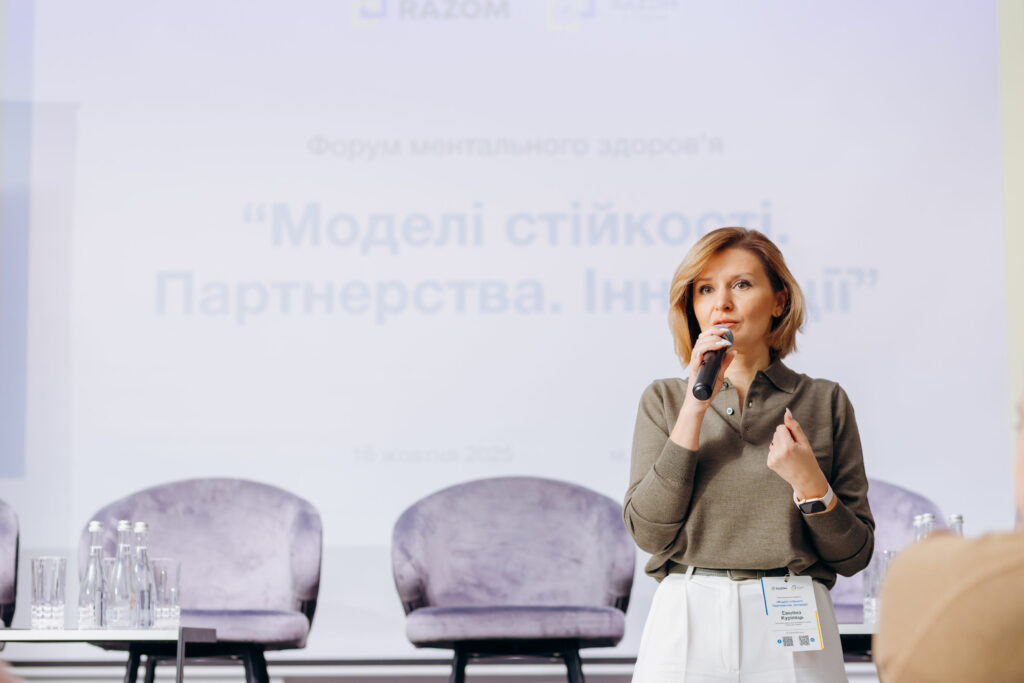
Opening remarks by Razom Executive Director in Ukraine Eva Kurilets
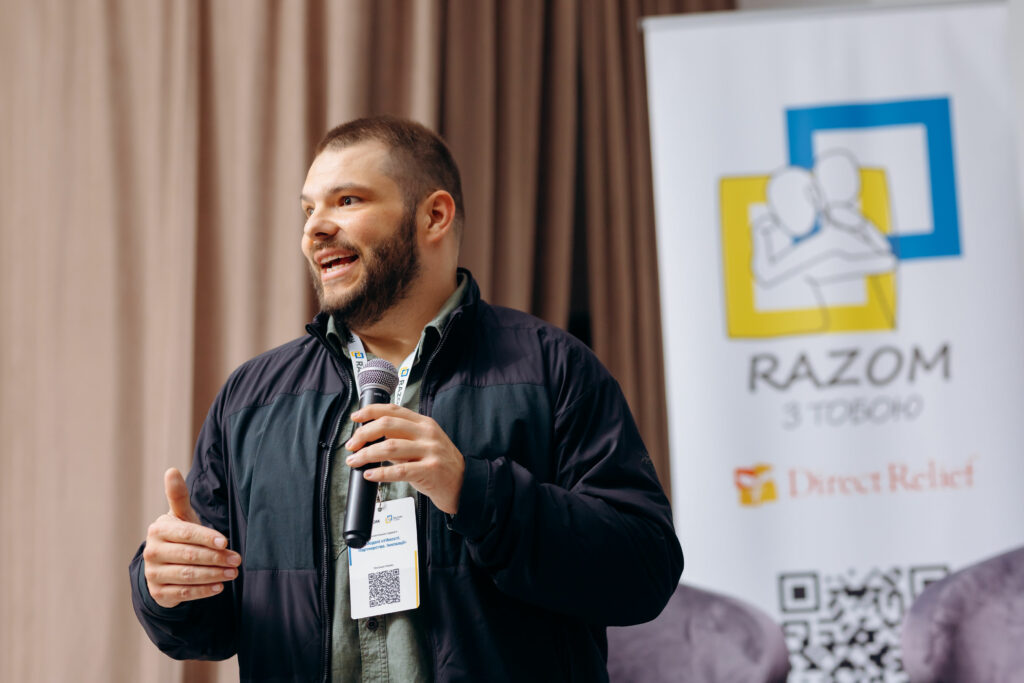
Opening remarks by Program Director of Razom Health Dan Solchanyk
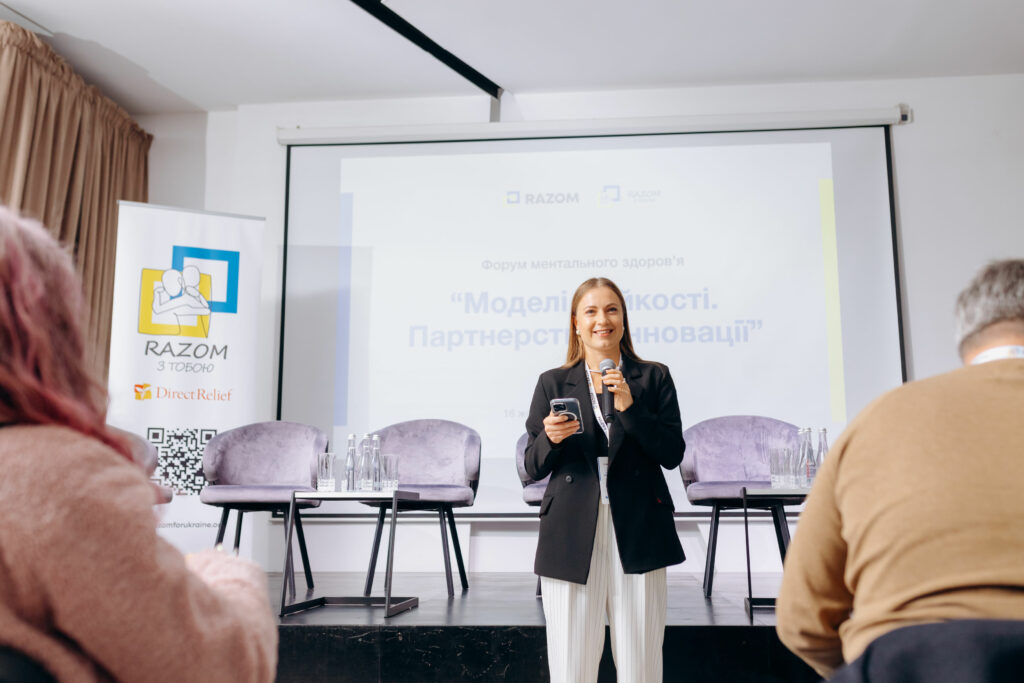
Opening remarks by Razom z Toboyu project lead Iryna Gudyma

From dialogue to a roadmap

A central outcome of the forum was the creation of a “roadmap” for intersectoral cooperation – a practical guide communities can use to develop and strengthen their own local mental health ecosystems. The roadmap that emerged from the Bucha forum translates dialogue into coordinated action. Developed on the basis of discussions, panels, and participant surveys, the Roadmap of Mental Resilience for Kyiv Oblast outlines how communities, professionals, and institutions can move from fragmented responses toward a coherent, people-centered system of psychosocial support.

At its core, the roadmap recognizes a simple truth: since the full-scale invasion, mental health has become inseparable from community resilience. Veterans, families of the fallen, internally displaced people, and civilians alike are living with prolonged stress and trauma. Addressing these needs requires more than isolated services – it requires sustained cooperation across sectors, shared standards, and trust.

The roadmap defines intersectoral partnership as the foundation of an effective system. Local governments, healthcare and education institutions, civil society organizations, and psychological centers each play distinct but interconnected roles. Communities are positioned as the first point of contact – places where people seek help and where trust is built – while specialized centers provide deeper clinical support, supervision, and methodological guidance. A third layer of organizations strengthens social cohesion through education, integration programs, and community-based activities.

Another central pillar is quality and accessibility of care. Forum participants identified stigma, low public awareness, and a shortage of specialists – especially in smaller or remote communities – as major barriers to care. The roadmap responds by prioritizing psychoeducation, clear referral pathways, and professional development for specialists. Regular supervision, peer support, and burnout prevention are not treated as optional add-ons, but as essential conditions for sustainable care.

Innovation and digitalization form a third key direction. The roadmap emphasizes that technology is not a goal in itself, but a tool for expanding reach and continuity of support. Online consultations, digital case management systems, telemedicine platforms, and emerging tools such as chatbots or AI-assisted follow-up can help ensure that people do not fall through the cracks – especially when in-person services are unavailable. At the same time, the roadmap acknowledges the need to invest in digital literacy and trust-building so these tools can be used effectively and ethically.

Importantly, the roadmap centers care for the caregiver. The sustainability of any mental health system depends on the well-being of those delivering support. Training, supervision, fair working conditions, and recognition of professional expertise are framed as investments in the resilience of the entire system.

Finally, the roadmap is not a static document. It calls for memoranda of cooperation, shared trainings, mutual referrals, joint advocacy, and continuous feedback between partners. Its ambition is practical: to ensure that no person facing the consequences of war is left alone, and that communities have the structures, partnerships, and tools they need to support recovery today and in the long term.

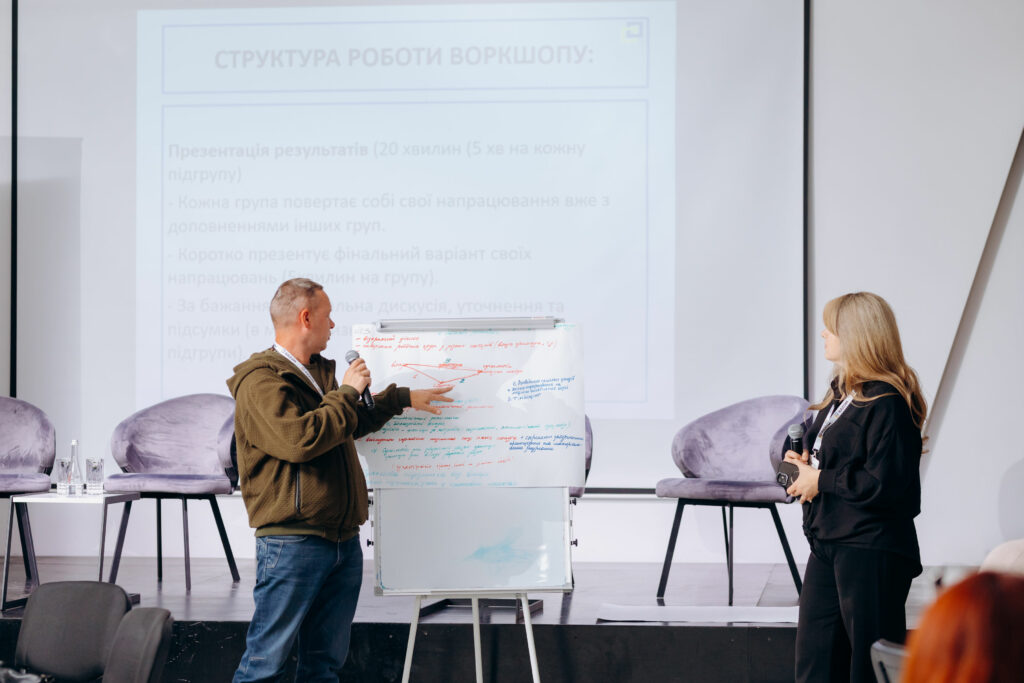
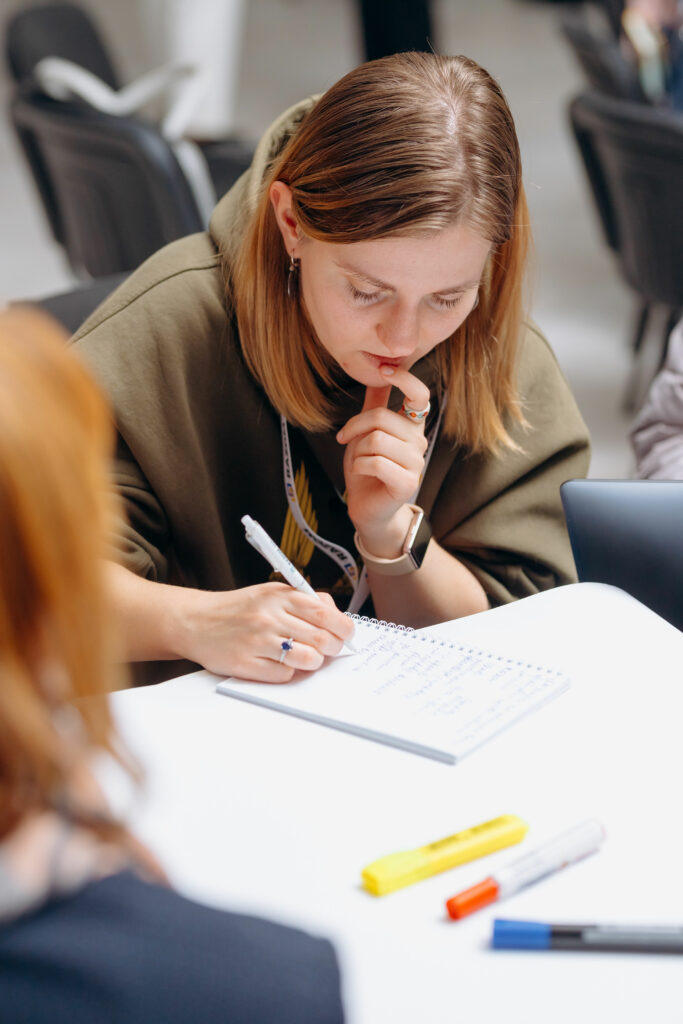
Forum participants are developing the roadmap in a series of workshop style sessions. The variety of contributors allowed to create a well-rounded, comprehensive roadmap that addresses many aspects of the mental health work in different contexts and with diverse audiences.

Ukrainian resilience-shared with the world

The Bucha forum is part of a broader conversation. In 2025, the RAZOM z Toboyu team also presented Ukraine’s experience at the Heal Ukraine conference at Harvard, sharing a model of psychological resilience shaped by the realities of full-scale war.

That model emphasizes four interconnected levels of resilience-individual, family, professional, and social-and pairs them with evidence-based individual support that tracks progress and adapts care plans over time. It also centers professional resilience, offering psychoeducation to specialists working in “human-to-human” professions, and family-based approaches that address transgenerational trauma among military families and veterans.

As Iryna Gudyma put it: “Ukraine’s experience is not only about endurance; it is about innovation under pressure. The systems being built today are meant to be accessible, measurable, and scalable-relevant not just for Ukraine, but for any society facing prolonged crisis.”

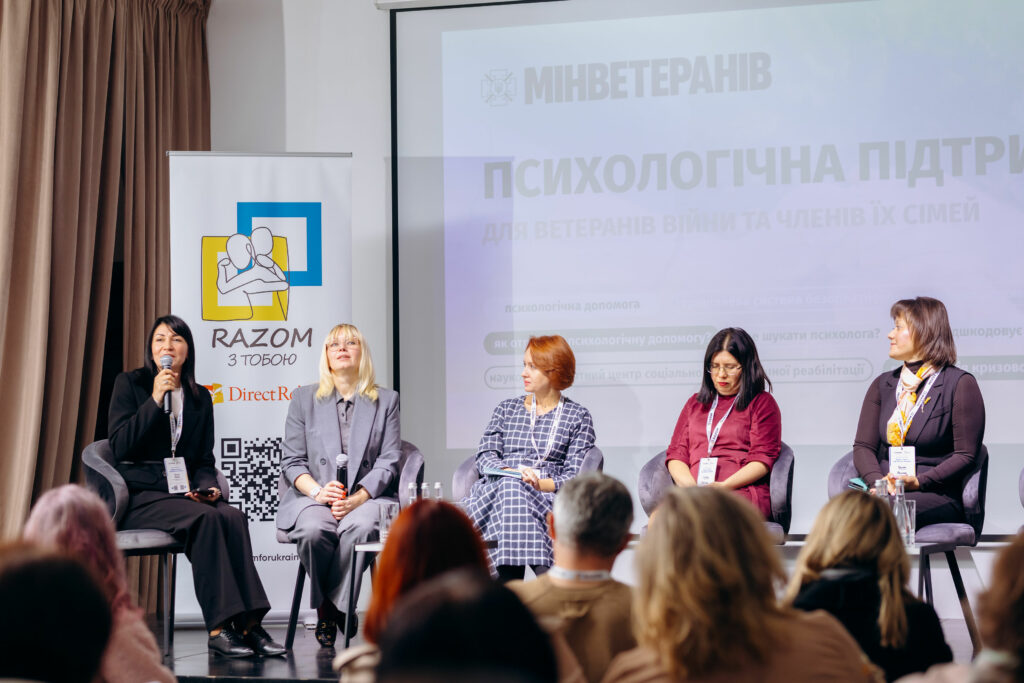
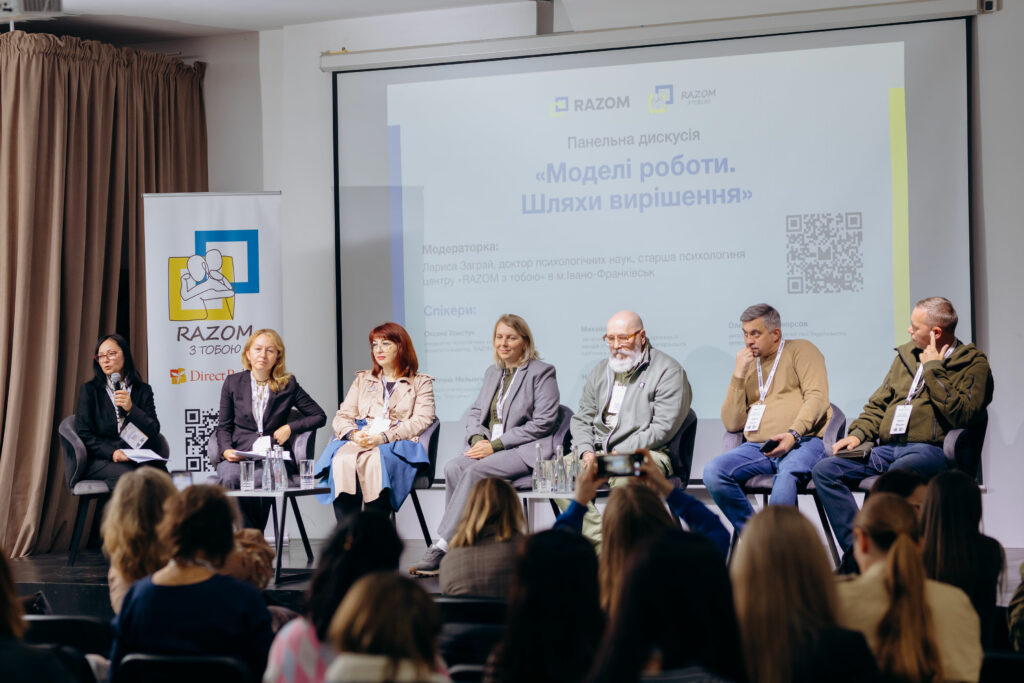
Panel discussion at the forum

Why this moment matters

Since 2022, RAZOM z Toboyu has been working to build a national system of psychological support based on trust, evidence, and partnership. A team of 40 psychologists – 12 with academic degrees – has delivered more than 28,500 individual consultations, 2,500 hours of group work, and over 440 psychoeducational trainings.

The Bucha forum marked an important milestone in that journey. It demonstrated what becomes possible when communities, professionals, and public institutions come together-not to compete for resources, but to align around people’s needs.

Resilience, the forum made clear, is not an abstract trait. It is something we build-deliberately, collectively, and in collaboration. In Bucha, that work continued, with eyes firmly on the future and a shared understanding that caring for mental health is essential to caring for the country itself.


/* */