

“Now, new jet-powered Shaheds are so fast that even the Telegram channels you rely on can’t warn you in time,” Hanna, Operations Manager for Razom’s mental health program, shares. “Before, there were a few hours of quiet. Now, non-stop exhaustion without sleep affects everything.”
Every day across Ukraine, people are still going to work, taking care of their families, running businesses, teaching children, treating patients, and helping their communities through another day of war. This is what keeps the country functioning, even as the conditions around them become increasingly difficult.
After more than four years of full-scale war, another headline about an attack on Ukraine can be easy to scroll past. Some of our colleagues have even heard people abroad ask whether the war is still going on.
The reality is the opposite of a war fading away. In the first eight months of 2026, the UN recorded more civilian casualties in Ukraine than during all of 2025.
But numbers tell only part of the story. What can look from abroad like another week of “war in Ukraine” is, in everyday life, a humanitarian crisis that reaches far beyond the front line. A destroyed business means more than a damaged building. A strike on a medical warehouse means supplies may never reach the patients waiting for them. When a school, hospital, communications network, or workplace is hit, the consequences continue long after the attack disappears from the news.
At Razom, we see those consequences through our own colleagues, grantees, and partners across Ukraine. They are treating patients, delivering aid, supporting communities, running organizations, and building for the future while navigating the same attacks as everyone around them. And over the past weeks, doing that work has become even harder.
The people behind the headlines
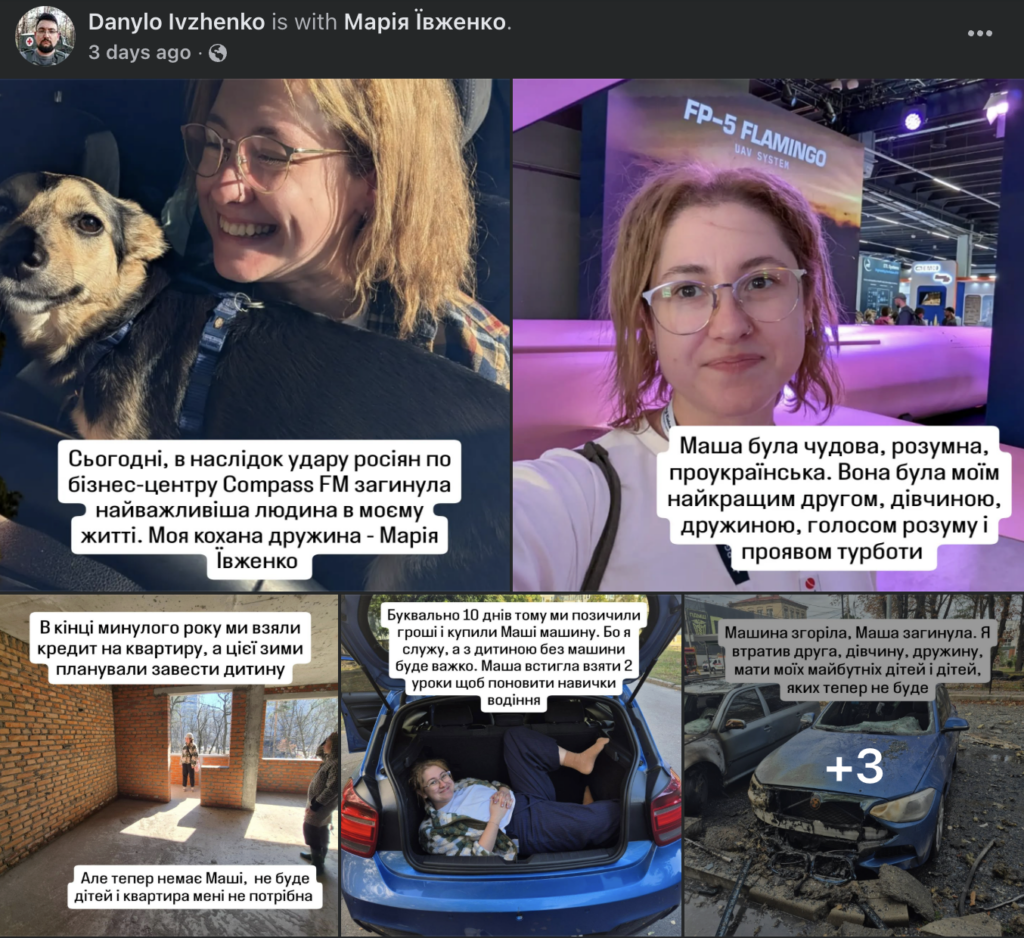
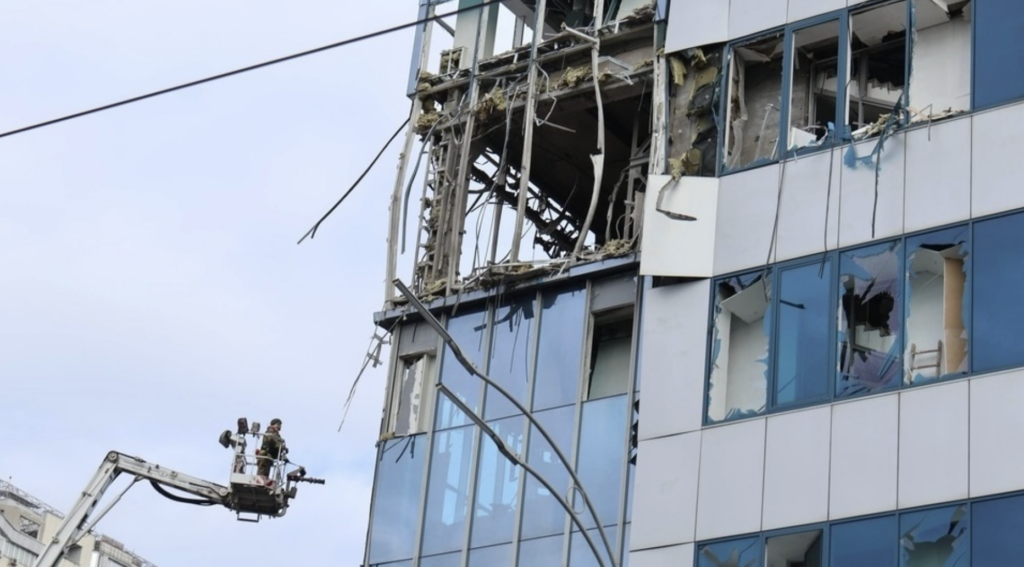
Kyiv has faced repeated attacks throughout September. On September 25, a Russian strike hit the Compass FM business center during the workday. Among those killed was journalist Mariia Ivzhenko, the wife of Danylo Ivzhenko, who is currently serving with Ukraine’s Third Army Corps. We know Danylo through his work with Razom on tourniquet training and other medical education initiatives in Ukraine. He is trained to save lives on the front line, yet this war reached his own family far from it. In a public post after Mariia’s death, Danylo shared that they had recently bought an apartment and were planning to start a family this winter. Our deepest condolences go to Danylo, Mariia’s family, and everyone who knew and loved her.
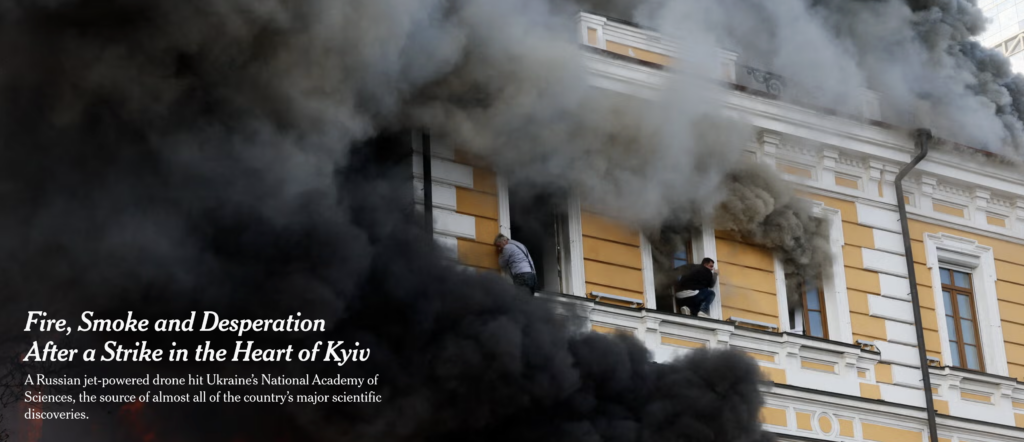
Three days later, on September 28, Russian attacks hit two more places at the center of civilian life in Kyiv. A Russian drone struck the National Academy of Sciences of Ukraine, killing people while they were at work inside. Later that day, another strike hit a Dobrobut medical center, damaging the clinic and injuring patients and staff.
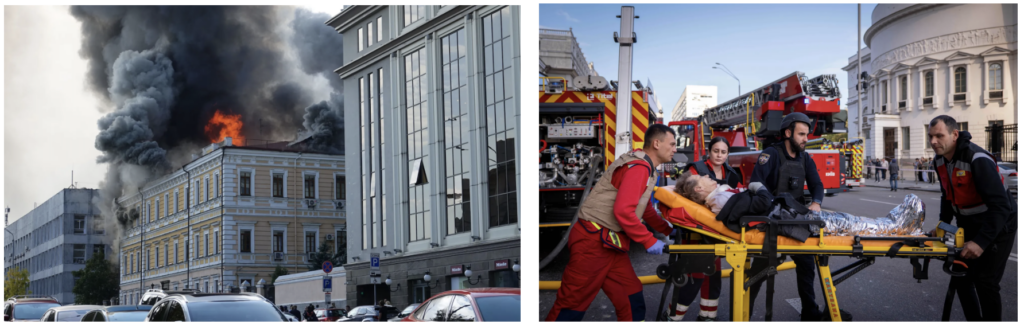
A scientific institution. A medical center. A business. Homes, schools, warehouses, and communications infrastructure. These are not places on a distant front line. They are the places where Ukrainians work, learn, receive care, and try to live their lives.
For our colleagues in Kyiv, these are not distant news stories. They are people they know, streets they travel, workplaces they pass, and neighborhoods where their families and friends live.
The growing pressure on Ukrainian businesses
There is another part of this story that receives less attention: the growing pressure on the businesses and infrastructure that keep Ukraine functioning.
In August, the UN documented 32 attacks against facilities belonging to six major Ukrainian food, retail, and logistics companies, nearly three times the number recorded in July. Warehouses and distribution centers have been damaged, disrupting the systems Ukrainians depend on for food, deliveries, jobs, and everyday services.
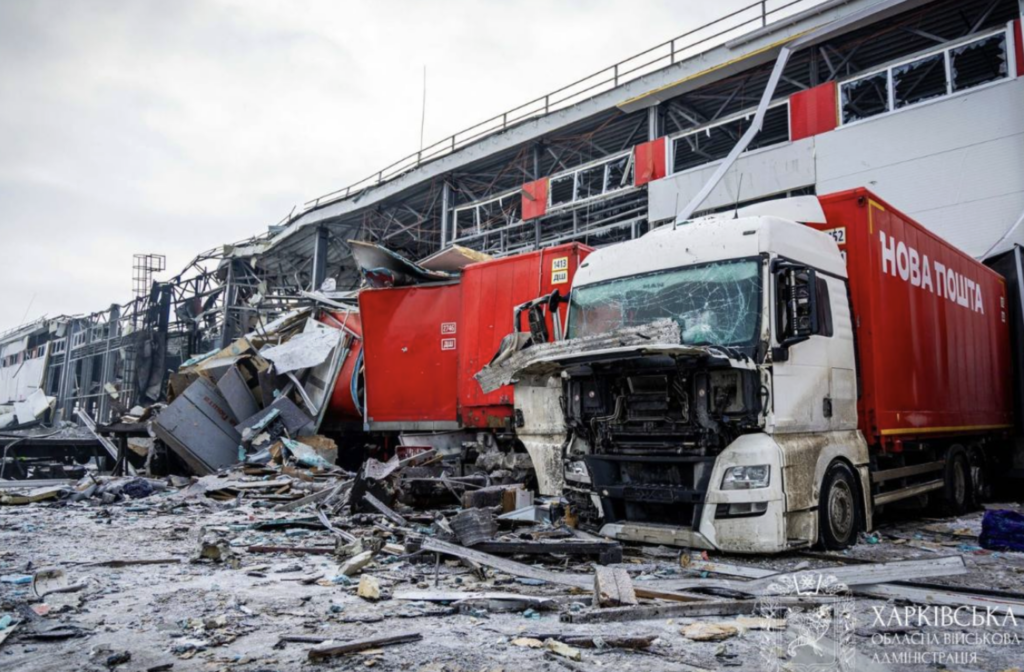
For Razom, we see another consequence through our partners on the ground.
Ukrainian businesses have been important donors to civil society organizations providing essential relief and recovery services in their communities. Our partners are telling us that as businesses are hit and lose revenue, some of that support is disappearing too, putting funding for critical programs under pressure.
A damaged business affects its employees and their families, the local economy, the organizations it supports, and ultimately the people who depend on those organizations.
The same is true for humanitarian and medical infrastructure. In only three months this summer, airstrikes destroyed three warehouses used by the World Health Organization, including a Dnipro facility where half of the medical supplies and equipment intended to support approximately 225,000 people in frontline and hard-to-reach communities were lost. At least 20 attacks have affected warehouses storing humanitarian supplies in Ukraine so far this year.
This is what a humanitarian crisis looks like beyond the immediate moment of an attack: the systems designed to help people survive and recover are themselves placed under enormous pressure.
Oleshky: Hell on Earth Under Russian Occupation
The pressure on civilian life is not limited to the cities and infrastructure being hit by Russian attacks. In Russian-occupied Oleshky in Kherson Oblast, the same humanitarian crisis has reached an extreme.
Civilians, including children, are trapped without sufficient food, medicine, medical care, running water, or electricity. The Council of Europe Commissioner for Human Rights has warned that residents face a high risk of death and called for humanitarian access and safe evacuation.
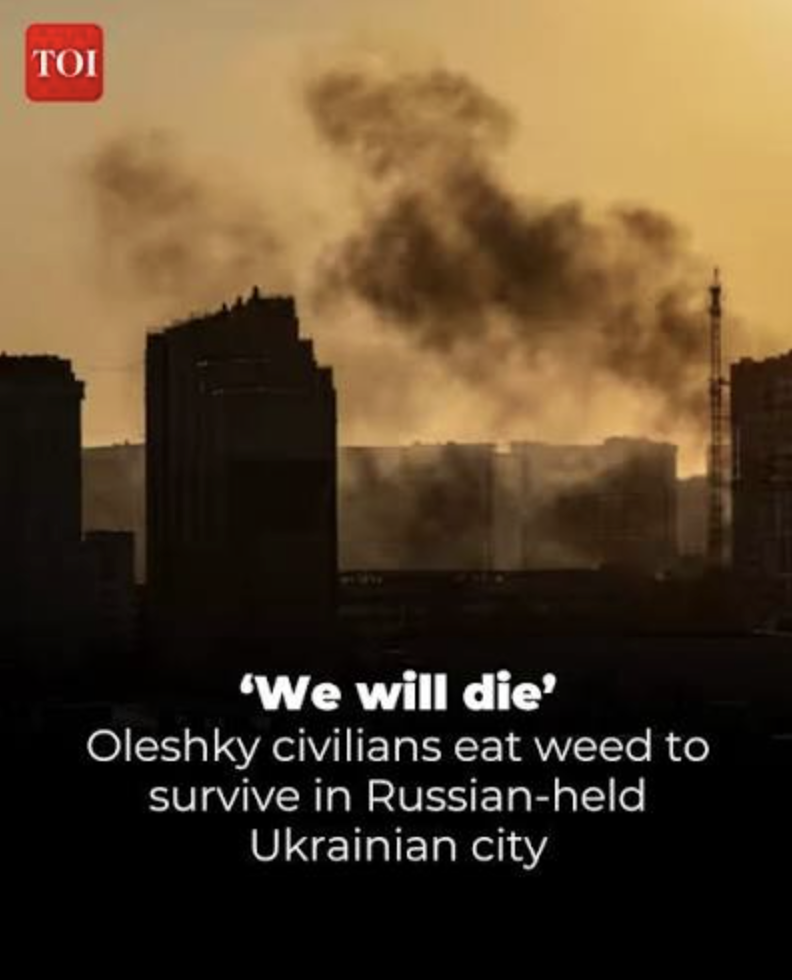
With conventional humanitarian access severely restricted, Ukrainian defenders are still trying to reach those trapped there. In one recent operation, Ukrainian forces used drones to deliver around four tons of food and medicine to 100 locations across Oleshky.
Oleshky shows the humanitarian catastrophe Russia’s war and occupation have created in its most extreme form: people cut off from the basic conditions they need to survive. And it is happening right now, alongside the attacks on homes, businesses, hospitals, schools, and infrastructure across Ukraine.
This is what gets lost when all of it becomes simply “the war in Ukraine.”
Ukrainians are still doing the work
And still, life continues. Doctors go to work after sleepless nights. Businesses reopen after attacks. Teachers keep classrooms running, volunteers keep aid moving, and communities continue taking care of one another. But Ukrainians should not be expected to endlessly adapt to destruction. Resilience is not protection, and it cannot replace the support people need to keep going.
For Razom, that is why responding to the immediate crisis and investing in Ukraine’s future have always been connected. We help provide urgent humanitarian and medical support while strengthening the people, organizations, and communities that will carry Ukraine forward.
The international community has tools to act. The recently enacted Lindsey O. Graham Sanctioning Russia and Iran Act gives the United States additional authorities to increase economic pressure on Russia and those helping finance its war. These tools must be used to their fullest extent. Contact your representatives in Congress and urge them to call on the White House to increase pressure on Russia and ensure continued support for Ukraine.
Ukrainians are already doing the work: saving lives, keeping businesses open, caring for their communities, and building a future in Ukraine. What they need now is not for the world to admire their resilience, but to stand behind it.
Join us. Support Ukraine.