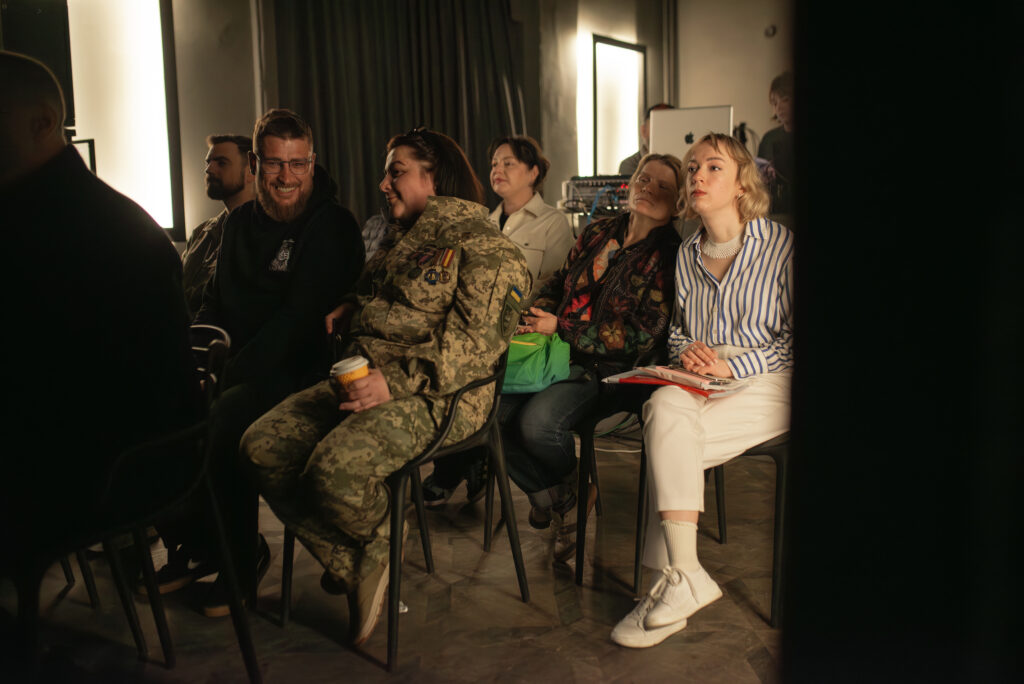

Coming home from war does not end on the day a person leaves the military. Veterans need to find their place among civilians again, rebuild relationships, and feel that their experience matters. For Alina, that place was a community of writers. Now she is creating the same kind of space for other veterans.
Alina Sarnatska is a veteran, human rights advocate, radio host, and writer. In Lviv, she created the Veterans’ Theater, a space where veterans can develop their skills as playwrights. The project is part of the Veterans Program of INDEX, the Institute for War Documentation and Intellectual Cooperation with the Outside World, with support from Razom.
Over two and a half months, nine veterans and two veterans’ wives learned to write plays about their experiences of war, returning to civilian life, and how these experiences changed them.
“Veterans can come to the theater and see themselves represented on stage. It matters to see that people in this place care about veterans,” Alina says.
We spoke with Alina about her journey to theater and how playwriting can bring veterans together while helping the world understand what Ukrainians are experiencing during the war.
Writing to Find Yourself Again
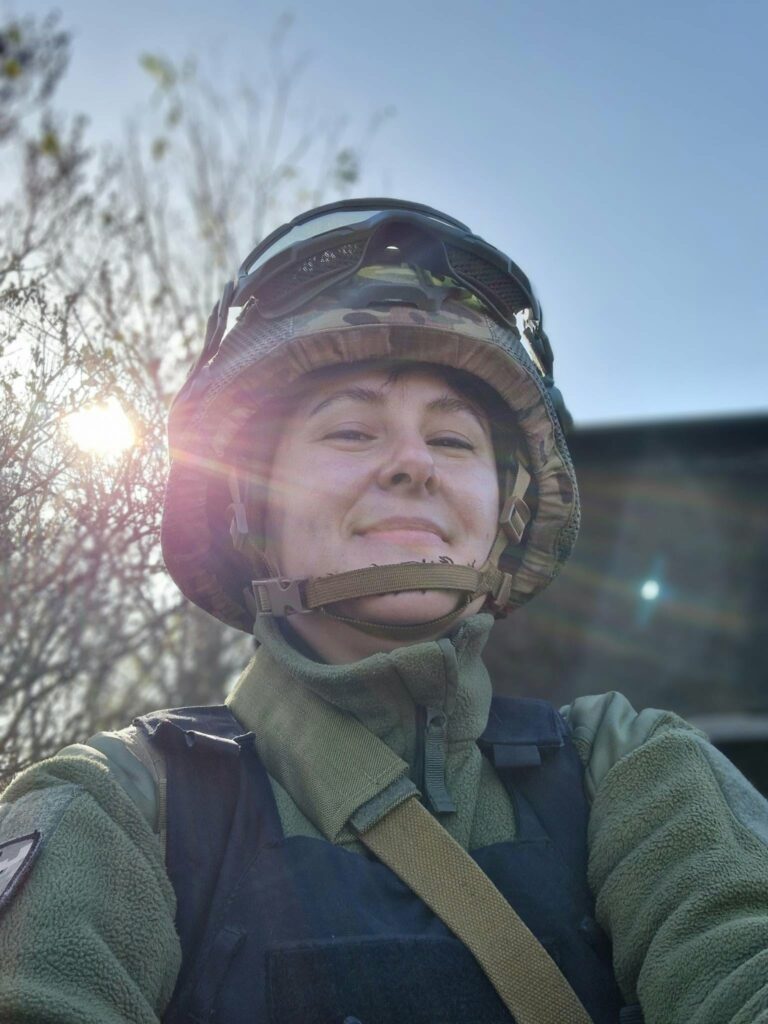
“In the army, you get the full picture of what will happen when you die. How quickly people will forget about you. It is really hard to process,” Alina Sarnatska says.
“At some point, I realized that if I were killed, if the world completely erased all traces of me, I would regret not spending enough time with the people I loved and not writing enough.”
After three years of military service, Alina realized that she had not simply put her life on hold. Some of her skills were beginning to fade.
“After the army, I realized that I could no longer put my thoughts together. I was no longer as bright or confident as I had been. I was very sad. I realized that if I did not find a community, I would stop writing. I did not have enough courage. At some point, my friends started sending me links to a playwriting school run by playwright Maksym Kurochkin’s Veterans’ Theater. I applied. And I found a mentor in him. That helped me keep going — I finally had someone I could rely on.”
That is how a new Ukrainian playwright emerged. Her plays are now read and staged not only in Ukraine but abroad as well. For example, her play Balance was presented as part of Razom’s Ukrainian Drama Showcase in New York.
The theater gave Alina more than a new profession and a community. It also allowed her to continue doing what she had done before: representing people’s needs and making their experiences visible to society.
After finding this new source of support, Alina decided not to stop at writing plays. She wanted to teach other veterans how to write and create theater — and to help new voices emerge.
Writing for Equal Rights
We are speaking with Alina over video when explosions begin outside my window in Kyiv. I have to pause the conversation and move into the closet.
“Why pay rent for the whole apartment when we’re basically living in the corridor?” I joke.
“Why pay rent at all when you can just live in the subway?” Alina jokes back.
Alina trained as a psychologist and studied social work in graduate school. She conducted research and worked as a manager at a nonprofit organization. For many years, she focused on women’s rights, including preventing gender-based violence. She worked with UN Women, Columbia University, and other international organizations.
“We wanted to make changes in the country,” Alina says.
Alongside her work in civil society, Alina was involved in a right-liberal movement, where she first met veterans of the Russian-Ukrainian war. The community had a significant influence on her, she says. She remained friends with many of them even after their work together ended.
“We used to argue a lot about women’s rights, Pride, and the LGBTQ+ community. When the full-scale invasion began, I saw all these people join the military — except mothers with children. And I think they gave me an incredible example.”
“The Ukrainian army is made up of civilians who went to defend their country out of love,” Alina says. She came to the military from the civil society sector.
Writing to Support Her Battalion
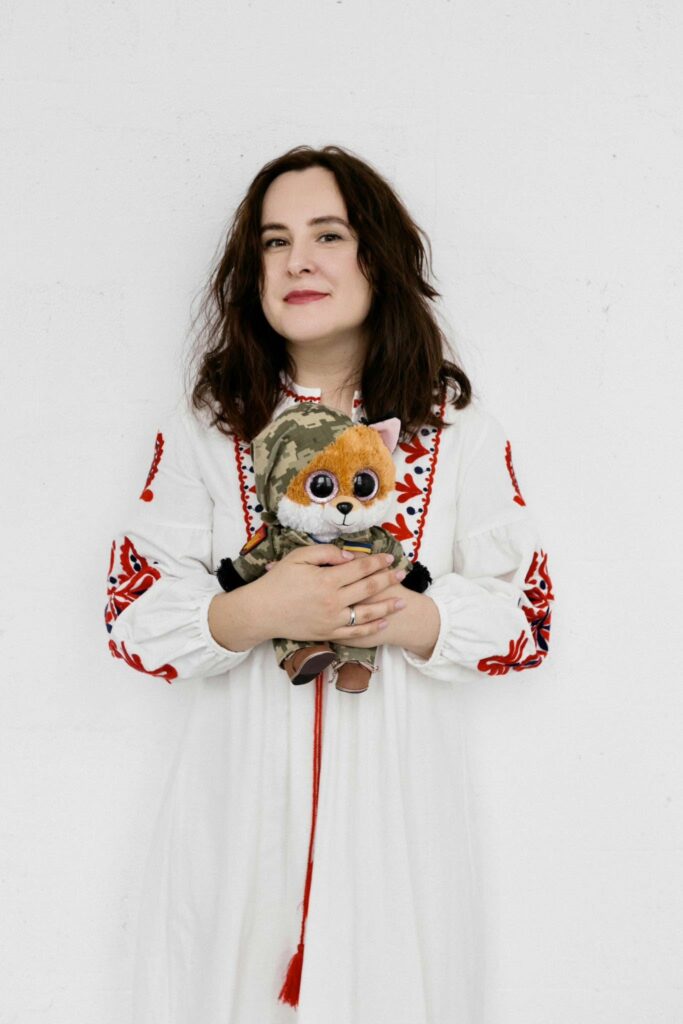
Alina’s Facebook posts from before and during the COVID-19 pandemic are about podcast recordings, work, burnout, and learning English. There are also fox toys, fox decorations, and fox emojis.
In March 2022, “Fox” became her military call sign. The civil society activist became a combat medic with a fire support company of the 207th Battalion of the 241st Territorial Defense Brigade of the Armed Forces of Ukraine. At the time, women in Ukraine were not subject to mandatory mobilization, and Alina’s employer had offered her the opportunity to leave the country.
As of early 2026, more than 75,000 women serve in Ukraine’s Armed Forces.
“I am an adult woman without children. I understood that I had to join the military and defend my city and my people. When people ask why I joined the military… I think the more logical question is why someone did not.”
In the spring of 2022, recruitment centers were filled with volunteers: teachers, IT professionals, managers, and other civilians who had never served in the military. Like Alina, they chose to put their lives on hold for their country.
“During the first few weeks, I cried at night. Nothing made sense. Everything was frightening and strange. I was afraid I would not be able to handle the responsibility. I was told that I was now responsible for the health of hundreds of soldiers. I had no medical training, and we had not had a single day of training. Someone showed me where the safety on the rifle was. I learned tactical medicine from materials I found online… Bit by bit, it became easier.”
There were no weekdays in the army, and the only color left in her wardrobe was camouflage green. Alina would track incoming strikes near the Kyiv home where her family stayed and would celebrate a second birthday after surviving an artillery attack near Irpin (a town near Kyiv).
“To serve in the military, you have to find balance. In my first year of service, I bought cat ears for my helmet and a sleeping bag liner with Pokémon on it. In my second year, I stopped being embarrassed about sleeping with a stuffed animal. My mother sent me a badger from home. His name was Filimon. He got a little dirty, so whenever I had the chance, I washed him and dried him in the sun,” Alina writes in her play Balance.
During her service, she began writing again. This time, she wrote short posts on social media to raise money for her battalion.
“We needed everything: vehicles, drones, radios… Everything. I became pretty good at writing dialogue because dialogue was what brought in the most donors and helped raise donations,” Alina recalls.
Alina took part in combat operations in Donetsk region. She received the Commander-in-Chief of the Armed Forces of Ukraine’s “For Saving Lives” badge and the President of Ukraine’s “For the Defense of Ukraine” award.
At the beginning of her service, Alina wanted to sleep in a bed, go to the movies, to kiss the person she loves, roast a chicken in the oven, and write well. She dreamed of becoming a writer.
Writing to Bring Veterans Together
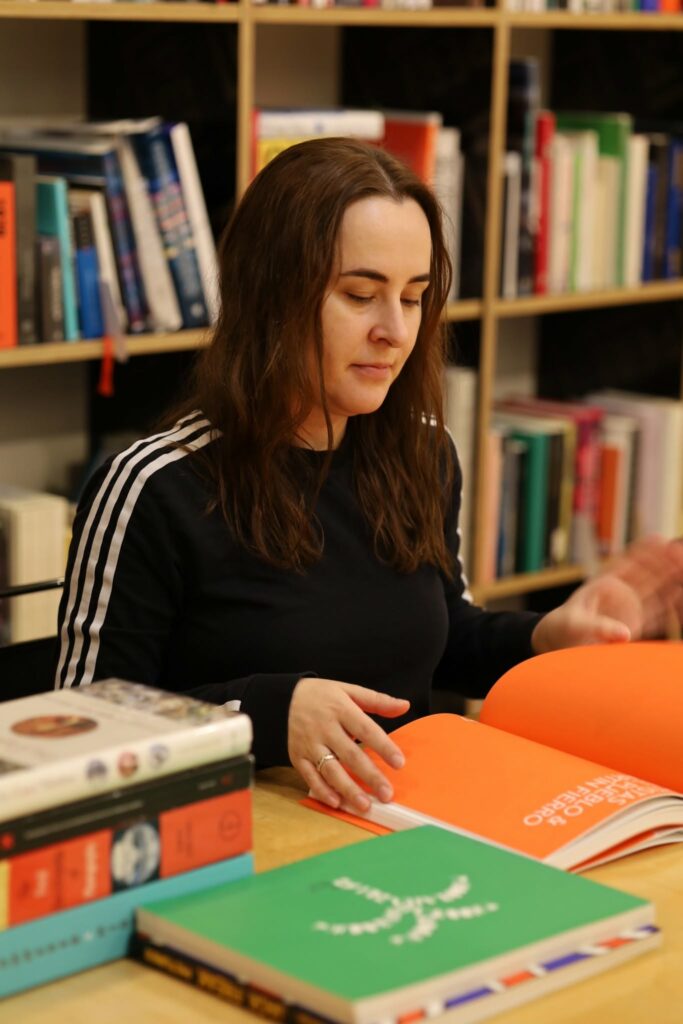
“I believe that people should be part of a community and that it is important to serve your community. I want to be useful to veterans. For me, it is almost a question of faith,” Alina says. She has attended church for more than 20 years.
Alina says it would be wrong to describe the program as art therapy. Not every creative process is healing. Even watching performances of her own plays can leave her feeling unwell for several days.
For her, the most valuable part is being among people with similar experiences — and having the chance to learn a new profession.
“We had one participant in Lviv from Superhumans (Rehabilitation Center for Military), a very young man who had only recently lost his leg. I am not sure the program was really about writing for him, but he became part of the community. He came to every class and wrote a play. A year later, he realized that he wanted to keep writing. It is a long-term process. For us, this is not just a course — we’re always with them now.”
After the program ends, all participants remain in a group chat where they share opportunities and stay in touch.
Veterans who are still receiving treatment in hospitals can join the classes. Even active-duty service members at the front have participated.
Writing to Bring the Country Together
“I understand that what happens to veterans will affect many generations. It will matter how abandoned and unnecessary they feel,” Alina concludes.
Military service can fundamentally change the way people see life and everyday things. For service members, the primary task is to survive. In Ukraine, projects focused on veterans’ integration and support have existed since 2014.
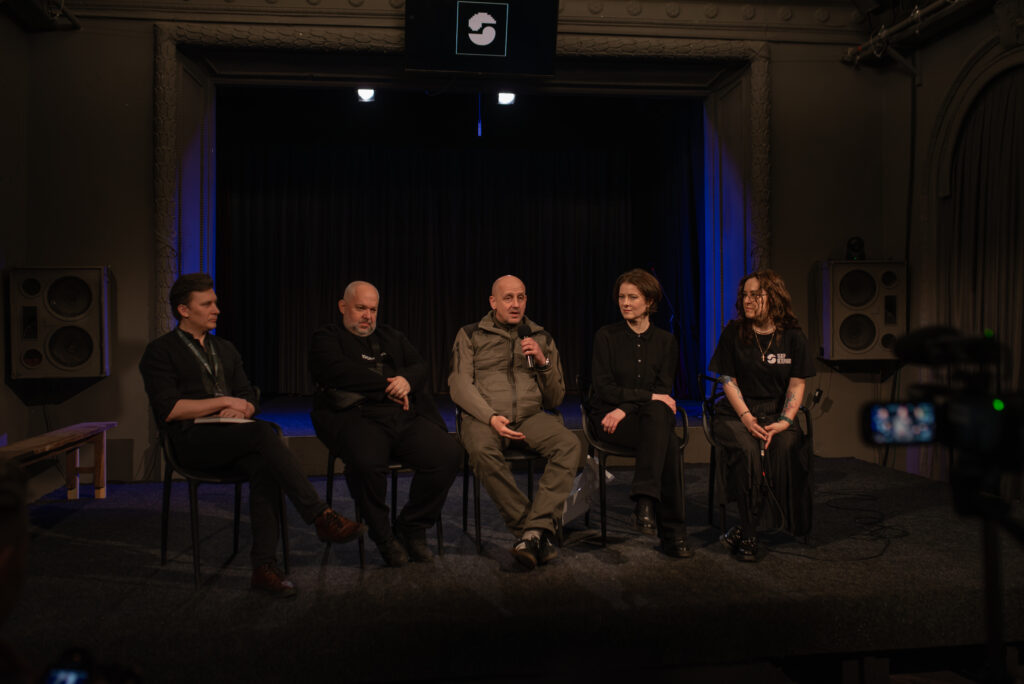
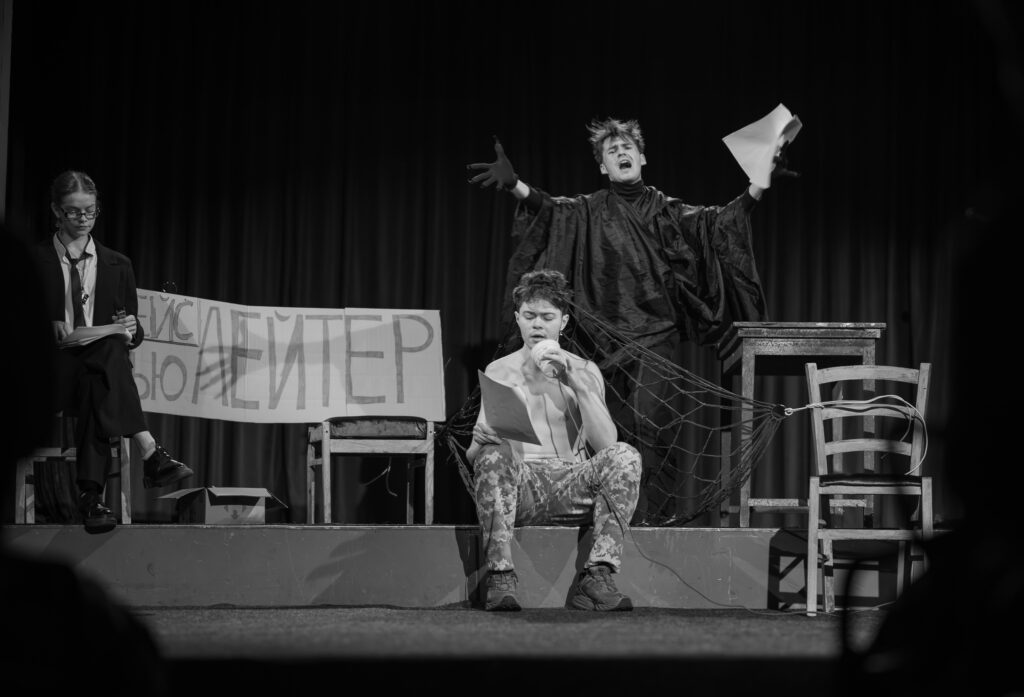
The final stage of Alina’s program is a public reading of the new plays, performed by professional actors.
“It has a huge impact on the participants. They see that these stories matter to other people. And it affects everyone — both the local community that comes to the performance and the veterans who wrote the plays.”
A play can become a way for people with very different experiences to understand one another — and to find a way to live and create together.
Theater cannot erase the experience of war. But it can give veterans a place where people listen to them. And it can give society an opportunity to hear their stories.
Alina Sarnatska’s story is not only about finding yourself after war. It is also about how the support you receive from others can become an opportunity to support someone else. Once, a community helped Alina believe in her own voice. Today, she helps other veterans find theirs — and make themselves heard far beyond the theater stage.
Because returning from war is not only a journey a veteran has to make. It is also about whether society is ready to create a space where their experience, talent, and future matter.
And that is a space we need to build together.
That is why supporting these communities is an investment not only in veterans. It is an investment in the Ukraine that will emerge after the war.