Kharkiv: On the Frontier of Resilience

Few cities embody the word frontier as powerfully as Kharkiv. It sits just 25 kilometers from the Russian border, close enough that aircraft can reach the city in minutes. It has lived under constant aerial threat since the first days of the full-scale invasion, yet it continues to function exceptionally well. Those brave enough to visit are immediately struck by the spotless streets, flowers and decorations set up to beautify areas previously scarred by missiles and drones, and punctual public transportation that was made free of charge for all residents immediately after the start of the invasion. If not for the plywood covering many windows and defensive barricades at the city’s entrance – one might think they are in a safe city in Western Europe.  Much of this ability to withstand the daily attacks and offer a sense of order to the residents comes from systems the city has created in wartime – systems that allow Kharkiv to detect danger quickly, warn people in time, and respond in a coordinated way.

At the center of this effort is the Kharkiv Situational Center (KSC), the only civilian defense hub of its kind outside Kyiv. Here, a team of young civil protection workers monitors live feeds, tracks incidents on an integrated city map, and coordinates everything from utility repairs to emergency rescue. 

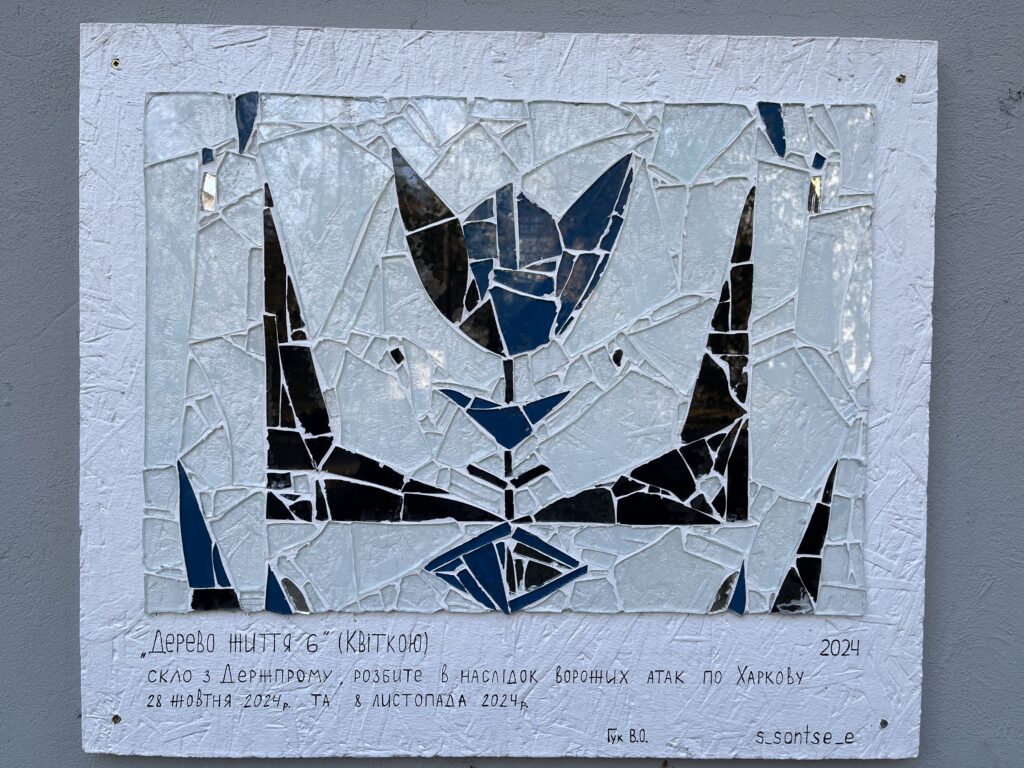
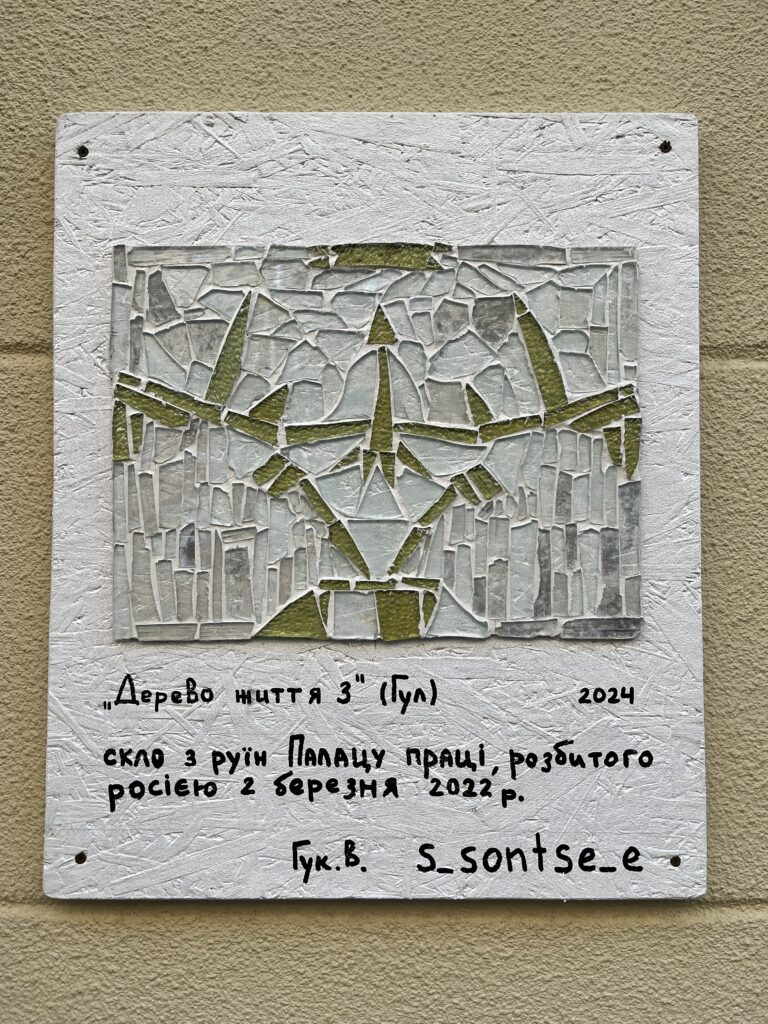
Residents of Kharkiv creatively conceal damage to city's buildings and windows
Kharkiv businesses bring beauty to the streets of the city despite widespread damage

The Heartbeat of Kharkiv

The Situational Center is the heart of Kharkiv,” says Bohdan Gladkyh, the city’s Director for Civil Protection and head of the KSC. “It sees everything that happens in the city and directs every response – from fire brigades to medics. It’s the pulse that keeps Kharkiv alive.

Built in just three months through a partnership of the city, local businesses, volunteers, and international donors, the KSC was a feat of wartime engineering. Not only was it considered nearly impossible to complete such a facility in this timeframe, but bringing so many services under one command to cooperate is not an easy feat in any circumstances – much less while each individual system is stressed to the maximum. But the city was able to work out a structure where the State Emergency Services, EMS, police, firefighters, and even utilities work together and coordinate seamlessly for the safety of Kharkiv residents.

Its digital map tracks every hydrant, road, and danger zone; its cameras monitor hundreds of live feeds; its analysts coordinate all emergency and utility services in real time. When an emergency situation arises – whether a complex attack on the city or a simple household fire – the staff at KSC can evaluate the situation through the live camera feeds, pull up complete information about the affected infrastructure, and dispatch necessary services (fire, medics, utilities) to the site depending on the real needs on the ground. 

When war turned Kharkiv into a constant target, this “heart of the city” became its shield. But even the most sophisticated coordination system is only as strong as its communications. And in Kharkiv, when power and cell towers fall, silence can be deadly.

The skyline of Kharkiv, monitored 24/7 by the Kharkiv Situational Center's staff. Any threat is detected immediately and shared with appropriate teams within minutes
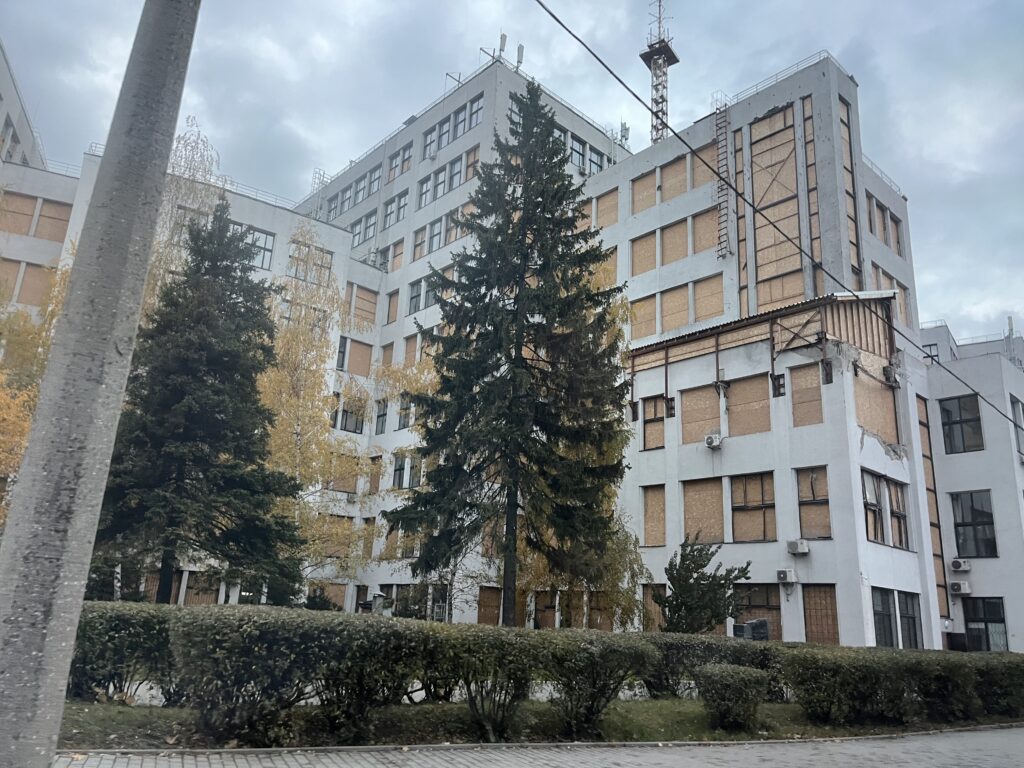
Kharkiv's iconic Derzhprom building, on UNESCO's List of Cultural Property Under Enhanced Protection, was damaged by a Russian missile strike

When the Signal Means Survival

During blackouts or heavy bombardments, mobile networks collapse within minutes. Towers fall, base stations burn out, and with them the ability to direct responders.

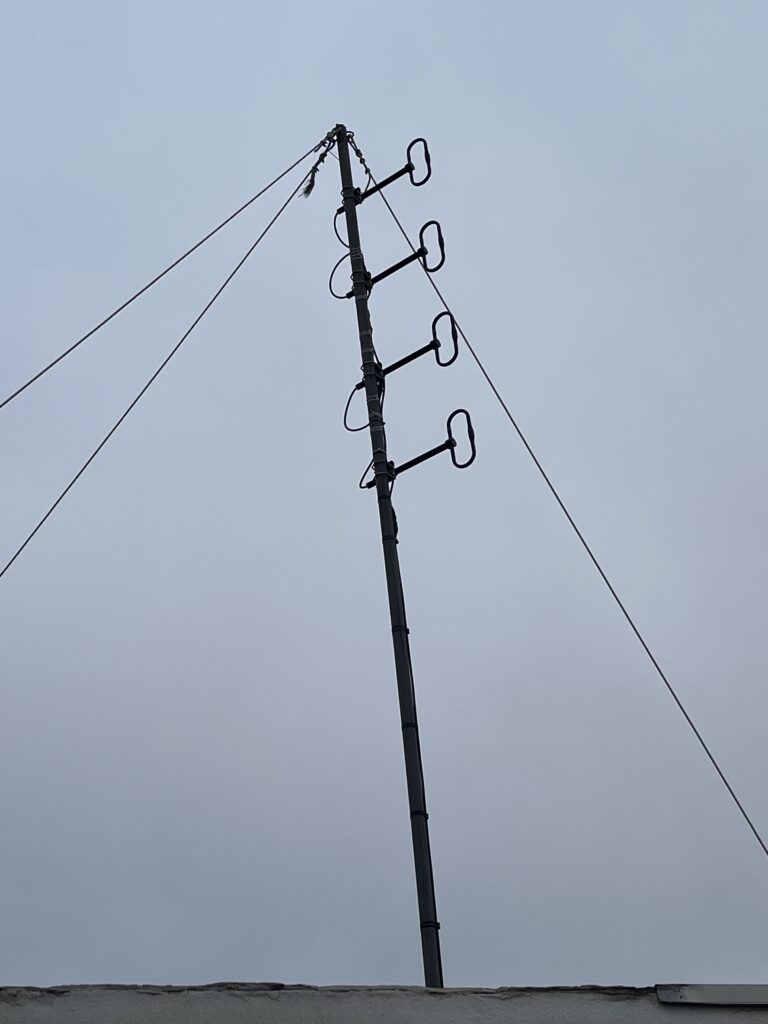
To close that gap, Razom provided radio repeater equipment – the backbone of a secure digital network now linking city hall, emergency services, and municipal companies. The system keeps the signal alive even when everything else fails.

“At first, our rescuers had no stable signal,” Bohdan says. “During blackouts, we were blind. Once the repeaters were installed, communication never failed again – not once.”

He remembers the night that proved just how essential that link is.

“Two months ago, during a double-tap attack, our teams were already working the site of an initial strike when a dispatcher called out on the radio: ‘Rocket incoming!’
Twenty-eight seconds later, the second missile hit. Everyone had time to get into the shelter. Every single person survived.”

A “double-tap” strike is a tactic where a second missile is launched at the same location shortly after the first, often targeting the rescuers who arrive to help. During the first impact, the explosion destroyed a nearby cell tower. As soon as the tower failed, mobile phones in the area lost service completely – even Bohdan’s two SIM cards showed no signal. 

“Both of my SIM cards were dead,” Bohdan said. “The cell tower was gone. The only thing that worked was the radio network you helped us build.”

What he meant was that the only functioning communications line was the city’s digital radio network. While emergency crews were already on the ground, a dispatcher monitoring air activity saw that a second missile had been launched toward the same site. Because radios don’t rely on cell towers or commercial networks, the dispatcher was able to relay the message and every responder received it instantly. They had 28 seconds to get into a shelter. The second missile landed about 20 meters from where more than a hundred people had been standing. More than a hundred responders – utility workers, firefighters, and medics – were saved because the repeater network carried that single warning.

Today, that system covers the entire city. The mayor, department heads, and all critical service units carry connected radios. It ties directly into the automatic air-raid alert system that interrupts local radio stations to warn drivers on the road. The network is powered by generators and designed with redundancy: if one repeater goes down, another instantly takes over.

“I don’t see any alternative to digital radio communication,” Bohdan says firmly. “Without it, there is no coordination, no timely warning – and no chance to save lives.”

His conclusion is simple and urgent: every major city in Ukraine needs this system.

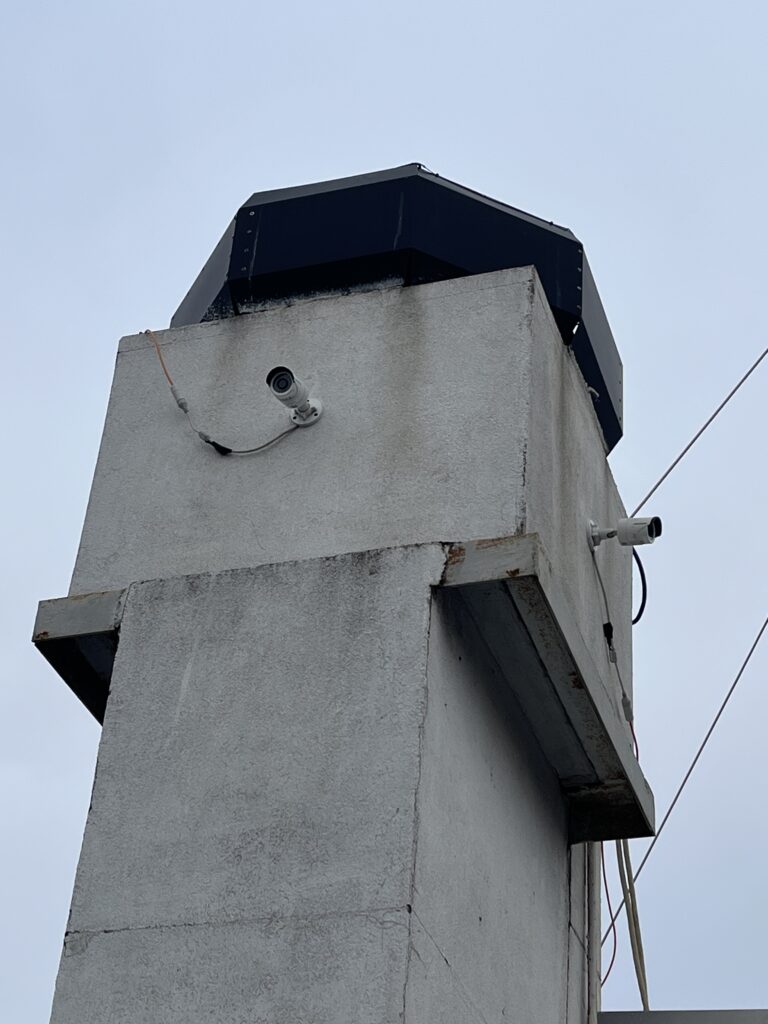
Radio repeater equipment
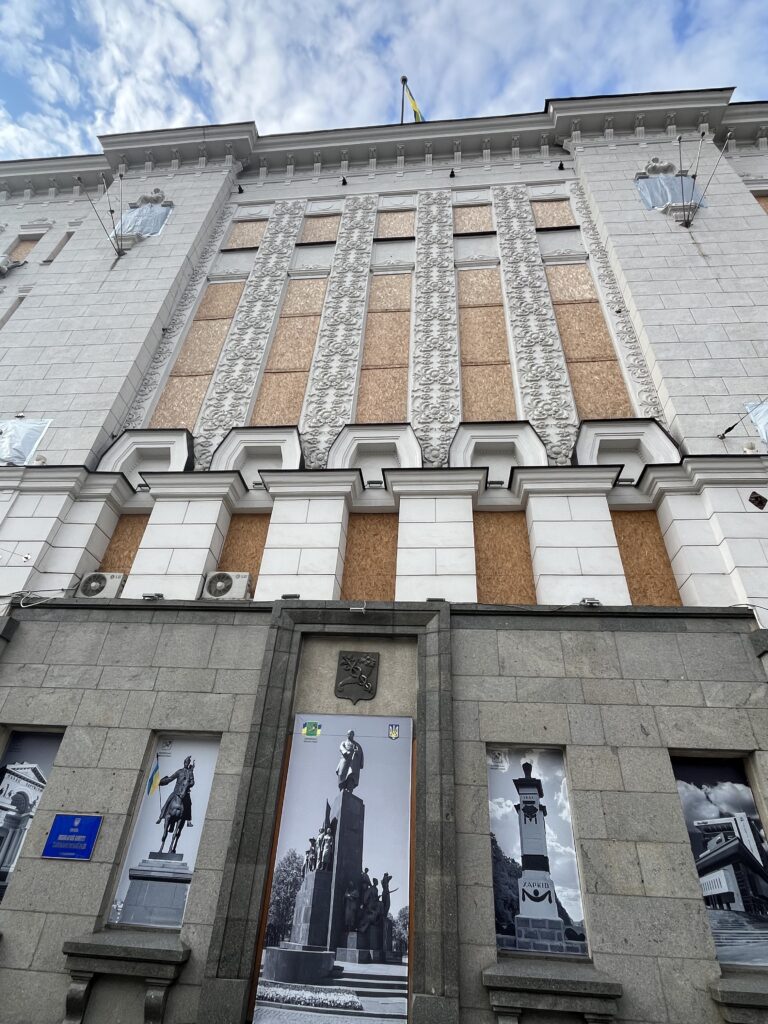
Kharkiv City Hall
Radio repeater equipment

Innovation Beneath the Ground

That life-saving network reaches far beyond the Situational Center’s walls into Kharkiv’s schools, hospitals, and neighborhoods.

During one of our visits to the city this fall, several guided aerial bombs struck different districts just as we toured one of Kharkiv’s newly built underground schools. Sirens blared, and messages from Bohdan’s radio crackled through the thick concrete walls. Even while offsite, he was able to coordinate real-time responses across multiple impact zones – dispatching rescue crews, rerouting traffic, confirming that nearby shelters had opened to civilians.

It was a living demonstration of how vital communication is and how the city’s commitment to protection now extends below the surface of the earth.

Kharkiv’s underground schools are a direct answer to life on the front line: fully functional learning spaces that double as certified bomb shelters. Each can host 700-800 students for classes and up to 2,000 people during air raids. They are equipped with filtration systems, independent power, and water reserves. Ten are already operational, with more under construction. 

One of these schools was hit directly by a missile in 2023 – and held firm.

“That was our test in real conditions,” Bohdan says. “Everything worked: the blast doors, the filters, the ventilation. The building took the hit, and everyone inside was safe.”

During each air-raid alert, hallways open to residents from nearby buildings, turning the school into a community refuge. Thanks to the same citywide communication system, 

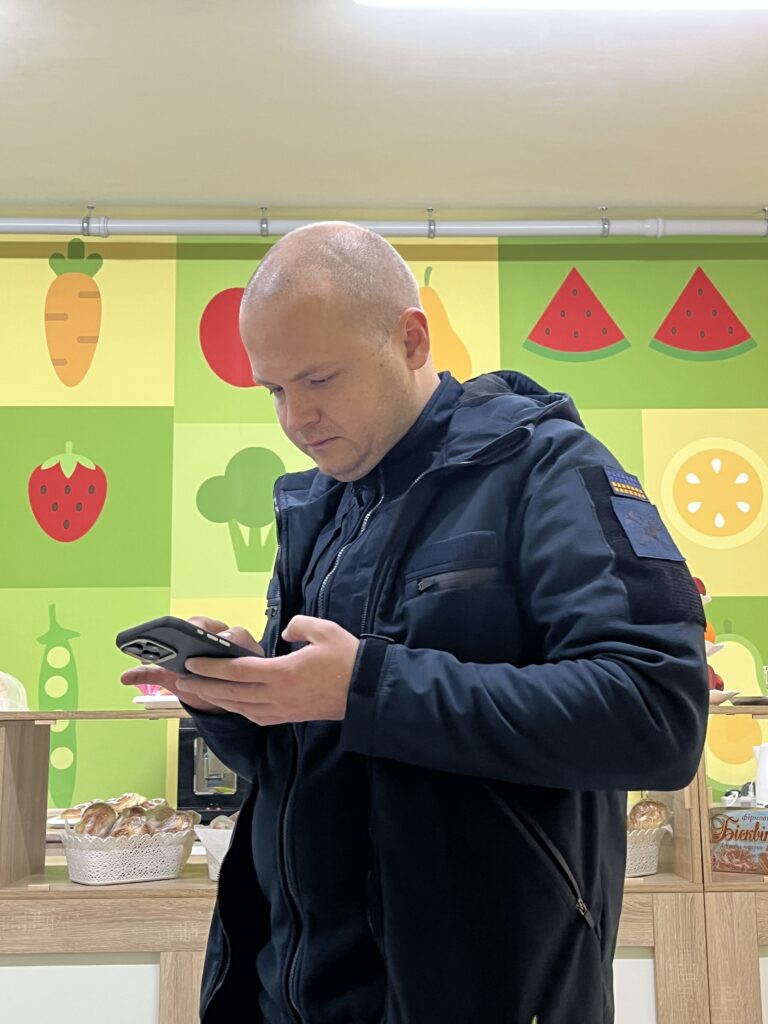
Bohdan Gladkyh receives news of the guided aerial bomb attack while showing an underground school to Razom staff
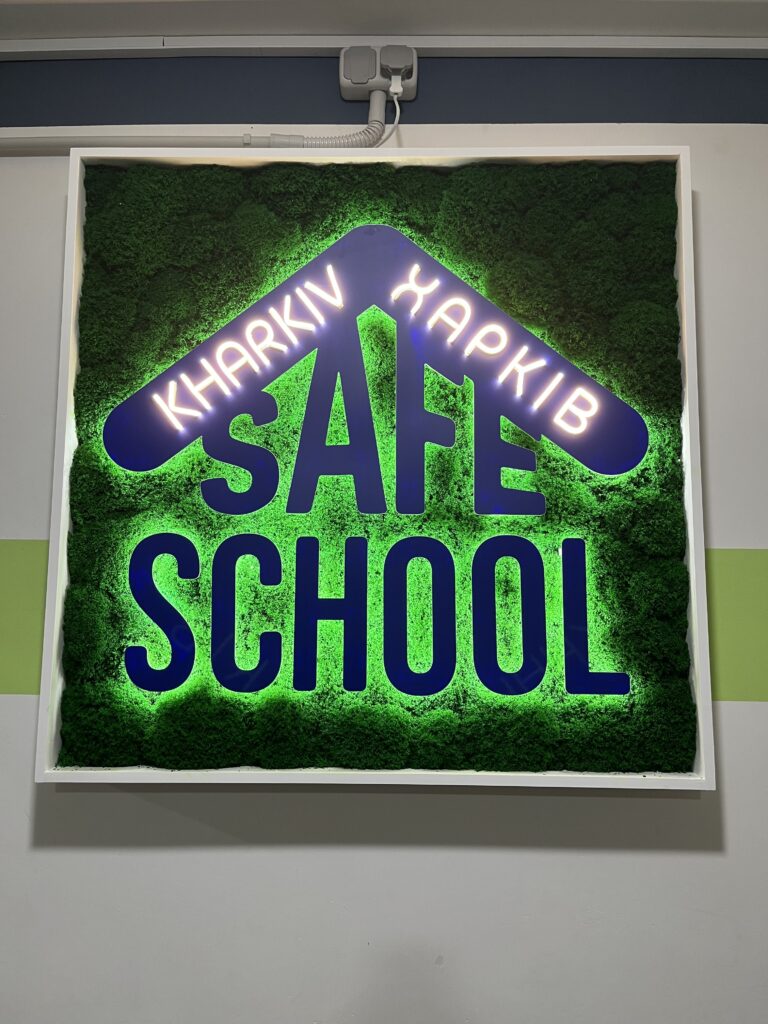
Entrance to one of Kharkiv's underground schools
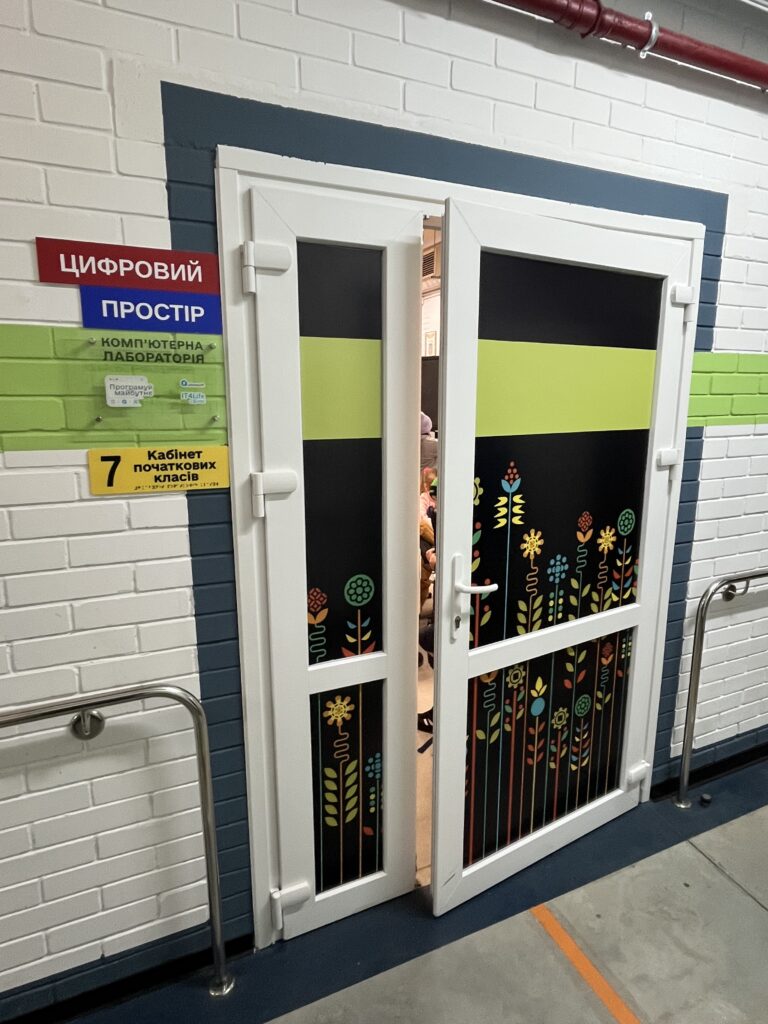
Computer lab in an underground school
Hallway design in an underground school
Tetyana, the dining hall attendant at an undeground school

alerts arrive in time for people to reach shelter, and teachers can continue lessons safely underground. In addition to the standalone underground schools, learning spaces have also been creatively integrated into the metro stations – one of which was depicted in Kateryna Gornostai’s documentary “Timestamp”. Kharkiv’s engineers are now expanding the model even further – planning not only new schools but even the country’s first underground kindergarten. It’s education as civil defense, learning as resistance.

A City That Refuses to Break

Kharkiv’s population has shrunk by nearly half since the full-scale invasion, yet those who remain embody an unshakable resolve. Streets are cleared, utilities restored, children return to class – acts of quiet defiance performed every day under fire.

“I have made my choice,” Bohdan says simply.I am staying.

He has worked for the city for a decade, first in digital transformation, now in civil protection. In Ukraine, “civil protection” or “civil defense” is a function that is not administered by a single agency. It is a coordinated system that includes emergency dispatchers, firefighters, medics, utility crews, and shelter managers – the people who keep a city functioning during missile strikes, blackouts, and other crises. Essentially, it is everyone who defends the civilian population but is not in the armed forces – a role that is as important as it is demanding during a full-scale invasion. And so like many on his young team, Bohdan sleeps little, works fourteen-hour days, and endures the constant stress of alarms and loss. The hardest moments, he admits, are when children die. 

“We are a frontier city – not only of defense, but of solutions,” he says. “When something breaks, Kharkiv finds a way to make it work again.”

The Situational Center’s average employee is twenty-nine years old. Together they’ve rebuilt a modern civil defense system once considered impossible. Their early-warning network has ensured that not once in the past year did a missile land in Kharkiv without a prior alert. Other municipalities now look to them as a model for resilience.

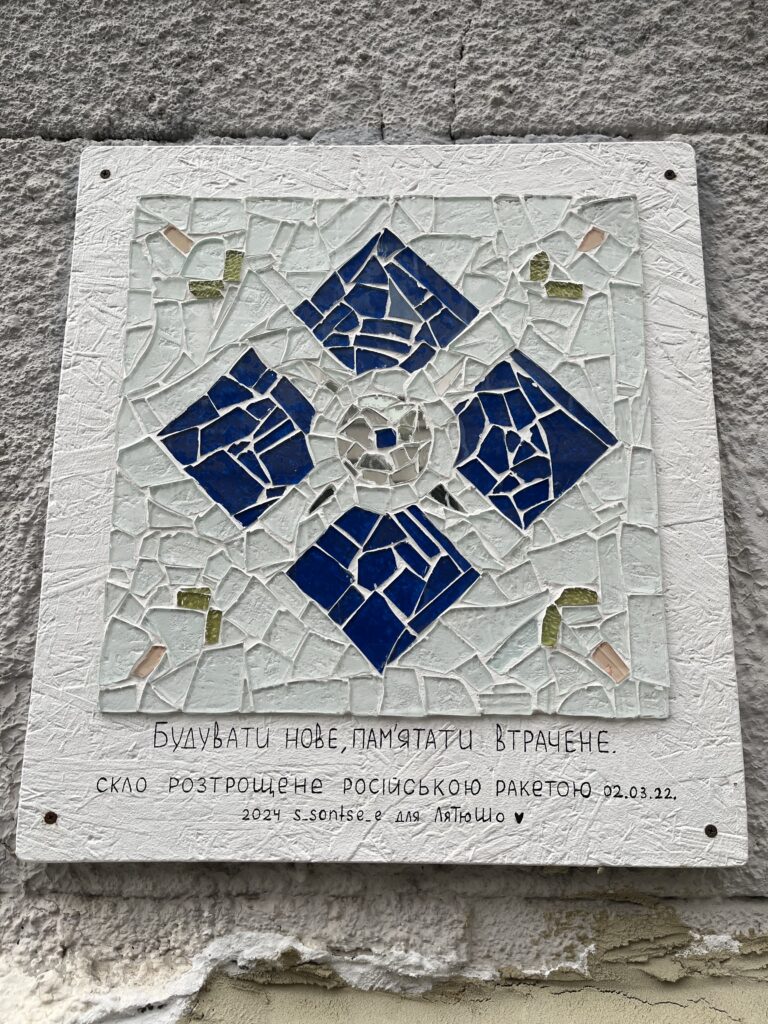
Kharkiv artist Valentina Guk creates artworks from the pieces of glass broken from windows and facades by Russian attacks. The artworks are placed on the buildings from which the broken glass was collected - replacing destruction with beauty and meaning.

Together on the Frontier

Kharkiv stands as both shield and blueprint – proving that, even under siege, a city can innovate, organize, and care for its people. Razom is proud to have supported this frontier of resilience – to equip those who refuse to give up, who keep communication alive in blackout conditions, and who demonstrate that information, when shared swiftly and securely, saves lives.

The work that began in Kharkiv must now expand across Ukraine. The technology exists, the expertise is proven, and the will is unstoppable. What is needed is partnership – the same spirit of razom, “together,” that built the Kharkiv Situational Center in record time.


/* */