
At Razom we firsthandedly know that lifesaving systems require more than equipment. That’s why, joined by partners, we support medical training, leadership development, supply initiatives, and spaces where professionals can exchange frontline experience and strengthen systems of care under wartime conditions.
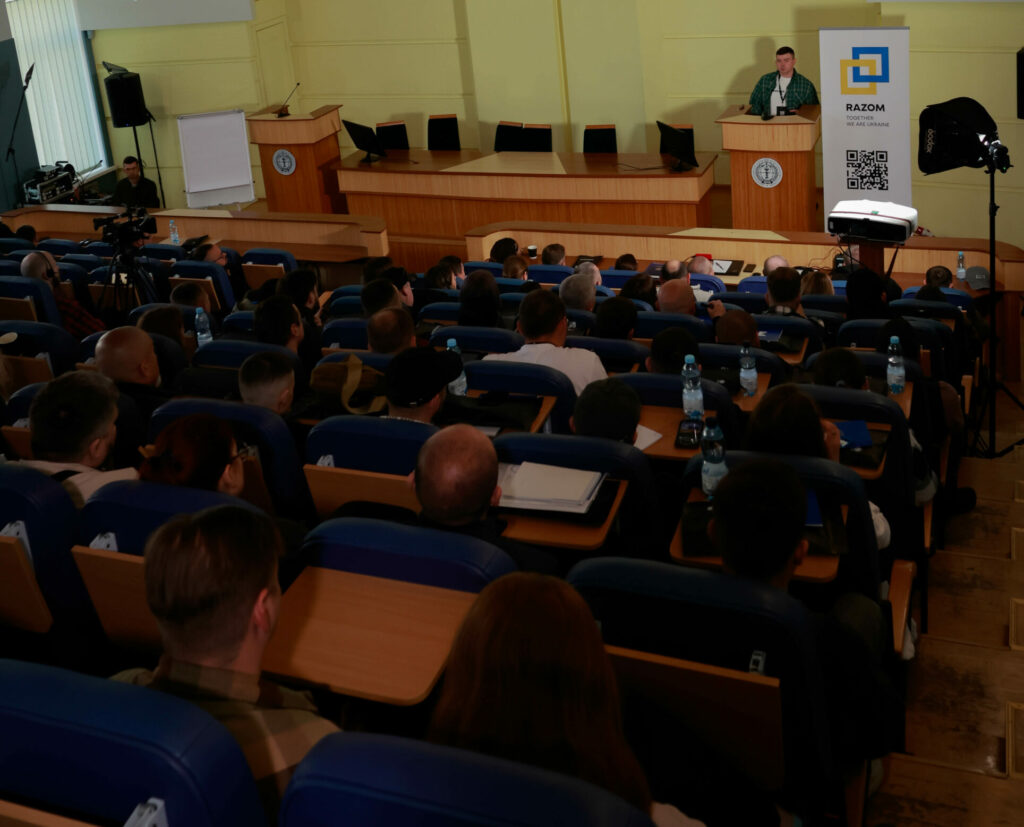
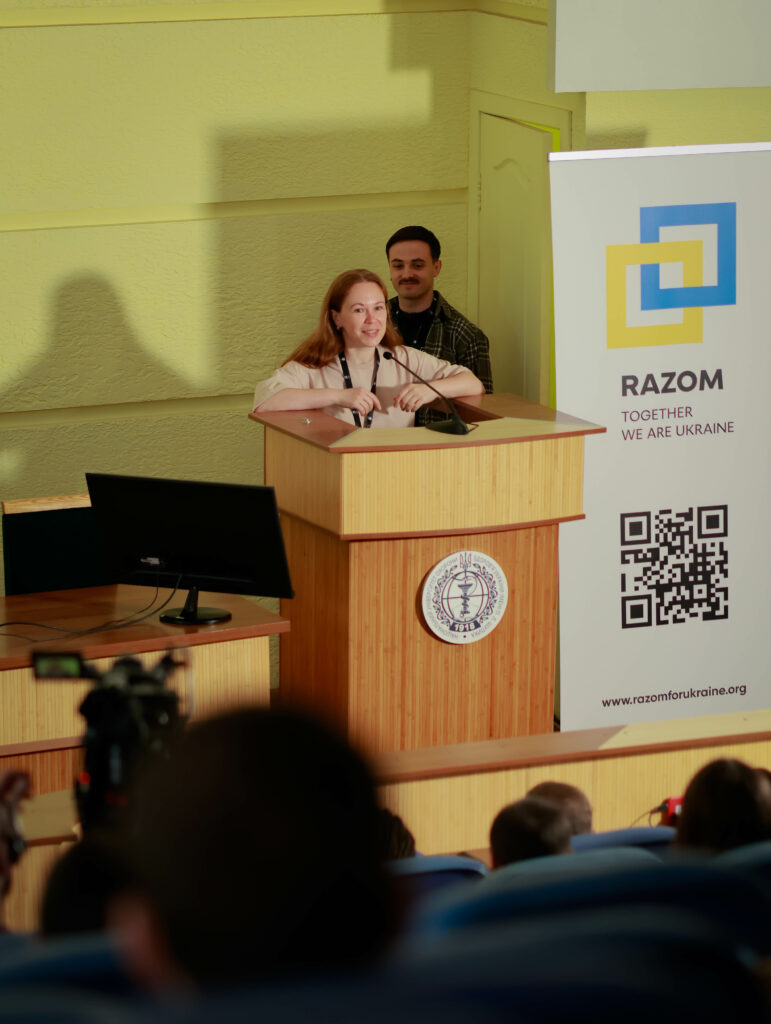
Together with the 2nd Corps of the National Guard of Ukraine “Khartiia” and partners, Razom organized a workshop designed around direct field experience and honest conversation. More than 50 medical leaders and combat medics examined a difficult question: how does the medical system actually function when decisions must be made in seconds, and mistakes can cost lives? Participants focused on what works practically in the field, what does not, and what must change to save more lives.
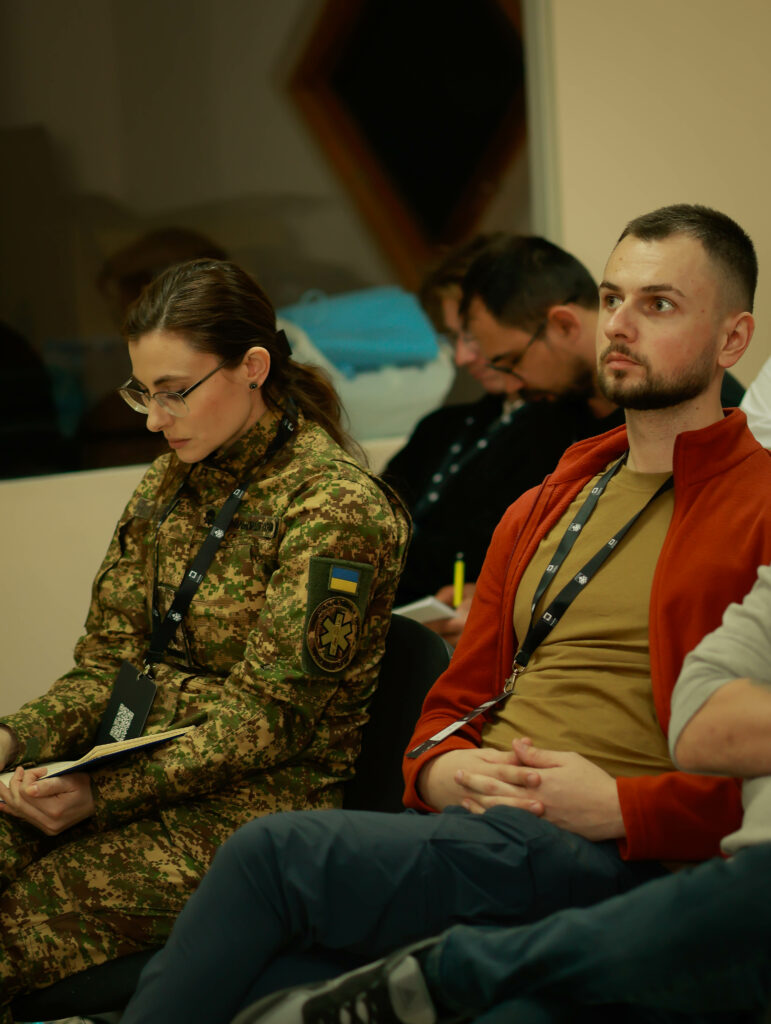
Throughout the discussion the groups quickly saw the pattern – the systems struggle to keep pace with the realities of modern warfare and often rely heavily on individual initiative.The issue becomes especially visible during evacuation. Participants repeatedly described prolonged transport times as one of the greatest barriers to survival. Six hours or more is not unusual. During that time, risks multiply. Information gets lost, resources become limited, and a patient’s condition can deteriorate.
Communication during handoffs remains another major concern. Even where protocols exist, documentation and information transfer often vary from team to team. As a result, receiving teams may work with incomplete information while making critical decisions under pressure.
Participants also discussed the challenges of infusion therapy in combat conditions. Protocols may look straightforward on paper, but battlefield conditions introduce obstacles that cannot be ignored: limited supplies, weather conditions, delayed evacuation, and shortages of blood products. Several medics noted that approaches designed for ideal conditions often become difficult to apply in practice.
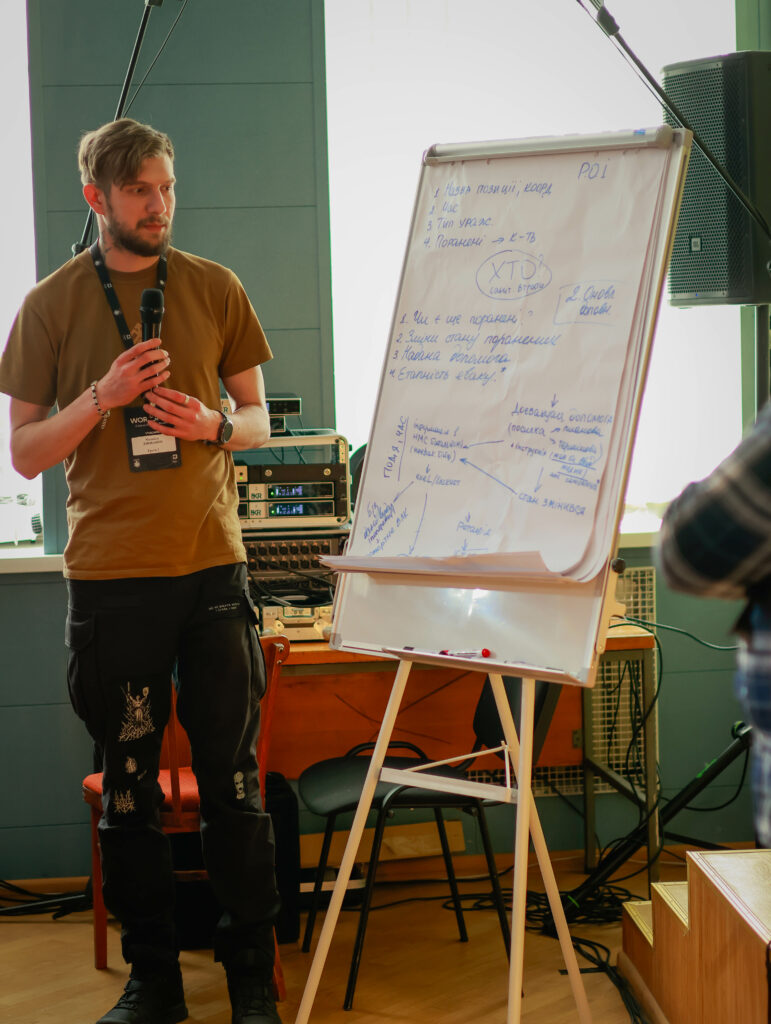
Tourniquet conversion surfaced as another area where knowledge alone is not enough. Participants described situations where medics hesitated even when clinical conditions supported action. The challenge was not only technical skill. It was confidence. Delays can cost not only limbs, but lives.
One conclusion surfaced repeatedly throughout the workshop: improvement begins with training. Tourniquet conversion cannot remain a complex or rarely practiced procedure. It must become a practical skill reinforced through repetition and integrated into care during the earliest and most critical moments after injury.
Participants returned to a common theme throughout the day: the issue is rarely a lack of knowledge. More often, barriers include limited training time, equipment shortages, outdated regulations, and staffing gaps that make applying knowledge consistently more difficult.
“This is not just another conference. It is about forming a new approach to medical support in modern war and building a system that reflects the real challenges of the frontline. The main result is not only the exchange of experience, but the creation of a permanent platform for cooperation and solutions that directly affect survival and operational effectiveness.”
Bohdan Korylchuk, Chief of Medical Service, 2nd Corps “Khartiia”
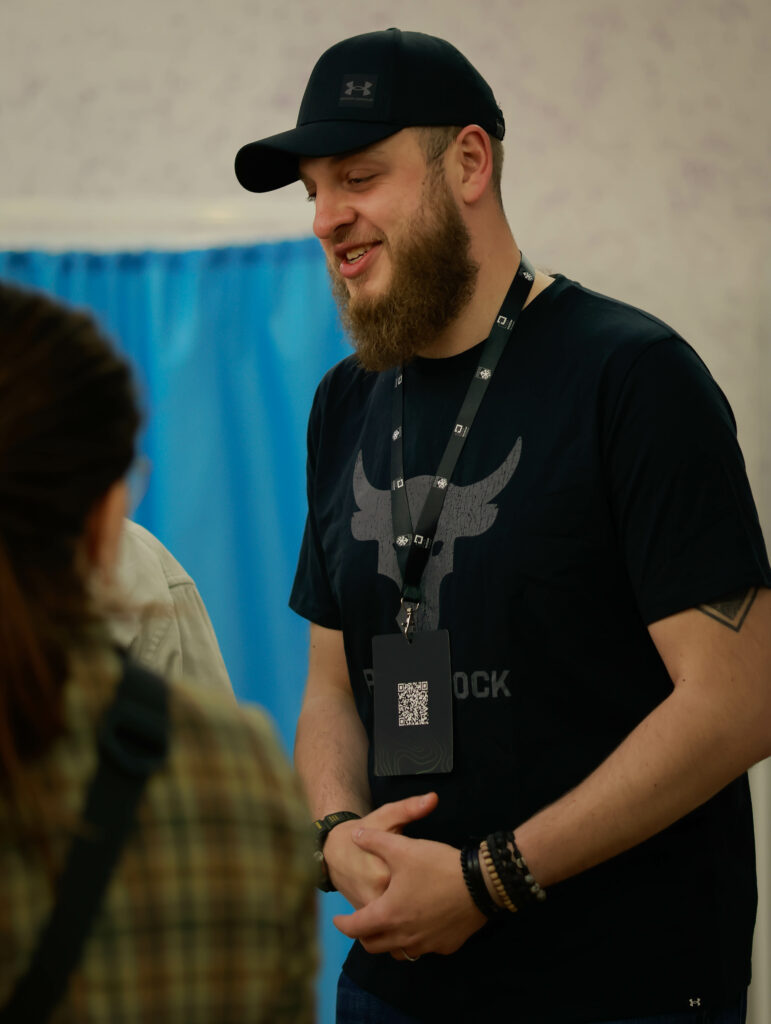
There was also a clear positive takeaway. Participants emphasized that conversations with colleagues from other units created new understanding and practical solutions. Teams working in different environments recognized shared challenges and identified opportunities to align their approaches.
This workshop is one of many steps we take to support medics in Ukraine, an example of how we can achieve better coordination and strengthen systems from within by creating spaces where professionals can speak openly, share experiences, and work on common solutions.