

As part of the Children & the Future Under Fire month, Razom is highlighting initiatives that support children, teenagers, and young people in Ukraine — not only as those in need of protection, but as active participants in the recovery and development of their communities.
One such initiative focuses on empowering active youth in 25 communities across 14 regions of Ukraine, including communities that have been deeply affected by the war. The project is implemented by the National Network for Local Philanthropy Development “Philanthropists” with the support of Razom and Fondation de France.
At the heart of the project is the International Youth Banks model. For more than two decades, this approach has been used in countries around the world, giving young people the opportunity not only to learn, but also to make decisions, mobilize resources, and support change in their own communities.
Similar youth philanthropy models also exist in the United States. For example, Northfield YouthBank and youth-led grantmaking programs at community foundations give young people the opportunity not only to propose ideas, but also to make decisions about funding projects in their communities.
What Is Youth Initiative Bank?
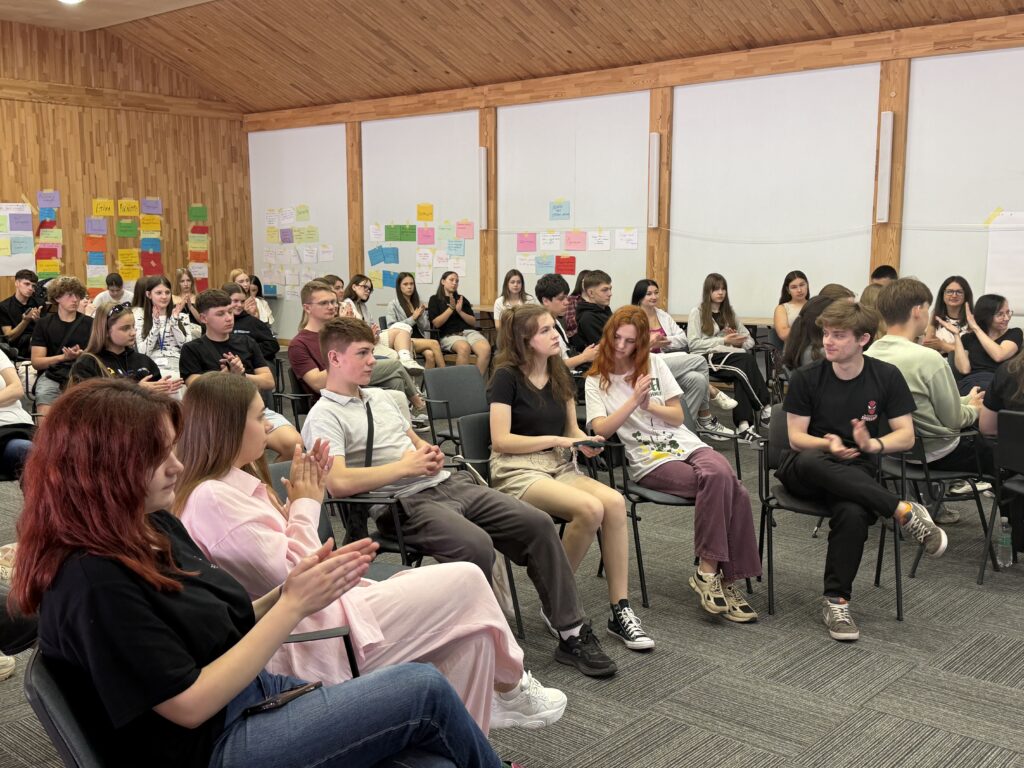
Youth Initiative Bank is an international model that has been implemented for more than 20 years in 37 countries with the support of Youth Bank International. In Ukraine, the model is implemented by the National Network for Local Philanthropy Development with financial support from Razom for Ukraine and Fondation de France.
A Youth Initiative Bank is a team of young people who study the needs of their community, mobilize local resources, organize grant competitions, and support the implementation of youth-led projects.
In other words, young people are not only applying for support for their own ideas. They are learning how to become grantmakers themselves: analyzing needs, defining priorities, developing selection criteria, making funding decisions, and supporting initiatives through implementation.
The model is built on the principle of “learning by doing.” Young people go through the full cycle of managing local change — from assessing community needs to fundraising, supporting projects, monitoring results, and reporting back to the community.
How It Works
Each year, every Youth Initiative Bank team goes through a full cycle of work.
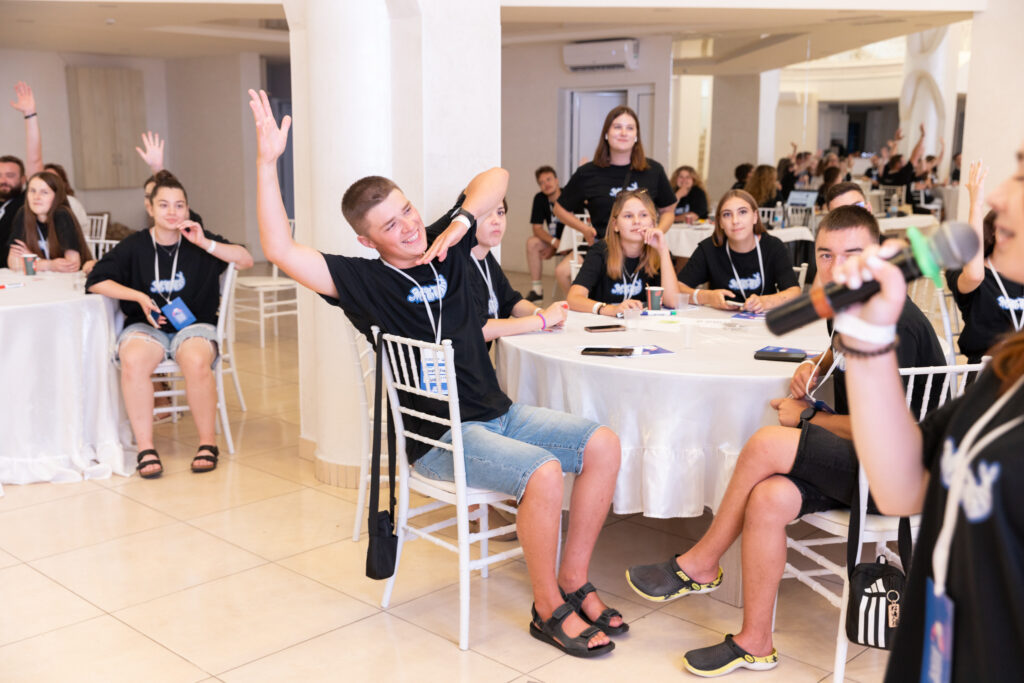
First, a team of active young people is formed. They receive basic training and divide responsibilities among themselves. Then, the participants study the needs of their community by conducting surveys, focus groups, and consultations with residents to understand which challenges are most urgent.
Based on this research, the young people define priorities — the themes and areas that need support in their community. These may include social, educational, cultural, volunteer, or other initiatives that respond to real local needs.
The next stage is local fundraising. Teams organize charity events, fairs, campaigns, and community activities, raising funds from local residents, businesses, and partners. This is an essential part of the model, because it helps young people not only speak about change, but also bring their community together around it.
After that, the Youth Initiative Bank announces an open grant competition for youth initiatives, develops selection criteria, and makes decisions about which projects to support. The selected teams implement their ideas with mentoring support from the Youth Initiative Bank. At the end of the cycle, they analyze the results, assess the impact, and report back to the community.
Why Co-Funding Matters
One of the key features of this model is co-funding.
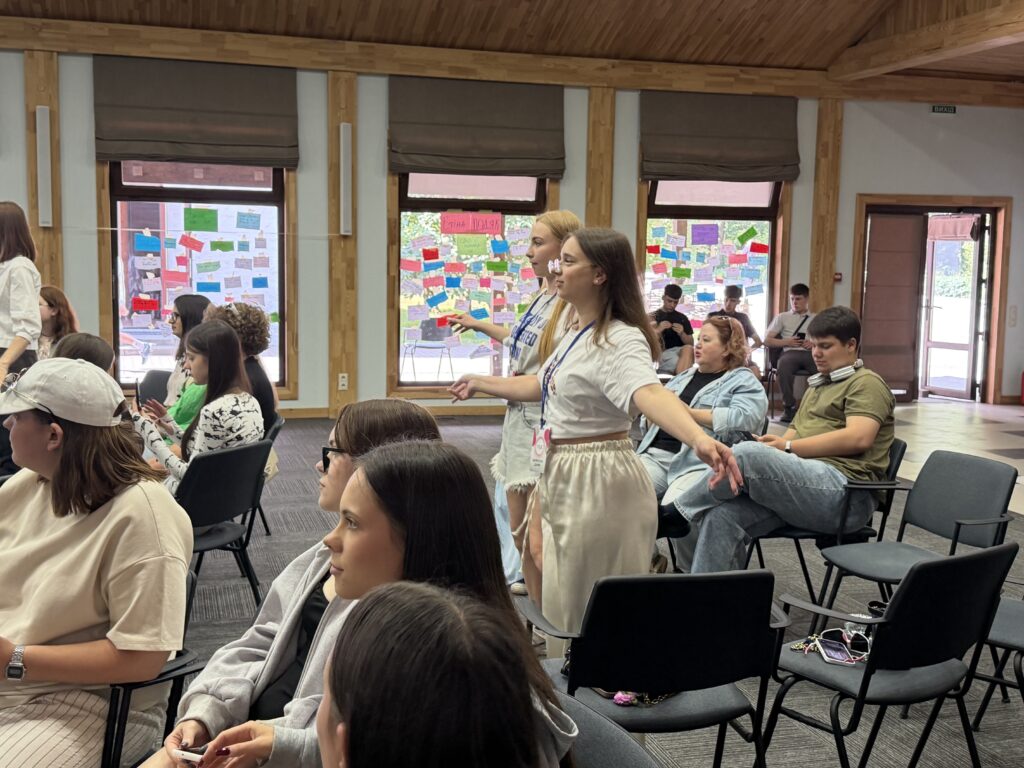
Teams do not simply receive support from outside. They raise resources within their own communities: they speak with residents, look for partners, work with local businesses, and organize charitable events. Based on the results of the grant competition, the Youth Initiative Bank then provides additional funding for youth-led projects.
This means that the more actively a team mobilizes local resources and community support, the more opportunities it has to bring its ideas to life.
This approach builds more than individual projects. It builds trust within the community. Young people see that their voices matter. Local residents see that young people are capable of taking responsibility. And the community receives initiatives that are not imposed from above, but born from its real needs.
What Young People Gain
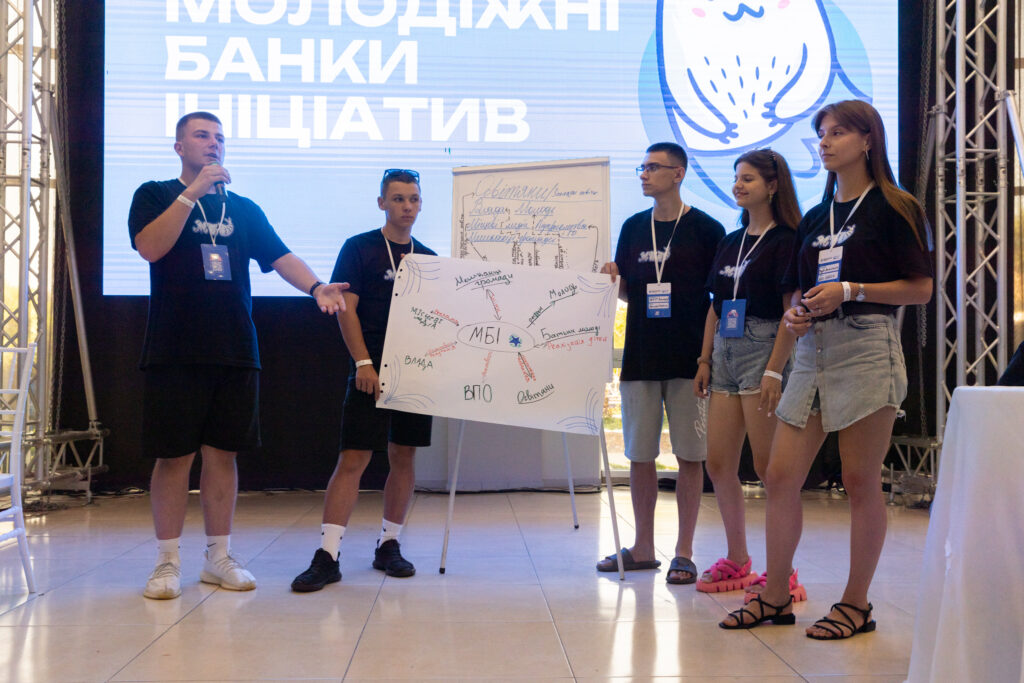
Participation in a Youth Initiative Bank gives young people practical experience that is difficult to gain through formal education alone. They learn how to work in a team, manage projects, analyze information, write grant applications, communicate ideas, lead fundraising efforts, and distribute resources responsibly.
But just as importantly, young people gain the experience of being trusted. They are not simply told that they matter to the future of their community. They are given real tools of influence: the ability to research, decide, support, and take responsibility for results.
For communities — especially those affected by war — this is particularly important. Amid loss, displacement, and constant uncertainty, it is essential not to lose active young people, but to create reasons for them to stay engaged, grow, and see their place in Ukraine’s future.
Where Young People Are Given a Chance
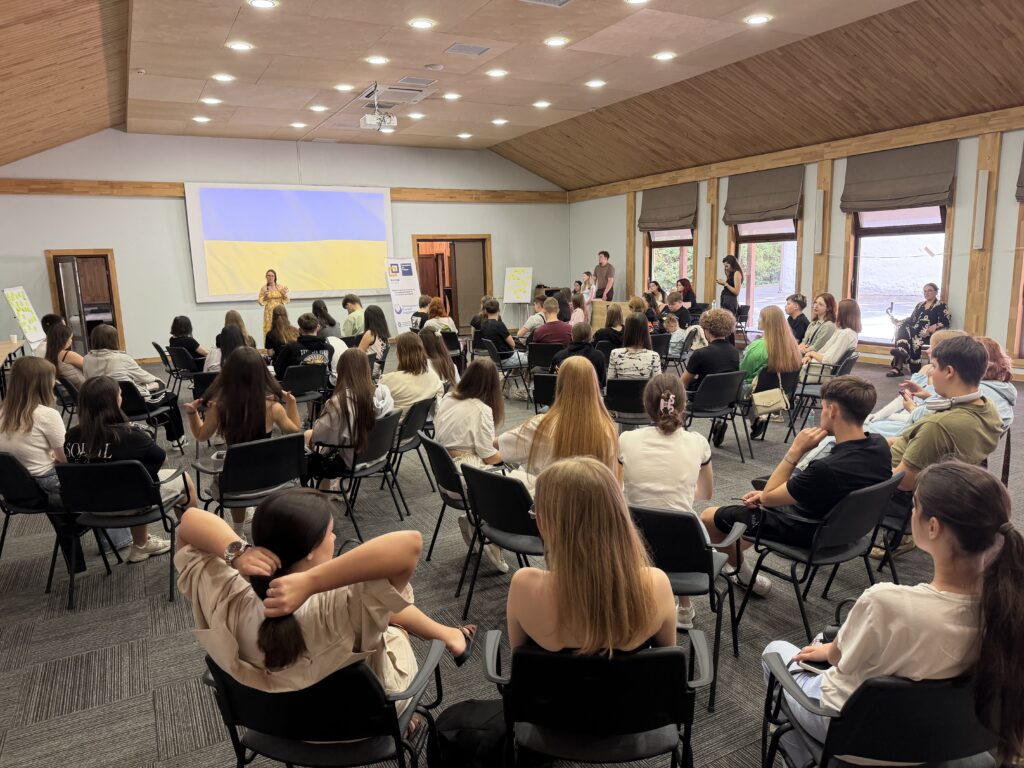
Behind every Youth Initiative Bank, there is more than a grant competition or a training program. There are people who, at some point, heard a simple but powerful phrase: “You can do this.”
In the Kobleve community in Mykolaiv region, this journey did not begin with major victories. Youth Initiative Bank coordinator Oksana Dukhan recalls returning from training two years ago with “a whole carriage of doubts.” She was not local, she knew few people, and the community itself consisted of 11 villages scattered across an area with limited transport connections. Because of the war, some young people had left, and opportunities had become fewer. Even gathering the first team of three people was a challenge.
The first fundraising attempt did not work either. The team opened a charitable donation jar, made plans, and waited. But no one donated, because no one knew who they were. So they changed their approach: they went to people in person. They asked the community to believe not just in projects, but in youth-led ideas. Gradually, the community began to respond with trust.
One of the first projects was the restoration of a volleyball court in the village of Luhove. Teenagers planned the budget themselves, purchased materials, painted, and organized the space. For them, it was more than just a sports ground. It was their first experience of realizing that they can change the place where they live.
Criticism followed. Some said it could have been done better, that the net was not right, that teenagers should not be trusted with money. But at that moment, the real meaning of the project became clear. The point was not that everything had been done perfectly. The point was that young people had, for the first time, gone through the full path from idea to result on their own.
A year later, young people in the same village of Luhove implemented another project — creating a modern cinema space for local residents.
Today, the Kobleve Youth Initiative Bank team includes 12 active teenagers. Over two years, they have implemented 15 youth projects in eight villages, raised around UAH 250,000 for youth initiatives, and helped more than 45 teenagers gain their first real experience in project management, fundraising, and civic engagement.
Another story comes from Cherkasy. Tetiana Honcharova joined the Youth Initiative Bank as a young professional looking for a space where she could be useful. Her first project, “ArtInsight,” combined psychological support with creative practices. In just one month, it reached more than 150 people.
For Tetiana, this was more than a grant competition victory. It was the moment she felt that her ideas had value — and that the desire to help could become real change. Later, she went on to lead the Youth Initiative Bank herself. Today, she supports other young people, helping them overcome fear, speak up, act, and try.
This is the power of Youth Initiative Banks. They do not simply fund youth ideas. They create the moment when a teenager in their community feels for the first time: I am trusted. My voice matters. My idea can become something real.
During wartime, that carries special weight. Because Ukraine’s future is not an abstract date after victory. It is already being shaped through small decisions: to gather a team, to go out and speak to people, to ask for support, to restore a playground, to hold a meeting, to support someone else’s idea, to believe in yourself.
Big changes can truly begin with a small local initiative — especially when young people are given a chance at the right time.
A Future Built Locally
The war has forced many young people to grow up faster. But even under these circumstances, they are not only adapting — they are acting.
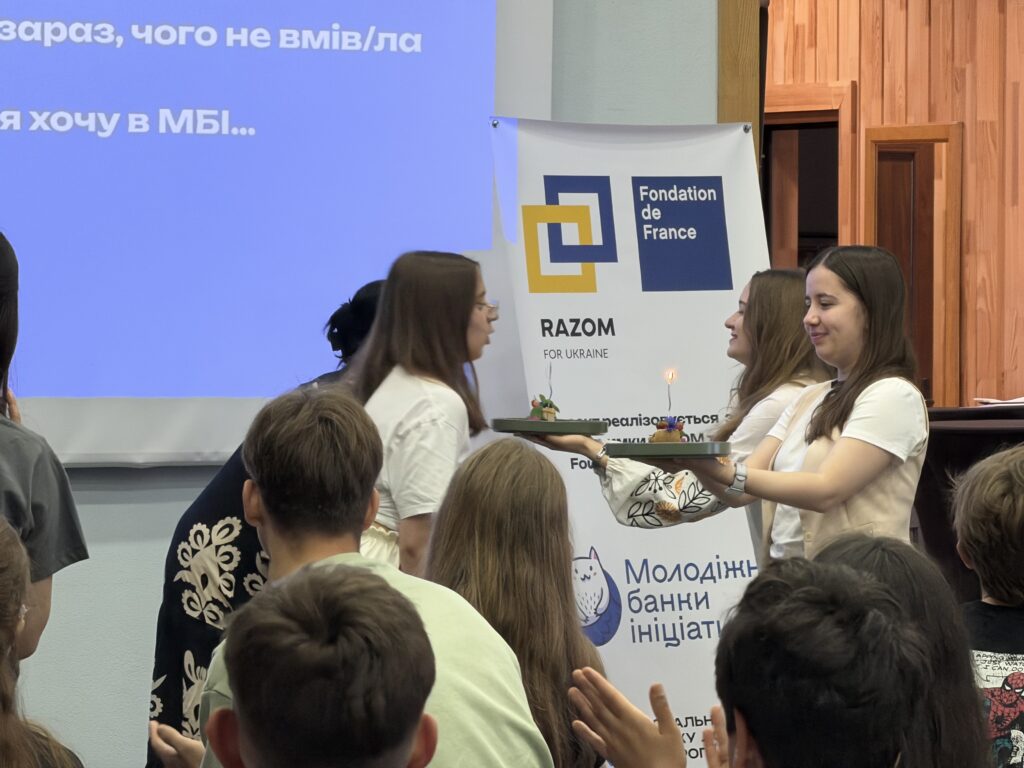
Through Youth Initiative Banks, young people in Ukrainian communities launch local projects, support their peers, engage residents, work with partners, and learn to make decisions that affect the lives of those around them.
For Razom, supporting such initiatives is part of a broader effort to strengthen the resilience of Ukrainian communities. During wartime, the future is not an abstract idea. It is formed every day — in schools, youth spaces, volunteer teams, local initiatives, and communities where young people are given the chance to act.
When young people have the tools, trust, and support they need, they do not simply imagine the future. They begin to build it.