
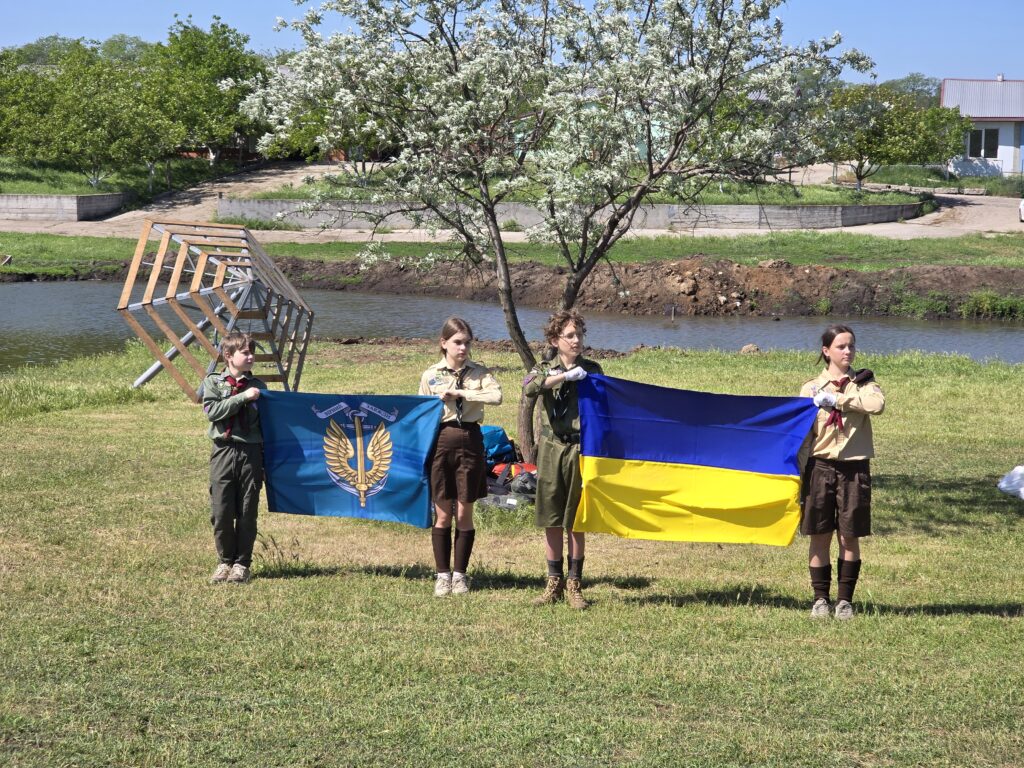
On a warm, sunny May afternoon, a scenic lakeside in Odesa dotted with tents hummed with the sound of children’s laughter and play. Standing on the banks downstream from their campsite, a row of young Vikings saluted their group oath in unwavering solidarity, “Brothers, it is time for us to stand in a row, raise the Plast banner, and gain glory for Ukraine.”
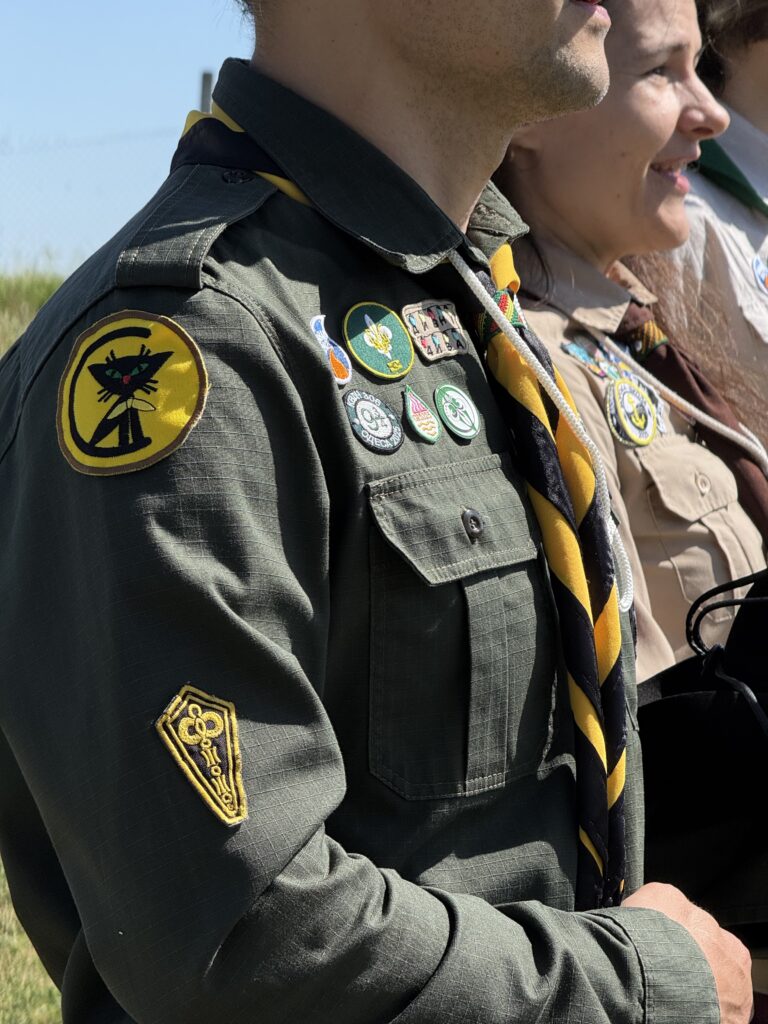
The bright patches of their uniforms, each hard-won through successfully completing a meticulous task or test, caught in the sunlight as the children held their imaginary Viking shields by their side.
Yes, today they would be Vikings.
Not orphans or children without a home. Not refugees forced to flee their city. Not children of frontline parents, not children of war. Just Vikings in a beautiful, carefree world of make-believe. And underneath that, just children.
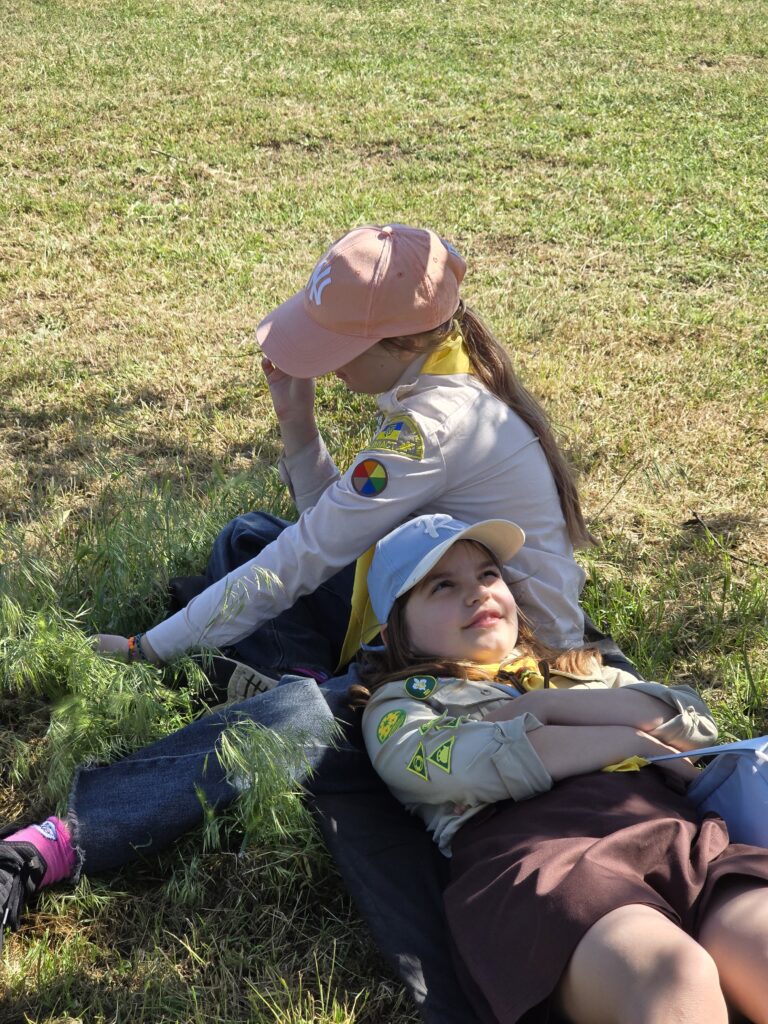
This return to the innocent and creating a space for free development is exactly what Plast, Ukraine’s international scout organization, strives to create. For over a century, Plast has helped young people build character, hone leadership skills and establish a strong community through outdoor adventures, service and teamwork. In today’s Ukraine, where many children have grown up under the shadow of war, these lessons take on new meaning, creating a new reality with more possibilities.
Plast, like all of Ukraine, was built through repression, difficulty and seemingly insurmountable obstacles. Founded in 1912 in western Ukraine, the organization survived two world wars as well as occupation by Poland, Germany and Russia, all of whom forbade or restricted the existence of Plast.
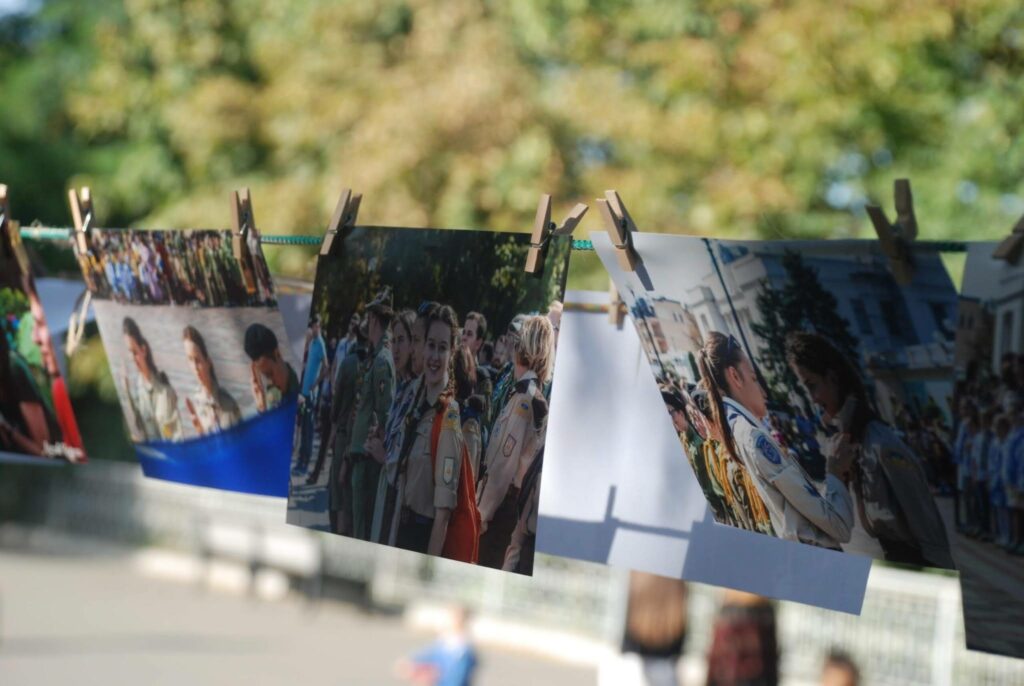
1. Plast camp in the village of Solochyn (Zakarpattia Oblast), 1934. Archive of the “Local History” project. 2. Plast group in the village of Bryukhovychi, Lviv District, Lviv Province, 1920s. Personal archive of Daria Korchak. 3. Plast girls, 1930s. “Local History” Project Archive. 4. A Plast camp for boys in Staryava near Khyrov, held from June 28 to July 24, 1939. Personal archive of Lukia Lukomska
In theory, Plast, like all of Ukraine, wasn’t supposed to make it. War after war, regime after regime, everything that plagued the land that Plast was built on, tried to snuff out the flame of Ukrainian culture and progress which it strived to illuminate. All of it worked to make Plast and Ukraine a faint memory.
And now, the full-scale invasion of Russia brings past horrific history into full swing again as war forces Plast into another round of defense and struggle for its own existence and name. But Plast has shown throughout its history that, like Ukraine, it cannot be thrown down that easily.
Since the beginning of the full-scale invasion, over 25,000 internally displaced children have moved to Odesa. Combined with a shortage of youth programs and stable community spaces, many children in the area have limited opportunities for personal development, leadership training and social connection, a problem that Razom joined Plast this year to help address.
However, the challenges facing children in Odesa extend beyond displacement. Air raid sirens remain a regular part of life, and youth activities can still be interrupted by security threats. Plast youth leader Polina described a recent case when a Shahed drone flew over the camp, forcing everyone to flee into bomb shelters.
“It was so scary… But afterward, we had to get back and just continue- in a country without war, you don’t have to think about this,” said Polina.
Many such thoughts and anxieties surround Ukrainian youth in their day-to-day lives. Their unique situation makes things like Plast all the more important for their continued development.
“There is nothing ‘ordinary’ about being a young person in Ukraine today,” said Nastia Rab, chief advancement officer for Razom. “Even a summer camp takes place against the backdrop of a full-scale war. Yet that makes these experiences even more important. They give young people community, purpose, leadership skills and a sense of hope for the future.”
Despite these obstacles, this spring, Plast’s Odesa branch hosted its fifth major youth event of the year, “Spring Celebration”, bringing together children from across the region, and across Ukraine, for a weekend of camping, games, challenges and friendships. Razom’s team joined in to experience the festival firsthand and to speak with participants and leaders about what Plast meant to them- and why they believe it’s important in shaping Ukraine’s future.
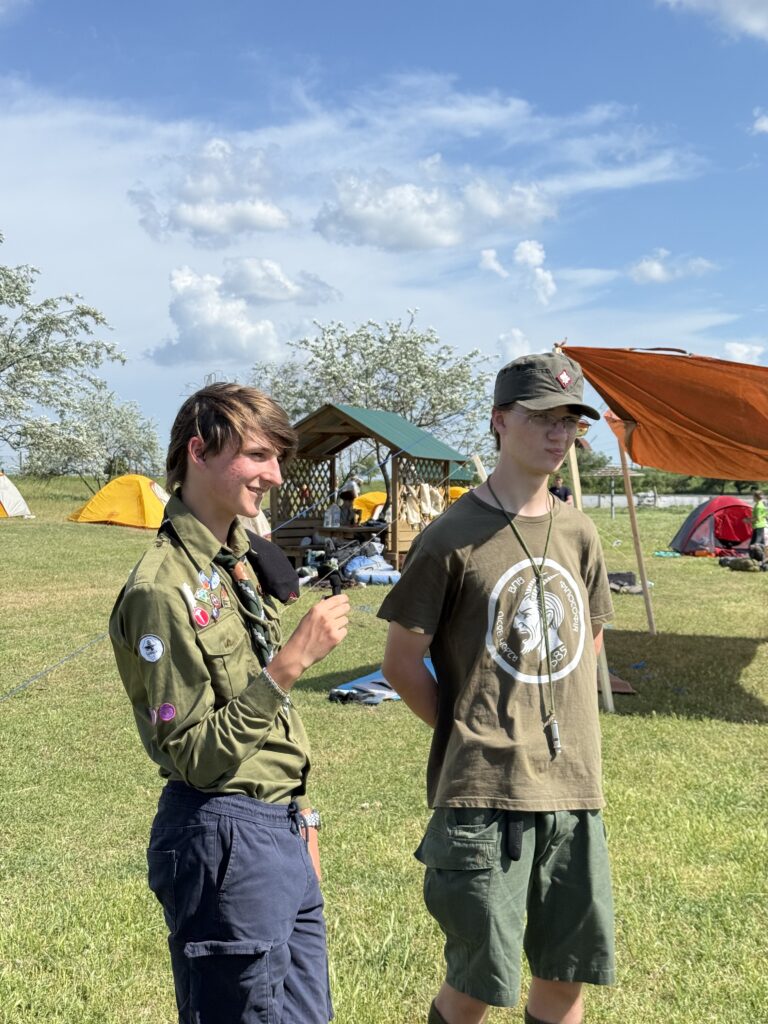
Razom partnered with Plast Odesa last year to provide a full year of support for such youth advancement activities. By providing materials such as tents, ropes, crafts and training resources, Razom helped manifest the goals and ideas that Plast had for the kids in their community.
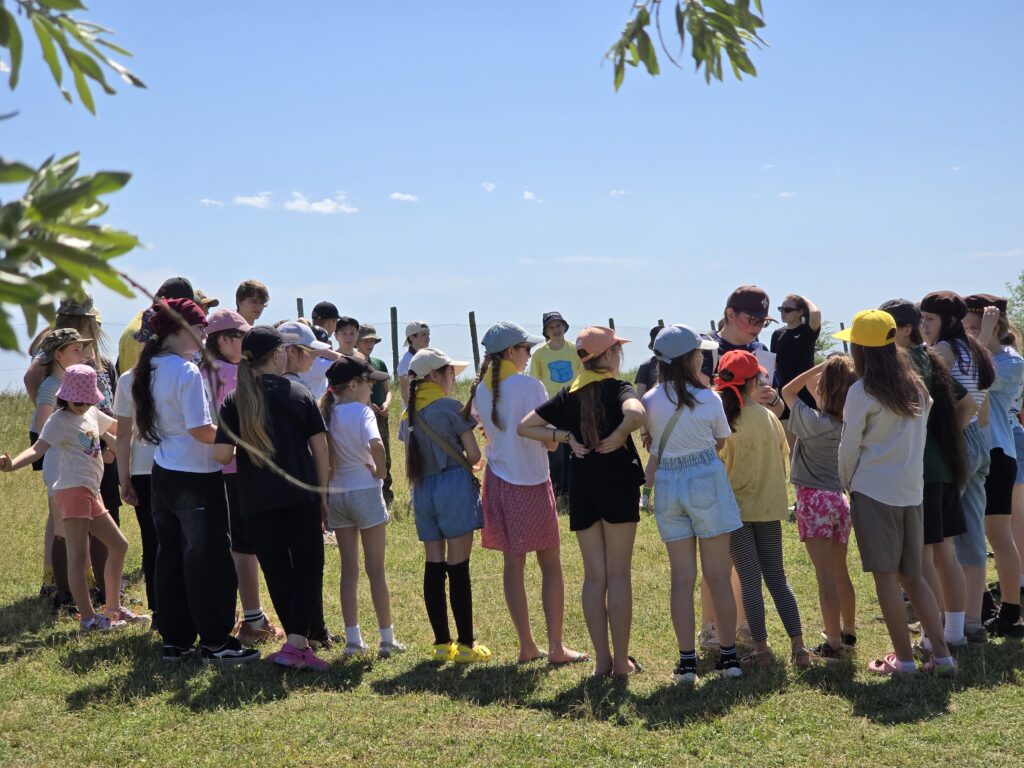
Students participated in a rotation of workshops, stations and games where they learned different scouting and nature skills, such as knot tying, proper travel packing, setting up tents and map reading, materials for which were directly provided by Razom.
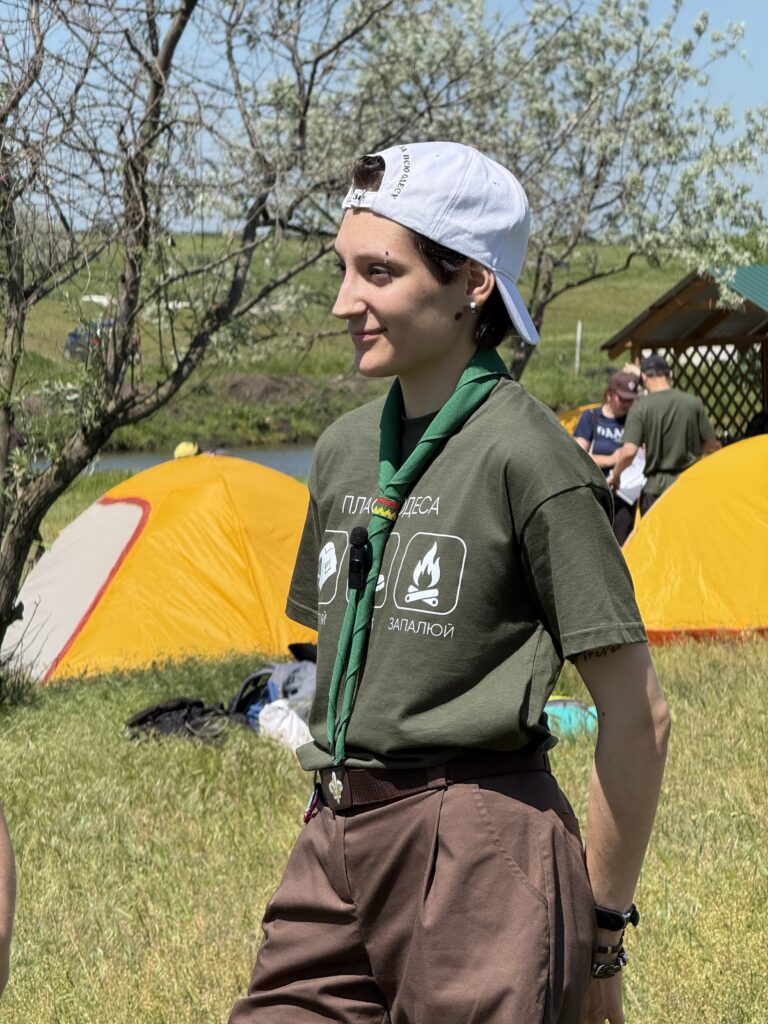
Their achievements are reflected in the patches they earn, and every patch tells a story. Most children have already gained multiple patches in several Plast programs throughout the year, including one for providing emergency first aid.
In addition to learning practical skills, participants and leaders emphasized the importance of Plast providing a unique environment for a thriving Ukrainian culture and community. Plast is Ukrainian-speaking, meaning all the events and activities are hosted in Ukrainian. For some students who don’t speak Ukrainian at home or encounter Russian in their everyday contexts, this provides a space where Ukrainian language and culture are the norm rather than the exception.
“A child should be immersed in Ukrainian-language culture and experiences, without Russian constantly entering that space,” said Korotaeva.
For some participants, Plast is an experience of re-immersion into Ukrainian culture and a unique space where they can share that with others.
“They want a community. They want more friends who share their values, more Ukrainian values, people who speak Ukrainian. Maybe at school or near home they don’t have that,” said Polina.
Plast not only invests in children participants, but also in training up group leaders and student counselors. As a training ground for young adults, Plast prepares older youth to step into adulthood with a leadership mindset and skillset.
“This also gives me some benefits, I gain experience being a leader, -something I don’t often get the chance to do,” said another Plast leader.
Most importantly, Plast provides participants with relationships and friendships that they can keep with them for the rest of their lives. It’s not just a camp where kids are dropped off and then picked up at the end of the day, it’s a forever-community, said Korotaeva.
“For me, Plast has become an inseparable part of life,” said a young participant.
Plast is all about investing in this resilient future. However, Razom’s connection to Plast is actually much deeper rooted in the past. Many from Razom’s staff were once Plast scouts or counselors as youth, and owe much of their love and work for Ukraine to their experience in the organization.
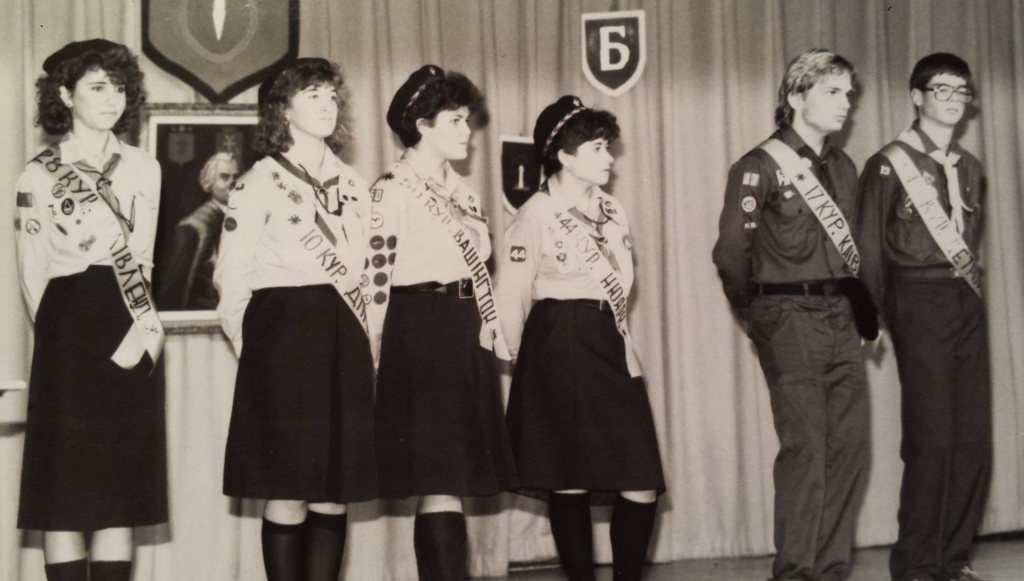
Dora Chomiak, third from left at a Plast history and public speaking competition
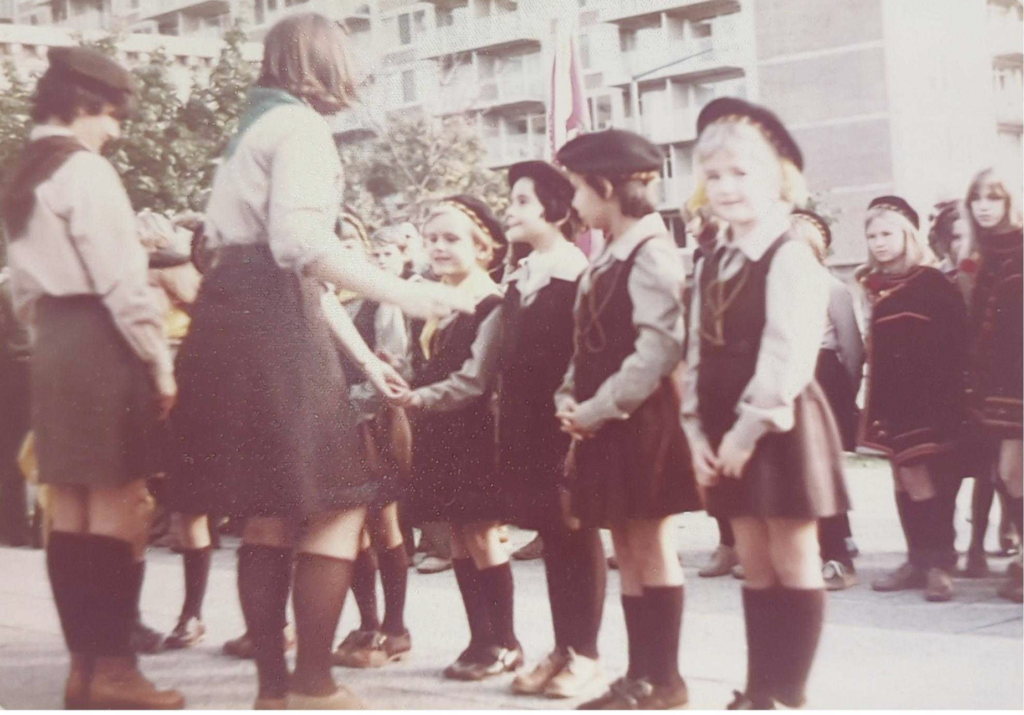
Dora Chomiak, shaking the left hand of a Plast counselor
Dora Chomiak, Razom’s CEO, started her journey with Plast as a child, attending camps in the Washington D.C. branch. Later, she became a Plast leader herself where she learned how to plan and run a camp for over a dozen students only a few years younger than her.
“I rely on all those experiences throughout my career,” said Chomiak. “Collaborate. Roll with it. Walk on the sunny side of the street when you can. Respect nature.”
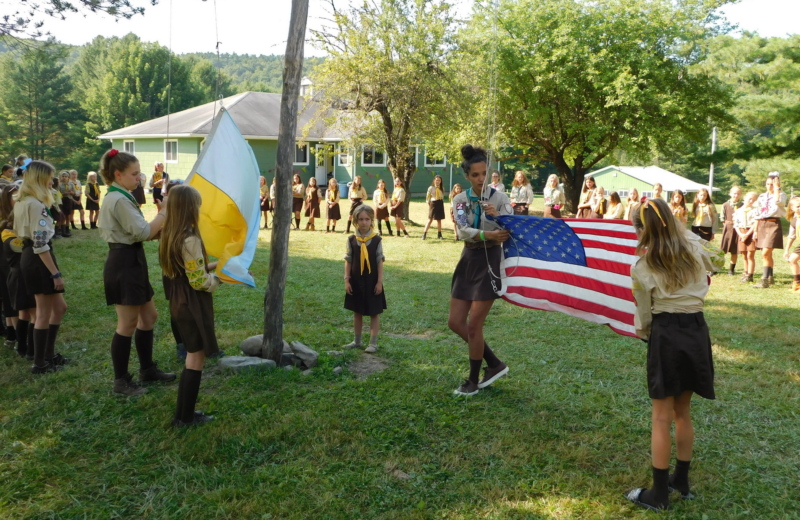
Rab immigrated from Ukraine to the U.S. as a child and found an invaluable Ukrainian community in Plast that allowed her to stay connected to her roots.
“Plast helped shape who I became. Knowing that today’s scouts are finding the same friendships, values and sense of responsibility that I found years ago makes me especially proud of this partnership,” said Rab.
Uliana Bilash, Razom’s director of people and culture is a generational Plast attendee in her family. Her parents met at a Plast camp and passed on the experience to her, which eventually brought her to Plast camps across the U.S., Canada, Spain, Belgium, Germany and Ukraine both as a camper and counselor.
In 2022, when Plast summer camps in Ukraine had to close due to the invasion, Bilash volunteered at a Plast camp in Spain where many Ukrainian children refugees fled. It was another chance for her to pour into the next generation. Now that Plast is back in Ukraine, she works to ensure that kids still have the same experiences she had as a Plast scout.
“Now, we are lucky that Plast camps continue in Ukraine, but we often lack the resources needed to run them,” said Bilash. “By supporting Plast camps, we can help Ukraine’s children learn skills that can grow them into leaders of a prosperous and democratic Ukraine.”
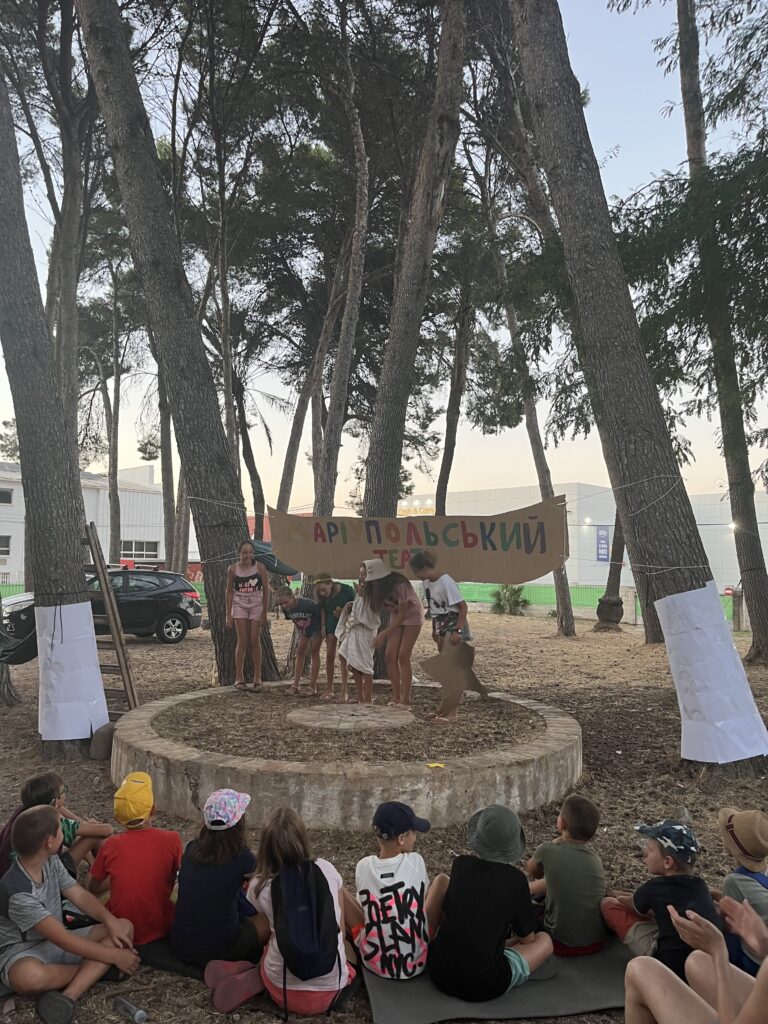
Ukrainian Plast participants recreate their version of the Mariupol Theater at a Plast camp in Spain 2022.
Razom’s public engagement coordinator for its advocacy branch, Daryna Lesniak, also a Plast alumnus, started her own Plast group in Shanghai as a way to express her own Ukrainian story wherever she went.
“With Plast you always carry a piece of Ukraine with you,” said Lesniak.
Plast’s rich history and work has brought much of Razom’s team to their place right now. However, Plast’s reach also goes beyond the regular parts of Ukrainian society. Not only have Plast members taken great part in fighting in the world wars, were strong participants in Ukraine’s Revolution of Dignity in 2014, but many now serve on the front lines, in defense against Russia’s aggression.
Having members of Plast serve in the Armed Forces of Ukraine creates a conflicting reality. Enormous amounts of time, energy and resources are poured into supporting current and former Plast members in the army, which hold paramount importance. However, that also creates challenges in funding and sustaining the core youth programs that keep Plast active for the next generation, said Rab.
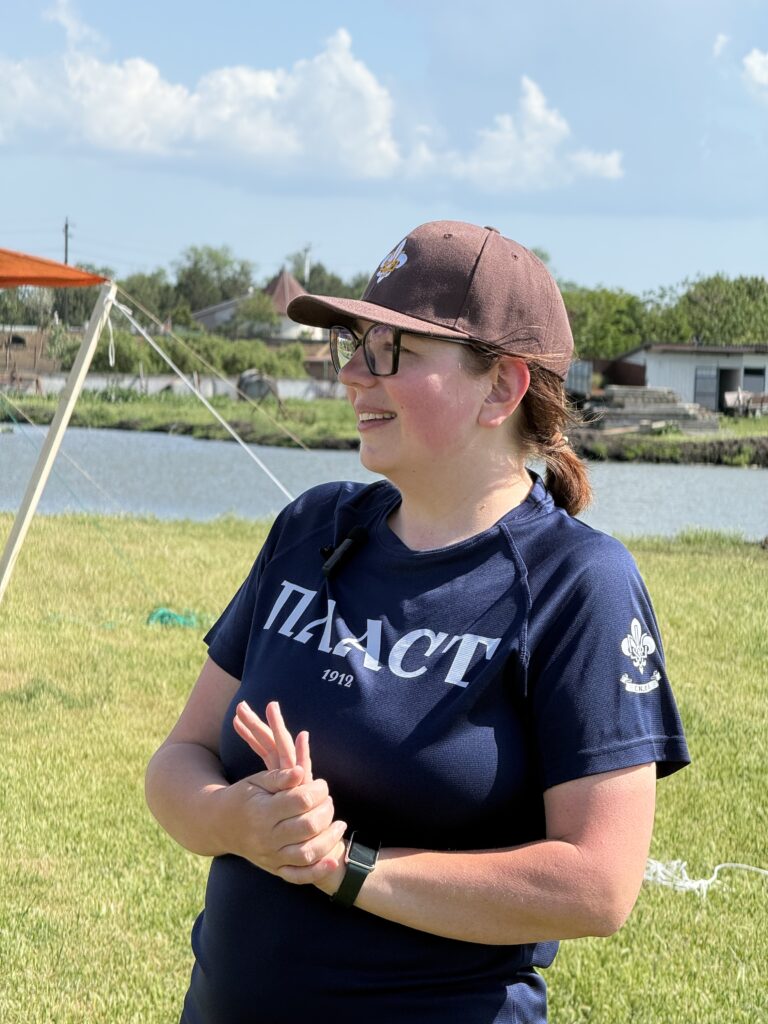
The future of Plast in Odesa is one of prospective growth. The current program is at full capacity with over 100 children on the waiting list. There are only so many resources available to cover so many students; there is not enough capacity for demand, said Korotaeva.
“We receive inquiries from parents almost every day,” said Korotaeva. “I keep writing and saying everywhere that our dream is for anyone who wants to join to be able to do so. Any child, especially here in Odesa.”
Looking ahead, Plast in Odesa hopes to expand their equipment inventory, train more leaders and eventually open up their own office to reach more communities in the area, and Plast’s organizers emphasized the important role of donors and outside support to make this a reality.
“Through these grants, over the last seven months, we’ve grown tremendously and made our events bigger and better. Without that support, we wouldn’t have been able to do it,” said Korotaeva.
“One of the things that makes me very happy on bad days is knowing that people in other countries are supporting us.”
Every year, Plast functions as a community of knowledge, skill-building, close relationships and Ukrainian values.
Whether a refugee in Spain, an immigrant in the U.S., or a young Viking on the banks of an Odesa lake, every Plast member inherently becomes part of its vast history, part of an experience they will never forget.
“For many people, Plast is one big adventure,” said participant, Ihor.
“It’s something you’re meant to enjoy.”
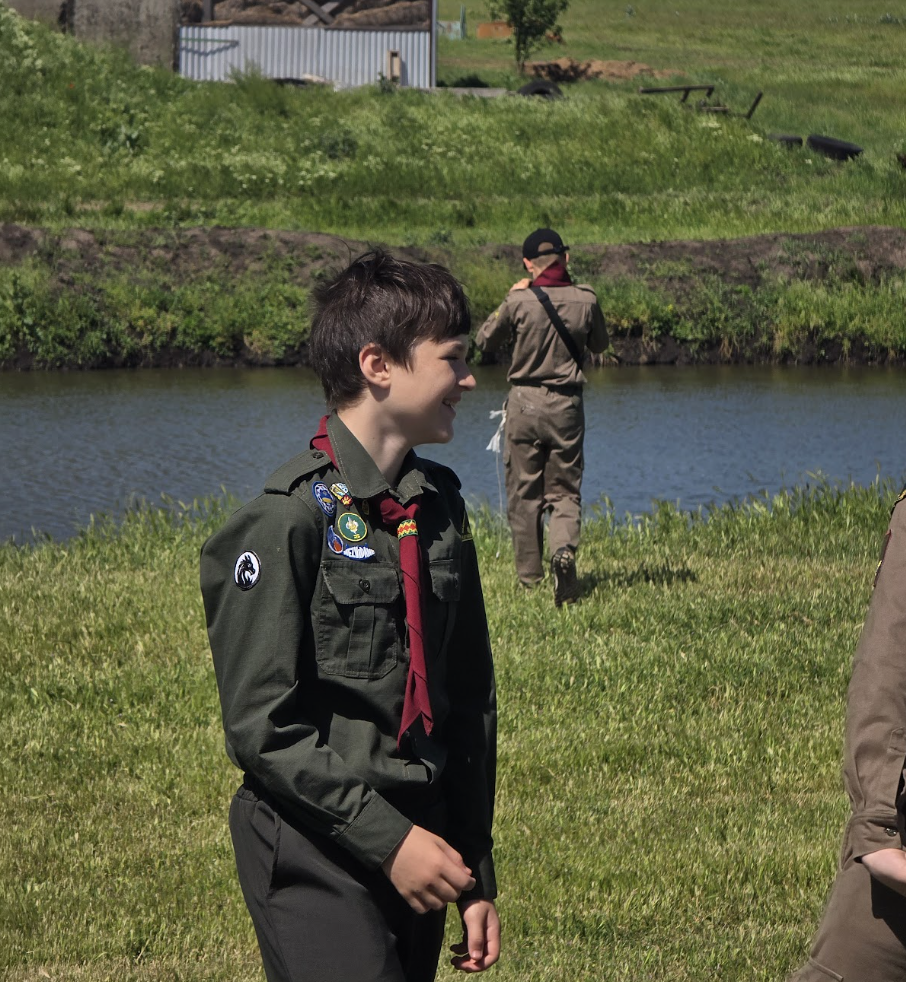
Plast in Odesa is just one of the vital projects we’ve been able to support this year thanks to the generosity of our community.
But our work doesn’t stop here.
War is trying to steal their childhood, but you can help us give it back.
By becoming a part of this crucial mission, your gift to our Kids Campaign helps Ukrainian children reclaim their joy, resilience, and hope—giving them safe spaces to learn, grow, and just be kids.