
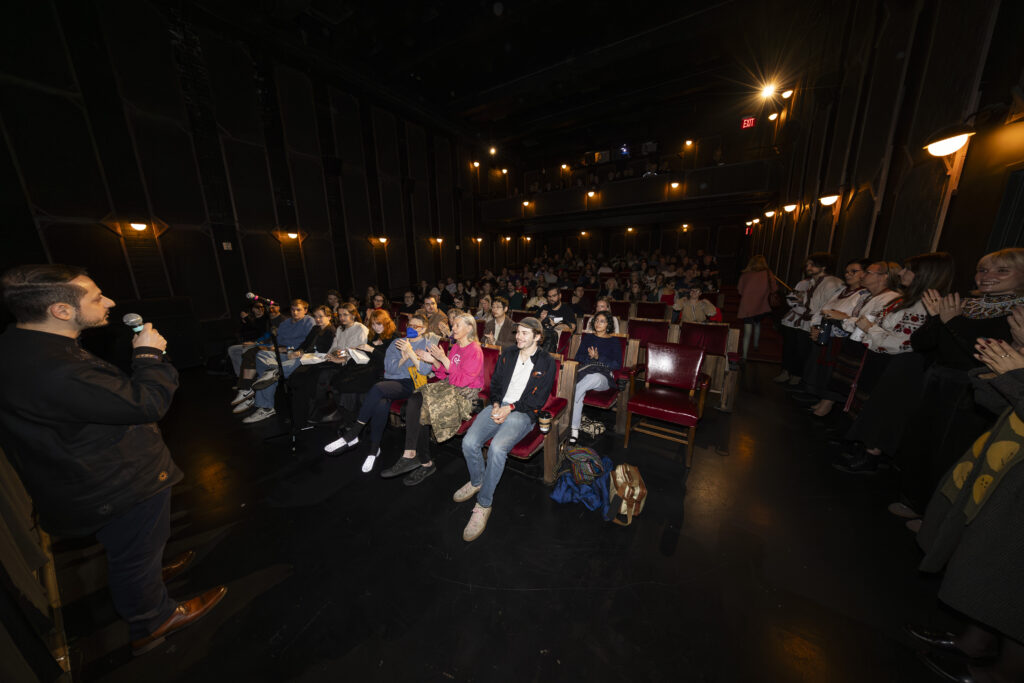
In late 2025, New York audiences gathered at Metrograph for Soul & Soil: Ukrainian Poetic Cinema — an ambitious retrospective co-presented by Metrograph, Razom Cinema, and Dovzhenko Center that introduced audiences to one of the most visually innovative film movements of the twentieth century. Across eighteen screenings, the series drew nearly 1,400 in-person attendees, reached thousands more through streaming, and generated significant engagement across social and film media platforms.
But the retrospective was never intended to function merely as a successful repertory film series. At its core, Soul & Soil, sought to challenge a longstanding misconception in global film culture: the tendency to treat Ukrainian cinema as a subsidiary chapter within “Soviet cinema,” rather than as a distinct artistic tradition with its own language, identity, and historical trajectory.
“There’s a version of Ukrainian cinematic history that gets told as a footnote to Soviet cinema,” explained Head of Razom Cinema Polina Buchak. “One of the things that drives Razom Cinema is the refusal to accept that framing.”
Through a carefully curated program of landmark films, rare archival materials, guest discussions, and contextual programming, Soul & Soil demonstrated not only the enduring artistic power of Ukrainian Poetic Cinema, but also the growing appetite among international audiences to engage with Ukrainian culture on its own terms.
Building the Collaboration
The retrospective emerged from a collaboration between Razom Cinema and Metrograph’s Program Operations Manager, Anri Vartan. Both recognized an opportunity to create a program that would move beyond topical wartime cultural interest and instead introduce audiences to the historical depth of Ukrainian cinematic tradition. Vartan was also the curator of the retrospective series.
While Razom Cinema had already become known for presenting contemporary Ukrainian films and cultural programming in New York, Soul & Soil marked its first major retrospective dedicated specifically to Ukrainian film heritage. It was also the first significant Ukrainian Poetic Cinema retrospective in New York City since the Film at Lincoln Center series curated by Richard Peña in 2012.
“The series was conceived to illuminate the depth and distinctiveness of Ukrainian Poetic Cinema,” said Vartan. “For audiences in New York, the goal was to offer more than just a screening series — it was an invitation to experience a distinct cinematic language profoundly rooted in its sense of time and place.”
The title Soul & Soil reflected the retrospective’s central themes: the enduring relationship between the Ukrainian people, their land, and cultural memory. The films traced a path through key moments in Ukraine’s modern history, from the National Revival period through the Soviet era and into works that anticipated the collapse of the Soviet Union itself.
Reclaiming a Cinematic Heritage
For both Metrograph and Razom, the retrospective carried significance beyond film history. Ukrainian Poetic Cinema emerged during the 1960s as a visually daring movement associated with filmmakers such as Sergei Parajanov, Yurii Illienko, Leonid Osyka, and Ivan Mykolaichuk. Drawing deeply from Ukrainian folklore, history, ethnography, and language, the movement represented a profound break from the rigid constraints of Soviet Socialist Realism.
As filmmaker and producer Pylyp Illienko explained in a companion Metrograph interview, the movement was heavily censored precisely because it articulated a distinctly Ukrainian cultural identity. The films’ emphasis on folklore, spirituality, local traditions, and historical memory challenged Soviet cultural homogenization and, in many cases, resulted in bans, shelving, or severe censorship.
“Revisiting these films today allows audiences to see how questions of identity, resilience, and self-determination have been explored by Ukrainian filmmakers for decades,” said Vartan. “Ukrainian Poetic Cinema was a site of resistance against Soviet cultural hegemony.”
That framing became especially resonant in the context of Russia’s ongoing aggression against Ukraine. For Razom Cinema, presenting these films internationally was not only an artistic project, but also a cultural and historical intervention.
“Russia’s full-scale invasion of Ukraine is not only a military assault, but a deliberate attack on Ukrainian cultural identity,” Buchak noted. “Presenting Ukrainian cinema to international audiences is an affirmation of Ukraine’s existence as a distinct, sovereign culture with its own artistic voice.” Cinema, she argued, offers audiences something beyond news coverage or geopolitics — a way to experience a culture from within: “It allows audiences to feel a culture from the inside — its motions, its rhythms, its memory and identity.”
Creating a Singular Audience Experience
What distinguished Soul & Soil from a standard repertory series was the depth of contextualization and the extraordinary level of collaboration behind the scenes.
Razom Cinema provided grant support that enabled the sourcing of rare 35mm prints from Yurii Illienko’s personal archive — materials that had not screened outside Ukraine in decades — alongside digital restorations from the Dovzhenko Center, Ukraine’s leading film archive.
The retrospective also featured in-person appearances by Pylyp Illienko, son of Yurii Illienko, who introduced films and participated in post-screening discussions, offering audiences rare insight into the production histories and political contexts surrounding the works. Composer Leonid Grabovsky, whose experimental scores shaped the audiovisual language of several Illienko films, also joined select screenings.
“These screenings became something much more unique,” Buchak said. Metrograph and Razom further elevated the experience through live subtitling provided by Razom Cinema Program Coordinator Yuliia Haleta, custom translation work, and carefully designed print and editorial materials that framed the series for audiences unfamiliar with Ukrainian film history.
Opening night set the tone for the retrospective’s immersive approach. Before a screening of Oleksandr Dovzhenko’s Earth accompanied by DakhaBrakha’s score, the Ukrainian Village Voices ensemble performed live folk music inspired by the same traditions reflected in the film itself.
For Vartan, contextualization proved essential: “The way a film program is framed has a huge impact on the audience’s experience and ultimately on their appreciation of the cinema itself,” he reflected. “Print materials, guest appearances, and the technical presentation itself are all integral details that are vital in presenting a film in its best light.”
This emphasis on contextualization extends beyond the screenings themselves. Razom Cinema’s team continues to invest in ongoing study and engagement with Ukrainian film history, including participation in programs such as the 2026 Ukrainian Institute London course Ukrainian Cinema: A Century of Innovation, Struggle, and Resilience, reflecting the organization’s commitment to presenting Ukrainian cinema with both historical depth and contemporary relevance.
Audience Response and Institutional Impact
The response to Soul & Soil demonstrated that Ukrainian cinema can attract substantial international interest when presented with strong curatorial framing and institutional support. The retrospective achieved a 68% average occupancy rate across eighteen screenings, drawing nearly 1,400 attendees in theaters. An additional 1,640 viewers engaged with the series through Metrograph’s streaming platform, bringing total viewership to more than 3,000 people.
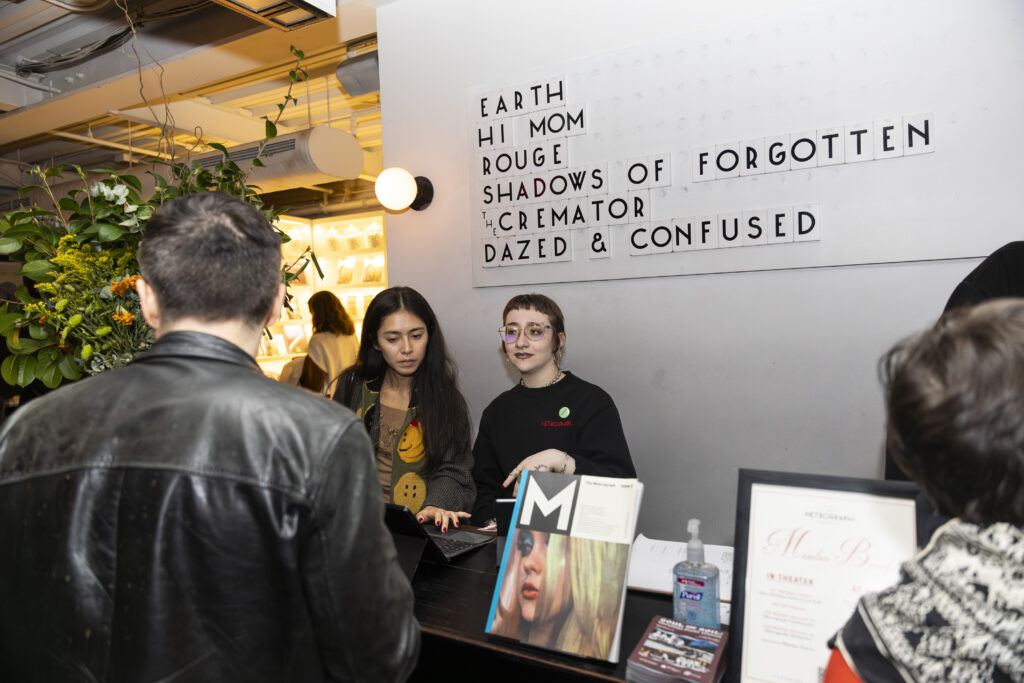
The program’s digital footprint extended even further. Promotional content reached approximately 370,000 social media accounts and generated more than 887,000 views, including a highly successful collaboration with Letterboxd that alone approached 700,000 views. Coverage from outlets including Letterboxd, FilmStage, Screenslate, United24, Bazilik, and The Gaze further amplified the retrospective’s visibility.
For Razom Cinema, the statistics confirmed something larger than the success of a single event: “There is a desire and appetite for Ukrainian cinema among international audiences,” Buchak said. “Soul & Soil proved that when the programming is presented with care, context, and the right institutional partnerships, audiences show up.”
The collaboration has already opened conversations about future institutional partnerships and expanded programming opportunities. Both Razom Cinema and Metrograph see the retrospective not as a singular event, but as a model that can travel to other venues and audiences.
“The films are extraordinary,” Buchak reflected, “but audiences need a frame to receive them. Razom Cinema is here to help build that frame in collaboration with any institution ready to open their doors to the power that Ukrainian cinema offers.”