
We have been without electricity since October 2024. People rely on generators. Now we also have no gas or phone service. Thank God, there are no children here, but 110 older people remain in the village (as of October 15). They refuse to evacuate for different reasons. Some cannot afford to leave. Some have nowhere to go. Others simply do not want to leave their homes.
Nataliia Kamenetska, Village Head of Oleksandrivka, Stanislav Community
When people think of humanitarian aid, they usually think of food, water, medicine, clothing, and other basic necessities. In Ukraine, drone detectors have become another essential item.
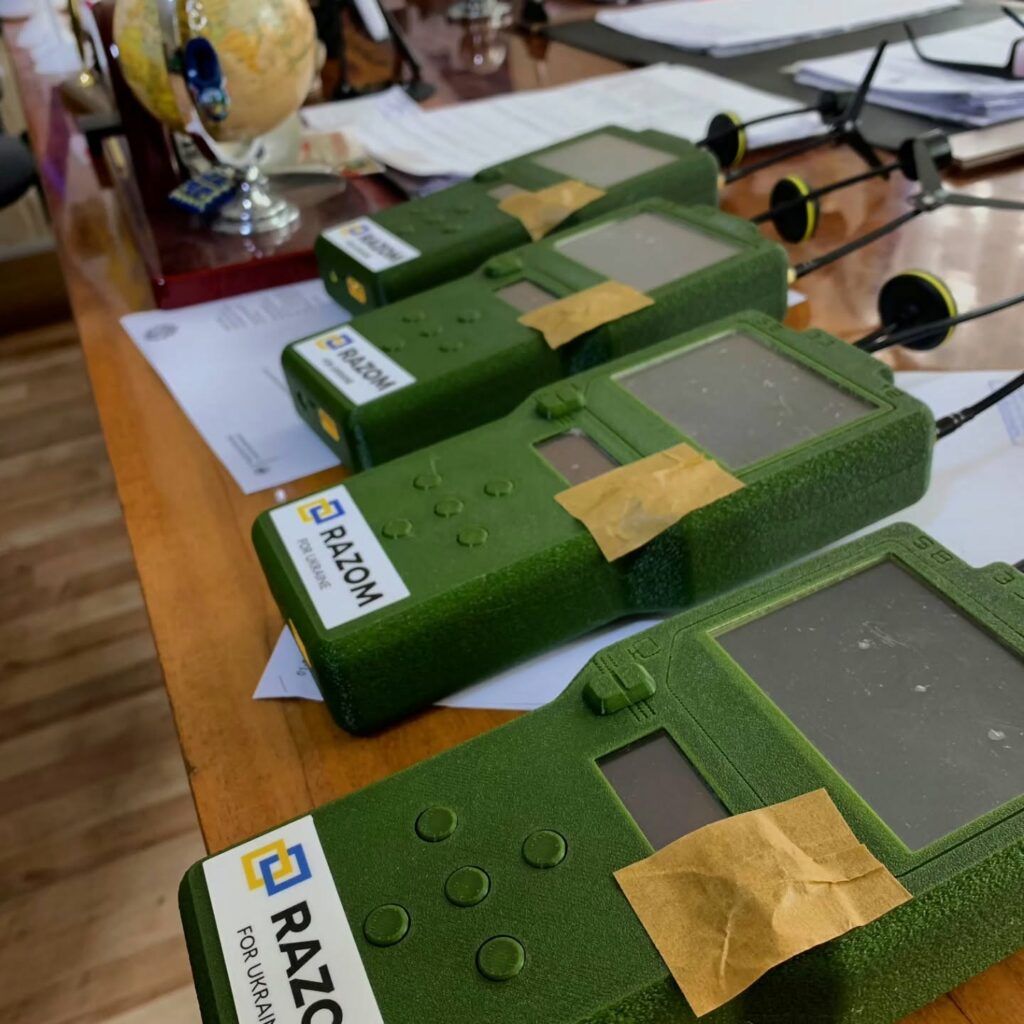
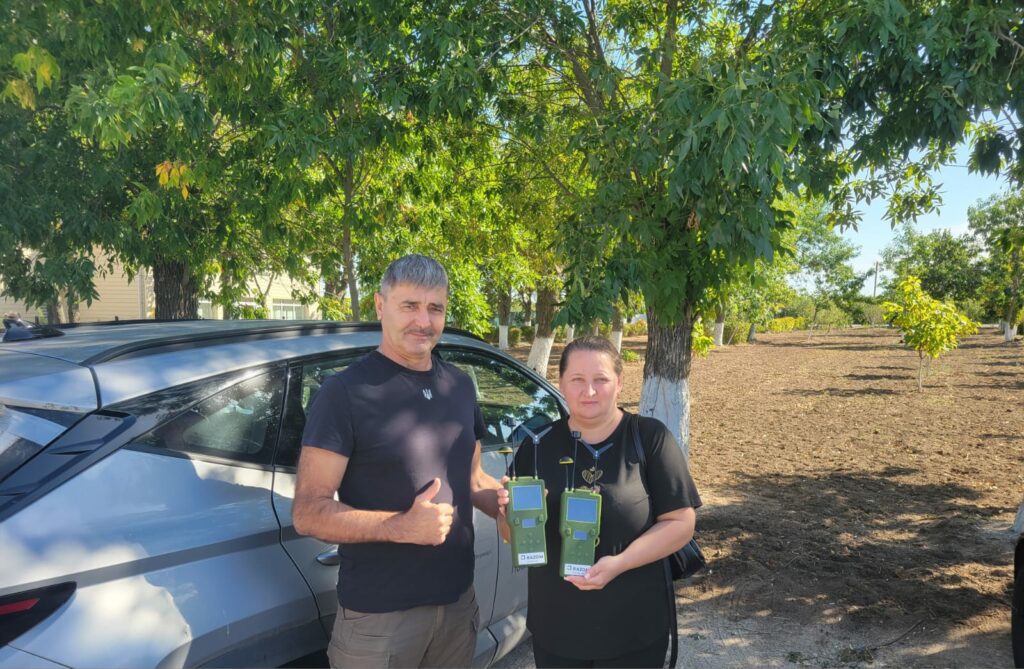
With financial support from Razom, the Obiednannia Charitable Foundation delivered 52 Dzyga (spinning top) drone detectors to the Kherson region. These devices help firefighters, medical teams, utility workers, social services, and evacuation teams stay safer while doing their jobs.
The Kherson region lies in southern Ukraine, with access to the Black Sea and the Sea of Azov. It is famous for its delicious watermelons. Today, part of the region remains under Russian occupation, while the rest faces constant attacks by Russian drones.
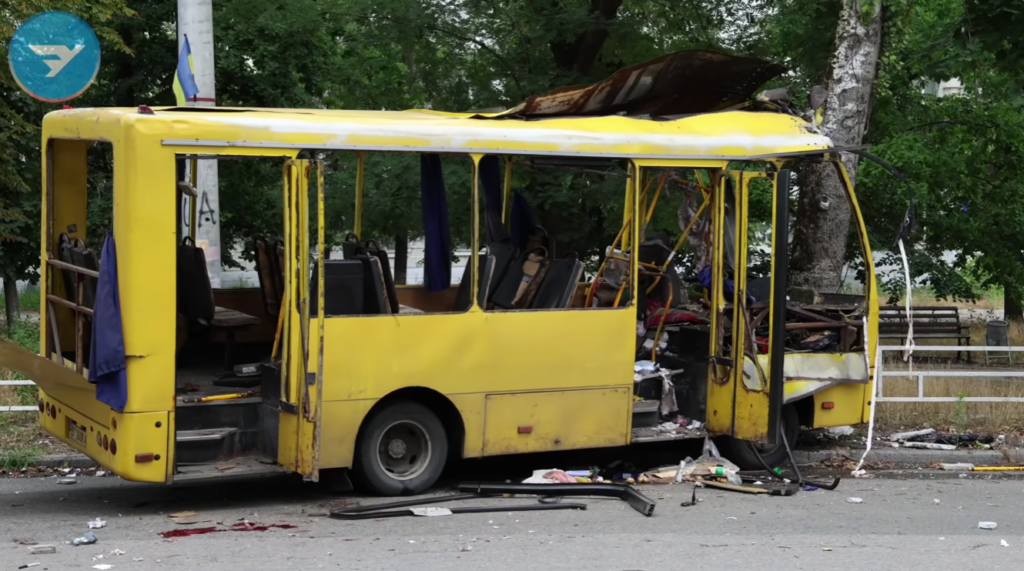
According to official data from the Kherson Regional Military Administration, the number of Russian drone attacks in the region has more than doubled over the past year, rising from around 2,500 to 5,500 drone attacks per week in the de-occupied part of the region. Russian forces increasingly target civilian vehicles, municipal equipment, minibuses, ambulances, and evacuation vehicles.
This affects the daily lives of local residents. Traveling around Kherson and operating public transport have become life-threatening.
How Do Drone Detectors Work?
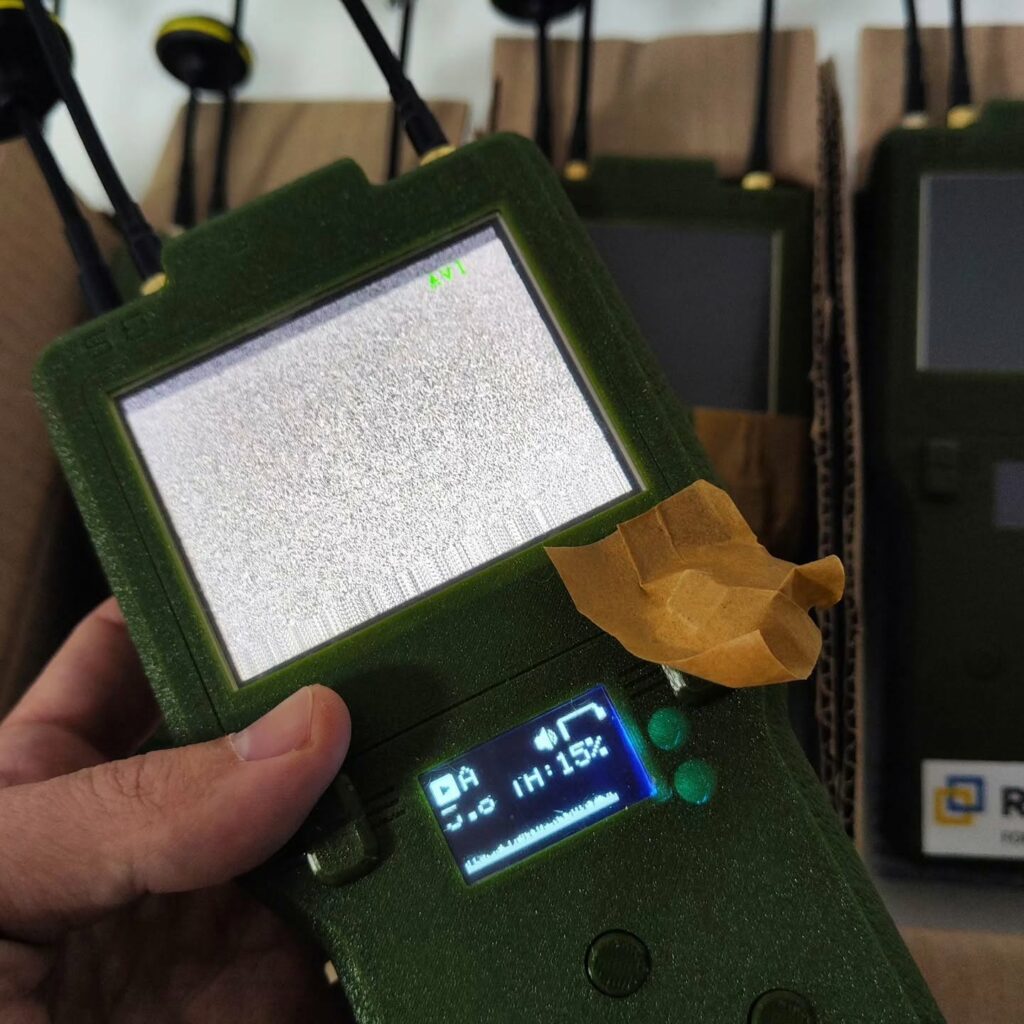
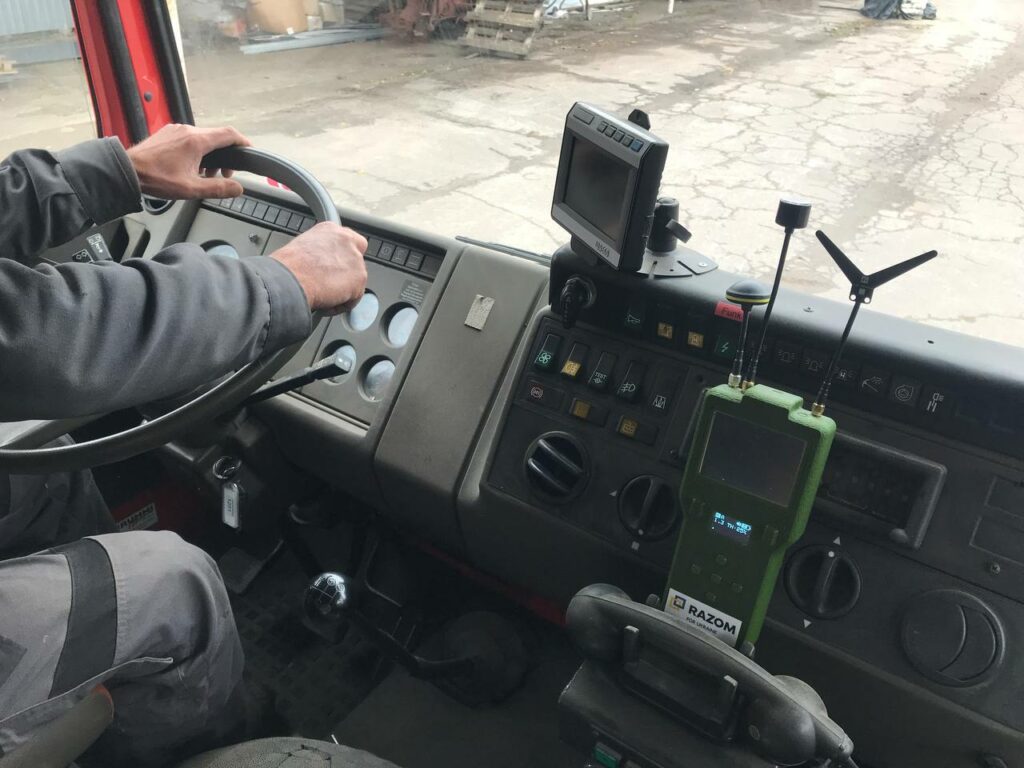
A drone detector is like a pocket-sized TV. But instead of news and your favorite shows, it searches for video signals from nearby drones that may be filming you in real time.
For example, someone riding alongside an ambulance driver can use the detector to see what the Russian drone pilot sees. The device allows users to switch between different “channels,” or frequency ranges, to search for signals. The receiver does not transmit any signals itself, so it cannot be tracked through its own signal emissions.
Using a drone detector gives people more time to decide what to do while a drone is still far away. This can literally save lives.
To choose the best detectors for the people receiving them, the Razom team relied on tests conducted by radio communications specialists. They carried out field tests of around 40 types of detectors and different models.
One of the best options in terms of price and quality was Dzyga, a drone detector made by a Ukrainian manufacturer. The team considered not only professional test results but also positive feedback from users.
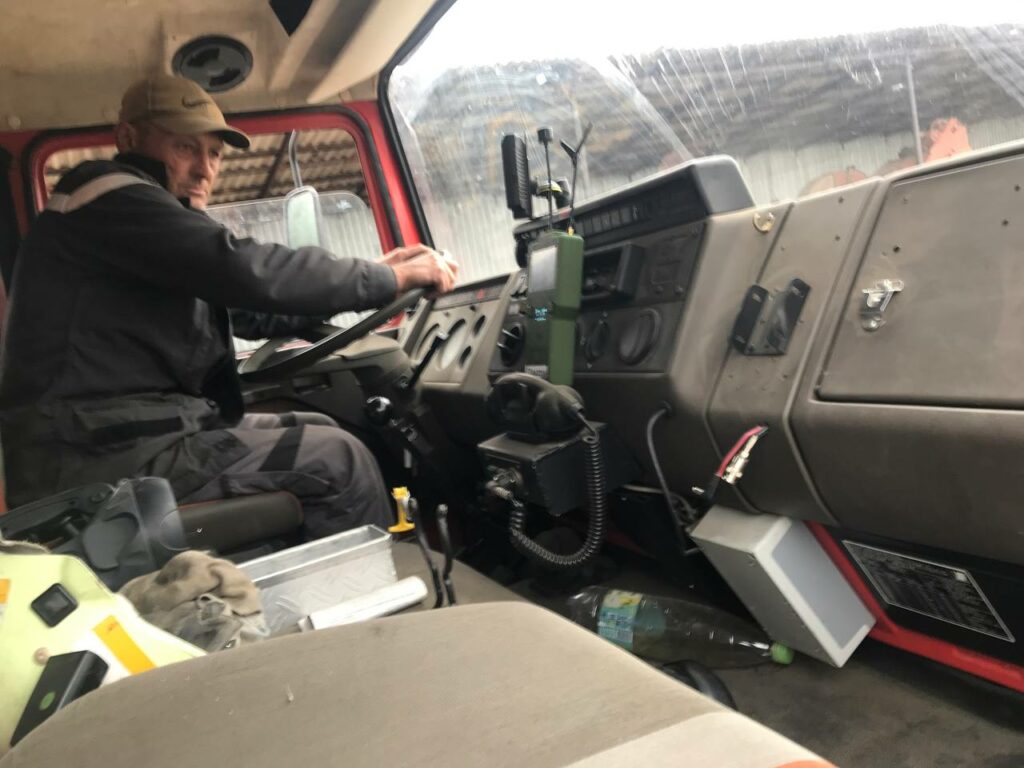
Dzyga is easy to use: switch it on, raise the antenna, and wait for a signal. It charges like a phone, using a power bank or a car charger. If the device breaks, the warranty covers repair or replacement.
Unfortunately, no detector can identify every drone, even though Dzyga covers most of the radio frequency ranges used by drones. For example, if a drone operates through a fiber-optic cable or flies on autopilot without an operator controlling it, the detector may not detect it.
That is why, even when using Dzyga, people continue to watch and listen carefully to their surroundings so they have time to protect themselves from Russian drones.
We spoke with people in the Kherson region who use Dzyga detectors about the situation in their communities and how the devices have become part of their daily work.
Ruslan Petrovych: Head of the Local Fire Department in Arkhanhelske, Vysokopillia Community
“During the summer, we often had fires caused by dry grass, or a drone would crash somewhere and start a fire. So we went out on emergency calls at least once every one or two weeks.
Before we had this detector, drone operators would call us and warn us to be careful or stop and wait somewhere because something was flying nearby. We also checked social media groups for updates. Now we can see the signals ourselves.
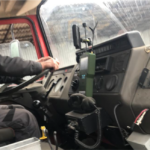
Three of us go out on each call. One person always drives, and another uses Dzyga to watch the monitor. When the detector picks up a signal, it starts beeping. Then we turn on a larger monitor, which shows us an image from the drone.
We don’t wait until we can see our own vehicle on the screen. If the monitor starts showing an image, we stop, get out of the vehicle, look at the sky, and listen carefully. If possible, we move to a safer place.”
Nataliia Kamenetska, Village Head of Oleksandrivka, Stanislav Community
“We have been without electricity since October 2024. People rely on generators. Now we also have no gas or phone service. Thank God, there are no children here, but 110 older people remain in the village as of October 15. They refuse to evacuate for different reasons. Some cannot afford to leave. Some have nowhere to go. Others simply do not want to leave their homes.
“The Russians attack all kinds of transport, whether it is a car or even a bicycle. In cold weather, they target places where they see steam or smoke rising.
“After Russian drone strikes, people in our village can also be left without water. Our water supply is centralized, and the wells are outside the village, in an open field.
“For utility workers to connect a generator and restore the water supply, they need at least basic equipment to warn them when drones are nearby. That is why these detectors are so important to us. Thank you so much for this support.
“We also use them when we travel outside the village to collect deliveries of diesel fuel.”
Humanitarian Aid That Meets Real Needs
The situation in Ukraine is constantly changing, as are the weapons Russia uses to attack Ukrainian communities. Humanitarian aid must keep pace with these changes and respond to what people actually need on the ground. For Razom, listening to local communities and responding quickly is essential.
The 52 drone detectors will not stop Russian attacks. But they will help firefighters respond to emergencies, utility workers restore water supplies, and social workers and evacuation teams carry out their work with a better chance of staying safe.
This support helps communities keep going, even in places where everyday work has become life-threatening. Most importantly, these devices can save lives.
Another winter of Russia’s full-scale war lies ahead. Razom is raising funds to provide Ukrainians and local services with essential support, from backup power to equipment for emergency responders.
Your support will help Ukrainian communities prepare for winter and keep essential services running — services that people depend on for their lives and well-being.