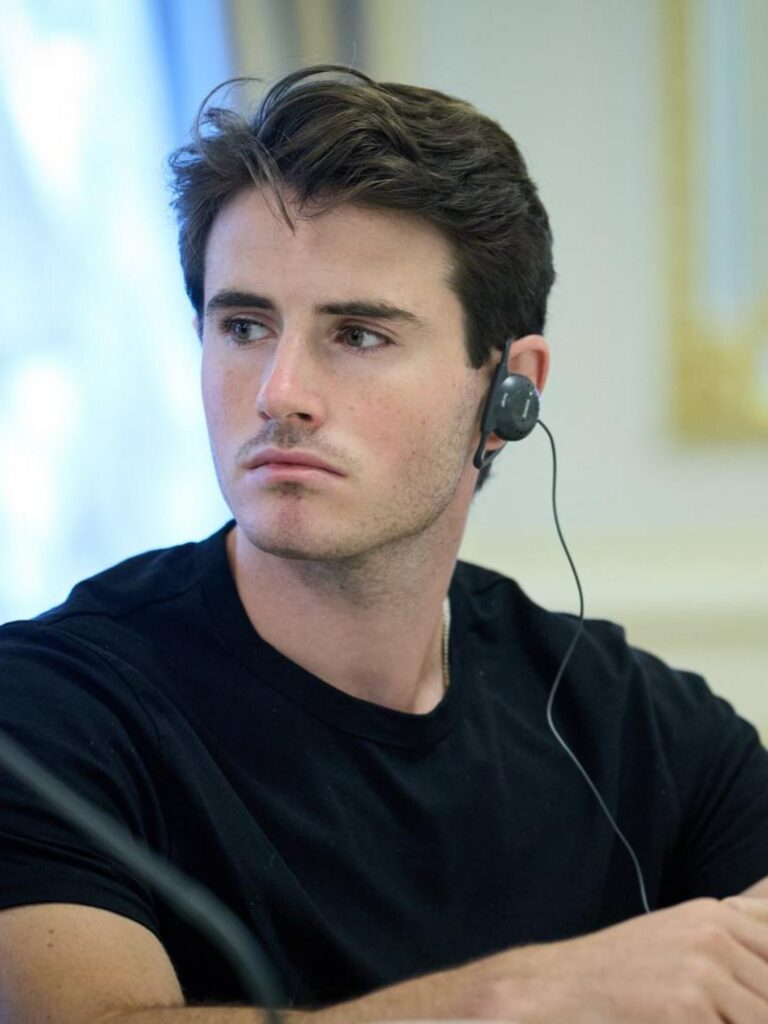

A year ago, Aidan Stretch arrived in Ukraine as a participant in ImpactUA, a program run by Brave Generation with support from Razom for Ukraine. He planned to spend a few weeks in Lviv assisting a local NGO. Today, he lives in Kyiv and works as an international correspondent for CBS, reporting on a country he once knew primarily from university lectures.
From the window of his apartment in Podil, the domes of Kyiv’s cathedrals rise above the Dnipro River. It’s one of three things Aidan loves most about Ukraine. The other two are borsch and the palpable sense of patriotism everywhere you go.
He has been living in Kyiv for about a year — long enough to get used to nighttime air raid sirens, learn to track missile alerts closely, and explain to his family in the United States why he stays in a country where his workday often starts just as most people are heading for cover.
Aidan’s journey in Ukraine didn’t begin with CBS news cameras or reporting from front-line regions. It started with academic curiosity, a connection made in historian Timothy Snyder’s class, and a decision that originally felt temporary.
"To Understand a Country, You Have to Go"
At university, Aidan studied Eastern European and Ukrainian history. His professors and Ukrainian friends kept driving home a simple point: books can give you knowledge, but they can’t replace being there.
To truly understand a country, you have to go, meet the people, and see how they live.
By that time, Aidan already had experience in international journalism. However, his decision to go to Ukraine was motivated by more than professional curiosity; he acknowledges that there was a sense of idealism involved.
Aidan felt that Ukrainians were fighting for values that many Americans often take for granted: freedom, democracy, and the ability to shape their own nation’s future. He wanted to witness this struggle firsthand.
In Timothy Snyder’s class, he met Tanya, the head of Brave Generation, an organization that partners with Razom to run ImpactUA. This initiative connects American students and young professionals with internships in Ukraine.
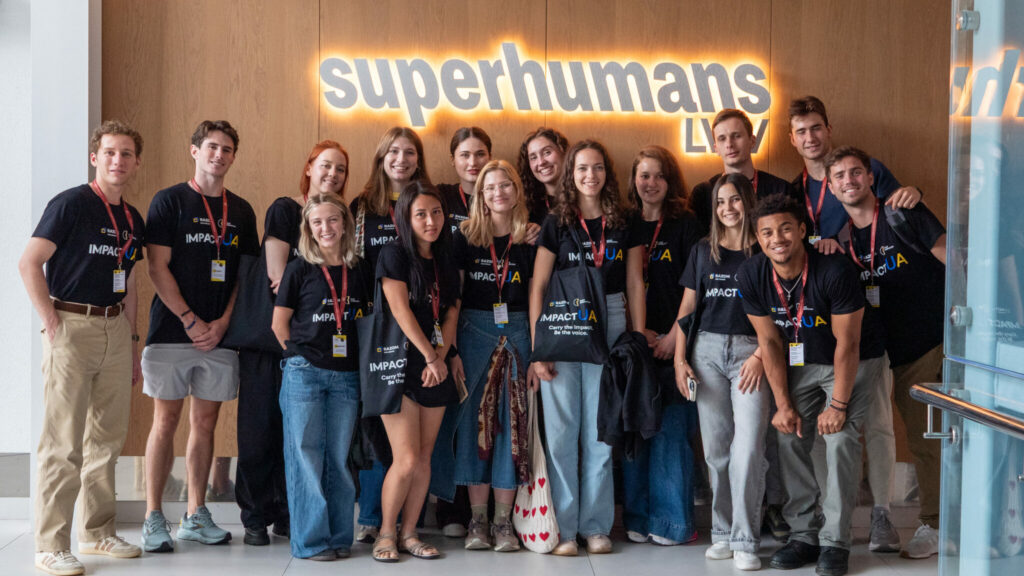
Aidan shared his plans to move to Ukraine and pursue a career in reporting. Although spots for that internship cohort had already been filled, they managed to find him a position with a Lviv-based initiative called Cities for Cities.
Just like that, what began as a three-week internship turned into the first chapter of a much longer story.
Many Ways to Serve
Cities for Cities helps Ukrainian municipalities build partnerships with communities across Europe and the United States. Initially, Aidan worried that this work would be a far cry from journalism.
However, during his first few days, the team encouraged him to shape his own contribution: Who did he want to meet? What story did he want to tell? What did he need to report it?
The organization opened doors for him, introduced him to local leaders, and helped him pursue stories. Aidan traveled to small towns in western Ukraine, interviewed municipal officials, and published some of his earliest pieces on the ground.
One story in particular changed his perspective on international aid. U.S. municipal officials were holding regular calls with representatives from Kherson to learn how the Ukrainian city managed emergency responses amid a full-scale war.
Aidan had initially assumed that the learning curve would go the other way — that Ukrainians would be learning from Americans. Instead, American cities were looking to draw from Kherson’s hard-earned experience. During his internship, he first glimpsed the broader meaning of public service.
Before coming to Ukraine, Aidan believed that service in wartime meant military duty or direct aid to the armed forces. However, in Lviv, he encountered people who weren’t serving on the front lines but woke up every morning with a profound sense of duty.
They were connecting communities, building international partnerships, mobilizing expertise, and strengthening the capacity of Ukrainian cities.
This experience expanded his understanding of patriotism. He realized serving your country doesn’t always look heroic. Often, it involves emails, video calls, drafting documents, and showing up every day for work, whose impact becomes visible only over time.
The Road East
Initially, Aidan reassured his parents that he would remain in Lviv, a city he believed was safer than Kyiv or the eastern regions. However, after a few encounters, it became clear to him that he couldn’t stay confined to the west.
In Lviv, Aidan met soldiers, veterans, and displaced individuals from front-line areas. Among them was a veteran who had lost a leg in combat near Sumy and was undergoing rehabilitation. Conversations like these convinced Aidan that to report on Ukraine responsibly, he needed to understand the full reality of the situation.
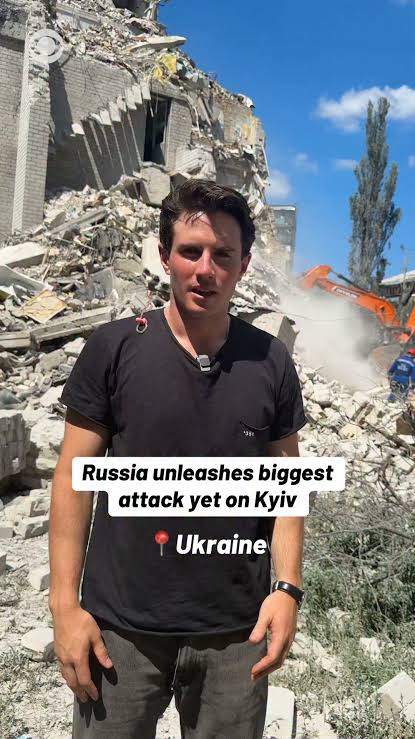
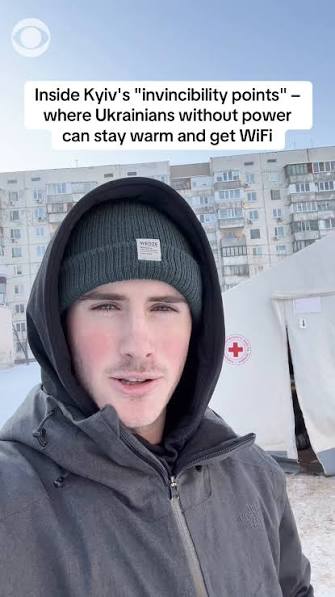
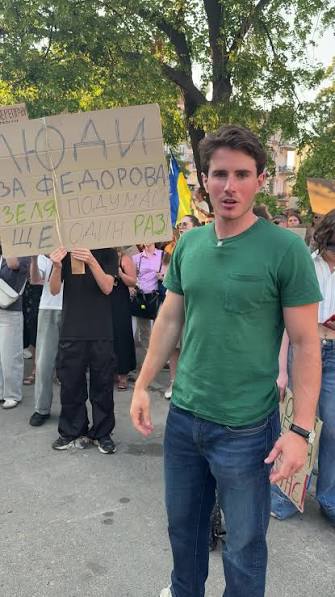
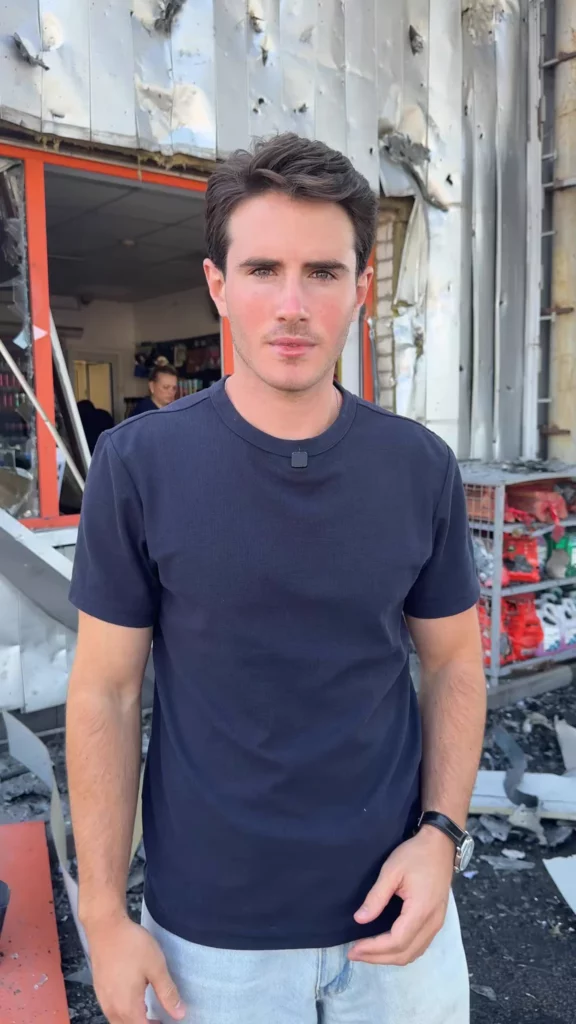
He then moved to Kyiv and began traveling to cities such as Kharkiv, Kryvyi Rih, and others across the south and east. There, he encountered people whose stories he believed international audiences needed to hear.
Aidan started as a freelancer, submitting reports to CNN, France 24, and CBS. By January, he had joined CBS full-time as an international correspondent.
Not a Message, But a Reality
Aiden believes that a journalist should not arrive in Ukraine with a pre-packaged narrative. His role, as he sees it, is to provide the most accurate view of reality possible for those far away who cannot witness it for themselves.
This means resisting the temptation to search for stories that fit a neat thesis and instead choosing to remain curious. He strives to listen, verify, and observe how war reshapes cities, families, politics, and even casual conversations over coffee.
One such conversation significantly reshaped his understanding of Ukrainian democracy.
Aiden was sitting in a coffee shop with a fellow journalist and her husband, a Ukrainian veteran, when news broke about another peace proposal that might involve territorial concessions. Aiden asked whether the President of Ukraine would ever agree to such a proposal.
They looked at him in surprise. For them, the choice was never solely up to a single leader. Society, the military, and ordinary citizens held their own convictions — something the political leadership simply could not ignore.
For Aiden, this was a profound lesson in wartime democracy.
From a distance, Ukraine is often viewed through the lens of its president, diplomatic summits, or military maps. However, on the ground, he discovered a different reality: a society that sees the state as its own and refuses to relinquish full responsibility for its future to politicians.
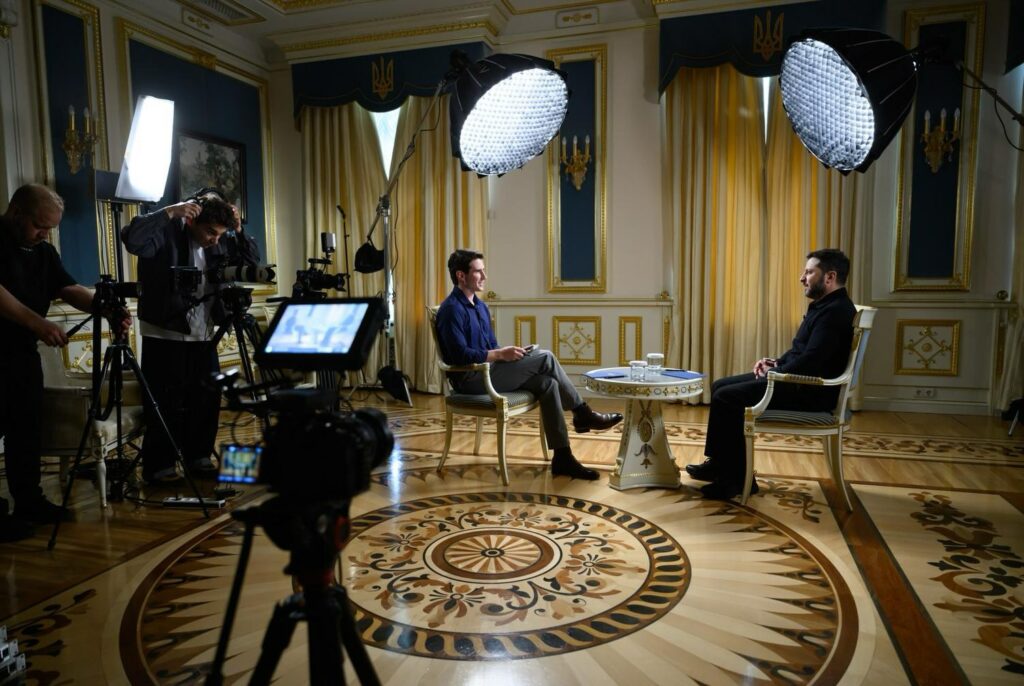
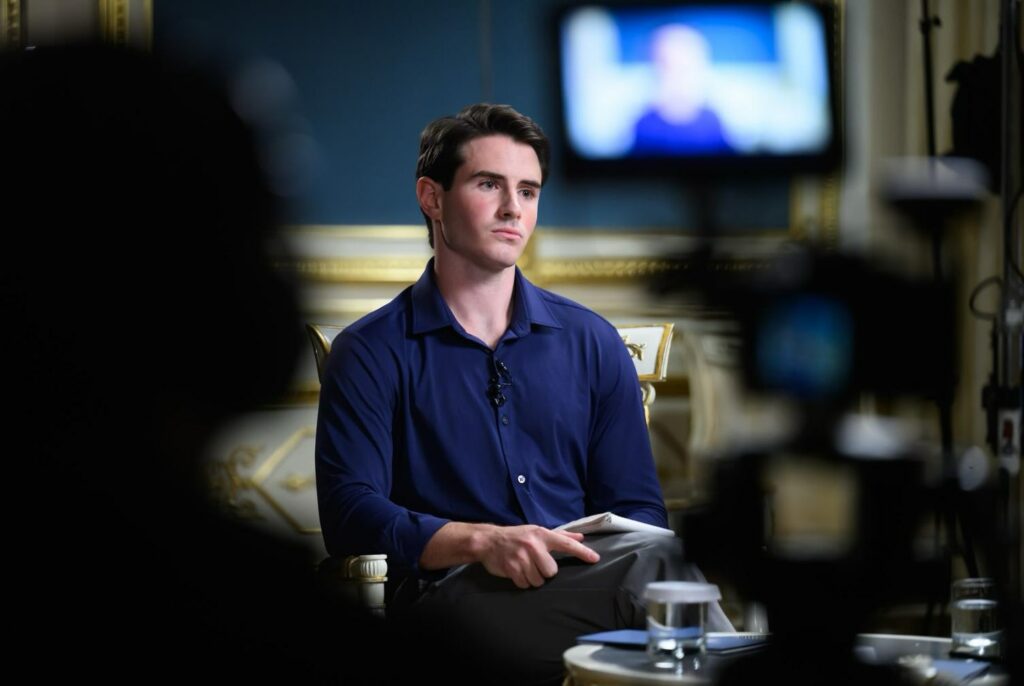
Aidan Stretch interviews Ukrainian President Volodymyr Zelenskyy in Kyiv for an exclusive CBS News segment, 2026.
Youth That Doesn't Wait to Take Responsibility
Aidan recently attended the Ukraine Recovery Conference in Gdańsk, where he had the opportunity to interview Polish Foreign Minister Radosław Sikorski about the Russian threat, support for Ukraine, and the lessons that European nations are learning from the Ukrainian experience.
However, one of the most memorable moments of the trip occurred outside the conference hall.
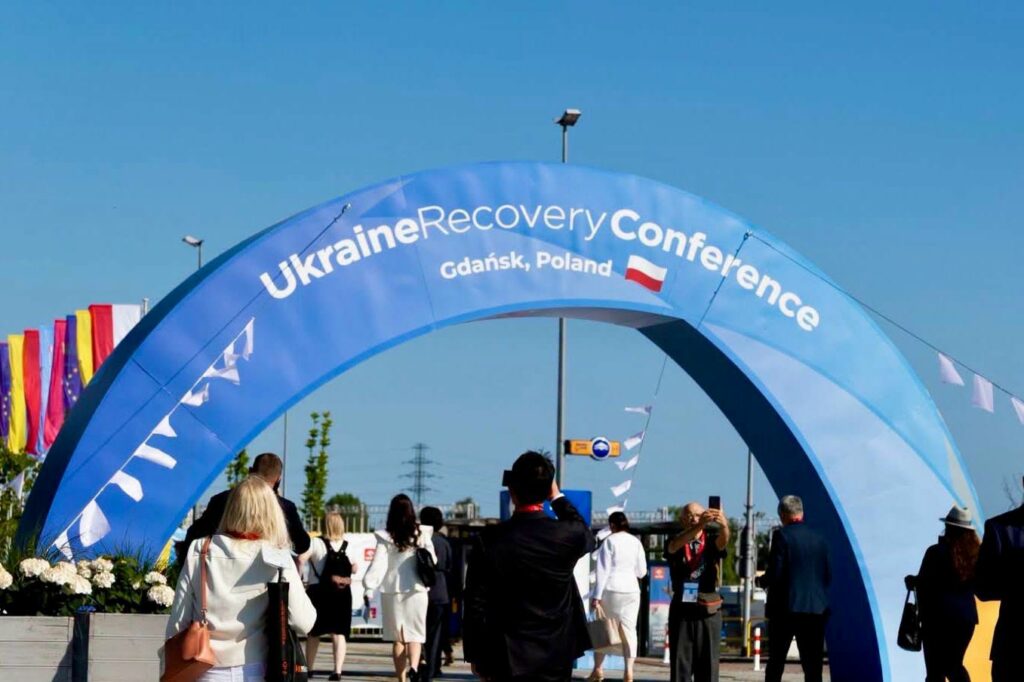
Aidan took a 26-hour train ride from Kyiv to Gdańsk alongside a group of young Ukrainian delegates. This journey provided ample time for them to get to know each other and to discuss their work. Aidan observed that in the United States, conversations among twenty-somethings rarely start with discussions about serving their country. In contrast, for the Ukrainian delegates, this was second nature.
They spoke about their projects, civic initiatives, advocacy efforts, and the work that still needed to be done. To Aidan, these young people represented a generation that is not waiting for responsibility to come with age or a formal title.
A Land of Deep Conversations
Aidan’s life in Kyiv involves more than just reports and field assignments. Most of his friends are Ukrainians working in journalism, government, anti-corruption organizations, or the military. He observes that virtually all of them are dedicated to working for the public good in one way or another.
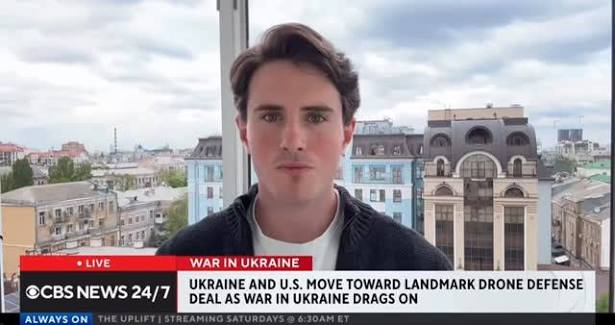
Aidan is still learning Ukrainian. Although his friends mostly speak English, he has quickly picked up on the cultural nuances of the language and society.
As an American, Aidan was accustomed to smiling at strangers on the street and engaging in light small talk. However, in Kyiv, this can raise a few eyebrows. He humorously notes that Ukrainians aren’t particularly fond of small talk. Instead, they are prepared for deeper conversations and a level of candor that might take years to reach in other cultures.
In just a year in Ukraine, Aidan has developed friendships as close as those he cultivated over many years back home.
This is one of the experiences he shares with American friends when they ask about life in Ukraine. He describes Kyiv as a beautiful European capital, highlighting areas like Podil, the Dnipro River, and its stunning cathedrals. He also emphasizes that while Ukrainians may seem reserved at first, they take human connections remarkably seriously.
History Repeating Itself
Aidan’s mother had a personal connection to Ukraine long before he was born. In 2012, as a law professor, she participated in a legal exchange program, teaching university students in Kyiv and Kharkiv. Many relationships she formed during that time have lasted for decades.
So, her son’s decision to stay in Ukraine wasn’t entirely surprising to her. She understood his fascination with the country, even as she worried every time the news reported on ballistic missiles targeting Kyiv or the cities where he was working.
Aidan admits that he misses his family. However, he considers himself fortunate to have a mother who supports his work, even in a place that is difficult to call safe.
In a way, his journey mirrors hers: it began with a professional program and evolved into deep personal connections, ultimately forming a bond with a country that goes far beyond a temporary visit.
"Don't Think. Just Do It."
When asked what advice he would give American students considering ImpactUA, Aidan’s response comes quickly: “Don’t think. Just do it.”
Behind that straightforward advice lies the experience of a tumultuous year. An internship at a small NGO led him to international reporting. A few weeks in Lviv transitioned into a new life in Kyiv. What started as an academic interest in Ukraine turned into daily work alongside people living through history — experiencing it not as a topic in a syllabus, but as part of their everyday reality.
Aidan came to Ukraine to understand it better. He stayed to help the rest of the world see it for what it truly is.