

Authored by Dan Solchanyk, Director of Health at Razom
When international organizations come to Ukraine, they bring things Ukraine genuinely needs: clinical experience, specialist expertise, funding, surgeons, instructors, and equipment. That matters, and it produces real results while the work is underway. But the question that decides whether any of it lasts arrives at the end, not the beginning. When the project closes and the visiting team goes home, can the work continue without them? Ukrainian institutions absorb the immediate benefit of the training. What they do not always acquire is what would let them run it themselves. That means certified national instructors, an accreditation pathway, an institutional home, and a financing line that does not depend on the next grant.
That is why the key question for any international healthcare project should be simple. How do we transfer responsibility and ownership to Ukrainian institutions? Who will continue this work after us? Who will run the next course? Who will train the next doctor? Who will have the resources and authority to develop the program further?
This means thinking beyond the launch of a project and planning for the moment when the Ukrainian team can fully take ownership, develop the program, and scale it. That is our bigger goal at Razom. Not just to respond to an emergency, but to help build a system that keeps working whether or not we are there.
Our clearest example of this approach is ATLS (Advanced Trauma Life Support), which Global Medical Knowledge Alliance (GMKA) is leading the implementation and development of in Ukraine, in partnership with Razom for Ukraine and in collaboration with international ATLS partners, including the American College of Surgeons, Mass General Brigham, Harvard Humanitarian Initiative, and Harvard Medical School.
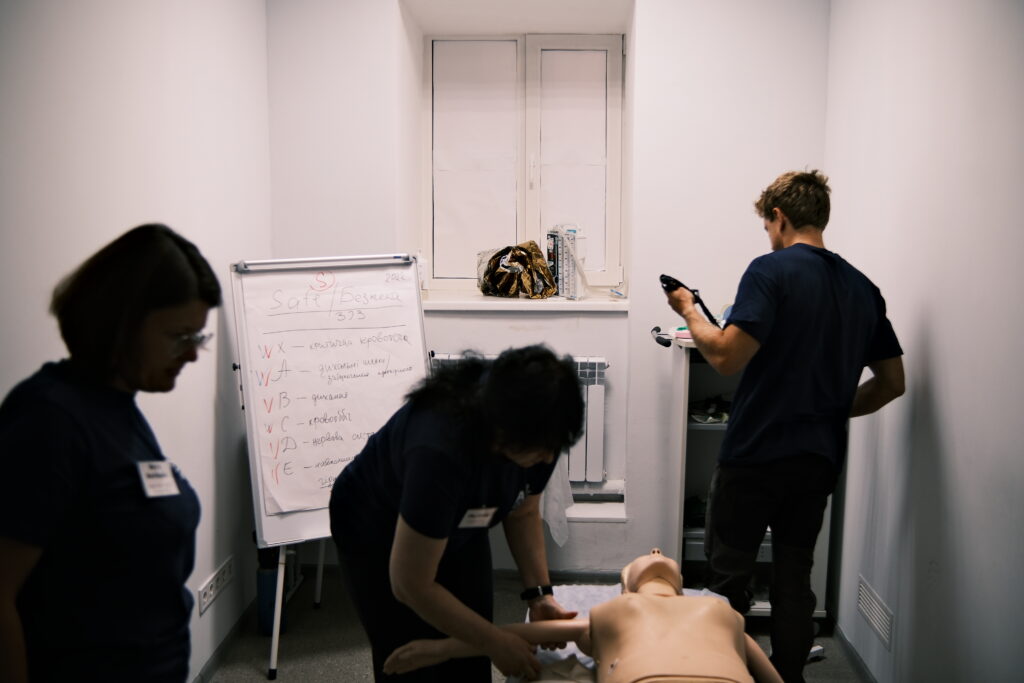
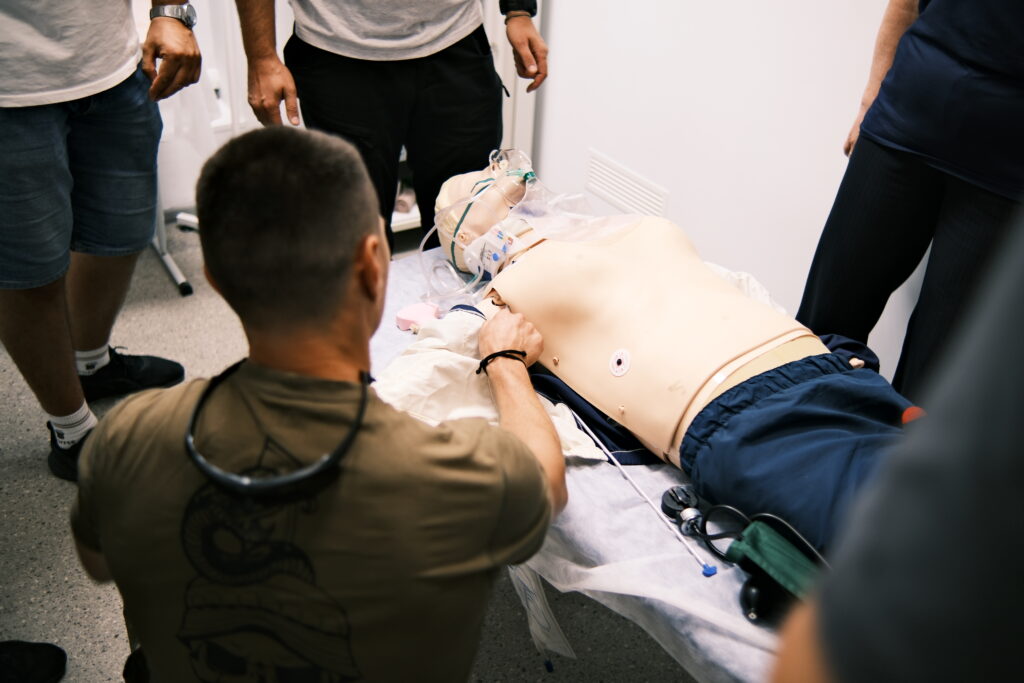
Start with the program itself. ATLS is the global standard for the initial in-hospital assessment and management of the severely injured trauma patient. It is what trauma teams across most of the world are trained on, and it gives clinicians a common language and a common sequence under pressure. In Ukraine, where healthcare professionals face war-related trauma every day, a standardized approach has become increasingly important.
But there is another reason this program is different for us.
Delivery and ownership are two different problems. A course can run well, and the clinicians in the room can come away genuinely better, and none of that guarantees the training continues once the visiting faculty stops coming.
So rather than relying indefinitely on international instructors, we partnered with GMKA in building a Ukrainian team that can deliver ATLS independently, develop new instructors, and sustain the program in Ukraine. The long-term goal is to establish a Ukrainian-led ATLS system, with Ukrainian course directors, educators and institutions taking responsibility for the program, supported by the appropriate international ATLS structures.
This is how international organizations should be working in Ukraine in 2026 and beyond.
We can bring expertise, funding, and experience. But the result we are working toward is stronger Ukrainian clinicians and institutions, not deeper reliance on external support.Put simply, our goal is to build something that no longer needs us. What matters is not how long we’re involved or how much we deliver, but whether the systems we help build can stand on their own.
A successful project is not one that international funding sustains indefinitely. It is one Ukraine can carry on its own, with a system stronger and more capable than the one we found.