Razom For Ukraine Announces New Advocacy Advisory Board
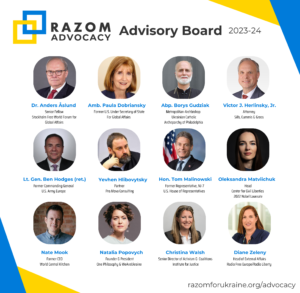
WASHINGTON, D.C. – Razom Advocacy, a program of Razom for Ukraine committed to advancing Ukrainian victory, announces the formation of a new advisory board. Composed of experienced leaders, the advisory board will guide the Razom Advocacy team as it seeks to ensure that Ukraine receives the tools it needs for a swift victory.
“Bipartisan American support for Ukraine is a hallmark of US foreign policy and will remain so. Razom for Ukraine is fully committed to ensuring that Ukraine gets all of the resources it needs to defend itself. We are grateful to the top policymakers, experts, and executives who have joined Razom Advocracy’s advisory board,” said Mariya Soroka, Vice President for Advocacy at Razom for Ukraine.
Established in the United States in 2014, Razom strives to create a more democratic and prosperous Ukraine. Razom Advocacy was created in March 2022 as part of Razom’s response to Russia’s full-scale invasion. Since then, Razom has raised more than $100 million for emergency relief and psychological assistance to Ukrainian civilians, supplies and generators for medical facilities, tactical medicine and communications gear for the armed forces, and support for Ukrainian cultural projects.
The Razom Advocacy Advisory Board includes the following members:
Dr. Anders Åslund, Senior Fellow at the Stockholm Free World Forum for Global Affairs
Ambassador Paula Dobriansky, Former U.S. Under Secretary of State for Global Affairs
Archbishop Borys Gudziak, Metropolitan-Archbishop of the Ukrainian Catholic Archeparchy of Philadelphia
Victor J. Herlinsky, Jr., Attorney, Sills, Cummis & Gross
Yevhen Hlibovytsky, Partner, Pro.Mova Consulting
Lt. Gen. Ben Hodges (ret.),Former Commanding General, U.S. Army Europe
The Honorable Tom Malinowski, Former Representative for New Jersey’s 7th District, U.S. House of Representatives
Oleksandra Matviichuk, Head, Center for Civil Liberties & 2022 Nobel Laureate
Nate Mook, Former CEO, World Central Kitchen
Nataliya Popovych, Founder & President, One Philosophy & WeAreUkraine
Christina Walsh, Senior Director of Activism and Coalitions, Institute for Justice
Diane Zeleny, Head of External Affairs, Radio Free Europe/Radio Liberty
###
For media inquiries or other questions, Nana Gongadze at nana.gongadze@razomforukraine.org. Razom (“together” in Ukrainian) is a U.S.-based nonprofit dedicated to helping build a more democratic and prosperous Ukraine. More information is available at RazomForUkraine.org.
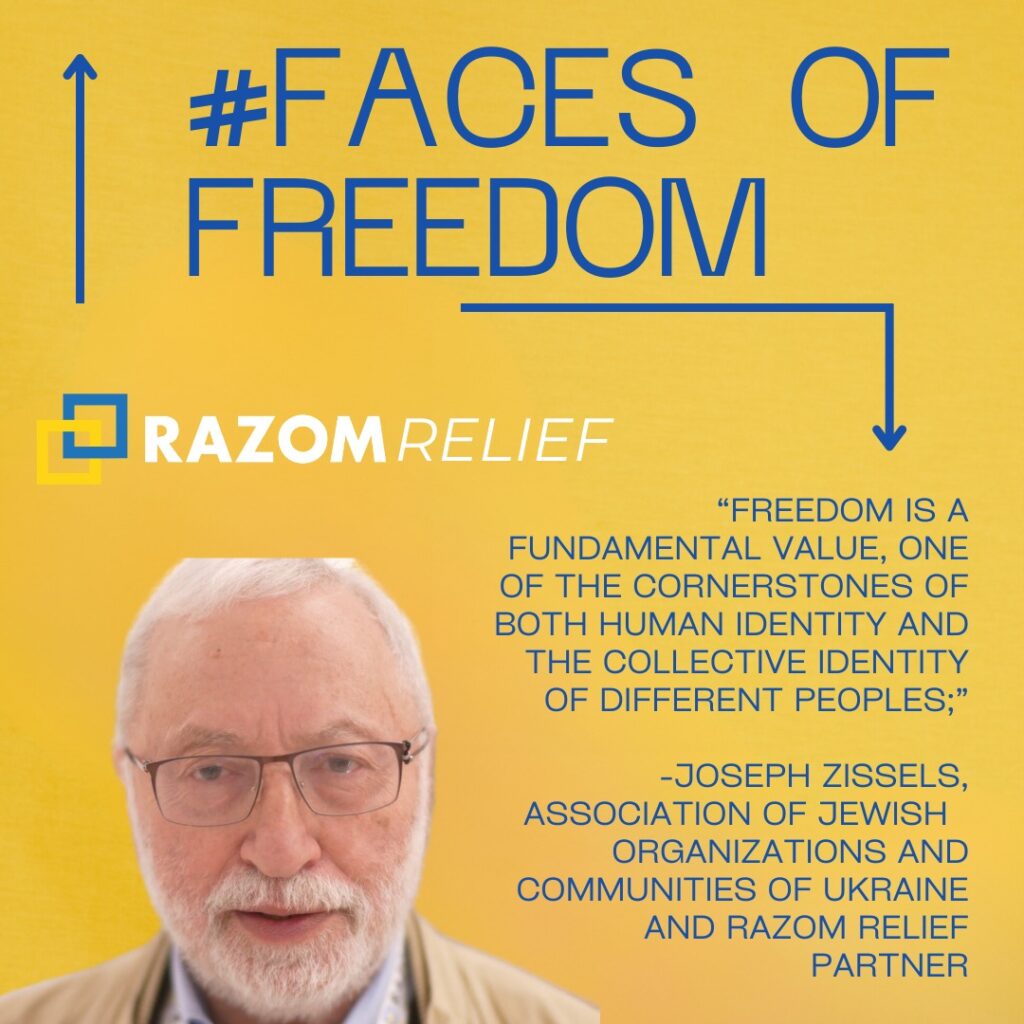
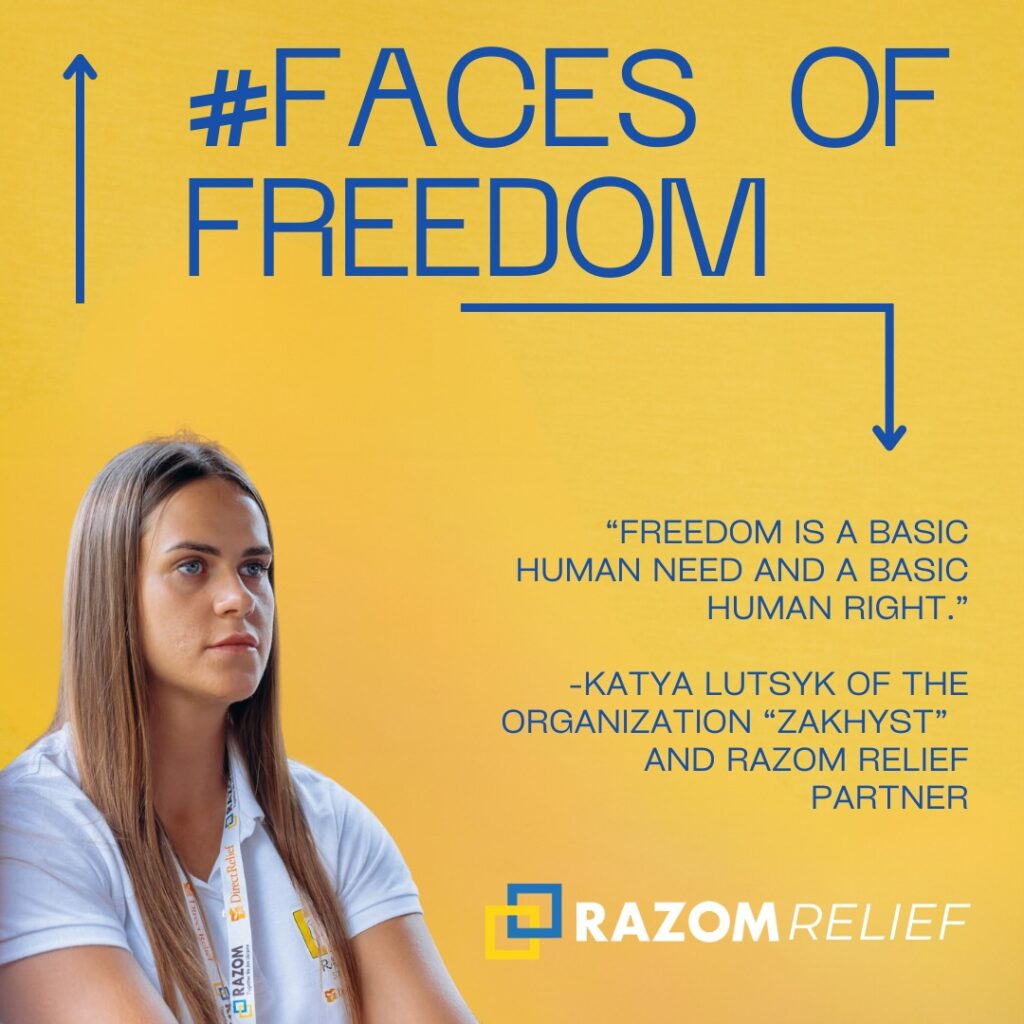
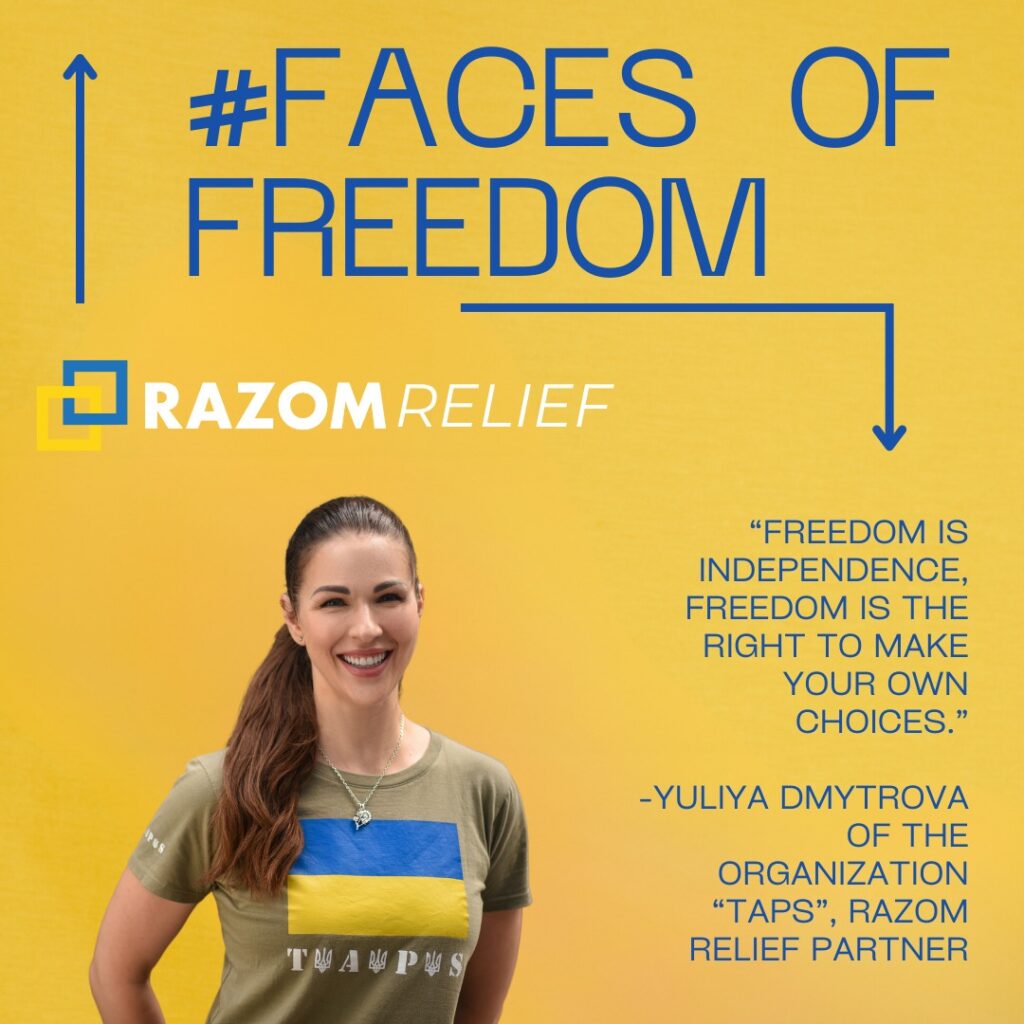
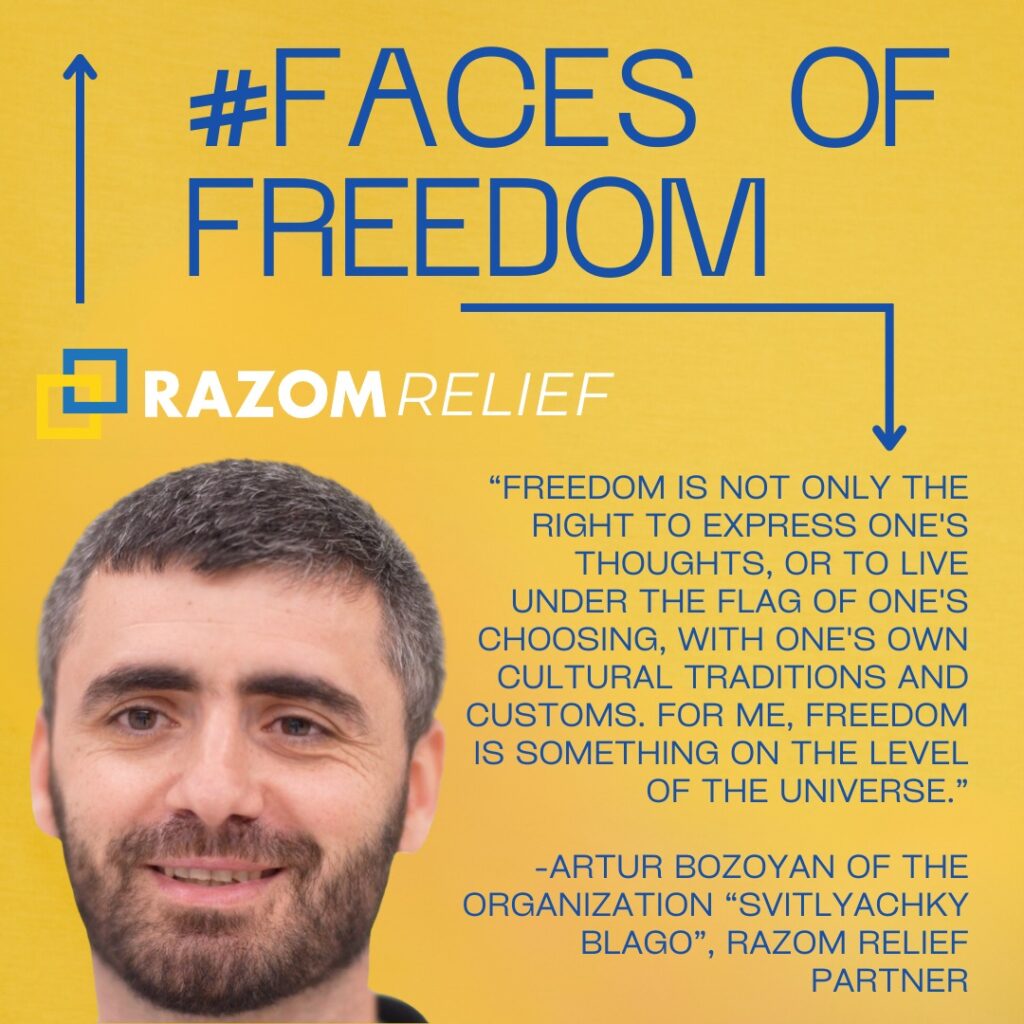
This year to honor the Ukrainian Independence Day on August 24th, Razom has launched a celebration of the incredible freedom fighters within our community. From dedicated delivery drivers in Ukraine to passionate volunteers in New York, behind every face is an inspiring story about freedom which we are excited to share and encourage you to create your own.
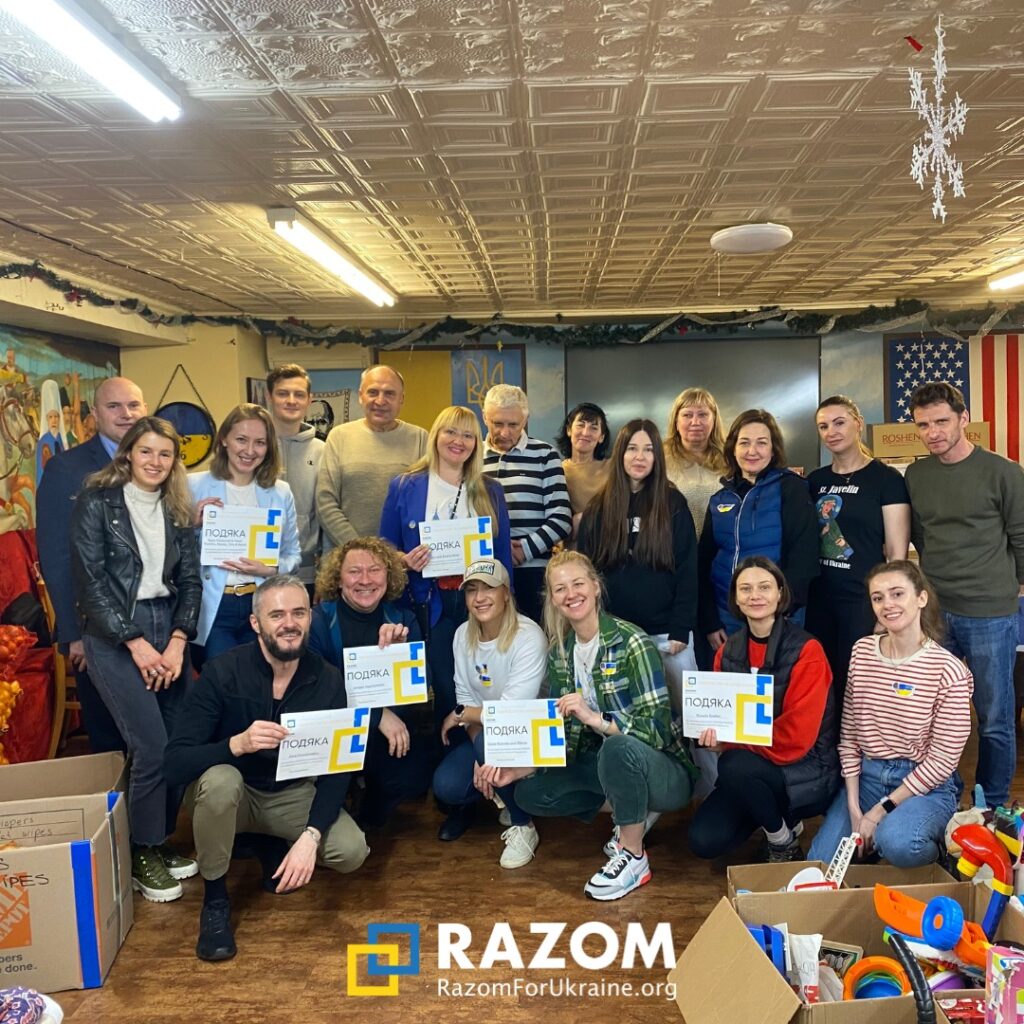
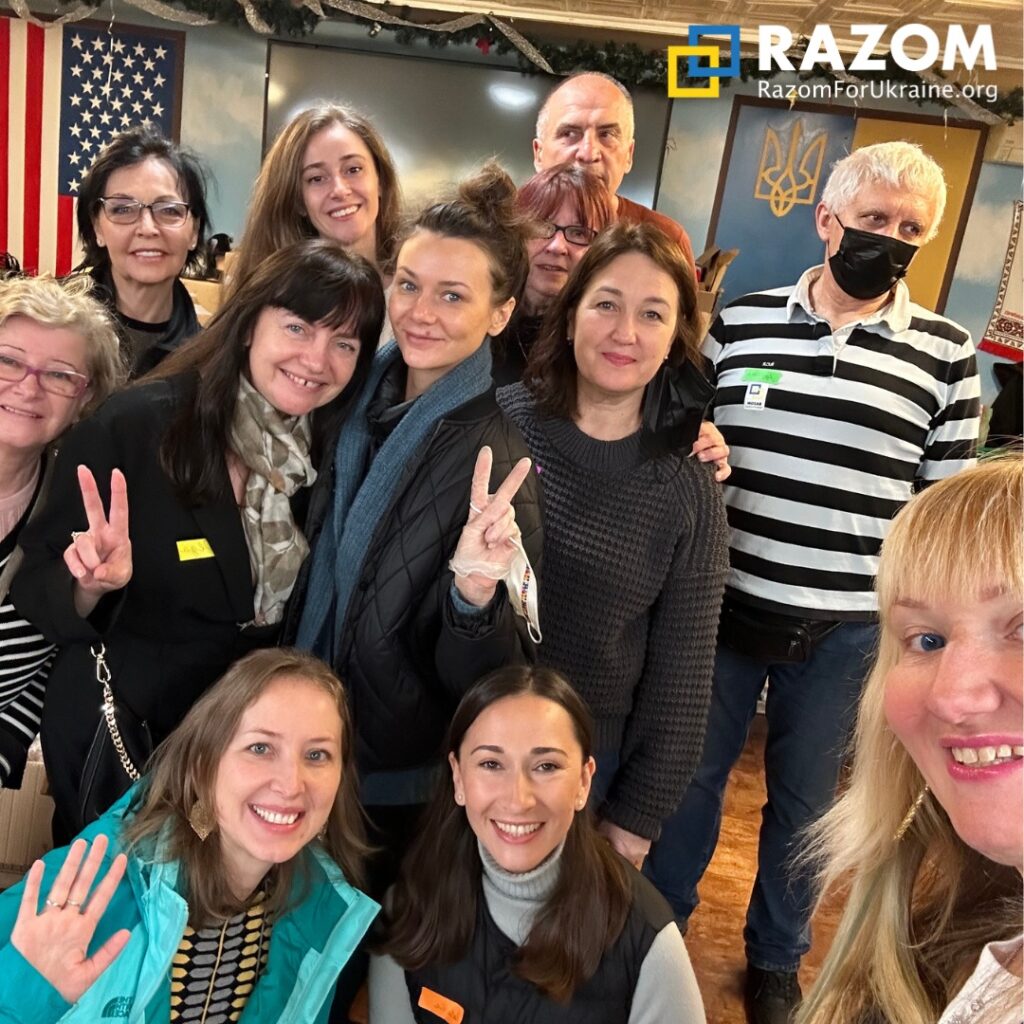
Meet the Razom Ukraine Response Initiative team! They assist externally displaced Ukrainians in the New York area with everything they need to gain a sense of normalcy after being forced to flee Ukraine because of russia’s full scale invasion. They provide vital support, including legal consultations, clothing and food distributions, and medical services, such as flu vaccines. And they do all that with a big smile! It takes a lot of care to help the displaced Ukrainians – many of them fled their homes in places like Mariupol and Kharkiv with just a backpack and came to New York, where they know no one and are often faced with challenges such as health problems and difficulty finding a job to provide for their families. But the Ukraine Response Initiative doesn’t only provide material help. They also provide a much-needed sense of community. Many of the recipients of the Initiative’s aid also become volunteers to help other Ukrainians. Because together – we are Ukraine.
We’re honored to feature Texas Congressman and Chair of the House Foreign Affairs Committee, Mr. Michael McCaul, among our Faces Of Freedom. He emphasizes the importance of supporting Ukraine: “Supporting Ukraine and standing up to unprovoked aggression that violates sovereignty and territorial integrity is in the U.S. and free world’s interest, especially with China closely watching the world’s response to Russia’s full-scale invasion. Razom is critical in keeping up this support by educating the American people on why a victory for Ukraine is imperative.”
We thank Mr. McCaul for the kind words and for all his support of Ukraine! We thank ALL of Congress for its unwavering and crucial support of Ukraine not only over the last year and a half, but the last 32+ years. It’s amazing to walk down the halls of Congress, as the Razom Advocacy team often does, and see so many signs of support for Ukraine – from Ukrainian flags to “We stand with Ukraine” posters.
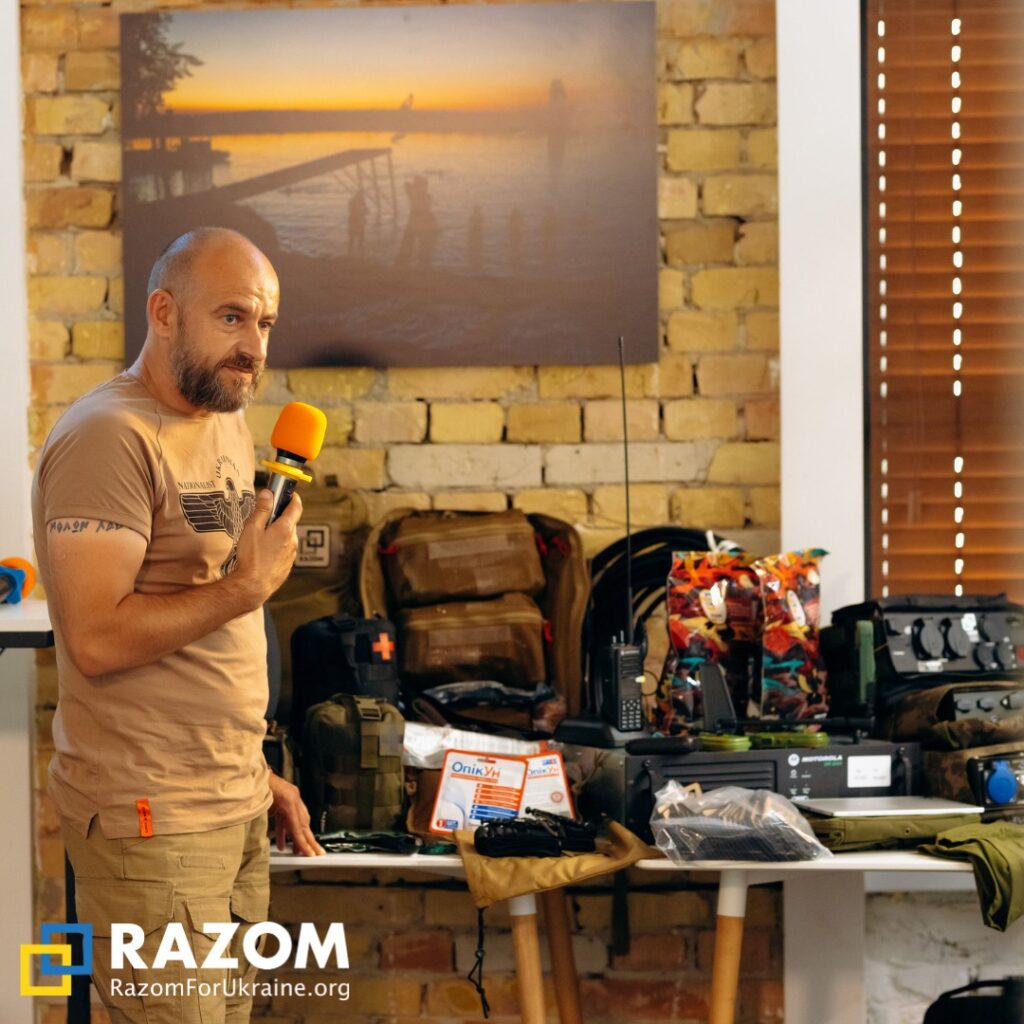
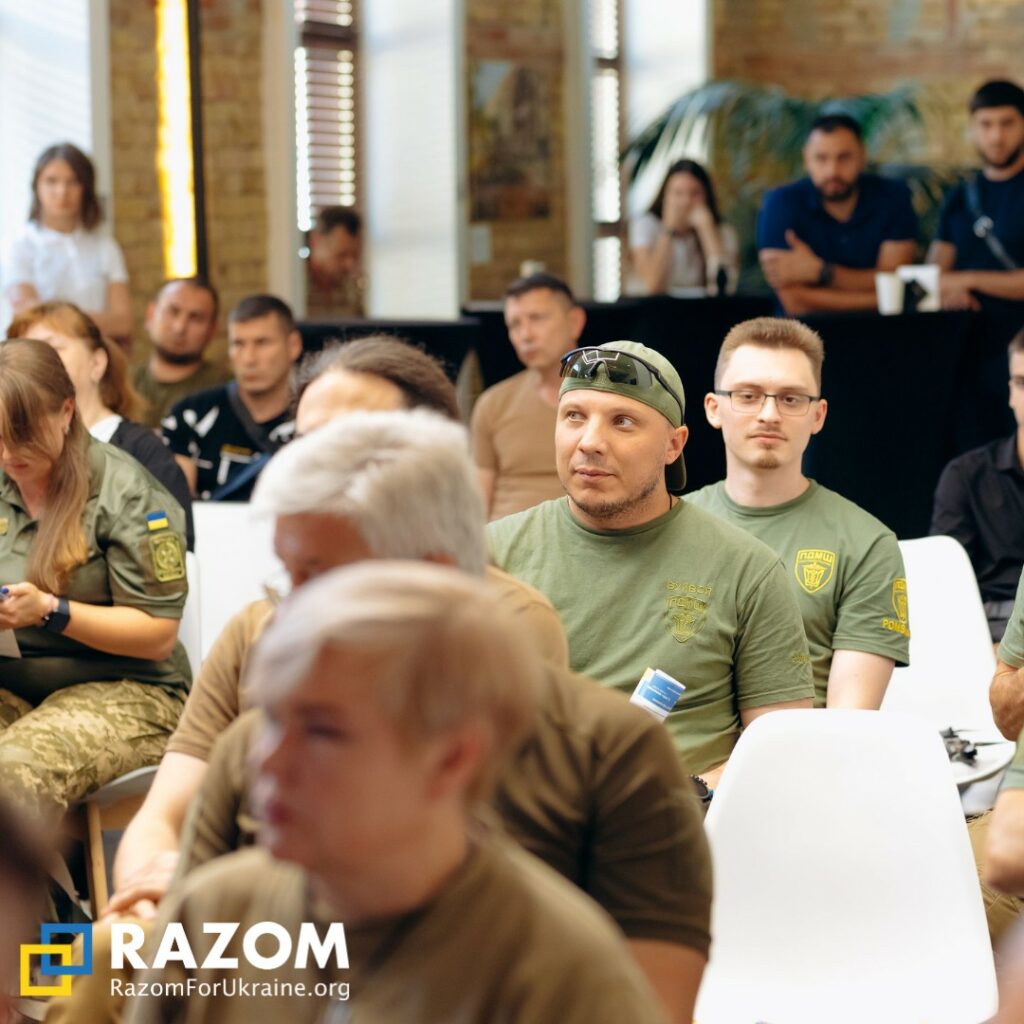
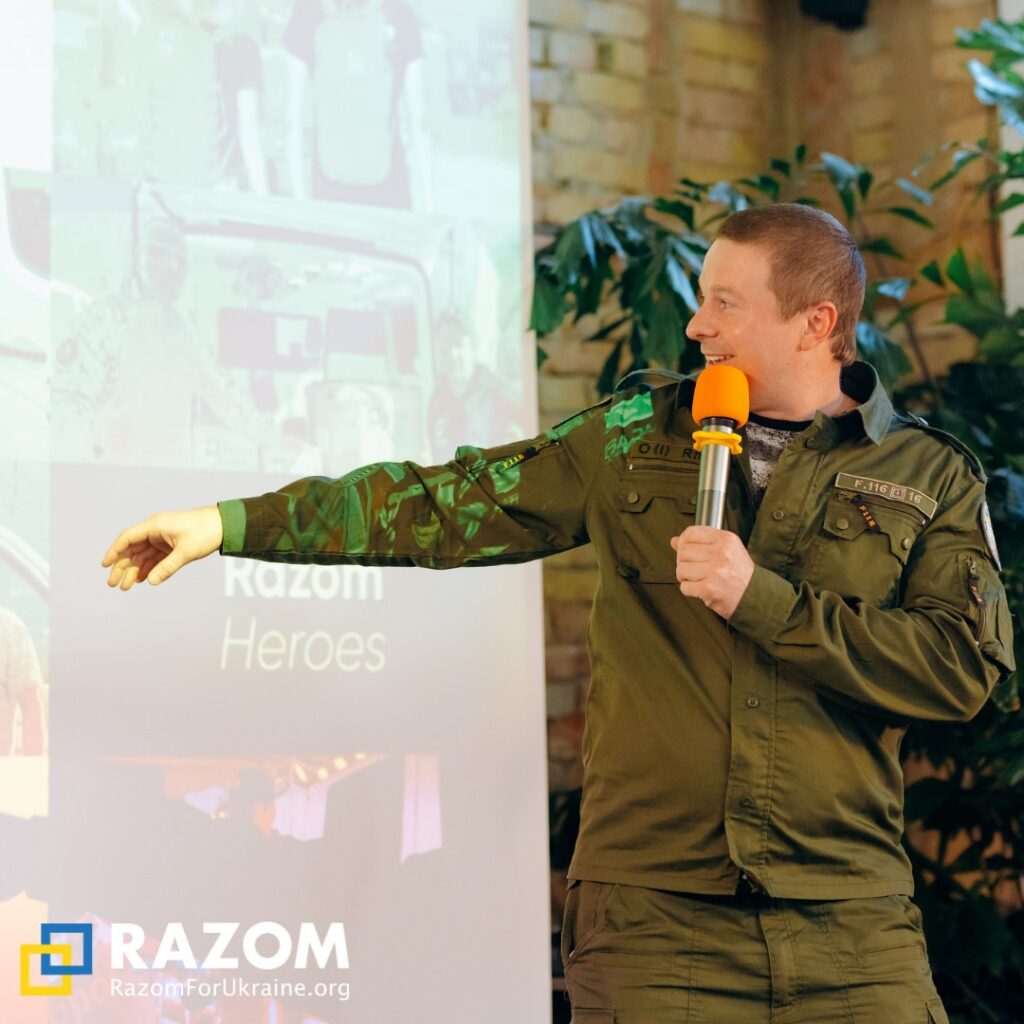
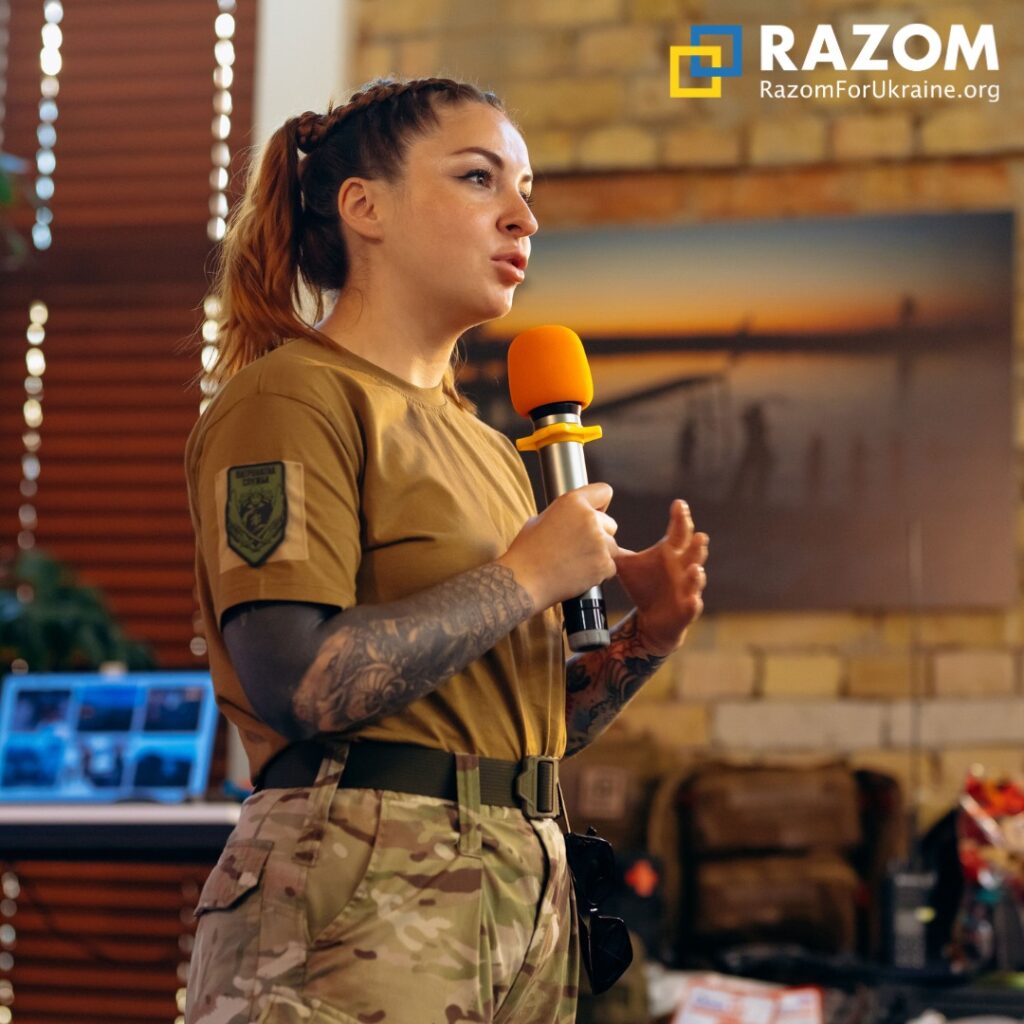
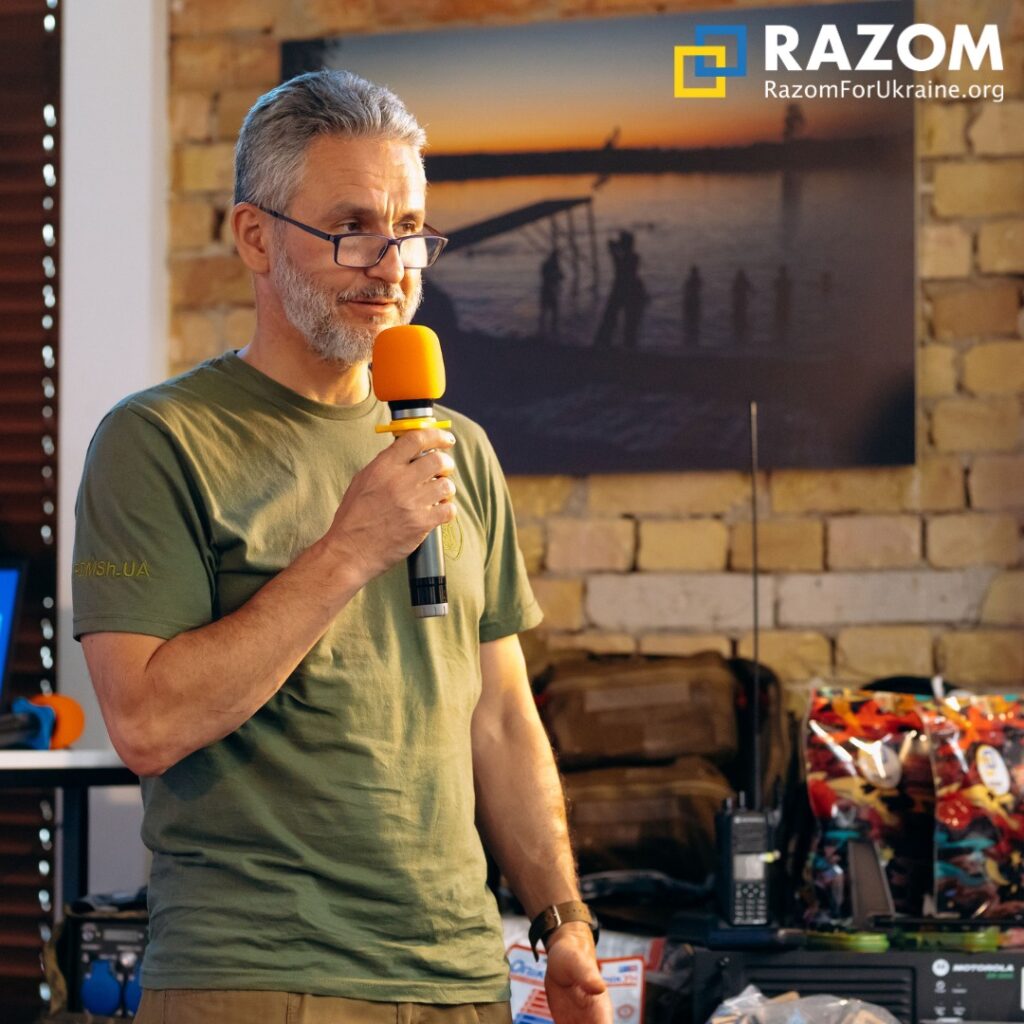
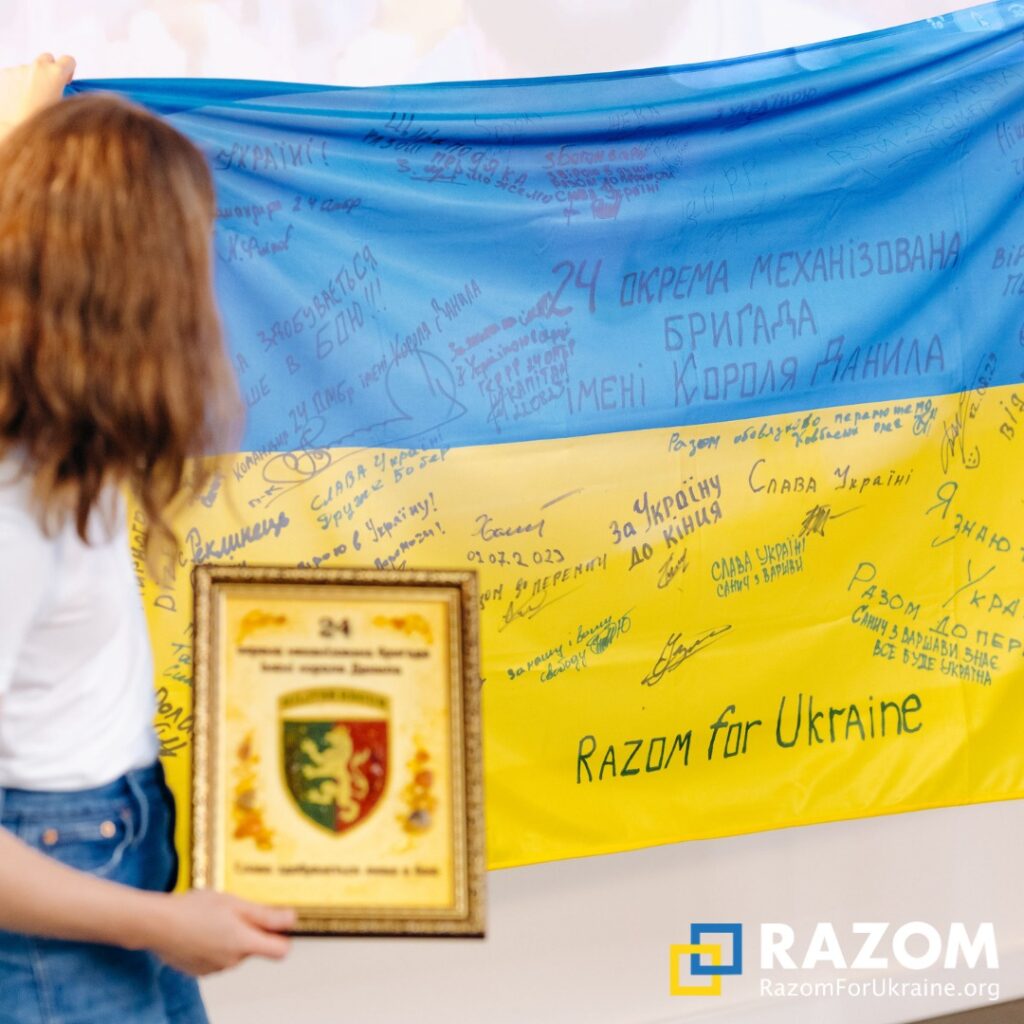
The day before Ukrainian Independence Day, Razom’s team presented the results of the Razom Heroes program at a press conference in Kyiv. We were thrilled to share that $45 million worth of aid was provided to Ukraine’s defenders through this project. Razom has delivered over 15,000 radios right into the hands of the defenders and helped evacuate over 1,300 injured soldiers from the frontlines on medical vehicles. Razom has also delivered hundreds of tons of tactical medicine, medical equipment and medicine, thousands of drones, walkie-talkies, radios, generators, portable charging stations and other supplies to Ukrainian defenders, emergency services, hospitals and clinics. To celebrate Ukrainian Independence Day and thank the brave defenders of Ukraine, the Razom Heroes team hosted an impactful meeting with many of the recipients of Razom’s aid from the frontlines. We were so happy to have so many of our partners and friends in one room!
In honor of Ukrainian Independence Day, the President of Ukraine Volodymyr Zelenskiy held an award ceremony to recognize the “National Legends of Ukraine”. One such is Dr. Andriy Sirko, the head of the neurosurgery department at Mechnikov Hospital in Dnipro. Aside from being a talented and skilled neurosurgeon, Razom is proud to call Dr. Sirko a partner in our Co-Pilot Project. Just recently, three American neurosurgeons travelled to Ukraine to support Dr. Sirko’s department through the Co-Pilot project. Additionally, Razom shipped 21 pallets of donated neurosurgery supplies to the frontline hospital. We are grateful to Dr. Sirko for his incredible work! We thank all the doctors, surgeons, nurses, medical workers and professionals working to bring Ukrainian victory closer every day!
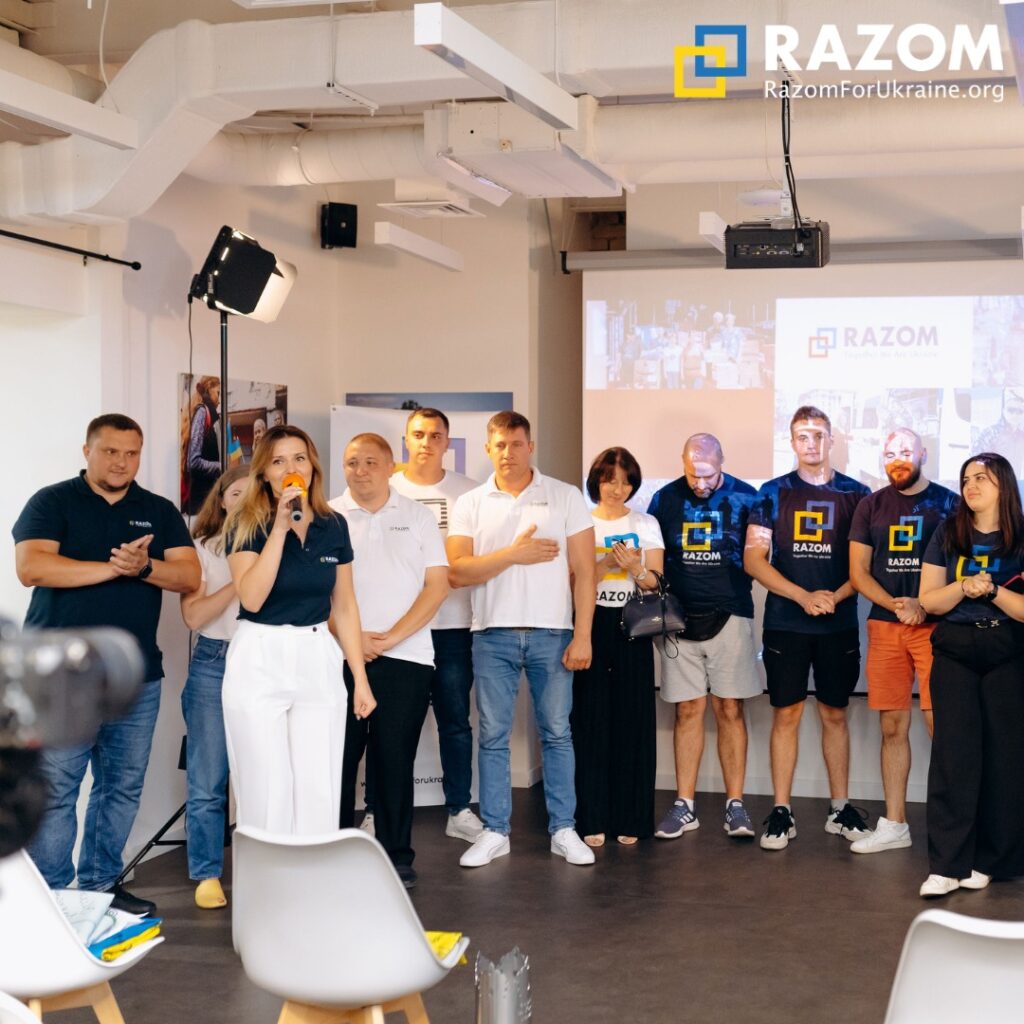
Faces Of Freedom would not be full without one of our largest programs – Razom Relief and all its amazing partners. In 2022, Razom Relief team provided $5MM in grants to a network of 123 volunteer organizations in Ukraine that help local communities. The impact of this work is vast. Among other aid, these organizations distributed 221,458 food packages to people in need, evacuated 9,640 people, renovated 91 buildings including 11 shelters, and supported 18 shelters that provided 2,375 sleeping places. Surely, the people behind these organizations, some of which are pictured in here, are real Faces of Freedom. We asked a few of them what freedom meant to them. Read their responses and get inspired to continue working together for Ukraine.
Finally, we are excited to share a very special video with you – the video that marked the finale of our Faces Of Freedom campaign. As the Ukrainian community gathered for an Independence Walk (organized by Svitanok) starting at Washington Square Park (NYC) on the Ukrainian Independence Day, we set up a photo booth where we asked the participants what “freedom” meant to them. Their words are felt deep and touch our hearts.
We thank the filmmaker Polina Buchak and photographer Irynka Hromotska for making this project come to life. You’re an incredible creative duo and we’re so happy to have you as part of our community.
We thank all of you, who are not mentioned here, but feel for Ukraine, support Ukraine, and do a lot to contribute to Ukraine’s freedom. YOU are, too, the faces of freedom. Thank you!
A BRAVE, VISCERAL, MERCILESS MASTERPIECE… FEELS LIKE A CINEMATIC SIEGE OF THE SOUL.
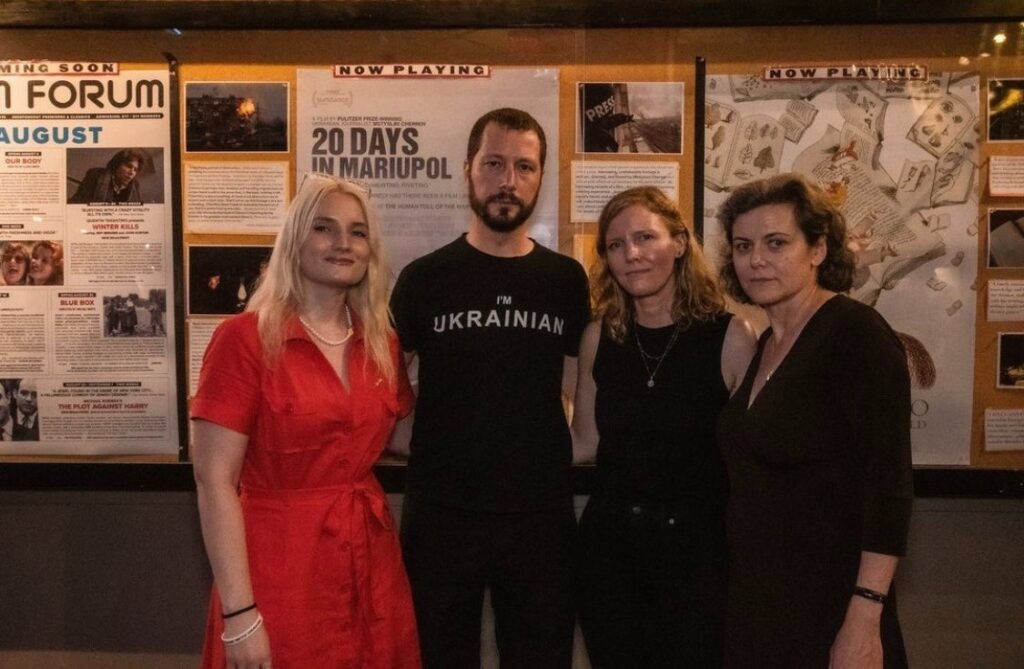
Razom is proud to be a presenting partner with PBS Frontline and the Associated Press on the US theatrical release of the award-winning Ukrainian documentary “20 Days In Mariupol,” directed by the Pulitzer Prize-winning journalist and filmmaker, Mstyslav Chernov. Earlier this year, the film won the audience award at the Sundance Film Festival.
The documentary follows an AP team of Ukrainian journalists who were trapped in the Ukrainian city of Mariupol during the first weeks of Russia’s full-scale invasion. The film documents their struggle to continue their work documenting Russian atrocities. As the only international reporters who remained in the city, they captured what later became defining images of the war: dying children, mass graves, the bombing of a maternity hospital, and more.
Our own Polina Buchak and Christopher Atwood helped coordinate the screenings with PBS Frontline. After a packed pre-release private screening, Polina Buchak moderated a conversation with director Mstyslav Chernov. The two spoke about how and when his reporting shifted into documenting the invasion of the city. Mstyslav spoke about how he navigates being a journalist, filmmaker, and, most importantly, Ukrainian while documenting the brutal invasion of Mariupol.
Razom co-presented the sold-out first screenings of the film, on July 14th-16th in New York, together with the Ukrainian Institute of America and PEN America. We are proud to have connected the film to our extensive network of organizations and activists around the film to promote the screenings in cities around the country. We want to thank Film Forum for supporting Ukrainian storytelling as well as our friends at the Ukrainian Institute of America and PEN America for helping us amplify and raise awareness about the documentary. In fact, the film has proven so popular that its New York screening run at Film Forum has been extended until August 3rd.
We encourage you to help us continue to make noise and spread the word on social media and find tickets to a screening near you via 20daysinmariupol.com. Keep in mind that screening dates can be extended, so always double-check with your local theater. And remember to tag the filmmakers while you’re making noise online, so they can feel your support!
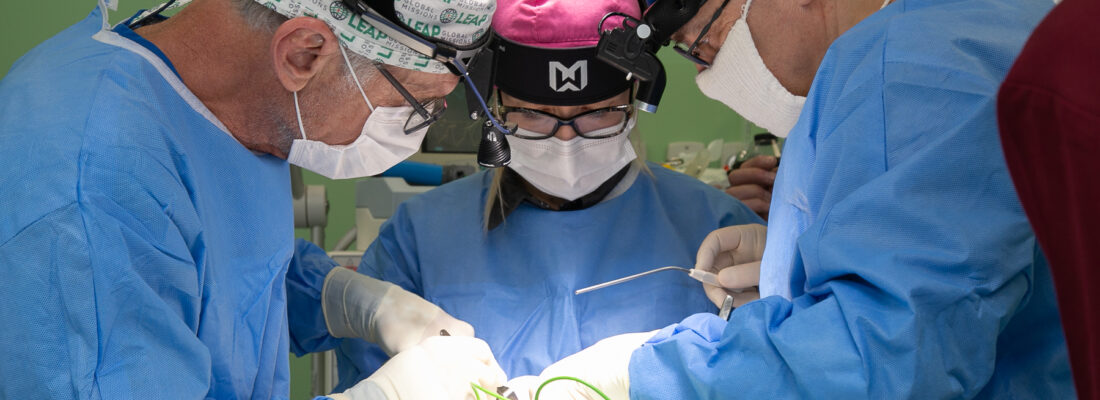
Razom for Ukraine welcomed back a team of doctors from LEAP Global Missions who completed their 7-day medical visit to Lviv in March 2023. The team consulted more than 200 children and performed 35 highly-skilled surgeries at following hospitals: Ohkhmadyt Lviv Regional Children’s Hospital, First Emergency Adult Hospital, St. Nicholas Children’s Hospital, and a Military Hospital.
The team was organized by Dr. Steve Orten (tag), a plastic surgeon from Texas who visited Ukrainian hospitals independently in 2022 and shared his experience with US colleagues from LEAP Global Missions (tag), motivating them to visit Ukraine. The team’s preparation lasted two months, including regular Zoom meetings with Ukrainian doctors, patient selection, and revision of medical supplies.
Photo: Dr. Steve Orten, Plastic Surgeon from Texas USA and Ukrainian surgeon Dr. Christina Pohranychna look at CT scans of a patient in Lviv Regional Children’s Hospital as the father looks on.
The Co-Pilot Project: an initiative within Razom for Ukraine which coordinates and supports medical missions, supports this team of surgeons by covering housing, food, medical supplies, transportation, and providing scrubs to the doctors. Drs. Steve Orten (tag) and Craig Hobar (tag) led a team of 11 doctors who specialized in head and neck reconstruction, craniofacial surgeries and orthodontics, neurosurgery, urology and dermatology. Local logistics were organized by CMA UA (tag ) to make doctors feel at home in the Ukrainian city of Lviv.
LEAP surgeons collaborated with Ukrainian surgeons in treating complicated craniofacial cases. “Our team worked with incredibly capable, professional, respectable Ukrainian surgeons. LEAP’s mission was to expose them to new surgical techniques, and LEAP was excited to assist with this cooperative relationship,” commented LEAP Media Director Jon Cermin, who documented the trip.
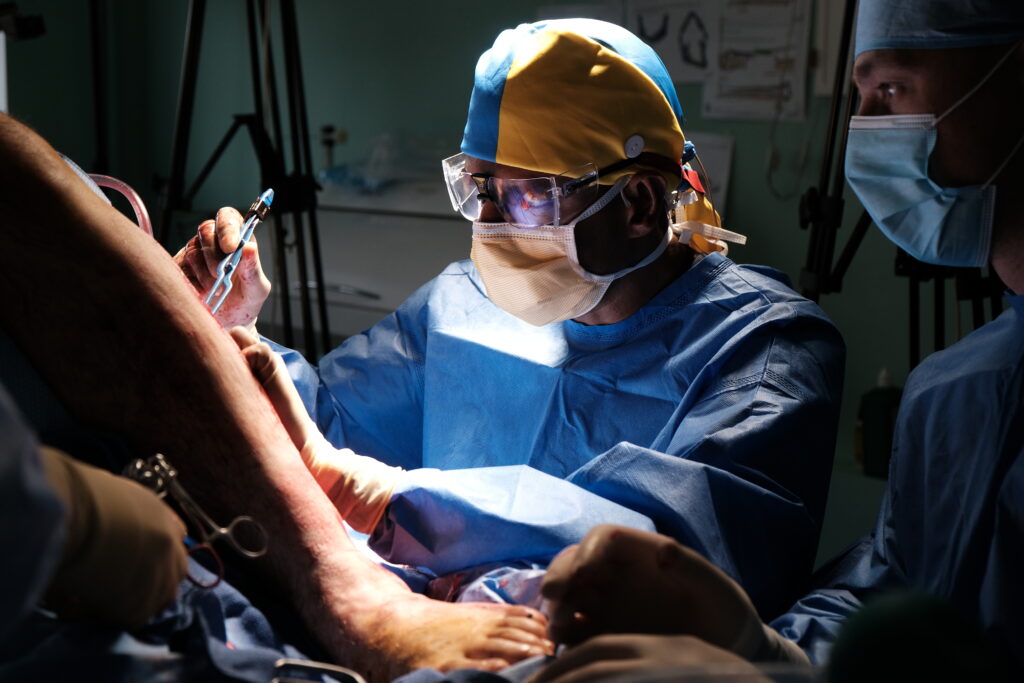
The medical team provided treatment for babies and children with birth defects, tumors of both children and adults in the head and neck area, traumas and scar revisions caused by shelling, from burns and other traumatic events. Two of the surgeries performed during the trip were complex maxillary midface advancement surgeries with computer planning, led by Dr. Craig Hobar, the Founder and Medical Director of LEAP Global Missions. The surgeries are expected to have a significant impact on the two young men’s quality of life, including how they function, eat, and even smile. Having exposure to this surgical procedure will change how these cases can be managed in the future in Ukraine.
The team included Ukrainian-American doctors, Dr. Victor Cherkasij (tag), Skin Cancer and Cosmetic Dermatology PC. Dr. Cherkasij not only treated difficult dermatological cases but also translated for his colleagues. He believes one week is not enough and plans to return for two or three weeks.
“Since the war started, I’ve been watching the war trying to understand and I was seeing the horrors of the war and I always felt I wanted to help Ukraine. I’m very happy I have something to offer, and we hope we will do it again.” – said James Suen(tag), MD, from University of Arkansas for Medical Sciences.
Photo: Dr. James Suen, Facial Plastic Surgery Otolaryngologist, Little Rock, Arkansas, Victor Cherkasij, PA, Dermatology from Cleveland, Tennessee and Dr. Christina Pohranychna, Okhmadyt Lviv Regional Children’s Hospital, Ukraine
The educational and training component of medical visits is the most important part that helps to establish a sustainable professional health care system in Ukraine.
Dr. Cheryl Anderson-Cermin (tag), craniofacial orthodontist, gave lectures to dental students, as well as the orthodontic residents from the Orthodontic Department of the Dental School in Lviv in regards to management of the infant, adolescent and adult individual with cleft lip and palate
Photo: Dr. Cheryl Anderson-Cermin, DDS, Craniofacial Orthodontics giving lecture to Ukrainian students in the the Orthodontic Department of the Dental School in Lviv
Dr. Anderson-Cermin outlined that the goals in this partnership are to bring additional expertise in these areas as the orthodontist on the team walks the child and the family through the process of the initial diagnosis, to the end of the growing years. The importance of psychological support for these families is also stressed, and the orthodontist has a significant role to play in this regard. Supplies were presented to the Orthodontic department to allow them to properly evaluate and treat future individuals.
It is worth mentioning that the urgent need for such complex surgeries in Ukraine is more significant than ever before. Thus, medical trips like this one are crucial for the treatment of patients who are in need. As these trips not only provide medical treatment, but more importantly, allow transfer of knowledge and skills to Ukrainian medical professionals.
Thank you to LEAP Global Missions US TEAM for their support of Ukraine:
Craig Hobar, MD, Craniofacial/Plastics
Steve Orten, MD, Facial Plastic Surgeon
Setty Pradeep, MD, Neurosurgery/Spine
Suen James, MD, Facial Plastic Surgery/H&N
Mark Hnatiuk, MD, Craniofacial/Plastics
Roman Bukachevsky, MD, ENT/Facial Plastics
Cheryl Cermin, DDS, Craniofacial Orthodontics
Victor Cherkasij, PA, Dermatology
Clanton Harrison, MD, Pediatric Urology
Jon Cermin, Photo/Video
Tatyana Bessmertnaya, Photo/Video/Translation
From Left: Rudy Myhovych, Christian Medical Assoc. Of Ukraine, Dr. Mark Hnatiuk, Dr. Pradeep Setty, Dr. Roman Bukachevsky, Dr. James Suen, Dr. Steve Orten, Dr. Clanton Harrison.
Leap Global Missions group: In-front: Tatyana Bessmertnaya and Dr. Craig Hobar In the back from left to right: Dr. Cheryl Anderson-Cermin, Dr. James Suen, Dr. Mark Hnatiuk, Dr. Steve Orten, Dr. Victor Czerkasij, Dr. Roman Bukachevsky, Dr. Pradeep Setty. Not pictured, Dr. Clanton Harrison
Cover photo: Photo: Dr. Craig Hobar assists Ukrainian surgeons Christina Pohranychna and Dr. Roman Ogonovsky, Ohkhmadyt Lviv Regional Children’s Hospital
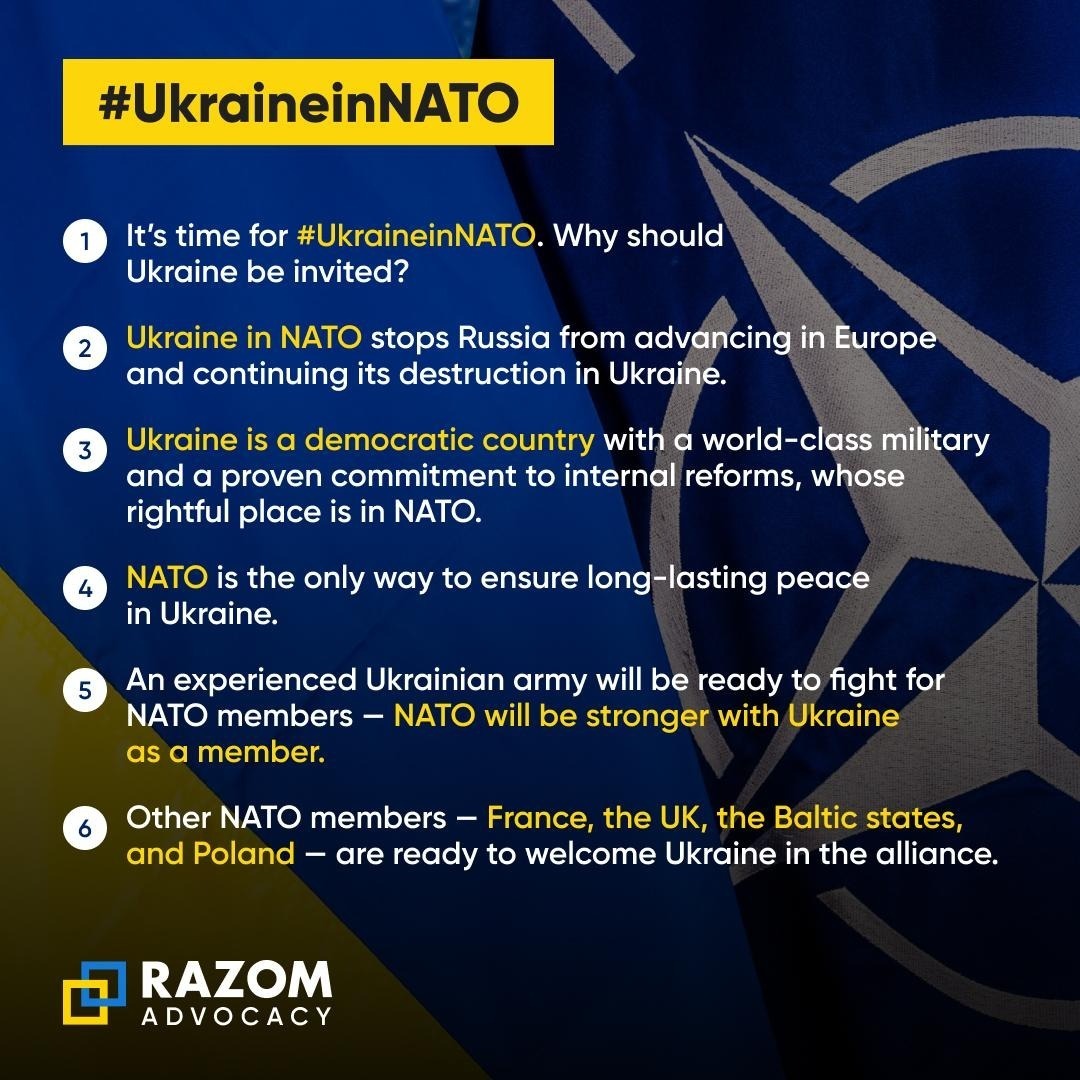
On July 11-12, allies will meet in Vilnius, Lithuania for the NATO Summit and the status of Ukraine’s accession into NATO will be the top topic. We are asking the United States and our allies to support a clear roadmap of Ukraine into NATO – and invite you to join us for our #UkraineInNATO campaign.
– In 2008, NATO did not accept Ukraine and Georgia (Bucharest Summit Declaration). Since the Russian full-scale invasion, Finland has been accepted and Sweden applied for membership, resuming the conversation about including Ukraine.
– Many NATO members have expressed their willingness to accept Ukraine (Baltic states, UK, France, Poland) – the United States, which has not been clear about their support of an invitation for Ukraine, should join them. The decision about Ukrainian membership is contingent on the Biden Administration’s decision.
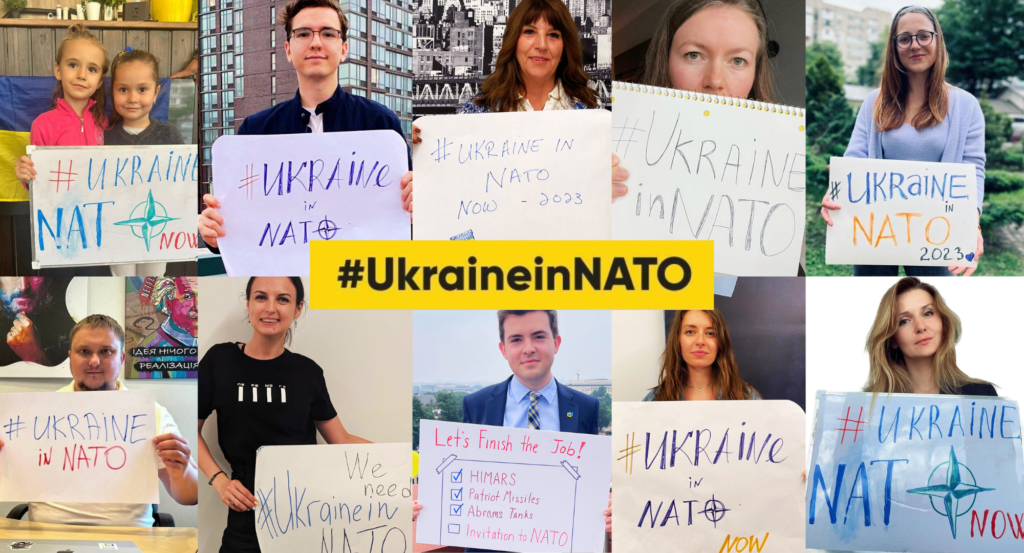
Join our campaign to broaden the support for Ukraine’s invitation into NATO by posting your message of support on social mediawith the hashtag #UkraineInNATO. Take your own photo – or use our graphics! Find an extended selection, free for download, here.
Need more ideas for content – or want to dig deeper into some of the reasons why NATO should admit Ukraine? Check out 7 Reasons Why Ukraine Should Receive NATO Invitation at Vilnius NATO Summit:
1. It’s cheaper to stop Russia in Ukraine than in Western Europe, and Ukraine’s eventual NATO membership is the only ironclad way to stop Russia in Ukraine.
2. Ukraine has proven that its rightful place is in NATO and is making great strides toward interoperability. It’s a democratic country making concrete efforts to curb corruption and conduct oversight with a world-class military, and an invitation to join would ensure the final steps for Ukraine meeting or exceeding NATO standards. Further reading:Just Security
3. NATO will be stronger with Ukraine as a member—Ukraine has the most experienced modern army in Europe. It has already shown it can be interoperable with NATO equipment, and NATO has much to learn from Ukraine’s 16 months of combat experience. Further reading:Newsweek,The New York Times
4. Best deterrent of future wars. Don’t repeat past mistakes—keeping Ukraine and Georgia out of NATO in 2008 allowed Russia to invade both. NATO membership is the best guarantee against future wars. Further reading:POLITICO
5. Don’t be late to the game! The consensus among NATO Allies is already building for Ukraine to join. France, the UK, the Baltic states, and Poland all are in favor of Ukrainian membership. Just like with weapons systems, consensus will only continue to build for membership for Ukraine.Further reading:Le Monde
6. NATO membership is the best way to bring stability to Ukraine and Europe. Ukraine needs weapons to win the war now, but the Alliance is what can bring lasting peace after Ukraine wins.Further reading:Washington Post
7. No more Bucharests. NATO already committed that Ukraine could join—now is the time to tell Ukraine when it can join. No one expects instant membership, but if Vilnius brings no specifics on when accession can happen, it will be Bucharest 2.0 and embolden the Russians. Further reading:Foreign Policy,Just Security
An update on our Kakhovka dam response and how you can continue to support our work addressing the devastating consequences of the catastrophe, and a plea to advocate for #UkraineInNATO in the run-up to the Vilnuius NATO Summit on July 11-12. Get plugged in to our advocacy work to learn about what Ukraine needs, now, to win.
Dear Friends of Razom,
Thank you so much for your generous outpouring of donations and support following the urgent appeal to help victims of the devastation caused by russia’s destruction of the Kakhovka dam on June 6th. The consequences of this disaster — human suffering and ecological devastation — will likely be felt for years to come.
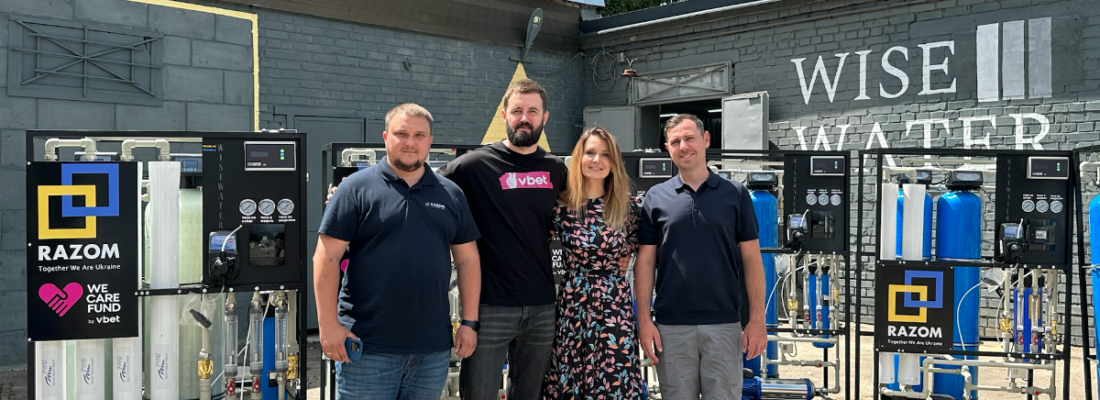
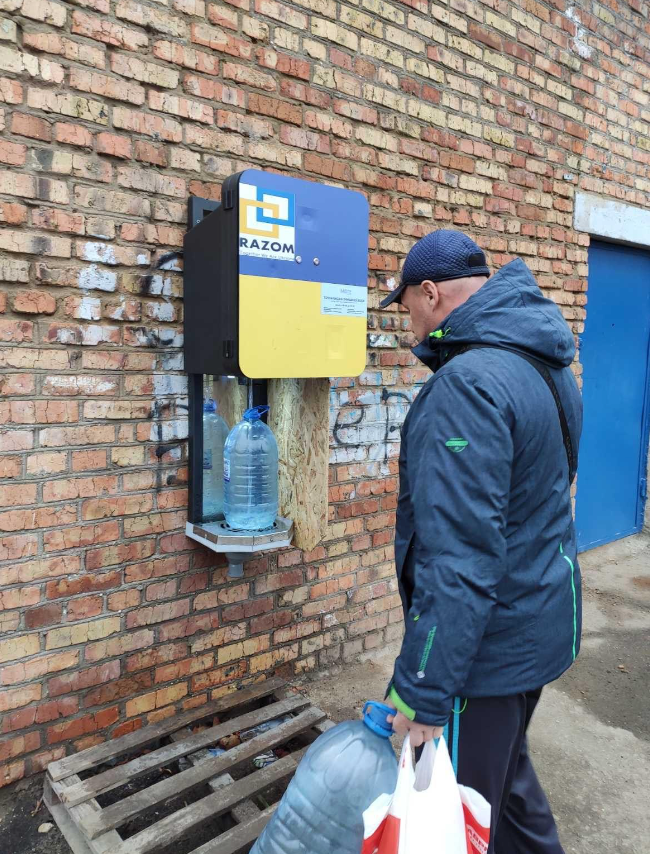
Very early on our team understood that to respond effectively, we needed to find long-term solutions. That’s how within a couple of weeks since the disaster, 10 water purification systems are already being installed in settlements across Kherson and Dnipro regions where there is no more water supply. This will provide drinking water for up to 36,000 people per day (more than 1 million per month). Razom is also providing for the replacement materials needed to service the stations long-term and for the water quality to remain high. We had worked effectively with WiseWater, an ingenious Ukrainian manufacturer who adapted these filtration systems with German parts for minimum human intervention and maximum efficiency and reliability, since May 2022 to help supply drinking water to Mykolaiv in the south and Konstantinivka in Donetsk region after russians bombed water pipelines there.
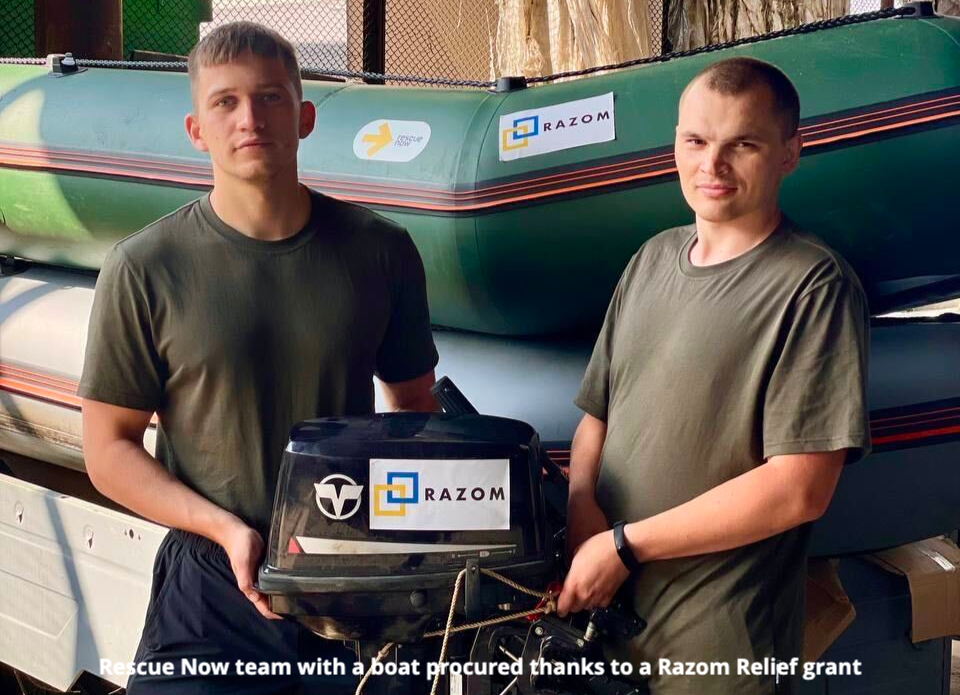
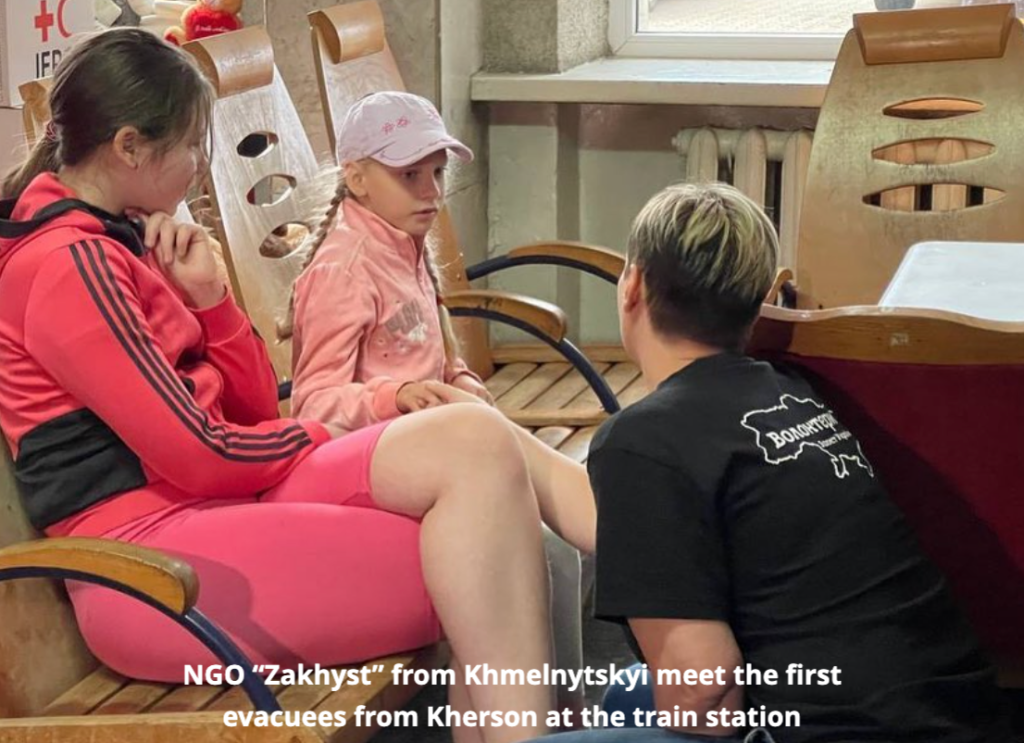
Our emergency response in Kherson also included Razom Relief releasing grants to several grassroots organizations within our network to mobilize quickly to offer humanitarian aid, evacuations, and refugee support in areas north of the region. Our partners Rescue Now, set up a base in Kherson that serves as a logistical hub for humanitarian aid for numerous NGOs and as a temporary shelter for evacuees. With support from Razom, they purchased 5 five-seater boats, 8,500 liters of bottled drinking water, 41 water filters, 600 water disinfection tablets, 300 blankets, 30 tourniquets, 38 fishing suits, 6 Ecoflow charging stations and hundreds of liters of fuel for the buses that transport the humanitarian aid. Meanwhile our partners, “Zakhyst” from Khmelnytskyi, are able to support up to 1,000 refugees with basic essentials and therapy in partnership with our “Razom With You” project.
Razom is multifaceted support for Ukraine which means that Razom Advocacy has been hard at work mitigating the longer term consequences of this disaster and helping Ukraine prevent future russian-made catastrophes. Over 2,000 advocates in our network across the US were mobilized to contact their Congressional representatives and ask for support for the resolution declaring Ukraine’s invasion as genocide (H.Res. 154 / S.Res. 72). You can join that network here. The team has also worked to connect Ukrainians deeply affected by the flood with major media outlets so that the stories of Ukrainians in the region are heard.
You can find a deeper report of our Kakhovka Dam response here on our website.
Our team at Razom Advocacy is laser focused on advocating for policy that will help Ukraine achieve swift victory. In the run-up to the Vilnius NATO Summit on July 11-12, we’re calling on the United States to join allies like France and the UK to invite Ukraine into NATO. Ukraine, Europe’s best hope for lasting peace and security in Ukraine and Europe. Join us on social media by posting about #UkraineInNATO – check out our thread andjoin us! Want to be more involved? Our team has launched a weekly series of talking points/legislative asks for nationwide advocacy efforts. This document provides a list of critical legislation and messages about what Ukraine needs, now, to win. Also our next Ukraine Action Summit will take place on October 22-24, 2023 so save the date and join us so that we can reach more of our elected representatives! In April, our team and the American Coalition for Ukraine convened gathering over 300 constituents from 34 states to receive advocacy training and meet with their members of Congress to advocate for policies to help Ukraine. Together, we reached 33% of US Congress.
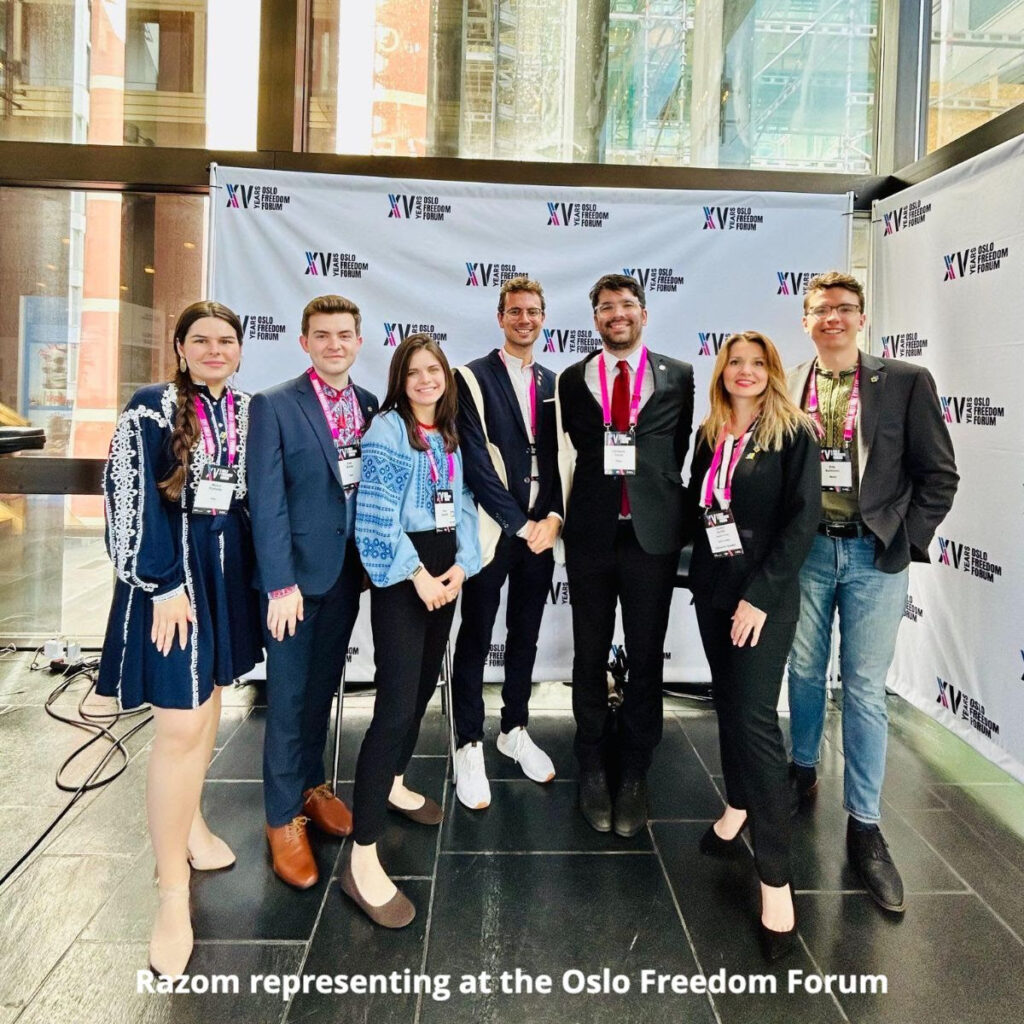
Over the past several weeks, various Razom team members have traveled to Ukraine, London, and Oslo to connect with and learn from civil society leaders, further strengthen our partnerships, and hear directly from people on the ground on priorities, efforts, and challenges surrounding the war. We are lucky to work with such dedicated and inspired individuals, partners, and allies.
It was an honor to participate in the Oslo Freedom Forum and share stories of resilience and blueprints for victory with the global community of activists present. Eva Kurilets, Razom’s Executive Director in Ukraine, spoke on a panel alongside Taiwanese legislator and metal band singer Freddy Lim, Syrian refugee and human rights activist Omar Alshogre, and Washington Post journalist Josh Rogin, highlighting the solidarity between Syrians, Ukrainians, and the Taiwanese in their fight against a network of violent, autocratic regimes. It was spectacular to hear and see so much solidarity and support for Ukraine across so many different communities and struggles for freedom, human rights, and dignity and connect with like-minded and motivated civil society leaders from around the world.
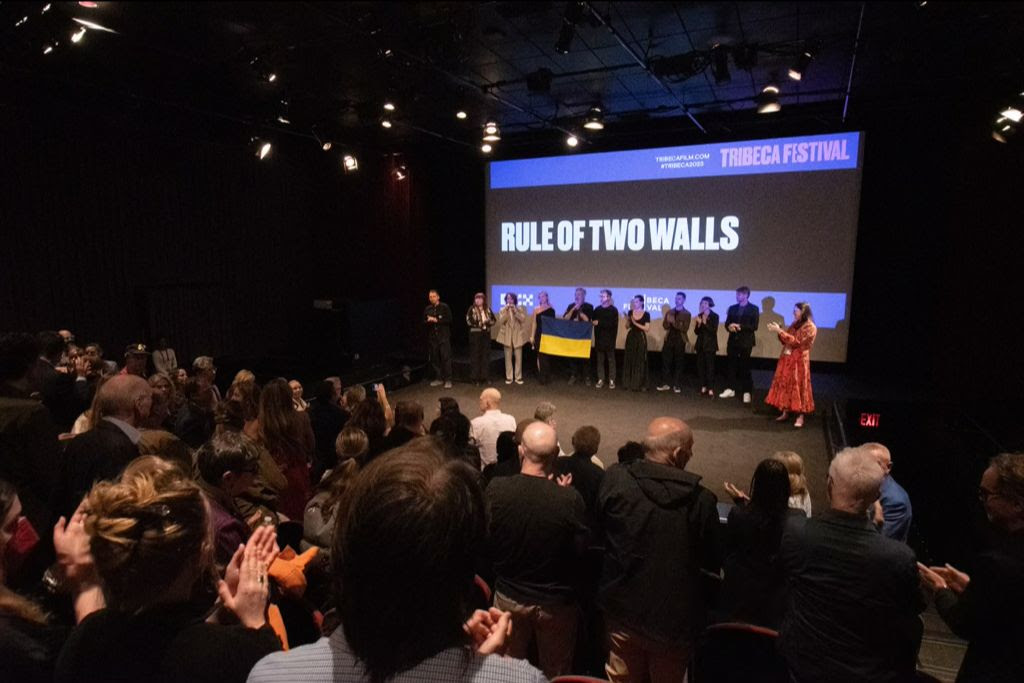
A Razom-supported feature documentary Rule of Two Walls had its World Premiere at Tribeca 2023 with 4 sold out screenings, each attended by the filmmaking team as well as the artists that were featured in the documentary to make sure there is a strong Ukrainian representation at one of the largest international film festivals in New York City. What’s more, this talented team walked away from the festival with a Special Jury Prize for Human Rights and Artistic Expression!
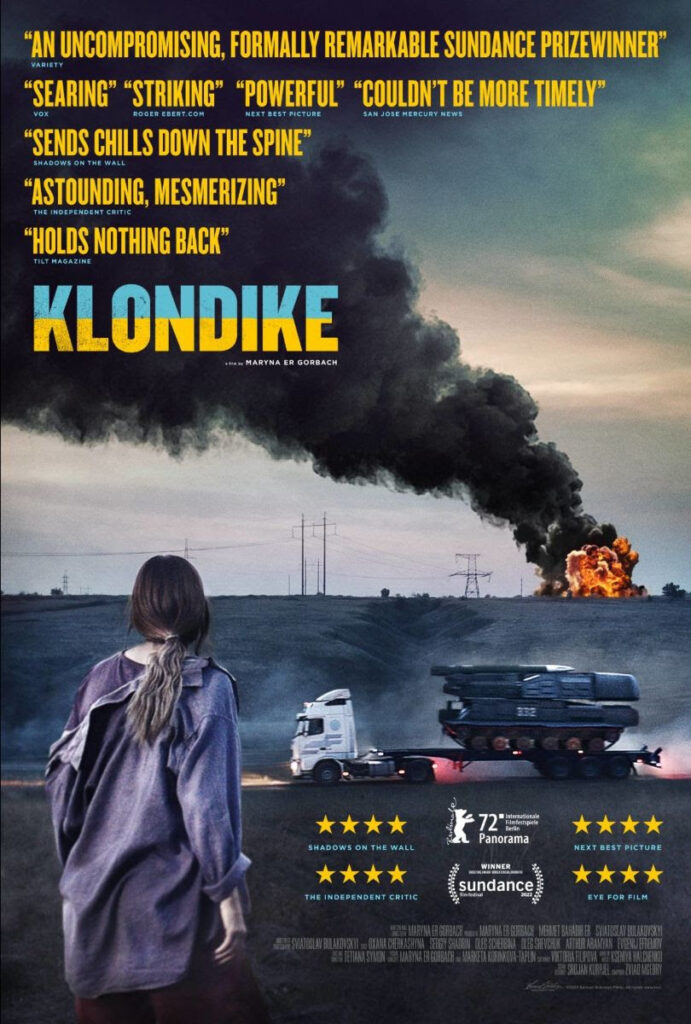
Klondike will have its US theatrical release on August 4th, 2023 from Samuel Goldwyn Films!
Razom proudly supported Klondike at its Sundance Premiere – and it is one of the most acclaimed titles from last year’s Sundance, where it picked up the top directing awards in its World Cinema Dramatic category. Maryna Er Gorbach’s Klondike premiered just weeks before russia launched its full-scale invasion of Ukraine. Set in 2014, Ukraine’s Oscar entry for International Feature follows a pair of expectant parents living in eastern Ukraine near the frontlines of the Donbas war. After an international air-crash catastrophe elevates the tension enveloping them, pregnant Irka (Oxana Cherkashyna) refuses to be evacuated and leave her home, even as their village is captured by russian armed forces.
Razom is partnering with PBS to support the US theatrical release of an award-winning documentary 20 Days in Mariupol opening July 14th at the Film Forum in NYC.
February 2022: As russian troops advance on the Ukrainian city of Mariupol, a small crew of Associated Press reporters are trapped amongst the besieged civilian population. 20 DAYS IN MARIUPOL — winner of the 2023 Sundance Audience Award for World Cinema Documentary — is the unflinching visual chronicle of this harrowing ordeal. Ukrainian war correspondent Mstyslav Chernov (he directs, shoots, and narrates) and colleagues are the only international correspondents left in the city, witnesses to the first sighting of a “Z” on a russian tank (a declaration of war), random shelling, the bombing of a maternity hospital, the digging of mass graves, and russia’s eventual encirclement of the city. Their images of war crimes would soon go viral, potently exposing russia’s monstrous lies that deny their targeting of Ukrainian civilians, and earning the AP team two 2023 Pulitzer Prizes: for Public Service Journalism and Breaking News Photography.
To celebrate Crimean Tatar Flag Day and the Crimean Tatar Muslim holiday of Kurban Bayram, you’re invited to join us tomorrow, Sat July 1st at the Ukrainian National Home to celebrate Crimean Tatar culture through music, dance, and food. Do not miss this opportunity to learn more about the indigenous people of Ukraine! More info and here.
If you’re in the Berkshires July 1st or 2nd, then don’t miss this event!
With an immersive installation that will transform the theater into an ancient Ukrainian forest, this production centers around a classic Ukrainian art film of the same name. It pushes the boundaries of traditional musical performance while exploring what a group of talented, multicultural musicians have created, using traditional Ukrainian folk music as source material, and sharing immigration and refugee stories. Details & tickets here.
PROBASS ∆ HARDI– Ukraine’s top trending electronic band is launching its first tour in the US! Their hit songs such as “Good Evening, Where Are You From? (Good Evening, We Are From Ukraine)” and others have been streamed over 80 million times. Get your tickets here before they sell out!
Thank you so much for reading this newsletter (and forwarding it on!), for keeping up to date with Razom, and for your support of Ukraine. We’re so glad you’re here.
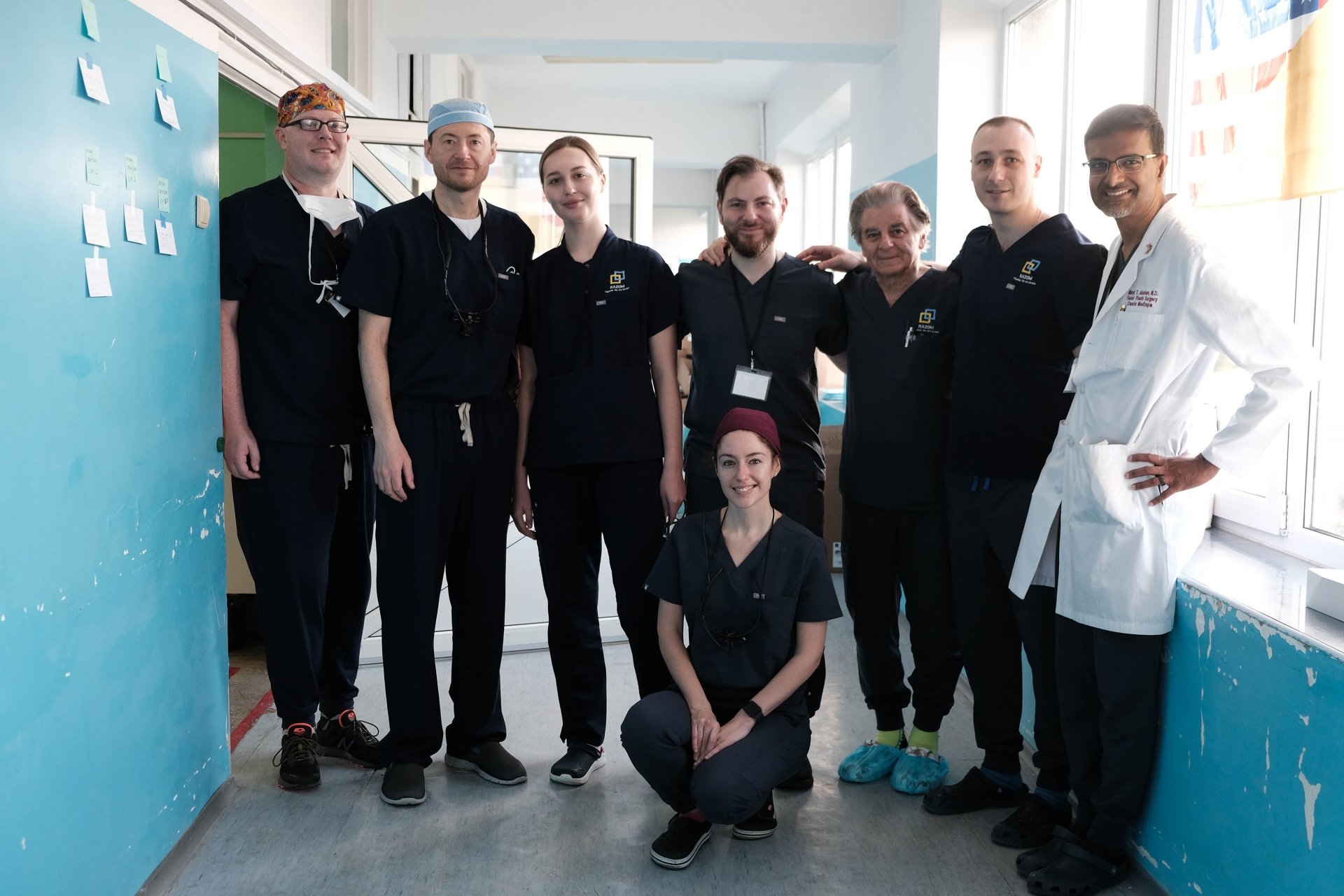
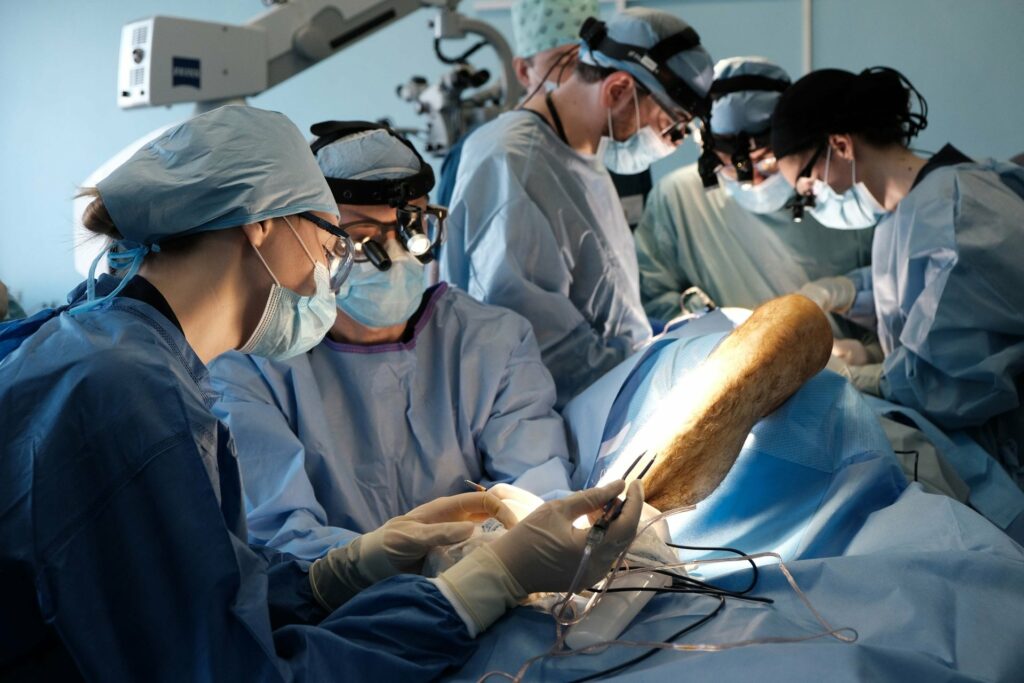
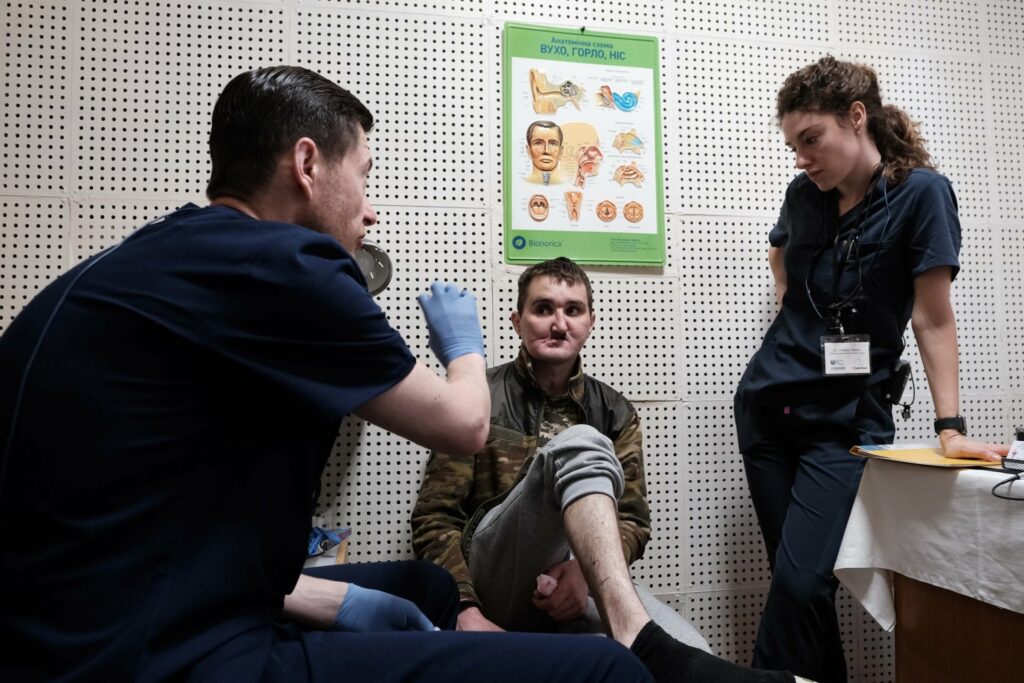
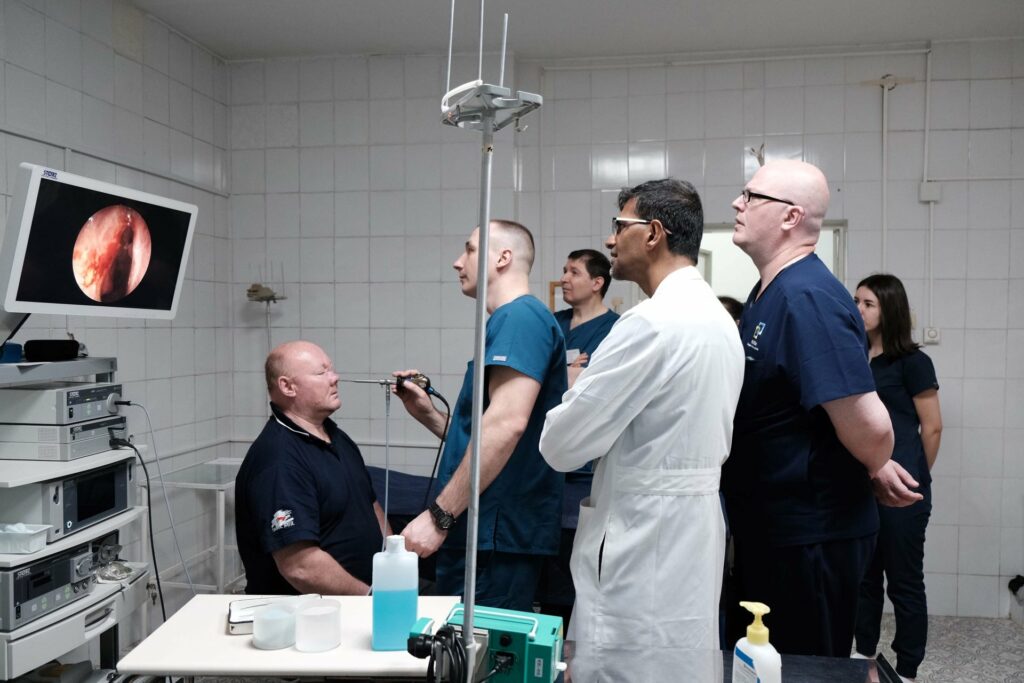
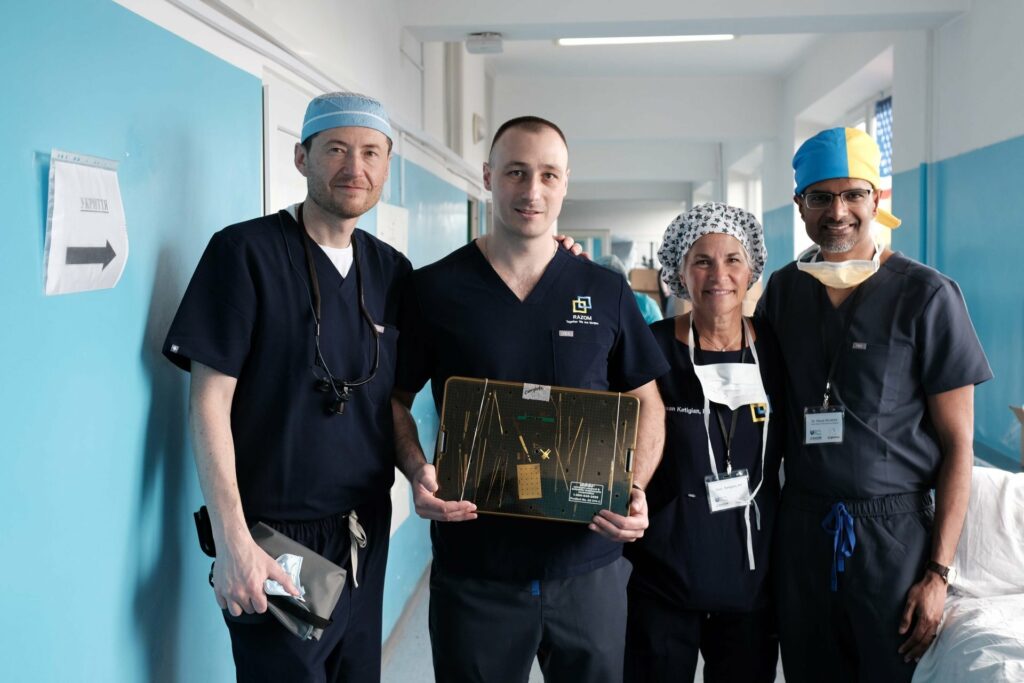
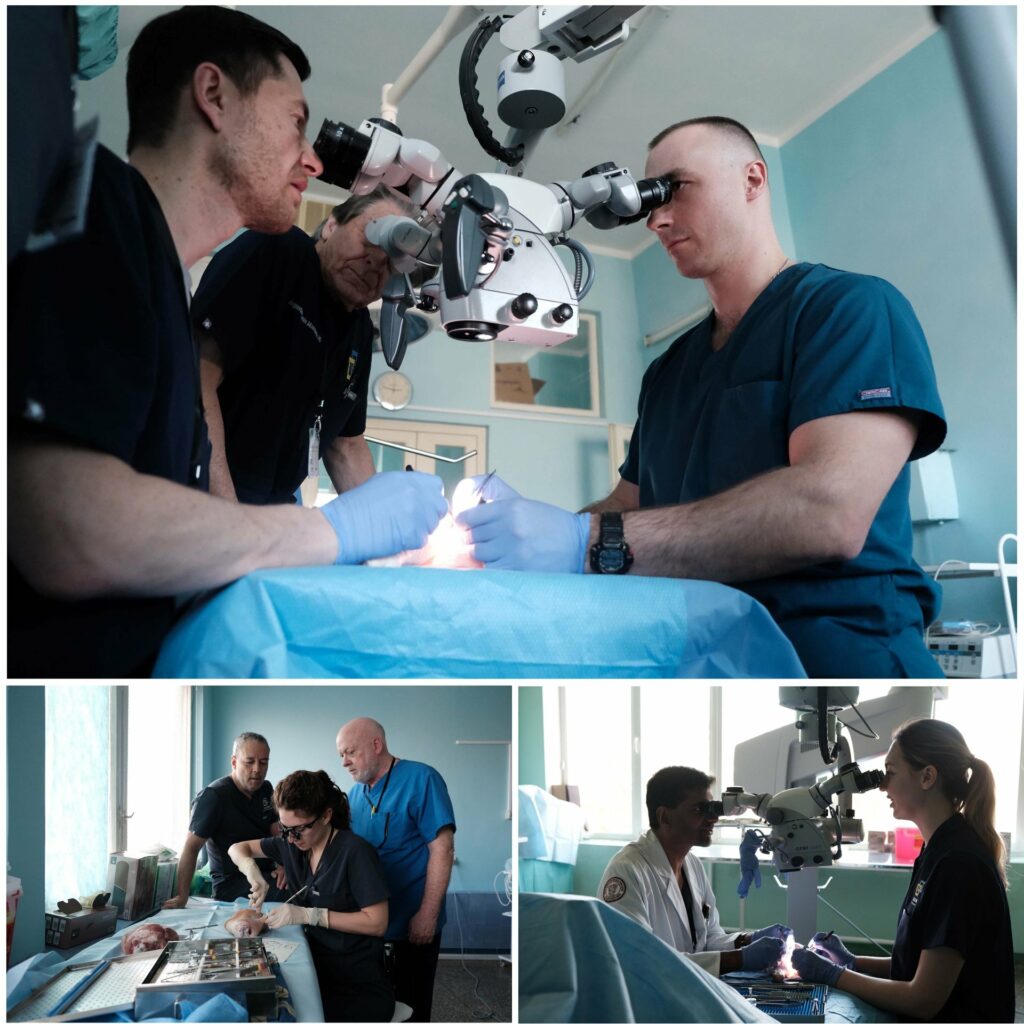
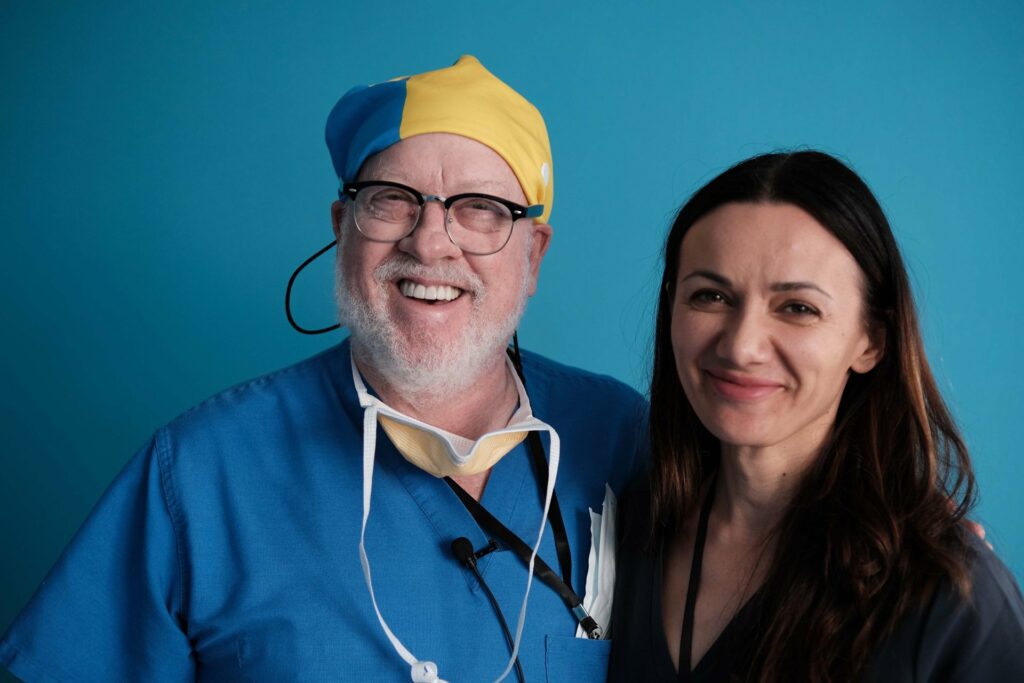
The Face to Face mission of American facial reconstructive surgeons took place in a Lviv hospital on April 22-29. Nine doctors and eight nurses from the United States, along with their Ukrainian colleagues, performed free reconstructive and plastic surgeries on soldiers who had suffered face and neck injuries on the front line during russia’s war against Ukraine.
Great thanks to the team of
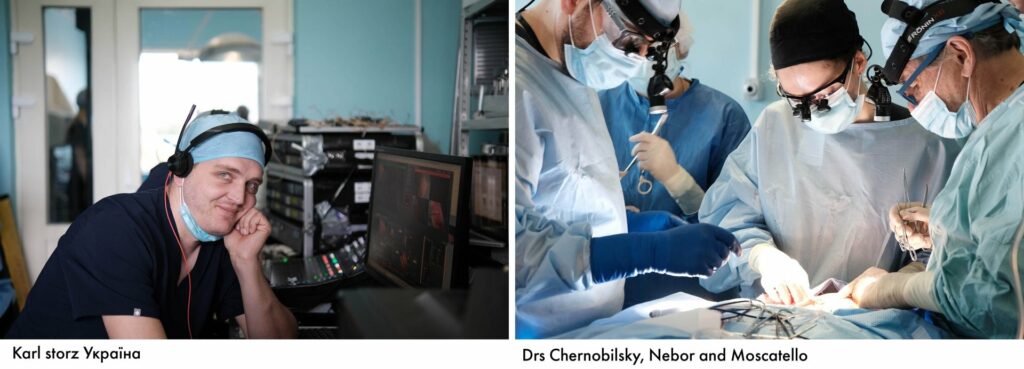
Surgeons: Drs Manoj Abraham, John Frodel, Augustine Moscatello, Gregoriy Mashkevich, Bruce Moskowitz, Ryan Winters, Boris Chernobilski, and Ivanka Nebor.
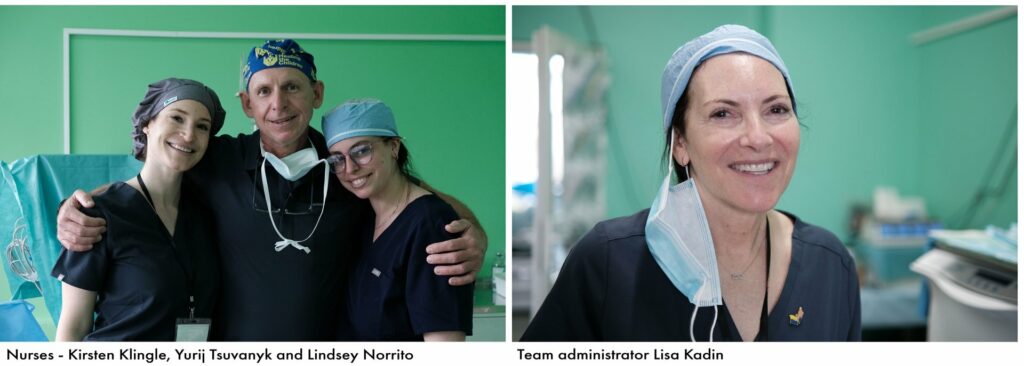
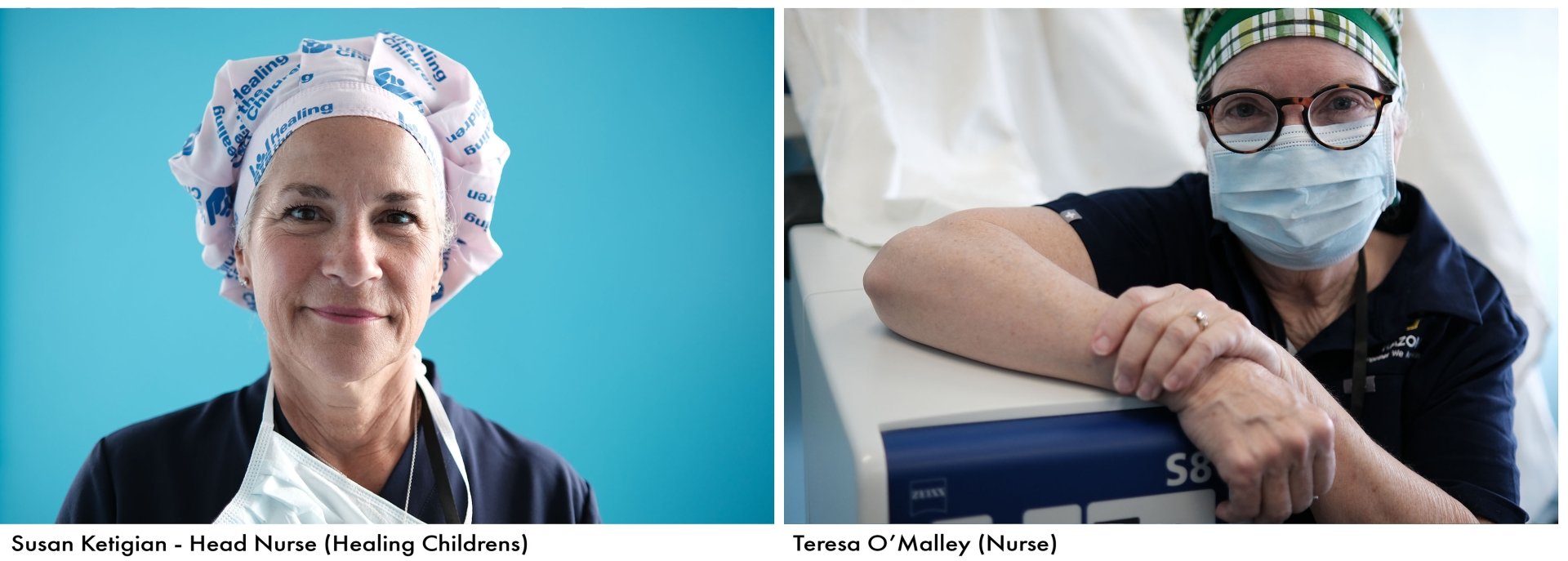
Nurses: Susan Ketigian, Teresa O’Malley, Lindsey Norrito, Kirsten Kringle, Joanne Heil, Iryna Frankiv, Yuriy Tsuvanyk, and Mariana Varchuk
Administrators: Aly Owens and Lisa Kadin
Drs Winters, Mashkevich, Rudomanenko, Chernobilsky, Moscatello, Panchenko, Abraham and Nebor
The mission duration was 7 days. Over 5 surgical days, 26 reconstructive surgeries were performed, five of which were unique procedures – bone transplants from legs and arms for the reconstruction of the jaw and nose.
Surgical cases included:
5 free flaps (3 fibular free flap, 1 radial free flap and 1 anterolateral thigh flap) for reconstruction of mandibular, maxillary and midface defects
11 personalized titanium 3D implants for facial bones reconstruction (Materialise)
5 complex rhinoplasties
1 facial nerve reconstruction with graft
Drs Rudomanenko, Mashkevich, Chernobilsky, Moscatello and Nebor are performing flap harvesting from the leg for mandibular reconstruction
Dr Ryan Winters (USA) and Vitaliy Panchenko (Ukraine)
The mission preparation took 3 months. We received more than 100 applications, but were able to select only 30. Following consultations, 26 patients underwent surgeries. There were 5 patients from the previous mission, which took place in September 2022. The American and Ukrainian teams worked side by side.
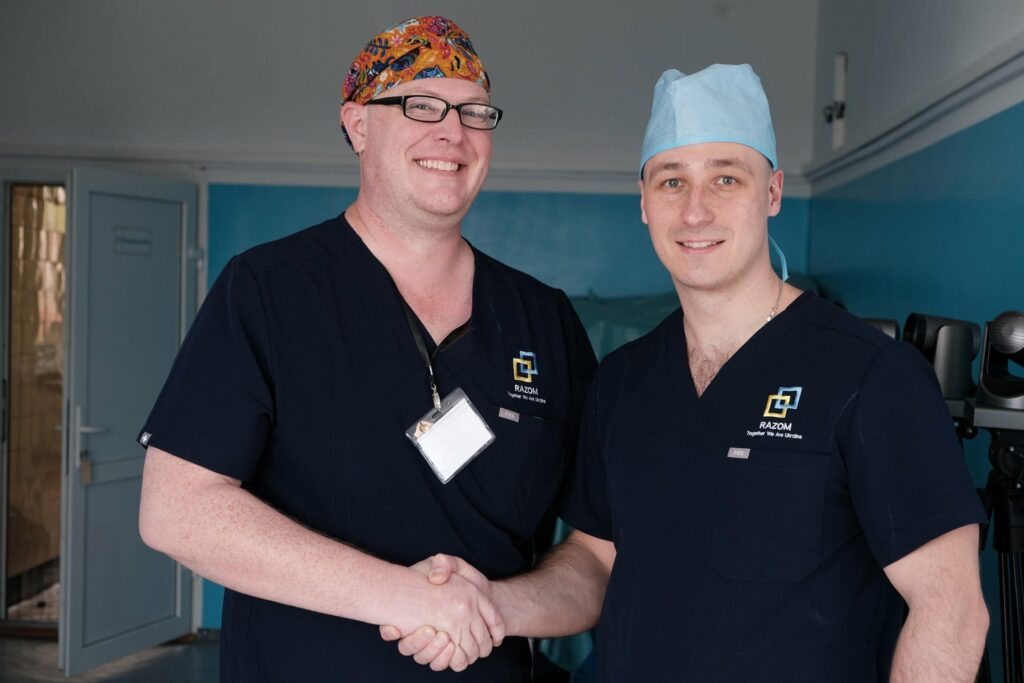
We are grateful to Ukrainian plastic surgeon Vitaliy Panchenko for his work and courage to host such a complex mission in his department. He, along with surgeons Mykola Syniuk, Tetiana Rudomanenko, Yuriy Herbish and Ukrainian anesthesiologists and nurses, made this mission possible and successful. Special gratitude goes to Hryhoriy Prokhorenko and Volodymyr Knychnytskyy.
Ukrainian team - Drs Syniuk, Knygynitsky, Prokhorenko and Panchenko
Drs Mashkevich and Nebor during patients consultation
First day - Patients consultation
On average, the surgeons operated for 15 hours daily. The total cost of all operations would have been about $1,000,000 in the United States. The team brought with them medical supplies, surgical threads, tools and equipment totaling about $100,000.
The microvascular instruments set was presented to Ukrainian plastic surgeon Dr. Vitaliy Panchenko by American team (Dr Mashkevich, Dr Panchenko, Susan Ketigian and Dr Abraham)
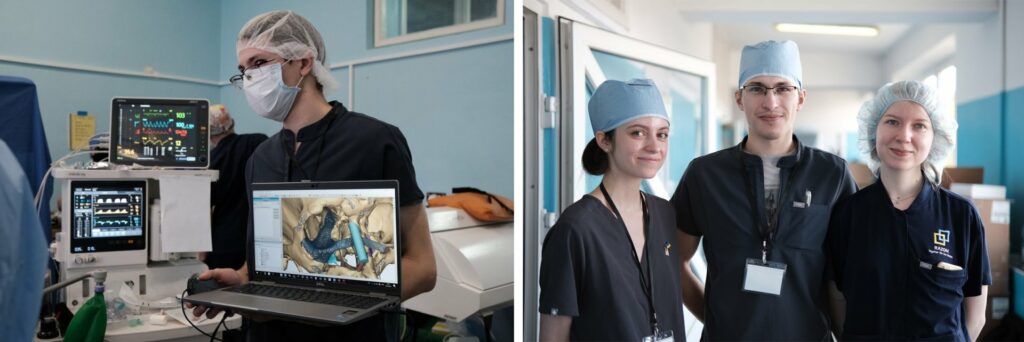
With the help of Materialise, titanium 3D implants for facial bone reconstruction were modeled and printed for patients, although such technologies and production are quite expensive. Professionals from Materialise provided free modeling and printing for Ukrainian patients, and volunteers were present at each surgery to help surgeons with visualization for each case.
Specialists from Materialise - Anastasia Krychun, Oleksandr Kanivets, Olha Horniak
One of the main goals of the Face to Face mission is to train Ukrainian surgeons. On the first day, American surgeons organized a workshop on applying vascular anastomoses under a microscope. They also conducted a training on the basics of scar reconstruction.
With the support of the Karl Storz Ukraine and Bionorica, the three surgical days were broadcast live, with more than 500 Ukrainian otolaryngologists, maxillofacial surgeons, plastic surgeons and ophthalmologists participating. The procedures were commented by Ukrainian specialists – Prof. Kopchak A.V., Bilotserkivsky I.V., Chepurny Y.V., Omerova L.M. and Yushchenko V.M.
Dr John Frodel and Razom for Ukraine team administrator Aly Owens
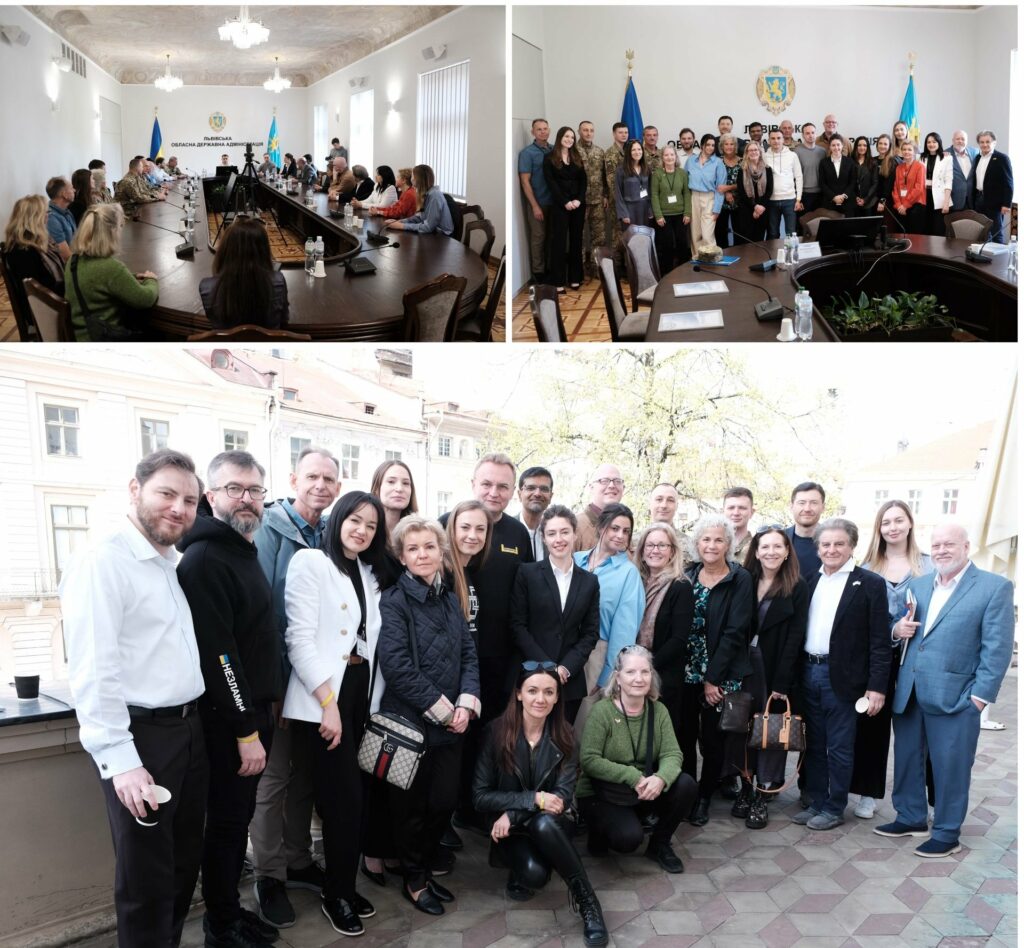
The Face to Face team was awarded by Lviv Regional State Administration and the Mayor of the City for volunteering efforts and helping Ukrainian victims of war. Lviv Mayor Andriy Sadovyi also met with the team and thanked them for their support and work.
Face to Face team was awarded by Lviv Regional State Administration for their efforts and met with Mayor of Lviv - Andriy Sadovyi
The project is aimed at helping the soldiers and war-affected Ukrainians who have suffered head and neck injuries. This project is about reuniting caring people to help others. We are already planning our third mission. And we thank every partner and volunteer who makes this project possible!
We would like also to thank Yulia Shama (Razom), Iryna Gudyma (Razom), Ihor Kurylo (INgenius), Ihor Solovei (INgenius) and Oleksandr Zakorchenyi (Materialise) for their significant contribution to the mission.
The first Face to Face mission took place in September 2022 in Ivano-Frankivsk, where the team conducted 31 operations for soldiers and civilians who suffered from facial and neck injuries during the Russian-Ukrainian war. Details are here.
As part of Razom Advocacy’s ongoing work advocating for policies that will help Ukraine achieve swift victory, we have created a weekly series of key messages/talking points and list of target legislation to help align nationwide advocacy efforts. Hover over the PDF to navigate to pages 2 & 3. Please feel free to download and distribute. Keep up with the latest on Razom’s advocacy workby following us on Twitter @razomforukraine.