When Civic Activism Becomes a Full-Time Job, the Mission Stays the Same
Ella Petrenko was 26 years old when she founded the NGO Bilozerka Center for Regional Development. What began as an after-work passion project in her home village of Shyroka Balka, Kherson Oblast, has grown into a full-fledged organization with a team of 30 employees and volunteers dedicated to empowering local communities.
“I was born in a village, studied in Kherson, but I always wanted children in villages to have access to cultural and sports opportunities,” said Petrenko. “That’s why I eventually returned to work in the village.”
Her inspiration came from youth workers and civic activists she met in Poland, Denmark, and Sakartvelo. From the very beginning, her organization has intentionally focused on rural communities. “It’s not that we purposely ignore the city of Kherson,” she explained. “It’s just that rural communities are our focus.”
The Bilozerka Center began with youth projects and educational programs. Over the years, it has expanded to support democracy development, environmental awareness, and civic participation. When Russia launched its full-scale invasion, the work of the NGO shifted dramatically. “After Feb. 24, we had to reorganize completely,” she said. “For the first time, we started distributing humanitarian aid.”
When the full-scale invasion began in 2022 and Russian forces occupied Kherson Oblast, the NGO had to adapt quickly. During the occupation, they were quietly delivering humanitarian aid.
Though Petrenko had always juggled her NGO work with a job at the Migration Service, she made a big decision in 2024 and resigned to focus on the Bilozerka Center full-time.
“That shift was a turning point for me,” she explained. “I realized that doing good work is not enough—you have to do it efficiently and sustainably.”
As the team grew and the projects expanded, so did the operational challenges. Without strong internal systems, burnout set in. “We never had written internal policies,” she said. “We always worked based on trust and intuition. But now, with a larger team and more stress, that’s not enough.”
That’s when she discovered the Sylnishi (Stronger) grant—part of Razom’s effort to build the organizational capacity of its grantee partners.
“Before, we had support from Razom for specific projects,” she said. “But the Sylnishi grant gave us something more important—support for internal growth. That’s what we were lacking.”
Through Sylnishi, the Bilozerka Center received both funding and mentorship to strengthen its strategy, fundraising, and internal communications. They reviewed their mission and goals, developed clear operational policies, and began crafting a strategy for the next three years.
“For the first time in ten years, we sat down as a team and asked ourselves who we are, what our goals are, and what we want to change in our communities,” Petrenko said. “It helped us slow down and reflect.”
One of the biggest takeaways was the importance of staff wellbeing. “We work with communities in crisis every day—violence, trauma, displacement,” she said. “But we hadn’t created any internal support systems for our team.”
With the Sylnishi support, they organized team retreats and introduced mental health resources. “Burnout was a real threat,” she admitted. “Now, we’re trying to build a healthier workplace culture.”
The grant also helped them design a new fundraising strategy. Petrenko acknowledged that previously they relied heavily on a few donors. “We want to diversify, build resilience, and engage more with the communities we serve,” she said.
Despite the challenges, Petrenko remains deeply motivated. Her hope for Ukraine’s future is rooted in the grassroots.
“I see how change starts in small communities,” she said. “It’s not just about big reforms in Kyiv. It’s about what we do in Bilozerka, in small towns and villages, every day.”
She believes that supporting local NGOs isn’t just about charity—it’s a long-term investment in Ukraine’s democratic future. “We’re the ones working with people face-to-face. We know their stories, their needs, their strengths.”
For Petrenko, civic activism is more than a job. It’s a calling.
“I don’t need to motivate myself to keep going,” she said. “When you’re surrounded by people who believe in the same things, who do their work from the heart—it gives you energy.”
Looking ahead, she hopes more organizations can access support like Sylnishi.
“These grants are about more than money,” she said. “They give us time to reflect, to grow, and to build organizations that will be here for the long run.”
With your support, Ukrainian grassroots organizations grow stronger, boosting their impact.
Pryluky: A Future Tech Hub
Around the world, the cities that recovered strongest after a crisis did so by investing early in the people who would rebuild them – starting in classrooms. Through school curricula, early exposure to advanced technology created the skilled workforce that later powered entire tech-led recoveries. In the United States, some of the most successful post-industrial cities – places like Pittsburgh, Indianapolis, Raleigh, or Austin – didn’t simply “bounce back” after the decline of manufacturing. They reinvented themselves by investing early in STEM education, nurturing local talent, and treating young people not as passengers of a shrinking economy but as the architects of a new one. That reinvention rarely started in obvious “innovation centers.” It began in mid-sized cities that embraced the idea that future prosperity belongs to places that equip their youth with 21st-century skills.
In frontline-adjacent Ukraine today, we are watching something similar take root, and Razom’s STEM investments are helping accelerate that transformation. And we find one of the most inspiring examples in Pryluky, a midsize city in Chernihiv Oblast that saw Russian forces come within ten kilometers in 2022 and still manages daily blackouts. It’s not the first place you’d expect to see cutting-edge robotics education – but stepping inside Pryluky’s Lyceum #1 makes the bright future of Ukraine feel closer than ever. Razom has worked with NGO “The Generation of Success” and its founder Viktoriia Volvich to procure and supply robotics kits to the Lyceum and set up its STEM curriculum.
A Classroom Where the Future Is Being Built
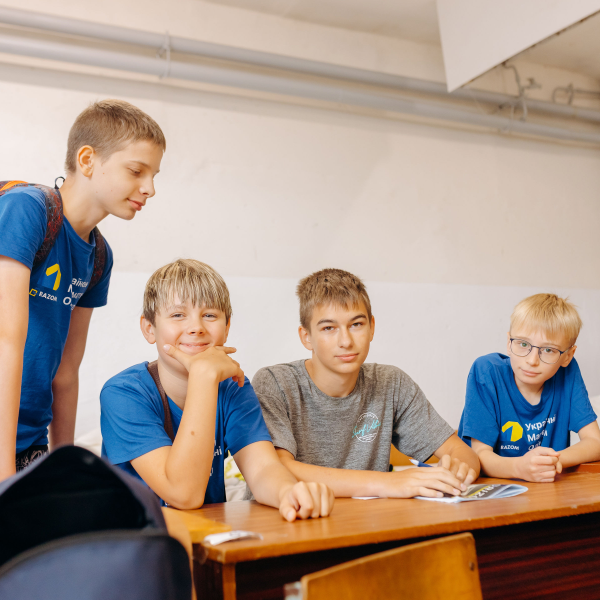
The first thing you notice during one of the regular STEM class periods is a group of boys, huddled in pairs around robot dogs – small, bright creatures made of plastic. Each duo’s face is scrunched up in concentration as they race to beat their classmates and be the first ones to complete the small robot. Thirteen-year-old Zakhar assembled it in just two 30-minute class periods. “It’s a robot dog,” he explains, carefully placing it on the table. “It can spin around and jump like a little projectile.”
When asked how he managed to assemble it so quickly in only his second robotics lesson, he answers simply: “My teacher explained how to do it, and the instructions helped.” He shrugs while responding, a gesture aimed at making it seem like it isn’t a big deal – yet the speed with which the kids grasped the intricacies of motors, sensors, and microcontrollers is nothing short of astonishing. Soon, their next robotics project will up the ante by including coding lessons that will allow the students to program a more complex robot to perform various actions.
But what’s striking about Zakhar is not just his competence, but his clarity about the future he wants to help build. “I think Ukraine will be strong,” he says. “A big, unbreakable country that will win.” He says this while holding the robot he built himself – a small but meaningful sign of what confidence looks like when paired with opportunity.
The teacher Zakhar speaks about is the STEM instructor Oleksii Ivanovych. Before Razom funded robotics kits, he had shown great creativity by teaching robotics concepts using cardboard, scrap wood, and improvised materials. He always believed his students deserved real tools that matched their curiosity. Now that the kits are here, he sees their impact immediately: “We’re finally keeping up with the modern world,” he says. “This equipment teaches kids to think critically, work in teams, discuss problems, and solve them.”
Instead of abstract theory, students now rotate through:
multi-level robotics sets
microcontrollers
motion and temperature sensors
3D printing and laser engraving modules
When asked how the students respond, he smiles. “They love it. They want to come to this class. They’re excited to work and to learn.” He emphasizes that robotics should not just be an elective – it’s foundational. “Robotics is everywhere now,” he says. “Medicine, logistics, industry – almost no field works without it anymore.” For a teacher who once taught mechanical movement using syringes and paper, having proper tools is transformative – for him and for his students. To show his gratitude, Oleksii Ivanovych surprises us with a gift – a laser engraved Razom logo, created using the equipment purchased through the grant program.
While Oleksii Ivanovych pours his heart into his students during each class, it is the Lyceum’s Principal Olena Rohaliova who works tirelessly behind the scenes to ensure the school has the best resources possible. So when the NGO “The Generation of Success” leader Viktoriia brought Razom’s grant opportunity to her, the decision was immediate. “This has been my dream for a long time,” she admits. “I wanted modern STEM education, but without equipment, there was no way to make it real.”
The moment the grant was approved, she convened an emergency meeting of the school’s pedagogical council and rewrote the school’s educational program to officially introduce robotics as a full course – something no other school in the city had done. “Ukrainian schools often don’t prepare students for real life. We have to give them knowledge that feels meaningful — something interesting enough to pull them away from their phones and into thinking, problem-solving, creating.” For Principal Rohaliova, Razom’s support wasn’t just a material investment – it was a catalyst. “Every dollar you invested is working at 200%,” she says. “You helped make our dream real – not just mine, but our teachers’, our students’, and their parents’.”
And parents definitely feel the positive impact as well. We caught up with Liudmyla, whose eighth-grade son Serhiy attends Lyceum #1. Liudmyla works at the local radio station, which during the first days of the full-scale invasion served as an air raid alert system for the city. This woman with a delicate, melodic voice but with steel character shares how she refused to leave the city as the Russian forces approached and slept at the studio in order to be able to keep the residents safe and informed. Liudmyla understands the importance of technology firsthand, so for her STEM education isn’t abstract — it’s a stabilizing force.
“It’s incredibly hard to motivate kids to learn right now,” she says. “The air-raid alarms, the time spent in shelters… Even though the school’s shelter is wonderful, learning underground is still learning under stress.” But STEM changed something for her son. “STEM helps them understand why they’re learning,” she explains. “They study something in class, then they apply it immediately — they build a project, run an experiment, create a model. It has a direct effect on motivation.” She also notes the sense of accomplishment: “When you’ve built something with your own hands and see the result, it inspires you to do more. STEM doesn’t force kids — it inspires them.” For her son, a naturally thoughtful and responsible teenager, this class gave him a place to test ideas, work with others, and see himself as someone capable of creating solutions.
The parents are not the only ones whose dedication to Pryluky is striking. The robotics program at Lyceum #1 began with local NGO leader Viktoriia, whose love for her city is immediate and unmistakable. “I’m really just a fan of this community,” she says. “I believe young people move Ukraine forward.” Her son’s interest in robotics and her exposure to U.S. exchange programs convinced her that students in Pryluky deserved the same opportunities as students in American schools. She sought out a teacher with passion (she found one), a school ready to change (she convinced one), and equipment that could transform everything (Razom provided it). The result was a project that, in her words, “made kids want to stay in the classroom even during recess to keep building.”
Scaling Up: “Education on Wheels”
What began in Lyceum #1 has now expanded across the city through a second NGO’s program called “Освіта на колесах” (“Education on Wheels”). Coordinator Diana explains the vision: “Kids in a city like Pryluky should have the same opportunities as kids in the capital city of Kyiv,” she says simply.
Their NGO model:
trains computer science teachers citywide
shares microcontroller boards for learning coding and electronics and robotics kits across all schools
rotates equipment every two months
provides full lesson plans and methodology
ensures access even during blackouts by offering backup learning spaces
Diana’s motivation is rooted in wartime experience. “Our path through 2022 shaped who we are now,” she says. “It taught us how to adapt, how to organize, how to keep educating kids even when everything around us was falling apart.” This program didn’t just expand STEM – it built a citywide community of teachers and students learning together, sharing tools, and raising the bar for what’s possible.
What’s happening in Pryluky is more than a robotics class. It’s a blueprint for rebuilding a country from the inside out. Future drone engineers, medical roboticists, software developers, cybersecurity specialists, and startup founders start here, with a robot dog that sparks interest, a teacher who finally has the right tools, and an NGO leader unwilling to accept “impossible”. This is Razom’s model in motion: a small, catalytic investment leads to local leadership, which in turn generates exponential community impact.
Principal Rohaliova said it best: “We had the people. We had the ideas. But these kits from Razom made it possible to bring it all to life.” That is how future tech hubs begin – in the classrooms of cities some might overlook, but where hope, skill, and determination are already abundant.
We invite you to become a part of making dreams come true and helping children prepare for the future in which they apply their skills and knowledge to advancing the techonolgical innovation for a peceful, secure, and prosperous Ukraine.
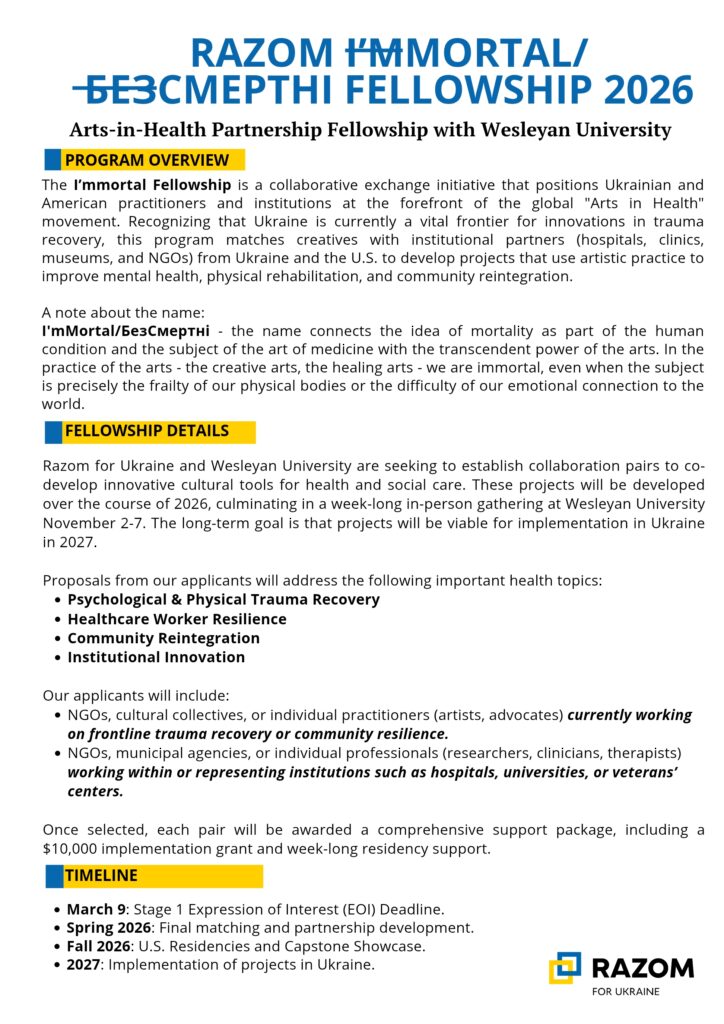
Razom Recommends January 2026
January brings a renewed sense of momentum – a chance to look ahead with clarity, purpose, and resolve. As we step into a new year, we’re excited to continue sharing Ukrainian culture in all its depth, creativity, and defiance. From film and literature to music, exhibitions, and conversations that challenge and inspire, this year’s recommendations invite you to engage with Ukraine not just as it endures, but as it creates, imagines, and leads.
5 Jan|NYC & Online
Ukrainian Language & Culture Online Courses
Join the UIA learning community this winter. Immerse yourself in the Ukrainian language and culture through engaging online courses. Guided by expert instructors, the interactive curriculum and small class sizes provide personalized attention at every stage of your learning journey. Continue building your skills and connect with Ukrainian culture in a meaningful way. The winter semester begins on January 5, 2026, offering three levels — Beginner, Intermediate, and Advanced — each with multiple sublevels designed to support steady progress.
8 Jan| 6:30-9:00 PM | NYC
Ukrainian Institute of America Winter Social
The Young Members Committee of the Ukrainian Institute of America invites guests 35 and under — members and non-members alike — for a Winter Social! Join this lively group for a bustling evening of food, drinks, and conversation. Enjoy wintery views of Central Park from the UIA’s beautiful home while connecting with fellow young members and friends in a relaxed social setting.
9 Jan| 7:00 PM | Chicago, IL
“My Tribute to the Creator” Exhibit
In this exhibit by Eleonora Bilinska, each painting carries not only an artistic title but also a dedication to a specific person, community, or meaningful theme in human existence. It is an artistic message to the viewer – warm, bright, and at the same time deeply philosophical – evoking feelings of joy, hope, love, and faith. The centerpiece of the exhibition is the painting “You Know, and the Stars Also Sing”, which the artist dedicated to Ukrainians of Chicago – offering a symbol of light and unity within the Ukrainian diaspora.
10 Jan| 2:00 PM | NYC
Between the Bowery and the East River: Germans, Jews, and Ukrainians
The Ukrainian Museum seeks to bring communities together by highlighting the shared multi-cultural history of the neighborhood. Join for a seminar presentation by author, artist, and professor of political science, Alexander J. Motyl, who will discuss how waves of German, Jewish, and Ukrainian immigrants interacted with New York City’s geography, economy, politics, and culture to shape the Lower East Side and its gentrified progeny, the East Village. Prof. Motyl’s visual presentation will be followed by a Q&A and light refreshments.
10 Jan| 6:00 PM | Chicago, IL
Peace for Ukraine Fundraising Concert
Come hear two outstanding musicians — Julia on violin and Myroslav on piano — as they come together in a beautifully expressive duo. The interplay between violin and piano creates a rich, intimate sound that brings both warmth and depth to the performance. All proceeds from this concert will support the orphanage in Zinkiv, helping provide care and essential resources for Ukrainian children with disabilities.
18 Jan| 2:00 PM | Chicago, IL
Caroling Together
Caroling Together event invites the community to gather in the Ukrainian Village and share in the joyful tradition of caroling. Rooted in centuries of Ukrainian culture, caroling is a way of bringing people together through song, celebration, and shared spirit. Join neighbors and friends of all ages as we fill the streets with music and mark the season together.
30-31 Jan| Cambridge, MA
2026 TCUP Conference
The 2026 Temerty Contemporary Ukraine Program Conference welcomes registrations for in-person and online attendance. Titled “Solidarity Within and Beyond Ukraine”, the conference will explore the shifting dynamics of global solidarity with Ukraine (and the forces that undermine this solidarity) as well as the evolving forms of political engagement that are giving renewed meaning to the idea of Solidarity within Ukraine itself. The keynote speaker is Maksym Butkevych, human rights activist, journalist, and winner of the Václav Havel Human Rights Prize (2025). Razom’s Ukraine on Campus offers stipends for in-person attendance.
29 Jan| 6:00-8:30 PM |Cambridge, MA
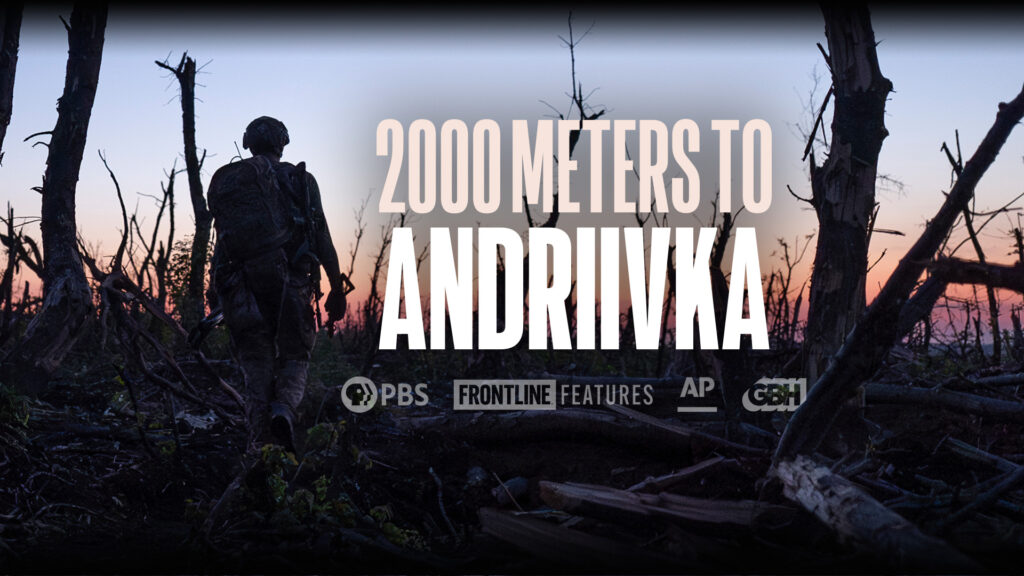
Additionally, don’t miss the film screening of “2000 Meters to Andriivka”, a documentary by Mstyslav Chernov, Academy Award-winning filmmaker and Pulitzer Prize winning journalist.
This event is organized by Harvard students in collaboration with Razom for Ukraine and it is presented as part of the 2026 Temerty Contemporary Ukraine Program Conference: Solidarity Within and Beyond Ukraine.

31 Jan Deadline| Alberta, CA
Virtual DUSS Scholars Program
The University of Alberta’s Disrupted Ukrainian Scholars and Students Initiative is launching the fourth stream of its virtual residency program and welcomes applications from eligible Ukrainian scholars. The program is meant to support up to five Ukrainian scholars currently based in Ukraine or in Canada. The DUSS Initiative will provide successful applicants with $2,000 CDN honoraria to support their work and assist them in establishing scholarly connections with the UAlberta community. Where possible, successful applicants will be paired up with UAlberta mentors working in the same or adjacent fields of research for the purpose of collaboration during their virtual residency. Application Deadline is January 31, 2026.
A Ukrainian masterpiece on the walls of Carnegie Hall
The original musical notes of the legendary Ukrainian song ‘Carol of the Bells’ are now displayed on the wall of Carnegie Hall!
This month, a new piece was officially opened in Carnegie Hall’s prestigious Composers Gallery: a high-quality facsimile of the original notes for ‘Shchedryk’, the iconic Ukrainian song known worldwide as ‘Carol of the Bells’.
Its original manuscript is preserved at the Institute of Manuscripts of the V. Vernadsky National Library of Ukraine. The facsimile at Carnegie Hall offers an opportunity to recognize the Ukrainian origins of one of the world’s most renowned musical works.
Printed by Razom and delivered to Carnegie Hall’s archives, these notes are now on display, quickly becoming a favorite stop for guided tours of the historic venue.
It is significant that the cultural artifact is clearly identified as being composed by a Ukrainian artist, a fact that, until recently, was mainly unknown outside of the tight-knit Ukrainian diaspora. Now, they sit alongside notes by legends like Pete Seeger and just a step away from Beethoven.
Shchedryk first premiered at Carnegie Hall in 1922, when Ukrainians were fighting for freedom. Today, a century later, it has become a hallmark of the holiday season in the United States and stands as a testament to Ukrainian culture and resilience.
The 100th-anniversary concert, Notes from Ukraine, organized by Razom together with the Ukrainian Institute and the Ukrainian Contemporary Music Festival (UCMF) on December 4, 2022, brought this history full circle.
Dozens of volunteers helped make the concert possible, and its success has become a model for Carnegie Hall staff: ‘Make it like the Carol of the Bells concert’ is now a phrase used when planning other events.
A century after its premiere on this very stage, these notes celebrate not just a song, but a story of resilience, identity, and the enduring spirit of Ukraine.
This historic moment is now documented in the book Shchedryk. We look forward to seeing its publication in English, so it will allow the story to connect with and touch the hearts of an audience around the world.
The Composers Gallery ensures that the Ukrainian story behind Carol of the Bells will be remembered, celebrated, and shared for generations to come.
The initiative became possible in tight collaboration with the Embassy of Ukraine in the United States, the Institute of Manuscripts of the V. I. Vernadskyi National Library of Ukraine, the Vernadskyi National Library of Ukraine, and the Permanent Mission of Ukraine to the United Nations.
This is one example of how Ukrainian culture is being reclaimed and properly recognized worldwide. Join us in ensuring Ukraine’s story is told truthfully!

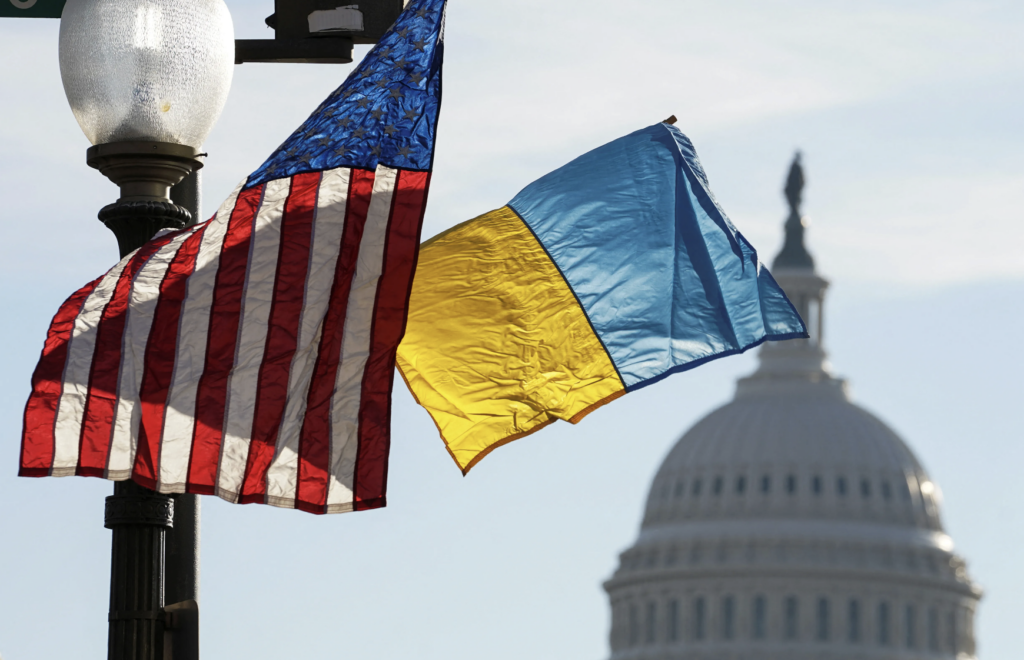
RAZOM FOR UKRAINE SUPPORTS PEACE THROUGH STRENGTH AGAINST RUSSIA ACT OF 2025
December 19, 2025
Washington, D.C. — Razom for Ukraine supports the bipartisan Peace Through Strength Against Russia Act of 2025 and urges House action when Congress returns in January.
Russia has shown it will continue its war against Ukraine as long as it can afford to do so. Congress must raise the cost for the Kremlin and cut off the channels that keep Russia’s war machine running. This bill does that by tightening and expanding sanctions, targeting the sectors and actors that finance Russia’s war, and limiting Russia’s access to the financial systems it uses to keep the war going.
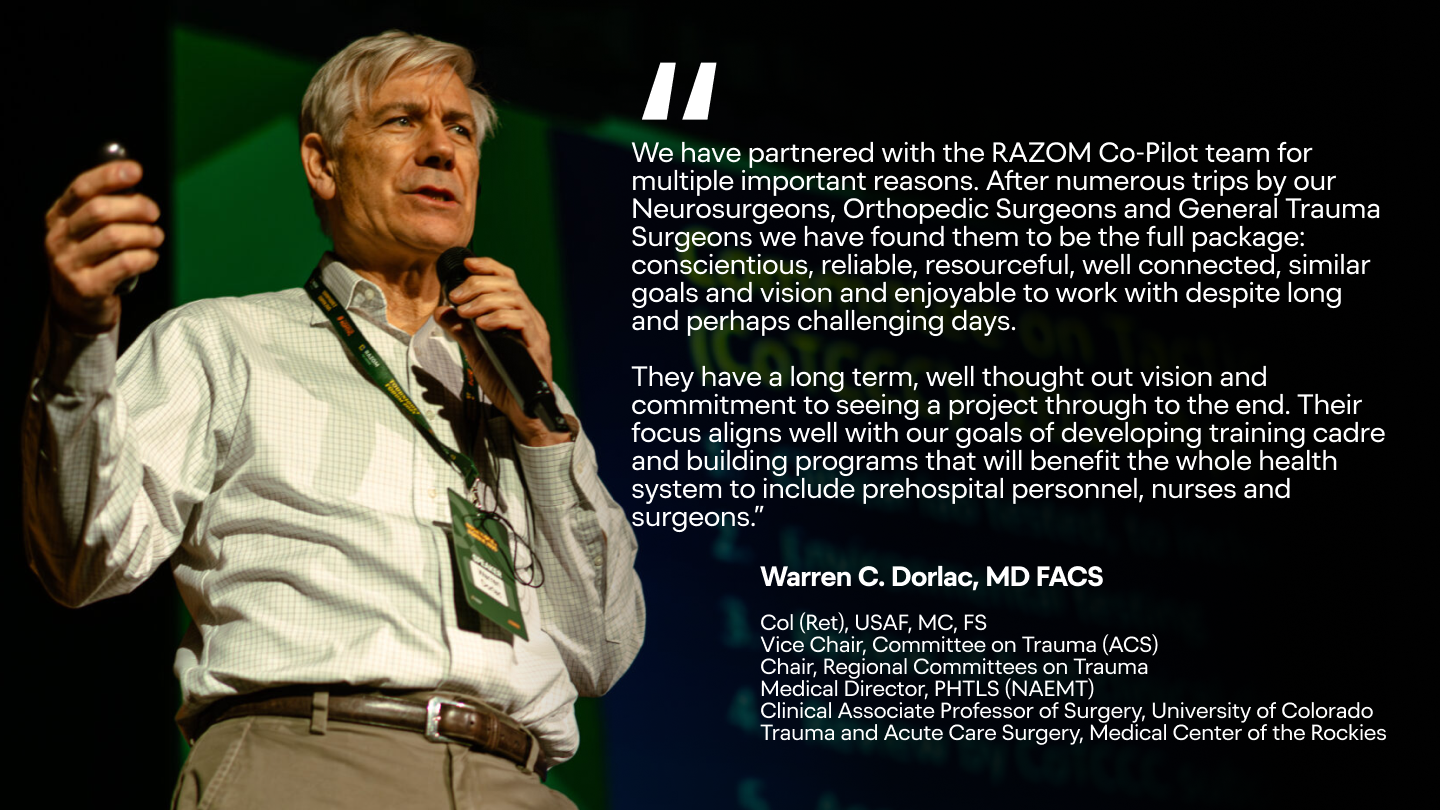
At a pivotal moment, this bipartisan bill signals that Congress is prepared to respond with strength in January. “Russia must face sustained pressure until it stops its brutal attack on Ukraine,” said Diana Godlevskaya, Director of Government Affairs, Razom for Ukraine. “Stopping Russia in Ukraine strengthens our partners and protects U.S. national security by making clear to America’s adversaries that aggression carries real cost. We thank Congressmen Fitzpatrick (R-PA) and Meeks (D-NY) for leading this vital effort.”
As Congress reconvenes in January, Razom for Ukraine urges prompt floor consideration of this legislation.
###
Razom (“Together” in Ukrainian) is a U.S. nonprofit providing medical and humanitarian aid to Ukraine and a leading advocate for continued U.S. assistance to Ukraine.
Razom Congratulates Ukrainian Films in the Running for the 98th Academy Awards
On December 16, 2025, the Academy of Motion Picture Arts and Sciences announced the official shortlists for the 98th Academy Awards, marking one of the major milestones in the 2026 Oscar season. Razom Cinema celebrates the achievements of all filmmakers whose works were part of this season, with particular recognition for films that amplify Ukrainian voices and stories connected to Ukraine.
This year’s shortlists reflect a wide range of timely, socially resonant, and artistically accomplished works, underscoring the continued global relevance of cinema rooted in lived experience and cultural truth. Over the years, Razom Cinema has supported films that center Ukrainian perspectives and bring stories from Ukraine to international audiences.
As the 2026 Oscar race moves forward, we want to congratulate all filmmakers whose work has been recognized by the Academy, acknowledging not only the honor of being shortlisted, but the dedication, creative excellence, and impact that led to this moment.
Final Oscar nominations will be announced in January 2026, with the Academy Awards ceremony scheduled for March 2026. Our team collected the list of this year’s contenders to give you a deeper insight into the top films from and about Ukraine that made it to the Academy nomination, take a look below!
Animated shorts: I Died in Irpin (dir. Anastasiia Falileieva)
Czech Republic, Slovakia, Ukraine, 2024
At the onset of Russia’s full-scale invasion, Falileieva and her boyfriend leave Kyiv to visit his parents in Irpin. The city becomes a battleground, but the danger is not only outside the house.
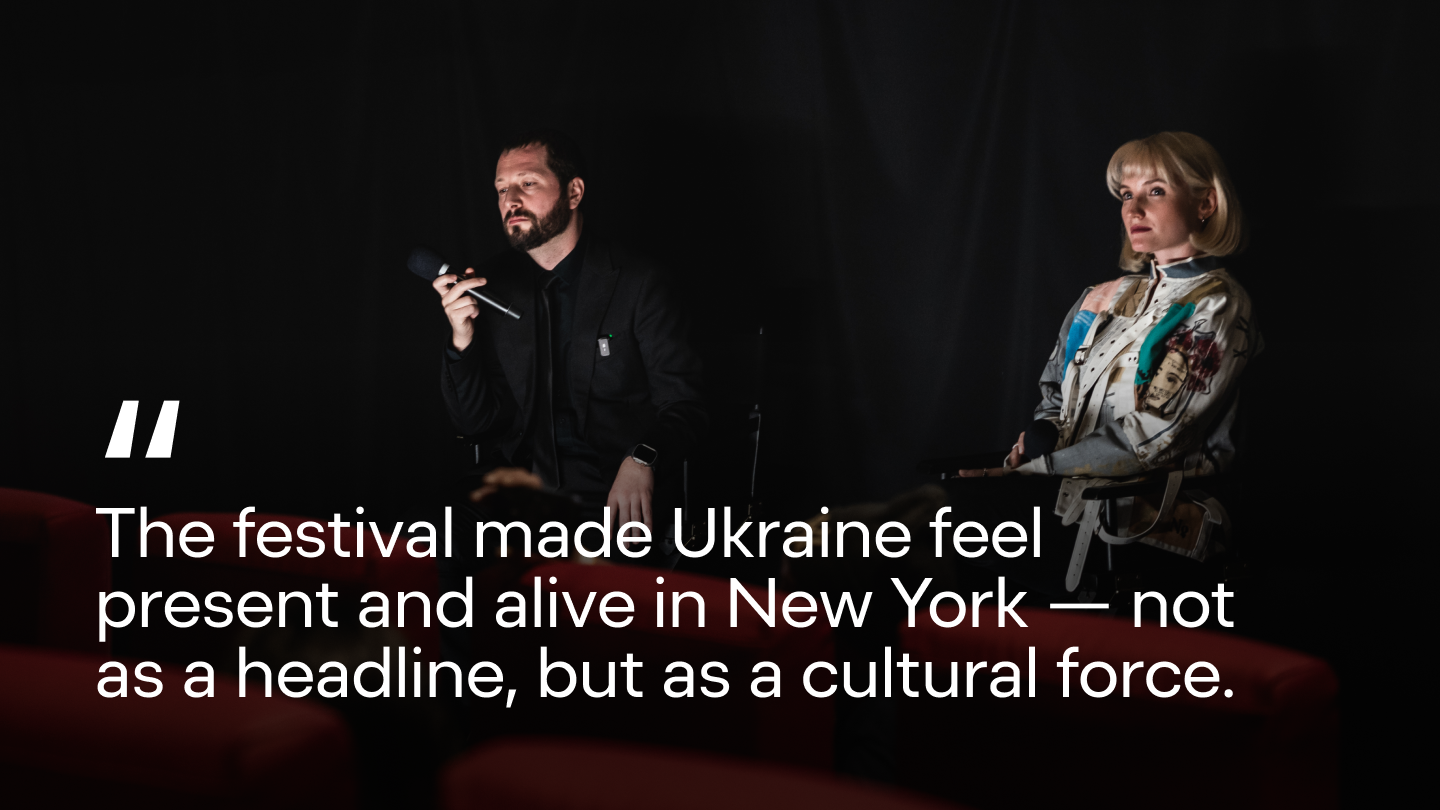
‘On February 24th in the morning, my boyfriend and I decided to go from Kyiv to Irpin to see his parents. It is hard for me to recall the chronology of those days. My mind blocks and minimises all the memories, erases them, but the only thing I know for sure is that every day, everything rapidly becomes worse.’
Animated shorts: Bound (dir. Masha Ellsworth)
USA, Ukraine, Germany, 2024
Against a backdrop of pastoral beauty, Ivanko and Galya must navigate a maze of miscommunications and pride, leaving them to question whether their love can truly blossom.
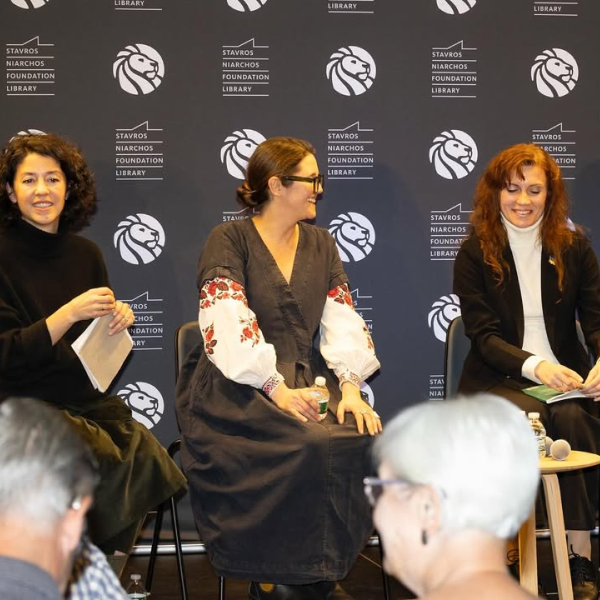
‘Bound’ was screened as a part of the Ukrainian Cultural Festival cinema program in October 2025 in NYC.
For more information: masha-makes-movies.com/bound
Documentary feature: 2000 Meters to Andriivka (dir. Mstyslav Chernov)
Ukraine, United States, 2025
Amid the failing counteroffensive, a journalist follows a Ukrainian platoon on their mission to traverse one mile of heavily fortified forest and liberate a strategic village from Russian occupation. But the farther they advance through their destroyed homeland, the more they realize that this war may never end.
‘2000 Meters to Andrrivka’ was screened as a part of the Ukrainian Cultural Festival cinema program in October 2025 in NYC. Razom Cinema partners with Mstyslav Chernov and the PBS producing team supporting their ongoing distribution for educational purposes through our Ukraine on Campus program.
Streaming: Youtube or PBS website starting Nov. 25th
Follow for more updates: 2000meterstoandriivka.com
Documentary feature: Sanatorium (Dir. Gar O’Rourke)
Ireland, Ukraine, France, 2025
Despite a war close by, mud treatments and electro-therapies continue at Kuyalnik Sanatorium near Odesa in southern Ukraine, where a small group searches for love, healing & happiness.
Streaming: BBC Storyville & MUBI
For more information: garorourke.com/portfolio/sanatorium
Documentary feature: Viktor (dir. Olivier Sabril)
Viktor, a young Deaf man in Kharkiv, watches warily during the early days of the Russian invasion of Ukraine. A fan of samurai films and raised on stories of war, he dreams of becoming a warrior but is repeatedly denied when he tries to enlist. Eager to find purpose, Viktor embarks on a quest to find his place in the midst of a war he cannot hear.
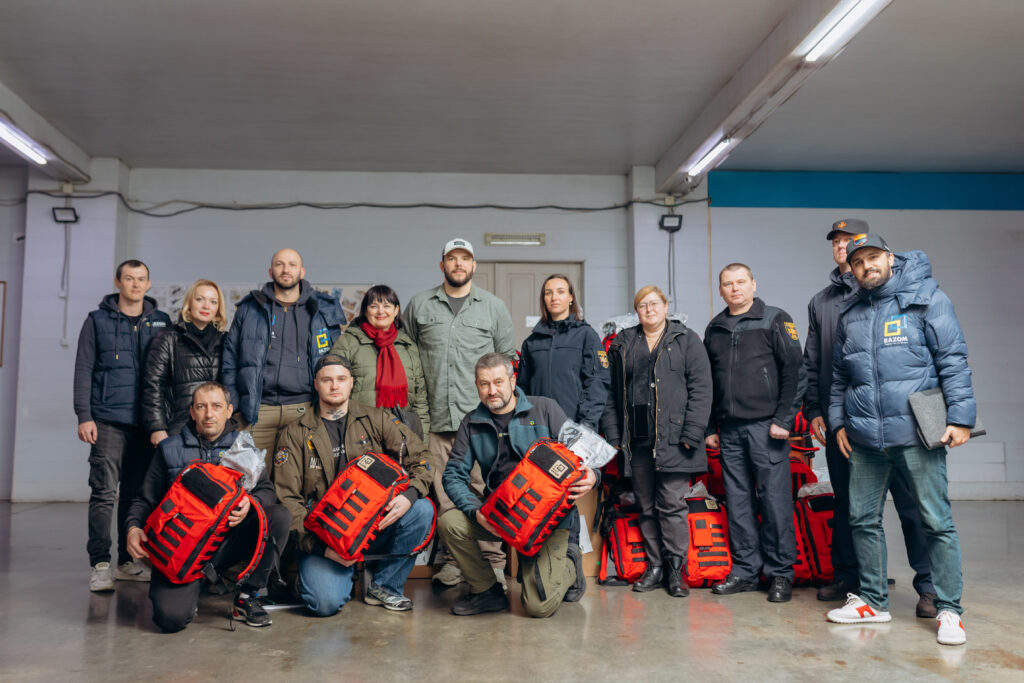
“Viktor” was screened as a part of the Ukrainian Cultural Festival cinema program in October 2025 in NYC.
For more information: viktorfilm.com
Documentary feature: Checkpoint Zoo (dir. Josh Zeman)
United States, United Kingdom, Ukraine, 2024
When Russia’s full-scale invasion of Ukraine began in 2022, the world watched in horror as cities came under relentless fire. But few knew of the quiet heroism unfolding just outside Kharkiv, where the Feldman Ecopark Zoo sat between advancing Russian forces and the Ukrainian defenders.
More than 5,000 animals were trapped in the crossfire – helpless, frightened, and in desperate need of rescue. Against impossible odds, a small team of zookeepers and volunteers risked their lives day after day to save these creatures.
This is not just a story about animals. It is about humanity, resilience, and the Ukrainian spirit of defying destruction with compassion and courage.
Razom Cinema was able to host a special screening of Checkpoint Zoo at the Ukrainian Action Summit in DC before the theatrical release in the U.S. – connecting advocates to the story so that they can bring it to their communities and support the film in the theaters.
For more information: checkpointzoo.com
Narrative short: Rock, Paper, Scissors (dir. Franz Böhm)
Ivan and his father, operating a small hospital at the frontline, are tested when a platoon of Russian soldiers approach their building, forcing them to make a difficult decision in order to protect their patients and their own lives.
The film features Ukrainian actor Oleksandr Rudyndkyi and won the 2025 BAFTA for Best British Short Film.
For more information:
Make sure to follow our newsletter and social media for announcements on how to catch these films and more! In the meantime, we urge you to connect with your local theaters, art institutions, and other locations where you could potentially host a screening of one of these films (or reach out if you’re looking for more). Watch the films, bring your friends, and take it to social media to make noise around them!
RAZOM FOR UKRAINE APPLAUDS PASSAGE OF FY26 NATIONAL DEFENSE AUTHORIZATION ACT
FOR IMMEDIATE RELEASE
December 17, 2025
RAZOM FOR UKRAINE APPLAUDS PASSAGE OF FY26 NATIONAL DEFENSE AUTHORIZATION ACT
Washington, D.C. — Today, Congress passed the National Defense Authorization Act for Fiscal Year 2026, which includes important provisions to bolster support for Ukraine and expedite an end to Russia’s war in Ukraine. We look forward to President Trump signing this legislation into law.
In the NDAA, Congress reaffirmed that the Ukraine Security Assistance Initiative (USAI) is a key tool to expand U.S. weapons and ammunition production and deliver life-saving arms to Ukraine, alongside allied procurement and arms sales to European partners. Revitalizing America’s defense industrial base, while giving Ukrainians the tools they need to defend themselves, is an America First approach. We urge the Trump administration to act swiftly to issue new contracts under USAI.
We also applaud Congress for creating important new oversight mechanisms for U.S. arms sales to Ukraine, helping ensure that intelligence support continues so Ukrainians can defend against Russia’s air attacks. Critically, this legislation includes the Abducted Ukrainian Children Recovery and Accountability Act, which authorizes new support to locate, return, and care for Ukrainian children stolen by Russia. Saving abducted Ukrainian children is a key priority of First Lady Melania Trump, and this legislation delivers tools to help accomplish that mission — no deal to end the war should be finalized until every Ukrainian child is safely returned home.
While the FY26 NDAA delivers on key issues to support Ukraine and advance peace, Congress’s work is not done. It’s time to levy new mandatory sanctions on Russia and deliver strong, legally binding security guarantees for Ukraine that protect Ukraine’s long-term freedom, safeguard U.S. security, and end Russia’s war.
###
Razom (“Together” in Ukrainian) is a U.S. nonprofit providing medical and humanitarian aid to Ukraine and a leading advocate for continued U.S. assistance to Ukraine.
“You Did Not Leave Us Alone”: Inside a Mission Where Every Gesture Matters
In Ivano-Frankivsk Regional Hospital, the echoes of the full-scale invasion feel both far away and impossibly close. Outside, life hums along: deliveries come and go, local residents walk their dogs while chatting, people carry home warm loaves of bread and other groceries. But on the ninth floor, inside the otolaryngology wing, the consequences of Russia’s invasion are etched into the faces of the people waiting quietly in the hallway.
Most are veterans, but some are also civilians caught in the wrong place at the wrong moment. Many have lived for months and years with injuries that no one in peacetime imagines: shattered cheekbones, torn eyelids, fractured eye sockets, burn scars, and the emotional burden of carrying an altered face through the world. This fall, a team of surgeons, anesthesiologists, and nurses from the United States and Canada returned again to offer what Ukrainian patients describe most simply and most poignantly: hope.
This is the “Face the Future Ukraine” mission, and many hands took part in making it happen: the Face the Future Foundation, Razom for Ukraine, Still Strong , Patients of Ukraine, Ivano-Frankivsk Regional Hospital, Materialise, and Humanitarian Nova Post – as well as dozens of individual doctors, nurses, and other professionals.
Khristie Morell, a Canadian nurse who has been volunteering in Ukraine since the earliest days of the full-scale invasion, reflected on what she sees in every patient she meets: “Being here in Ukraine, I see that every single contact from the outside world – people really take that to heart.” She added, almost as if speaking to every Ukraine supporter around reading this: “Every single donation, every single time you think of Ukraine or spread the word, is extremely valuable.” Her words are not abstract, but rather reflect something you can only understand when you stand at the bedside of a patient waking from anesthesia while air-raid sirens sound in the distance: the world’s presence really matters to Ukrainians, especially after four years of the full-scale war.
One of the patients waiting for surgery was a Ukrainian defender named Viktor Hrytskevych. Viktor has deep wounds on his face, a missing right arm, and almost no sight in both eyes – and requested not to be photographed or have video taken of him.
He was guided into the room by his wife Natalka, who hasn’t left his side since he received his injury – walking him around the hospital and helping him with daily tasks. Somewhat reluctantly, Viktor spoke of the injuries that he carried through multiple hospitals and across regions. He recounted how he was evacuated through Pokrovsk, then Zaporizhzhia, then Dnipro, then Kyiv, and finally Odesa. Specialists restored a small amount of vision there.
He now sees light, shadow, and some shapes – “але не більше” (“but not much more”). Months later, during rehabilitation, doctors told him there was a visiting mission that might be able to help further. He didn’t hesitate. “The doctors told me there is a program offering surgery… I agreed right away.” He squeezes Natalka’s hand as he says it, sharing that his biggest dream is to see his beautiful wife’s face again.
Another patient is Andrii Dyachko, a defender who spent a year undergoing treatment in Latvia, but even going abroad was not enough. He described his injuries in raw detail: “My face was asymmetrical, the cheekbone was shattered, my eye was sunken.” Previous surgeries helped restore some symmetry, but he hoped this mission could take him further – restore function, expression, the ability to meet the eyes of loved ones without self-consciousness. For him, surgery is not cosmetic, it is truly about recognition of the self he once was and the self he hopes to be again.
To understand the scale of this hope, you must also hear from those who make it possible, including the Ukrainian doctors who have worked tirelessly to bring this mission to the Ivano-Frankivsk Regional Hospital. Dr. Natalia Komashko, an otolaryngologist at the regional hospital and the founder of Still Strong Initiative, is the Ukrainian lead for the mission. She recalls the earliest days of the partnership, describing how the first mission was challenging and overwhelming, but also a breakthrough: “We carried out such a large-scale mission in Ukraine for the first time… It was difficult, but it succeeded.” That success opened the door to Face the Future’s ongoing collaboration. About the international team, she says: “We saw that their values align with ours, and that we can learn a great deal from each other.” For Dr. Komashko, this mission isn’t just about surgeries – it’s about building a medical community across borders, even under war.
Dr. Matthew Brace, a facial plastic and reconstructive surgeon from Ontario, has volunteered on multiple missions. His voice is calm but charged with purpose when he explains why he keeps coming back: “There’s nothing more satisfying as a doctor than helping somebody who’s in acute, dire need – when they can’t get help anywhere else.” His path to this mission began with a desire to combine trauma expertise with humanitarian care. When he first heard about Ukrainian patients waiting months or years for specialized procedures, he felt a pull he couldn’t ignore. But it wasn’t only the surgeries that kept him returning – it was the people. The Ukrainian doctors were eager to learn. The local teams who arrive early, stay late, and absorb every detail. The patients who endure what no one should.
As he put it: “To help 30 people in one week is extraordinary. But the impact doesn’t stop with them – it ripples outward to their families, their communities, their children.”
“I have four daughters and my wife, and so being away from them for ten days is probably the hardest part. They’re all very understanding. When I first told my wife about the invitation to come, she said, ‘I don’t want you to go, but I think you should.’ And my kids have been the same… we talked about it a lot as a family. I said, ‘If we were in the same situation Ukraine is in and I was injured, I would hope somebody would be brave enough to come and help.’ And my kids are totally on board with that, and they say, ‘Yeah.’”
And the patients are certainly grateful for the ones brave enough to come and help. One patient, after speaking with the mission leads, took the interviewer’s hands and said: “ [I wish] prosperity to you and your organization.” It is gratitude not for charity, but for presence and for solidarity. For the knowledge that he – and Ukraine – have not been forgotten.
Nurse anesthetist Andrew Kosteniuk, a Ukrainian-Canadian member of the team, certainly understands the importance of letting Ukrainian people know that they are remembered by the global community: “It’s vital that people here don’t feel alone, don’t feel abandoned, don’t feel forgotten. We’re here to give them hope that there is a better future, a brighter future. Hope is the most important thing.” In wartime Ukraine, hope is not abstract – it emerges through the smallest gestures and moments. It looks like surgeons huddled over CT scans at 7:00 a.m, sounds like quiet Ukrainian spoken to a patient emerging from anesthesia, and feels like a promise that there are people in the world who care enough to come.
Dr. Peter Adamson, founder of Face the Future, reflects on these small moments and gestures that have a big impact through the mission’s butterfly logo: “The butterfly flaps its wings… and the impact grows.”
During the Face the Future Mission, this flap of wings looks like dozens of life-changing reconstructive surgeries, over 200 nurses trained in a single symposium, Ukrainian surgeons mastering techniques they had never performed before, and veterans regaining function, symmetry, dignity. In the middle of a war, small things are not small – they are everything.
None of this – not one surgery, not one training, not one moment of connection – happens without a vast chain of people who believe in Ukraine’s right to heal. Razom helps coordinate logistics, secure supplies, support patient vetting, and build long-term relationships between Ukrainian medical teams and their international colleagues. The support of our donors and partners ensures that defenders with shattered faces receive world-class care and patients hear a message that matters as much as the medicine: you are not alone.
As one patient said, with a tired but grateful smile: “Я з вами заодно.” (“I am with you.”) And because of supporters like you – Razom is with them too. Together, we keep the butterfly’s wings in motion, carrying hope across a country that refuses to lose its face – and its future.
Join the Effort to Power Ukraine Through Winter
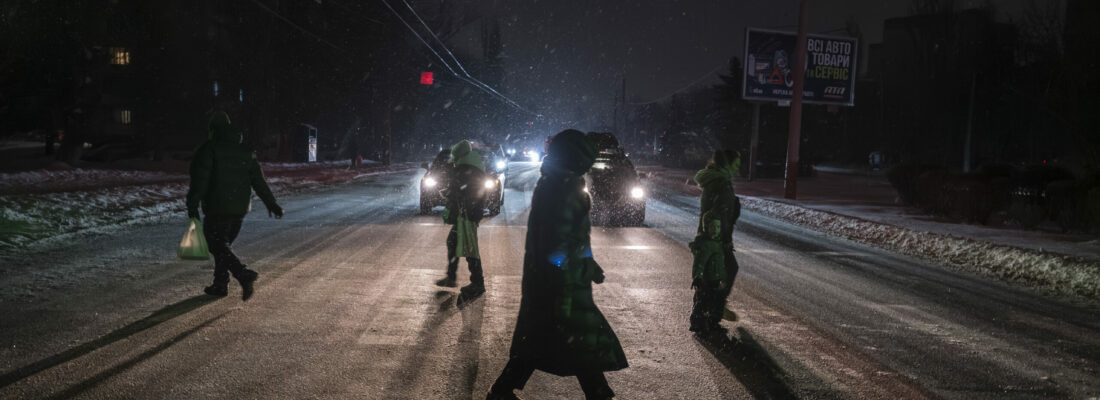
The situation in Ukraine is growing darker, literally.
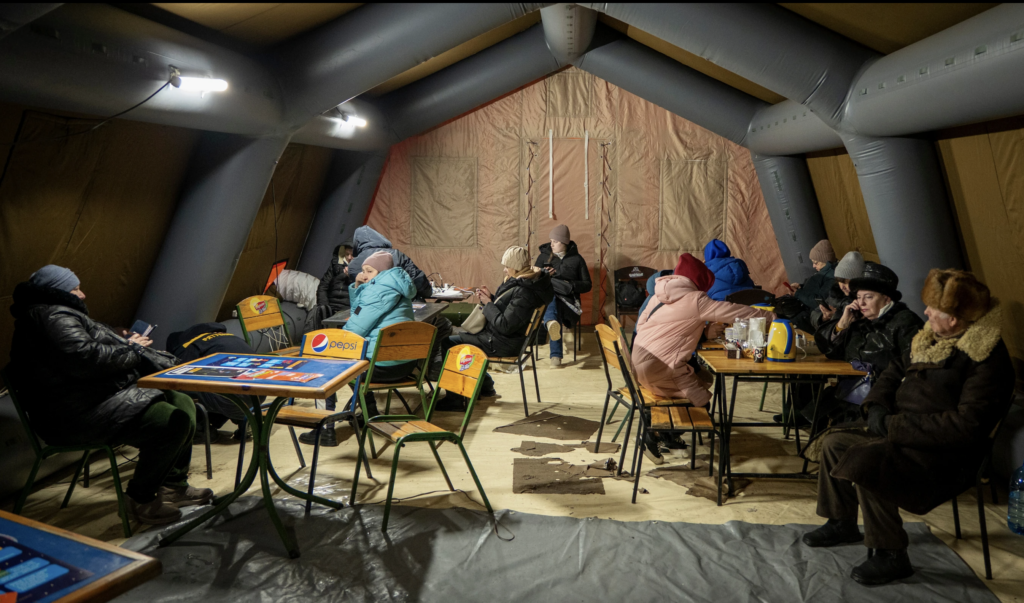
For the fourth fall in a row, Russia is targeting Ukraine’s energy system. These assaults cause widespread blackouts, sometimes for days, disrupting heating, water supply, medical care, and basic communications.
Blackouts as a Weapon of War
At Razom, we see these attacks for what they are: a deliberate tool of war meant to hurt the civilian population and exhaust the will of the nation.
When the lights go out, everything becomes harder and more dangerous. The absence of reliable autonomous power critically reduces communication efficiency and response time to threats, including missile attacks and the mass use of Shahed-type kamikaze drones, whose numbers in a single strike are now counted not in dozens, but in hundreds.
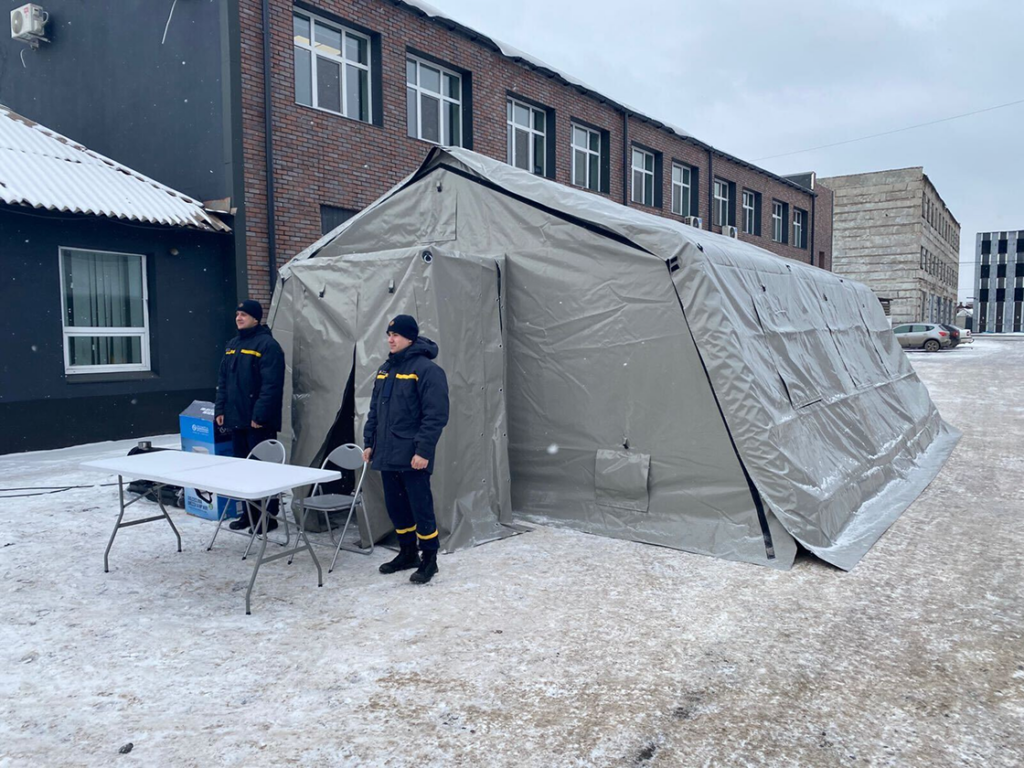
Without power, hospitals struggle to keep life-saving equipment running. First responders lose critical tools and reliable communication. Communities are left in the dark, literally and figuratively, just when they need information and connection most.
How Razom Is Powering Ukraine Through Winter
That’s why part of Razom’s ongoing winter preparedness plan is to procure Ukraine-made equipment that helps communities and service members endure when the lights go out.
Our teams on the ground in Ukraine are sourcing and delivering:
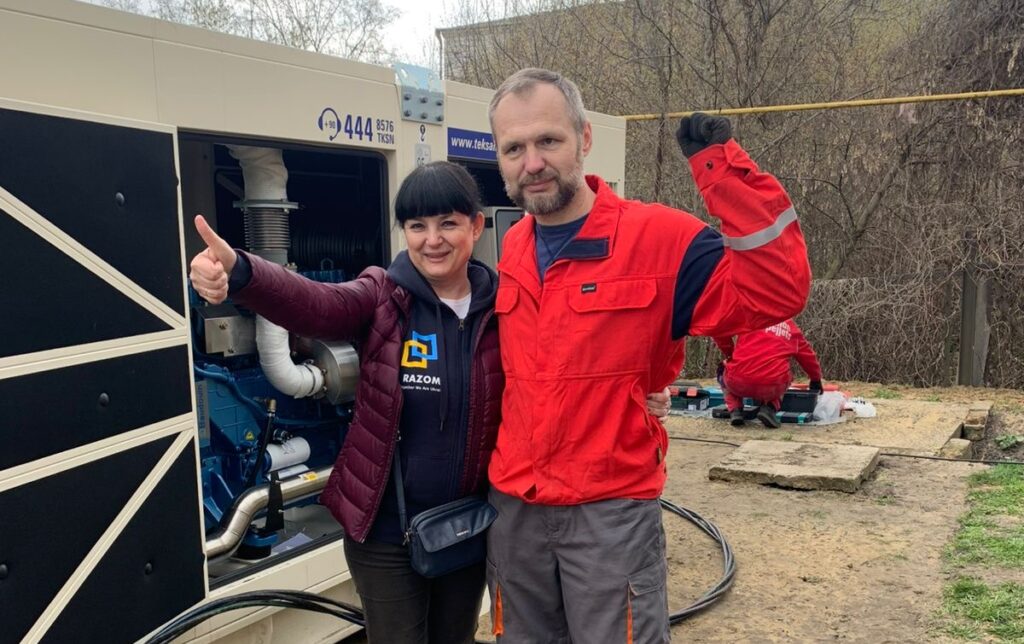
- Generators to keep hospitals, clinics, and critical infrastructure powered.
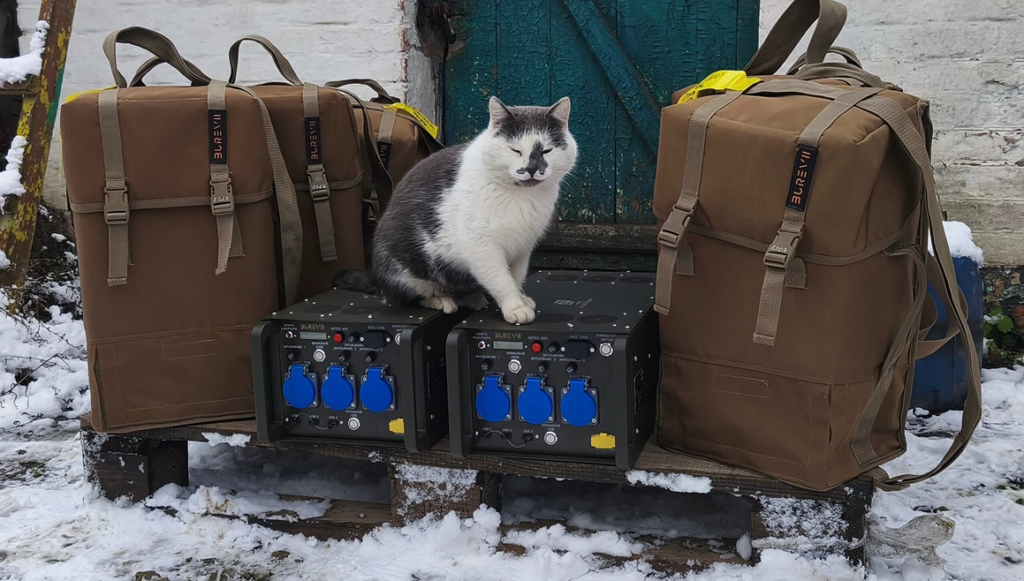
- Portable power stations to help medics, volunteers, and local communities stay connected and operational under blackout conditions.
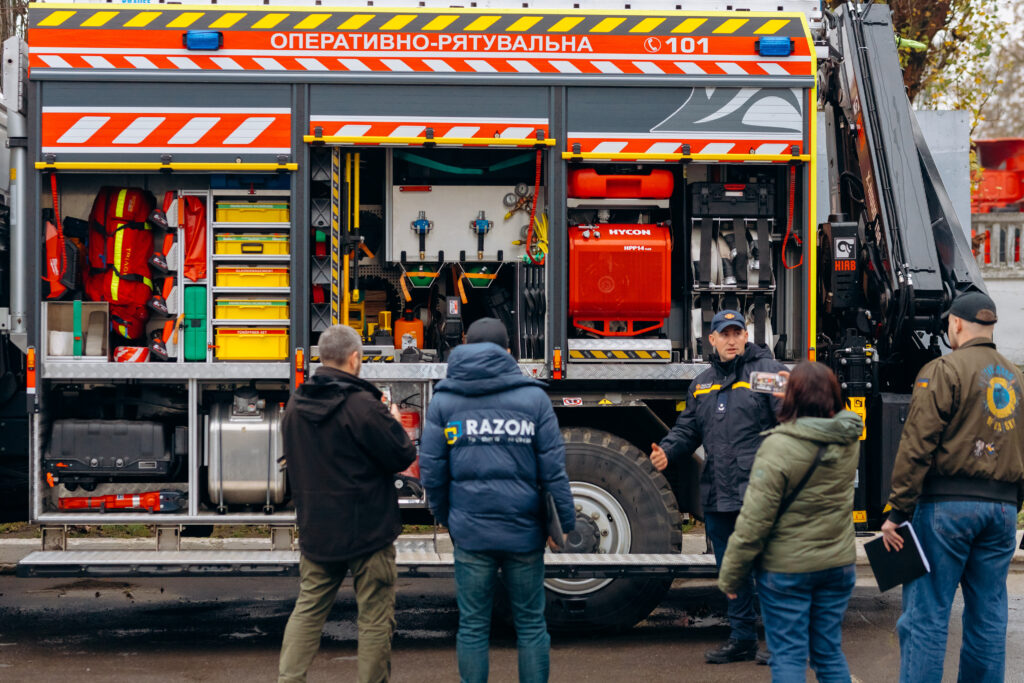
- Essential communications gear, such as radios, to help hospitals, first responders, and service members stay coordinated and mobile under fire.
Because Razom runs an in-house logistics fleet in Ukraine, every donation that goes towards procuring tech-enabled aid gets translated into real deliveries that reach the right hands – quickly and efficiently.
From the Frontlines: “Every Minute Matters”
The impact of this work is measured in lives saved.
“When several severely wounded arrive at once, every minute matters. Without power stations or generators, the equipment fails, and we can’t keep saving lives.”
— Oleksii, National Guard of Ukraine
Emergency medics at mobile stabilization points near the frontlines often work under generator and flashlight light. Their ability to stabilize and evacuate the wounded depends on having a steady power supply and reliable communications.
When power equipment fails, care fails. When equipment works, people get a second chance.
How Your Gift Helps
The need for generators, power stations, and communications gear continues to grow as attacks escalate and Russia again targets Ukraine’s energy system.
Your gift today helps us procure, deliver, and maintain the tools that keep communities and service members safe under constant threat. In practical terms, your support:
✅ Keeps frontline hospitals and clinics powered.
✅ Supports secure communications for first responders and service members.
✅ Maintains connectivity in isolated or frontline areas.
For Ukraine to survive this winter and push back against escalating attacks, we must anticipate, prepare, and act now. Every dollar helps us procure more units, scale faster, and put them where they matter most.
Together, We Help Ukraine Shine Through the Dark
Russia’s strategy is to plunge Ukraine into darkness and cold. Our response is to bring light, power, and connection wherever we can.
When you give to Razom, you help ensure that hospitals can keep operating, medics can keep working, and communities can keep going, even when the grid goes down.
Donate now to help power Ukraine through winter:
- « Previous Page
- 1
- 2
- 3
- 4
- 5
- ...
- 42
- Next Page »