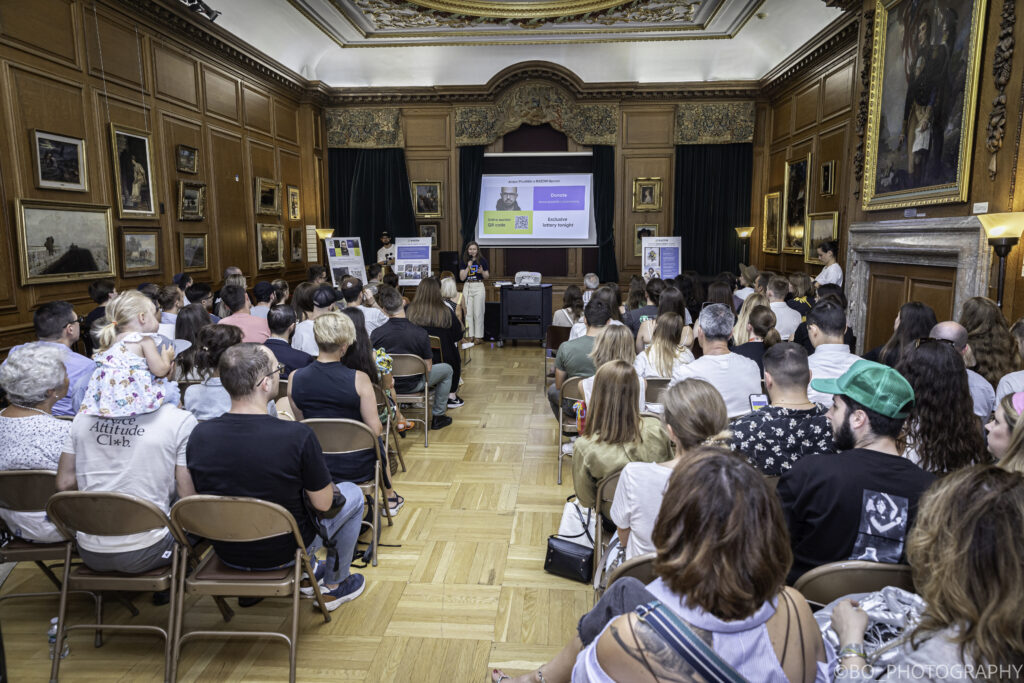
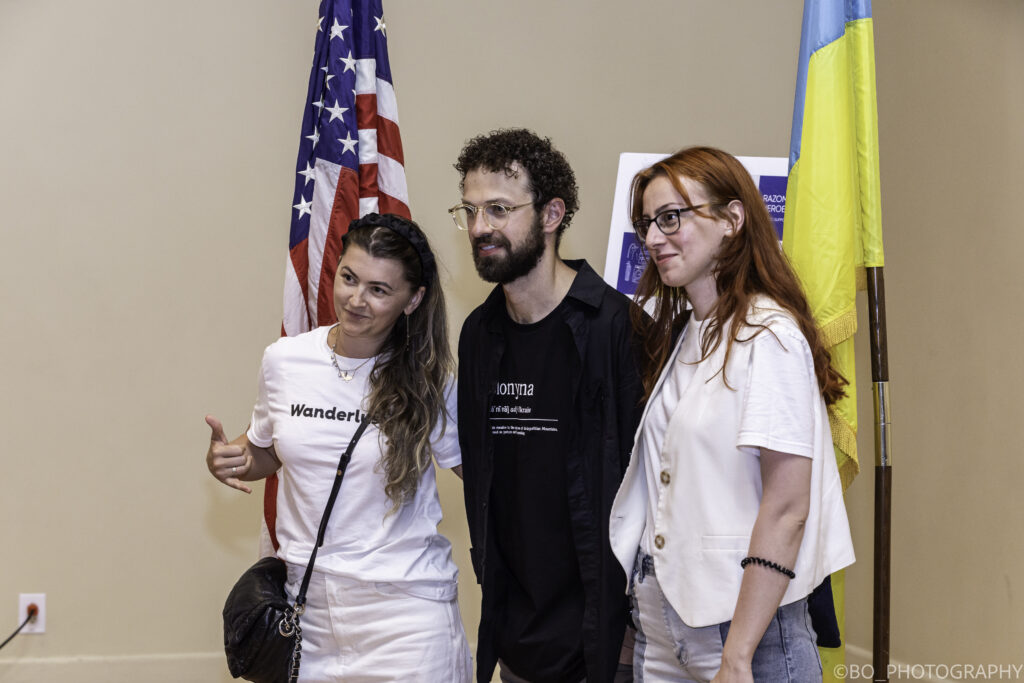
Razom together with the famous Ukrainian travel blogger Anton Ptushkin, held a fundraiser in the United States to purchase 10 mobile bath and laundry complexes for the defenders of Ukraine on the front lines.
The fundraiser included two charity meetings with Anton Ptushkin in New York, which drew over 300 attendees, as well as an online auction where people could purchase valuable commemorative items to support the defenders of Ukraine.
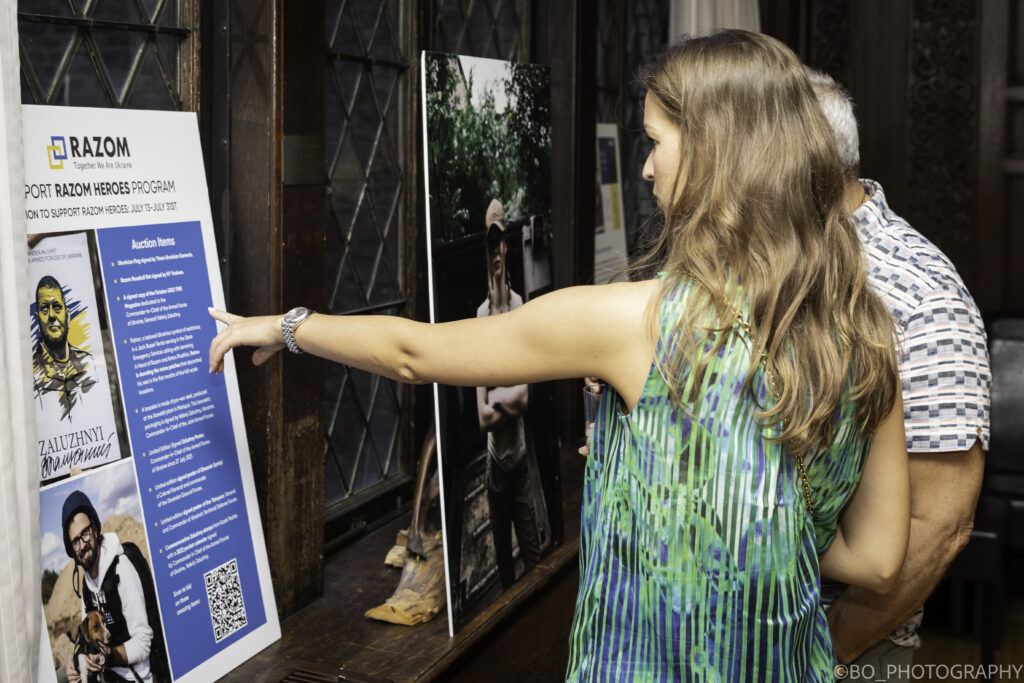
Some of the items up for auction included:
A flag with the signatures of three Ukrainian generals — Zaluzhny, Syrsky, and Pavlyuk — which sold for $6,900.
A copy of Time magazine with Valery Zaluzhny on the cover and his autograph, which sold for $5,600.
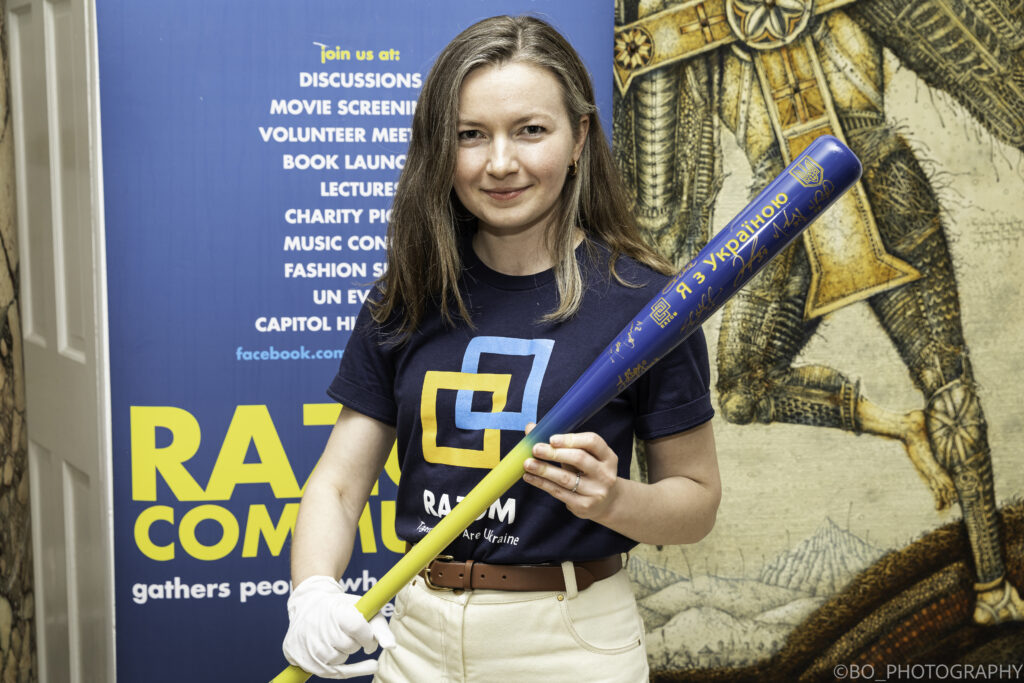
A baseball bat signed by members of the New York Yankees baseball team, which sold for $3,700.
A bracelet with the “Azovstal” logo and the signature of the Commander-in-Chief of the Armed Forces, which sold for $2,600.
Chevrons with the image of Patron the Dog, the hero dog who helped detect landmines in Ukraine, which sold for $3,700.
“Before I came to the United States, I tried to raise funds for one bath and laundry complex through my social media in Ukraine,” said Anton Ptushkin. “I was surprised to raise the money we needed in just two hours, and I raised the money for the second complex just within a day. This showed me that Ukrainians are willing to donate to humanitarian items for the military. However, people in Ukraine are also willing to donate to weapons and drones, while American people are more cautious about donating to these things and prefer to donate to humanitarian items. This is why I decided to try to raise money for mobile bath and laundry complexes in the United States. We did our first fundraiser and it was a success, so we decided to continue.”
Ptushkin also said that he chose New York as the starting point for the fundraiser because there is a large Ukrainian diaspora in the city. Jason Birchard, an owner of famous New York restaurant Veselka, generously donated $20,000 from his Stand With Ukraine Fund to the event.
Overall, the fundraiser raised $200,000, which will be used to purchase 10 mobile bath and laundry complexes. The showers are currently being manufactured near Kyiv and will soon be delivered to the front lines.
“It’s great to see that people from all over the world are coming together to support Ukraine,” said Olya Yarichkivska, one of the founders of the Razom foundation and the head of the Razom Heroes program in the United States.
“The money raised from this fundraiser will provide our defenders with much-needed bathing and laundry facilities, which are essential in this hot weather. We will continue to do everything we can to support Ukraine and its defenders.”
The Razom Heroes program is one of the many initiatives of the Razom foundation and the “Together for Ukraine” non-profit that are providing vital assistance to the defenders of Ukraine.
The program has already provided the frontline with over 130,000 tactical first aid kits, 3,000 combat medic backpacks, 100 pickup trucks/evacuation vehicles, 2,000 drones, walkie-talkies, repeaters, generators, starlinks, and other essential items for victory.
We are grateful for your interest in our work here at Razom for Ukraine. Please refer to our frequently asked questions below for information you are seeking about our mission delivery and/or how to get involved. If you don’t see your question answered on this page, please contact us with your inquiry at info@razomforukraine.org. Thank you!
How can one volunteer for Razom?
Razom for Ukraine was built on the dedication of hundreds of volunteers working together toward a common goal. As we grow, we continue to seek volunteers to support our various projects and initiatives. If you’re interested in volunteering, please fill out this form. While we cannot promise immediate placement, we’ll reach out as soon as new volunteer requests emerge from our teams. You can also email volunteering@razomforukraine.org.
In the meantime, you don’t have to wait for us; there are already opportunities to support Ukraine today:
Participate in information events and advocate for Ukraine on social media. Follow us on Facebook, Instagram, Twitter, LinkedIn to stay updated on the latest initiatives, and subscribe to our e-newsletter for news on how you can support Ukraine in your community and beyond.
Initiate a third-party fundraiser on behalf of Razom and feel free to be as creative as possible. People have started personal fundraisers for Razom on social media, hosted charity concerts, poetry readings, and evenings dedicated to supporting Ukraine’s cause.
How can one get help for Ukrainian service members?
Razom provides life-saving support to those doing the valiant work of safeguarding lives in wartime. While our organization may not directly provide the type of help you’re looking for, we encourage you to visit this page for resources and information that may guide you to the appropriate channels for your needs.
How can one get help for medical institutions?
For detailed information on how to properly apply for aid for medical institutions across Ukraine from Razom, please go to the link.
How can one get (personal) humanitarian aid?
Under the current circumstances, the efforts and attention of Razom are focused on supporting first responders and medics, medical facilities, and field hospitals, as well as advocating for Ukrainian victory. We also support Ukrainian non-governmental organizations (NGOs) providing aid in their communities.
If you are a newly arrived refugee from Ukraine to New York (USA), Razom does have an online resource – our Refugee Infohub – to guide you through obtaining services and assistance.
If you are in Ukraine or another part of the U.S., we recommend reaching out to other local organizations that provide personal aid.
How can a nonprofit/organization get grants/help from Razom?
Our grant-making program, Razom’s Relief works to foster a resilient and sustainable recovery that ensures the competitiveness of the Ukrainian economy and opportunities for those living in Ukraine. We do this via strategic investment into Ukrainian community initiatives.
The main areas of focus are:
Investing in development of Ukrainian Civil Society organizations
Providing educational and leadership development opportunities for children and youth, with a focus on STEM.
Ensuring competitiveness within the Ukrainian economy by getting people back to work with the necessary skills
Providing opportunities for veterans and women to join the workforce
Ensuring recovery via projects in water and green energy space
We are working on finalizing our new mandate and will share it soon. In the meantime, you can leave information about your organization here. Or apply for organizational development grant or mentorship here.
Can you share our fundraising page with your audience?
Razom’s mission delivery currently focuses on five program areas: Heroes, Health, Relief, Advocacy and Connect, for which we actively fundraise and which allows us to remain a sustainable nonprofit organization. Because of this we can’t support fundraising for other organizations and are not a platform for other organizations’ fundraising efforts.
How can we partner?
Please send your inquiry to our email: info@razomforukraine.org and our team will get in touch with you at the earliest possible time.
Philanthropic support is critical in fulfilling Razom’s mission and we are very grateful to our generous donors. Razom, Inc. is a U.S. 501(c)(3) organization with EIN # 46-4604398. Donations and gifts are deductible to the full extent allowable under IRS regulations and can be made online at our dedicated page: https://www.razomforukraine.org/donate/.
I am interested in working at Razom – do you have any opportunities?
To learn about career and internship opportunities, please visit our website.
Do you accept clothing donations, etc?
At this time we don’t accept in-kind donations in other forms than medical equipment and supplies or non-military aid to Ukrainian first responders and front line personnel.
We advise you to check with your local church or community center whether they can distribute some items directly.
Do you offer United for Ukraine (U4U) Sponsorship?
Razom does not provide sponsorship and should not be referenced as a sponsoring organization on the USCIS visa form. However, Ukrainians can connect with a sponsor using the following website: https://ukraine.welcome.us/connect.
ПОШИРЕНІ ЗАПИТАННЯ
Ми щиро вдячні за Ваш інтерес до нашої роботи в Razom for Ukraine. Будь ласка, ознайомтеся з відповідями на часті запитання нижче, щоб дізнатися більше про нашу місію та способи долучення. Якщо Ви не знайдете відповіді на своє запитання, будь ласка, звертайтеся до нас за електронною адресою info@razomforukraine.org. Дякуємо!
Як можна стати волонтером Razom?
Razom for Ukraine була заснована завдяки відданості сотень волонтерів, які працювали разом заради спільної мети. Ми продовжуємо шукати волонтерів для підтримки наших різних проєктів та ініціатив. Якщо ви зацікавлені у волонтерстві, будь ласка, заповніть цю форму. Хоча ми не можемо гарантувати миттєве залучення, ми зв’яжемося з вами, як тільки виникне потреба в нових волонтерах. Ви також можете написати на volunteering@razomforukraine.org.
Тим часом ви можете підтримати Україну вже сьогодні:
Брати участь в інформаційних заходах та підтримувати Україну в соціальних мережах. Слідкуйте за нами у Facebook, Instagram, Twitter, LinkedIn та підпишіться на нашу електронну розсилку, щоб отримувати новини про те, як ви можете допомогти Україні.
Приєднуйтесь до нашої мережі адвокації та звертайтеся до своїх обраних представників.
Відвідуйте мітинги та акції протесту у своєму місті; звертайтеся до наших партнерів Svitanok або Klych для більш детальної інформації.
Підтримуйте відповідні петиції та/або бойкотуйте компанії, що продовжують працювати в росії.
Відвідуйте заходи, які підтримує Razom.
Подайте заявку на стажування в Razom.
Організуйте сторонній фандрейзер на користь Razom. Люди вже започаткували особисті збори коштів у соціальних мережах, проводили благодійні концерти, поетичні читання та вечори на підтримку України.
Як можна допомогти українським військовим?
Razom надає життєво необхідну підтримку тим, хто здійснює героїчну роботу зі збереження життів під час війни. Хоча наша організація може не надавати саме ту допомогу, яку ви шукаєте, ми рекомендуємо відвідати цю сторінку для отримання ресурсів та інформації.
Як можна отримати допомогу для медичних установ?
Для детальної інформації про те, як правильно подати заявку на допомогу для медичних установ по всій Україні від Razom, будь ласка, перейдіть за цим посиланням.
Як можна отримати (особисту) гуманітарну допомогу?
На даний момент Razom зосереджує свої зусилля на підтримці медиків, медичних закладів та мобільних шпиталів, а також на адвокації перемоги України. Ми також підтримуємо українські неурядові організації (НУО), що надають допомогу в своїх громадах.
Якщо ви нещодавно прибули як біженець з України до Нью-Йорка (США), Razom має онлайн ресурс — Refugee Infohub, щоб допомогти вам з отриманням послуг та допомоги.
Як неприбуткова організація може отримати гранти/допомогу від Razom?
Наша грантова програма Razom’s Relief спрямована на стійке відновлення України через стратегічні інвестиції в ініціативи українських громад.
Основні напрями:
Інвестування у розвиток громадянського суспільства в Україні.
Освіта та лідерство для дітей та молоді, з акцентом на STEM.
Підтримка конкурентоспроможності економіки України.
Підтримка ветеранів та жінок у працевлаштуванні.
Проєкти у сфері водопостачання та зеленої енергетики.
Як можна партнерувати з Razom?
Будь ласка, надсилайте ваші запити на info@razomforukraine.org, і наша команда зв’яжеться з вами якомога швидше.
In acknowledgement of all the hard work volunteers, supporters, partners, and donors have put into Razom’s Emergency Response for almost five straight months now, we’ve put together an Impact Report. We’re making history together, #Razom, and we wouldn’t be able to do it any other way. So take a look, read it, share it, and help us continue this great work for Ukraine.
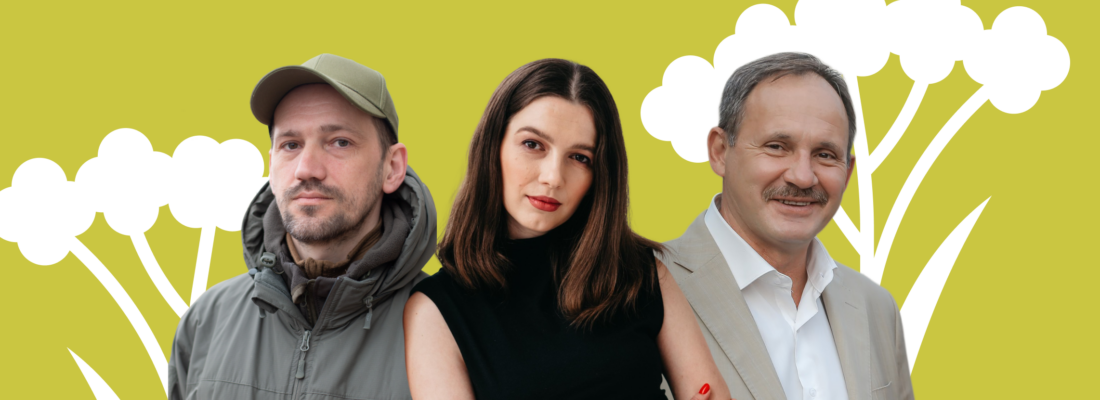
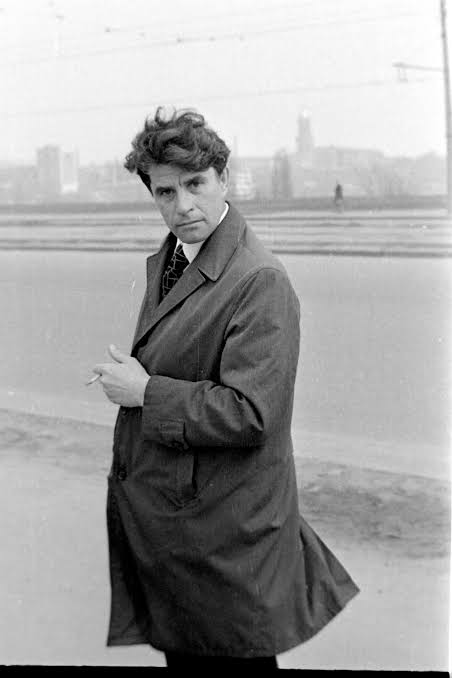
This year Razom for Ukraine is backing the first Hryhir Literary Award, a new prize for the best short prose collection in Ukraine, founded by the cultural agency Tereny. For Razom, which supports the translation of Ukrainian literature and its promotion abroad, the prize brings attention to a genre that captures lived experience most precisely, yet remains in the shadow of longer forms. The award is named after Hryhir Tyutiunnyk, one of the leading prose writers of the Sixtiers generation and an unrivaled master of the short form. Three finalists have made the shortlist, and the winner will be announced on December 5 in Poltava.
Hryhir Tyutiunnyk (1931–1980) was born on December 5 in the Poltava region. He belonged to the Sixtiers generation and became one of the key masters of Ukrainian short prose. More than ten collections of his prose were published during his lifetime and after his death, among them Zaviaz (The bud), Derevii (Yarrow), Batkivski porohy (Parents’ doorsteps), Krainebo (Horizon), and Korinnia (Roots). Tyutiunnyk wrote about forty short stories, several novellas (Klymko, Vohnyk daleko v stepu [A light far in the steppe], Obloha [The siege]), and stories for children. In 1989 he was posthumously awarded the Taras Shevchenko National Prize of Ukraine.
The award ceremony is timed to the writer’s birthday: in 2026 he would have turned 95.
Why short prose, and why now
Very few short story collections are published in Ukraine today. Tetyana Teren, head of the Tereny cultural agency, explains that publishers’ belief that such books sell less is only part of the reason. Ukraine has virtually no literary magazines, which elsewhere let authors publish for the first time and grow as prose writers through short fiction. As a result, authors are expected to start with long forms, and the genre that captures lived experience most precisely stays in the shadows.
“For our literature, written while Ukraine is fighting for its independence, short prose matters as much as the essay. Short fiction is the tool we use to record our emotions and begin to make sense of what we have lived through,” says Tetyana Teren.
The prize aims to recognize the most striking voices in short prose, to encourage the publication of short story collections in Ukraine, and to support the translation and international promotion of contemporary Ukrainian short prose.
The Hryhir Award is part of the wider work of the Tereny cultural agency, founded in 2025 to support the decentralization of cultural life in Ukraine and back cultural initiatives in the regions. The agency develops, preserves, and promotes the cultural heritage of Ukraine’s regions. It creates cultural spaces and residencies, trains cultural practitioners, organizes cultural research trips, runs prizes, media and book projects, and conducts research.
The Hryhir Award follows the same approach. The award ceremony will take place in Poltava: by holding it in the writer’s home region, the agency seeks to advance cultural decentralization and honor the memory of Hryhir Tyutiunnyk.
The award was open to collections of short fiction by Ukrainian authors first published in 2025–2026. Submissions were accepted from March 16 to September 1, 2026, and 48 books were selected for the longlist. The longlist and shortlist were chosen by the prize jury: Ivan Andrusiak, Myroslava Barchuk, Tamara Hundorova, Rostyslav Semkiv, and Tetyana Teren.
The 2026 Hryhir Award shortlist
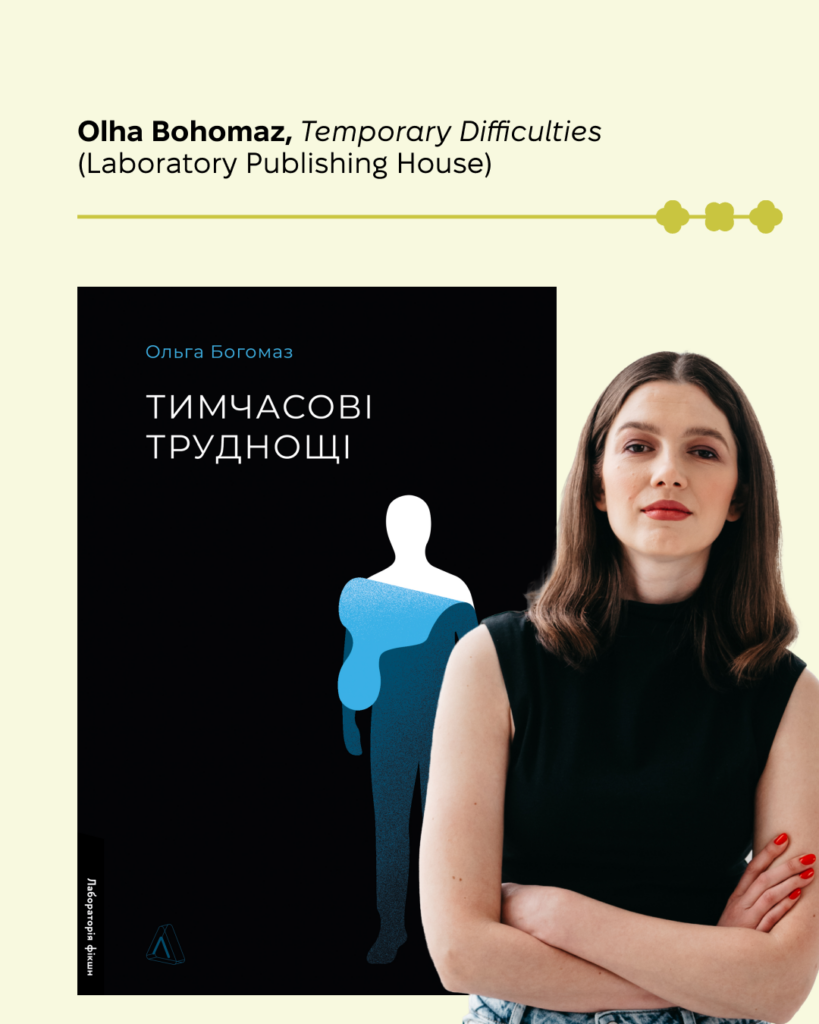
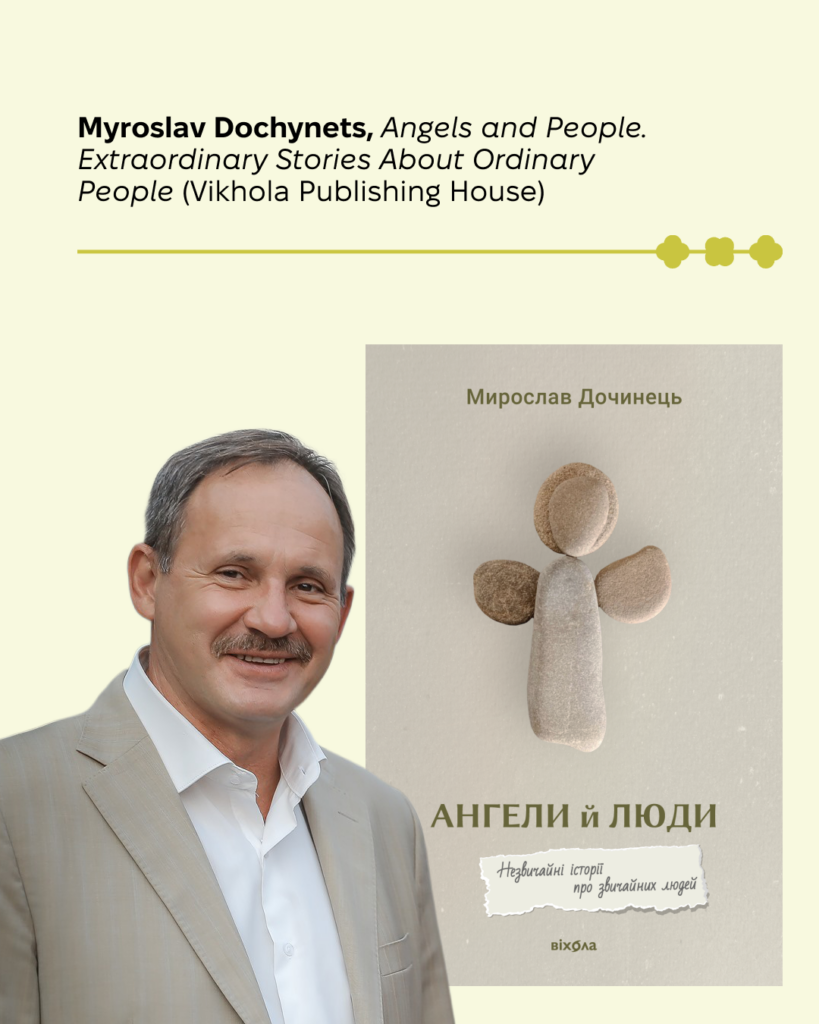
Olha Bohomaz, Tymchasovi trudnoshchi (Temporary difficulties), Laboratory Publishing; Myroslav Dochynets, Anhely y liudy. Nezvychaini istorii pro zvychainykh liudei (Angels and people: Unusual stories about ordinary people), Vikhola Publishing;
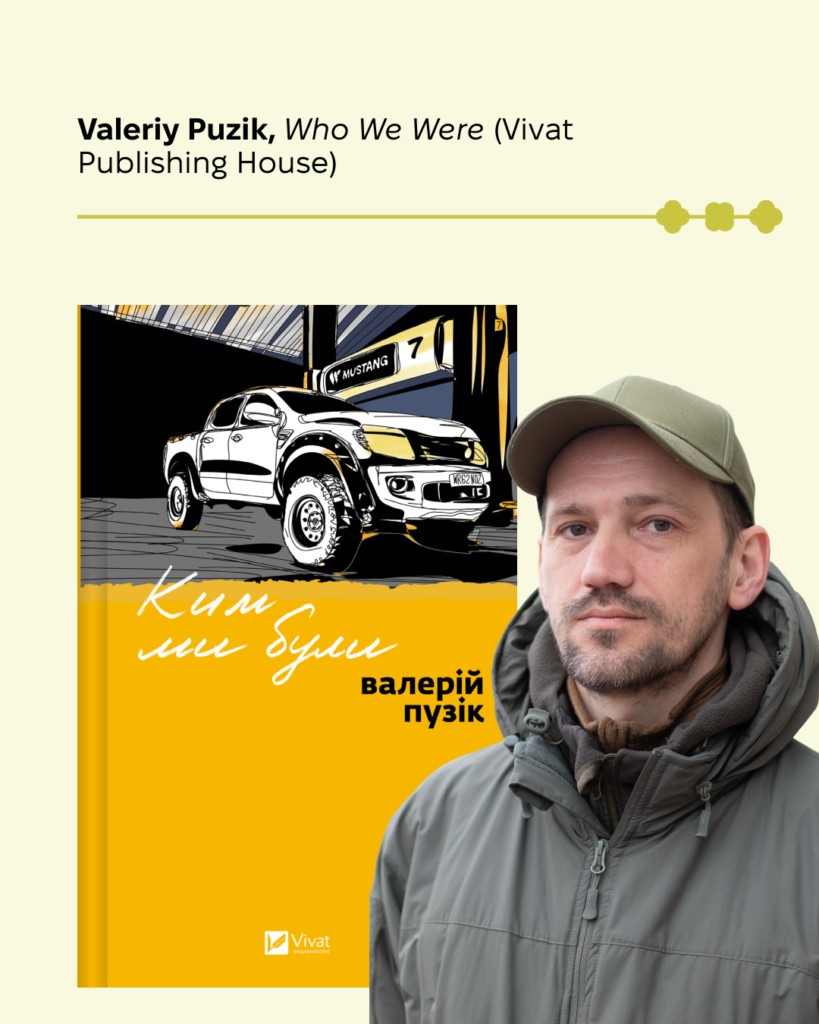
Valerii Puzik, Kym my buly (Who we were), Vivat Publishing.
The winner will be announced on December 5, 2026, in Poltava. They will receive a sculpture, a $4,000 cash award, and support for promoting and translating the book abroad. A separate Radio Kultura Special Award will also be given for artistic mastery and the strength of the author’s voice: stories from the winning collection will be adapted for radio and broadcast.
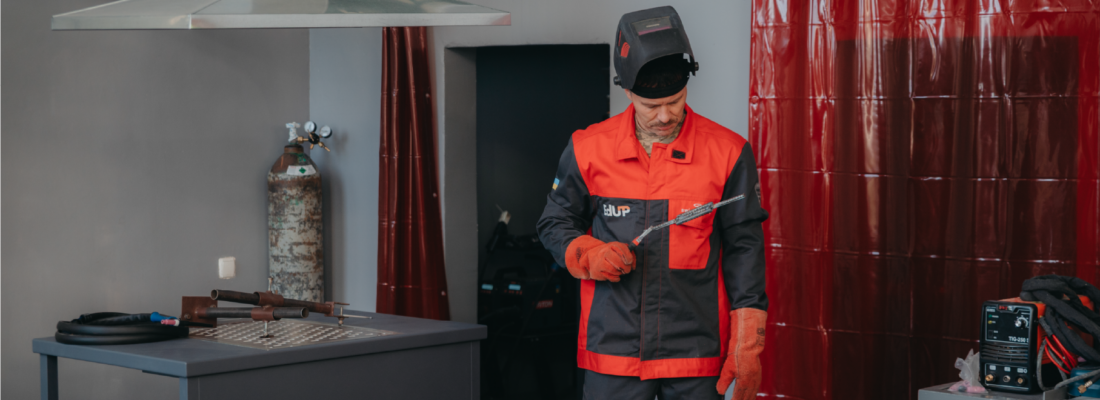
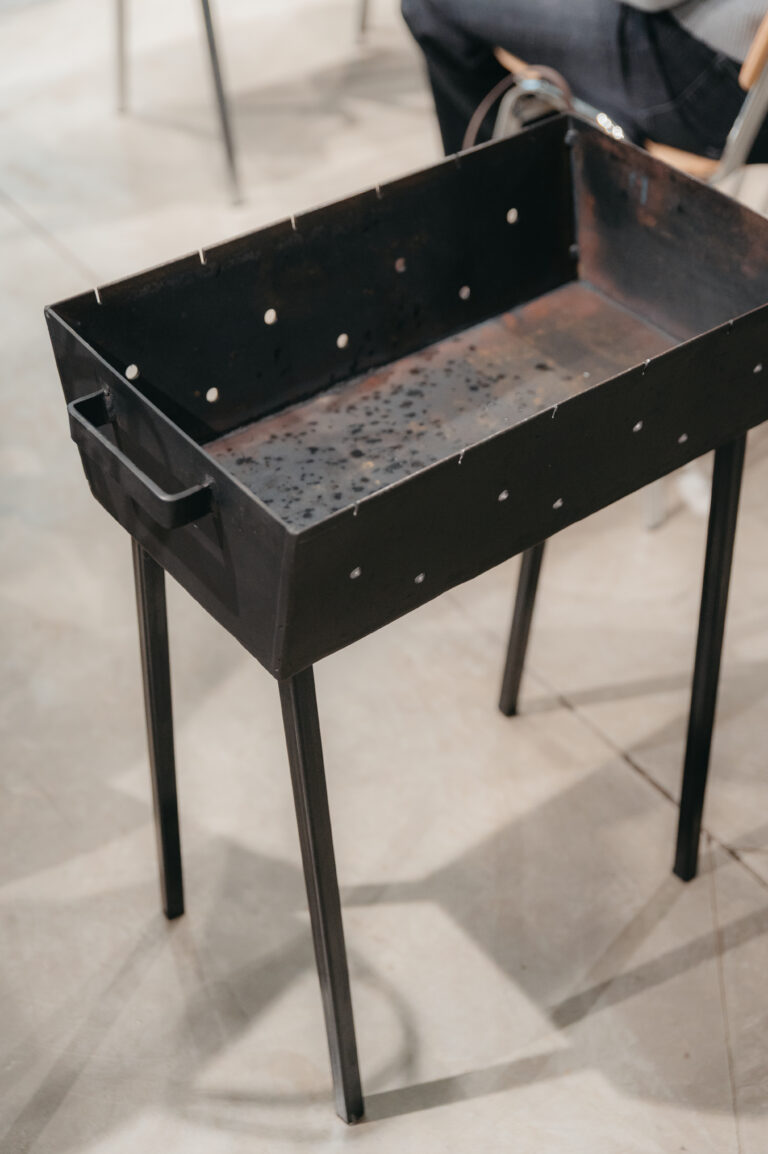
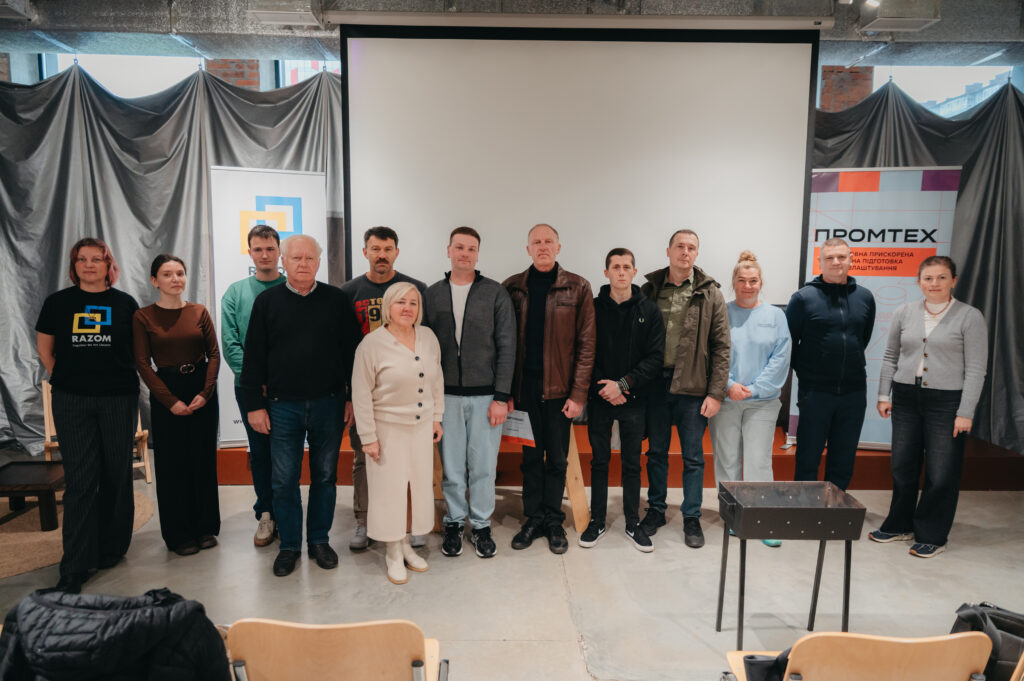
At the graduation ceremony, students bring out… a barbecue grill. They joke that it’s their final exam, fitting for a group that has just completed a welding course.
In welding, every joint needs to hold strong. The same is true of a country’s economy. Ukraine has plenty of work to do, but not enough workers to do it. Some Ukrainians have left the country, while others have left their jobs to defend Ukraine.
That’s why Razom supports the Prymprylad Charitable Foundation’s PromTech educational initiative, which offers short-term training programs to prepare skilled workers for today’s manufacturing industries.
Russia’s war against Ukraine has forced many industrial businesses to relocate to the country’s western regions. At the same time, the defense industry is expanding and construction is picking up. All of these sectors need skilled workers.
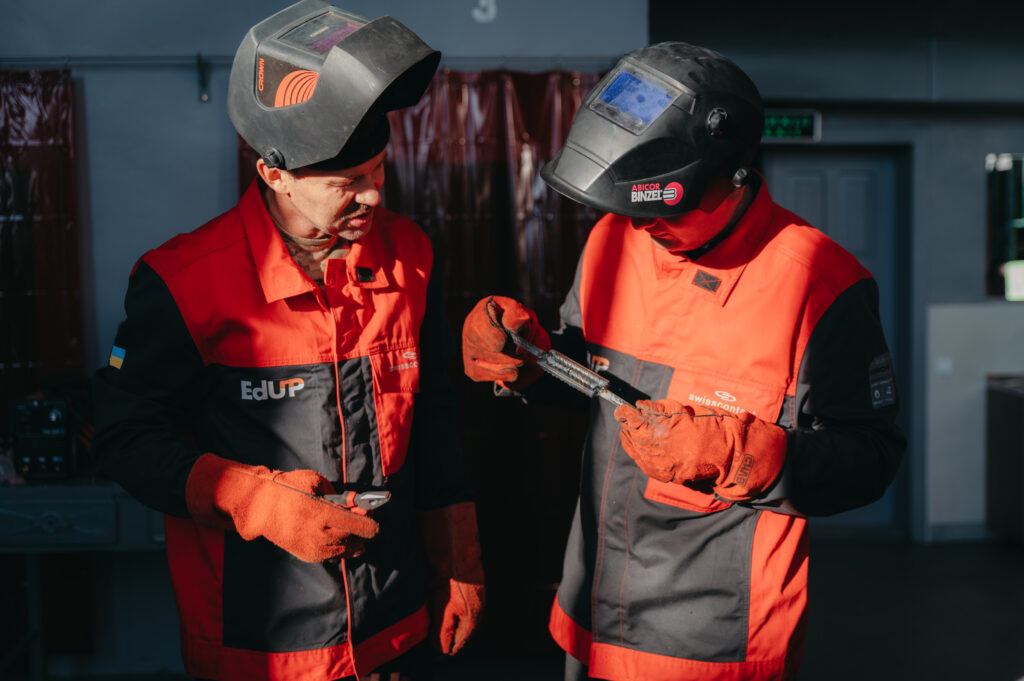
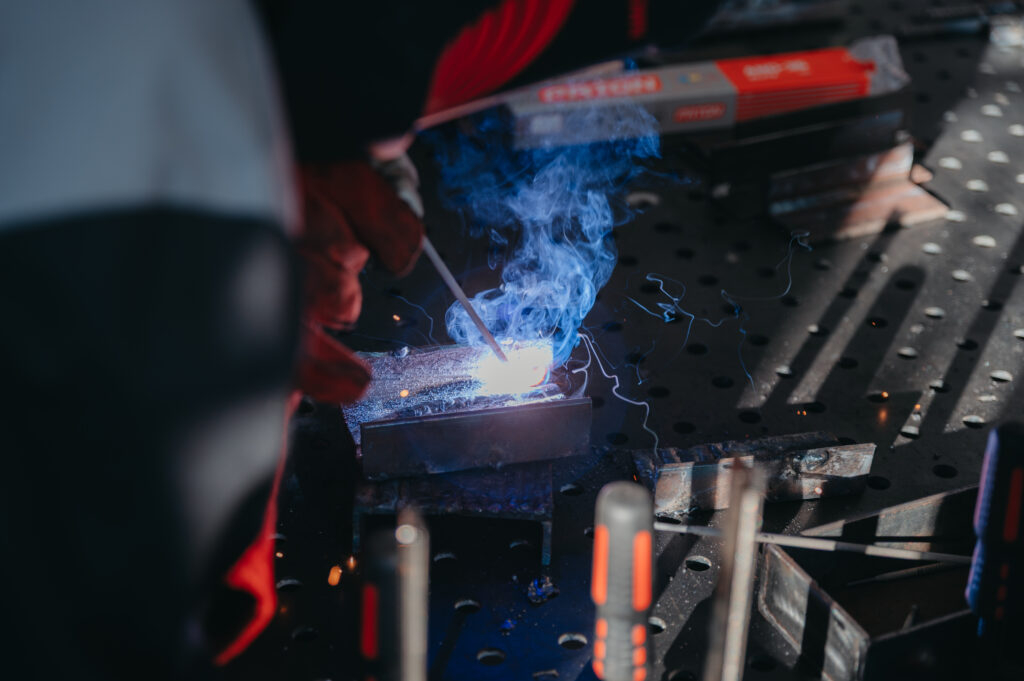
Ten participants completed 80 hours of welding training at the Ivano-Frankivsk Construction Vocational School. The program covered three main welding techniques: manual metal arc welding (MMA), gas metal arc welding (MIG/MAG), and gas tungsten arc welding (TIG). Students began with safety procedures, materials, and welding technology. Then they moved on to hands-on practice, learning to strike and maintain an arc, create even welds, and make butt and fillet joints in different positions.
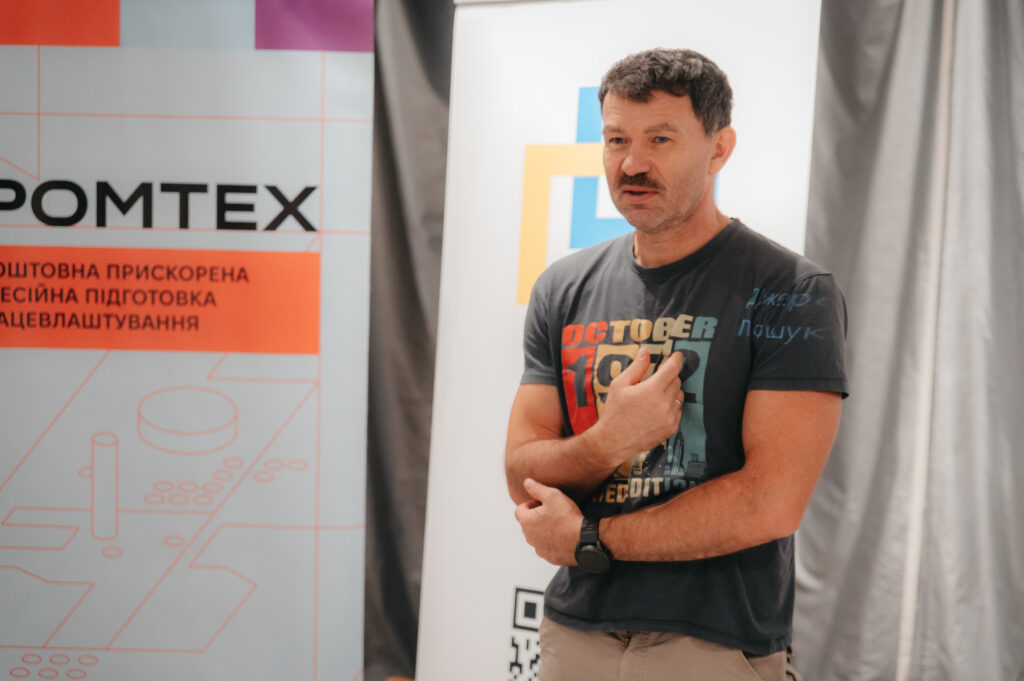
At the welding course graduation ceremony, we met Oleh Kovalskyi. He spoke candidly about whether four weeks of training can really provide the skills needed to find work.
When Experience Isn’t Enough
Oleh smiles as he says he has never been afraid of hard work. Over the years, he has worked as a physical education teacher, a civil servant, and the CEO of a football club. There has always been plenty to do at home, too. He has renovated his own apartment, installed drywall, and feels confident handling electrical wiring.
“I once needed to build a brick wall. I had watched other people do it, so I went ahead and built one myself. It wasn’t perfectly straight, but I got it done. That wall is still standing in the village today. It does its job,” he says.
Oleh had also been familiar with welding equipment for years, dating back to his service in the Soviet Army. But knowing how to operate a welding machine and having the skills to work as a welder were two different things.
“I knew what a welding machine was. I knew where to connect everything. But I didn’t understand why the electrode kept sticking or why I couldn’t get a proper weld. I simply couldn’t get the job done,” Oleh recalls.
He found out about PromTech’s courses through social media while searching for job openings. An advertisement caught his attention.
“I was surprised that the courses were free. But when I read about how they were funded, I understood the idea behind them: they were designed for internally displaced people, veterans, and anyone who wanted to learn a new trade. I also understood what a meaningful goal the donors were supporting,” Oleh says.
Training That Meets Real-World Needs
After an interview, Oleh spent four weeks learning the theory and practicing different welding techniques. Things didn’t always go smoothly at first, but the instructors’ support made a difference.
“When you start welding using one method or another and things aren’t working out, the instructors come over and say, ‘All right, all right, keep going.’ Even when things are clearly not all right,” he says with a laugh.
Oleh realized just how valuable the theoretical knowledge he had gained was when he applied for a welding job abroad.
“They don’t ask how much welding experience you have or ask you to show them your work. They ask, ‘What about 111?’ And I know what that means. It refers to manual metal arc welding with a covered electrode. Or they ask about semi-automatic welding. After the course, I know what they’re talking about and where to look for the information I need.”
While still taking the course, Oleh found a new job. It wasn’t a welding position, but his newly acquired skills soon came in handy. Within a month, he had a chance to put them to the test.
“We needed to build a metal stand. I looked at it and said it wasn’t strong enough. The welds were poor and wouldn’t hold. Rather than spend money on replacing it, I went to my instructors and asked if I could use their workshop ahead of time.
It’s great to have a properly equipped space like that. There are angle grinders, versatile welding machines, and, importantly, worktables where you can secure the metal pieces.
And there I was, doing the work — and it was actually turning out well! Maybe 50% of it even looked good. I felt this surge of pride. It meant those four weeks hadn’t been wasted,” he says, smiling.
An Idea for a Business
At the graduation ceremony, the director of the Ivano-Frankivsk Construction Vocational School invites graduates to return to the workshop whenever they need it. Oleh shares his experience of working with the instructors and says he would be happy not only to come back but also to pay for access.
In fact, he encourages the instructors to consider turning the workshop into a social enterprise. He is even willing to help brainstorm ideas and develop a business plan.
“Set an hourly rate for using the workshop — say, 500 hryvnias an hour. I’d be the first to show up and pay those 500 hryvnias, knowing the money would go back into the school. A quality workshop costs money to maintain. If the school has already equipped one with grant funding, and you can also get advice or ask an instructor for help when you run into a difficult situation, that’s ideal,” he says.
Among the things Oleh gained from the course is something no certificate can capture: confidence in himself.
I jokingly ask whether his wife is proud of him. He looks a little embarrassed but smiles and says she is.
“The most important thing is that this is my own personal upgrade. When I need to do something, I’ll take it on and get it done. And if I have doubts or feel unsure, I know who to turn to for help. That’s what matters most,” Oleh says.
Support That Helps Ukraine Stay Strong
Four weeks may not be enough to become an experienced professional, but they can give someone the skills and confidence to take on real work. Oleh’s story shows that Ukrainians are ready to work, and with the right support, they can accomplish a great deal — and inspire others along the way.
What they need is access to the skills employers are looking for. Investing in vocational training strengthens Ukraine’s economy, helps people regain a sense of dignity and purpose, and builds the capacity of communities to recover despite Russia’s ongoing attacks.
Supporting Ukrainians as winter approaches is just as important. Russia continues to target Ukraine’s energy infrastructure with missiles and drones, leaving people without electricity, heat, and water.
Learn more about Razom’s winter support initiative and join us in helping Ukrainians get through the winter at the link below.
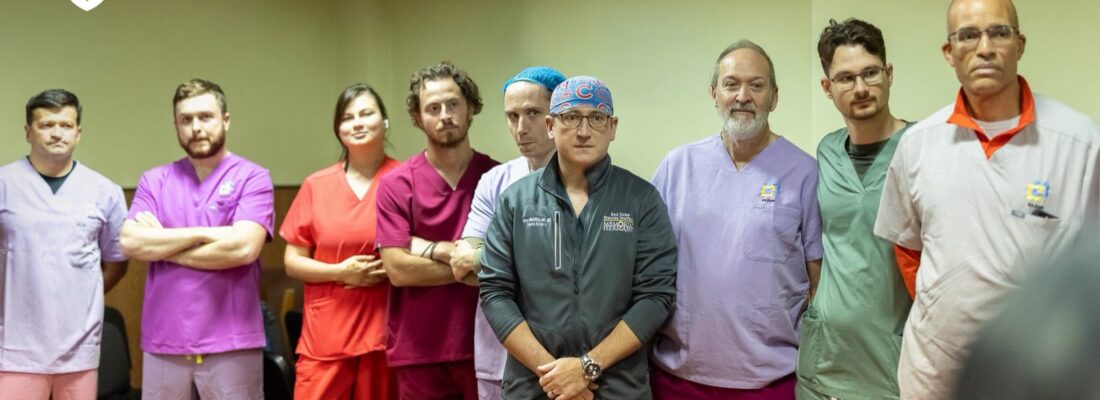
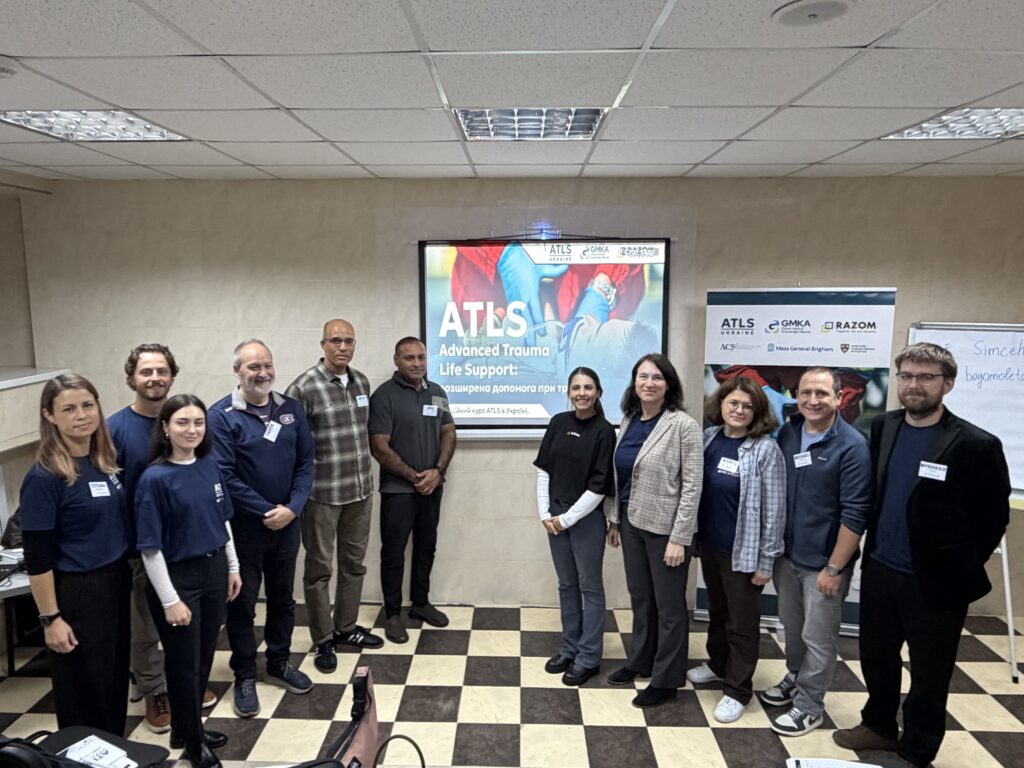
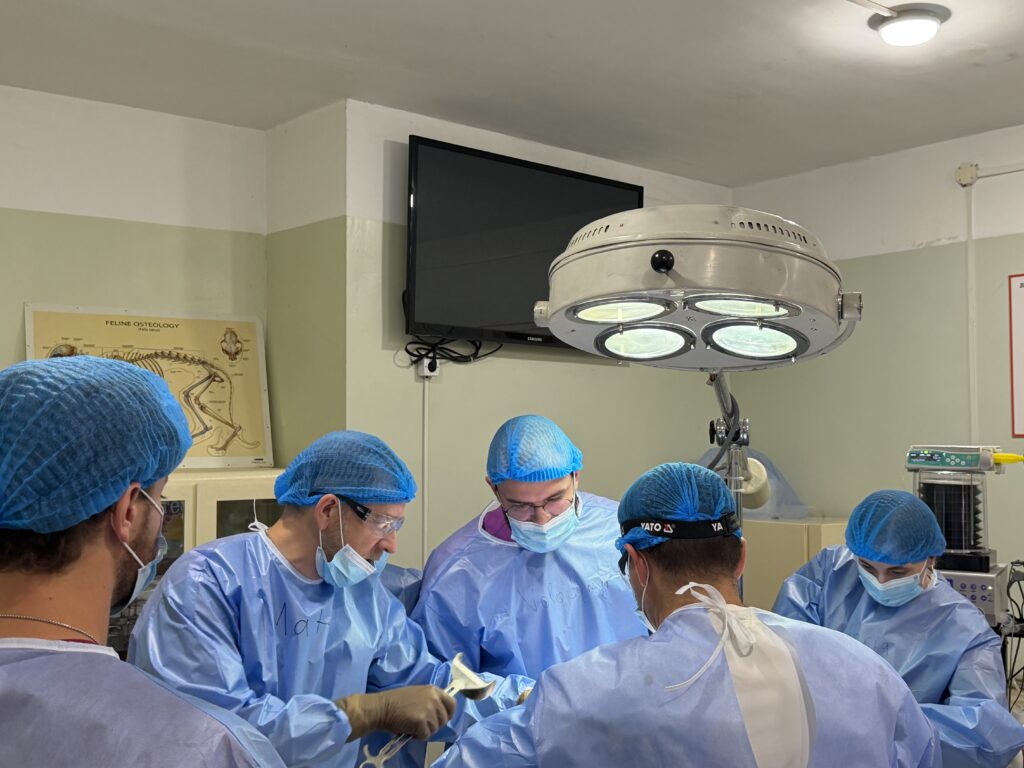
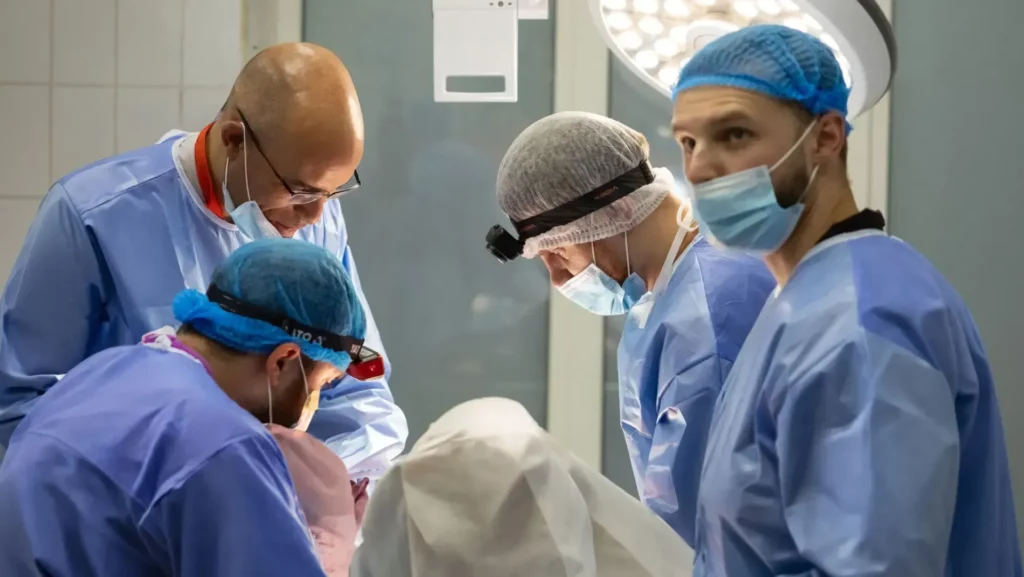
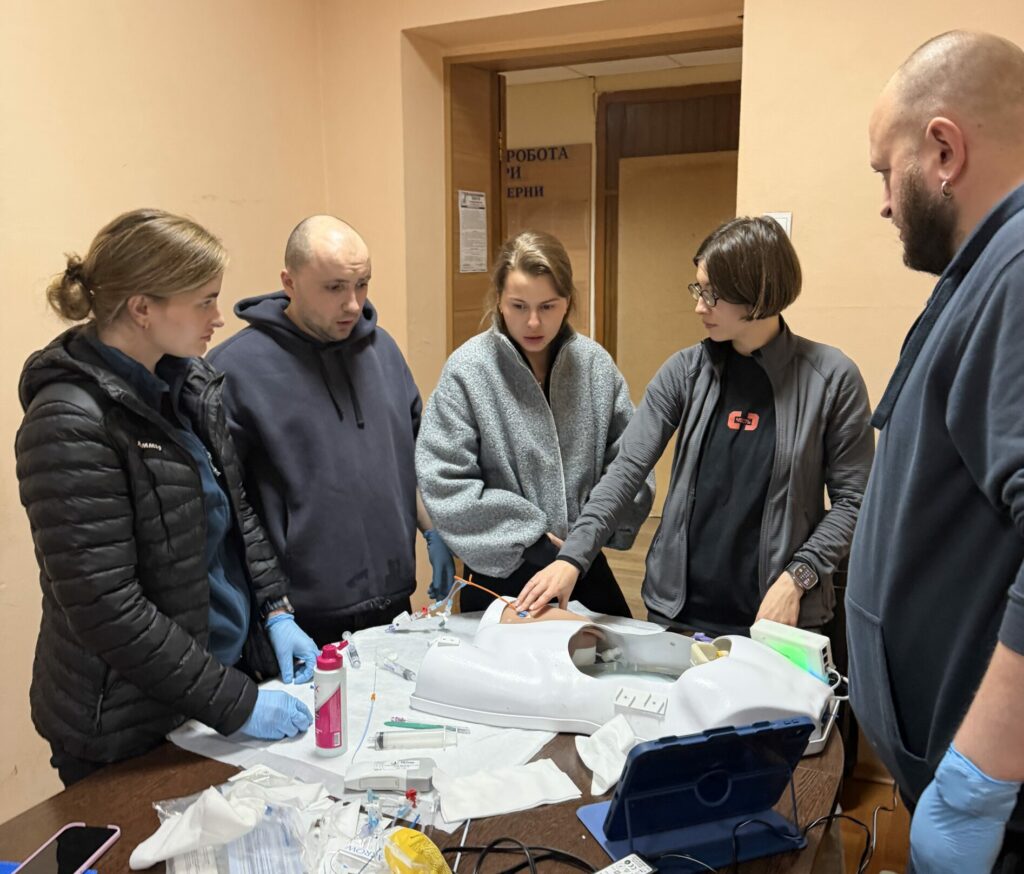
Ukraine had not seen a training like this before. In one week, 16 physicians went through 3 courses that build on each other. They started with the initial assessment and stabilization of a trauma patient (ATLS). Then they moved to surgical decisions in severe injuries (DSTC) and the surgical techniques for stopping hemorrhage and performing emergency interventions (ASSET).
Razom co-organized Tryzub, Ukraine’s first comprehensive national trauma surgery and resuscitation program, initiated by the Ministry of Defence of Ukraine. We delivered it in collaboration with the American College of Surgeons, International Association for Trauma Surgery and Intensive Care (IATSIC), the Global Medical Knowledge Alliance (GMKA), NGO Chest!, Department of Health and SOF “A”. Razom for Ukraine and Expertise France provided the financial and organisational support.
“Strong trauma care depends on skilled medical professionals who know how to work together under pressure. Through Tryzub, we wanted to help Ukrainian teams strengthen their skills, build connections with international colleagues, and bring that experience back to their points of care. We hope this program will have a lasting impact on how trauma care is delivered across Ukraine,” said Yuliia Shama, Health Project Manager, Razom for Ukraine.
The 16 physicians were 8 surgeons and 8 anesthesiologists who trained together. They serve at stabilization points and in forward surgical teams near the front line. In the program, they practiced working as one team in critical situations.
The 3 courses:
ATLS (Advanced Trauma Life Support): initial trauma assessment, resuscitation and stabilization.
DSTC (Definitive Surgical Trauma Care): surgical decision-making and management of severe injuries.
ASSET (Advanced Surgical Skills for Exposure in Trauma): surgical exposure techniques for hemorrhage control and emergency interventions.
Together, the courses strengthened clinical decision-making, surgical skills, and coordination between surgeons and anesthesiologists.
“We had been dreaming of taking an authentic, ACS-certified ATLS course for several years. It provides the framework to structure knowledge and systemize the approach to care—directly impacting a patient’s chances of survival. If ATLS courses are conducted regularly in Ukraine, I am more than convinced that over time we will see significantly improved statistics regarding patient survival and injury outcomes,” said Dr. Kateryna Maslyak, anesthesiologist and Medical Director of the NGO CHEST!, who participated in the Tryzub program.
The Ministry of Defence plans to expand such courses so that all Defence Forces surgeons and anesthesiologists can train according to best practices from the United States and other NATO member states.
“When a service member goes into combat, they must know that if they are wounded, people nearby will do everything they can to save their life. That kind of trust matters enormously at the front. And that trust is built on training, experience, and effective teamwork. That is why we want our medical personnel to have the best possible knowledge and skills and to be able to work as one team.”, emphasized Evgeniy Khmara, Minister of Defence of Ukraine
Tryzub united international medical societies, nonprofits, and the Ministry of Defence to reinforce Ukraine’s trauma care system. It marks the start of a broader effort to provide more Ukrainian medical teams with this level of training.
Every life saved starts with the right training, skills, and teamwork. With your support, Razom can continue strengthening Ukraine’s medical teams and helping frontline healthcare professionals deliver lifesaving care when every second counts.
In emergency medicine textbooks, the “golden hour” is still described as the timeframe within which an injured person must reach the operating room. However, the reality today is fundamentally different. Rescue and evacuation can take long hours or even several days, turning the route to safety into a grueling test of endurance.
In the first minutes following an injury, a person most often administers self-aid or receives help from those nearby – sometimes guided by a medic’s precise instructions over the radio or phone. What follows is a complex and dangerous transport via ground robotic systems or an evacuation on foot to a point accessible by emergency vehicles or where a mobile stabilization clinic is deployed.
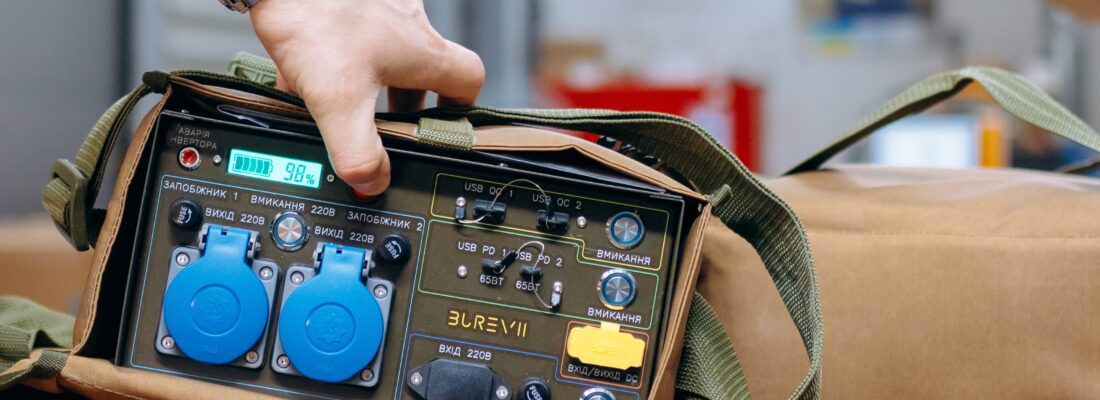
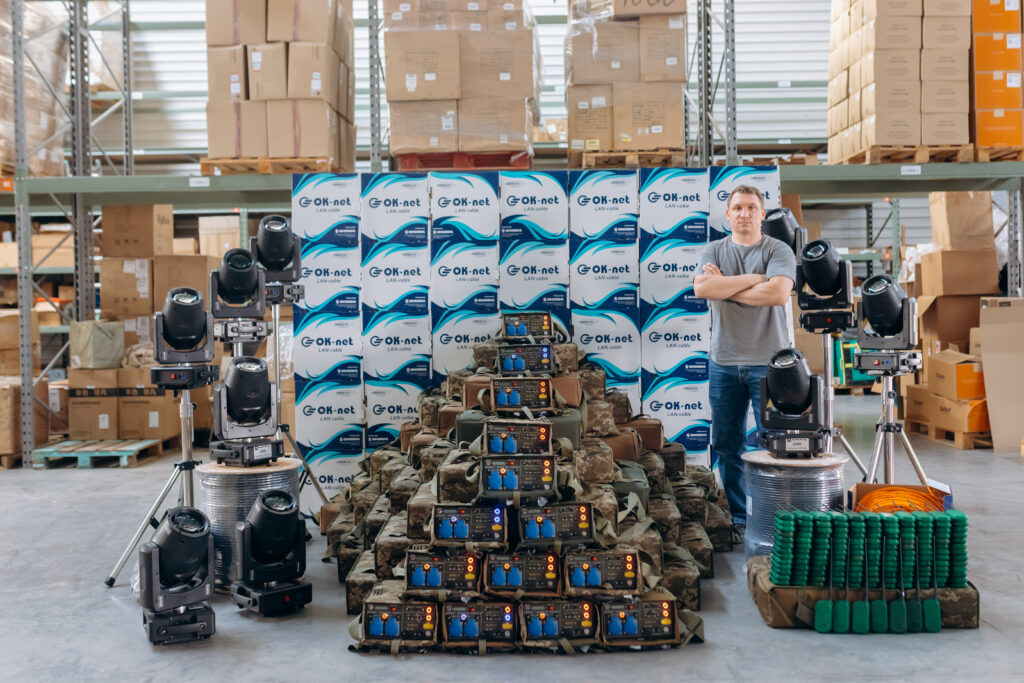
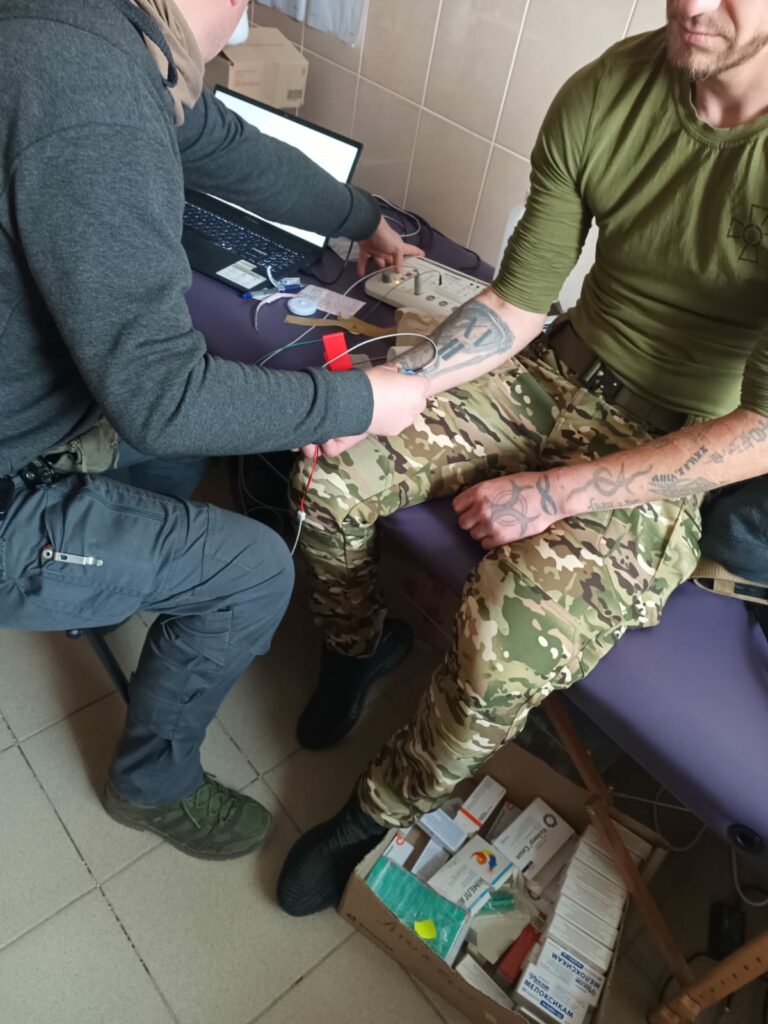
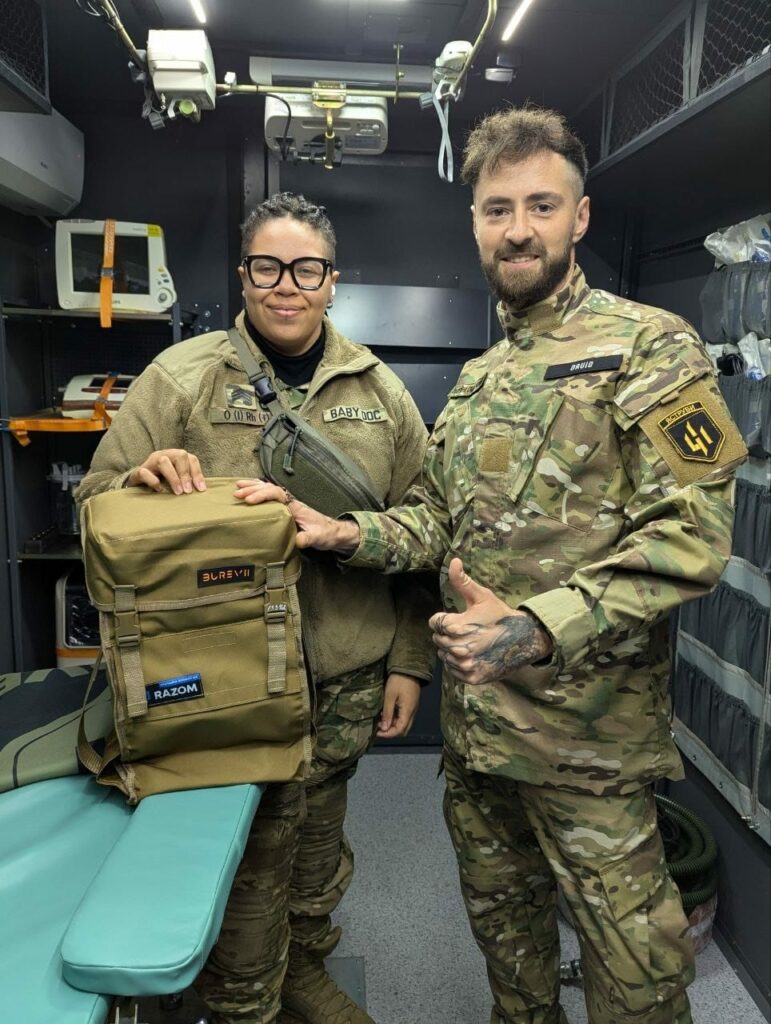
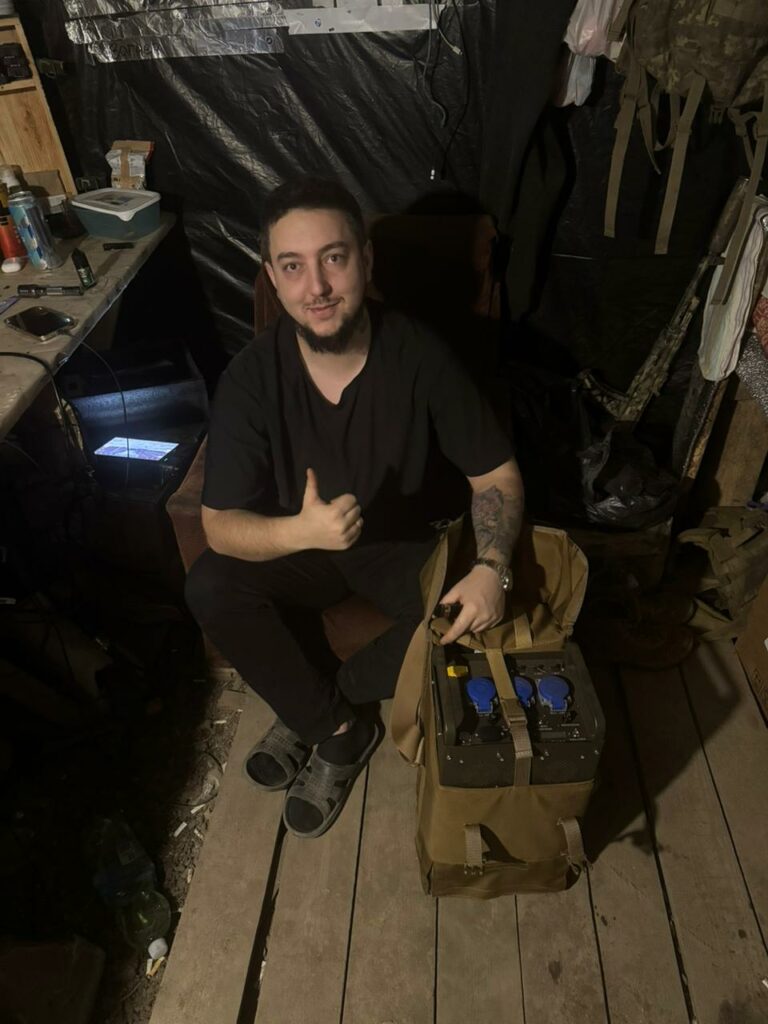
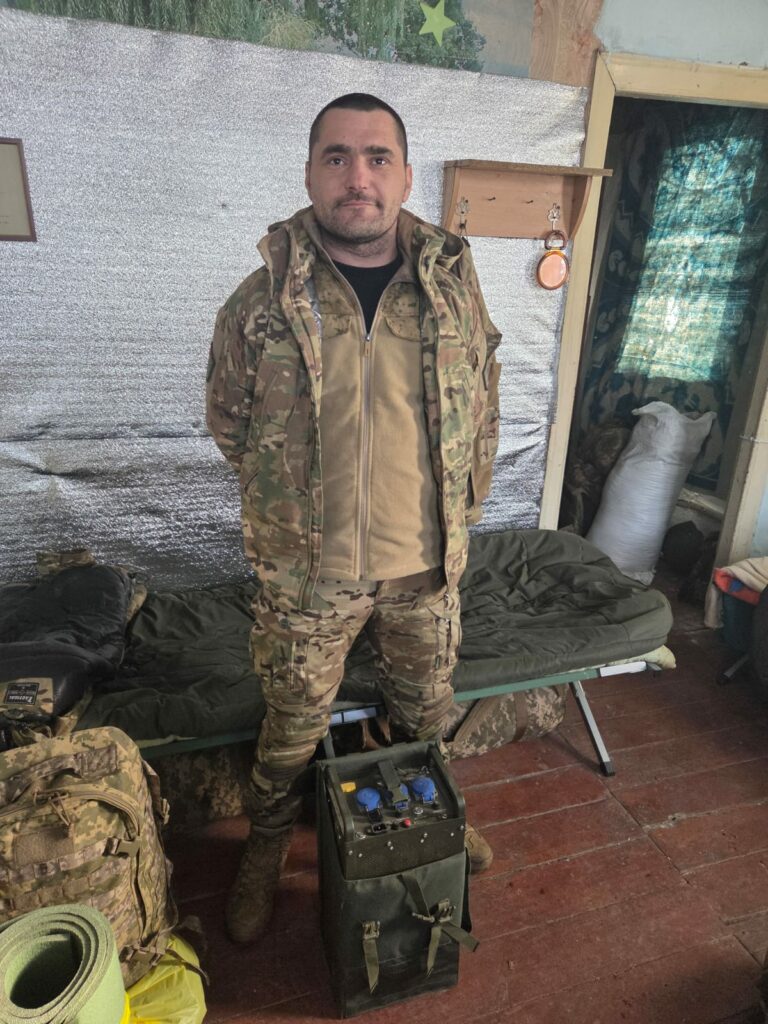
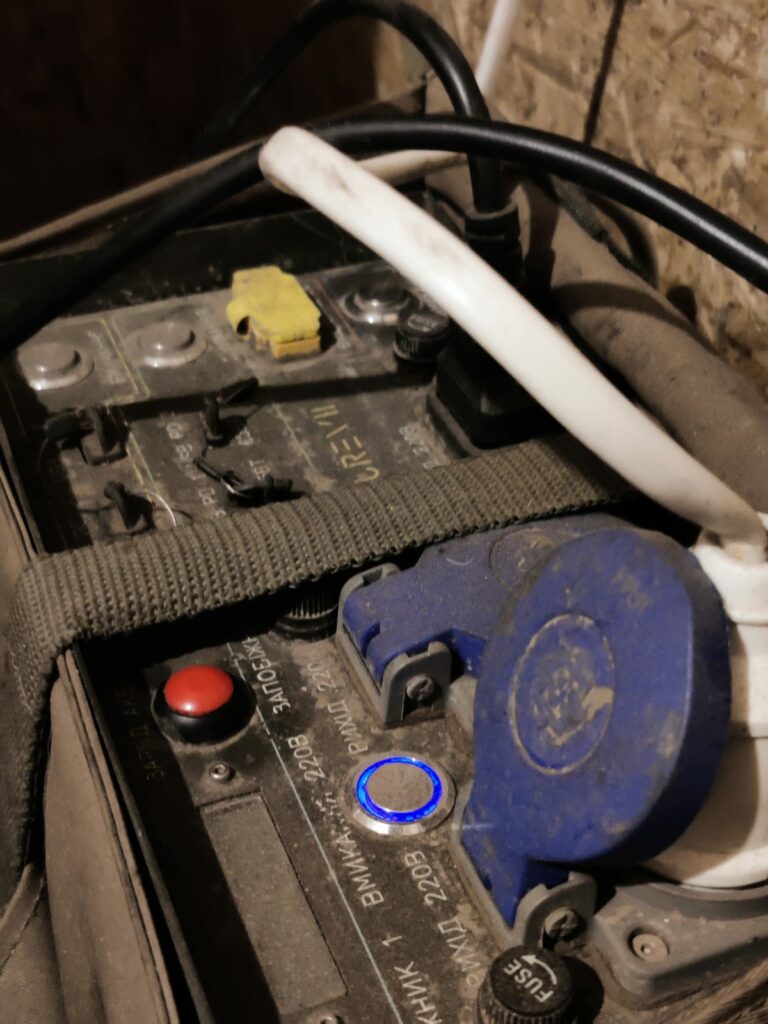
Under these extreme conditions, off-grid power and communications cease to be mere logistical details. They become a single lifeline sustaining human life. To support the medical teams of the 3rd Army Corps in these harsh realities, Razom purchased and delivered 120 Ukrainian-made Burevii power stations. In total, Razom has already provided 5,613 various power stations. This systematic humanitarian support aims to meet the critical needs of evacuation teams as well as field and mobile stabilization clinics to save as many lives as possible.
Power for Communication and the Fight for Life After Prolonged Delays
When evacuations stretch over days, the role of technology changes radically. Rescue efforts begin right in the shelter or safe position, where an injured person receives first aid or guidance via telemedicine. The stable power provided by Burevii units for Starlink terminals and radios allows medics to maintain uninterrupted communication with the injured and coordinate the evacuation process.
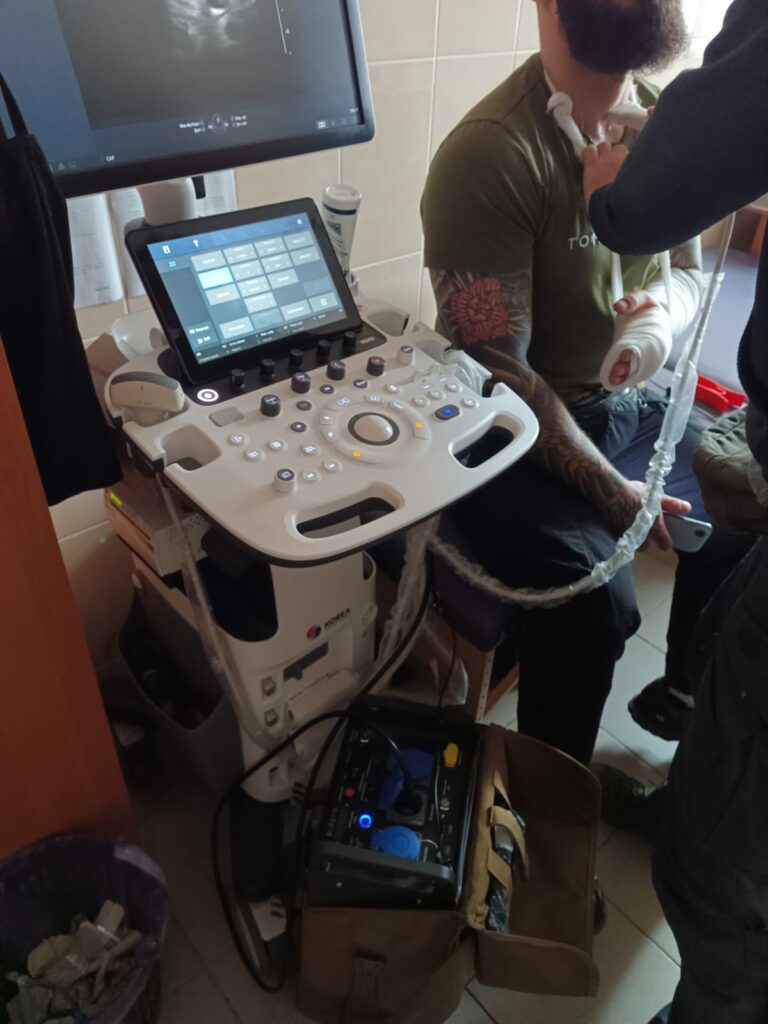
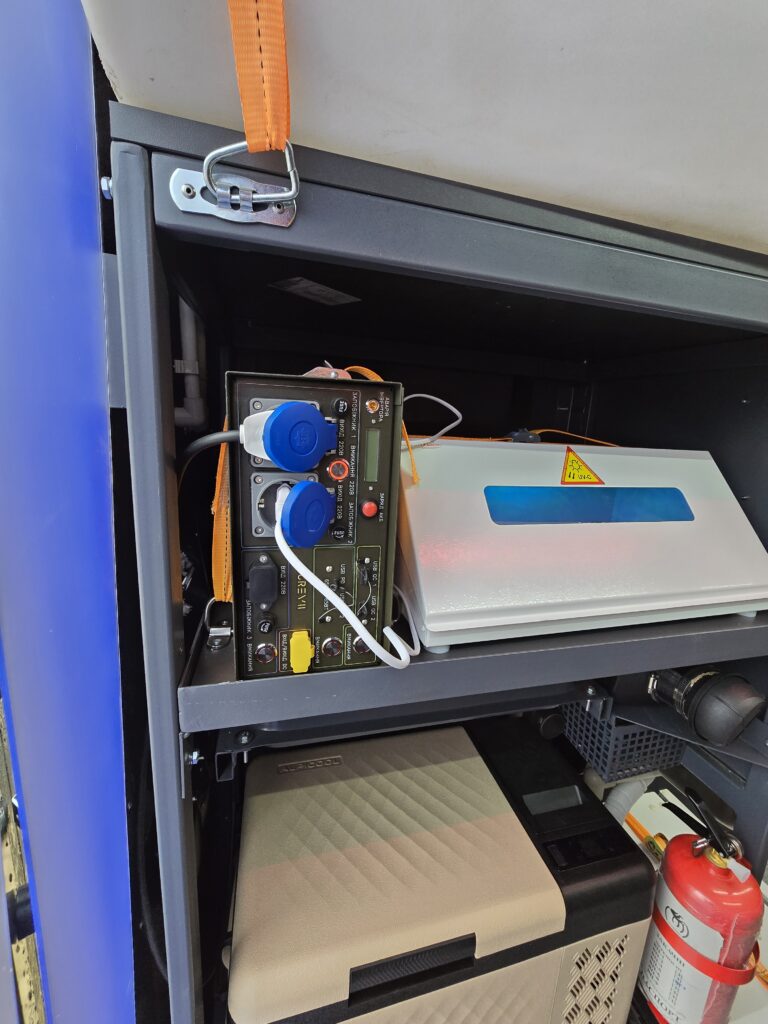
Once an exhausted patient finally reaches a mobile stabilization clinic or an ambulance after hours or days of waiting, their condition is usually critical due to prolonged tourniquet application, severe hypothermia, and massive blood loss. At this moment, medical equipment must function flawlessly and instantly. Burevii power stations immediately integrate into the chain of survival: they power vital signs monitors, portable ventilators, and devices for storing and warming blood components – equipment that is decisive in the initial stabilization phase.
Furthermore, a reliable internet connection enables urgent remote medical consultations directly from inside an ambulance or stabilization clinic. A medic can present a critically injured patient to leading specialists to quickly determine the correct stabilization strategy for a body suffering from prolonged exhaustion.
Built to Perform in Extreme Field Conditions
Most portable power units fail during winter due to harsh freezing temperatures, moisture, rough logistics, and mud. The decision to use Burevii stems from it being a domestic development tailored to the extreme conditions of a Ukrainian winter and the direct needs of responders on the ground. These stations maintain functionality in sub-zero temperatures to power warming equipment, while their protected casing reliably guards internal electronics during movement through mud and snow.
Thanks to their impact resistance and durable electronics, these power stations are designed for intensive use during constant relocations. Their dimensions account for the most crucial detail: field mobility. The devices come equipped with a specialized backpack carrying case. In a reality where a responder needs to move quickly in total darkness while carrying a stretcher or a medical kit, being able to wear the power source on their back becomes a matter of safety and saved seconds.
In addition to directly assisting in life-saving efforts, this procurement creates an important dual impact for the community: Razom not only provides medical workers with critically needed equipment but also invests in Ukrainian engineers who continue refining their technology based on fresh real-world experience.
Protecting Not Only Life, But Quality of Life
Prolonged evacuation is almost always accompanied by severe complications: high risks of amputation, tourniquet-related complications, and severe medical shock. Comprehensive medical care initiated immediately upon first contact with the evacuation team minimizes these long-term consequences.
When power stations run without interruption, medics do not waste precious time searching for light or rebooting shut-down equipment. They can fully focus on the patient. It is a fight to ensure that after grueling days in the gray zone, an injured person does not merely survive, but retains maximum physical functionality with high chances for successful medical treatment, rehabilitation, and a return to a full life.
The Power of Trust and Support
The delivery of Burevii stations is the result of synergy between donors who believe in Razom’s mission and the medical personnel who achieve the impossible on the front lines every day.
Today, as freezing temperatures return, the region enters another exhausting winter season. In these severe conditions, the need for reliable off-grid power remains critical. Thanks to donor support, this equipment is already operating where the environment is most hostile and the price of failure is highest. But for medics to continue providing timely care and saving lives, we need your support once again.
During a work trip to the United States, people ask me, ‘Don’t you think you have a weak government if civil society has to do so much?’
I say no. Let’s look at it another way. Ukrainian society is so active that it can sometimes step in and perform functions that would normally belong to the government.
Since Russia’s full-scale invasion began, Ukraine’s civil society has taken on enormous responsibility. Nonprofits and charitable organizations support the government, the military, and civilians. They help people get through crises and rebuild their lives. But who supports the people who help others?
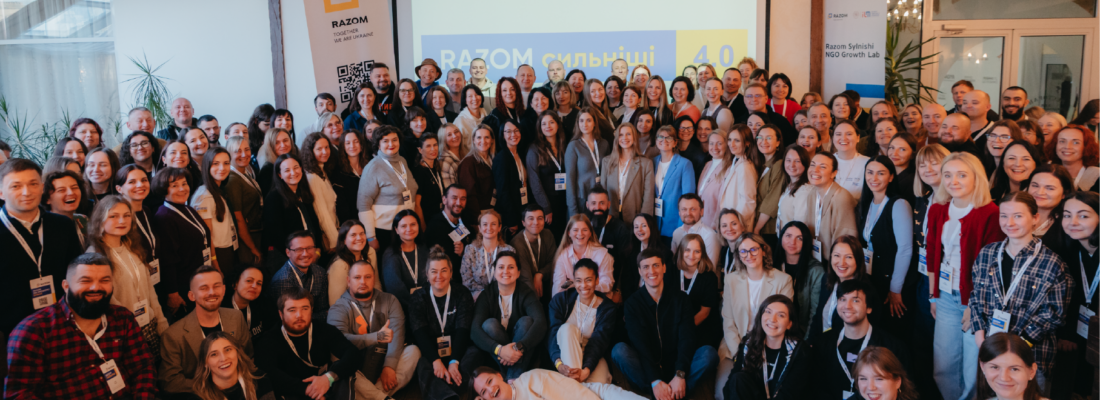
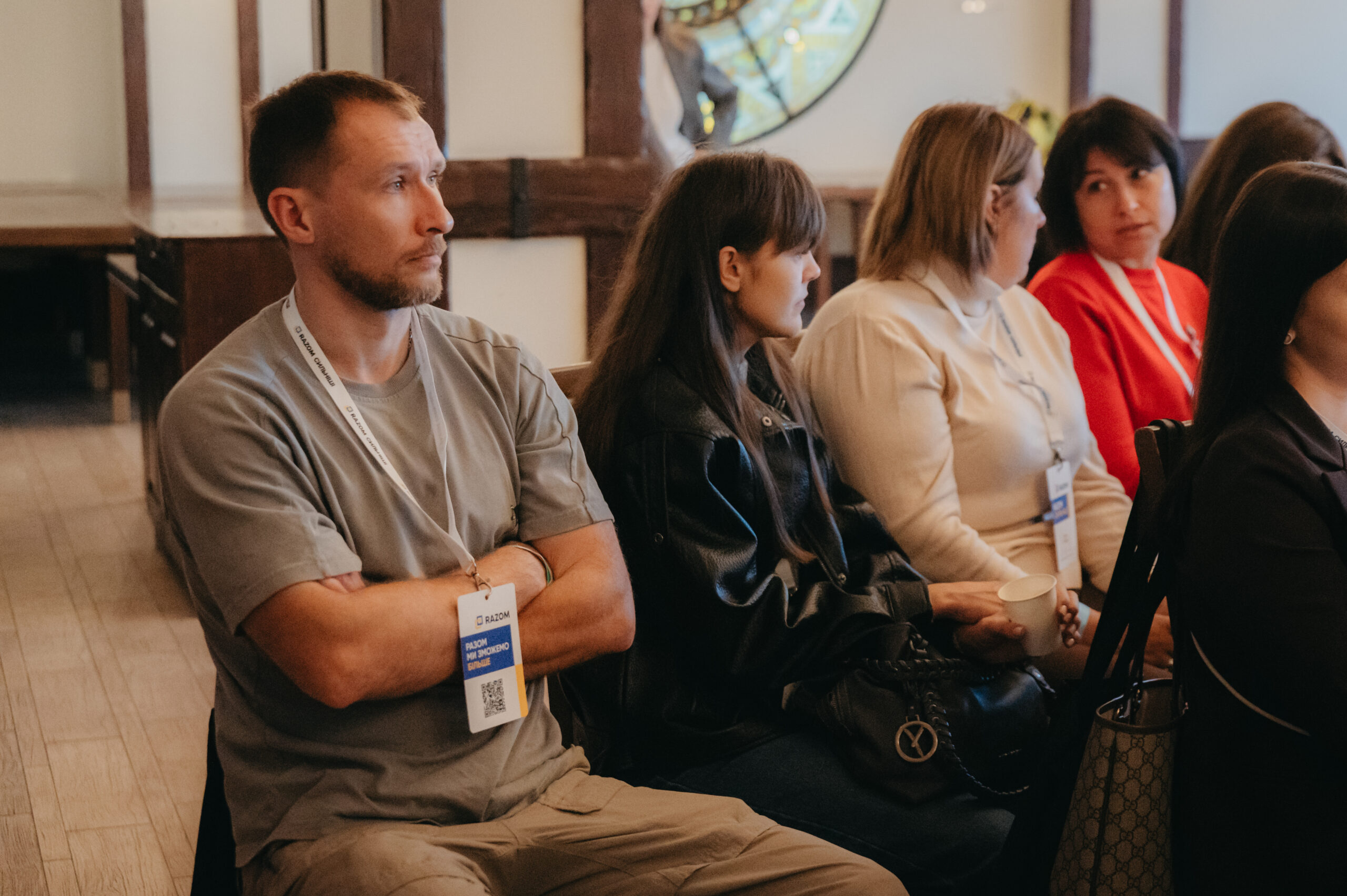
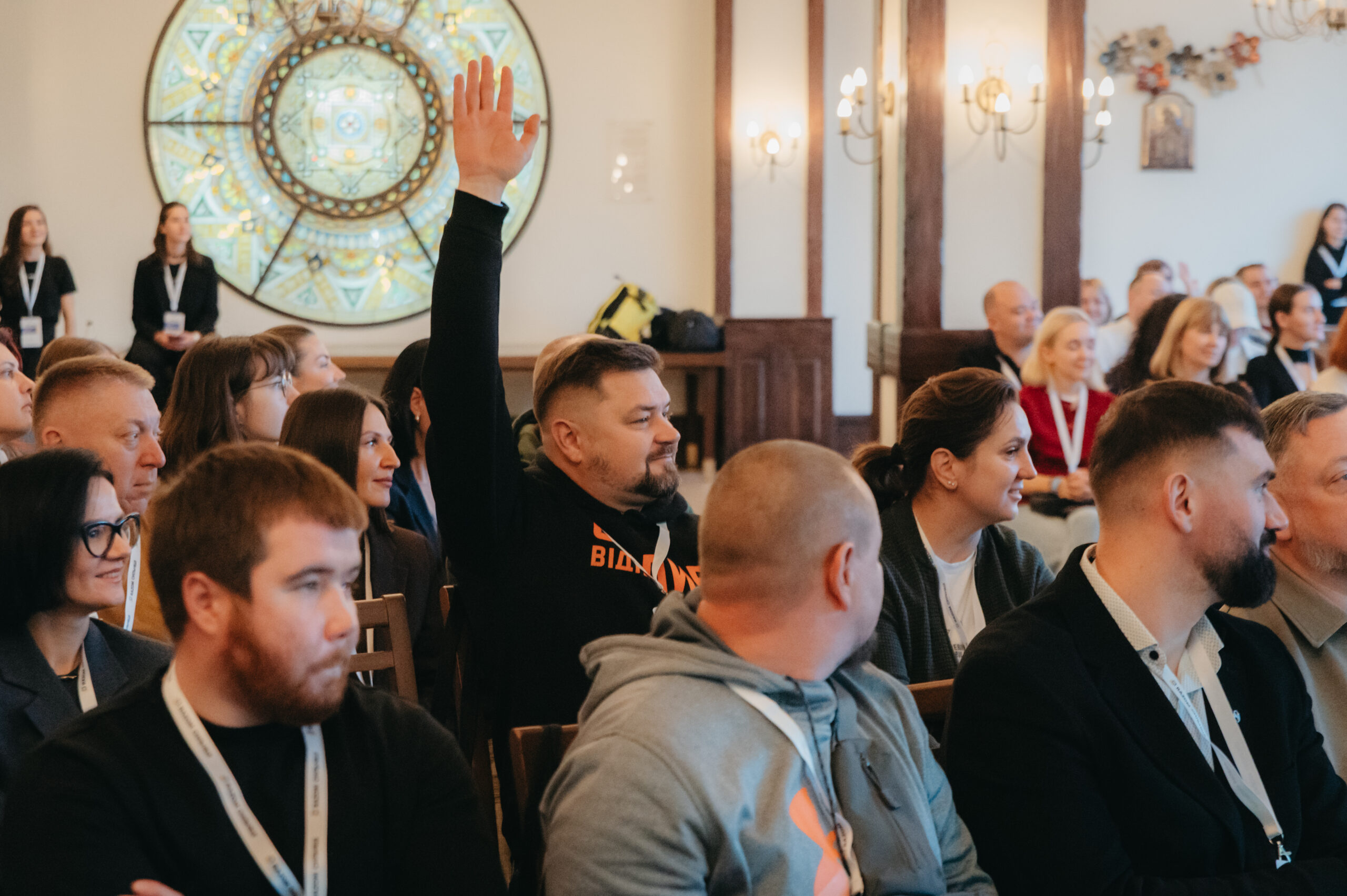
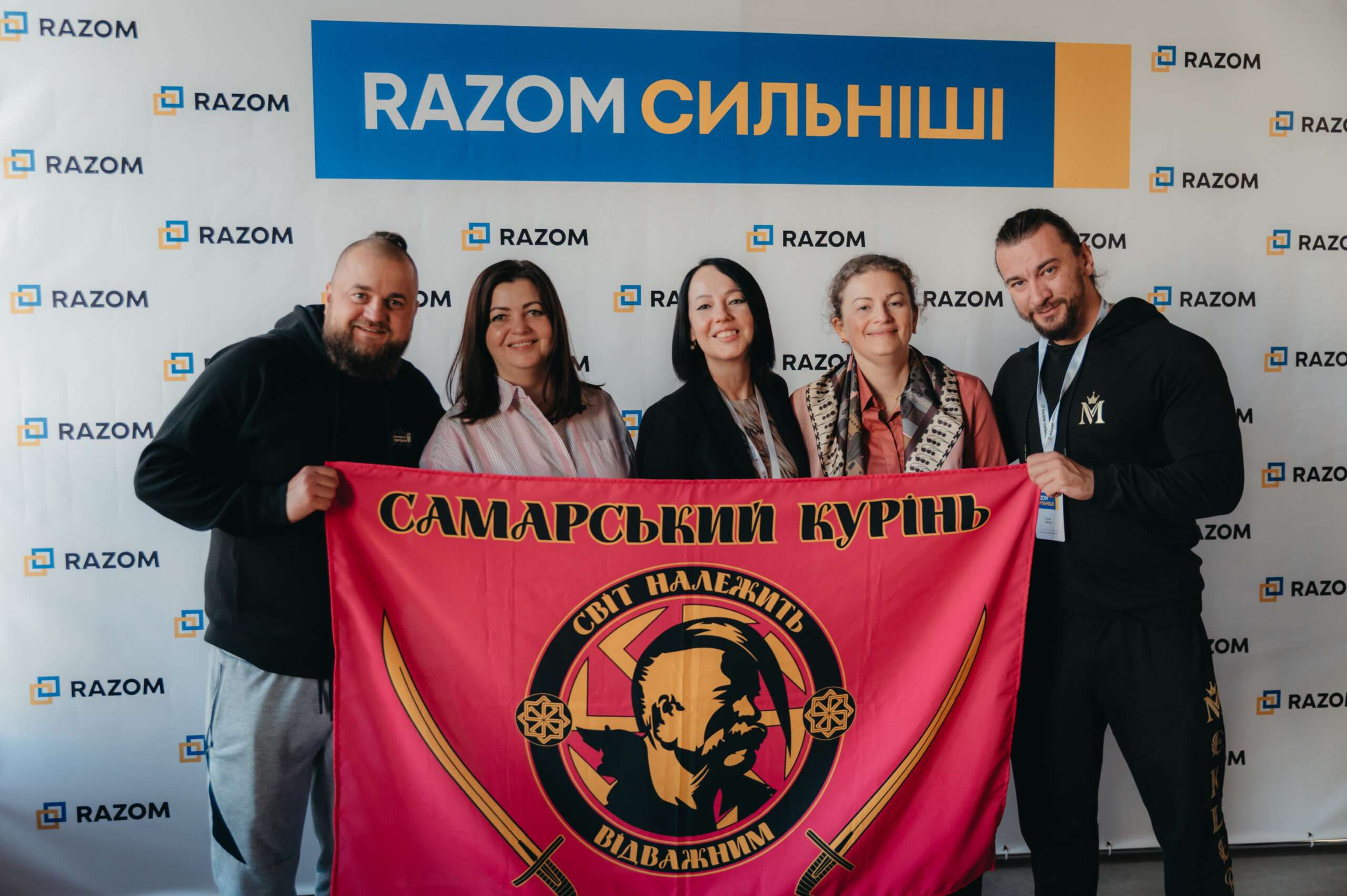
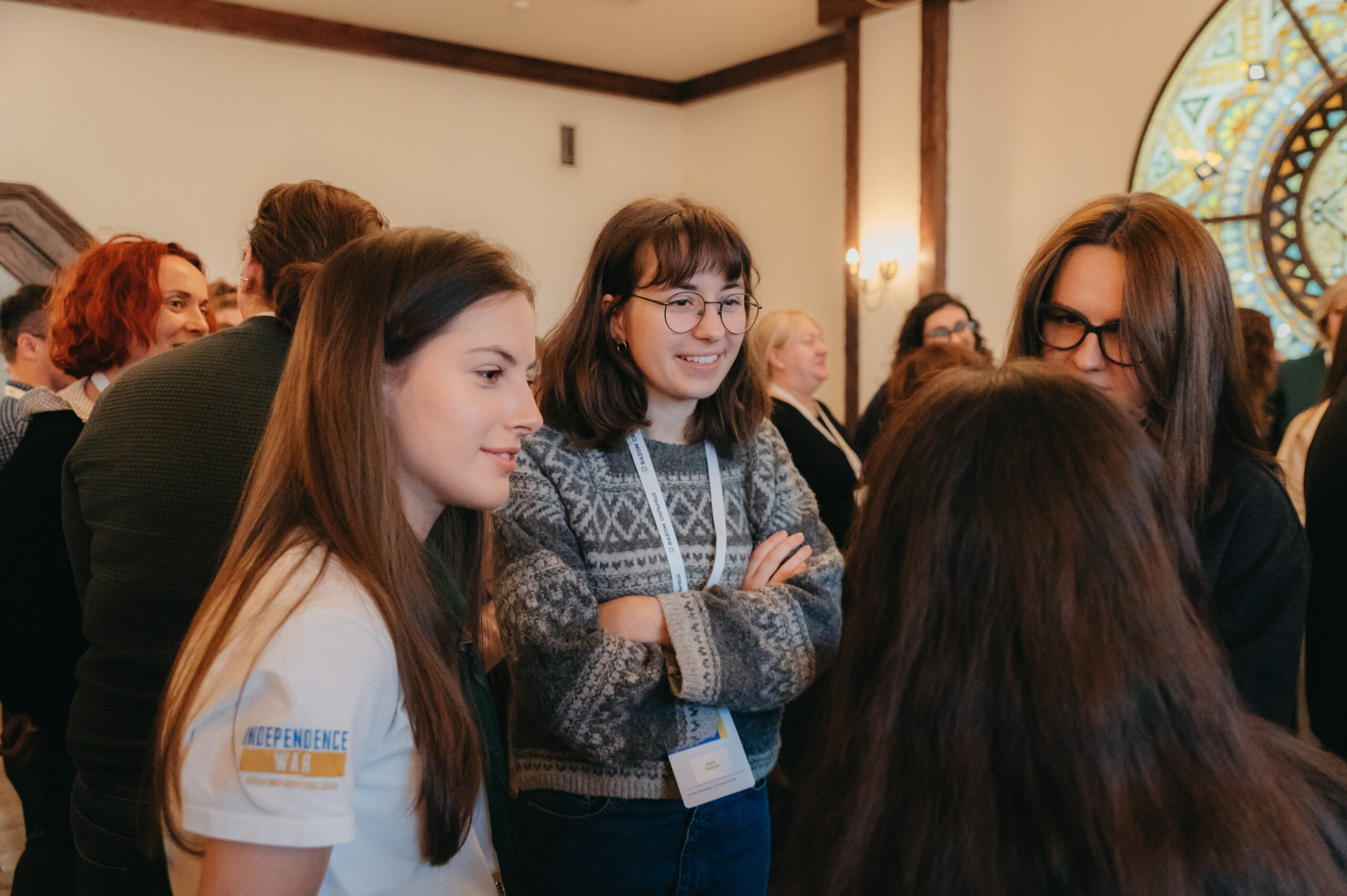
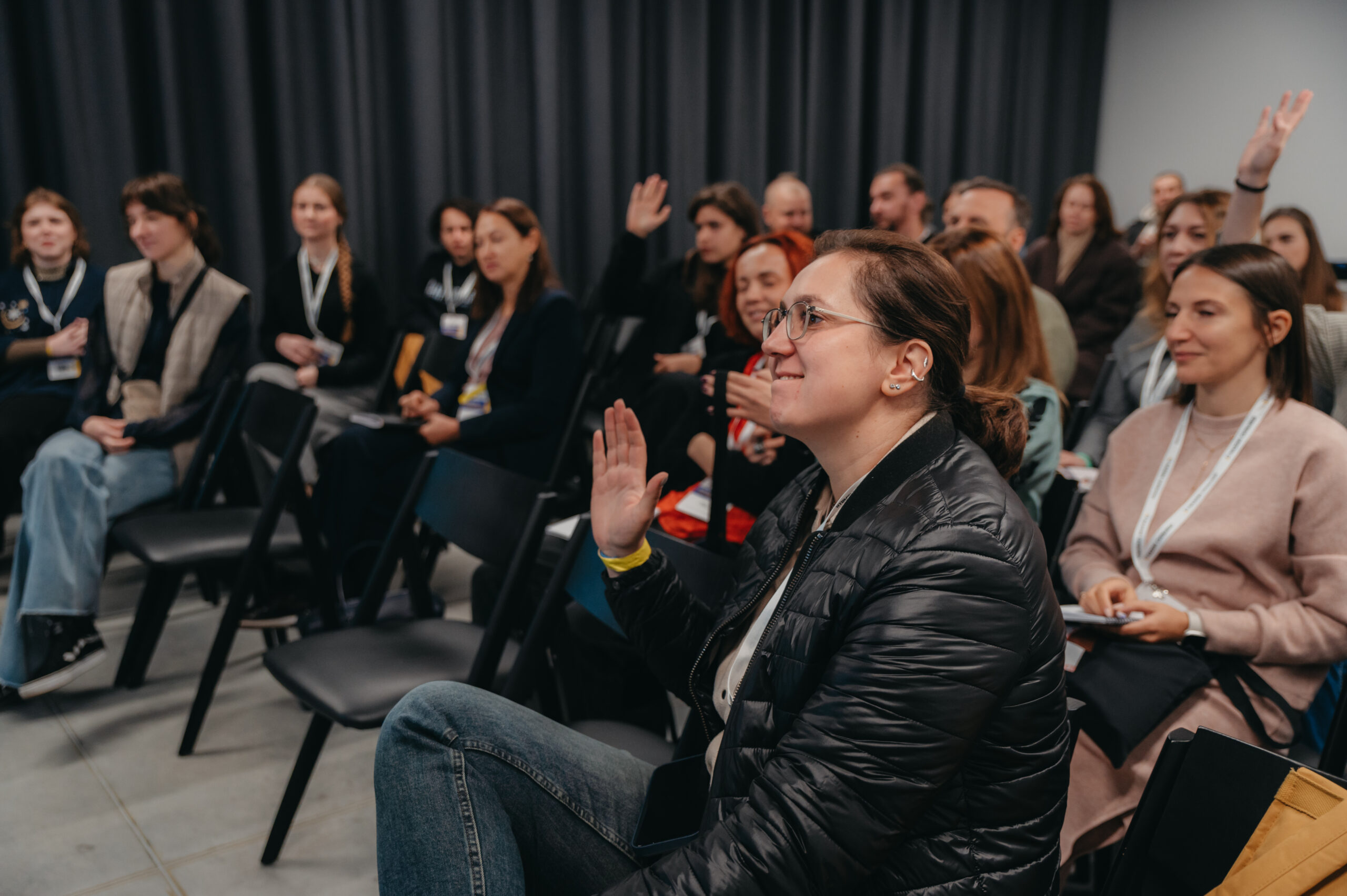
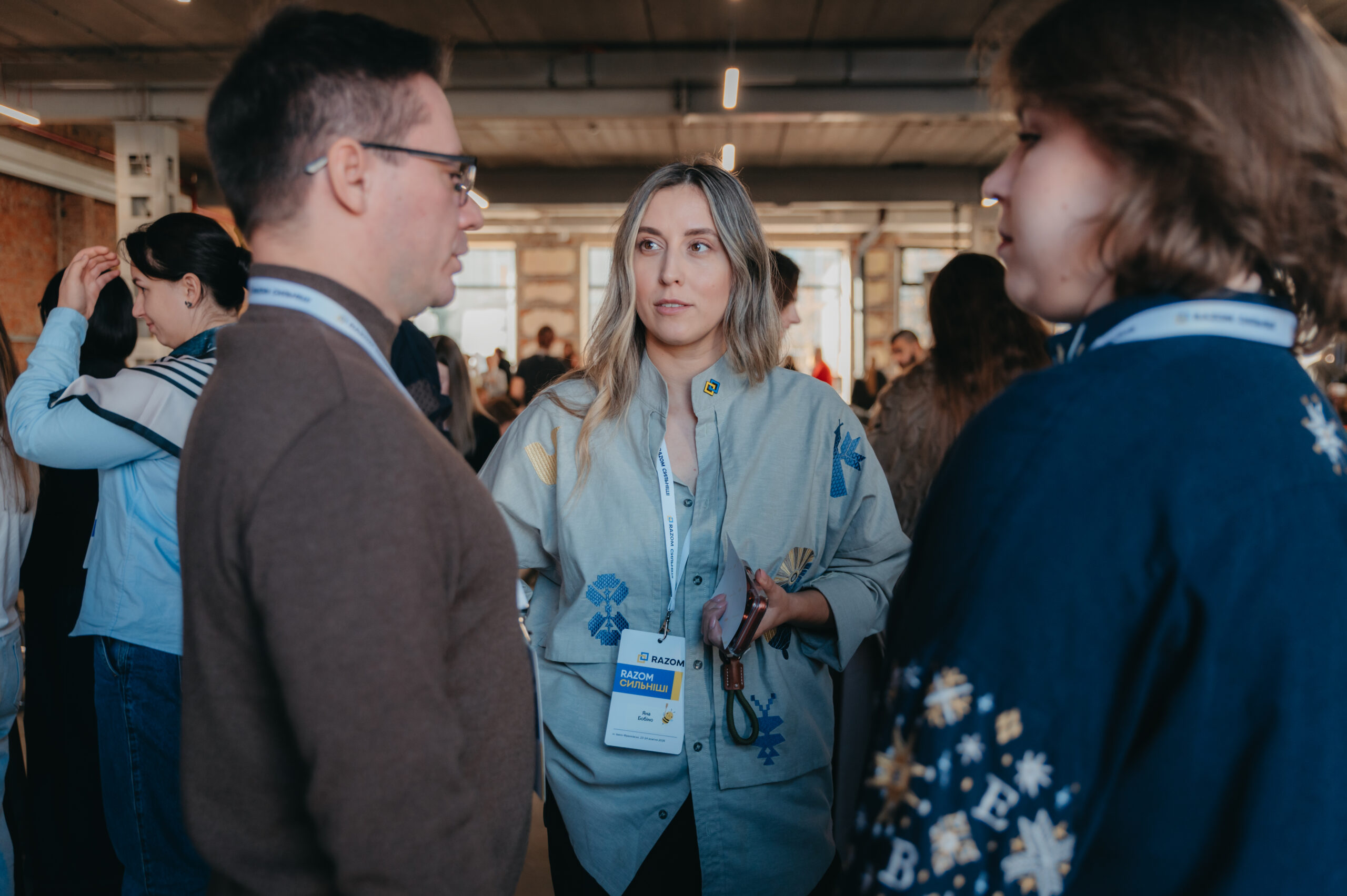
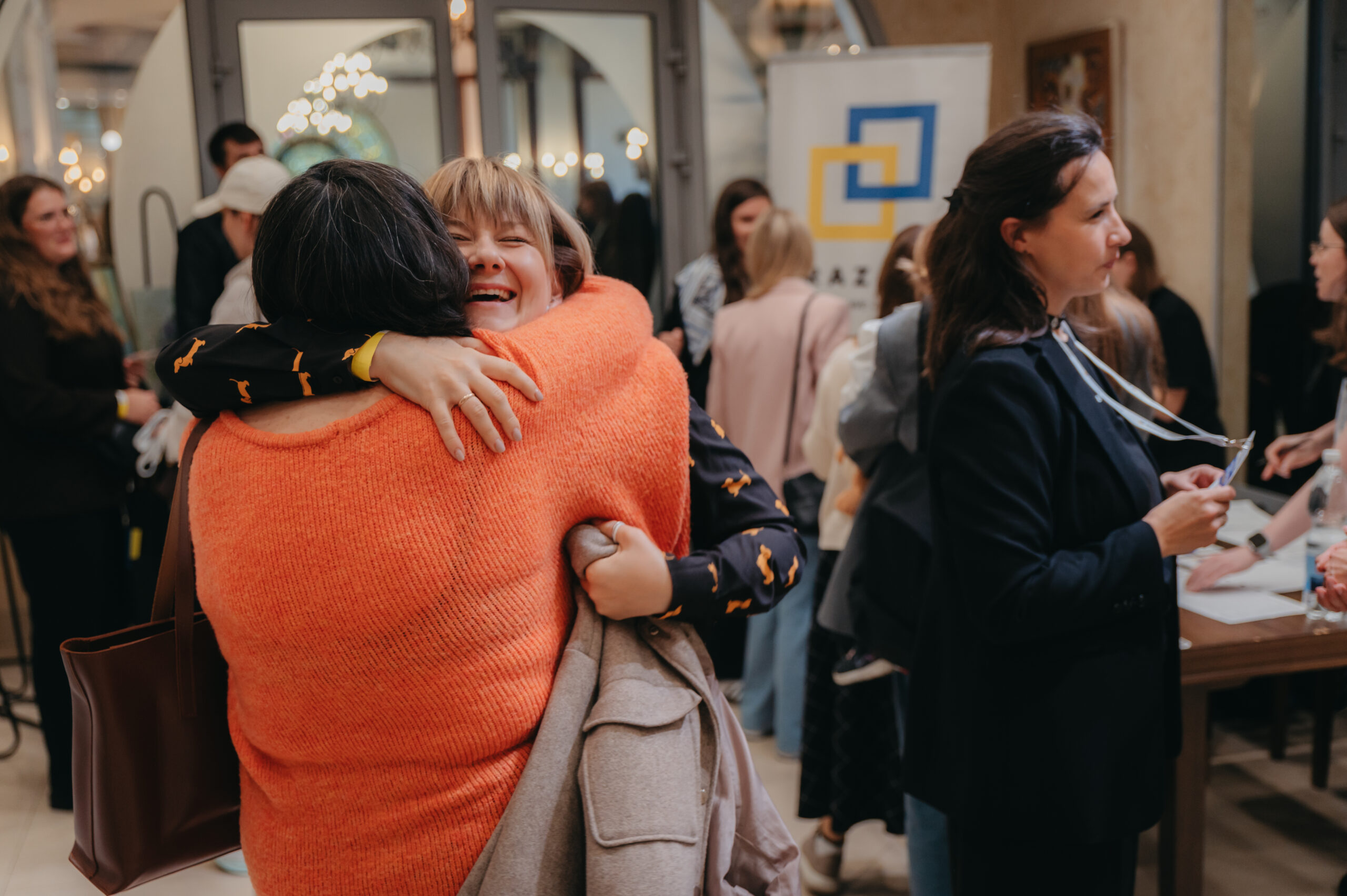
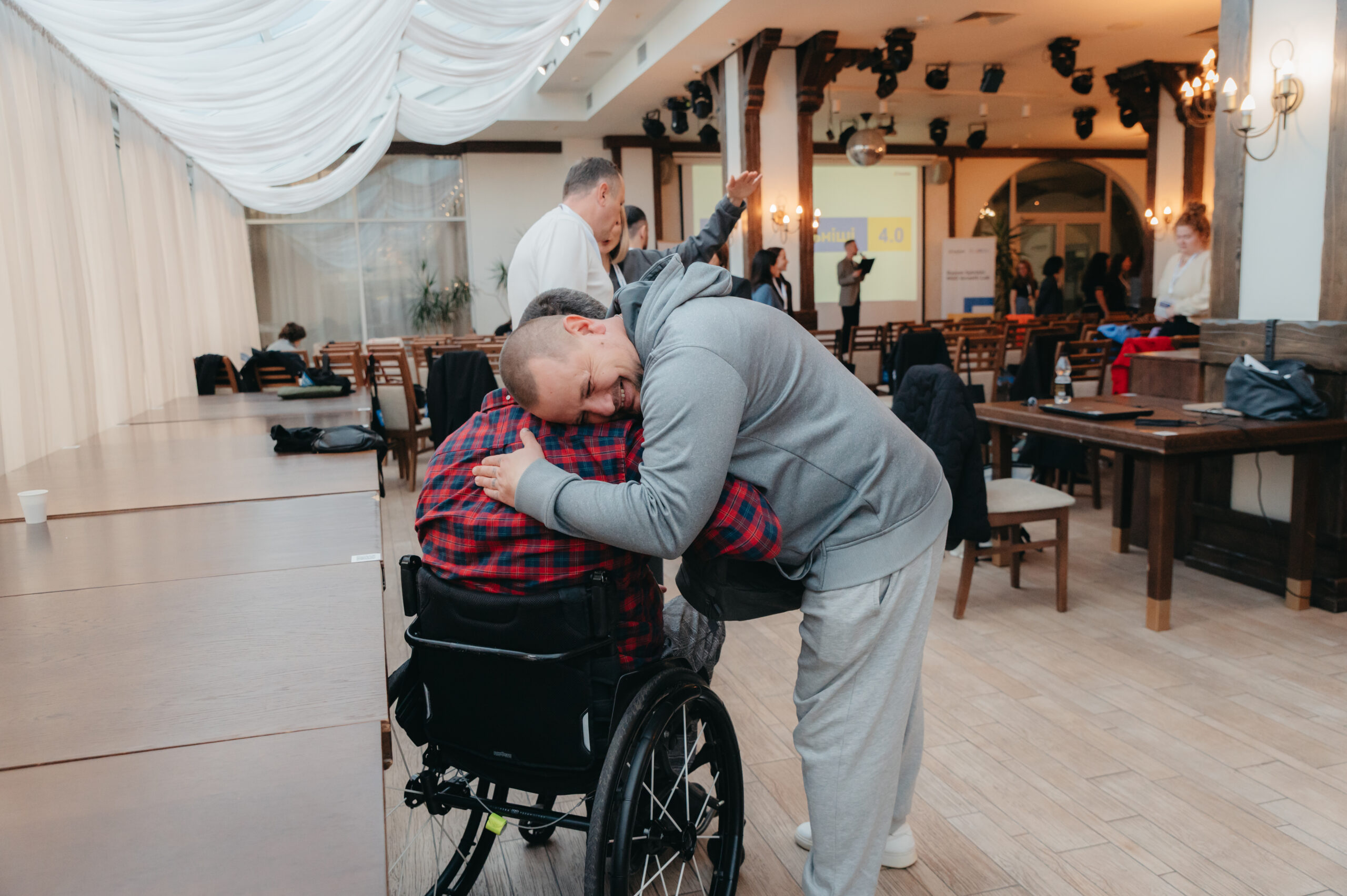
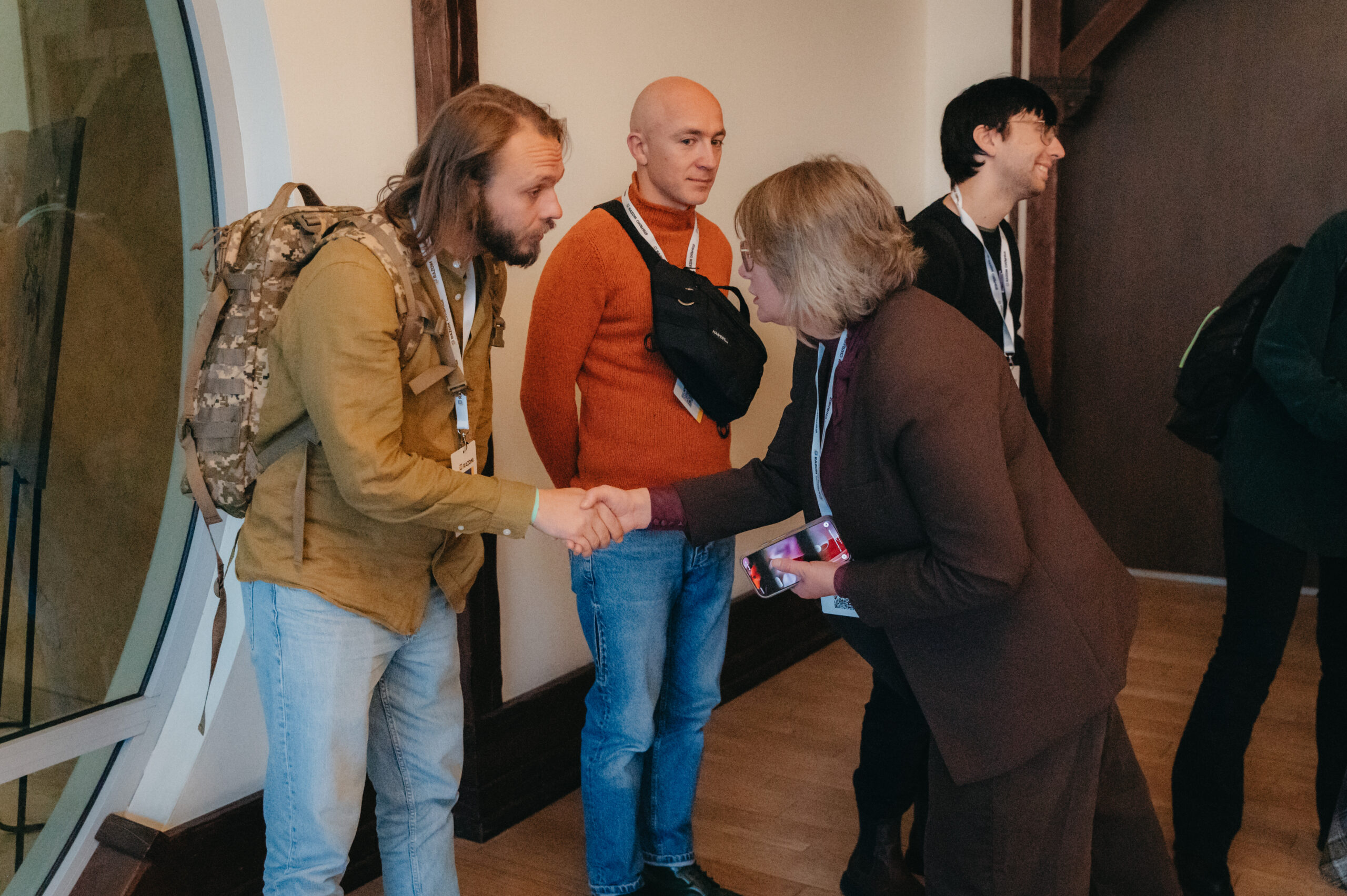
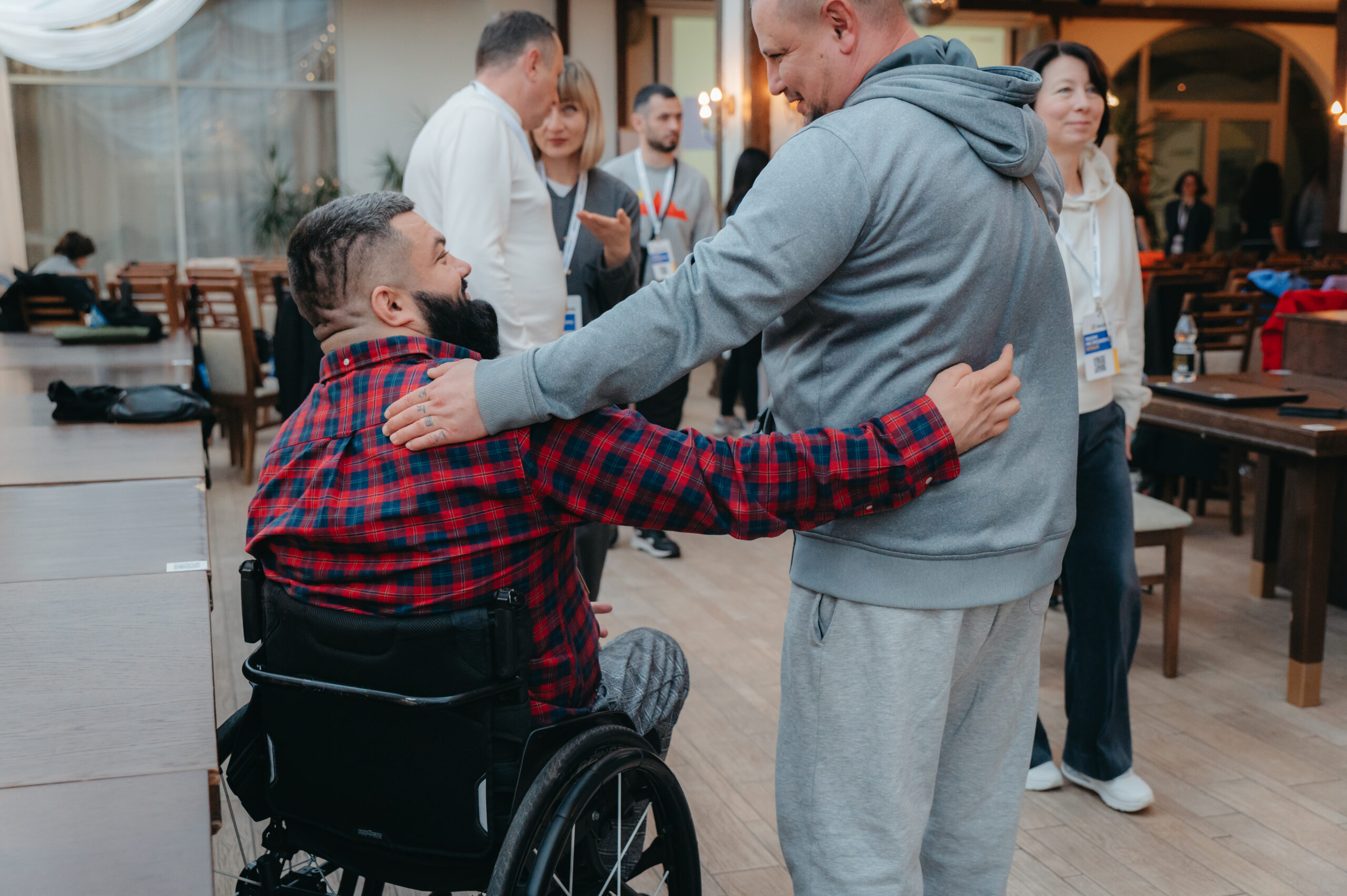
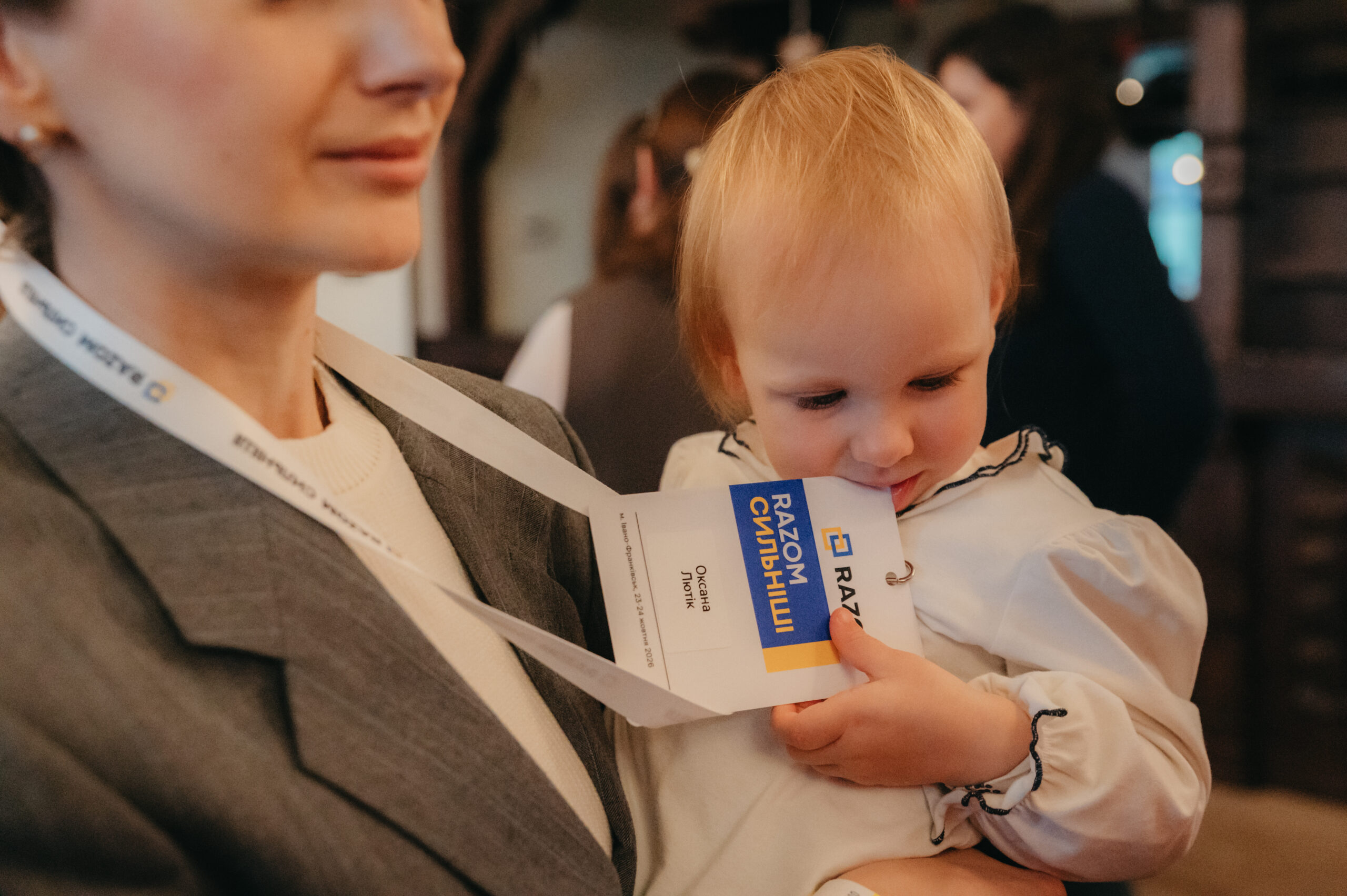
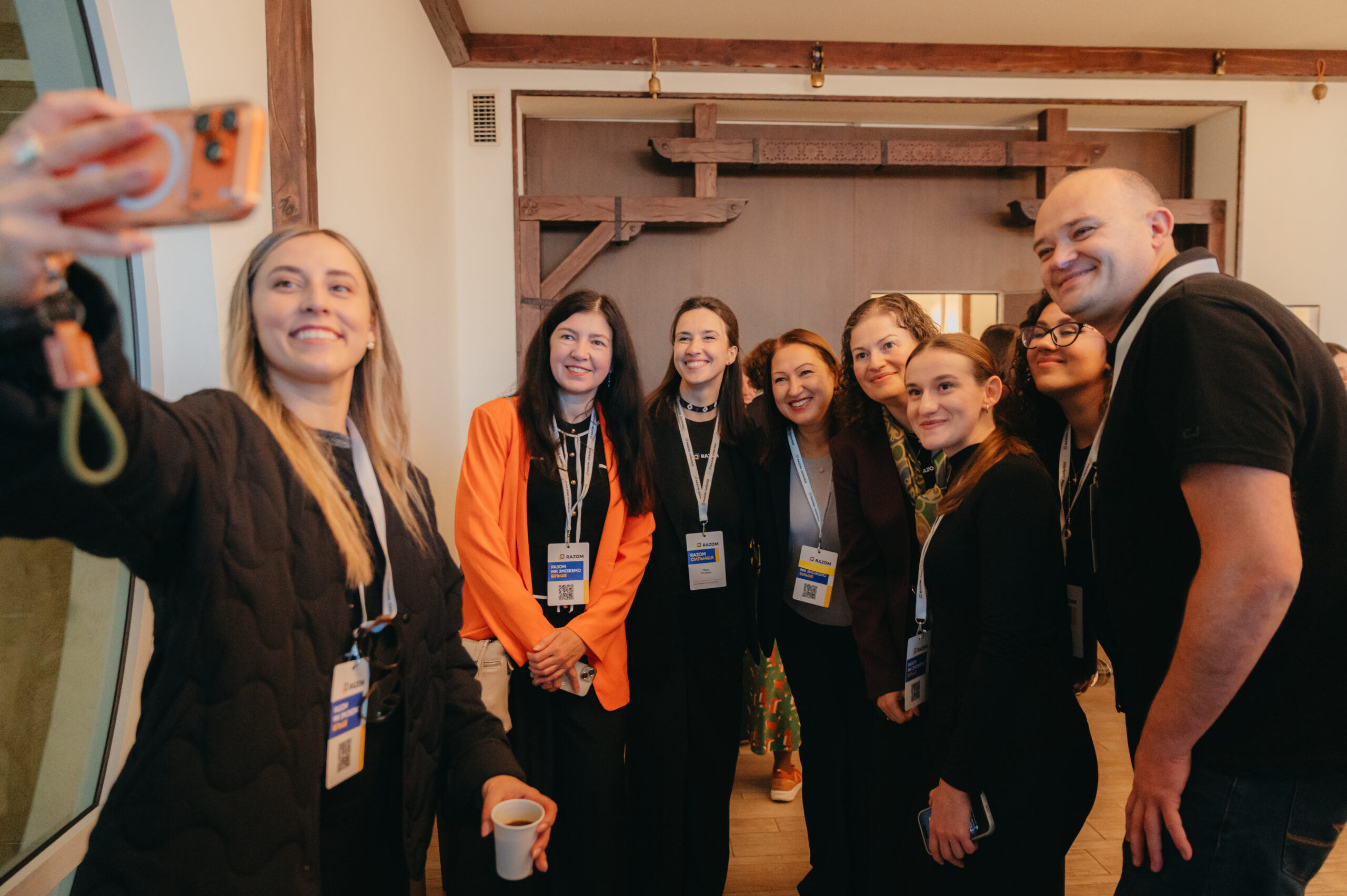
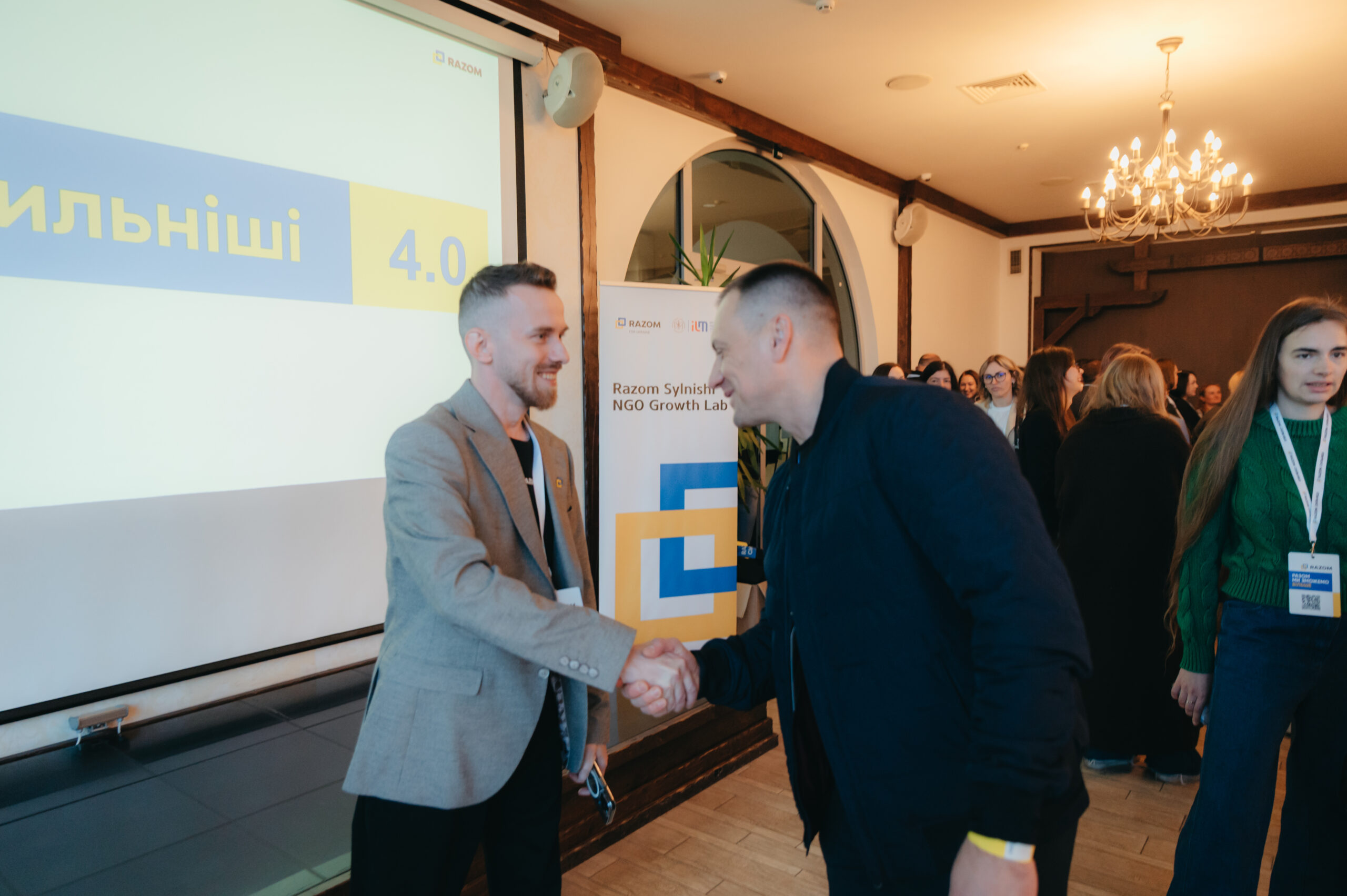
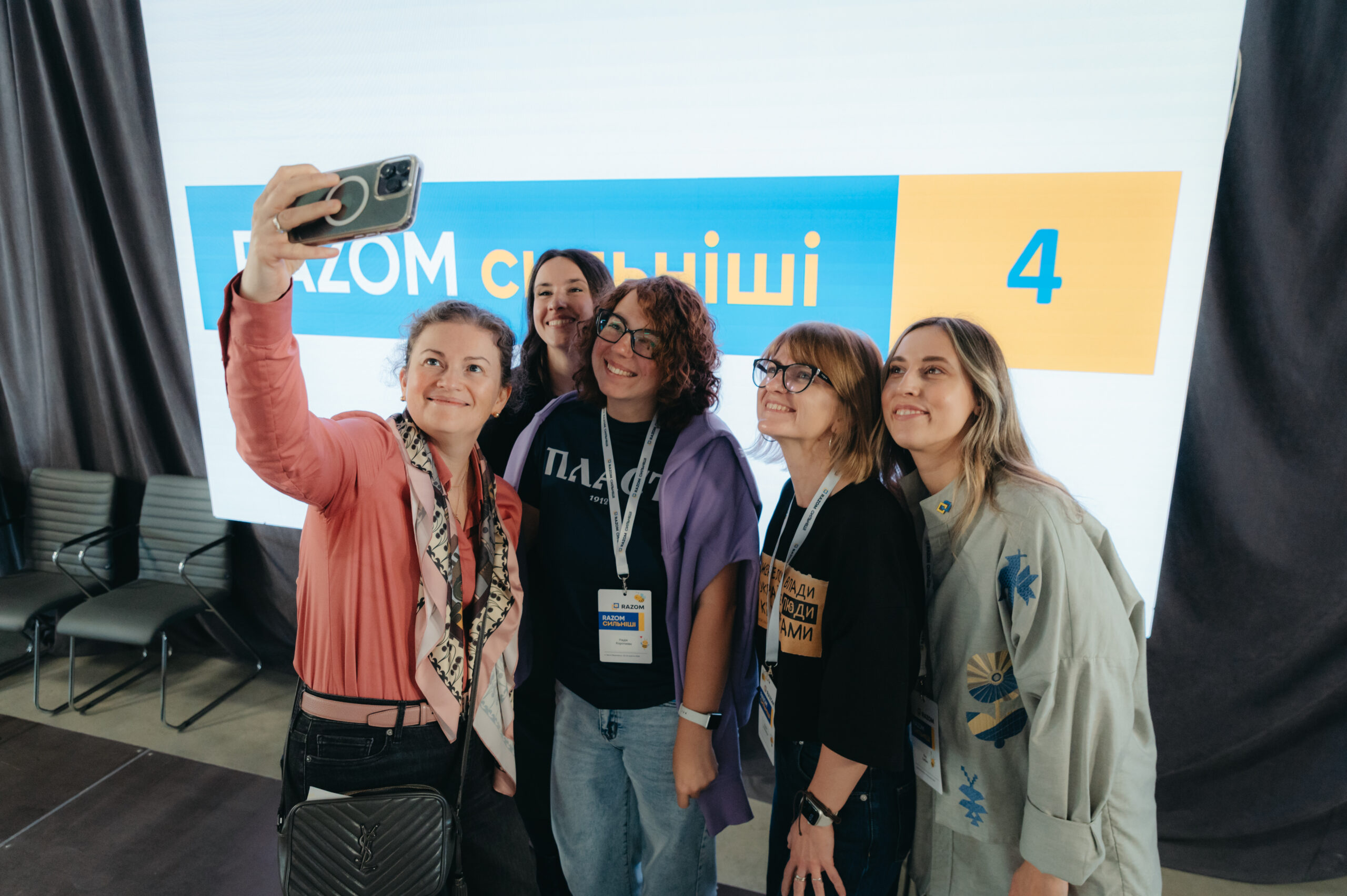
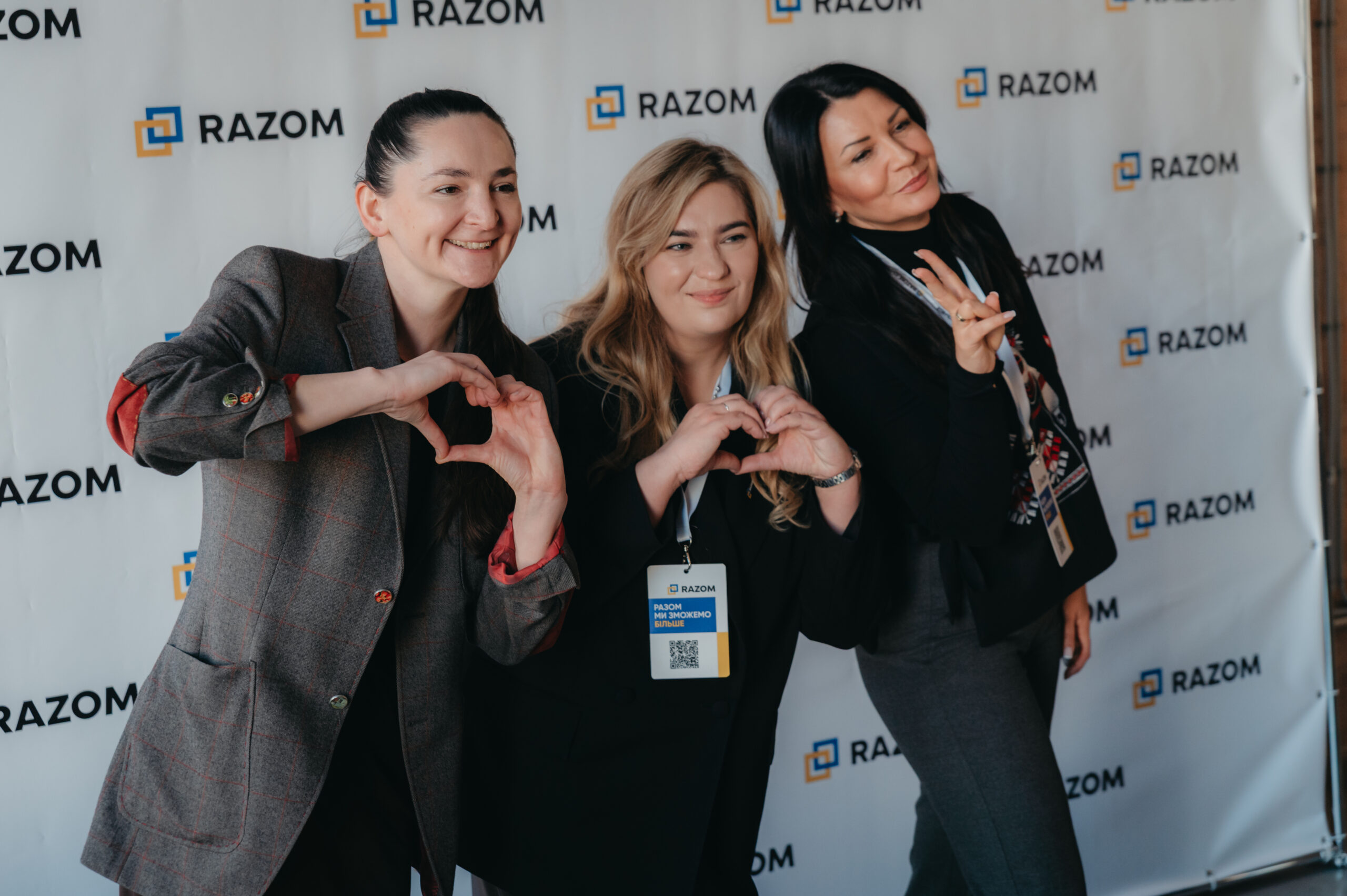
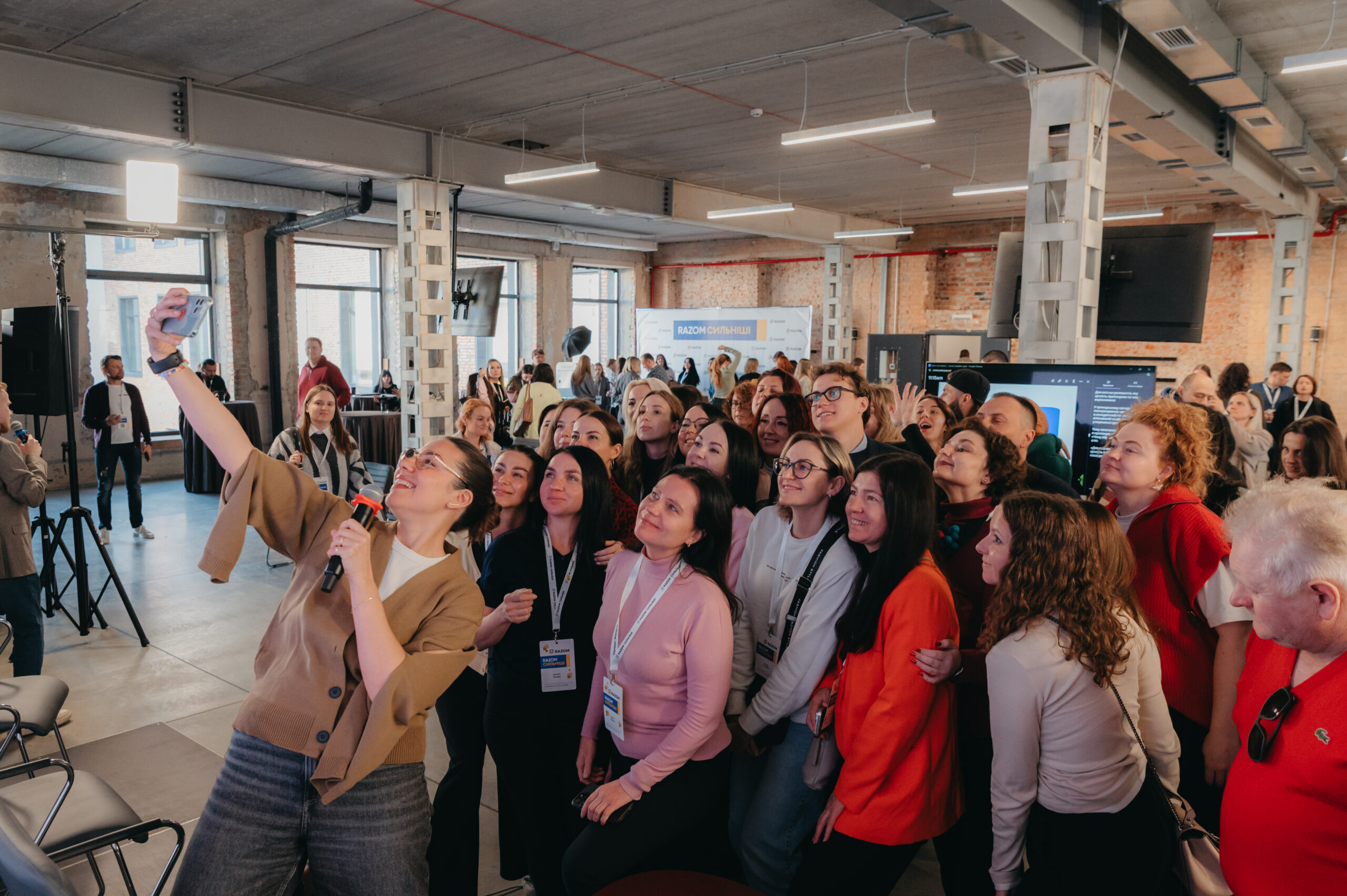
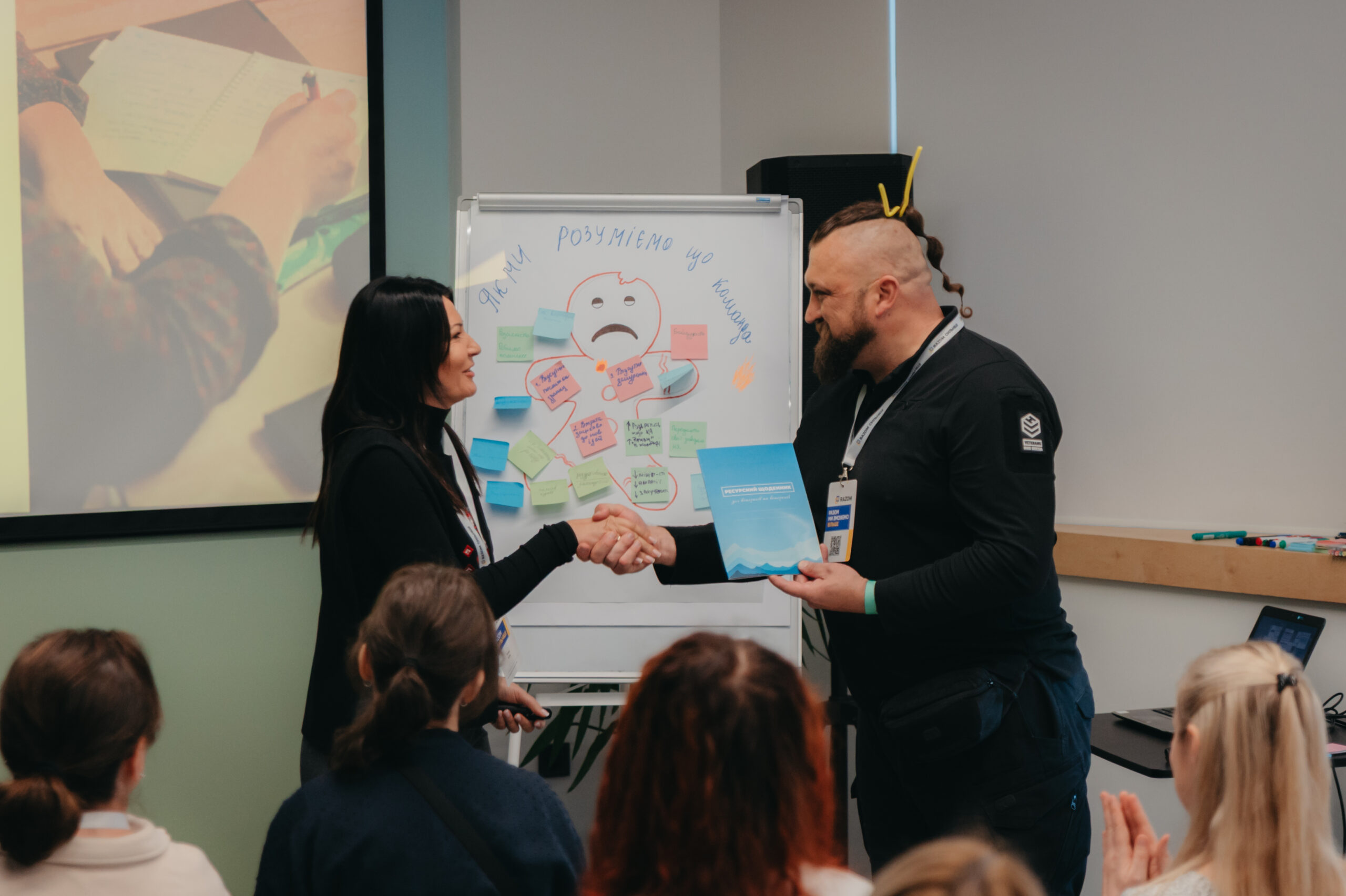
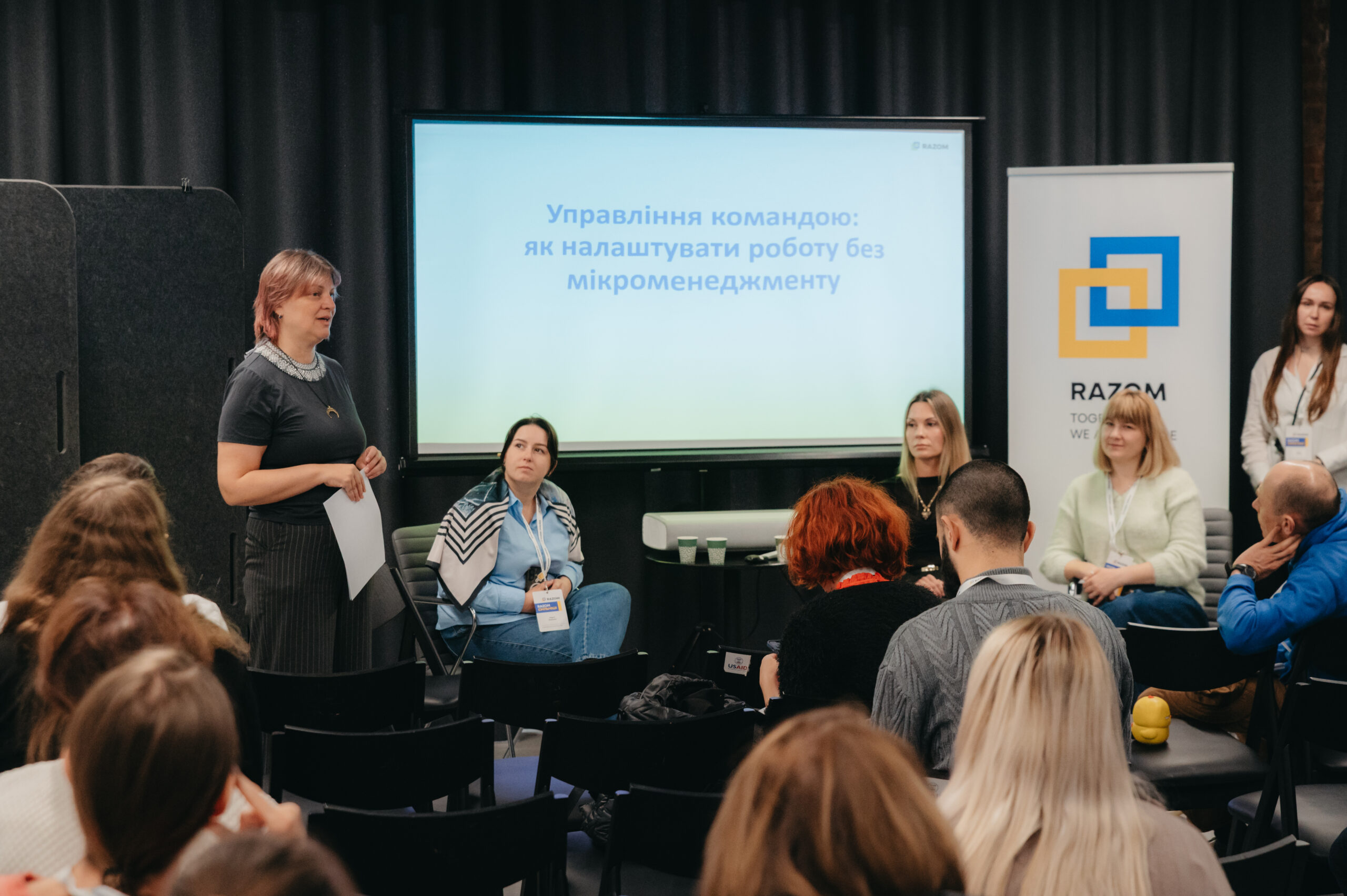
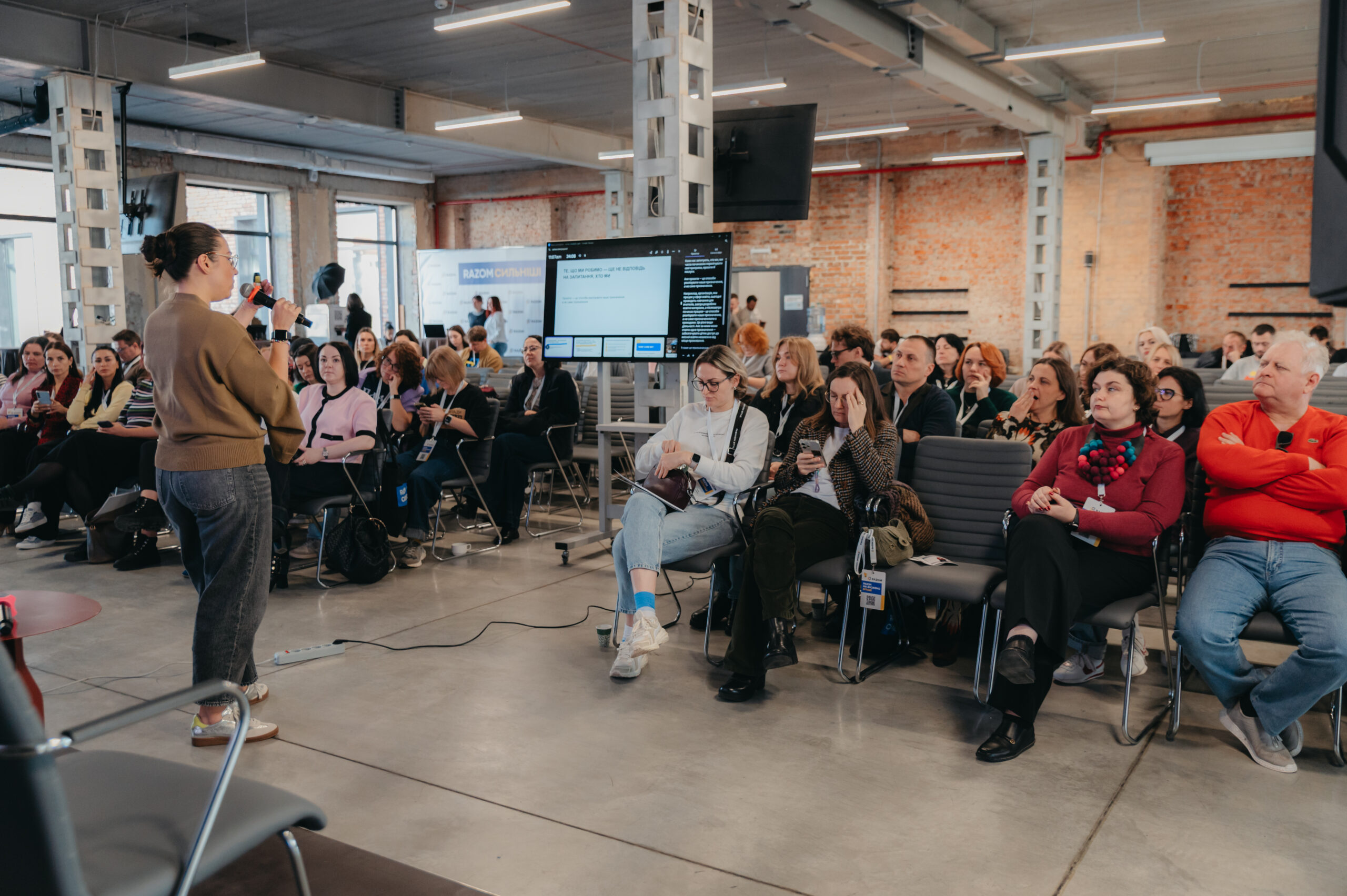
That was the question at the fourth Razom Sylnishi (Razom Stronger) conference, which brought together nearly 200 representatives from more than 80 local nonprofits and charitable organizations supported by Razom through grants. Held in Ivano-Frankivsk, the conference is part of Razom’s long-term program to strengthen Ukraine’s civil society. Its goal is to help organizations grow, build their capacity, find partners, and continue their work even in difficult conditions. Many other organizations in Ukraine had to cancel their planned conferences because of security concerns and financial constraints.
Razom Sylnishi 4.0 took place at Promprylad, a Razom partner. One of the main themes was collaboration: how organizations can join forces, find partners, and work together to address challenges that no single organization can tackle alone.
The conference program was shaped by the needs of organizations receiving grant support from Razom. Topics included fundraising and financial sustainability, team mental health, and micromanagement.
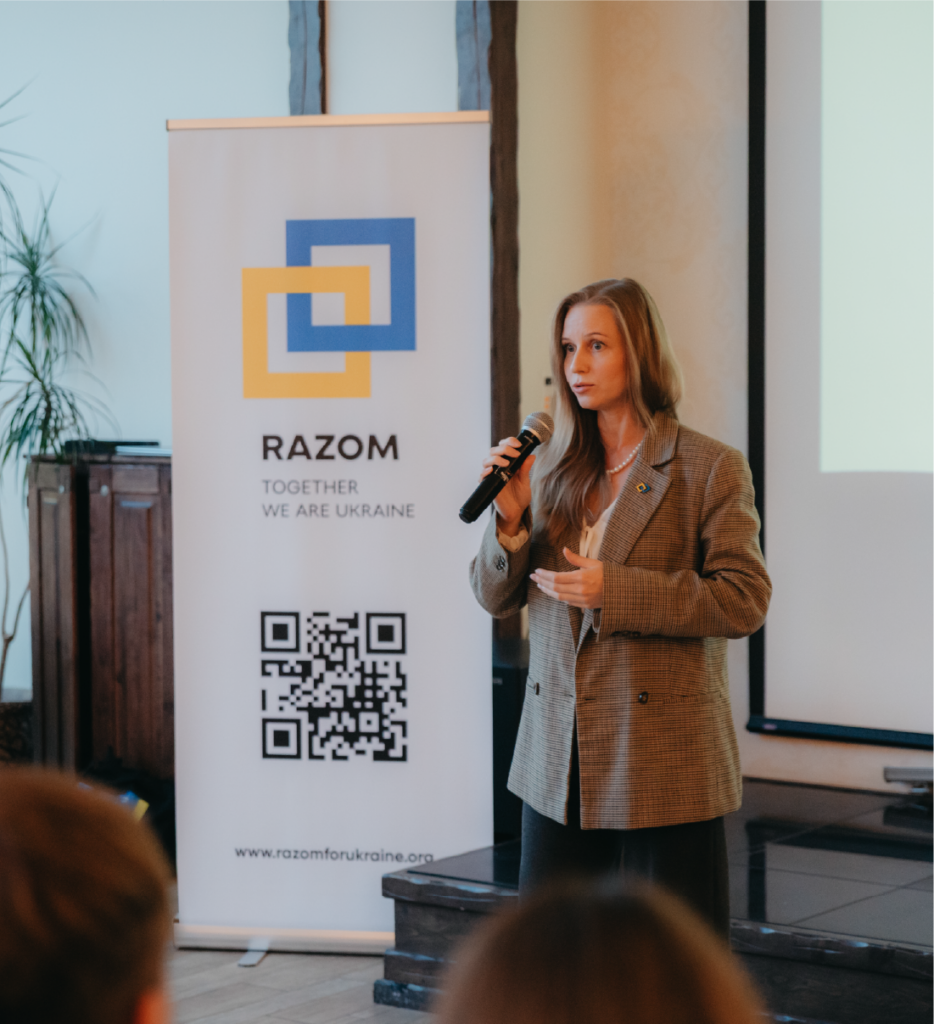
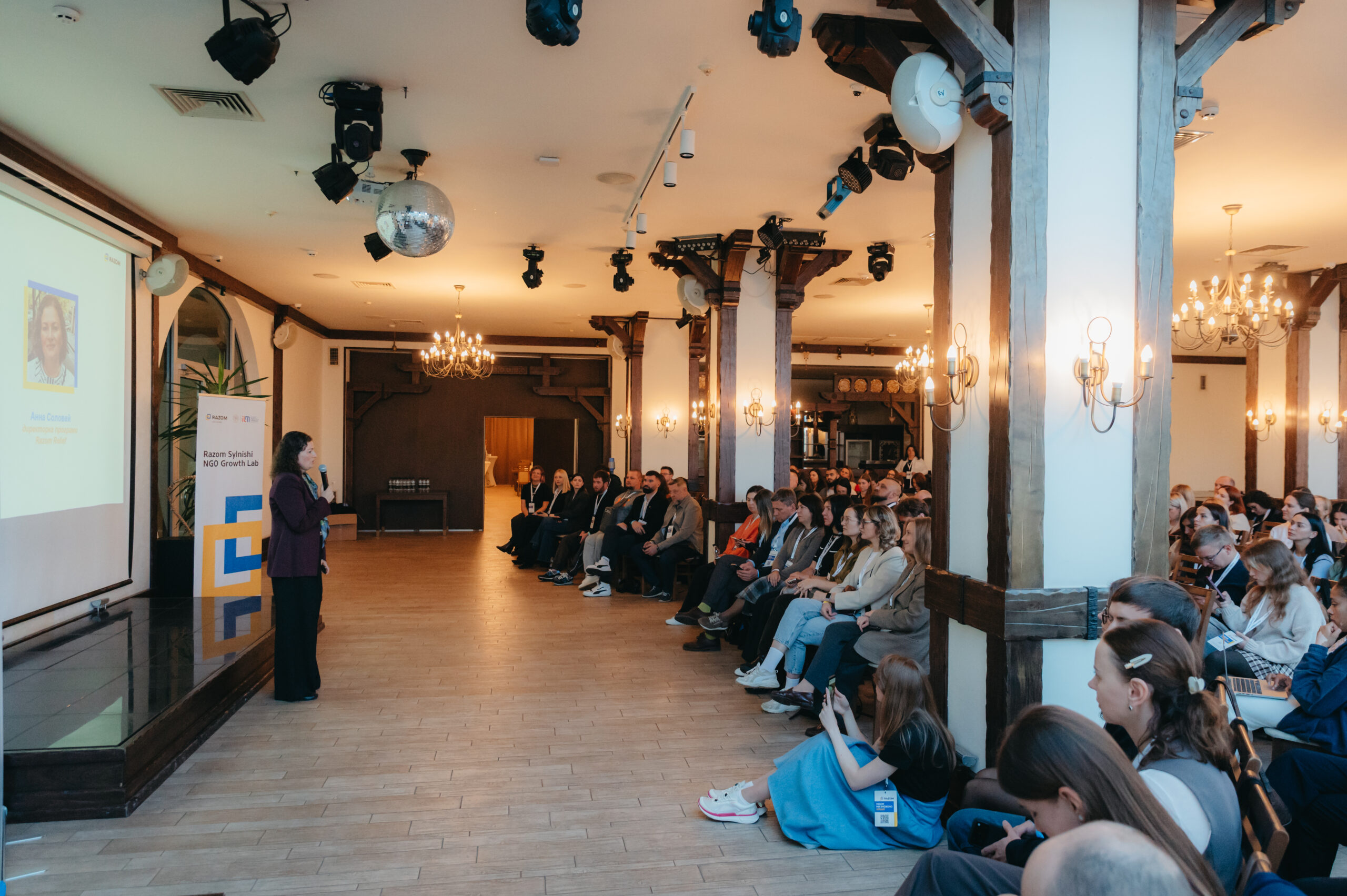
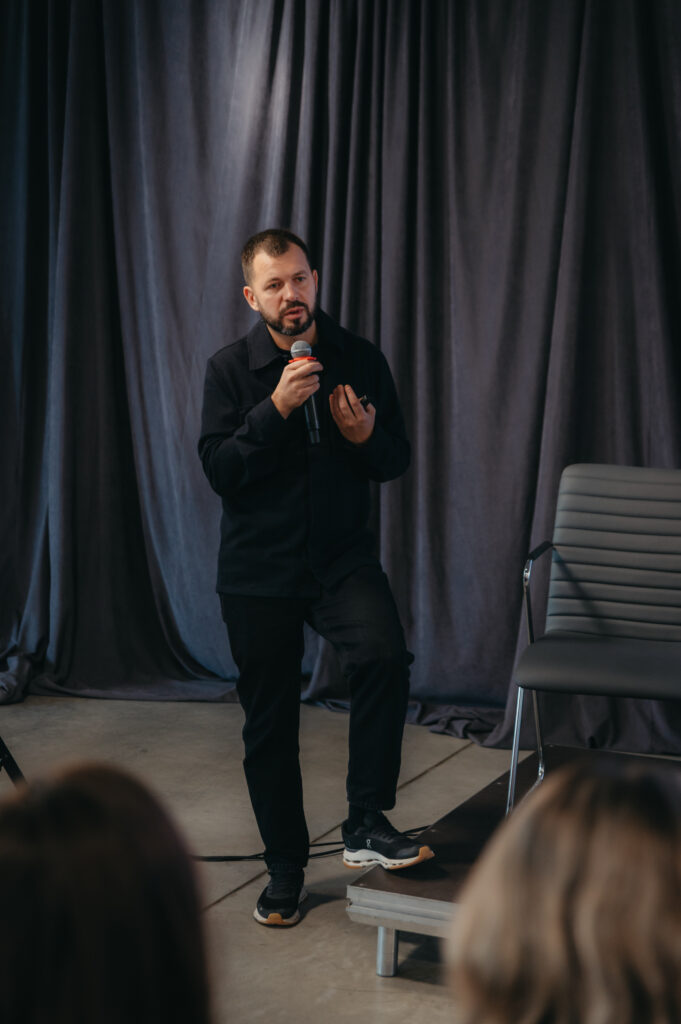
“We want this conference to be a place of inspiration and support, where new connections are made and a new day begins. We hope you feel that this conference was created for you,” said Anna Solovei, Director of Relief and Connect Programs.
Viktoriia Baltser, the Voznesensk Community Foundation
The Power of Partnerships
During a workshop for organizations working with young people, participants identified more than 15 potential partnerships in less than ten minutes. They discussed joint training programs for young people and teams, sharing expertise, and ways organizations could support one another.
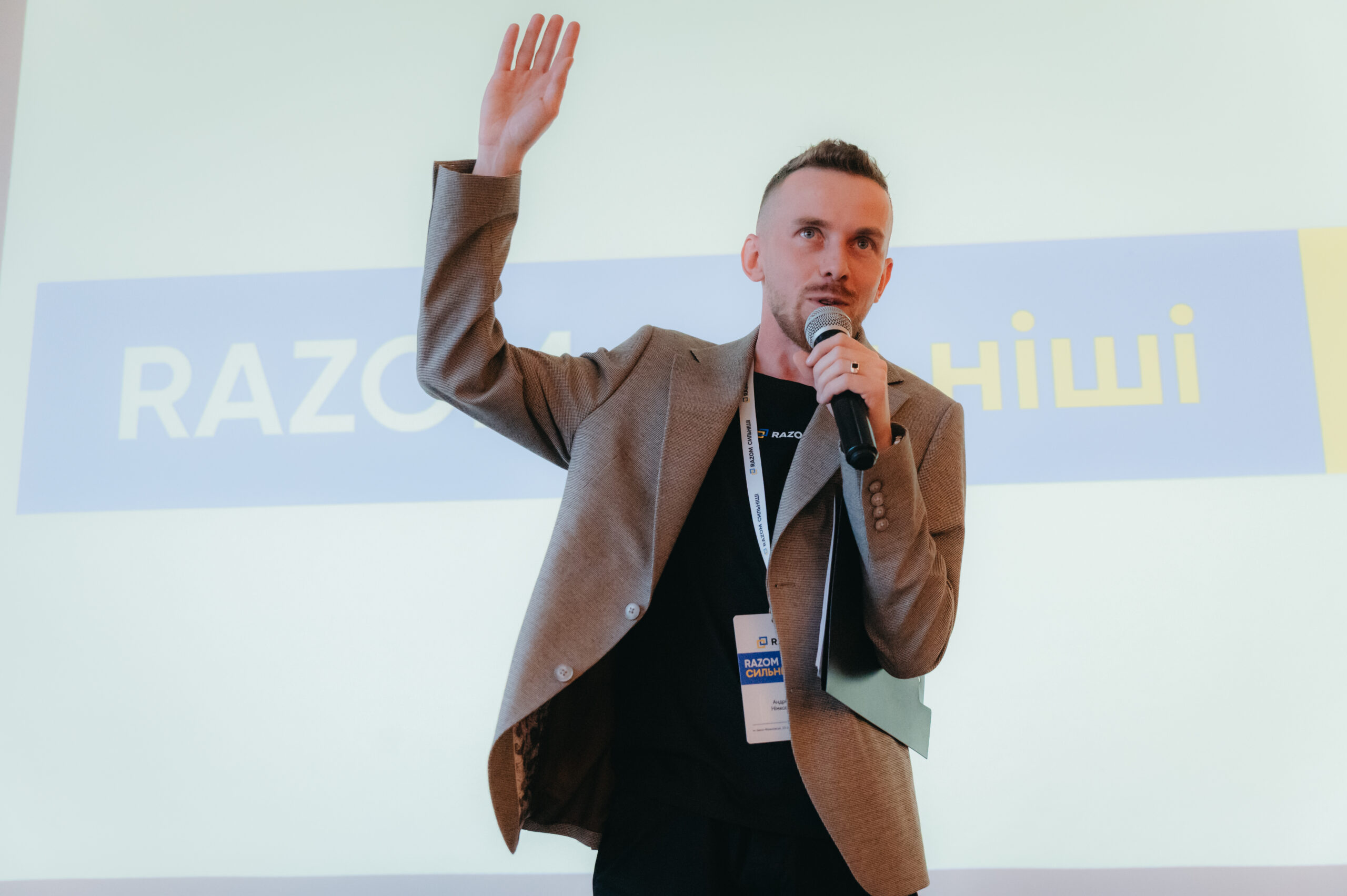
“We do everything we can to encourage our grantees to connect and develop joint projects,” said Andrii Nimkovych, Razom Sylnishi project manager and conference organizer.
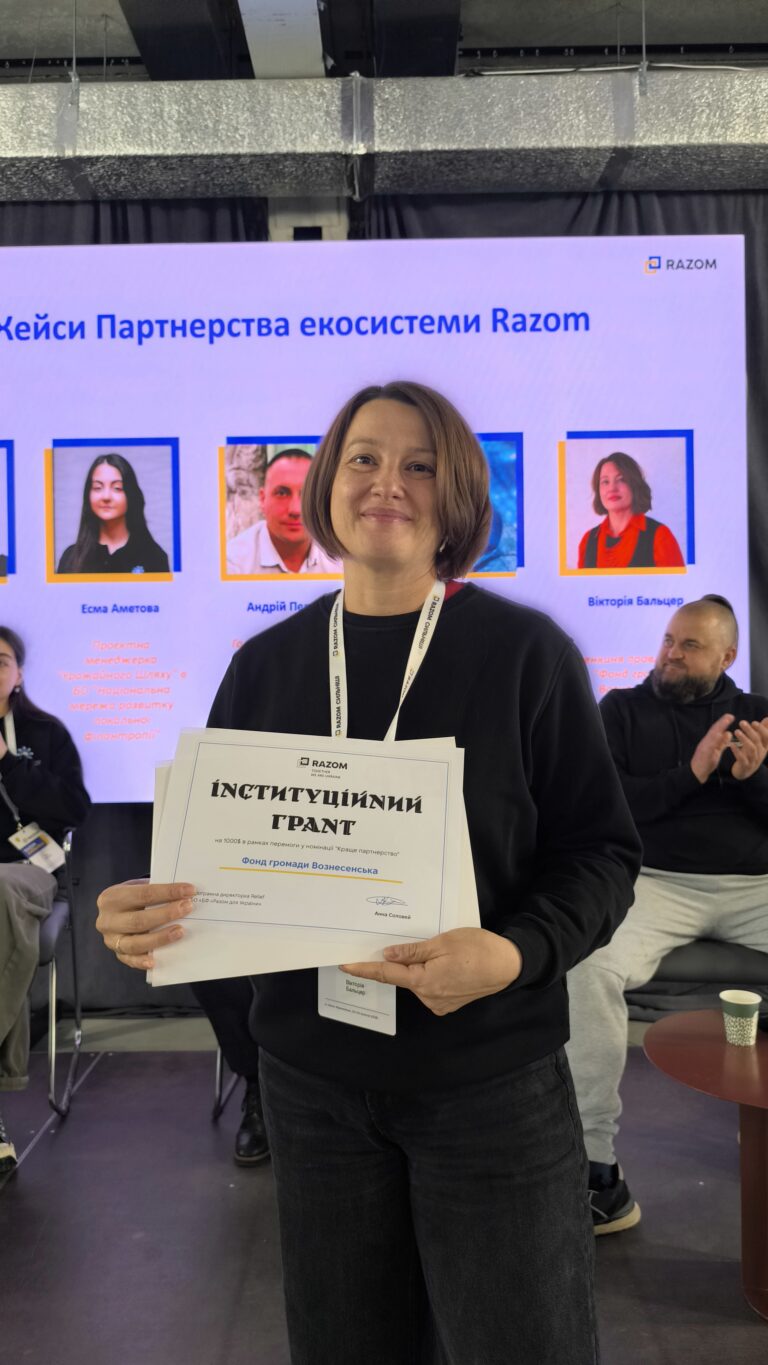
This year, Razom also recognized the winner of the Best Partnership award. The Voznesensk Community Foundation received the award along with a $1,000 institutional grant.
At a panel discussion on partnerships, the foundation’s leader, Viktoriia Baltser, noted that her organization was already carrying out or planning joint projects with nearly every speaker on the panel. Her team had even more partnerships in the works after the conference.
People United by a Common Purpose
Off the record, participants shared that they wished they had had more time to talk with one another. Their conversations covered education in Ukraine, employment, and the integration of veterans into society.
Some stepped outside their usual circles and learned about the challenges other organizations face. Others discovered that their experiences were not so different from those of their peers—and felt relieved to know they were not alone.
“This is my first conference, and I’ve realized one thing: we need to talk to one another. No problem is unimportant, and no problem is too small. Everything can be worked out. I’ve learned a lot today,” said Vladyslav from Volia Veteraniv (Veterans’ Will).
Yurii Fyliuk, an entrepreneur, civic leader, and founder and CEO of the Promprylad project
Culture Brings People Together, Too
The conference was about more than working sessions and sharing experience. It was also an opportunity to get to know the city, its culture, and the people creating new spaces for communities to connect.
Participants had the opportunity to visit the Ivan Franko National Academic Drama Theater. One of the conference speakers was Yurii Fyliuk, an entrepreneur, civic leader, and founder and CEO of the Promprylad project. Promprylad has transformed an industrial site into a place where different communities, ideas, and initiatives come together.
Like civil society, culture creates space for dialogue. It brings people with different experiences together, helps them better understand one another, and opens up possibilities for collective action.
Finding the Strength to Keep Helping Others
People who support others need support themselves. That is why the conference program included a workshop by Razom z Toboyu(Razom With You) on burnout and mental health.
Some participants admitted that they had not realized how exhausted they were until they ended up in intensive care. For people who are responsible for teams, projects, and helping others every day, their own well-being often comes last.
One participant, whose organization works to restore homes and support families affected by Russian attacks in the Kyiv region, joked that her team had sent her to the conference to “get some sleep.”
Behind the joke was an experience many Ukrainians know well. Russian attacks, overnight air raid alerts, and constant sleep deprivation take a particularly heavy toll on people living in Kyiv and Ukraine’s eastern and southern regions. Ivano-Frankivsk was chosen not only as a place for civil society organizations to meet, but also for safety reasons and to give participants a chance to rest.
“ I wasn’t in a very good place emotionally before the conference, but now I’ll go home feeling so much better!” shared Nadiia Korotaieva from Plast, Ukraine’s national scouting organization in the Odesa region.
Sometimes, continuing to help others starts with taking care of yourself. It also means being among people who understand your challenges, can offer support, and remind you why your work matters.
Creators or Victims of History?
At the end of her opening speech, Viktoriia Klymchuk-Dluhach recalled a quote by Yevhen Konovalets that she had shared during a conversation with Americans:
“We have a choice: to be creators or victims of history.”
“Ukraine’s civil society is choosing to be a creator of history, not a victim of it. Razom supports you as the people shaping Ukraine’s history,” Viktoriia said.
Nonprofits and charitable organizations across Ukraine put this choice into action every day. They support service members and veterans, help civilians, advance education, and find solutions to complex social challenges. They keep going even when they need support themselves.
The Razom Sylnishi conference is one way to provide that support. As part of Razom’s long-term commitment to strengthening Ukraine’s civil society, it creates a space where organizations can find the energy, connections, and inspiration to continue their work and help those who need it.
Razom brings together people who do not wait for history to decide Ukraine’s future for them. They are helping shape it themselves.
Did you know that 3 in 4 Ukrainians experienced mental health issues over the past year? The World Health Organization’s 2026 survey found that 76% reported stress, anxiety, low mood, or other mental health difficulties. As another winter approaches, access to psychological support matters more than ever, including for those who care for others.
Razom provides free psychological support to people affected by the war. Our mental health program Razom z Toboyu (“Razom with You”) has delivered more than 40,000 counseling sessions and supported over 22,000 people dealing with trauma, grief, and stress. It also trains local professionals who work with people affected by the war, helping them recognize psychological distress and respond with greater understanding.
Across Ukraine, this work also reaches the people who support veterans and their families. In Volochysk, in the Khmelnytskyi region, Svitlana Darmoroz knows how important this support can be. When Russia’s full-scale invasion began, Svitlana volunteered by collecting supplies for Ukrainian defenders, sending aid to the front lines, and bringing together people who wanted to help. She continued volunteering in the years that followed. On May 1, 2025, she took on a new role, joining the local Veterans Support Center as a specialist supporting veterans and service members returning from war.
She supports veterans as they adjust to civilian life and helps their families navigate the uncertainty and loss that can come with war. Some are waiting for news of loved ones who are missing or held captive; others are grieving someone they have lost.
“For families waiting for news, not knowing what has happened to a loved one can be incredibly difficult. Those who are grieving or adjusting to a loved one’s return also need understanding, patience, and support,” Svitlana says.
But supporting others can take an emotional toll. Svitlana knows this from experience:
“There are times when I’m so exhausted that I feel I can’t go on. But somehow, I always find a reason to keep going. I don’t see myself as anyone special. I just can’t stand by and do nothing when someone needs help.”
Svitlana first reached out to Razom psychological support center in Khmelnytskyi, for guidance on complex cases involving veterans and their families. She later invited the center’s team to provide training for her colleagues.
Through the Razom z toboyu Resilience program, four training sessions were held in villages across the community. Social workers, healthcare professionals, educators, and veterans’ support specialists learned about psychological first aid, grief, communication with veterans and service members, and professional burnout.
Svitlana found the practical exercises and case studies especially useful. They gave her and her colleagues concrete ways to approach difficult conversations and better understand what veterans and their families may be going through.
“Knowing the procedures isn’t enough in our line of work. Thanks to Razom’s training, we better understand what a person is going through, how to respond to difficult emotions, and how to offer support while respecting personal boundaries,” Svitlana emphasizes.
The sessions also helped Svitlana and her colleagues work out how to approach sensitive conversations and when to refer someone to a psychological professional. For Svitlana, supporting veterans starts with making sure that the people they turn to know how to listen, understand, and help without overstepping.
Svitlana’s story shows just how much psychological support can matter. For veterans adjusting to civilian life and families waiting for news of missing loved ones, having someone who knows how to help can make a real difference. In some cases, that support can save a life.
Razom helps local professionals support people facing these challenges. This winter, your support can help this work continue. Support Ukraine through Razom’s winter campaign.
We have been without electricity since October 2024. People rely on generators. Now we also have no gas or phone service. Thank God, there are no children here, but 110 older people remain in the village (as of October 15). They refuse to evacuate for different reasons. Some cannot afford to leave. Some have nowhere to go. Others simply do not want to leave their homes.
When people think of humanitarian aid, they usually think of food, water, medicine, clothing, and other basic necessities. In Ukraine, drone detectors have become another essential item.
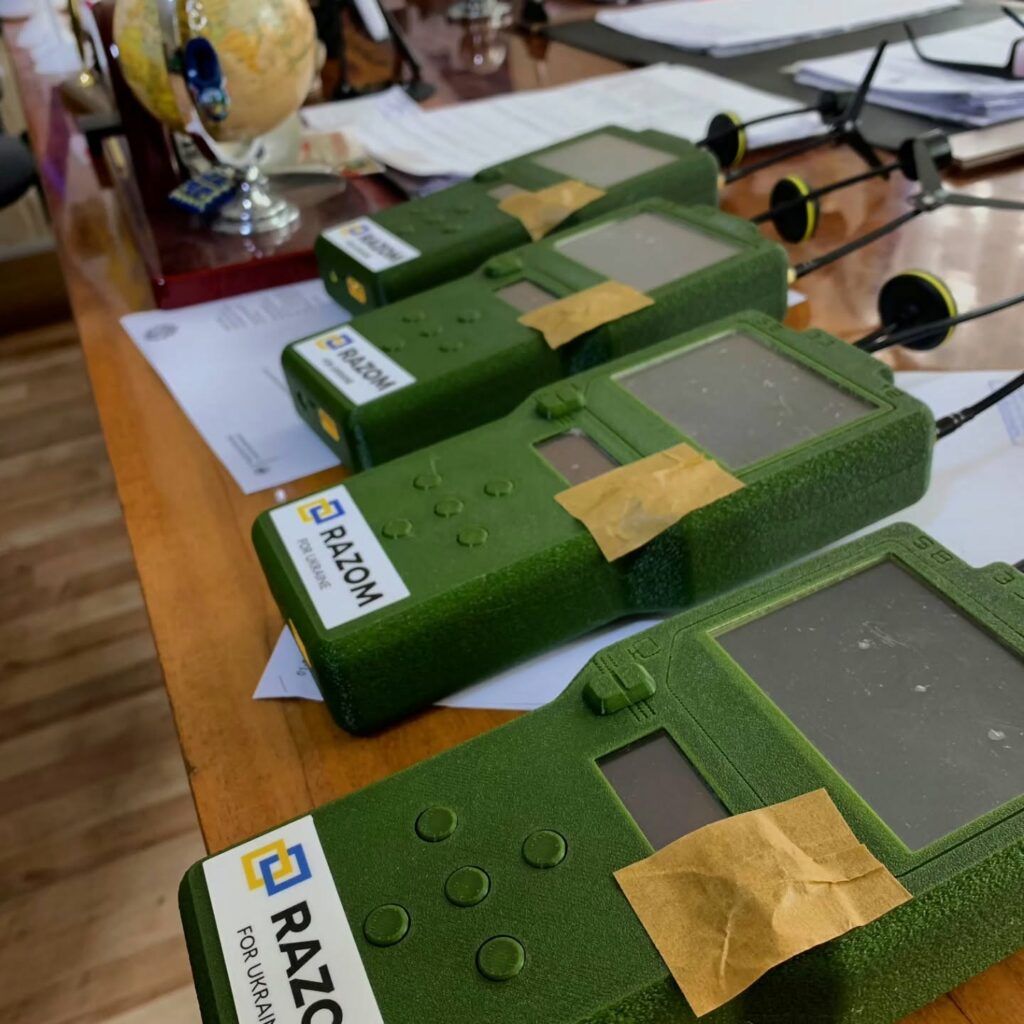
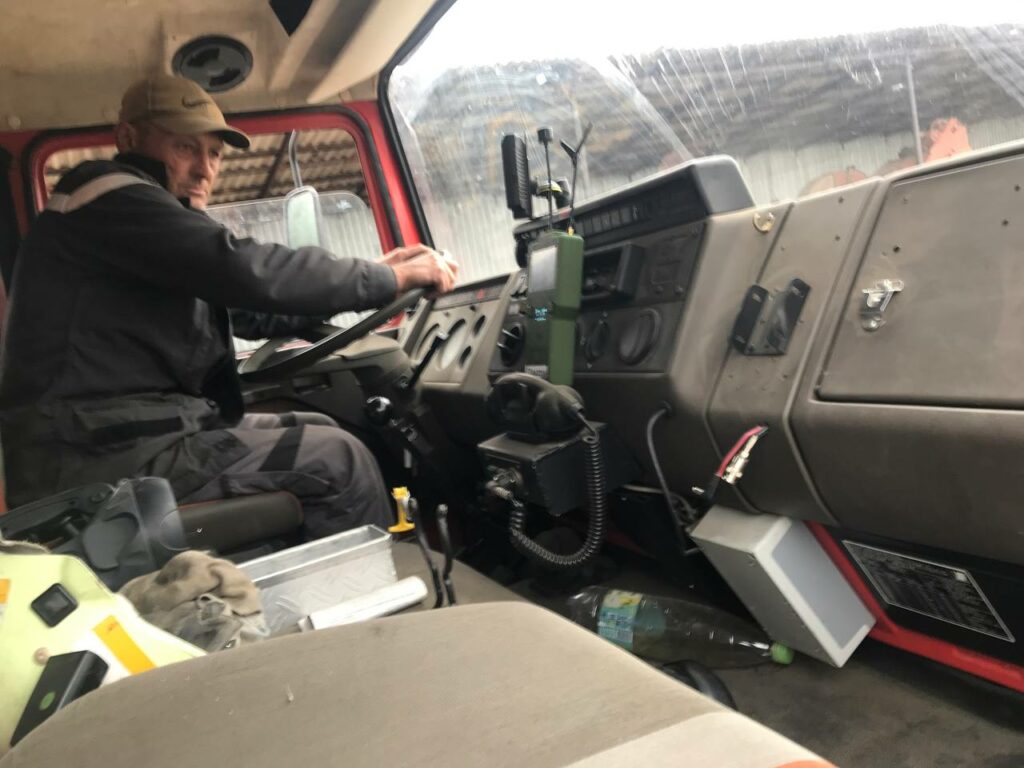
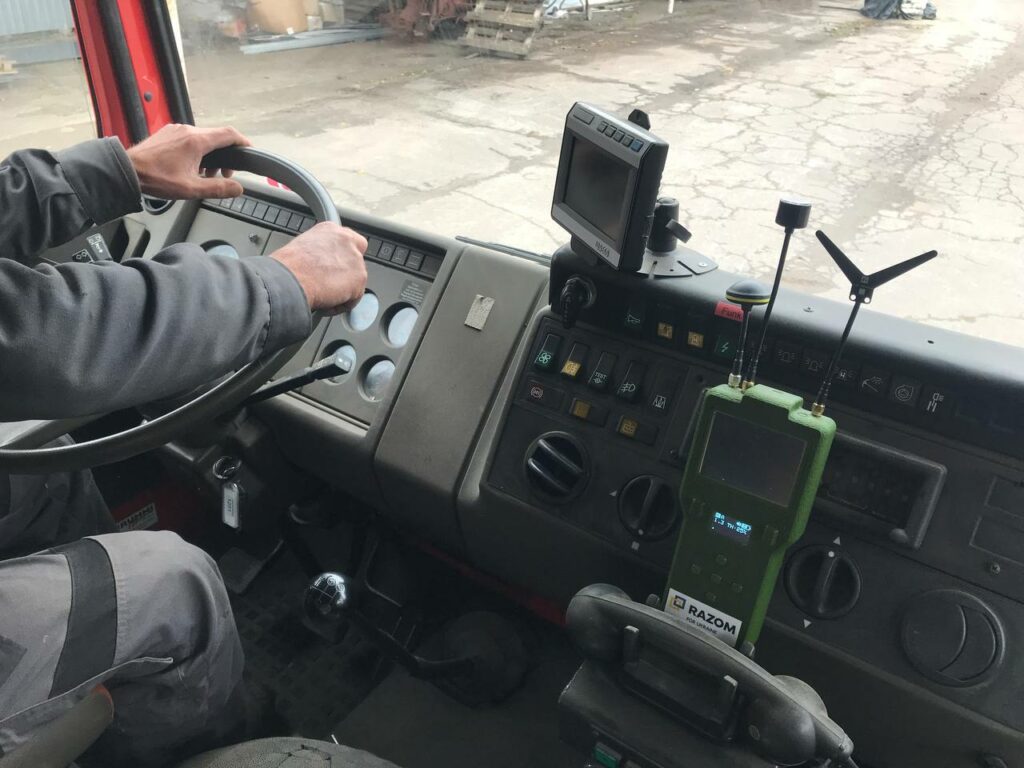
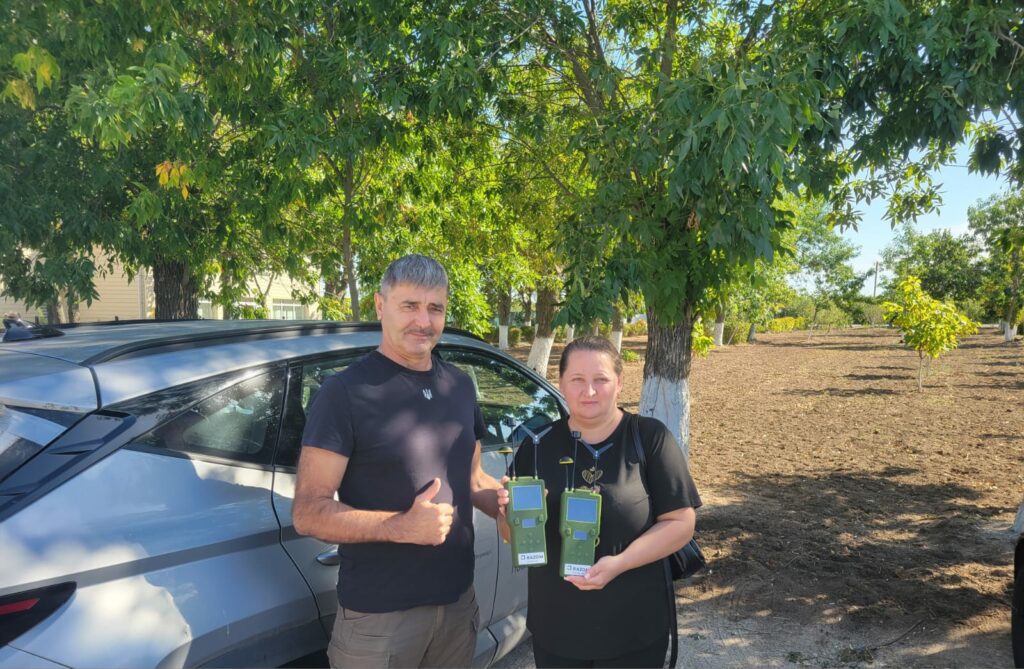
With financial support from Razom, Kherson Regional Charitable Fund «UNION» delivered 52 Dzyga (spinning top) drone detectors to the Kherson region. These devices help firefighters, medical teams, utility workers, social services, and evacuation teams stay safer while doing their jobs.
The Kherson region lies in southern Ukraine, with access to the Black Sea and the Sea of Azov. It is famous for its delicious watermelons. Today, part of the region remains under Russian occupation, while the rest faces constant attacks by Russian drones.
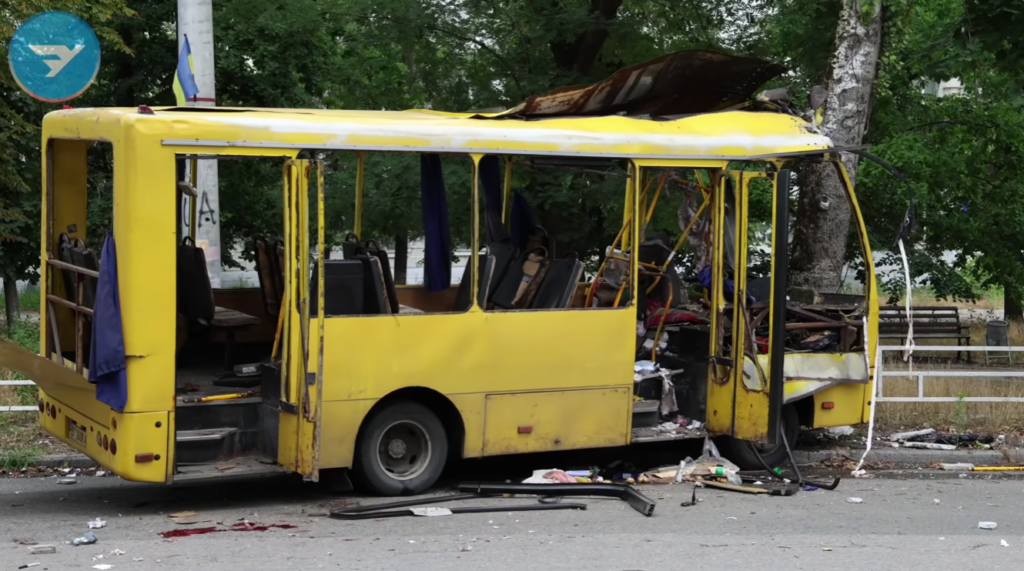
According to official data from the Kherson Regional Military Administration, the number of Russian drone attacks in the region has more than doubled over the past year, rising from around 2,500 to 5,500 drone attacks per week in the de-occupied part of the region. Russian forces increasingly target civilian vehicles, municipal equipment, minibuses, ambulances, and evacuation vehicles.
This affects the daily lives of local residents. Traveling around Kherson and operating public transport have become life-threatening.
Public transport in Kherson after a Russian drone strike. Source: Vgoru.Kherson.
How Do Drone Detectors Work?
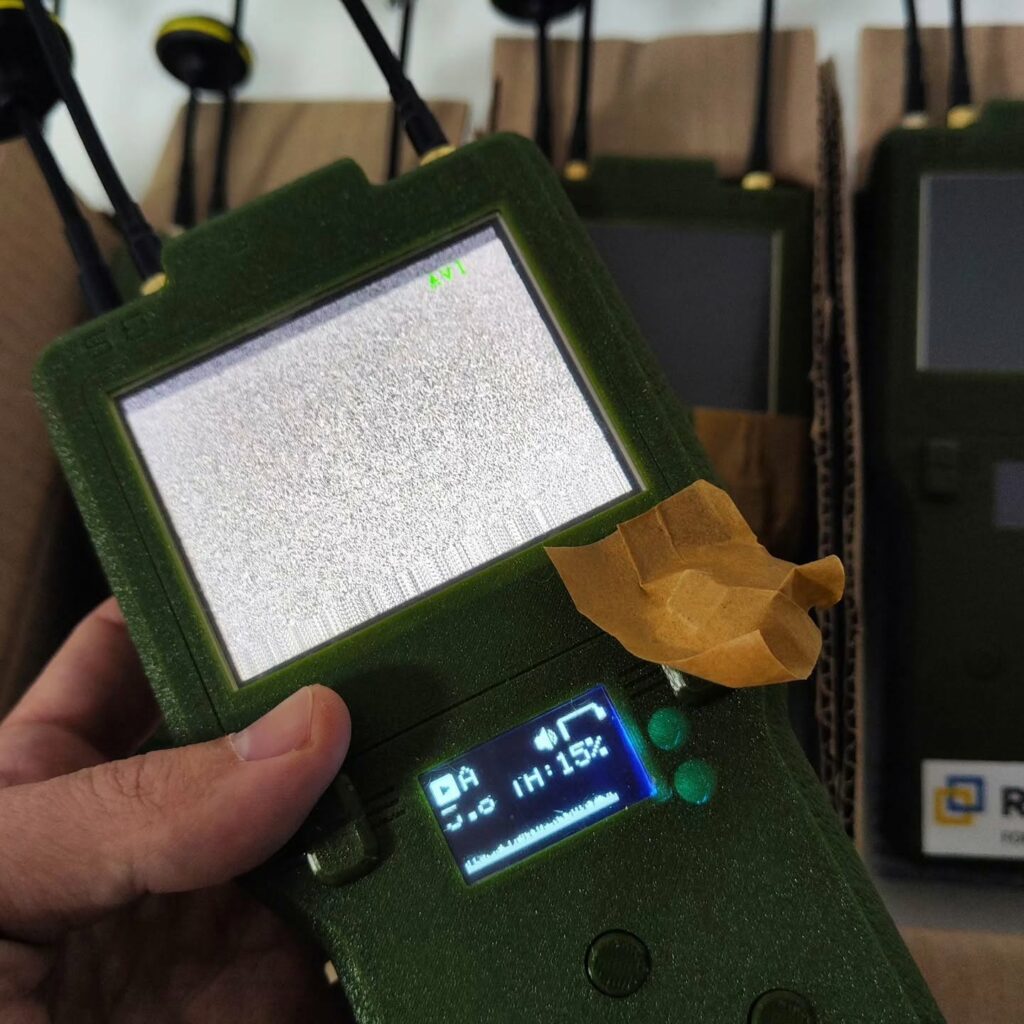
A drone detector is like a pocket-sized TV. But instead of news and your favorite shows, it searches for video signals from nearby drones that may be filming you in real time.
For example, someone riding alongside an ambulance driver can use the detector to see what the Russian drone pilot sees. The device allows users to switch between different “channels,” or frequency ranges, to search for signals. The receiver does not transmit any signals itself, so it cannot be tracked through its own signal emissions.
Using a drone detector gives people more time to decide what to do while a drone is still far away. This can literally save lives.
To choose the best detectors for the people receiving them, the Razom team relied on tests conducted by radio communications specialists. They carried out field tests of around 40 types of detectors and different models.
One of the best options in terms of price and quality was Dzyga, a drone detector made by a Ukrainian manufacturer. The team considered not only professional test results but also positive feedback from users.
Dzyga is easy to use: switch it on, raise the antenna, and wait for a signal. It charges like a phone, using a power bank or a car charger. If the device breaks, the warranty covers repair or replacement.
Unfortunately, no detector can identify every drone, even though Dzyga covers most of the radio frequency ranges used by drones. For example, if a drone operates through a fiber-optic cable or flies on autopilot without an operator controlling it, the detector may not detect it.
That is why, even when using Dzyga, people continue to watch and listen carefully to their surroundings so they have time to protect themselves from Russian drones.
We spoke with people in the Kherson region who use Dzyga detectors about the situation in their communities and how the devices have become part of their daily work.
“Dzyga” drone detectors donated by Razom to local communities
Ruslan Petrovych: Head of the Local Fire Department in Arkhanhelske, Vysokopillia Community
“During the summer, we often had fires caused by dry grass, or a drone would crash somewhere and start a fire. So we went out on emergency calls at least once every one or two weeks.
Before we had this detector, drone operators would call us and warn us to be careful or stop and wait somewhere because something was flying nearby. We also checked social media groups for updates. Now we can see the signals ourselves.
Three of us go out on each call. One person always drives, and another uses Dzyga to watch the monitor. When the detector picks up a signal, it starts beeping. Then we turn on a larger monitor, which shows us an image from the drone.
We don’t wait until we can see our own vehicle on the screen. If the monitor starts showing an image, we stop, get out of the vehicle, look at the sky, and listen carefully. If possible, we move to a safer place.”
Ruslan Petrovych during a fire department response
The fire department uses the “Dzyga” drone detector
Nataliia Kamenetska, Village Head of Oleksandrivka, Stanislav Community
“We have been without electricity since October 2024. People rely on generators. Now we also have no gas or phone service. Thank God, there are no children here, but 110 older people remain in the village as of October 15. They refuse to evacuate for different reasons. Some cannot afford to leave. Some have nowhere to go. Others simply do not want to leave their homes.
“The Russians attack all kinds of transport, whether it is a car or even a bicycle. In cold weather, they target places where they see steam or smoke rising.
“After Russian drone strikes, people in our village can also be left without water. Our water supply is centralized, and the wells are outside the village, in an open field.
“For utility workers to connect a generator and restore the water supply, they need at least basic equipment to warn them when drones are nearby. That is why these detectors are so important to us. Thank you so much for this support.
“We also use them when we travel outside the village to collect deliveries of diesel fuel.”
Humanitarian Aid That Meets Real Needs
The situation in Ukraine is constantly changing, as are the weapons Russia uses to attack Ukrainian communities. Humanitarian aid must keep pace with these changes and respond to what people actually need on the ground. For Razom, listening to local communities and responding quickly is essential.
The 52 drone detectors will not stop Russian attacks. But they will help firefighters respond to emergencies, utility workers restore water supplies, and social workers and evacuation teams carry out their work with a better chance of staying safe.
This support helps communities keep going, even in places where everyday work has become life-threatening. Most importantly, these devices can save lives.
Another winter of Russia’s full-scale war lies ahead. Razom is raising funds to provide Ukrainians and local services with essential support, from backup power to equipment for emergency responders.
Your support will help Ukrainian communities prepare for winter and keep essential services running — services that people depend on for their lives and well-being.
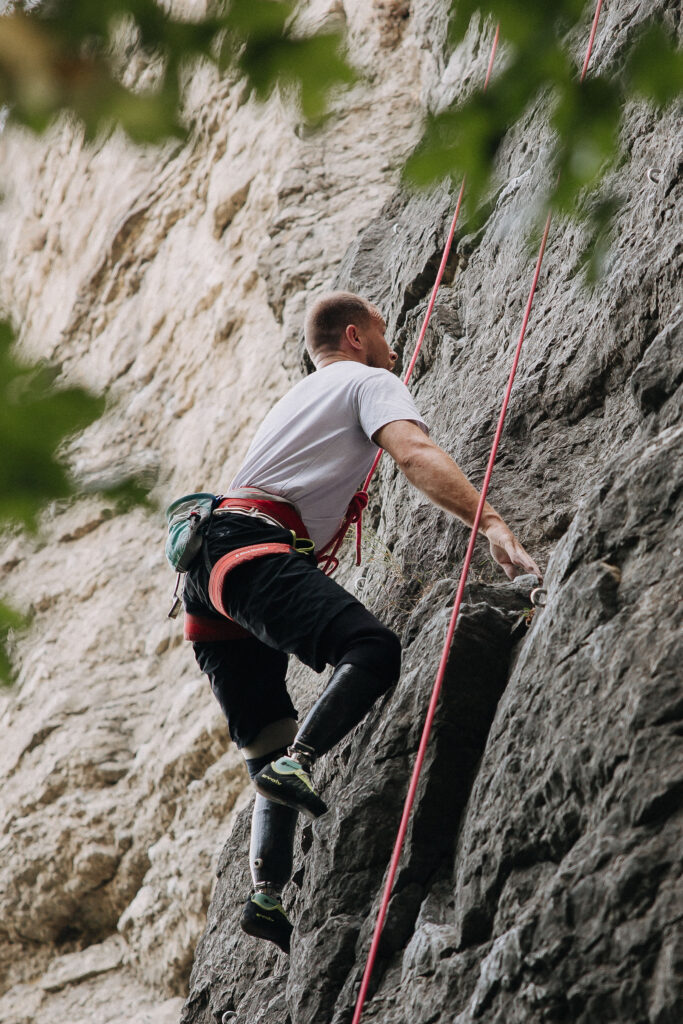
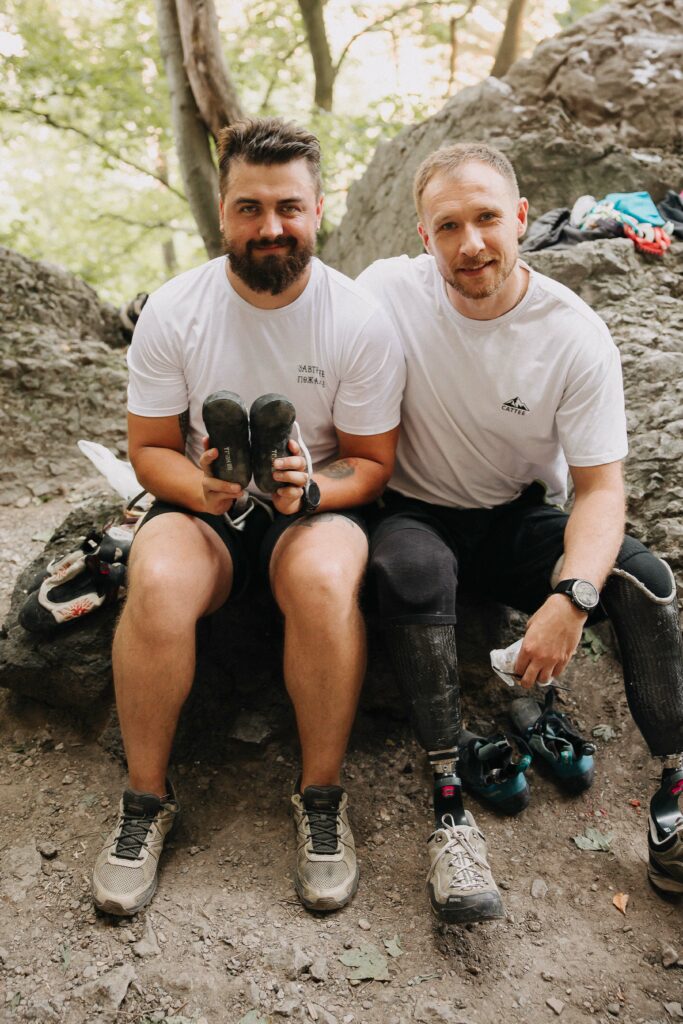
Before Russia’s full-scale invasion of Ukraine, Oleksandr Zhovnenko loved the mountains and rock climbing. After a serious injury on the front lines, he lost both legs but did not give up the activity he loved. At an adaptive climbing training camp supported by Razom, Oleksandr tried special prosthetic feet designed to help people with amputations climb rocks for the first time.
Today, he is also the captain of Ukraine’s national para ice hockey team. We spoke with Oleksandr about recovering after an injury, the support of the veteran community, and his plans to climb mountains again.
I started talking to guys who had already gone through the process of getting prosthetics
From Injury to Para Ice Hockey
“No one prepares you for disability. You don’t think, ‘I’m going to serve in the military, but what if I lose a leg or something else happens? How will I live?’” Oleksandr says.
Before Russia’s full-scale invasion, he organized trips around the world and later worked in IT. After the birth of his first child, Oleksandr joined the military and became a drone operator with the Azov Brigade, part of Ukraine’s National Guard.
During his service, a Russian artillery shell hit the dugout where Oleksandr was resting before his next shift.
“After the explosion, the dugout caught fire almost immediately. I got up to run out but fell right away. My right leg was hanging on by bits of skin and clothing. I applied a tourniquet immediately. Everything inside the dugout burned. Two of us suffered shrapnel wounds. Everyone survived,” he recalls.
About a week and a half later, doctors amputated Oleksandr’s other leg in Lviv. While still receiving treatment and using a wheelchair, he began attending para ice hockey training sessions.
Other veterans became an important source of support. They had already received prosthetics, returned to work, and found ways to rebuild their lives after injury.
“I was still in the hospital, going through doctors’ appointments and surgeries. Almost immediately, I started talking to guys who had already gone through the process of getting prosthetics. They had their own lives and jobs. I think that helped me avoid falling into depression. I saw that life could still be okay,” Oleksandr says.
Today, he is the captain of Ukraine’s national para ice hockey team. Along with giving motivational speeches, he keeps the team’s spirits up by dancing. In August, the Ukrainian team defeated Great Britain 4–0. The Ukrainian national team has been around for only one year, while the British team has been around for 10 years.
Moving Forward and Climbing Higher
Before the full-scale invasion, Oleksandr loved hiking in the mountains and later took up rock climbing. After his amputations, he returned to climbing at an adaptive climbing training camp, where he tried special prosthetic feet designed for the climbing.
“I had seen people with prosthetics climbing at a pretty high level. The American coaches brought special feet designed for rock climbing. I could feel how much more comfortable they were than the ones I use for walking. I even thought about whether I could make something similar myself using my old prosthesis,” he says.
For Oleksandr, the camp was a chance to see what he could do with the new equipment. For the other participants, it was an opportunity to try adaptive climbing with guidance from experienced coaches.
Building Skills and Creating Opportunities for Other Veterans
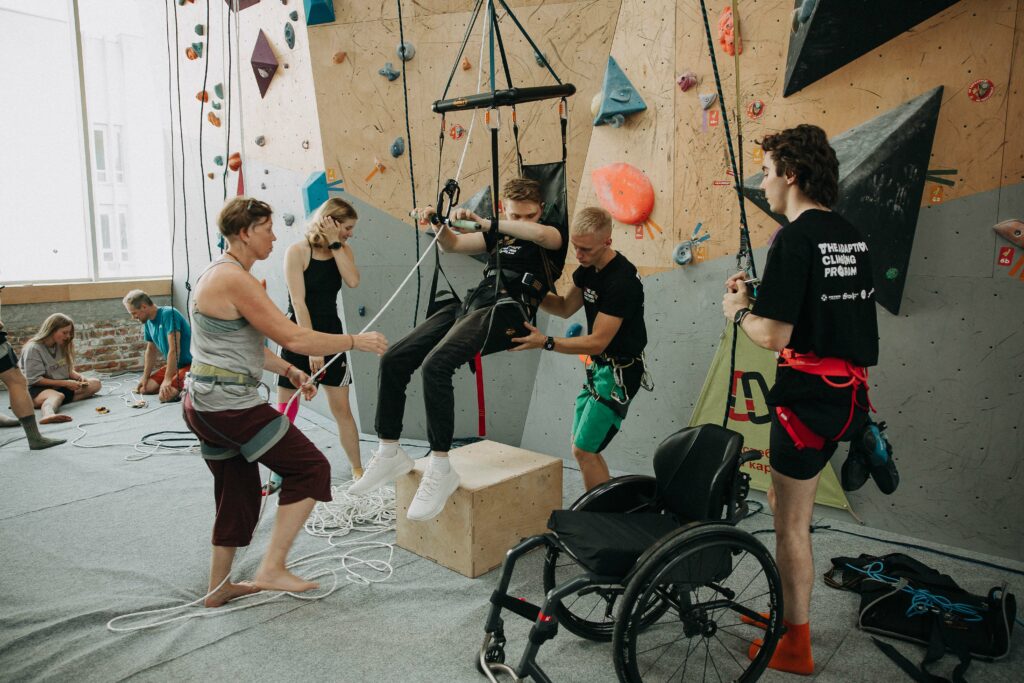
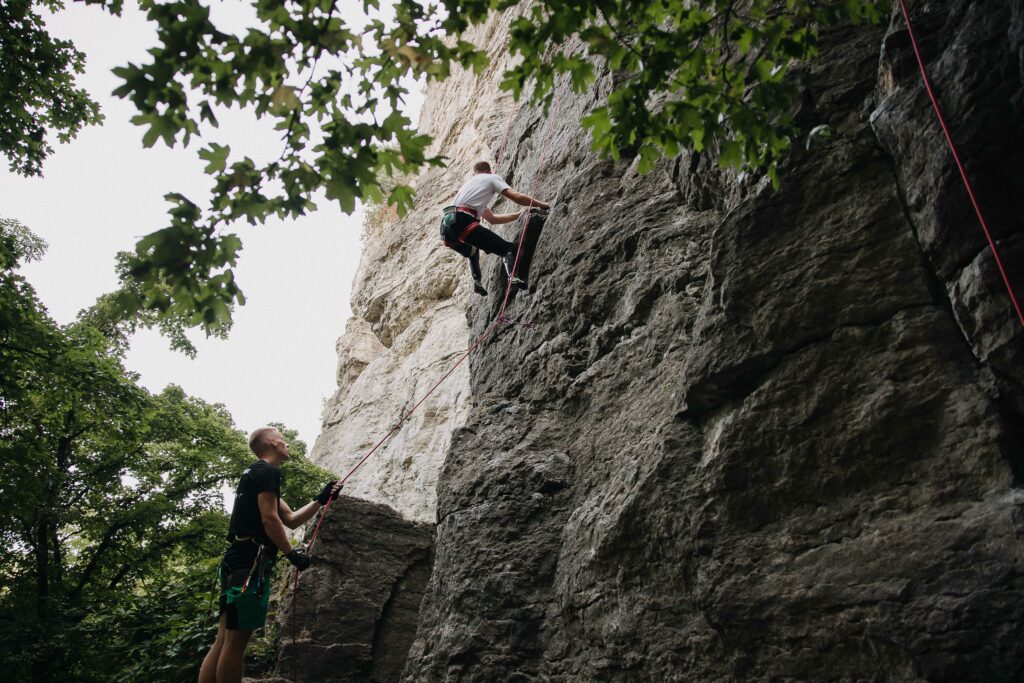
The five-day training camp brought together nine veterans and 12 coaches. Participants trained at an indoor climbing gym in Ivano-Frankivsk before moving on to natural rock formations in Kamianets-Podilskyi.
Razom supported the project in partnership with the Ukrainian NGO Veterans Civilian Petros, the Second Breath Charitable Foundation, and Paradox Sports, a U.S.-based organization from Colorado.
The camp was about more than giving veterans a chance to try adaptive climbing. Another key goal was to train Ukrainian coaches who can use these skills in their future work with people with different disabilities.
The coaches learned how to use specialized climbing prosthetics for people who have had a leg amputated, as well as safety systems for climbers with paralysis. The American partners also provided specialized equipment worth $10,000.
But adaptive climbing takes more than the right equipment. Coaches need to know how to adapt climbing techniques to each person’s needs and make sure every training session is safe. The Paradox Sports coaches shared their experience and practical skills with their Ukrainian colleagues.
With Razom’s support, the project is helping Ukraine develop not only adaptive sports programs but also a community of trained coaches who can make sports more accessible to veterans and other people with disabilities.
Now I don’t pay attention to my prosthetics.
New Summits Ahead
For Oleksandr, one important sign of recovery is feeling confident in everyday life again.
“Now I don’t pay attention to my prosthetics. And the most important thing is that my loved ones can forget I have them, too. They don’t have to think about it. It feels good to have regained my ability to do things and to know that the people around me don’t have to worry about me,” he says.
Before his injury, Oleksandr dreamed of climbing the Tatras. Now, he is planning that climb again. Special equipment, support from friends, and his experience returning to rock climbing have helped him see that this goal is still within reach.
“The Tatras have terrain and shapes similar to the Alps and even the Himalayas, but they aren’t as high. That means you can practice your climbing techniques there. Now I can see that it’s possible. I already have a circle of friends and people I know who can support me and help me. It feels like there’s still so much ahead,” Oleksandr says.
Oleksandr’s story shows that recovery is about more than medical treatment and prosthetics. It is also about returning to the activities you love, finding a community of people who understand your experience, and being able to plan for the future again.
By supporting initiatives like this, Razom helps veterans discover new opportunities and gives Ukrainian coaches the knowledge and tools they need to work with people with disabilities. What starts with one training camp can open up new possibilities for many people across Ukraine.
At Razom’s Washington, D.C., office, Ukrainian innovators and American policymakers explored the technologies reshaping modern security and the opportunities for deeper U.S.-Ukraine cooperation.
Ukraine’s experience defending itself against Russia’s full-scale invasion is transforming how the world understands modern warfare. Ukrainian engineers, trainers, and innovators are developing and adapting technologies at remarkable speed, drawing on lessons learned directly from the front lines. These innovations have implications far beyond Ukraine, offering important insights into the future of unmanned systems, emerging security threats, and international defense cooperation.
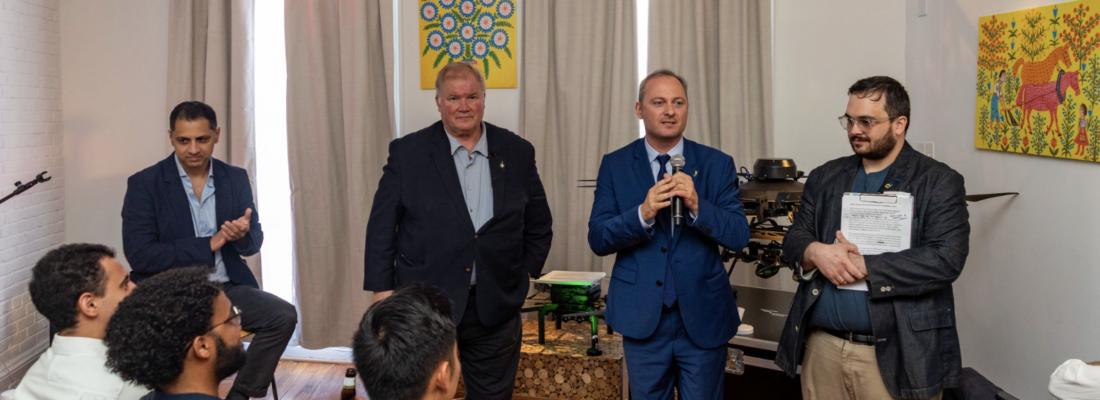
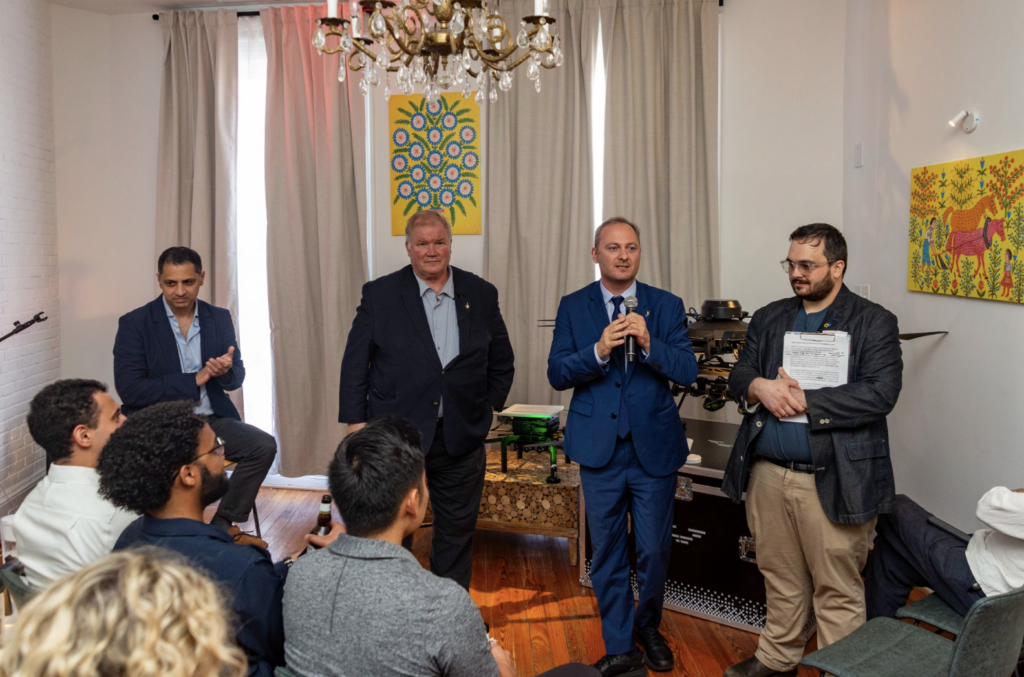
To bring that expertise directly to American decision-makers, Razom for Ukraine’s Advocacy Team convened and hosted Prometheus, an interactive defense innovation showcase at its Capitol Hill office in Washington, D.C., earlier this month.
Organized in partnership with the Embassy of Ukraine in the United States, the Foundation for Defense of Democracies (FDD), Liberty Ukraine, Accshellerator, Ukraine’s Boryviter Centre of Excellence, and Truth Hounds, the event welcomed more than 100 congressional staffers, executive branch officials, national security experts, and Ukrainian innovators.
“Out of necessity, Ukrainian engineers have developed inexpensive technologies that are being deployed in weeks, challenging weapons systems worth millions of dollars. Ukraine is at the forefront of this transformation, and the United States has much to learn from its experience. One of Razom’s central objectives was to build support for a formal U.S.-Ukraine working group to facilitate cooperation on unmanned systems,” said Daniel Balson, Director of Razom Advocacy.
A Hands-On Look at Ukrainian Innovation
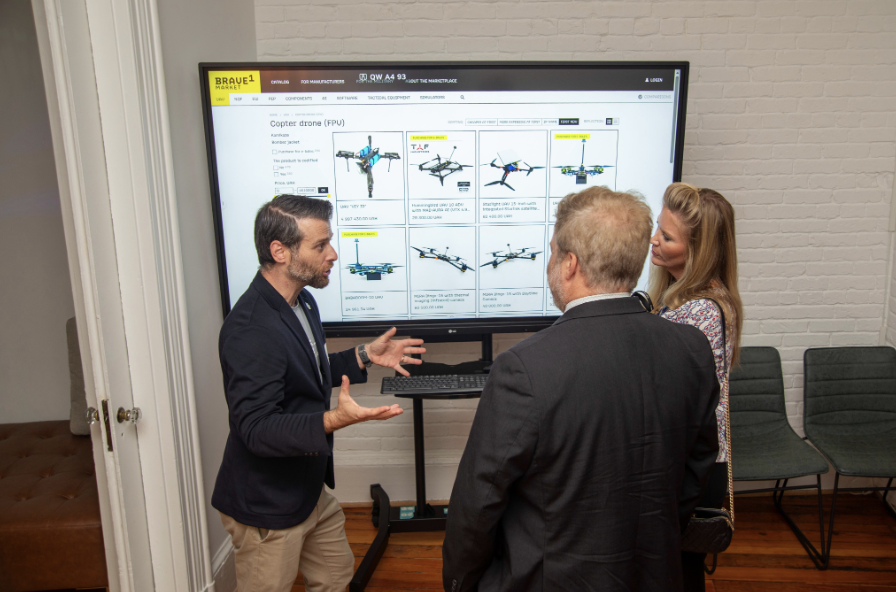
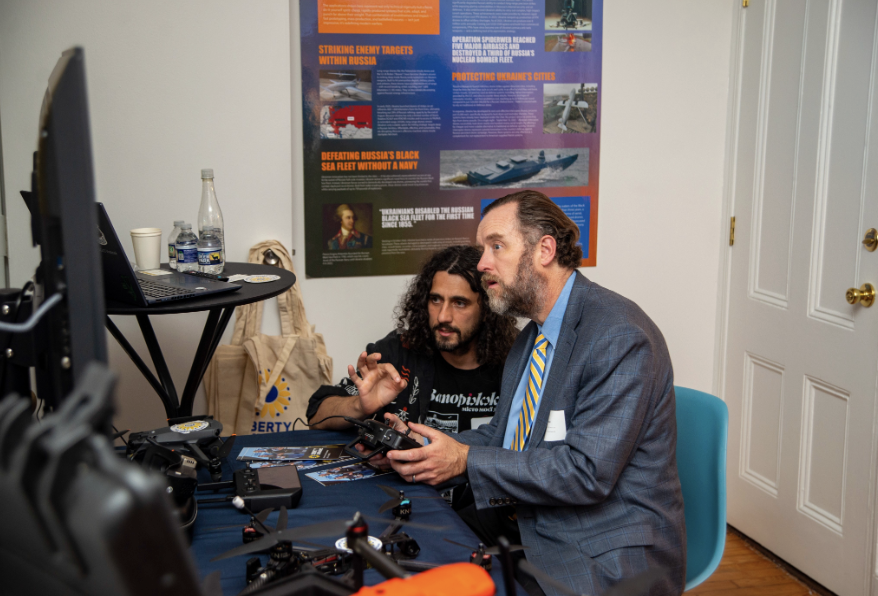
Prometheus gave participants an opportunity to experience Ukrainian technology firsthand and speak with the people developing and using it. Guests took the controls of first-person-view (FPV) drone simulators, examined Ukrainian drone models, explored battlefield logistics software, and learned about rapidly evolving technologies designed to counter unmanned threats. The demonstrations illustrated how quickly Ukraine’s innovation ecosystem has evolved under the pressures of war.
Ukrainian engineers, entrepreneurs, and frontline professionals have developed ways to adapt relatively inexpensive technologies to challenges traditionally addressed by far more costly systems. In some cases, technologies can be modified and deployed in weeks, or even days, to meet rapidly changing needs.
For the American policymakers in attendance, the opportunity to engage directly with Ukrainian innovators brought those developments into sharper focus. The showcase created space for technical questions, practical demonstrations, and conversations about what Ukraine’s experience can teach its international partners.
What Ukraine’s Experience Means for Global Security
A fireside conversation featuring Rear Admiral (Ret.) Mark Montgomery and Shashank Joshi of The Economist explored the broader implications of Ukraine’s experience for the future of warfare and American security.
As unmanned technologies evolve, Ukraine’s experience offers insights into how quickly security challenges can change and how institutions can adapt to emerging threats. The discussion reinforced one of the event’s central themes: Ukraine’s knowledge and experience can make a meaningful contribution to its partnerships with the United States. Ukraine has become an important source of practical expertise in unmanned systems, and sustained cooperation offers both countries opportunities to learn from that experience.
From Innovation to Lasting Cooperation
Prometheus also highlighted an opportunity to translate these exchanges into more structured collaboration: H.R. 9550, the Strategic Unmanned Systems Partnership Act, proposes strengthening U.S.-Ukraine cooperation in the development, production, and acquisition of next-generation unmanned systems. The proposal reflects the broader policy conversation surrounding the showcase: how the United States and Ukraine can build on Ukraine’s technological expertise through sustained cooperation.
For Razom’s Advocacy team, bringing Ukrainian experts into direct conversation with American policymakers is an important part of that process. The team connects decision-makers with credible information, Ukrainian perspectives, and opportunities for policy engagement.
Keeping Ukrainian Expertise at the Center
The success of Prometheus depended on the expertise and collaboration of many partners.
Razom extends special thanks to the Embassy of Ukraine in the United States and Chargé d’Affaires Denys Sienik for participating, and to the Foundation for Defense of Democracies, Liberty Ukraine, Accshellerator, Boryviter Centre of Excellence, and Truth Hounds for helping bring the showcase together.
We are also grateful to the Ukrainian engineers, trainers, and innovators who shared their knowledge and demonstrated technologies shaped by years of extraordinary challenges.
The event represents one part of Razom’s broader commitment to strengthening understanding of Ukraine in Washington and supporting relationships that recognize Ukraine’s experience, capabilities, and leadership.
Thanks to Razom’s supporters, we can continue bringing Ukrainian expertise to the people and institutions shaping important decisions, helping create opportunities for deeper understanding and lasting partnerships.
Razom for Ukraine: You Cannot Put America First While Buying Russian Diesel
Washington, D.C., October 9, 2026 — Razom for Ukraine expresses its unequivocal opposition to President Trump’s decision to allow nearly 5 million tons of Russian diesel to enter the American and global market. “Every dollar America spends on Russian diesel is a dollar that Putin uses to kill Ukrainians in hospitals, schools, and shelters,” said Daniel Balson, Director of Advocacy at Razom.
Just three weeks ago, the President signed the Lindsey O. Graham Sanctioning Russia and Iran Act to pressure other countries to end their dependence on Russian energy. Today’s decision undermines that effort, runs counter to the President’s stated goal of ending the war, and defies the bipartisan intent of that bill.
“Instead of increasing pressure on Russia’s energy sector, President Trump’s announcement is giving the Russian dictator an economic lifeline as his forces falter on the battlefield,” added Daniel Balson.
“The American people across the political spectrum support more economic pressure on Russia. According to the February 2026 Harvard CAPS / Harris poll, 66% of Americans say President Trump should impose further economic sanctions on Russia. You cannot put America first while buying Russian diesel.
Yesterday, Russia bombed two buses in the Ukrainian city of Kramatorsk, killing 33 people. The day before, Russia bombed an apartment building in Pryluky, killing 22, including children. Russian oil money bankrolls these crimes. President Trump says he wants to save lives. The decision to buy Russian diesel undercuts that goal,” said Balson.
Razom for Ukraine calls on President Trump to rescind this decision and urges members of Congress to explore every available legislative and oversight mechanism to reverse it.