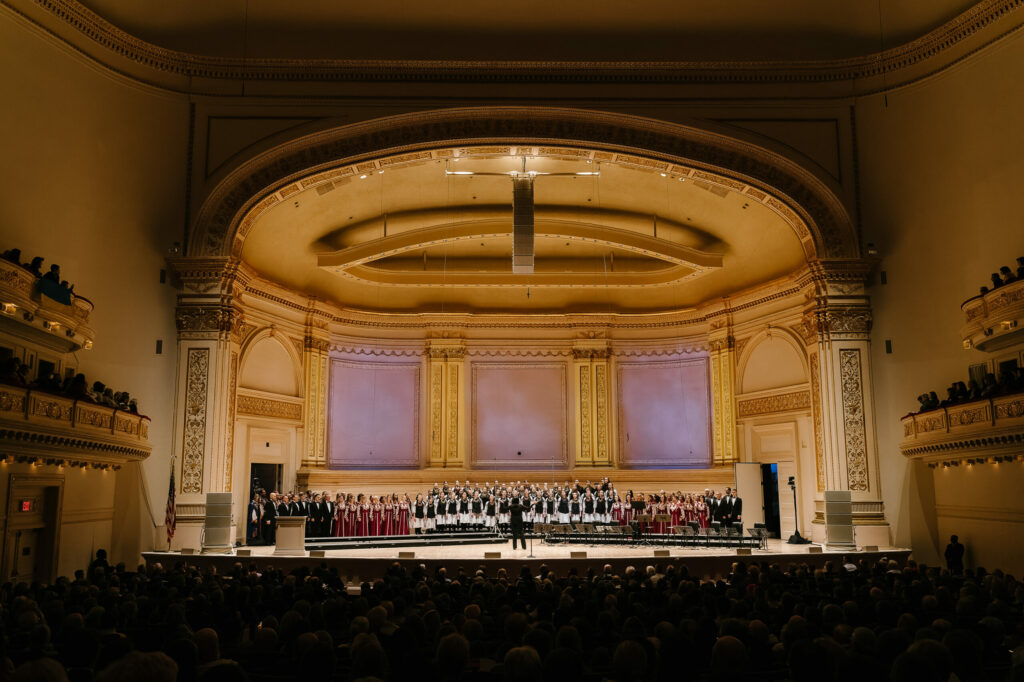
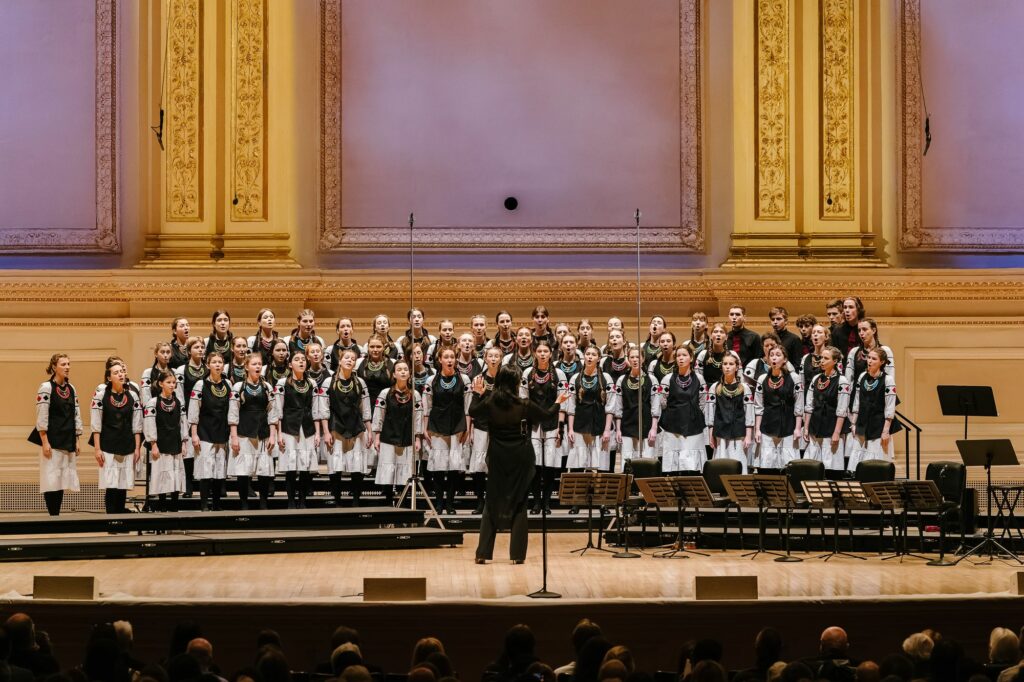
The original musical notes of the legendary Ukrainian song ‘Carol of the Bells’ are now displayed on the wall of Carnegie Hall!
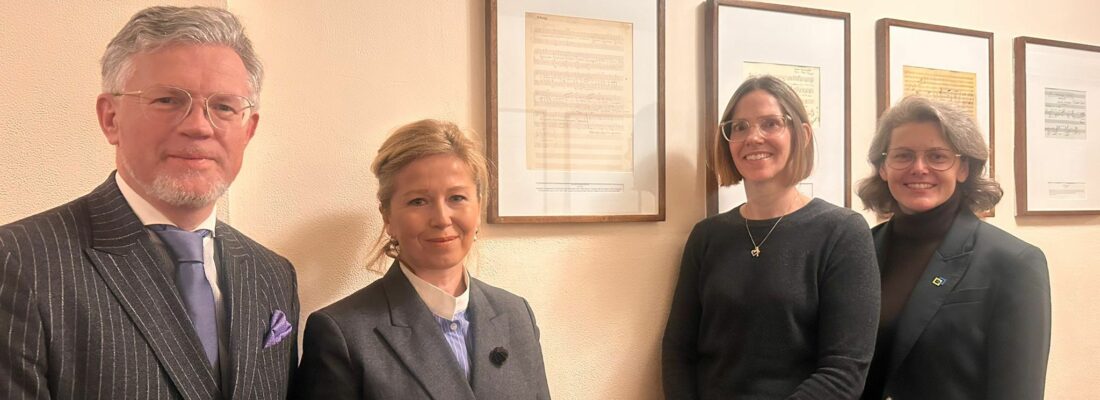
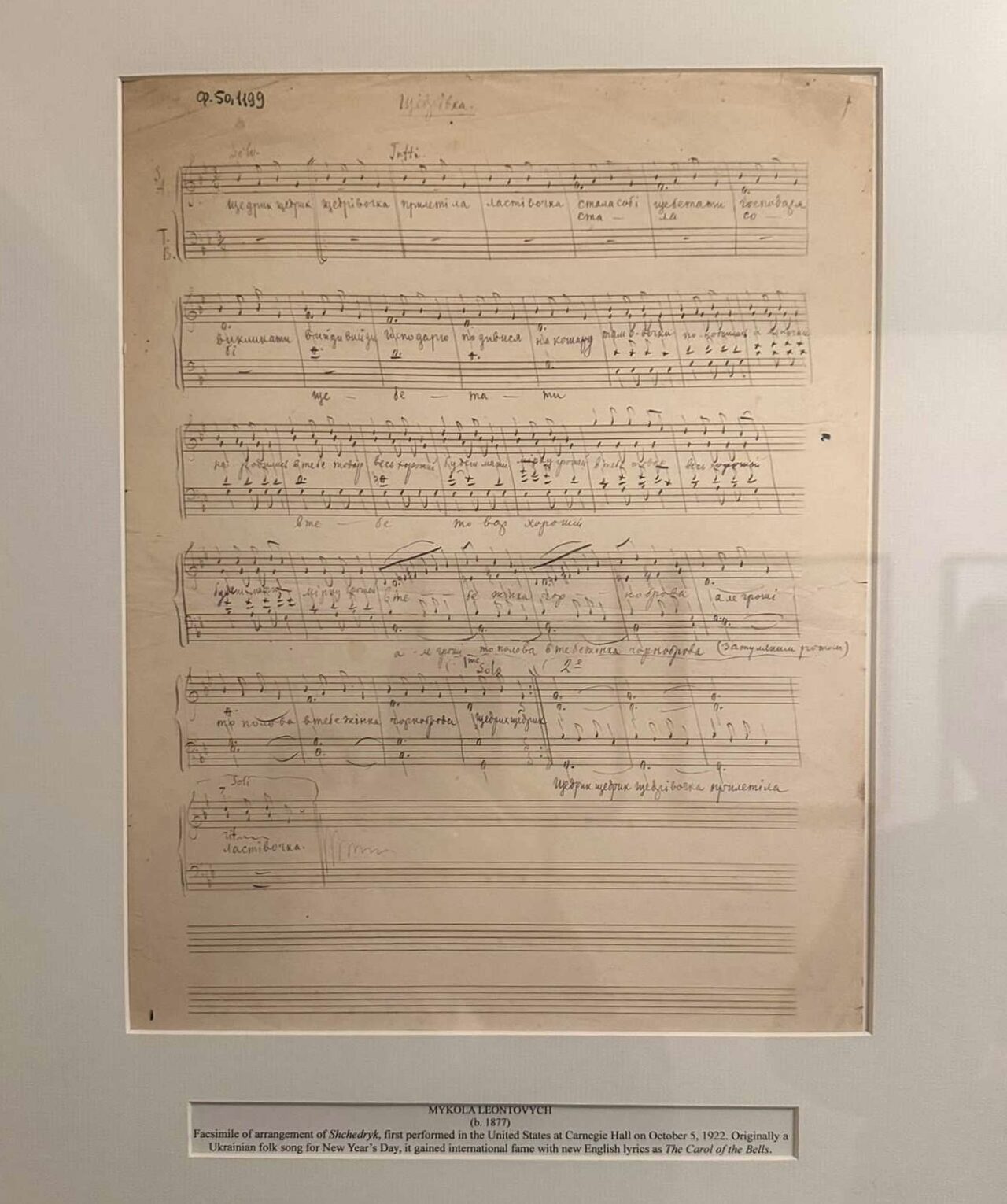
This month, a new piece was officially opened in Carnegie Hall’s prestigious Composers Gallery: a high-quality facsimile of the original notes for ‘Shchedryk’, the iconic Ukrainian song known worldwide as ‘Carol of the Bells’.
Its original manuscript is preserved at the Institute of Manuscripts of the V. Vernadsky National Library of Ukraine. The facsimile at Carnegie Hall offers an opportunity to recognize the Ukrainian origins of one of the world’s most renowned musical works.
Printed by Razom and delivered to Carnegie Hall’s archives, these notes are now on display, quickly becoming a favorite stop for guided tours of the historic venue.
It is significant that the cultural artifact is clearly identified as being composed by a Ukrainian artist, a fact that, until recently, was mainly unknown outside of the tight-knit Ukrainian diaspora. Now, they sit alongside notes by legends like Pete Seeger and just a step away from Beethoven.
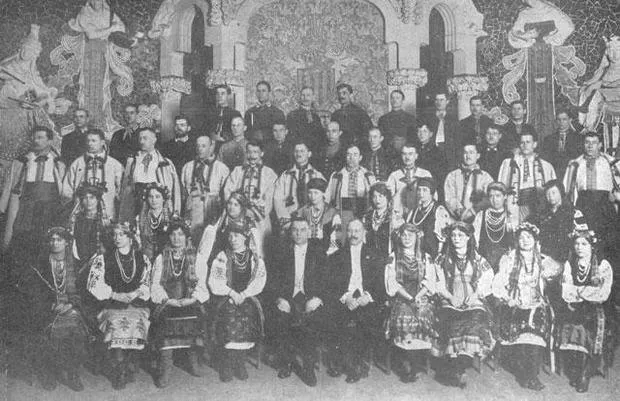
Shchedryk first premiered at Carnegie Hall in 1922, when Ukrainians were fighting for freedom. Today, a century later, it has become a hallmark of the holiday season in the United States and stands as a testament to Ukrainian culture and resilience.
The 100th-anniversary concert, Notes from Ukraine, organized by Razom together with the Ukrainian Institute and the Ukrainian Contemporary Music Festival (UCMF) on December 4, 2022, brought this history full circle.
Dozens of volunteers helped make the concert possible, and its success has become a model for Carnegie Hall staff: ‘Make it like the Carol of the Bells concert’ is now a phrase used when planning other events.
A century after its premiere on this very stage, these notes celebrate not just a song, but a story of resilience, identity, and the enduring spirit of Ukraine.
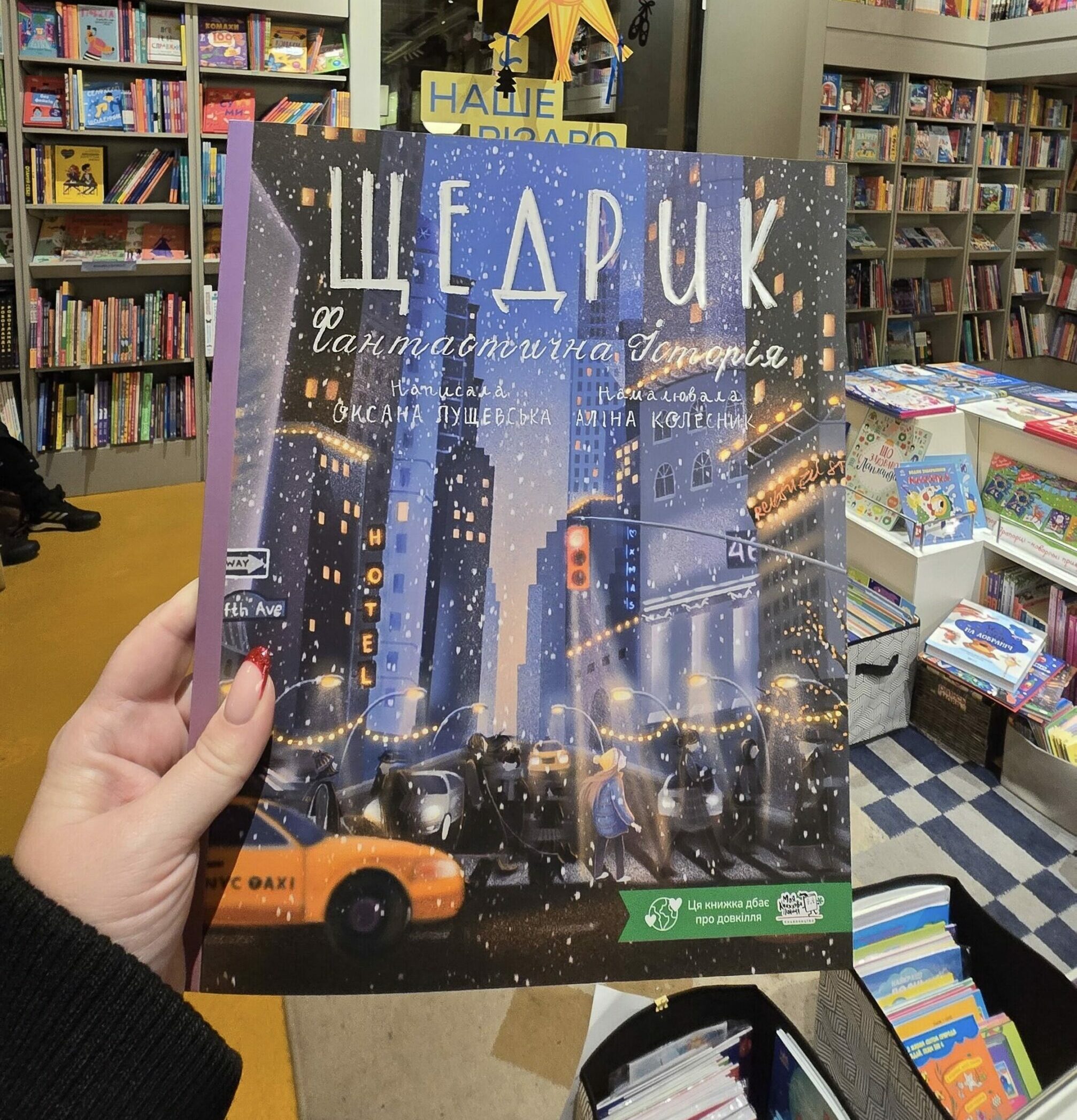
This historic moment is now documented in the book Shchedryk. We look forward to seeing its publication in English, so it will allow the story to connect with and touch the hearts of an audience around the world.
The Composers Gallery ensures that the Ukrainian story behind Carol of the Bells will be remembered, celebrated, and shared for generations to come.
The initiative became possible in tight collaboration with the Embassy of Ukraine in the United States, the Institute of Manuscripts of the V. I. Vernadskyi National Library of Ukraine, the Vernadskyi National Library of Ukraine, and the Permanent Mission of Ukraine to the United Nations.
This is one example of how Ukrainian culture is being reclaimed and properly recognized worldwide. Join us in ensuring Ukraine’s story is told truthfully!
At Razom, every program shares a common purpose: building a secure, prosperous, and democratic Ukraine. From delivering aid and medical training to supporting veterans and artists, each effort contributes to that goal in a different way. Advocacy is one of the ways we make that impact felt beyond Ukraine’s borders – by helping people everywhere understand why Ukraine matters.
Today, that work is expanding into new spaces. Our team is reaching Spanish-language audiences across the United States – because support for Ukraine should transcend language and geography. The team works hand-in-hand with experts, lawmakers, and local leaders to keep Ukraine’s story alive in the places where decisions are made.
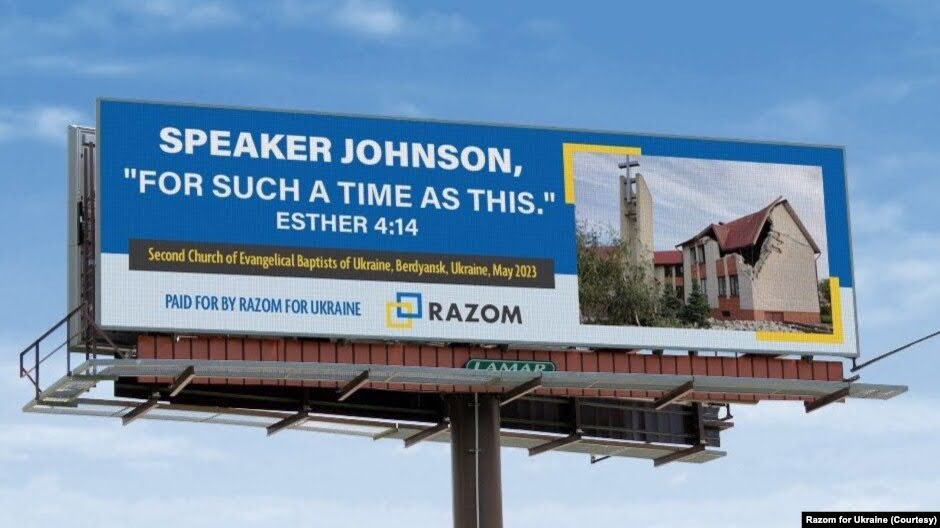
Sometimes that means taking the conversation straight to the top. In 2024, Razom helped explain to House Speaker Mike Johnson why additional U.S. aid to Ukraine was not just necessary, but moral. Ukrainian religious leaders – Evangelical Baptists who had suffered persecution under Russian occupation – traveled to Washington to meet him face-to-face. As a Southern Baptist himself, Johnson listened. Around the same time, Razom placed six billboards across Louisiana, including one directly in front of his Cypress Baptist Church. They carrieda verse from the Book of Esther that Johnson often quotes: “You were chosen for such a time as this.”
From Policy to Progress
In 2025, those efforts paid off in tangible results. Razom helped write and promote Senate Resolution 236, which demands that Russia return abducted Ukrainian children before any peace negotiations. The bipartisan resolution – introduced by Senators Grassley and Klobuchar – was picked up by Reuters, The Hill, and Newsmax.
Razom also backed a House letter that secured $8 million for the U.S. State Department to document and preserve evidence of the Russian war crimes. The Russian Frozen Assets Initiative, led by Yuliya Ziskina, resulted in real action abroad: a proposed Canadian law to seize $22 billion in frozen Russian assets, and a European Parliament resolution echoing Razom’s own policy language.
On Capitol Hill, the team organized a briefing with the American Enterprise Institute, bringing together GOP staffers to discuss the cost of abandoning Ukraine. They hosted five Ukrainian delegations, earned coverage in NBC, The Washington Post, and The Guardian, and trained more than 80 advocates and community leaders to speak confidently to journalists through media workshops led by Kateryna Lisunova.
Every week, activists from across the United States join Razom’s Advocacy coordination calls – sometimes hearing directly from guests like General Philip Breedlove or historian Serhii Plokhy. Together, they’re building more than policy momentum – they’re building a movement.
Local Roots, National Reach
While the Washington team keeps busy on Capitol Hill, Razom’s Public Engagement team works across the country, focusing on states that shape America’s political and moral compass. Right now, the priority states are Florida, North Carolina, Michigan, Louisiana, and Pennsylvania.
Florida matters because it is home to many key figures in the current administration. North Carolina serves as a defense and research hub, where military partnerships can help both countries build strength. Louisiana, Speaker Johnson’s home state serves as a hub for conferences and events with extensive media coverage, helping shape national opinion. In the state, the city of Shreveport stands out as a major commercial and industrial center, offering opportunities for economic cooperation. Michigan ties directly to U.S. defense manufacturing, while Pennsylvania – a longtime swing state – helps set the tone for national elections.
Florida is where the political agenda is being shaped today. Nearly a third of Floridians identify as Hispanic or Latino, and in Miami-Dade County, two-thirds of residents speak Spanish at home. To connect with that audience, Razom realized it had to speak their language – literally.
Spanish-language outreach isn’t just local-it has a global impact. Russian propaganda, particularly through RT en Español, has long spread distorted narratives across Latin America. Fortunately, most of the Public Engagement team are fluent in Spanish, including Daniel Balson, Director of Public Engagement and media advisors Kateryna Lisunova and Ostap Yarysh.
Kateryna, a former international journalist who studied Spanish at Kyiv’s Dragomanov University, leads this effort. She began her career as a Spanish-language editor for the multilingual channel Jewish News One (JN1) in its Kyiv headquarters. With over 13 years of experience in international and multimedia journalism, including work with VOA and the BBC, her fluency in Spanish and journalistic instincts make her a natural communicator for Spanish-speaking audiences.
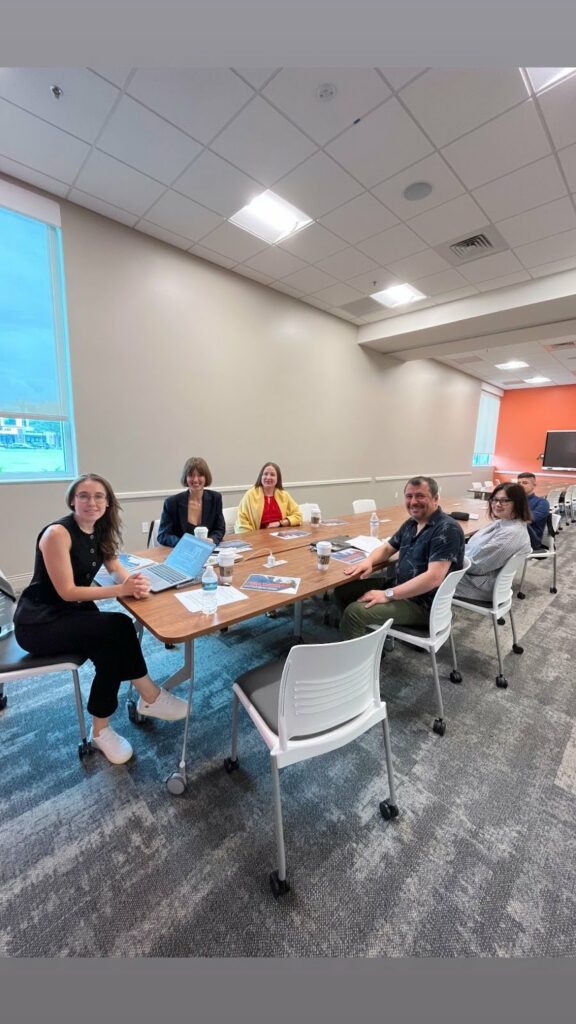
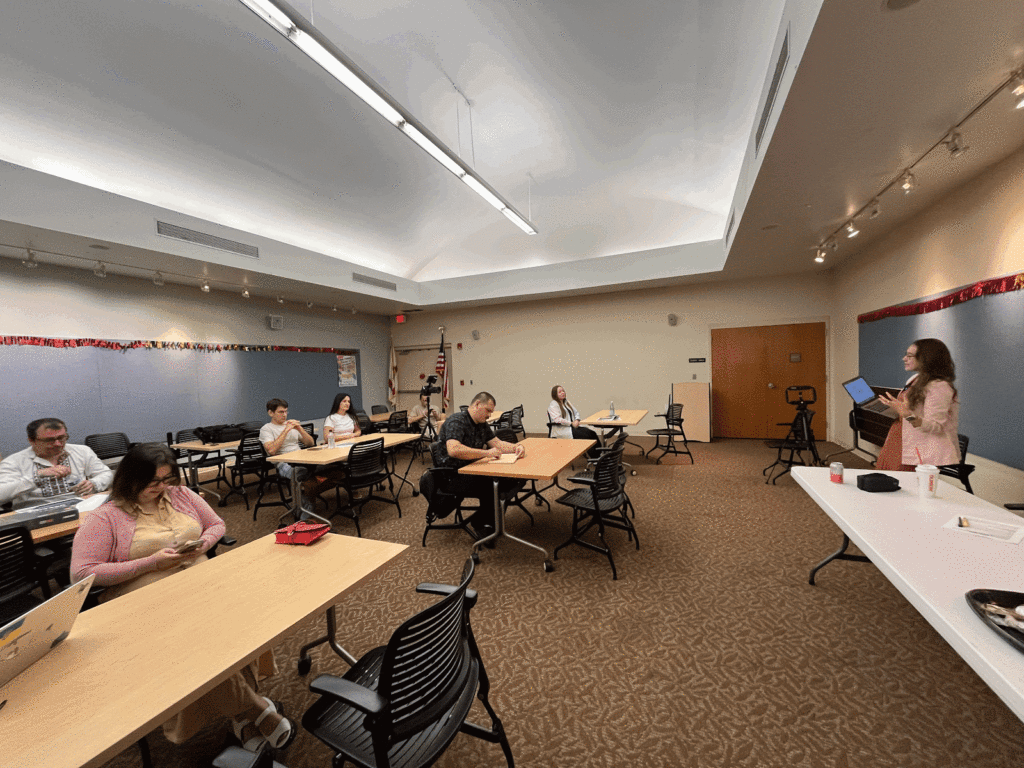
Kateryna Lisunova offers media trainings to grassroots activists in Florida.
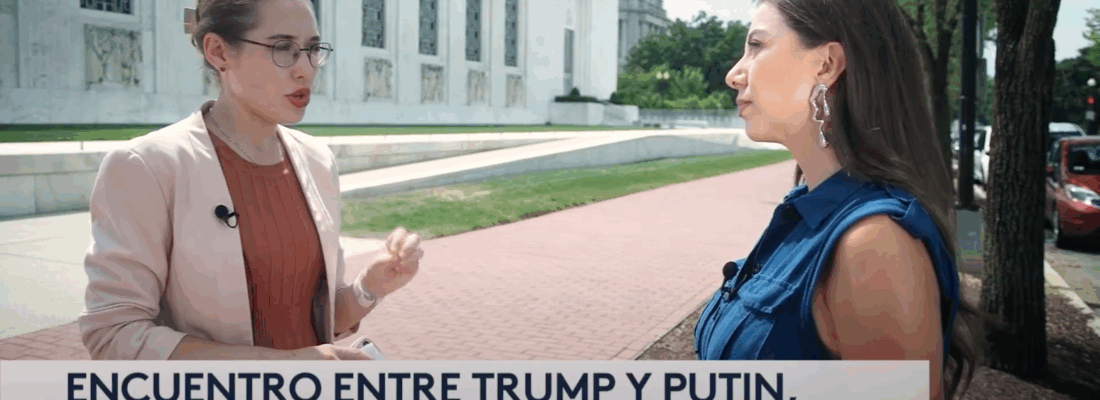
In an August interview with Spanish-language outlet Univision North Carolina, ahead of President Trump’s meeting with Putin, she shared her analysis:
“These negotiations are only necessary for Putin to buy some time, try to win more battles on the ground, and cause more damage in Ukraine—because in reality, he will never win this war,” Kateryna said. Regarding the potential territorial swap, she added, “It’s not just about land—it’s about people who have been tortured, raped, and whose children have been kidnapped.”
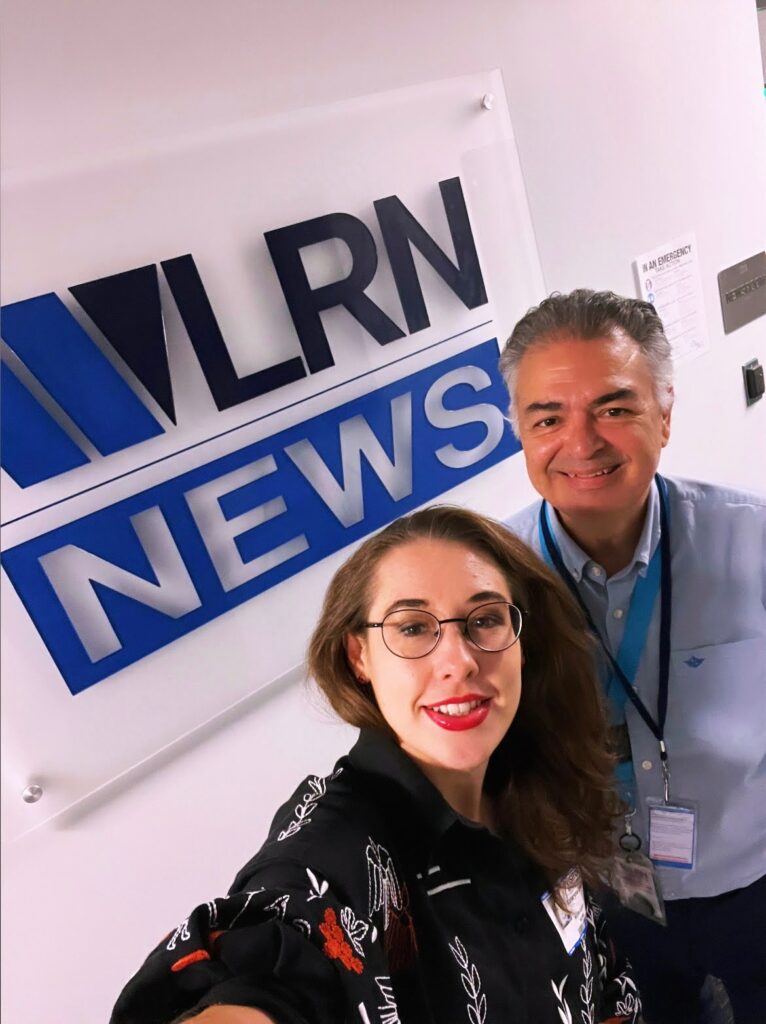
Kateryna Lisunova with Sergio Bustos, vice president of the WLRN news headquarters which covers Miami-Dade, Broward, Monroe and Palm Beach County
Connecting Communities
From Palm Beach to Orlando and Miami, Kateryna spent weeks connecting with local activists, influencers, and journalists to bring Ukraine’s story closer to home.
In Orlando, she met with Revived Soldiers Ukraine, a nonprofit providing rehabilitation for wounded soldiers, and helped share their work with local media. She also connected with Marc McMurrin, CEO of the Ginsburg Family Foundation, who after the 2022 invasion had led the first U.S.tour of Ukraine’s National Ballet in over 30 years. That tour inspired the documentary “The Sky Was on Fire,” which earned McMurrin and director Jonathan Maricle a Suncoast Emmy Award. After meeting Kateryna this September, they began collaborating on new events and exhibits to highlight abducted Ukrainian children and expand outreach across Florida.
In Palm Beach, she worked with community leaders, including members of UA Florida, conducting media training for Ukrainian activists and building relationships at Bethesda-by-the-Sea Church – the same church where Donald and Melania Trump were married and their son baptized.
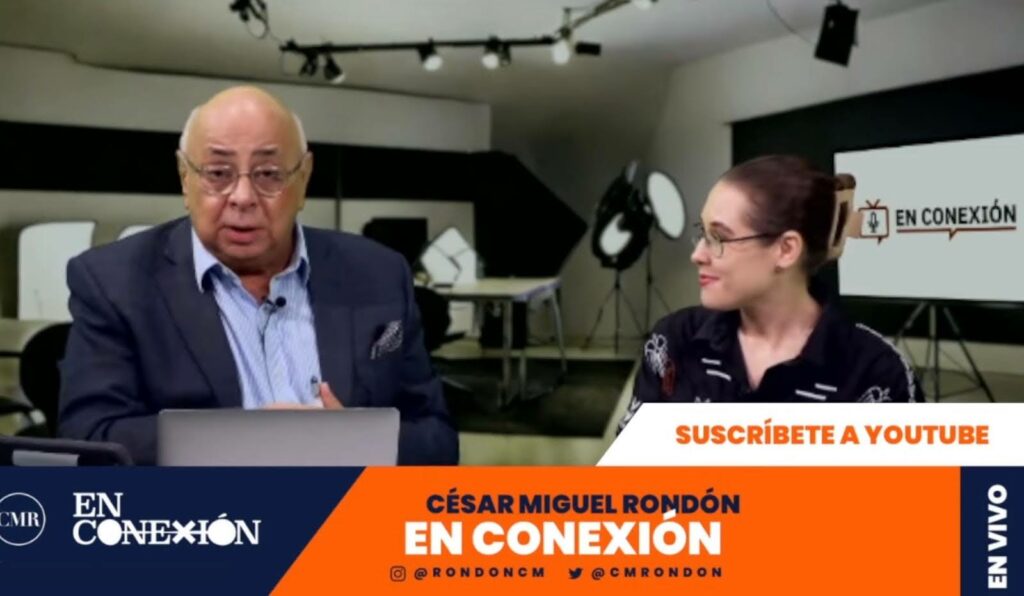
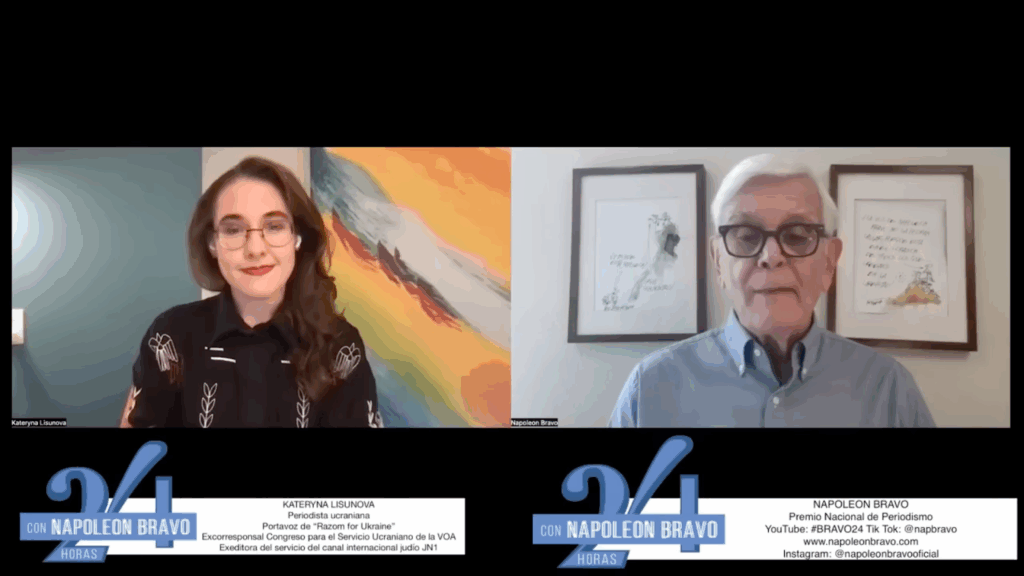
In Miami, Kateryna appeared on major Spanish-language programs, including “En Conexión Radio” with César Miguel Rondón (3M followers), “Esto es América” with José Pernalete (1M followers), and interviews with Napoleón Bravo (1M followers). She spoke about the cultural and linguistic roots of Ukrainian identity and explained that the embroidered vyshyvanka she wore is more than fashion – it’s a symbol of a living national heritage in modern Ukraine.
She also met with Sergio Bustos, vice president of WLRN Public Radio & Television, a PBS and NPR affiliate known for its award-winning coverage. These conversations sparked new ideas for future Spanish-language collaborations and cultural initiatives, aimed at reaching local political leaders in Florida.
A Network of Hope
Many people Kateryna met didn’t realize how much work was already being done to support Ukraine in Florida. Her trip became something more than outreach – it was a way to connect the dots. Local voices that once worked in isolation found each other, new projects were born, and the message grew stronger.
Supporting Ukraine, after all, is an easy decision. You just need the facts – and sometimes, to hear them in your own language.
Razom’s Advocacy team is proof that real change doesn’t come from shouting the loudest, but from speaking clearly, persistently, and from the heart. Now that you know about our efforts, we invite you to help connect more dots and expand our network in these key target states.
Every voice matters. If you’re in Florida and want to stand with Ukraine, join our network on the Quorum app to stay connected to Razom’s advocacy work and local events. Together, we can make sure Ukraine’s story continues to be heard. Register below.
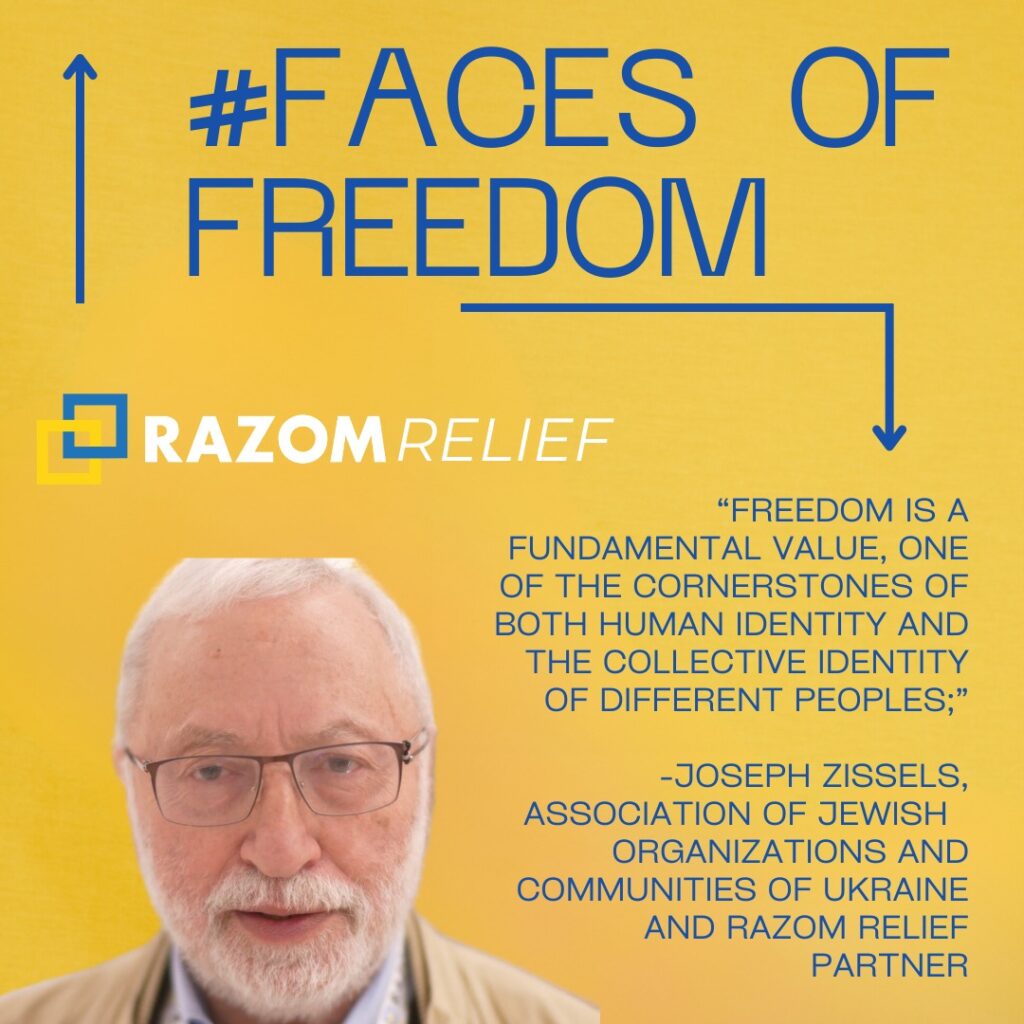
This year to honor the Ukrainian Independence Day on August 24th, Razom has launched a celebration of the incredible freedom fighters within our community. From dedicated delivery drivers in Ukraine to passionate volunteers in New York, behind every face is an inspiring story about freedom which we are excited to share and encourage you to create your own.
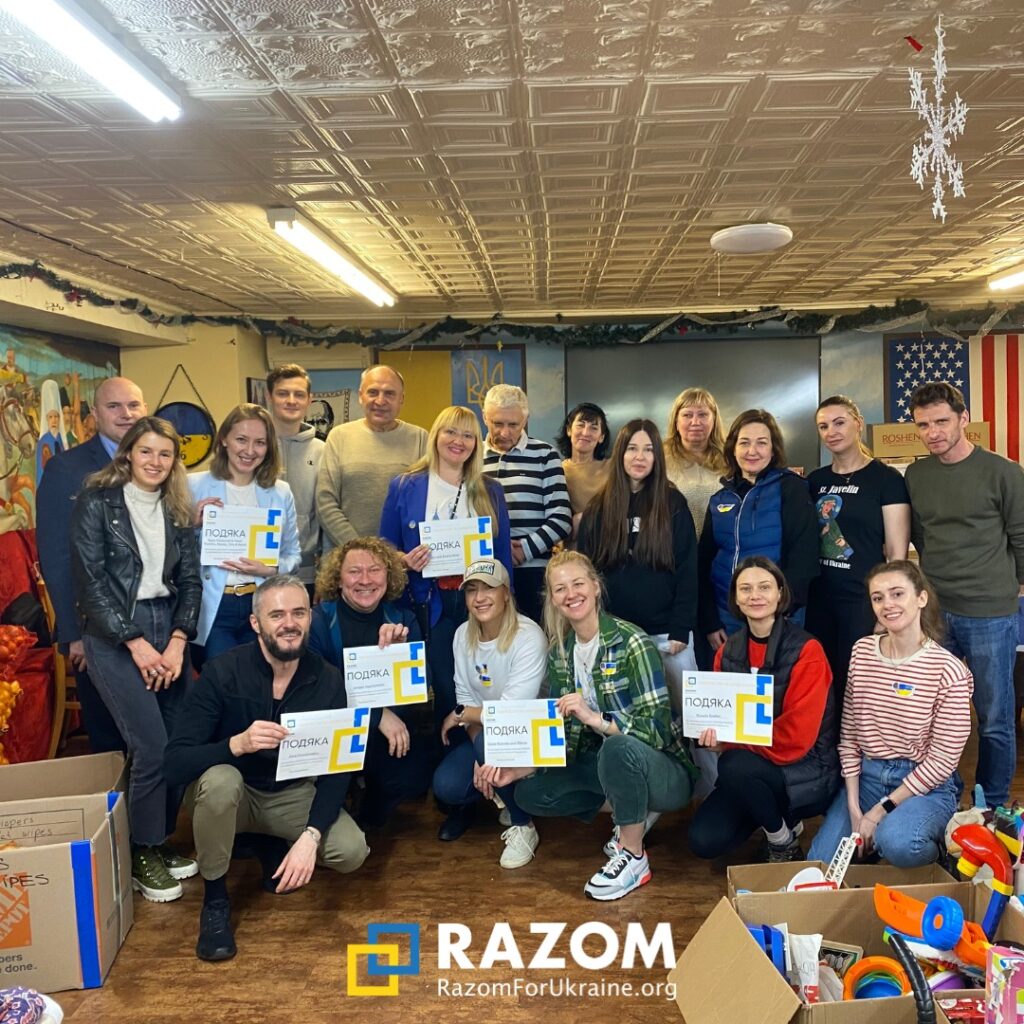
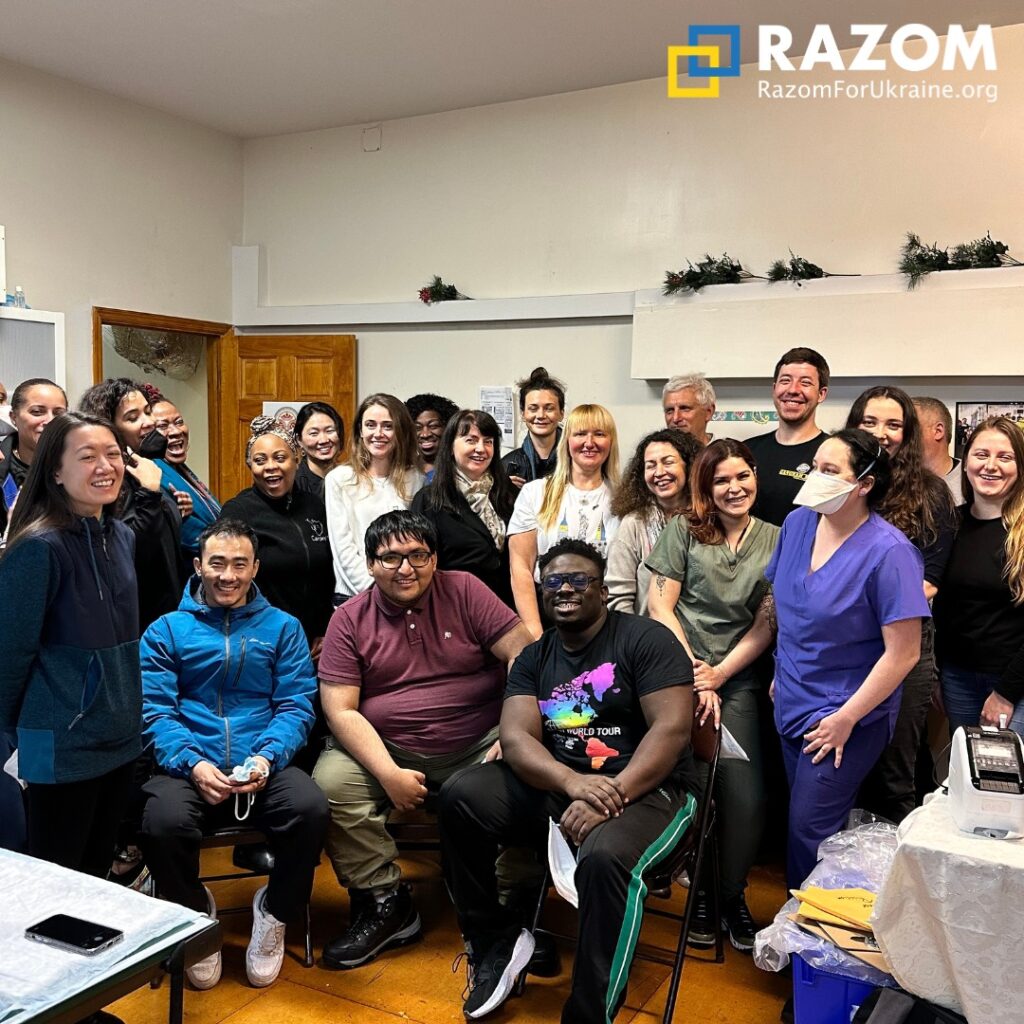
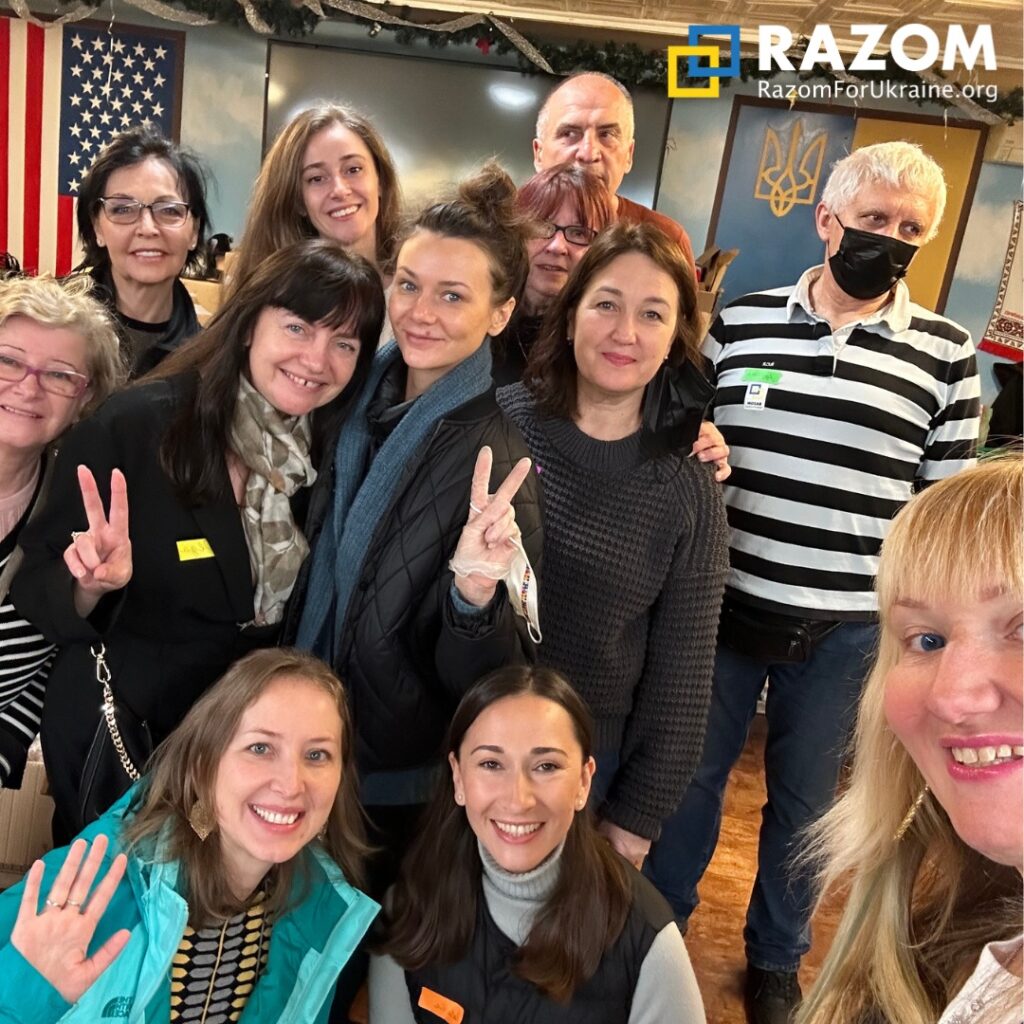
Meet the Razom Ukraine Response Initiative team! They assist externally displaced Ukrainians in the New York area with everything they need to gain a sense of normalcy after being forced to flee Ukraine because of russia’s full scale invasion. They provide vital support, including legal consultations, clothing and food distributions, and medical services, such as flu vaccines. And they do all that with a big smile! It takes a lot of care to help the displaced Ukrainians – many of them fled their homes in places like Mariupol and Kharkiv with just a backpack and came to New York, where they know no one and are often faced with challenges such as health problems and difficulty finding a job to provide for their families. But the Ukraine Response Initiative doesn’t only provide material help. They also provide a much-needed sense of community. Many of the recipients of the Initiative’s aid also become volunteers to help other Ukrainians. Because together – we are Ukraine.
We’re honored to feature Texas Congressman and Chair of the House Foreign Affairs Committee, Mr. Michael McCaul, among our Faces Of Freedom. He emphasizes the importance of supporting Ukraine: “Supporting Ukraine and standing up to unprovoked aggression that violates sovereignty and territorial integrity is in the U.S. and free world’s interest, especially with China closely watching the world’s response to Russia’s full-scale invasion. Razom is critical in keeping up this support by educating the American people on why a victory for Ukraine is imperative.”
We thank Mr. McCaul for the kind words and for all his support of Ukraine! We thank ALL of Congress for its unwavering and crucial support of Ukraine not only over the last year and a half, but the last 32+ years. It’s amazing to walk down the halls of Congress, as the Razom Advocacy team often does, and see so many signs of support for Ukraine – from Ukrainian flags to “We stand with Ukraine” posters.
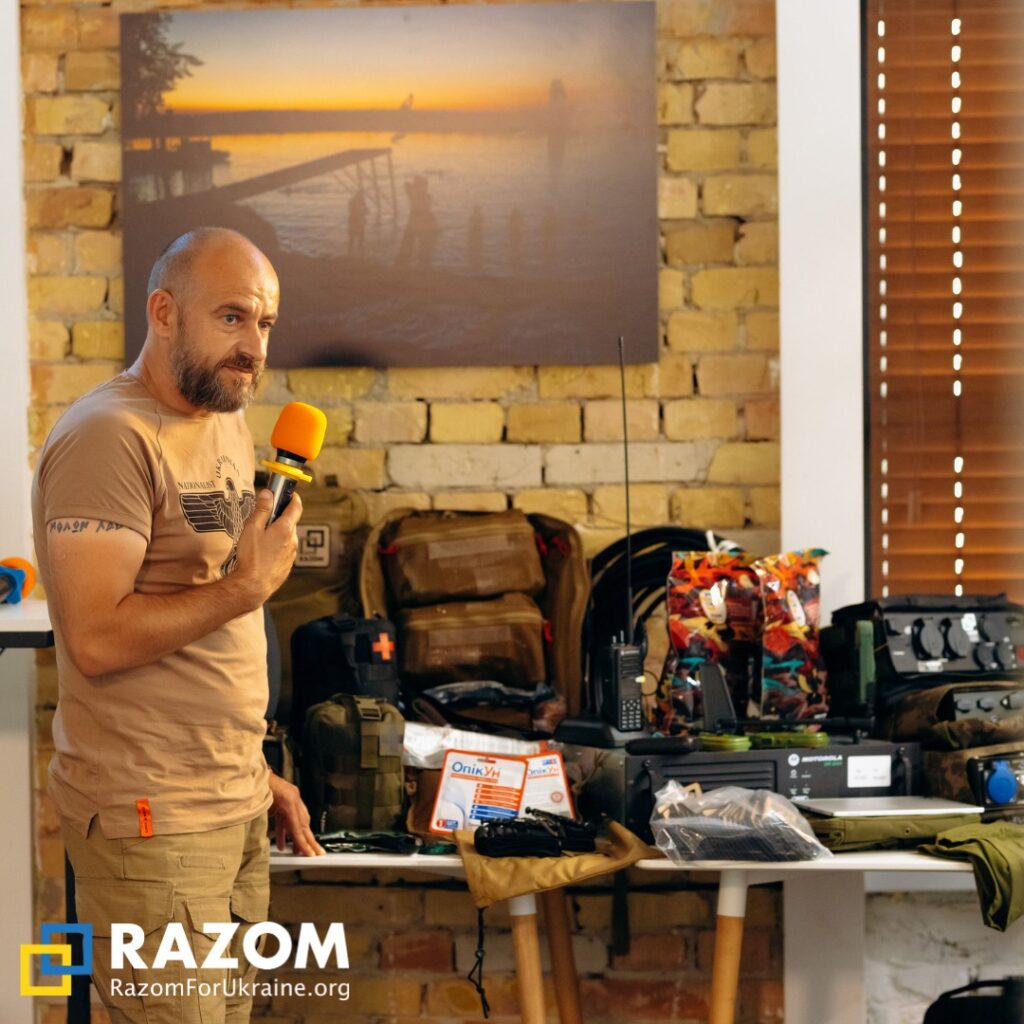
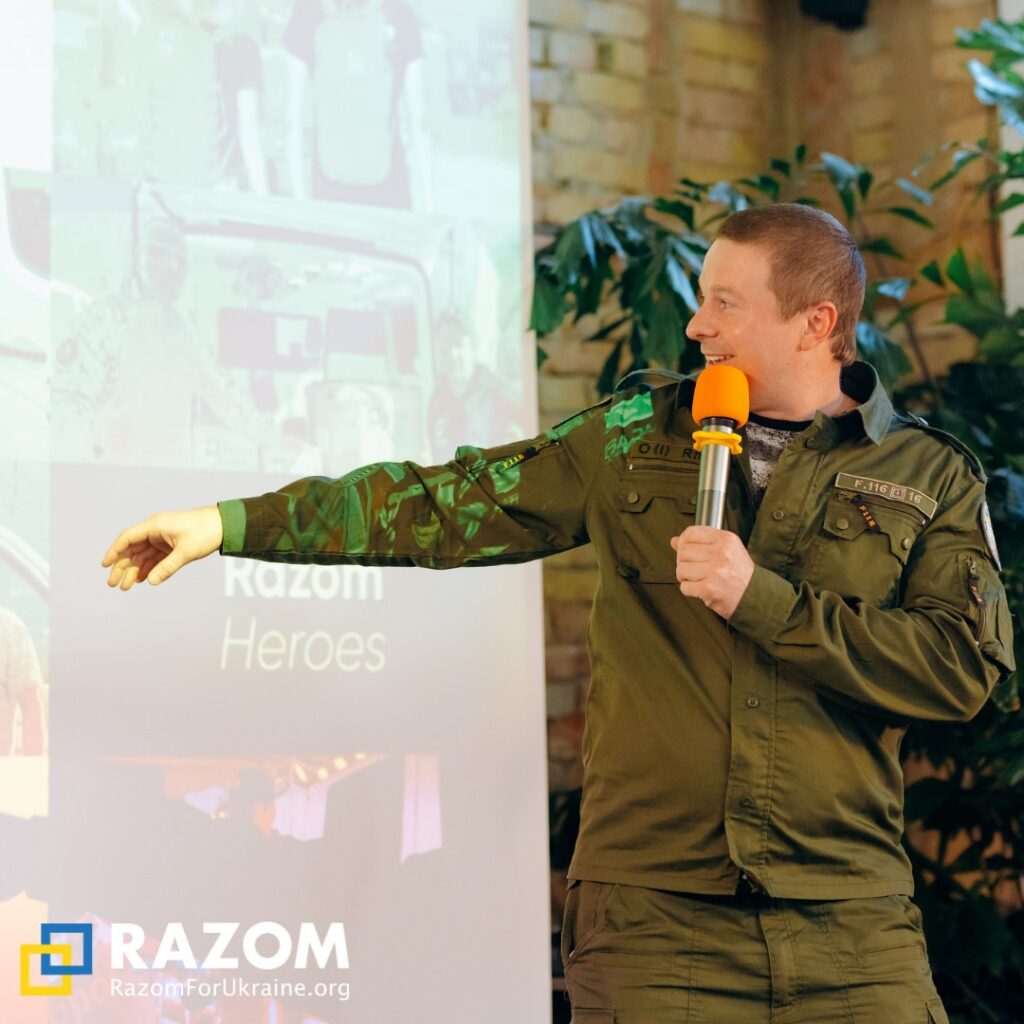
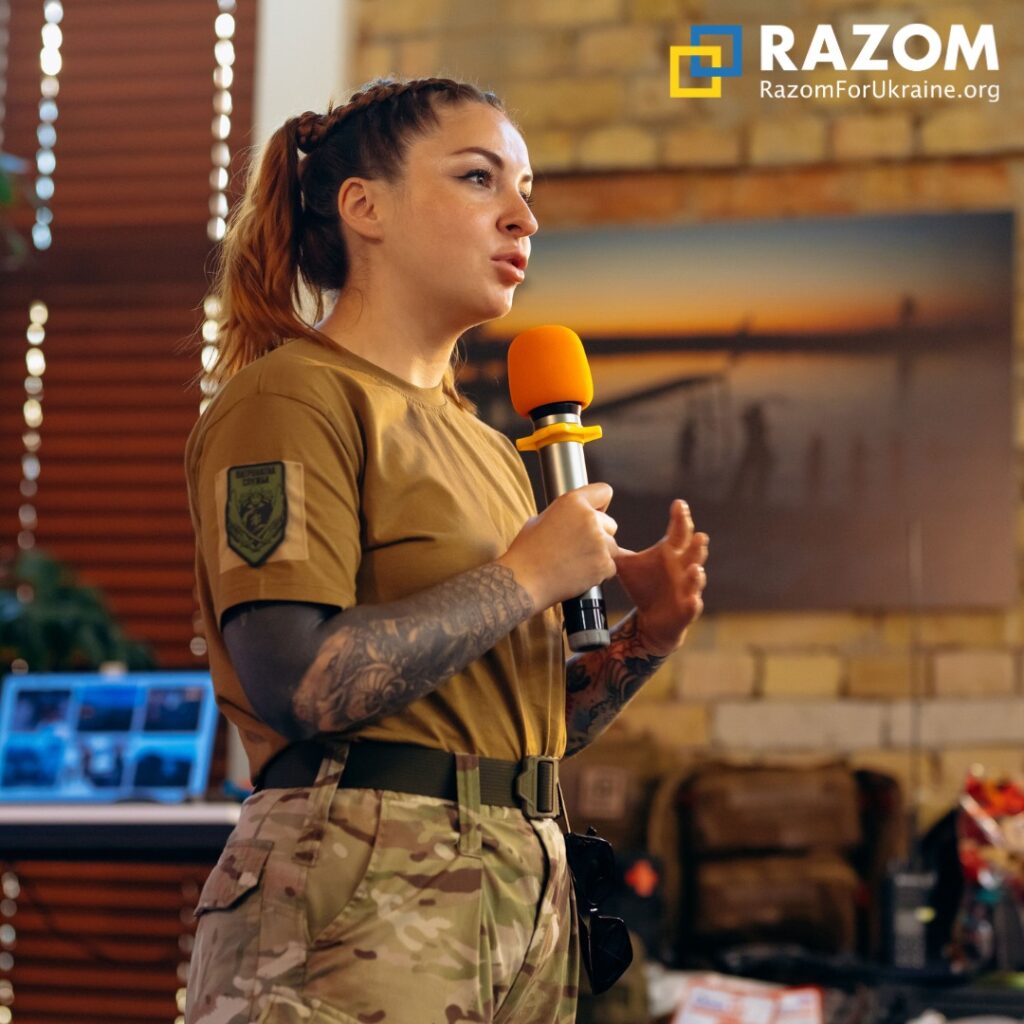
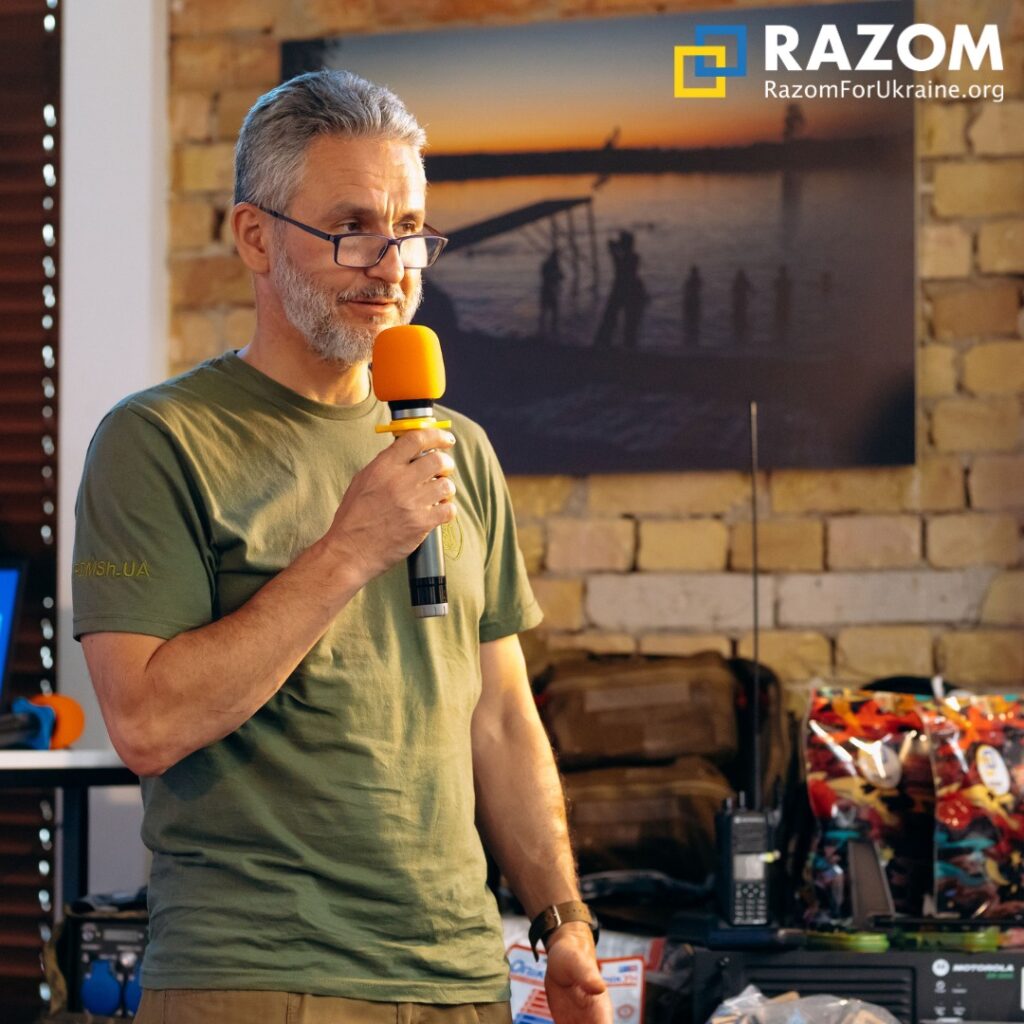
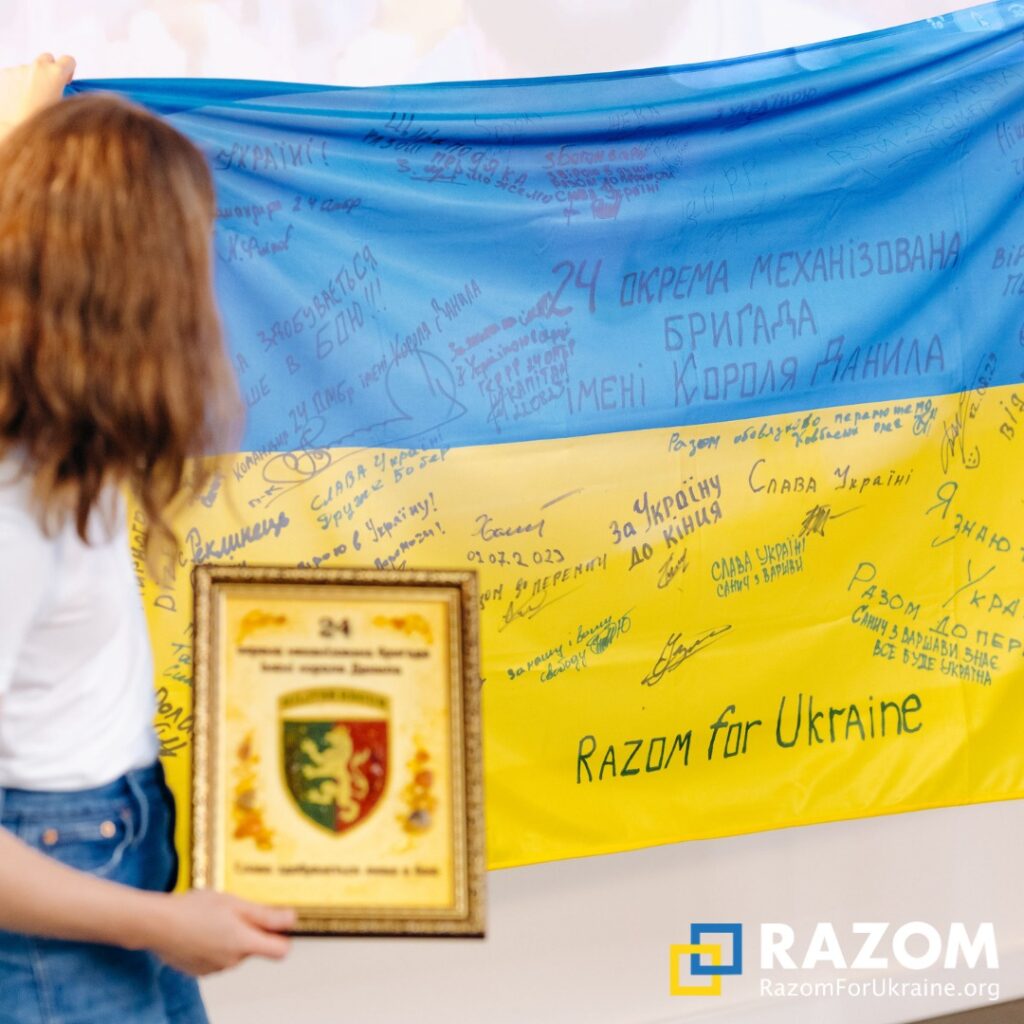
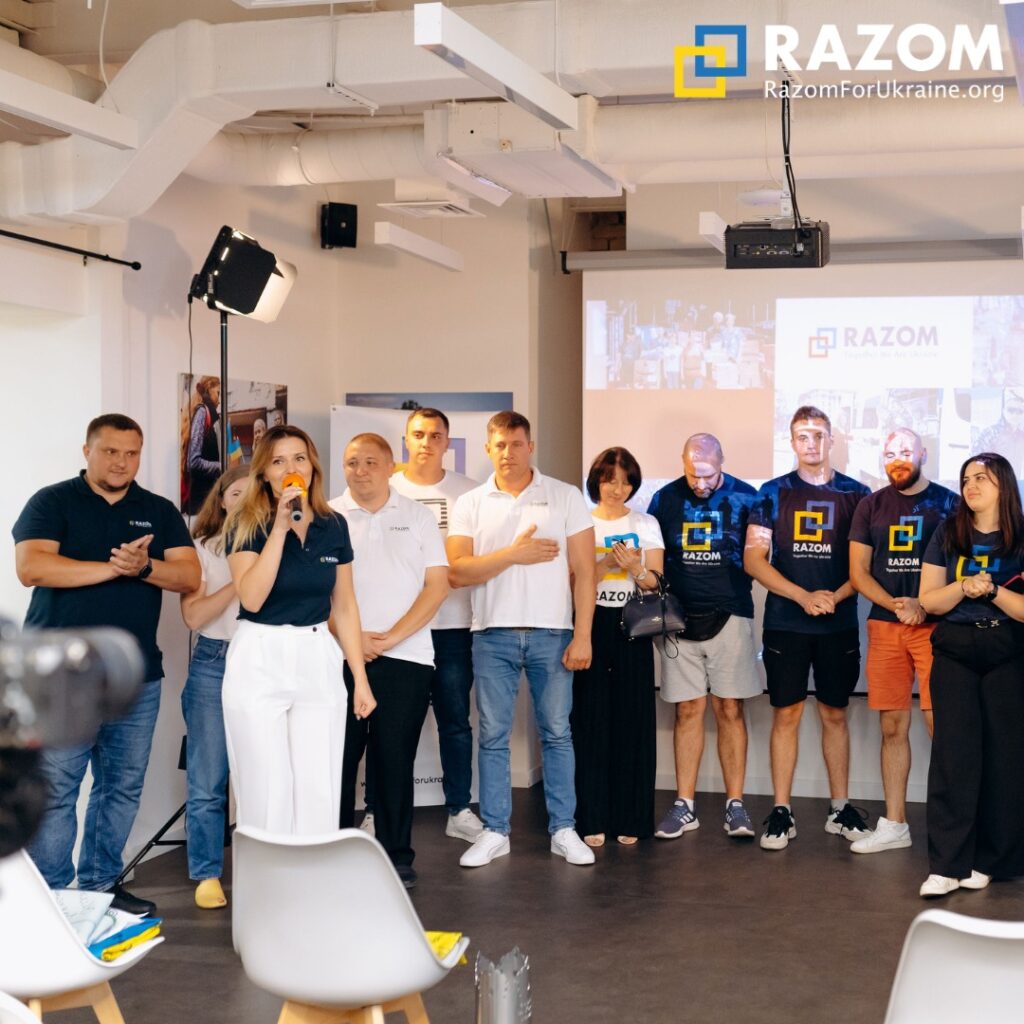
The day before Ukrainian Independence Day, Razom’s team presented the results of the Razom Heroes program at a press conference in Kyiv. We were thrilled to share that $45 million worth of aid was provided to Ukraine’s defenders through this project. Razom has delivered over 15,000 radios right into the hands of the defenders and helped evacuate over 1,300 injured soldiers from the frontlines on medical vehicles. Razom has also delivered hundreds of tons of tactical medicine, medical equipment and medicine, thousands of drones, walkie-talkies, radios, generators, portable charging stations and other supplies to Ukrainian defenders, emergency services, hospitals and clinics. To celebrate Ukrainian Independence Day and thank the brave defenders of Ukraine, the Razom Heroes team hosted an impactful meeting with many of the recipients of Razom’s aid from the frontlines. We were so happy to have so many of our partners and friends in one room!
In honor of Ukrainian Independence Day, the President of Ukraine Volodymyr Zelenskiy held an award ceremony to recognize the “National Legends of Ukraine”. One such is Dr. Andriy Sirko, the head of the neurosurgery department at Mechnikov Hospital in Dnipro. Aside from being a talented and skilled neurosurgeon, Razom is proud to call Dr. Sirko a partner in our Co-Pilot Project. Just recently, three American neurosurgeons travelled to Ukraine to support Dr. Sirko’s department through the Co-Pilot project. Additionally, Razom shipped 21 pallets of donated neurosurgery supplies to the frontline hospital. We are grateful to Dr. Sirko for his incredible work! We thank all the doctors, surgeons, nurses, medical workers and professionals working to bring Ukrainian victory closer every day!
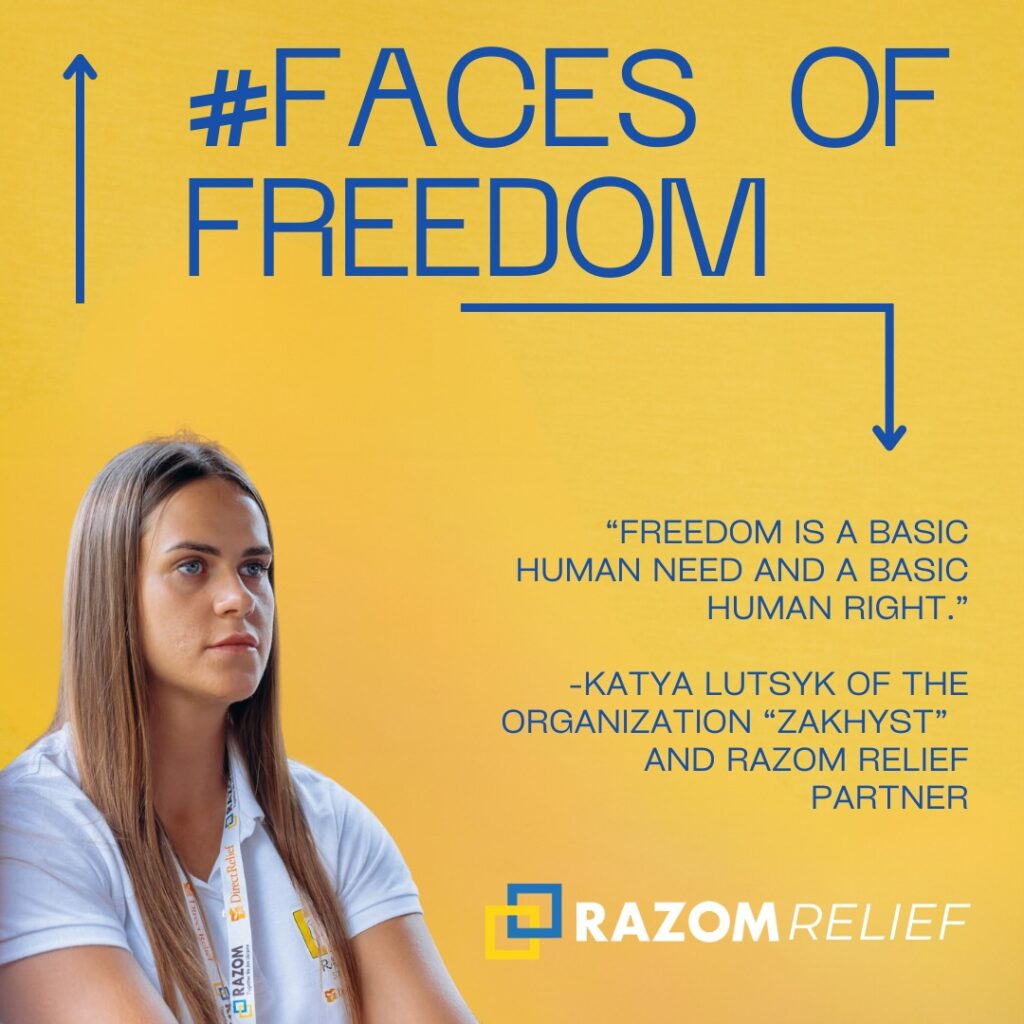
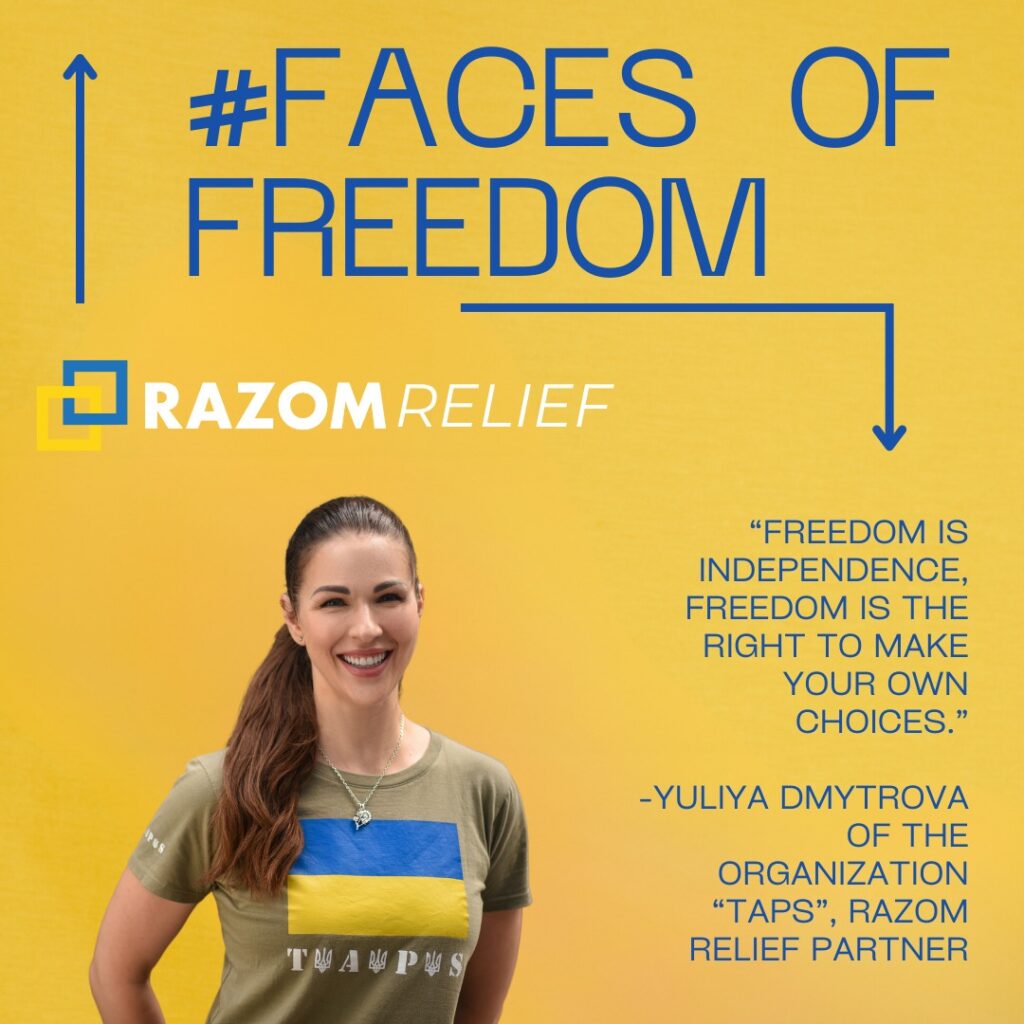
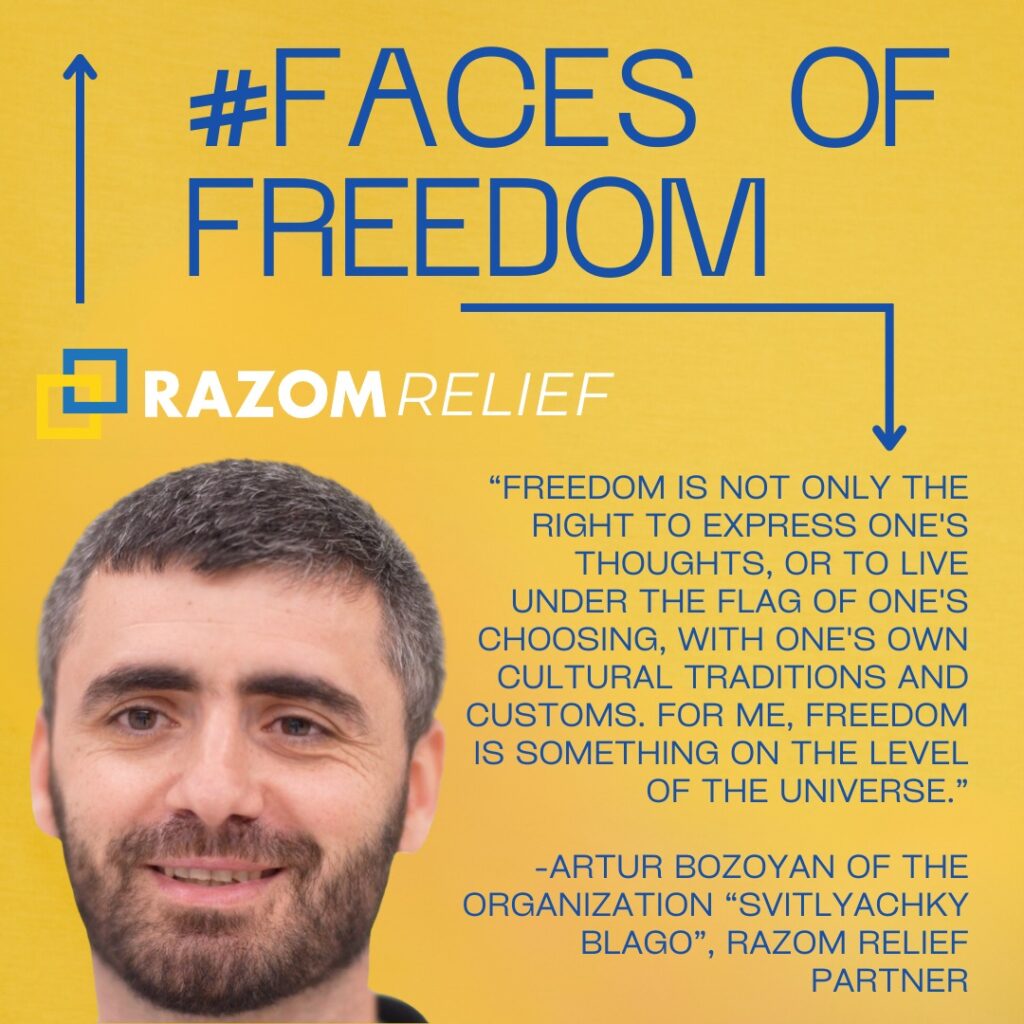
Faces Of Freedom would not be full without one of our largest programs – Razom Relief and all its amazing partners. In 2022, Razom Relief team provided $5MM in grants to a network of 123 volunteer organizations in Ukraine that help local communities. The impact of this work is vast. Among other aid, these organizations distributed 221,458 food packages to people in need, evacuated 9,640 people, renovated 91 buildings including 11 shelters, and supported 18 shelters that provided 2,375 sleeping places. Surely, the people behind these organizations, some of which are pictured in here, are real Faces of Freedom. We asked a few of them what freedom meant to them. Read their responses and get inspired to continue working together for Ukraine.
Finally, we are excited to share a very special video with you – the video that marked the finale of our Faces Of Freedom campaign. As the Ukrainian community gathered for an Independence Walk (organized by Svitanok) starting at Washington Square Park (NYC) on the Ukrainian Independence Day, we set up a photo booth where we asked the participants what “freedom” meant to them. Their words are felt deep and touch our hearts.
We thank the filmmaker Polina Buchak and photographer Irynka Hromotska for making this project come to life. You’re an incredible creative duo and we’re so happy to have you as part of our community.
We thank all of you, who are not mentioned here, but feel for Ukraine, support Ukraine, and do a lot to contribute to Ukraine’s freedom. YOU are, too, the faces of freedom. Thank you!
It is said, “If Russia stops fighting, the war ends. If Ukraine stops fighting, Ukraine ends.” We will not let that happen. Thank you for supporting us in so many ways towards ensuring Ukraine continues to get all the help it needs.
Dear Razom Supporter,
To be confronted over and over again with how the war has ravaged Ukraine and the people who have done what others only speak of to protect and uphold their democracy and freedom, can be devastating. But thanks to your stunning compassion and generosity, Razom has been able to reach more people than we ever imagined and solidify our network to proudly support Ukraine now and in the years ahead.
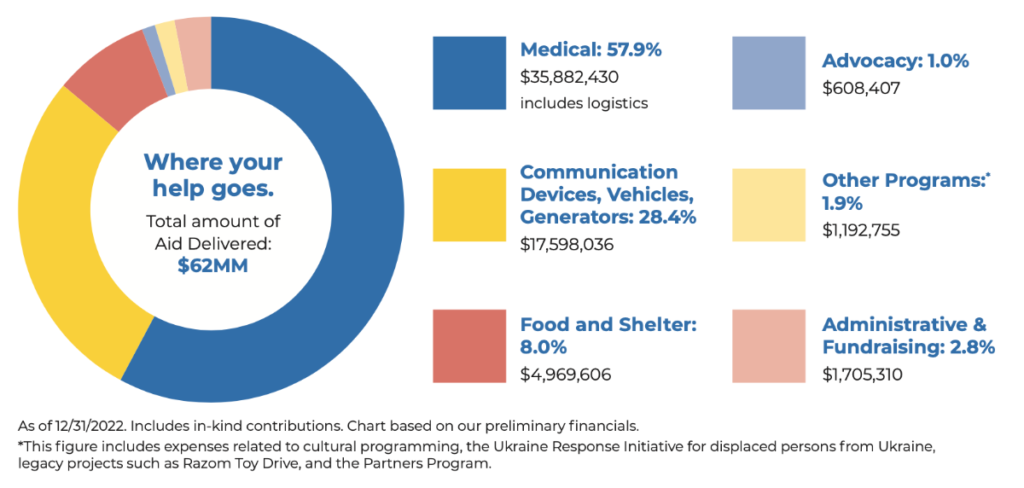
In 2022, more than 175,000 donors made it possible for us to deploy over $62 million towards our mission to save lives in Ukraine and meet the dynamic and critical needs of Ukrainians as they continue to resist russian forces.
The passionate outpouring of support from people like you created a tremendous opportunity for our programs. In order to achieve the greatest impact, we have now focused our efforts on the following five critical areas of support:
In each of these five categories, together with Razom staff, volunteers and our partners, we’ve been able to have tremendous impact on the lives of Ukrainians from all walks of life.
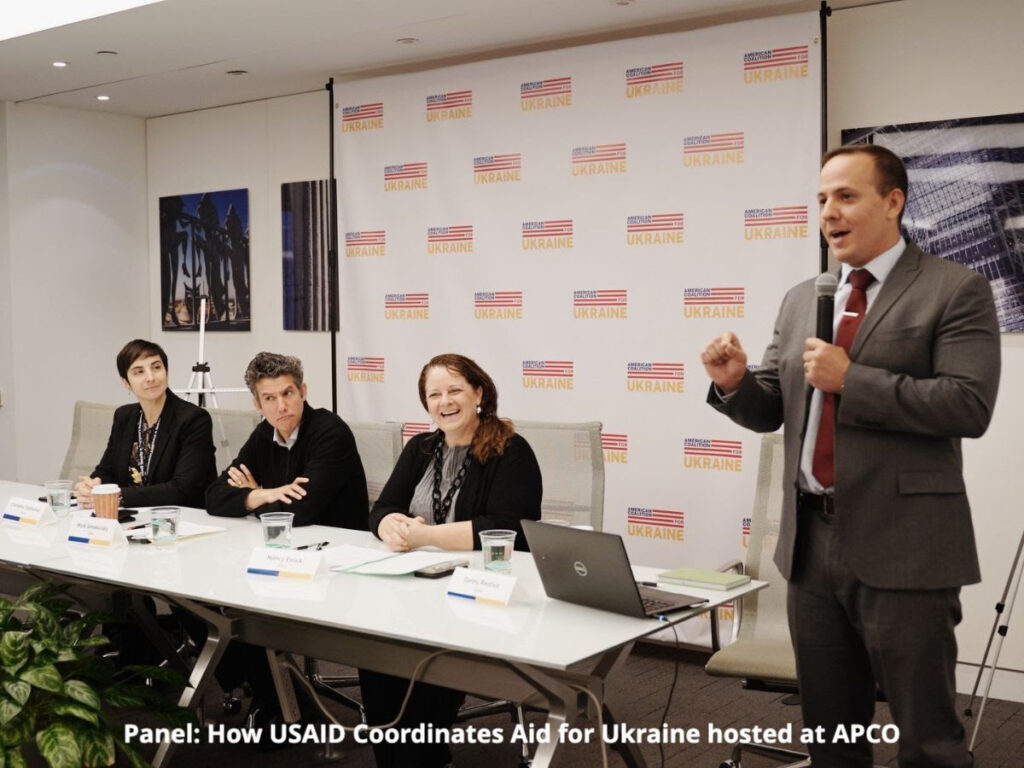
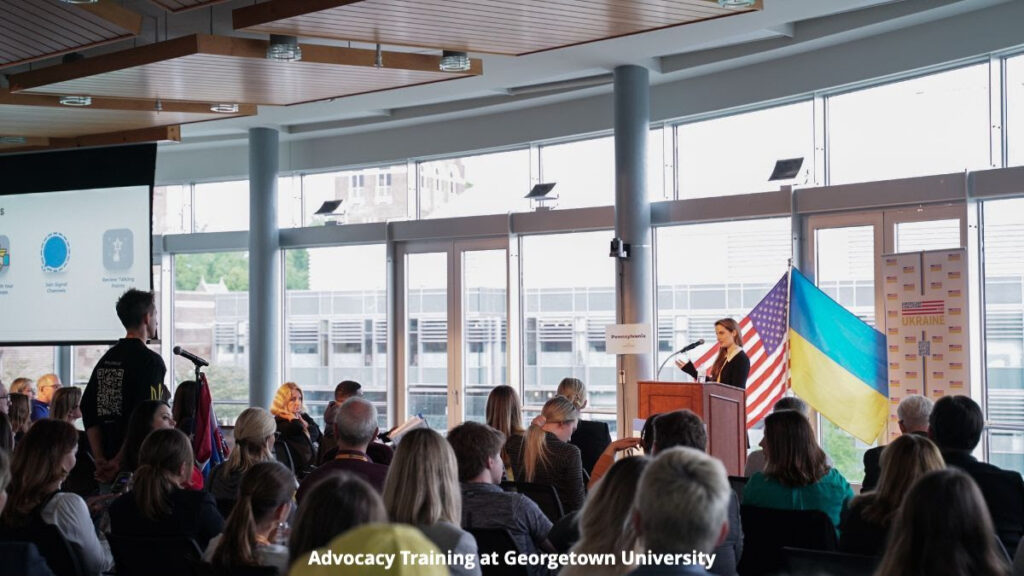
When the world needs to hear the truth about russia’s actions and aggression, Razom Advocacy is there. In 2022 our team organized more than 525 meetings with congressional offices to ask for critical support for Ukraine, co-founded the American Coalition for Ukraine (ACU) uniting 57 diverse organizations and constituents from all 50 states, and held an inaugural Ukraine Action Summit in Washington, D.C. a fly-in event with over 250 constituents from all over the country participating.
In the first quarter of 2023, Razom Advocacy co-organized a second Ukraine Action Summit that expanded to over 300 advocates from 34 states, and brought together 62 organizations representing the ACU. It was three days in Washington D.C. full of congressional meetings, advocacy training, panel discussions, and networking, and it was focused on a singular message – Ukraine must win. All told, the advocates met with one-third of the offices in Congress. You can read more about it on our website.
Beyond the Summit, our team has testified before Congress, led hundreds of government briefings and meetings, drafted dozens of policy briefs, proposed legislation, and amplified countless Ukrainian voices to protect bipartisan support for Ukraine and advance pro-Ukraine policy that is aligned to U.S. national interests. Don’t forget to join our advocates network to get the latest news from Razom Advocacy.
When a defender in a remote field needs a tourniquet, Razom Heroes is there. In 2022, the team deployed in-house order tracking software and a Ukraine-wide delivery system where Razom drivers take aid directly to the hot zones, delivered over 500 tons of life-saving supplies (including purchasing nearly 400,000 tourniquets), and packed and delivered almost 90,000 Individual First Aid Kits and over 2,000 tactical medical backpacks. We’ve also delivered over 2,000 quadcopters for safe passage and evacuation, and sourced and serviced 69 cars for frontline medics to use as first line evacuation. We have also supplied over 14,000 radios and over 2,000 tablets to keep Ukrainians connected on the front lines. In 2023, as the war continues, so does the procurement and delivery of this type of life saving aid.
Between March 17-May 7 of 2023, Razom Health successfully co-organized and coordinated four medical mission trips to Ukraine. You can read about each specific group of doctors and nurses that traveled here, and click above to watch a deep dive into what it takes to bring a trip like this to life and its impact. This specific team of American-Canadian volunteers, 8 doctors, and 4 nurses arrived in Ivano-Frankivsk in March to perform 35 complex surgeries for the Ukrainian military and civilians all while providing training for Ukrainian doctors to ensure the impact of their work gets multiplied long after they leave. Given the demanding hours and complexity of the surgeries, Razom’s team organized the many logistical elements essential to the smooth running of these missions, including covering travel, accommodations, daily logistics, and purchasing necessary equipment. There’s some great reporting that’s been done covering these trips including interviews from the doctors who traveled to Ukraine and the Ukrainian lives that have been changed by their work.
When war-torn hospitals need ultrasounds and wound vacs, Razom Health is there. In 2022, we supplied 419 medical facilities in Ukraine with aid like ultrasounds, wound vacs, electrosurgery machines, orthopedic fixators and more, delivered 23 hospital-grade generators so doctors could continue delivering critical care even when the lights were out, and launched 2 mental health centers in Ukraine with over 800 individuals served (65% using mental health services for the first time).
When families are displaced, hungry, sick, or in danger, Razom Relief is there. In 2022, the team awarded $5M in grants to a network of 123 volunteer organizations in Ukraine that help their local communities. Collectively, these organizations distributed 221,458 food packages to people in need, evacuated 9,640 people, renovated 91 buildings including 11 shelters, and supported 18 shelters that provided 2,375 sleeping places. Over the winter the team procured and delivered 90 generators and 50 charging stations to resilience points, shelters, and humanitarian hubs across Ukraine.
When the world needs to hear voices from Ukraine, Razom Culture and Connections is there. In 2022, our team organized the concert to commemorate the 100th anniversary of Shchedryk’s (Carol of the Bells) premiere at Carnegie Hall with Ukrainian and Ukrainian-American artists and celebrity guests, funded filmmakers from Ukraine to attend international film festivals (including Sundance and the Academy Awards) so people could hear directly from creators and make connections, and supported multiple cultural exchanges, book clubs, and concerts.
We couldn’t have done all this without your support and generosity! With your donations we can scale and continue to support Ukraine now and in the years ahead.
In the meantime, we hope to run into you at any number of these incredible events in New York and across the country that are really worth your time!
This weekend come see “Undesirable Elements: Ukraine” a collaboration of Ping Chong and Company and Yara Arts Group at the Ukrainian Museum on E 6th St in NYC. The production explores the experiences of Ukrainian-American New Yorkers and recent arrivals from Ukraine. In director Ping Chong’s “Undesirable Elements” series, real people tell about their own lives. Since 1992, over 65 “Undesirable Elements” productions have been made in communities across the country and around the world. You can get your tickets here & at the door.
Razom is honored to host an event at the Ukrainian Institute of America in NYC this weekend that’ll feature Ukrainian voices at this year’s Pen World Voices Festival. This evening will be mostly in Ukrainian and registration is required.
Come catch a performance from Trevor Noah: Off the Record Tour and fundraise for Ukraine! Led by a diverse group of Benefit Committee Members, it’s sure to be a really special evening.
Just look out for the yellow couch and you’ll find us!
This year at Razom Lounge at the festival, we’ll be hosting special guests, showcasing the work we’ve done over the last year, raising money for bigger projects to help Ukraine, and revealing some fun surprises throughout the day.
The Razom Ukrainian Response Initiative will also be part of the Razom Lounge, giving recently arrived displaced Ukrainians an opportunity to discover the Ukrainian Festival for themselves, meet the community here to support them, and share their stories.
P.S. Interested in volunteering at the Razom Lounge? Send us a message.
Razom is a Presenting Partner with the Human Rights Watch Film Festival, which will feature a Ukrainian documentary WHEN SPRING CAME TO BUCHA. It poignantly captures how a small community continues with life amid trauma and loss while war rages on close by.
Join audiences for its US premiere at the #HRWFFNY taking place on 6/6 at Film at Lincoln Center and the second screening on 6/7 at the IFC Center. A live Q&A with filmmakers and special guests will follow the screenings.
You can also stream the film across the US as part of the digital festival between June 5-11.
Ukrainian singer/songwriter and winner of the 2016 Eurovision Song Contest, Jamala is going on her first major USA and Canada tour!
The show includes music from different periods that will be performed through a special electronic interpretation. The tour name, “Like A Bird,” is a reference to the track of the same name from the “All Or Nothing” (2013) album.
Get your tickets here and join Razom at the New York City show on June 2 at Racket NYC. She’ll be in Philadelphia, Chicago, Toronto, Montreal, Vancouver, Seattle, San Francisco, Los Angeles, Minneapolis, and Orlando too!
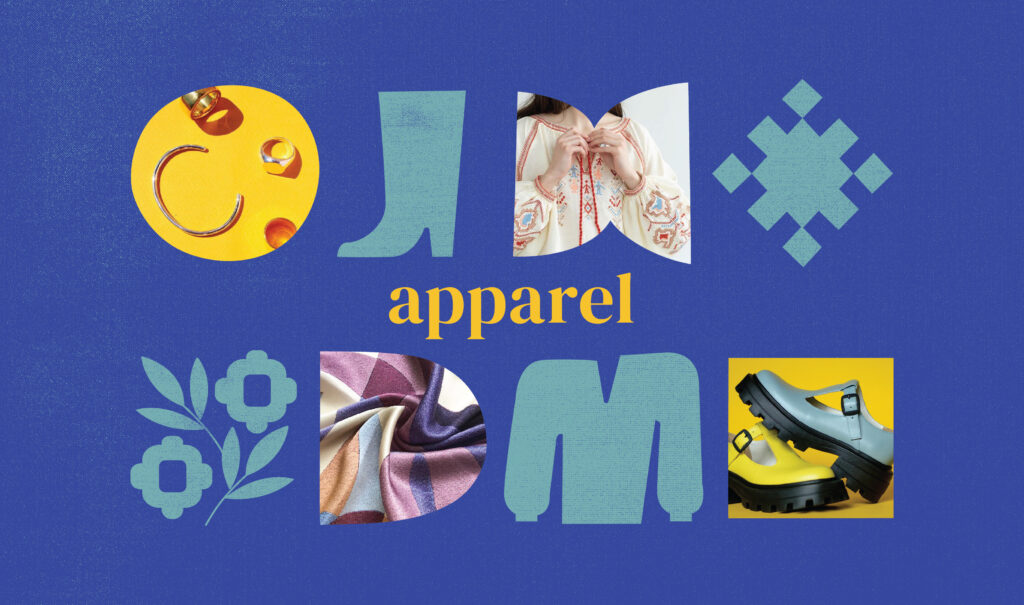
This holiday season Razom invites you to support Ukraine and Ukrainians through your gift shopping. Below is a curated list of Ukrainian brands and made-in-Ukraine products that will serve as a wonderful gift for your loved ones, and will support those who are still creating, doing and representing Ukraine. They are working through extraordinary times, and we have the power to support them in the process. This list is personal to Razom – we’ve shopped there ourselves, we’ve volunteered backstage for them at New York Fashion Week, we helped raise the funds needed to translate their works, and brought joy to our loved ones when gifting from some of these places. The list is organized by category – Home Decor, Apparel, Toys and Books, and everyone ships internationally.
Shchos Tsikave | a small home and gift store in Lviv selling crafts from local artists.
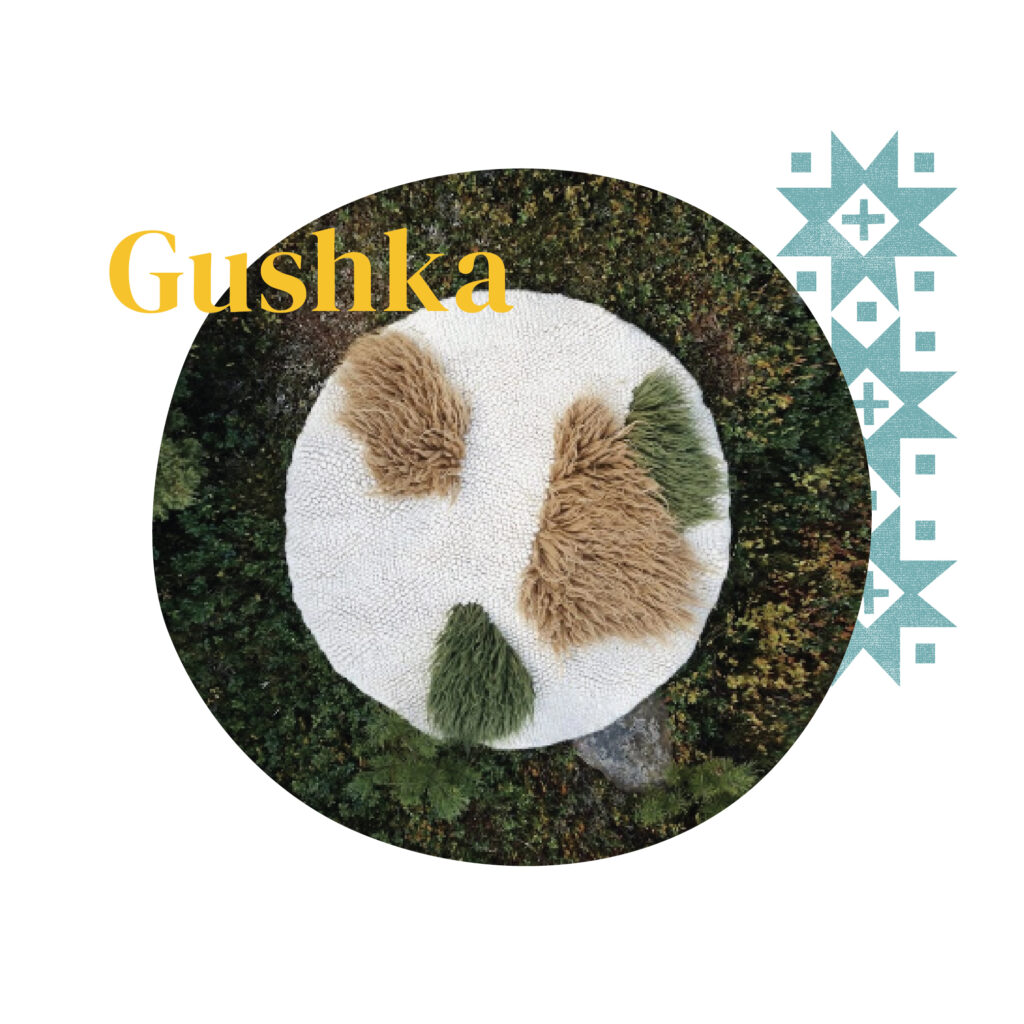
Gushka | a Ukrainian wool products workshop in Kosiv, a mountain town in Ivano-Frankivsk region.
JulliaTyasko | a modern glass art Fused glass art Contemporary wall art.
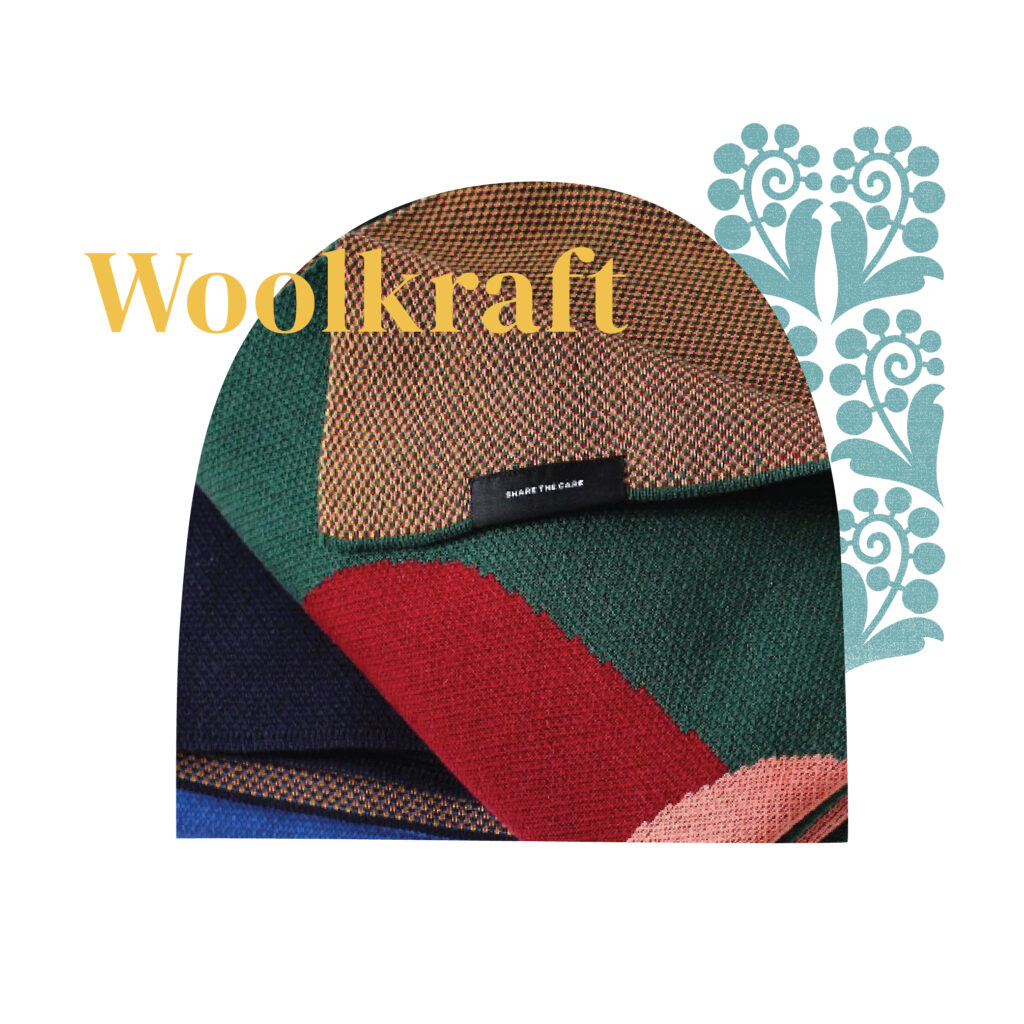
Woolkrafts | a blanket store!
Gunia Project | a brand of exceptional things produced with the unique combination of design thinking and deep ethnographic research.
Trots Ceramics | a family of Hutsul ceramics makers that's been around sine 1997.
Bevza | a Kyiv-based womenswear brand creating feminine minimalist clothing and jewelry, whose collections are shown at NYFW.
Morkva Bots | an instagram shop that hand-makes shoes!
EtnoDim | an embroidery shop that creates traditional Ukrainian clothing with a modern spin.
Oliz | beautiful silk scarves, ties, and clothing with patterns exclusively made in cooperation with Ukrainian artists.
RCR Khomenko | a fashion brand with signature upcycled shirts and fun handcrafted prints.
Vish | knitted clothes and accessories produced in limited edition collections.
Katimo | women's clothing brand with year-round collections, designed and manufactured in Kyiv.
Brua | a handcrafted jewelry store based in Lviv.
UGEARS | a Ukrainian startup that creates unique wooden toys for all ages.
HURI Publications | a part of Harvard University, check out their English-translated books of Ukrainian authors.
Since February 24, 2022, the Russian state has been deliberately and repeatedly targeting civilians, threatening them with death, injury, or forcible deportation to Russia. Russian forces regularly attack critical infrastructure, denying millions of Ukrainians electricity and water in an attempt to scare Ukraine into submission. Russia’s barbarities in Ukraine have long surpassed legal and policy thresholds for designating Russia as a State Sponsor of Terrorism. Russia must be designated a State Sponsor of Terrorism (SST).
In what follows, we debunk the most common misconception regarding the decision to designate Russia SST.
Tuesday, November 8 is Election Day, and this year’s election is critical to ensure that Ukraine continues to receive the necessary support from the United States. Our team at Razom Advocacy encourages everyone who is eligible and cares about the future of Ukraine to make sure to vote by the time the polls close.
Why Should You Vote?
While voting is an important part of our civic duty as members of society, it also has an impact on the support that Ukraine will receive for the next two years. Many people do not turn out for midterm elections, but your vote is crucial at a time when many House and Senate chairmanships are due to change in 2023 and districts have been redrawn after the 2020 census. Only by voting can you show that Americans value continued support and aid to Ukraine.
It may sometimes feel that your single vote will not make much of a difference. However, many elections are decided by a relatively small number of votes, especially once you look past the larger races. In the last twenty years, there have been more than a dozen races decided by a single vote or ending in a tie, and many more have been decided by less than 1% of the vote.
How Should You Vote?
Voting processes differ vastly from state to state, and many states have already opened early voting for the past few weeks – and we are sure many of you have already voted. (If you have, thank you!)
If you have not yet voted, here are some resources to determine the best way to do so in your area:
Over 20 states allow voters to register on Election Day. If your state is one of them and you’re not registered, make sure you bring proof of residency with you to your polling place, such as a driver’s license or ID card. You can find out more information on the registration requirements for your state here.
You can locate your polling place by using Vote.org’s Polling Place Locater. It’s good to make a plan! Decide when you will vote and how you will get there – many local transportation options have discounts or special services to help voters access the polls.
Know your rights – check what you will need to bring with you, such as ID, before you leave. If you are in line when the polls close, keep your place – as long as you stay in line, you will be able to vote. If you experience any issues or anyone attempts to stop you from voting, call the election protection hotline at 866-687-8683 to report it. More information on Election Protection can be found here.
Vote.org’s Ballot Information page provides information on all of the candidates that will be on your ballot. If their stance on Ukraine isn’t readily available, a quick Google search of their name and Ukraine can bring up previous statements they may have made around the issue.
On Election Day, we can all play an important role in ensuring continued support for Ukraine from the United States. Thank you for your advocacy.
We were very excited for the amazing concert that took place on January 2nd – Koliadky Reimagined: Ukrainian Carols in the 21st Century. Traditional folk met contemporary classical music in this stunning survey of Ukrainian Carols (Koliada) across generations. Ukrainian Village Voices were joined by musicians from the Aeon Ensemble. They performed centuries-old carols passed down orally and contemporary imaginings of these works by Ukraine’s finest living composers. The concert was broadcast live in both HD and 360° Virtual Reality so audiences could enjoy a completely immersive experience.
“I have to say I am loving every aspect of this – the programming, the performance, the music, the mix” – shared Dmytro during the concert. And we definitely forwarded these words to the artists, volunteers and everyone who made this happen.
Huge thanks to all of you who could join and so supported the bigger goal! The concert was part of a larger fundraising series to help with the production of a centenary concert celebration of Shchedryk’s first performance on the grand stage of the Carnegie Hall in 2022! All proceeds from the tickets are going toward our big vision and huge goal – learn more about and support the 100th anniversary of Shchedryk.
Learn more and support RazomCulture. Let’s share the incredible Ukrainian culture with the world!
We are thrilled to announce a new member to the Razom Board of Directors: Maria Genkin.
Maria has been deeply involved with Razom since 2017 and has been an enthusiastic supporter since 2014 when she attended a concert by Taras Chubai in New York. It is Maria who co-founded and is now managing the Razom Book Club. It’s Maria who initiated and built the partnership with the Serhiy Zhadan Charitable Foundation in Ukraine. It’s Maria who recommended Razom to PEN America as an organization to host an open community meeting with Oleg Sentsov in New York, where Maria moderated the conversation from the stage in January this year.
Born and raised in Lviv, Maria grew up speaking Russian. She was drawn to Razom because the volunteers and the projects reflect the multi-dimensional characteristics of a modern, forward-looking Ukraine, and she is looking forward to promoting Ukraine by encouraging connections among various groups and regions around the common goal of establishing a successful and self-reliant European Ukraine.
Maria has kindly shared with us her personal path of establishing her identity as a Ukrainian, which you can find below.
We heartily welcome Maria at the Razom Board of Directors! Looking forward to amazing collaborations and fun while building a prosperous Ukraine project by project RAZOM.
My story by Maria Genkin
As I am beginning my tenure as a member of Razom for Ukraine Board, I want to reflect on my background and the path I took to being involved in an organization working for a Ukrainian cause. It is not a straightforward path as in the last fifteen years I have started a Russian language school in NYC and served on the board of the Joseph Brodsky Fellowship Fund. Nevertheless to me it is part of the same story and it really comes down to my identity.
I have always considered myself a Ukrainian, but growing up Russian speaking in Lviv had made this identification somewhat difficult. Ukrainian and Russian communities in Lviv were not well integrated. In the late 80s and early 90s, with the resurgence of Ukrainian Nationalism and disintegration of the Soviet Union, these differences became especially apparent. To be a Ukrainian meant to speak Ukrainian exclusively, have relatives that fought for independencе, go to the newly resurrected Greek Catholic Church, own a vyshyvanka, that may have been passed down from a grandma, don’t eat meat at Christmas Eve dinner, and hold off all housework on Sundays. At least this was my perception of what ‘being a Ukrainian’ was at the time.
I did not fit that mold. My name was Maша Кiсельова. Even though my Ukrainian speaking grandparents lived only 200 kilometers east of Lviv, I spoke poor Ukrainian, went to a Russian school (coincidentally the same one where Ruslana Lyzhychko went at the time), and had mostly Russian speaking friends. My Ukrainian grandparents came from the other side of Zbruch, were ambivalent about Ukrainian nationalists, loved their socialism, and while they celebrated Christmas, nobody remembered that you were only supposed to have vegetarian dishes on the table.
My Ukrainian speaking mom from Khmelnytska oblast, met and subsequently married my Russian speaking dad, when they both attended Lvivska Polytechnica. He has lived in Lviv for most of his life. When she moved in with him, she also moved in with his dad, my grandfather. Grandfather was not a greatly educated man, who moved to Lviv after his retirement in 1959, and he did not speak a word of Ukrainian. Hence my mother switched to Russian, and when I was born, continued to speak Russian to me. The theories of bilingualism being beneficial to brain development were not yet popular at the time.
My high school was a Russian high school, which was not that unusual. At least 35% of the population of Lviv was Russian speaking, and for the most part, it was not Russified Ukrainians, but transplants from Russia itself, that, like my grandparents, filled in the vacuum left by Holocaust and the post-war reallocation of Poles. I was fortunate to have amazing teachers of Ukrainian, but I am saddened to say that at that time of our lives we felt very removed from what was happening around us because of the language and our backgrounds. Many of my classmates felt like unwelcomed outsiders. The local brand of nationalism to us seemed quite outdated and unrelatable.
That was the time of ambiguity for me. Can I be a Ukrainian when I don’t fit here? Russia is now a different country, but I still have relatives there, and I feel cultural affinity, but at the same time, I do not feel as I fit there either, and there is a lot in Ukrainian culture that still matters greatly to me. Who am I?
After I enrolled in Lvivska Polytechnica, I started traveling in Ukraine more. I became a co-founder of the Lviv chapter of the International Student organization, AIESEC. Being in that organization introduced me to students from Kyiv, Donetsk, Kharkiv, Berdyansk and Kherson. Under the auspices of Bohdan Havrylyshyn, AIESEC Ukraine has established itself as an independent entity and I have attended our first congress in Donetsk in the winter of 1994. With this experience came a realization that there is a Ukraine bigger than our local Lviv version of it and with all of the differences in the regions, we have a common goal to build a prosperous Ukraine. Around the same time I also made a lot more Ukrainian speaking Lviv friends and I realized that I have had certain prejudices and they do not hold true once you meet real people and you start working on the common goal.
However, what changed it all was a scholarship from the Ukrainian Professional and Business Persons Organization that I received in the summer of 1994 to attend the Summer School at the Harvard Ukrainian Research Institute (HURI). Bohdan Vitvitsky, a former Federal Prosecutor, was one of the sponsors. I took courses with George Grabowicz, a professor at HURI, and Virko Balley. Natalia Khanenko-Friesen, who is currently a director of the Canadian Ukrainian Institute, became a lifelong friend. I met Halyna Hryn, who is currently a president of НТШ, and Virlana Tkacz. But most importantly, I listened to a lecture on national identity by Roman Szporluk, at the time a professor of History at Harvard, and it was all of a sudden very clear to me. Identity is not something that is imposed on me by others – I define what my identity is. And no matter what language is dominant for me or what my background is, I have a right to choose to be a Ukrainian. And I have never changed that.
A year later, in 1995, I came to the states on a scholarship to attend Cornell University and met my husband. When his friend, himself a refugee from Moldova, came up to me asking “where in Russia are you from?”, my reply was very clear: “I am not from Russia, I am from Ukraine.” My future husband thought this was hilarious, as very few from his Russian speaking circle were actually “from Russia” and this was used generically to really mean “Where in the Soviet Union are you from?” However, for me even back then this was not an appropriate question.
The other story my husband likes to tell is that he first noticed me when I showed up at some “Russian” movie festival soon after arriving in Cornell. When he asked around who I was, he was told not to bother: “She is from Ukraine”, was the answer, and the implication was – she is a strange one for sure.
But yet we clicked. My husband emigrated here in 1992 with his family as a refugee from antisemitism. His mom is a daughter of “rozkulachenykh” – four of her older siblings died in the forced movement of the family to Siberia from the Urals. And his father is a Ukrainian Jew from Dnipro. What connected us and still connects us is values, and not languages, religion, or identities. We both consider the current Russian government criminal. We both would like to see Ukraine freed from corruption. But we do continue speaking Russian at home and when our children were born, we spoke and continue to speak to them in Russian. At the same time, we have not given them a Russian identity. They have visited Ukraine every year since they have been born. They have spent the traumatic summer of 2014 in a summer camp in the Western Ukraine with refugees from Donetsk. My son and I spent the summer of 2019 volunteering for Go Camp in Kharkiv oblast. While their connection to Ukraine is not built on the language, I like to think that it will be long lasting.
After my son Aaron was born in 2004, I realized that I wanted to take a break from the corporate world, and stopped working in Goldman Sachs in the spring of 2005. Many of my friends were getting married and getting pregnant at the time, and we realized that there was no Russian school in the city of New York at the time. And if we want the children to continue to speak the language we speak in the family, and know how to read and write, we need to build some structure for it.
There is a separate question on why preserving Russian was important for us. And I can honestly say that if we had children after 2014, it would not be. But prior to 2014, there was not as much of a dichotomy for me between the language I grew up speaking and my identity, which was very clearly Ukrainian, even prior to 2014.
I organized the school with three friends, two of whom immigrated from Ukraine in the 1980s with their parents as Jewish refugees, and one who came from St Petersburg in the early 90s.
The school is a private business, not an NGO, and is fully funded by tuition. We have never taken a penny from the Russian government or a Russian oligarch, and this is by choice. Neither I nor my partners were comfortable with the Russian government involvement even prior to 2014. This is not to say that the Russian government has not approached us in one way or another or tried to work with us. We have always refused the offers and stayed the course. We are a school of Russian language, not a Russian school. We teach the language, not the politics. When we start exploring the history, we shy away from contemporary style patriotic history, and instead explore the topics more relevant to american families attending our school. One of the books that we read with twelve year olds explores the issue of antisemitism in the Soviet Union, and the other, Elchin’s “Breaking Stalin’s nose” is about a child that is left an orphan because of Stalin’s purges.
I was approached with a proposition to join the Board of the Joseph Brodsky Fellowship Fund in 2013 and came fully on board in 2014. I joined the board as I was quite impressed with the people on the board and because I agree with the mission of supporting those Russian artists that build the bridges with European culture and western values. Amond my fellow board members was venerable Bob Silvers, an editor of New York Review of Books, a universally admired person.
I was not aware of Brodsky’s poem about Ukraine when I joined the board but found out about it shortly after. I have explored the circumstances around writing this poem with Ann Kjellberg, Brodsky’s literary executor, and I hope to eventually be able to foster a discussion about this poem in Brodsky’s legacy with the involvement of the Ukrainian intellectual community.
Everyone on the board has been very supportive of Ukraine in 2014 and 2015, and I do not have any reason to think that Brodsky today would have felt differently.
There were also some stark intersections between our Fellowship recipients and Ukraine. Elena Fanailova, a major Russian poet, and Radio Freedom host, is very vocal about her position. She has spent some of her fellowship translating Serhiy Zhadan into Russian. Boris Khersonsky, who as many of you know, is a Ukrainian poet based in Odesa, is also a Fellow. I have met Boris through the Fund and hosted a discussion with him in 2014 where we mostly spoke about Maidan and the situation in Ukraine.
I first met Zhadan through the Joseph Brodsky Fellowship Fund. We have hosted an evening with him for the NY literary world. Bob Silvers came and asked him to write for NYRB. The Head of the US Poetry Foundation was there as well as some other American poets and writers.
Joseph Brodsky Fellowship Fund has never taken money from Russian government. In the last couple of years, their support has been coming from Zimin Foundation, a fantastic organization with a record of supporting exiles from Russia.
As for many of us, the last part of the transformation of my identity happened during the Maidan and years that followed. In 2014 I protested annexation of Crimea in front of the Russian Consulate, I posted obsessively in social media, and I also discovered a new organization coming together during the Maidan, called Razom. I quietly supported some of their initiatives and watched in awe how passionate and organized this group of people was.
It was not until 2017 that I finally met some Razomtsi and organized a fundraising event with them benefiting Yara Arts. I then helped to organize yet another event that year with Slava Vakarchuk. With every event and every project, I met more and more wonderful young and passionate people that have the same goal that I have and that represent modern Ukraine in all of its diversity. This finally felt like home for my Ukrainian identity here in New York. I am proud to join the Board of this organization and to contribute to unlocking the potential of Ukraine.
There’s only one place in New York City where you can find such a diverse, motivated group of people coming together to meet, learn, and discuss projects impacting Ukrainians worldwide. That place is the Razom Annual Meeting.