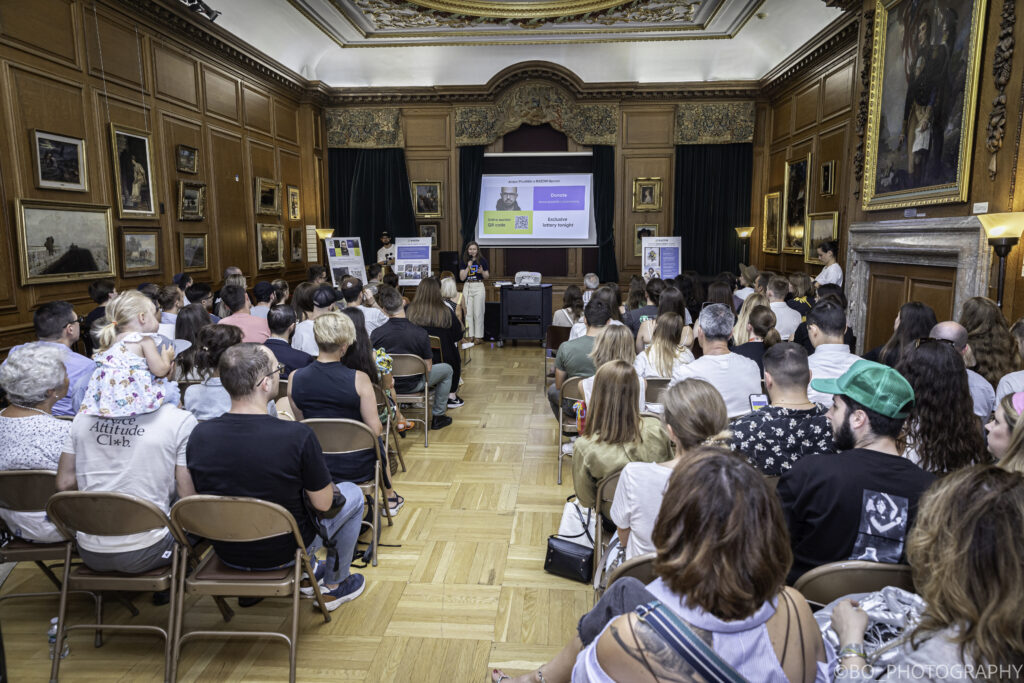
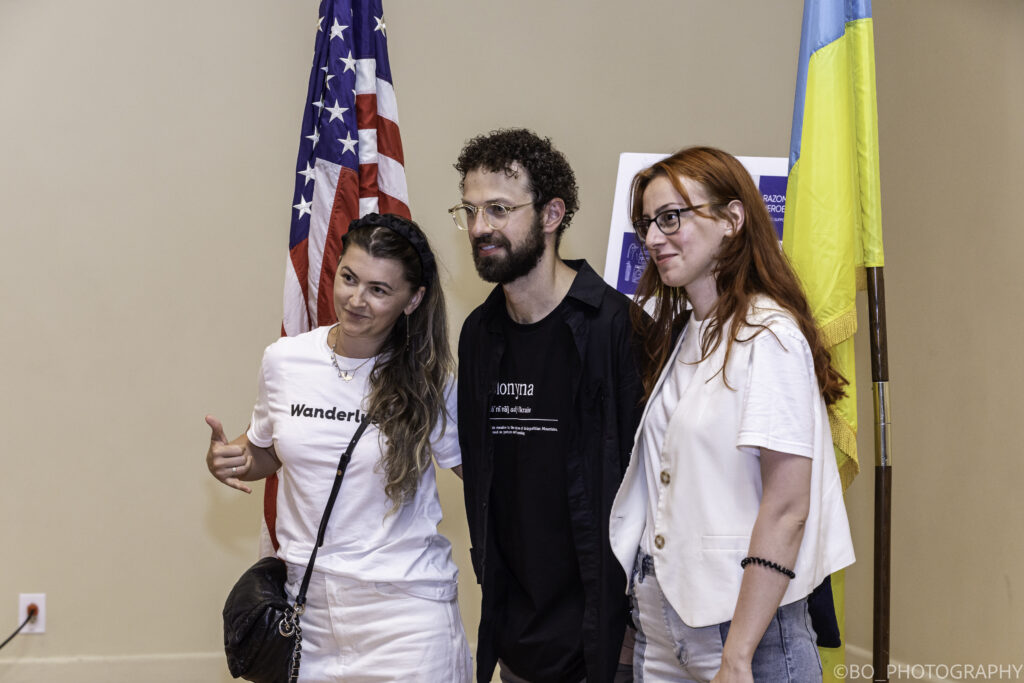
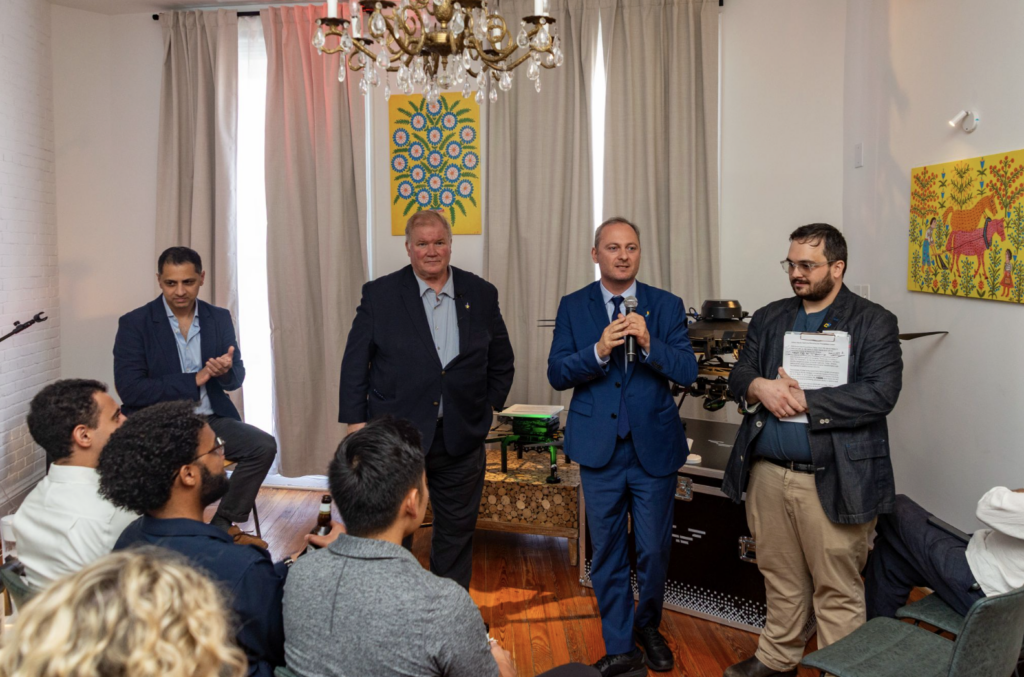
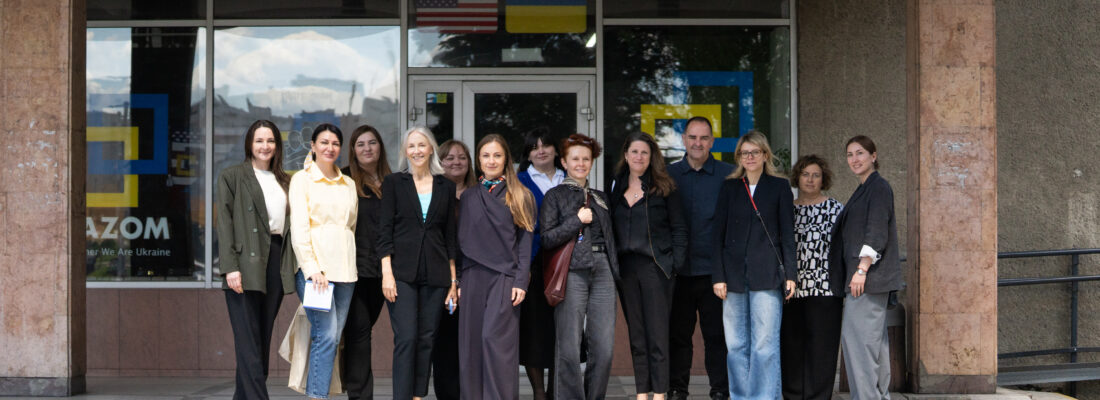
Razom together with the famous Ukrainian travel blogger Anton Ptushkin, held a fundraiser in the United States to purchase 10 mobile bath and laundry complexes for the defenders of Ukraine on the front lines.
The fundraiser included two charity meetings with Anton Ptushkin in New York, which drew over 300 attendees, as well as an online auction where people could purchase valuable commemorative items to support the defenders of Ukraine.
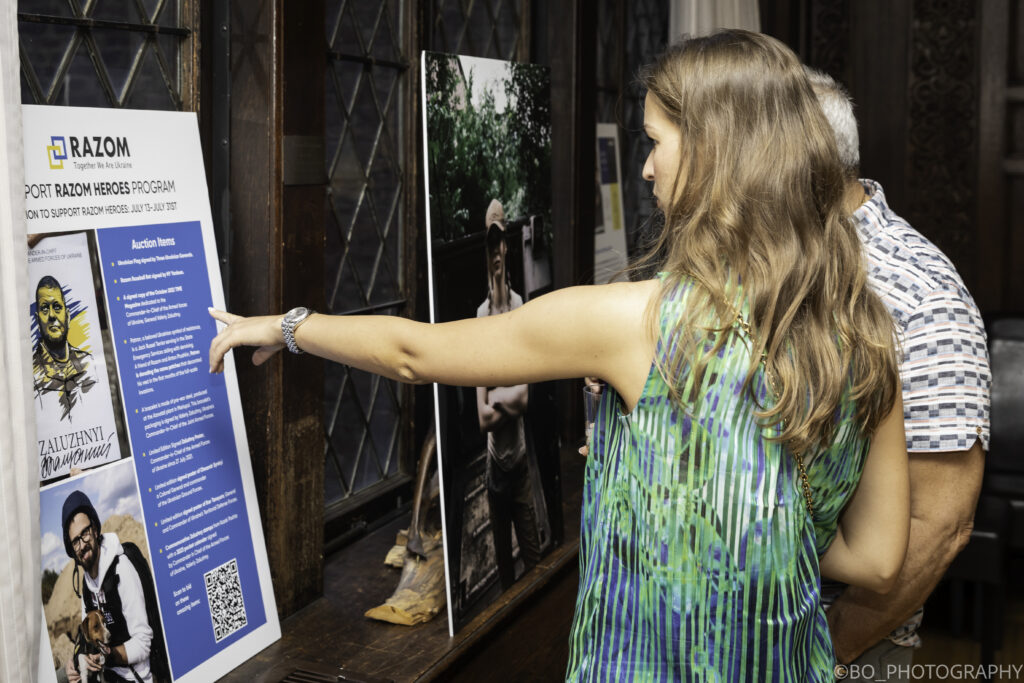
Some of the items up for auction included:
A flag with the signatures of three Ukrainian generals — Zaluzhny, Syrsky, and Pavlyuk — which sold for $6,900.
A copy of Time magazine with Valery Zaluzhny on the cover and his autograph, which sold for $5,600.
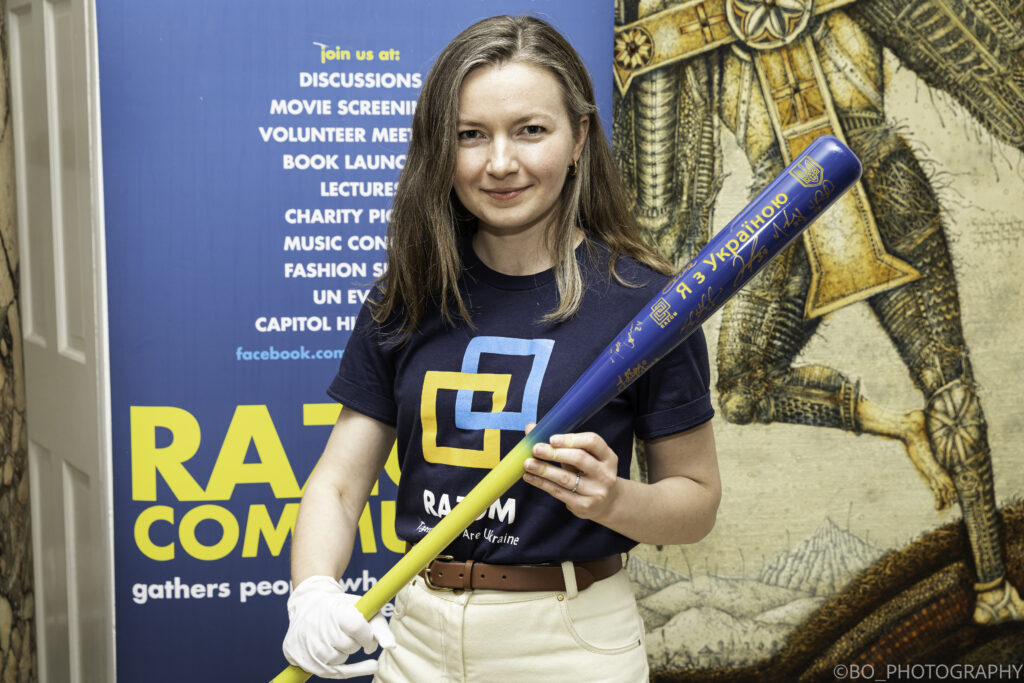
A baseball bat signed by members of the New York Yankees baseball team, which sold for $3,700.
A bracelet with the “Azovstal” logo and the signature of the Commander-in-Chief of the Armed Forces, which sold for $2,600.
Chevrons with the image of Patron the Dog, the hero dog who helped detect landmines in Ukraine, which sold for $3,700.
“Before I came to the United States, I tried to raise funds for one bath and laundry complex through my social media in Ukraine,” said Anton Ptushkin. “I was surprised to raise the money we needed in just two hours, and I raised the money for the second complex just within a day. This showed me that Ukrainians are willing to donate to humanitarian items for the military. However, people in Ukraine are also willing to donate to weapons and drones, while American people are more cautious about donating to these things and prefer to donate to humanitarian items. This is why I decided to try to raise money for mobile bath and laundry complexes in the United States. We did our first fundraiser and it was a success, so we decided to continue.”
Ptushkin also said that he chose New York as the starting point for the fundraiser because there is a large Ukrainian diaspora in the city. Jason Birchard, an owner of famous New York restaurant Veselka, generously donated $20,000 from his Stand With Ukraine Fund to the event.
Overall, the fundraiser raised $200,000, which will be used to purchase 10 mobile bath and laundry complexes. The showers are currently being manufactured near Kyiv and will soon be delivered to the front lines.
“It’s great to see that people from all over the world are coming together to support Ukraine,” said Olya Yarichkivska, one of the founders of the Razom foundation and the head of the Razom Heroes program in the United States.
“The money raised from this fundraiser will provide our defenders with much-needed bathing and laundry facilities, which are essential in this hot weather. We will continue to do everything we can to support Ukraine and its defenders.”
The Razom Heroes program is one of the many initiatives of the Razom foundation and the “Together for Ukraine” non-profit that are providing vital assistance to the defenders of Ukraine.
The program has already provided the frontline with over 130,000 tactical first aid kits, 3,000 combat medic backpacks, 100 pickup trucks/evacuation vehicles, 2,000 drones, walkie-talkies, repeaters, generators, starlinks, and other essential items for victory.
We are grateful for your interest in our work here at Razom for Ukraine. Please refer to our frequently asked questions below for information you are seeking about our mission delivery and/or how to get involved. If you don’t see your question answered on this page, please contact us with your inquiry at info@razomforukraine.org. Thank you!
How can one volunteer for Razom?
Razom for Ukraine was built on the dedication of hundreds of volunteers working together toward a common goal. As we grow, we continue to seek volunteers to support our various projects and initiatives. If you’re interested in volunteering, please fill out this form. While we cannot promise immediate placement, we’ll reach out as soon as new volunteer requests emerge from our teams. You can also email volunteering@razomforukraine.org.
In the meantime, you don’t have to wait for us; there are already opportunities to support Ukraine today:
Participate in information events and advocate for Ukraine on social media. Follow us on Facebook, Instagram, Twitter, LinkedIn to stay updated on the latest initiatives, and subscribe to our e-newsletter for news on how you can support Ukraine in your community and beyond.
Initiate a third-party fundraiser on behalf of Razom and feel free to be as creative as possible. People have started personal fundraisers for Razom on social media, hosted charity concerts, poetry readings, and evenings dedicated to supporting Ukraine’s cause.
How can one get help for Ukrainian service members?
Razom provides life-saving support to those doing the valiant work of safeguarding lives in wartime. While our organization may not directly provide the type of help you’re looking for, we encourage you to visit this page for resources and information that may guide you to the appropriate channels for your needs.
How can one get help for medical institutions?
For detailed information on how to properly apply for aid for medical institutions across Ukraine from Razom, please go to the link.
How can one get (personal) humanitarian aid?
Under the current circumstances, the efforts and attention of Razom are focused on supporting first responders and medics, medical facilities, and field hospitals, as well as advocating for Ukrainian victory. We also support Ukrainian non-governmental organizations (NGOs) providing aid in their communities.
If you are a newly arrived refugee from Ukraine to New York (USA), Razom does have an online resource – our Refugee Infohub – to guide you through obtaining services and assistance.
If you are in Ukraine or another part of the U.S., we recommend reaching out to other local organizations that provide personal aid.
How can a nonprofit/organization get grants/help from Razom?
Our grant-making program, Razom’s Relief works to foster a resilient and sustainable recovery that ensures the competitiveness of the Ukrainian economy and opportunities for those living in Ukraine. We do this via strategic investment into Ukrainian community initiatives.
The main areas of focus are:
Investing in development of Ukrainian Civil Society organizations
Providing educational and leadership development opportunities for children and youth, with a focus on STEM.
Ensuring competitiveness within the Ukrainian economy by getting people back to work with the necessary skills
Providing opportunities for veterans and women to join the workforce
Ensuring recovery via projects in water and green energy space
We are working on finalizing our new mandate and will share it soon. In the meantime, you can leave information about your organization here. Or apply for organizational development grant or mentorship here.
Can you share our fundraising page with your audience?
Razom’s mission delivery currently focuses on five program areas: Heroes, Health, Relief, Advocacy and Connect, for which we actively fundraise and which allows us to remain a sustainable nonprofit organization. Because of this we can’t support fundraising for other organizations and are not a platform for other organizations’ fundraising efforts.
How can we partner?
Please send your inquiry to our email: info@razomforukraine.org and our team will get in touch with you at the earliest possible time.
Philanthropic support is critical in fulfilling Razom’s mission and we are very grateful to our generous donors. Razom, Inc. is a U.S. 501(c)(3) organization with EIN # 46-4604398. Donations and gifts are deductible to the full extent allowable under IRS regulations and can be made online at our dedicated page: https://www.razomforukraine.org/donate/.
I am interested in working at Razom – do you have any opportunities?
To learn about career and internship opportunities, please visit our website.
Do you accept clothing donations, etc?
At this time we don’t accept in-kind donations in other forms than medical equipment and supplies or non-military aid to Ukrainian first responders and front line personnel.
We advise you to check with your local church or community center whether they can distribute some items directly.
Do you offer United for Ukraine (U4U) Sponsorship?
Razom does not provide sponsorship and should not be referenced as a sponsoring organization on the USCIS visa form. However, Ukrainians can connect with a sponsor using the following website: https://ukraine.welcome.us/connect.
ПОШИРЕНІ ЗАПИТАННЯ
Ми щиро вдячні за Ваш інтерес до нашої роботи в Razom for Ukraine. Будь ласка, ознайомтеся з відповідями на часті запитання нижче, щоб дізнатися більше про нашу місію та способи долучення. Якщо Ви не знайдете відповіді на своє запитання, будь ласка, звертайтеся до нас за електронною адресою info@razomforukraine.org. Дякуємо!
Як можна стати волонтером Razom?
Razom for Ukraine була заснована завдяки відданості сотень волонтерів, які працювали разом заради спільної мети. Ми продовжуємо шукати волонтерів для підтримки наших різних проєктів та ініціатив. Якщо ви зацікавлені у волонтерстві, будь ласка, заповніть цю форму. Хоча ми не можемо гарантувати миттєве залучення, ми зв’яжемося з вами, як тільки виникне потреба в нових волонтерах. Ви також можете написати на volunteering@razomforukraine.org.
Тим часом ви можете підтримати Україну вже сьогодні:
Брати участь в інформаційних заходах та підтримувати Україну в соціальних мережах. Слідкуйте за нами у Facebook, Instagram, Twitter, LinkedIn та підпишіться на нашу електронну розсилку, щоб отримувати новини про те, як ви можете допомогти Україні.
Приєднуйтесь до нашої мережі адвокації та звертайтеся до своїх обраних представників.
Відвідуйте мітинги та акції протесту у своєму місті; звертайтеся до наших партнерів Svitanok або Klych для більш детальної інформації.
Підтримуйте відповідні петиції та/або бойкотуйте компанії, що продовжують працювати в росії.
Відвідуйте заходи, які підтримує Razom.
Подайте заявку на стажування в Razom.
Організуйте сторонній фандрейзер на користь Razom. Люди вже започаткували особисті збори коштів у соціальних мережах, проводили благодійні концерти, поетичні читання та вечори на підтримку України.
Як можна допомогти українським військовим?
Razom надає життєво необхідну підтримку тим, хто здійснює героїчну роботу зі збереження життів під час війни. Хоча наша організація може не надавати саме ту допомогу, яку ви шукаєте, ми рекомендуємо відвідати цю сторінку для отримання ресурсів та інформації.
Як можна отримати допомогу для медичних установ?
Для детальної інформації про те, як правильно подати заявку на допомогу для медичних установ по всій Україні від Razom, будь ласка, перейдіть за цим посиланням.
Як можна отримати (особисту) гуманітарну допомогу?
На даний момент Razom зосереджує свої зусилля на підтримці медиків, медичних закладів та мобільних шпиталів, а також на адвокації перемоги України. Ми також підтримуємо українські неурядові організації (НУО), що надають допомогу в своїх громадах.
Якщо ви нещодавно прибули як біженець з України до Нью-Йорка (США), Razom має онлайн ресурс — Refugee Infohub, щоб допомогти вам з отриманням послуг та допомоги.
Як неприбуткова організація може отримати гранти/допомогу від Razom?
Наша грантова програма Razom’s Relief спрямована на стійке відновлення України через стратегічні інвестиції в ініціативи українських громад.
Основні напрями:
Інвестування у розвиток громадянського суспільства в Україні.
Освіта та лідерство для дітей та молоді, з акцентом на STEM.
Підтримка конкурентоспроможності економіки України.
Підтримка ветеранів та жінок у працевлаштуванні.
Проєкти у сфері водопостачання та зеленої енергетики.
Як можна партнерувати з Razom?
Будь ласка, надсилайте ваші запити на info@razomforukraine.org, і наша команда зв’яжеться з вами якомога швидше.
In acknowledgement of all the hard work volunteers, supporters, partners, and donors have put into Razom’s Emergency Response for almost five straight months now, we’ve put together an Impact Report. We’re making history together, #Razom, and we wouldn’t be able to do it any other way. So take a look, read it, share it, and help us continue this great work for Ukraine.
At Razom’s Washington, D.C., office, Ukrainian innovators and American policymakers explored the technologies reshaping modern security and the opportunities for deeper U.S.-Ukraine cooperation.
Ukraine’s experience defending itself against Russia’s full-scale invasion is transforming how the world understands modern warfare. Ukrainian engineers, trainers, and innovators are developing and adapting technologies at remarkable speed, drawing on lessons learned directly from the front lines. These innovations have implications far beyond Ukraine, offering important insights into the future of unmanned systems, emerging security threats, and international defense cooperation.
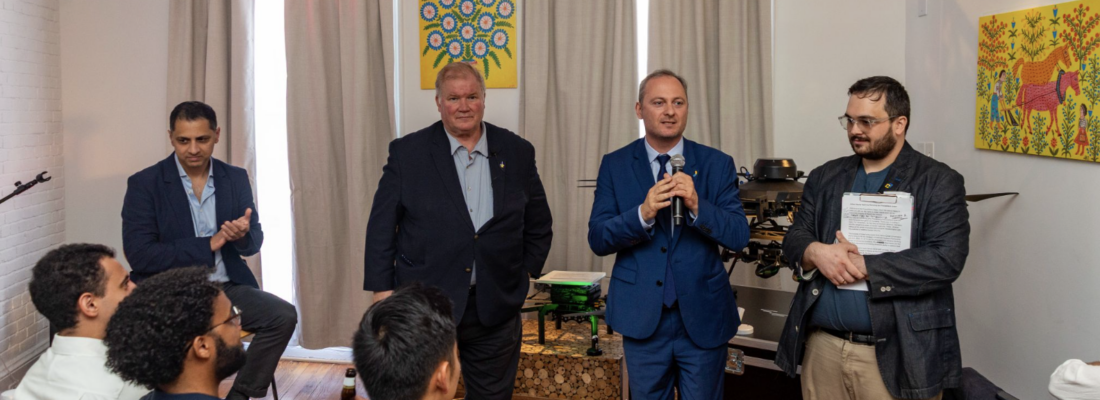
To bring that expertise directly to American decision-makers, Razom for Ukraine’s Advocacy Team convened and hosted Prometheus, an interactive defense innovation showcase at its Capitol Hill office in Washington, D.C., earlier this month.
Organized in partnership with the Embassy of Ukraine in the United States, the Foundation for Defense of Democracies (FDD), Liberty Ukraine, Accshellerator, Ukraine’s Boryviter Centre of Excellence, and Truth Hounds, the event welcomed more than 100 congressional staffers, executive branch officials, national security experts, and Ukrainian innovators.
“Out of necessity, Ukrainian engineers have developed inexpensive technologies that are being deployed in weeks, challenging weapons systems worth millions of dollars. Ukraine is at the forefront of this transformation, and the United States has much to learn from its experience. One of Razom’s central objectives was to build support for a formal U.S.-Ukraine working group to facilitate cooperation on unmanned systems,” said Daniel Balson, Director of Razom Advocacy.
A Hands-On Look at Ukrainian Innovation
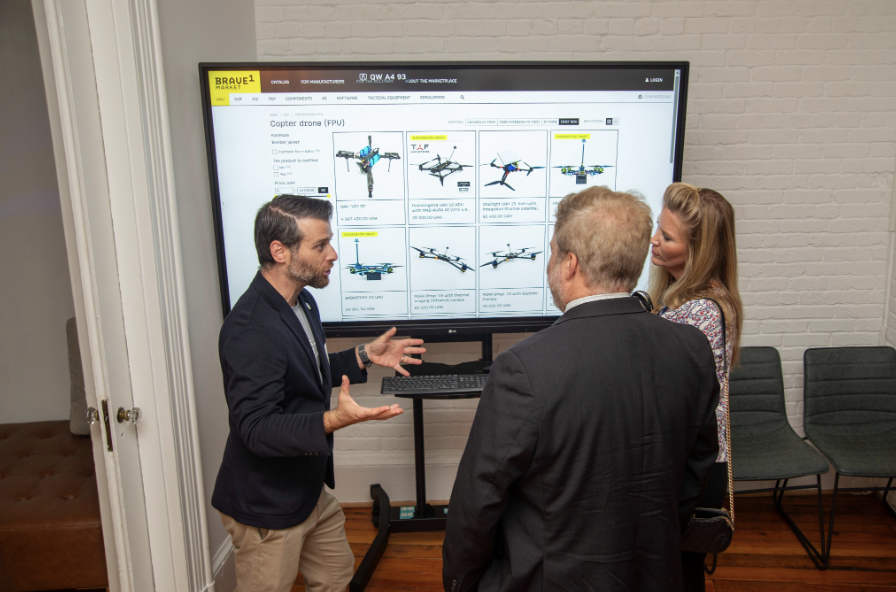
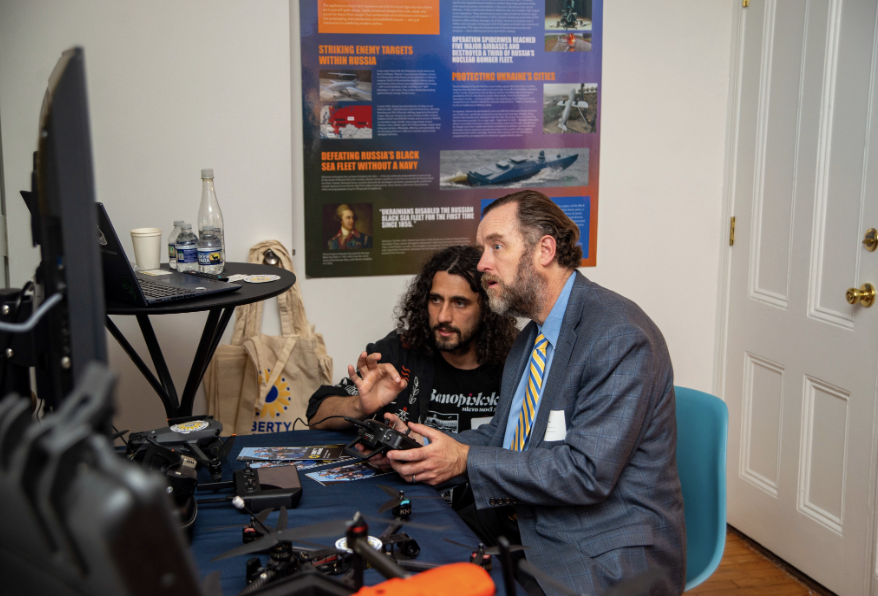
Prometheus gave participants an opportunity to experience Ukrainian technology firsthand and speak with the people developing and using it. Guests took the controls of first-person-view (FPV) drone simulators, examined Ukrainian drone models, explored battlefield logistics software, and learned about rapidly evolving technologies designed to counter unmanned threats. The demonstrations illustrated how quickly Ukraine’s innovation ecosystem has evolved under the pressures of war.
Ukrainian engineers, entrepreneurs, and frontline professionals have developed ways to adapt relatively inexpensive technologies to challenges traditionally addressed by far more costly systems. In some cases, technologies can be modified and deployed in weeks, or even days, to meet rapidly changing needs.
For the American policymakers in attendance, the opportunity to engage directly with Ukrainian innovators brought those developments into sharper focus. The showcase created space for technical questions, practical demonstrations, and conversations about what Ukraine’s experience can teach its international partners.
What Ukraine’s Experience Means for Global Security
A fireside conversation featuring Rear Admiral (Ret.) Mark Montgomery and Shashank Joshi of The Economist explored the broader implications of Ukraine’s experience for the future of warfare and American security.
As unmanned technologies evolve, Ukraine’s experience offers insights into how quickly security challenges can change and how institutions can adapt to emerging threats. The discussion reinforced one of the event’s central themes: Ukraine’s knowledge and experience can make a meaningful contribution to its partnerships with the United States. Ukraine has become an important source of practical expertise in unmanned systems, and sustained cooperation offers both countries opportunities to learn from that experience.
From Innovation to Lasting Cooperation
Prometheus also highlighted an opportunity to translate these exchanges into more structured collaboration: H.R. 9550, the Strategic Unmanned Systems Partnership Act, proposes strengthening U.S.-Ukraine cooperation in the development, production, and acquisition of next-generation unmanned systems. The proposal reflects the broader policy conversation surrounding the showcase: how the United States and Ukraine can build on Ukraine’s technological expertise through sustained cooperation.
For Razom’s Advocacy team, bringing Ukrainian experts into direct conversation with American policymakers is an important part of that process. The team connects decision-makers with credible information, Ukrainian perspectives, and opportunities for policy engagement.
Keeping Ukrainian Expertise at the Center
The success of Prometheus depended on the expertise and collaboration of many partners.
Razom extends special thanks to the Embassy of Ukraine in the United States and Chargé d’Affaires Denys Sienik for participating, and to the Foundation for Defense of Democracies, Liberty Ukraine, Accshellerator, Boryviter Centre of Excellence, and Truth Hounds for helping bring the showcase together.
We are also grateful to the Ukrainian engineers, trainers, and innovators who shared their knowledge and demonstrated technologies shaped by years of extraordinary challenges.
The event represents one part of Razom’s broader commitment to strengthening understanding of Ukraine in Washington and supporting relationships that recognize Ukraine’s experience, capabilities, and leadership.
Thanks to Razom’s supporters, we can continue bringing Ukrainian expertise to the people and institutions shaping important decisions, helping create opportunities for deeper understanding and lasting partnerships.
Razom for Ukraine: You Cannot Put America First While Buying Russian Diesel
Washington, D.C., October 9, 2026 — Razom for Ukraine expresses its unequivocal opposition to President Trump’s decision to allow nearly 5 million tons of Russian diesel to enter the American and global market. “Every dollar America spends on Russian diesel is a dollar that Putin uses to kill Ukrainians in hospitals, schools, and shelters,” said Daniel Balson, Director of Advocacy at Razom.
Just three weeks ago, the President signed the Lindsey O. Graham Sanctioning Russia and Iran Act to pressure other countries to end their dependence on Russian energy. Today’s decision undermines that effort, runs counter to the President’s stated goal of ending the war, and defies the bipartisan intent of that bill.
“Instead of increasing pressure on Russia’s energy sector, President Trump’s announcement is giving the Russian dictator an economic lifeline as his forces falter on the battlefield,” added Daniel Balson.
“The American people across the political spectrum support more economic pressure on Russia. According to the February 2026 Harvard CAPS / Harris poll, 66% of Americans say President Trump should impose further economic sanctions on Russia. You cannot put America first while buying Russian diesel.
Yesterday, Russia bombed two buses in the Ukrainian city of Kramatorsk, killing 33 people. The day before, Russia bombed an apartment building in Pryluky, killing 22, including children. Russian oil money bankrolls these crimes. President Trump says he wants to save lives. The decision to buy Russian diesel undercuts that goal,” said Balson.
Razom for Ukraine calls on President Trump to rescind this decision and urges members of Congress to explore every available legislative and oversight mechanism to reverse it.
Every morning, Ukrainian children head to school knowing that an air raid alert could interrupt their lessons at any moment. Russia could launch another missile or drone, and suddenly, solving for “x” is no longer important. What matters is getting to a shelter in time.
Supporting STEM education in Ukraine is one of Razom’s priorities. By supporting educational programs today, we help young people gain the skills they need to develop new technologies and shape the future of Ukraine and the world.
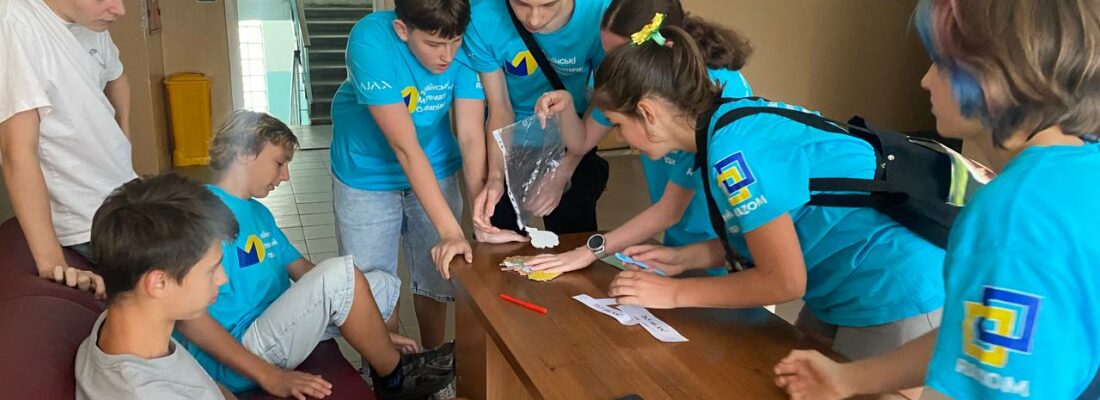
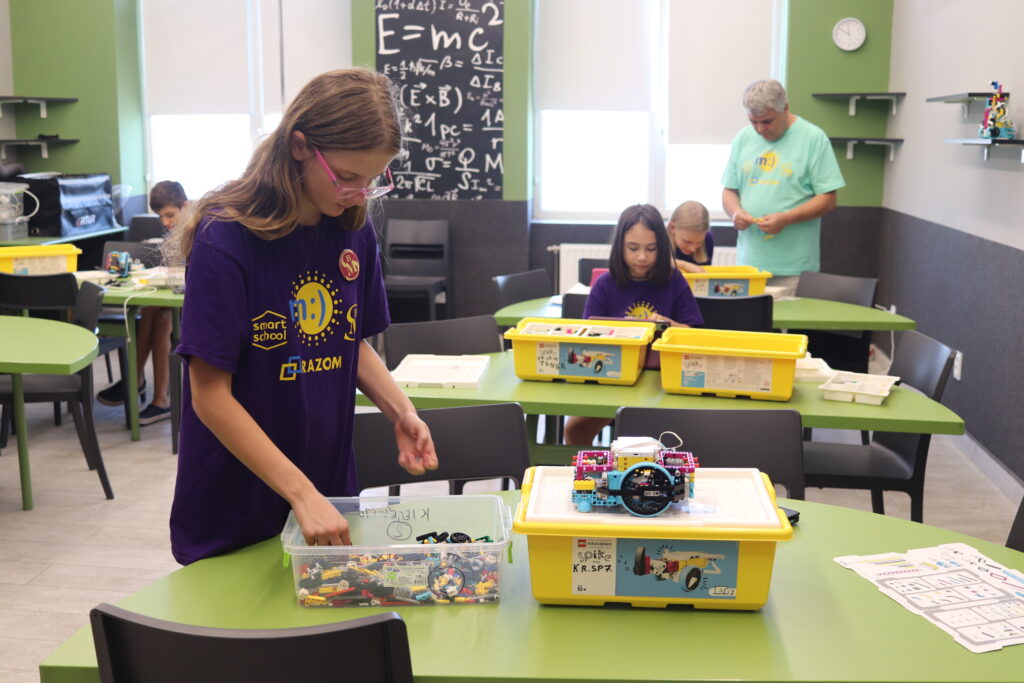
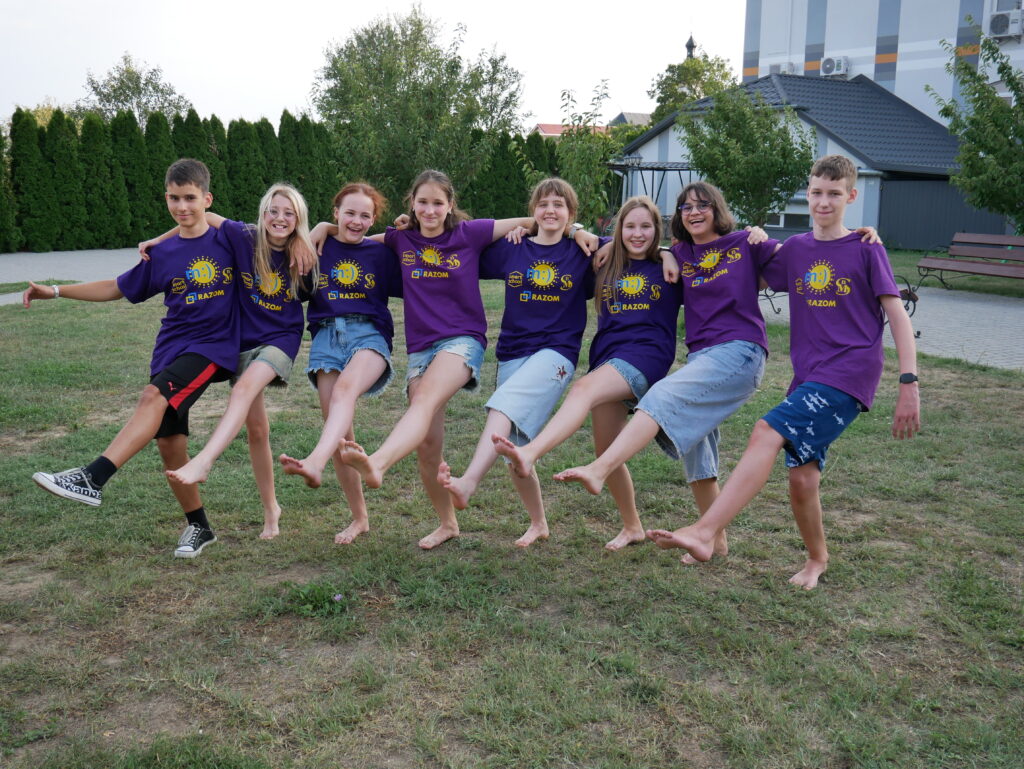
This summer, Razom supported three organizations that ran special summer camps for students with a strong interest in mathematics and programming: Boiko Foundation, the Center for Children’s Science and Creativity “Digit” (Tsyfra), and the AFINA Charitable Foundation.
Razom helped cover the cost of food and accommodation for 259 children out of nearly 400 who attended the camps. Without this support, these students would not have been able to take part. Many were winners of math competitions and Olympiads, while others had shown a strong interest in mathematics and technology.
A Place Where Loving Math Is Normal
“Honestly, before the camp, I was thinking about quitting math. But some of the lectures made me want to keep going,” says Yana Maltashova, a 10th-grade student at a specialized math and physics high school. She was also a finalist in Ukraine’s 2026 National Mathematics Olympiad.
Because of frequent Russian missile and drone attacks, many Ukrainian students have to study online. Their whole school life—classrooms, hallways, teachers, classmates, breaks, and snacks from the school cafeteria—has been reduced to a screen.
Summer math camps bring students back into real classrooms, where they can work at a board and learn directly from teachers. They offer something just as important: a place where it is normal to love math. A place where students can be just as excited about playing volleyball as they are about talking about black holes.
“Spending time with other students who share their interests often helps children stay motivated, take part in Olympiads, and consider STEM careers in the future,” says Viktoriia Tsan of the Mathematical Olympus Charitable Foundation.
Some students have had to leave Ukraine because of the war and move to Germany, Romania, Moldova, Hungary, or Malta.
“I really like the people here. They’re unique, and it’s hard to find people like them anywhere else. I live in Germany, and there’s no one like them there,” says Yeva Kozynets, a ninth-grade student who moved from Sumy to Germany because of the constant shelling in her hometown.
From a Love of Math to a Future Career
These summer camps are part of longer educational programs that help students deepen their knowledge of mathematics and related subjects. For many children, a camp is more than a summer experience. It is one step on a longer journey—from discovering a passion to choosing a career.
Razom has supported Boiko’s independent school and the SmartSchool network of after-school learning centers for more than three years. In the 2025–2026 school year, 18 graduates of Boiko’s school scored an average of 189.7 out of 200 on Ukraine’s National Multidisciplinary Test (NMT) in mathematics. The national average for mathematics on the 2026 test was 131.9.
Graduates of the educational programs Razom supports go on to study at the University of Cambridge, École Polytechnique in Paris, Jagiellonian University in Kraków, and other universities. Some have already become teachers in Ukrainian schools.
STEM education helps Ukrainian children keep learning and exploring science and technology, even as the war disrupts their lives and forces families to move. Today, these programs give children a chance to return to the classroom, meet others who share their interests, and keep learning. In the future, these same children could become the scientists, engineers, and technology experts who help Ukraine rebuild and grow.
Behind every high test score, place at Cambridge, or first teaching job are years of learning, caring teachers, and a place where a child can grow. The war has made it harder for Ukrainian students to access these opportunities. By supporting STEM programs today, we can help children continue learning, discover what they are capable of, and prepare for careers that will help shape Ukraine’s future.
When Russia launched its full-scale invasion, Ukrainians faced a challenge to their very survival as a country and a nation.
People responded by stepping up. Across Ukraine, thousands of volunteers began organizing food deliveries, supporting displaced families, helping communities under attack, and raising money for people in need. Some volunteer initiatives eventually closed. Others grew into formal organizations that continue to serve their communities today.
As this new civil society grew, so did a new need: people who had learned to respond to an emergency now needed the knowledge to build organizations that could last.
Leaders of Ukrainian nonprofits were looking for practical skills in organizational development, strategic planning, management, and financial sustainability. They had learned by doing. Now they needed an opportunity to turn that experience into lasting expertise.
Until recently, Ukraine had no formal graduate program specifically designed around the realities of nonprofit work. When Ukrainian Catholic University (UCU) launched its master’s program in Nonprofit Management, Razom created a scholarship program for civil society professionals.
The goal is simple: help the people serving Ukrainian communities build organizations strong enough to keep going.
Razom scholarships cover 75% of tuition for the full two-year program. Between 2024 and 2026, Razom supported seven civil society professionals.
Here are three of their stories — and what happens when people who are already creating change gain the knowledge to make that change last.
Anna Andruseiko: Seeing the Whole Picture
Anna Andruseiko came to the program with years of experience as a program manager at a donor foundation and a civic association. She already knew how to work with finances, law, management, and strategic planning.
But these skills existed in separate pieces.
Her studies at UCU helped her see how they fit together — and how people, processes, finances, and strategy all shape the strength of an organization.
She is already putting this perspective to work.
At the RUTA Association, Anna is helping develop an endowment and build a community around the organization. The goal is long-term financial independence, so the organization can continue its work without relying entirely on outside support.
At ZMIN Foundation, she looks beyond what an organization does. She asks what its work actually changes — and whether those results match its mission.
This is the theory of change in practice. And it gives Anna a stronger way to evaluate partnerships and make decisions.
For Anna, the program changed the way she sees her work. She learned to look at an organization as a whole and think more strategically.
She also found something just as valuable: a community of people with different experiences who are learning from one another and finding ways to work together.
Sofia Shcherbachuk: Turning Experience Into Stronger Action
For seven years, Sofia Shcherbachuk worked in volunteer, humanitarian, and civil society initiatives — from local projects to programs operating across Ukraine.
She learned how to work with communities, build trust, and turn ideas into projects that improve people’s lives.
But eventually, experience alone was no longer enough.
Sofia wanted to understand how to manage organizations more effectively, plan for the future, and measure whether their work was actually making a difference.
She began applying what she learned almost immediately.
Since March 2026, Sofia has led the culture program at SpivDiia Charitable Foundation. Before the program, her focus was mainly on delivering projects well. Now she also asks bigger questions: Why are we doing this? Who will it help? What will remain after the project ends?
That shift has already led her to develop new initiatives for her team and prepare grant proposals to grow the program.
For Sofia, the scholarship meant she did not have to put her professional growth on hold.
Most importantly, she saw that knowledge does not have to stay in a classroom. It can become a better decision the next day — and a stronger organization over time.
Ruslana Romanchuk: The Confidence to Lead Change
Ruslana Romanchuk first heard about the program in 2021 at the Civil Society Development Forum. She immediately saw it as the next step in her professional growth.
Many people she knew had already graduated from the program. They recommended it not only for the knowledge, but for the community of people working to strengthen Ukraine.
Ruslana believed in lifelong learning. She wanted to combine what she had learned through years of practical experience with a deeper understanding of how nonprofit organizations can grow and remain strong.
The impact was immediate.
At the NGO Resource Center for NGOs, Ruslana reviewed procurement policies, helped improve financial management, changed the organization’s approach to reporting, and facilitated a strategic planning session for a volunteer group.
During her studies, she also proposed creating a membership system for people who had worked with the organization for more than a year. The organization’s leadership adopted the new policy.
These may sound like internal changes. But they strengthen the organization’s ability to serve people — including through individual psychological consultations and support groups for adults and children from communities across Ukraine.
For Ruslana, the program gave her more than new tools. It gave her the confidence to use them.
And the scholarship made that possible. Without financial support, she would not have been able to afford tuition, accommodation, food, and travel.
The people she met through the program, she says, were one of the most valuable parts of the experience. They inspired her to keep learning, changing, and growing.
In 2025, the number of humanitarian organizations directly providing assistance in Ukraine fell by 20%. Even organizations with years of experience are struggling to maintain their work.
That is why investing in people matters.
When a civil society leader gains new knowledge, it does not stay with that one person. It returns to their organization as better decisions, stronger teams, clearer processes, and more sustainable work.
And over time, stronger organizations mean stronger communities.
The goal is not for Ukrainian nonprofits to depend on outside support forever. It is to help them build the knowledge, leadership, and systems they need to stand on their own.
When you support Razom, you are investing in the people who are building that future — one organization, one community, and one decision at a time.
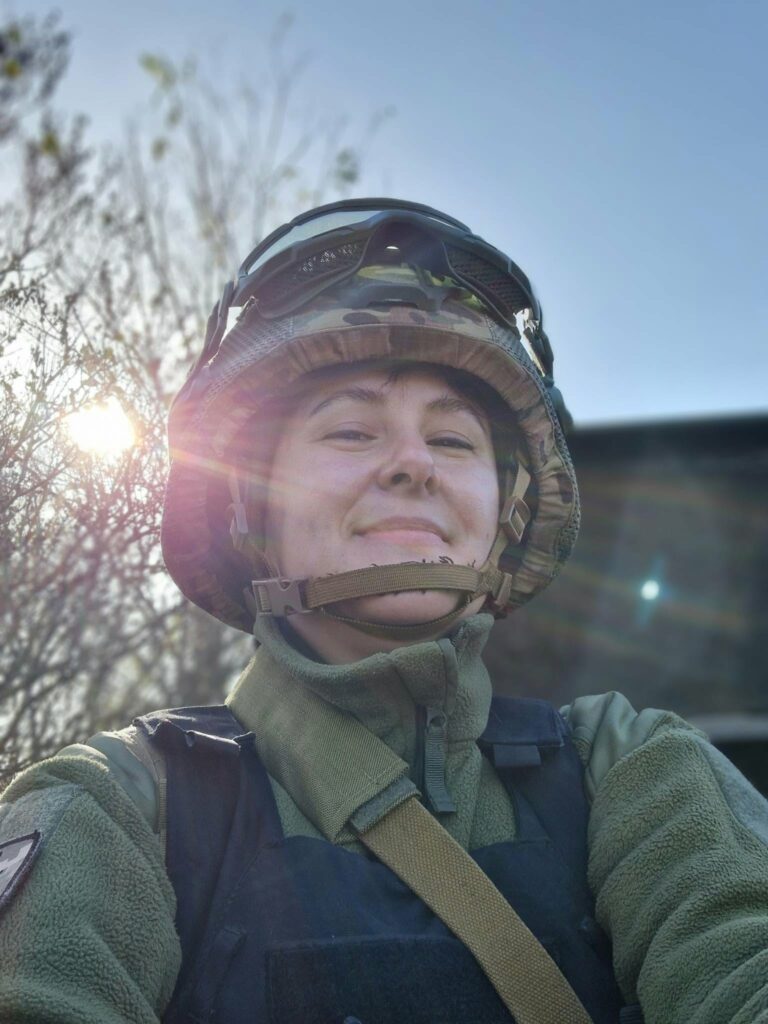
Coming home from war does not end on the day a person leaves the military. Veterans need to find their place among civilians again, rebuild relationships, and feel that their experience matters. For Alina, that place was a community of writers. Now she is creating the same kind of space for other veterans.
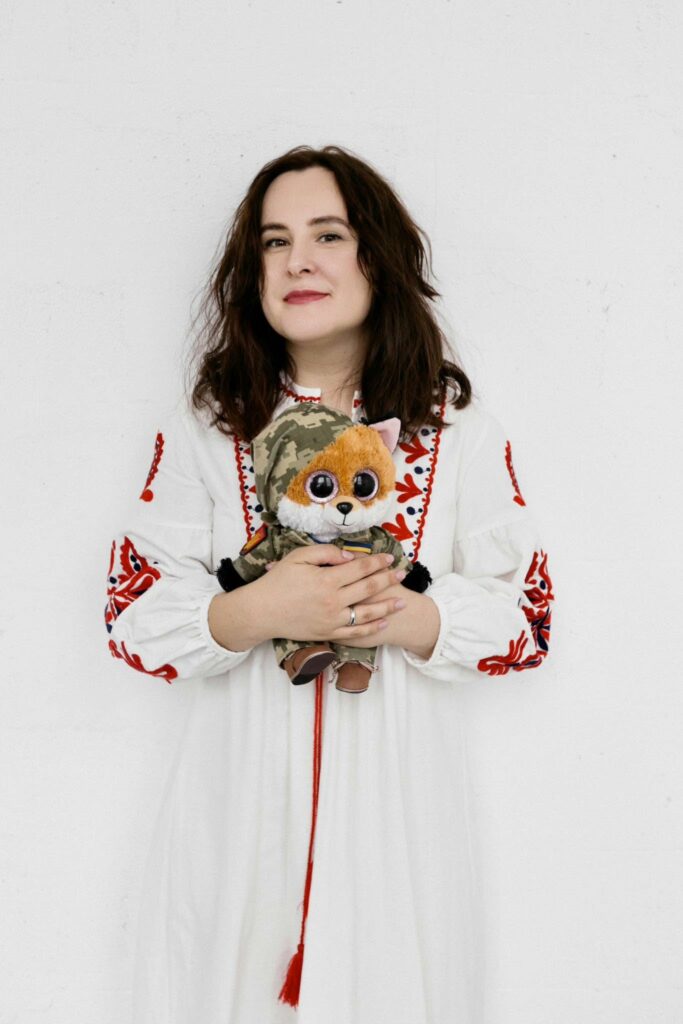
Alina Sarnatska is a veteran, human rights advocate, radio host, and writer. In Lviv, she created the Veterans’ Theater, a space where veterans can develop their skills as playwrights. The project is part of the Veterans Program of INDEX, the Institute for War Documentation and Intellectual Cooperation with the Outside World, with support from Razom.
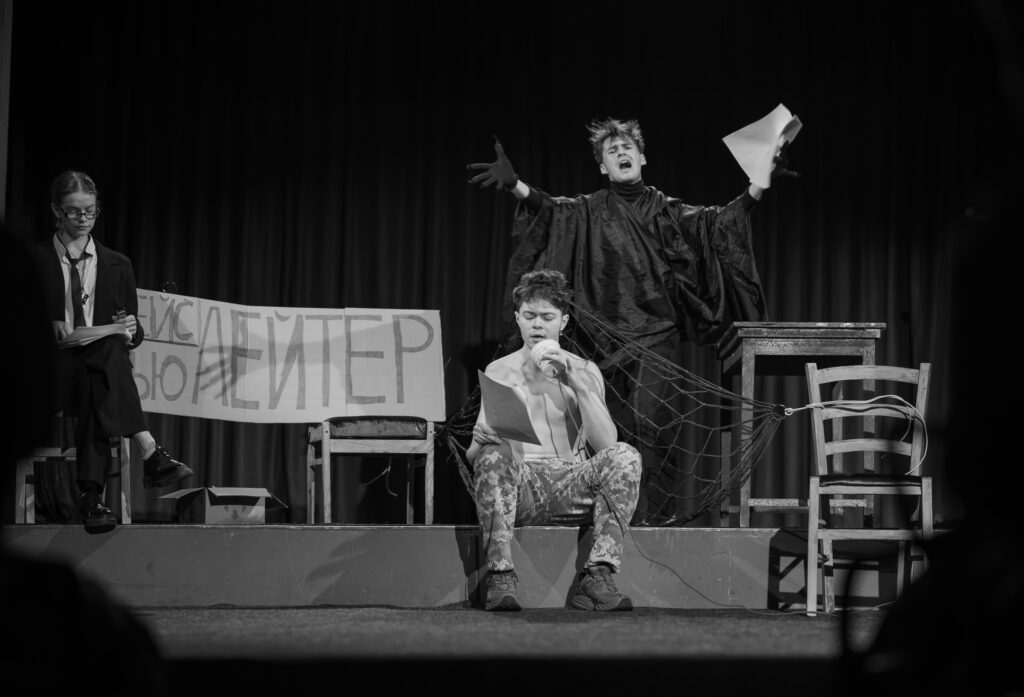
Over two and a half months, nine veterans and two veterans’ wives learned to write plays about their experiences of war, returning to civilian life, and how these experiences changed them.
“Veterans can come to the theater and see themselves represented on stage. It matters to see that people in this place care about veterans,” Alina says.
We spoke with Alina about her journey to theater and how playwriting can bring veterans together while helping the world understand what Ukrainians are experiencing during the war.
Photo from Alina Sarnatska's Facebook page
Writing to Find Yourself Again
“In the army, you get the full picture of what will happen when you die. How quickly people will forget about you. It is really hard to process,” Alina Sarnatska says.
“At some point, I realized that if I were killed, if the world completely erased all traces of me, I would regret not spending enough time with the people I loved and not writing enough.”
After three years of military service, Alina realized that she had not simply put her life on hold. Some of her skills were beginning to fade.
“After the army, I realized that I could no longer put my thoughts together. I was no longer as bright or confident as I had been. I was very sad. I realized that if I did not find a community, I would stop writing. I did not have enough courage. At some point, my friends started sending me links to a playwriting school run by playwright Maksym Kurochkin’s Veterans’ Theater. I applied. And I found a mentor in him. That helped me keep going — I finally had someone I could rely on.”
That is how a new Ukrainian playwright emerged. Her plays are now read and staged not only in Ukraine but abroad as well. For example, her play Balance was presented as part of Razom’s Ukrainian Drama Showcase in New York.
The theater gave Alina more than a new profession and a community. It also allowed her to continue doing what she had done before: representing people’s needs and making their experiences visible to society.
After finding this new source of support, Alina decided not to stop at writing plays. She wanted to teach other veterans how to write and create theater — and to help new voices emerge.
Writing for Equal Rights
We are speaking with Alina over video when explosions begin outside my window in Kyiv. I have to pause the conversation and move into the closet.
“Why pay rent for the whole apartment when we’re basically living in the corridor?” I joke.
“Why pay rent at all when you can just live in the subway?” Alina jokes back.
Alina trained as a psychologist and studied social work in graduate school. She conducted research and worked as a manager at a nonprofit organization. For many years, she focused on women’s rights, including preventing gender-based violence. She worked with UN Women, Columbia University, and other international organizations.
“We wanted to make changes in the country,” Alina says.
Alongside her work in civil society, Alina was involved in a right-liberal movement, where she first met veterans of the Russian-Ukrainian war. The community had a significant influence on her, she says. She remained friends with many of them even after their work together ended.
“We used to argue a lot about women’s rights, Pride, and the LGBTQ+ community. When the full-scale invasion began, I saw all these people join the military — except mothers with children. And I think they gave me an incredible example.”
“The Ukrainian army is made up of civilians who went to defend their country out of love,” Alina says. She came to the military from the civil society sector.
Photo from Alina Sarnatska's Facebook page
Writing to Support Her Battalion
Alina’s Facebook posts from before and during the COVID-19 pandemic are about podcast recordings, work, burnout, and learning English. There are also fox toys, fox decorations, and fox emojis.
In March 2022, “Fox” became her military call sign. The civil society activist became a combat medic with a fire support company of the 207th Battalion of the 241st Territorial Defense Brigade of the Armed Forces of Ukraine. At the time, women in Ukraine were not subject to mandatory mobilization, and Alina’s employer had offered her the opportunity to leave the country.
As of early 2026, more than 75,000 women serve in Ukraine’s Armed Forces.
“I am an adult woman without children. I understood that I had to join the military and defend my city and my people. When people ask why I joined the military… I think the more logical question is why someone did not.”
In the spring of 2022, recruitment centers were filled with volunteers: teachers, IT professionals, managers, and other civilians who had never served in the military. Like Alina, they chose to put their lives on hold for their country.
“During the first few weeks, I cried at night. Nothing made sense. Everything was frightening and strange. I was afraid I would not be able to handle the responsibility. I was told that I was now responsible for the health of hundreds of soldiers. I had no medical training, and we had not had a single day of training. Someone showed me where the safety on the rifle was. I learned tactical medicine from materials I found online… Bit by bit, it became easier.”
There were no weekdays in the army, and the only color left in her wardrobe was camouflage green. Alina would track incoming strikes near the Kyiv home where her family stayed and would celebrate a second birthday after surviving an artillery attack near Irpin (a town near Kyiv).
“To serve in the military, you have to find balance. In my first year of service, I bought cat ears for my helmet and a sleeping bag liner with Pokémon on it. In my second year, I stopped being embarrassed about sleeping with a stuffed animal. My mother sent me a badger from home. His name was Filimon. He got a little dirty, so whenever I had the chance, I washed him and dried him in the sun,” Alina writes in her play Balance.
During her service, she began writing again. This time, she wrote short posts on social media to raise money for her battalion.
“We needed everything: vehicles, drones, radios… Everything. I became pretty good at writing dialogue because dialogue was what brought in the most donors and helped raise donations,” Alina recalls.
Alina took part in combat operations in Donetsk region. She received the Commander-in-Chief of the Armed Forces of Ukraine’s “For Saving Lives” badge and the President of Ukraine’s “For the Defense of Ukraine” award.
At the beginning of her service, Alina wanted to sleep in a bed, go to the movies, to kiss the person she loves, roast a chicken in the oven, and write well. She dreamed of becoming a writer.
Photo from Alina Sarnatska's Facebook page
Writing to Bring Veterans Together
“I believe that people should be part of a community and that it is important to serve your community. I want to be useful to veterans. For me, it is almost a question of faith,” Alina says. She has attended church for more than 20 years.
Alina says it would be wrong to describe the program as art therapy. Not every creative process is healing. Even watching performances of her own plays can leave her feeling unwell for several days.
For her, the most valuable part is being among people with similar experiences — and having the chance to learn a new profession.
“We had one participant in Lviv from Superhumans (Rehabilitation Center for Military), a very young man who had only recently lost his leg. I am not sure the program was really about writing for him, but he became part of the community. He came to every class and wrote a play. A year later, he realized that he wanted to keep writing. It is a long-term process. For us, this is not just a course — we’re always with them now.”
After the program ends, all participants remain in a group chat where they share opportunities and stay in touch.
Veterans who are still receiving treatment in hospitals can join the classes. Even active-duty service members at the front have participated.
Writing to Bring the Country Together
“I understand that what happens to veterans will affect many generations. It will matter how abandoned and unnecessary they feel,” Alina concludes.
Military service can fundamentally change the way people see life and everyday things. For service members, the primary task is to survive. In Ukraine, projects focused on veterans’ integration and support have existed since 2014.
The final stage of Alina’s program is a public reading of the new plays, performed by professional actors.
“It has a huge impact on the participants. They see that these stories matter to other people. And it affects everyone — both the local community that comes to the performance and the veterans who wrote the plays.”
A play can become a way for people with very different experiences to understand one another — and to find a way to live and create together.
Theater cannot erase the experience of war. But it can give veterans a place where people listen to them. And it can give society an opportunity to hear their stories.
Alina Sarnatska’s story is not only about finding yourself after war. It is also about how the support you receive from others can become an opportunity to support someone else. Once, a community helped Alina believe in her own voice. Today, she helps other veterans find theirs — and make themselves heard far beyond the theater stage.
Because returning from war is not only a journey a veteran has to make. It is also about whether society is ready to create a space where their experience, talent, and future matter.
And that is a space we need to build together.
That is why supporting these communities is an investment not only in veterans. It is an investment in the Ukraine that will emerge after the war.
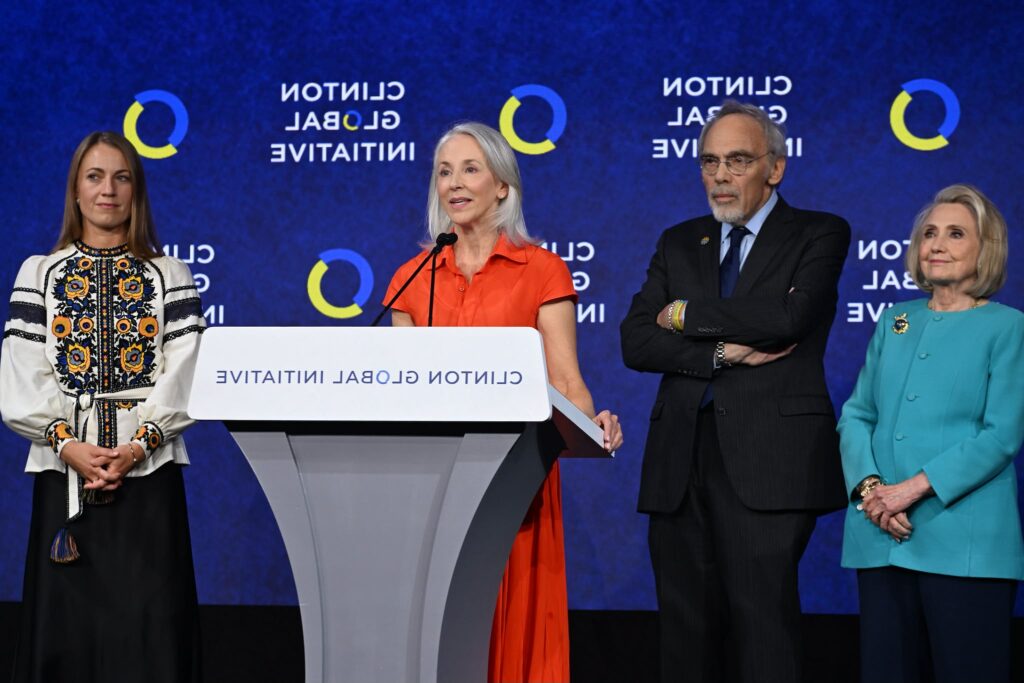
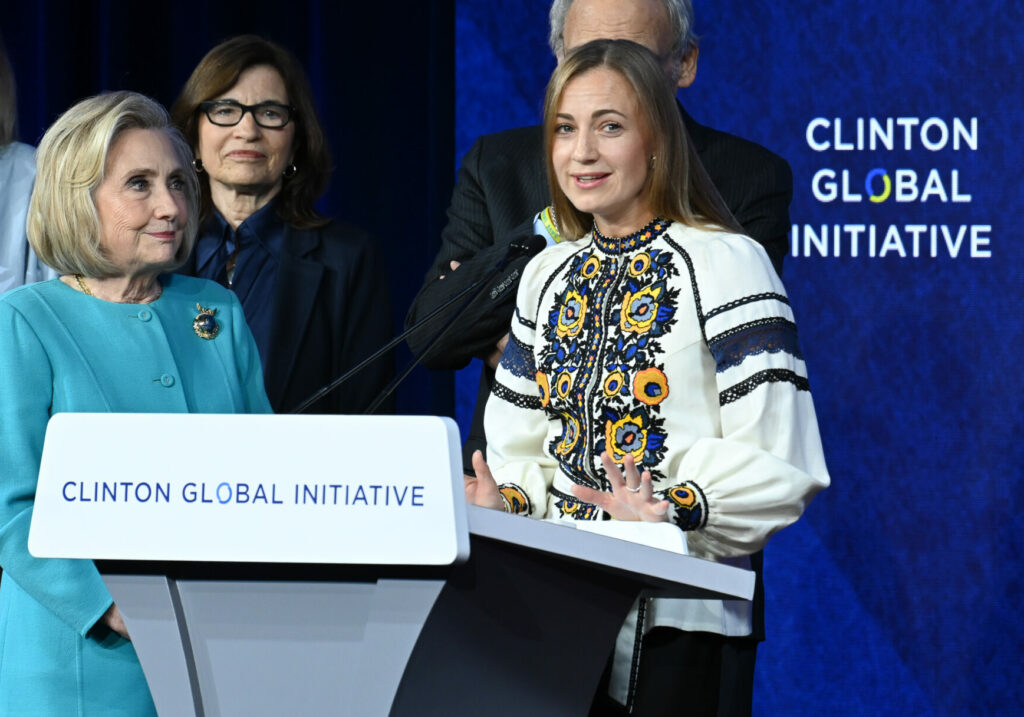
It was a great honor for us to stand on the same stage with global leaders, changemakers, and organizations working to address some of the world’s most urgent challenges.
Razom with You, a mental health support program providing free, professional psychological support to Ukrainians affected by the war. The program helps people cope with the impact of war, build resilience, support psychological well-being, and expand access to quality mental health care across Ukrainian communities
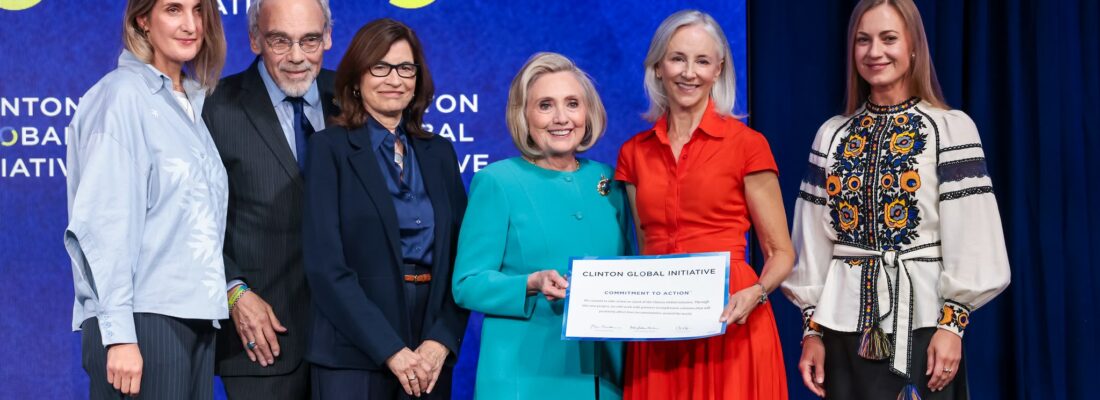
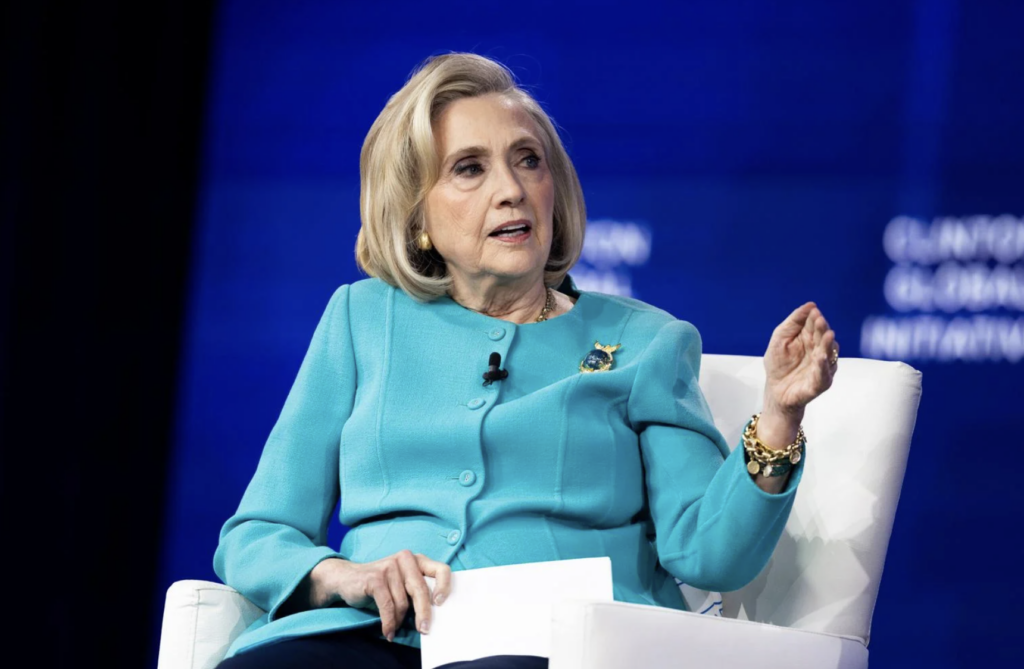
At the Clinton Global Initiative Annual Meeting in New York, during the The Optimism Strategy session, we had the opportunity to share the story of Razom with You — our mental health program providing free, professional psychological support to Ukrainians affected by the war.
We need to stand with the Ukrainian people and with the values of freedom and democracy that are at stake in this fight, because their fight is our fight, whether everybody wants to recognize it, accept it, or not. At CGI, we are not backing down, especially with another winter approaching. Our promise is simple: we will stay in this with you. Because together, we can help see Ukraine through to the end, open the way to the end of this war, and help its people rebuild their lives with dignity.
Hillary Clinton, former U.S. Secretary of State
Being part of a global conversation that brings together leaders from government, business, philanthropy, and civil society was deeply meaningful to our team. It was especially powerful to hear such strong words of support for Ukraine and for the work being done to care for Ukrainians.
We were supporting work in Ukraine before the war. We are there now, and we will be there in the future. We remain resolutely committed to the health of Ukrainians, and I’m honored to announce a further $10 million commitment to help organizations, including Razom, provide the care and services needed.
Amy Weaver, Chief Executive Officer at Direct Relief
We are deeply grateful to Direct Relief for standing with Razom and for supporting our work.
Razom with You has reached tens of thousands of Ukrainians and hundreds of organizations. It was a great honor to be recognized on the CGI stage, and especially meaningful to see the work and impact of our program acknowledged at this level.
My deepest appreciation goes to the Razom with You team — our psychologists, program and operations colleagues, coordinators, and everyone working behind the scenes. At the heart of our work are two things. First, supporting people through the war and everything they’re facing right now. And second, helping Ukraine recover and build a healthier, stronger future in the long term.
Five cross-border partnerships with one shared mission, and why creative practice belongs at the center of Ukraine’s recovery
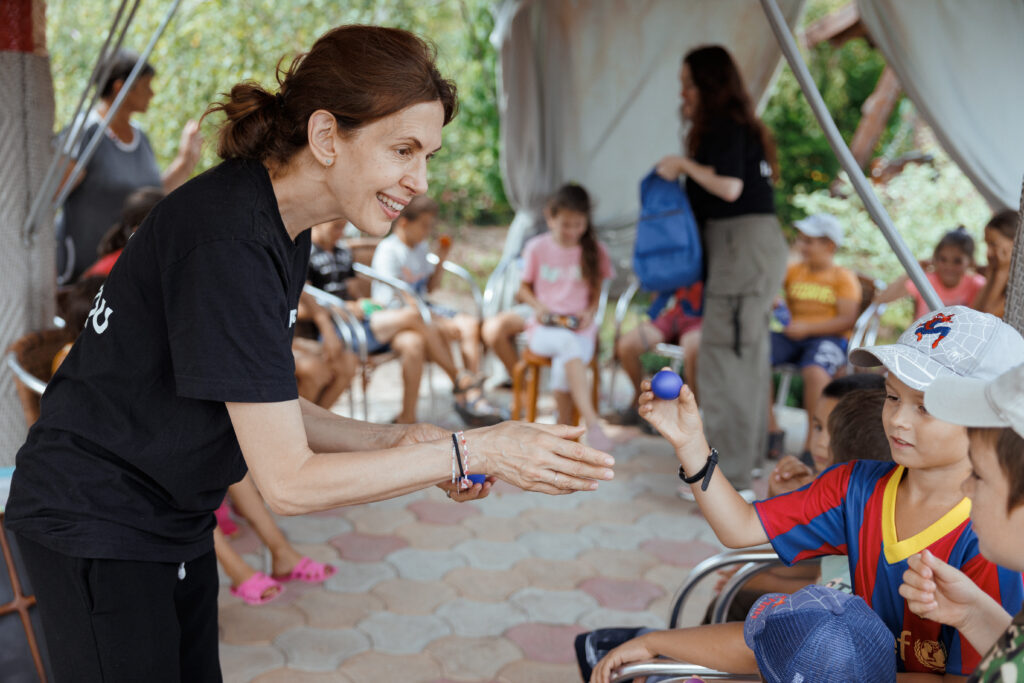
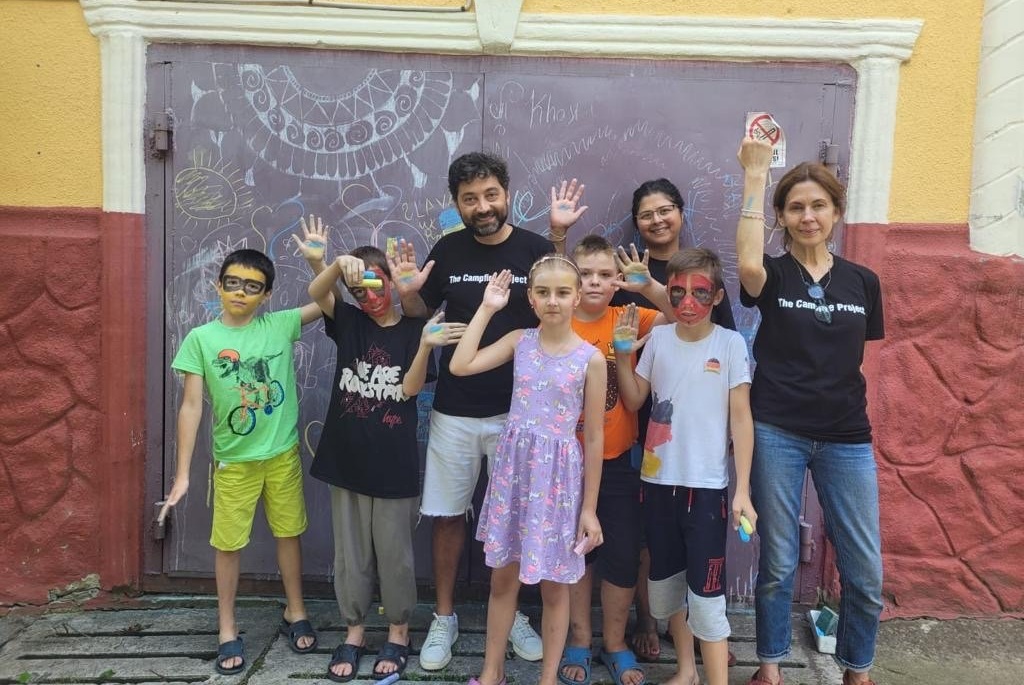
This summer, in the village of Nahachiv in Ukraine’s Lviv region, 80 children spent a week dancing, drawing, taking photographs, and writing their own plays. On the final day, they performed for their parents, neighbors, and local leaders. The show explored freedom, identity, and support, and the children imagined worlds of their own making.
Among the volunteers who joined The Campfire Project and Folkowisko Ukraine – the participants of our inaugural I’mmortal Fellowship – was two-time Oscar nominee Jesse Eisenberg, who had spent a year learning the Cyrillic alphabet so he could read his lines in Ukrainian during the children’s performances. Two air-raid sirens sounded that week in the area, both after the day’s programming had ended.
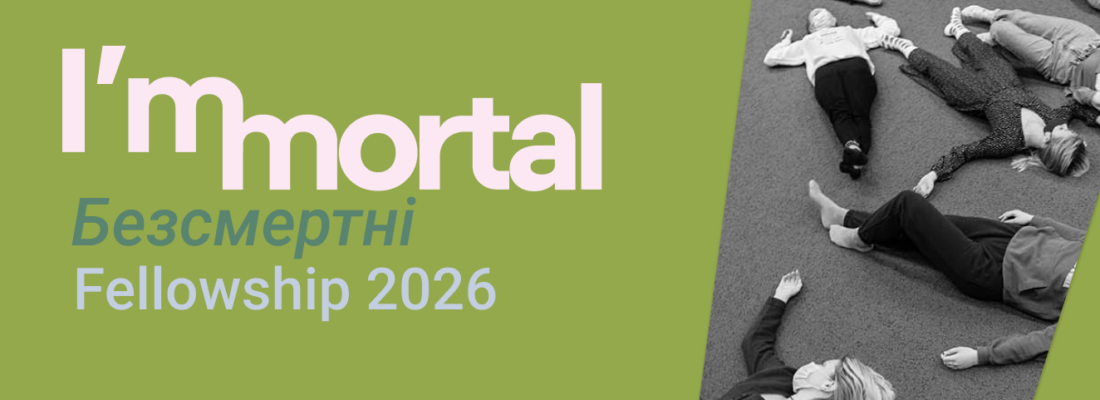
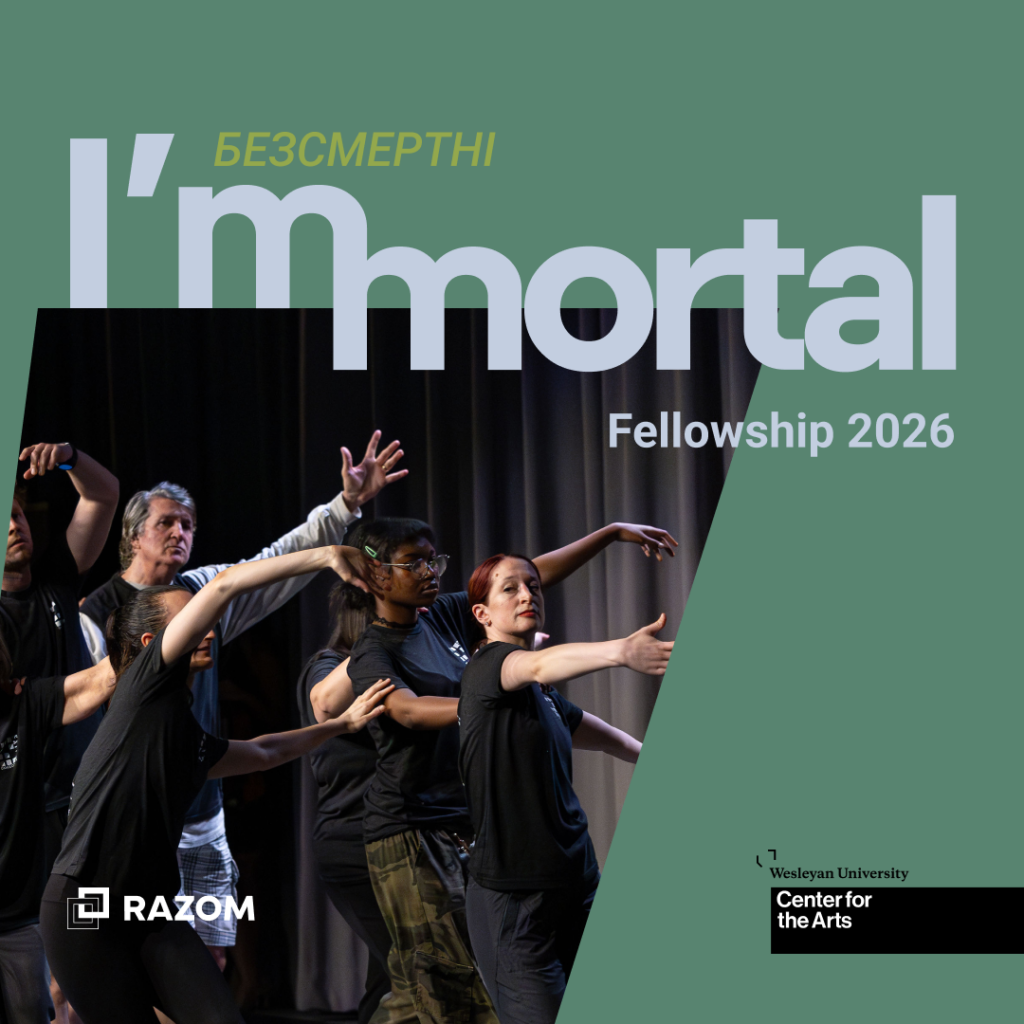
For us, this week captures what theI’mmortal Fellowship (Безсмертні) is about: using art as healing practice for those most in need.
“Art has always been how people make meaning and take care of communities in the hardest moments,” says Razom CEO Dora Chomiak. This year, we watched that happen in real time.
Why Arts in Health, Why Now
I’mmortal is Razom’s first Arts in Health program, created in partnership withWesleyan University’s Center for the Arts. It started from a simple idea: creative practice can be part of how people recover.
The need in Ukraine is enormous. After more than four years of full-scale invasion, the World Health Organization (WHO) estimates that a mental health crisis affects about 10 million people in Ukraine. Rehabilitation needs far exceed existing service capacity, and only 4% of hospitals provide inpatient rehabilitation.
At the same time, the evidence around arts and health is growing. A major WHO review of more than 3,000 studies found that the arts can play an important role in preventing ill health, promoting health, and managing and treating illness across the lifespan.
When we opened the I’mmortal Open Call this spring, we received 35 applications from across Ukraine and the United States. They came from NGOs, cultural collectives, artists, clinicians, and universities. Our Selection Committee matched 12 of them into five cross-border partnerships.
Each received a grant of up to $10,000 for their pilot projects, and was asked to co-create, not simply export an American model to Ukraine, or vice versa.
Five Partnerships, Five Different Stories
Gathering Around the Fire. Eleven artists, creative arts therapists, translators, and a psychiatrist, led by New York-based The Campfire Project and its director Jessica Hecht, traveled from the US to work alongside the local Folkowisko Ukraine team. After the children’s summer camp, they trained 30 educators, social workers, psychologists, and doctors in Yavoriv, some of whom came from frontline regions. The training was run with the Jameel Arts & Health Lab and the World Health Organization’s Regional Office for Europe. As part of the program, participants were also equipped with tools they can continue using long after the visiting team leaves.
Artscapes of Care. This project started with a question that is easy to overlook: Who takes care of the people who take care of everyone else? Through soundscapes, movement, and visual storytelling, US partners Kerry Kincy and Dr. Midori Samson joined Kyiv-based First Aid of the Soul in Lviv for interactive, arts-based workshops with children and families at St. Nicholas Hospital, veterans at UNBROKEN, and teachers at Oberih School, which serves children with intellectual disabilities. The exchange culminated in a professional development and networking program at Ukrainian Catholic University for mental health and social service practitioners from across the region. It highlighted something important: supporting the people providing care is part of supporting the people they serve.
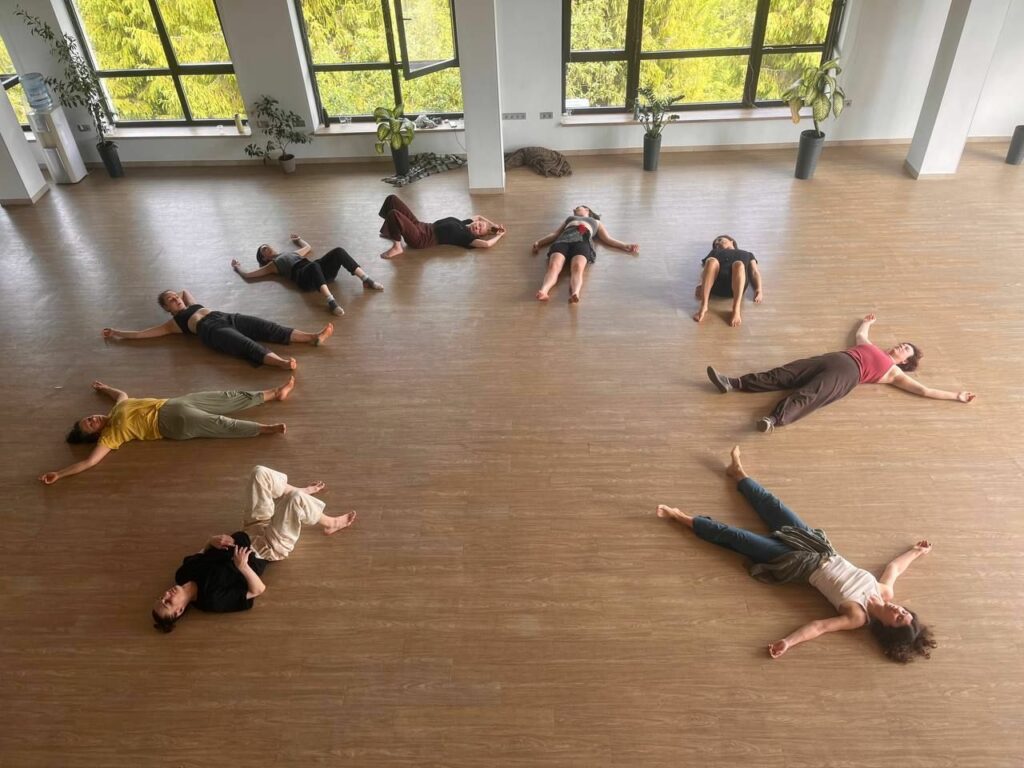
Rhythm as Regulation.This summer, New Orleans-based dancer and acupuncturist Yekaterina Chizayeva and Ukrainian somatic educator and psychologist Kateryna Taranova brought together a group of Ukrainian artists in the Carpathian town of Slavsko. The group included dancers, ceramicists, vocalists, and visual artists. They worked in different mediums, but found a common thread: the rhythms of the nervous system, and the power of creative practice to support regulation, wellbeing, and resilience. The residency has grown into a community of practitioners who continue to meet and share knowledge. A second lab follows in New Orleans in October, with the goal of creating a shared toolkit for rhythm-based practices and exploring how movement and sound can help ease anxiety, calm groups together, and support recovery from the sensory toll of war, including the hypervigilance caused by drones overhead.
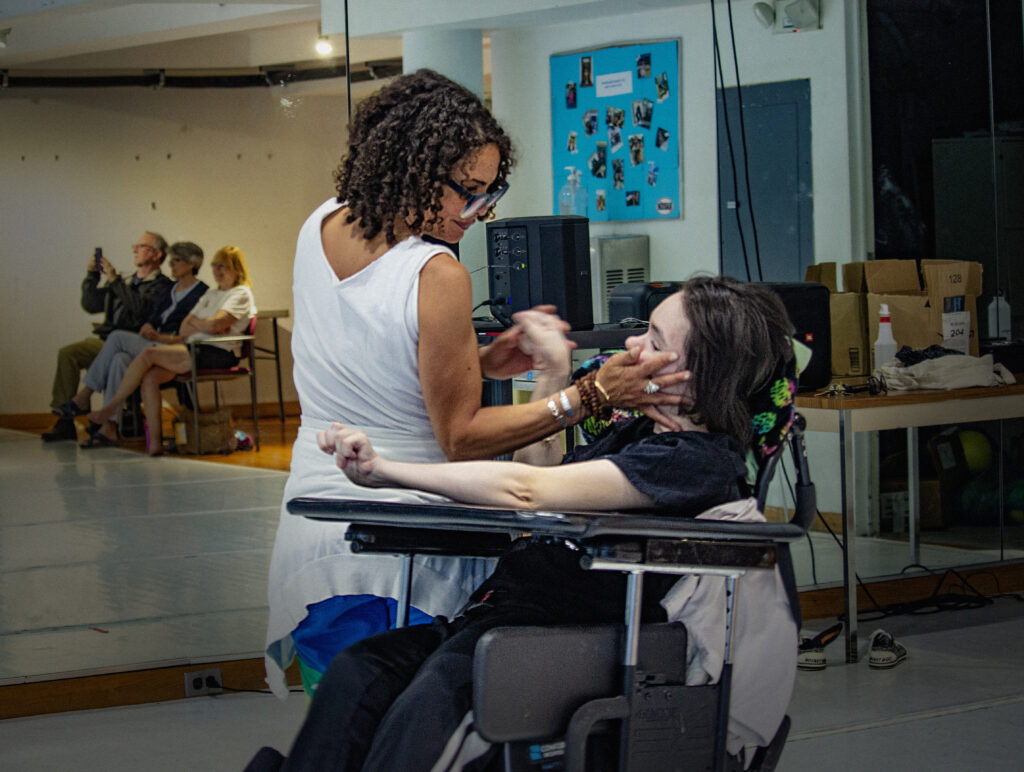
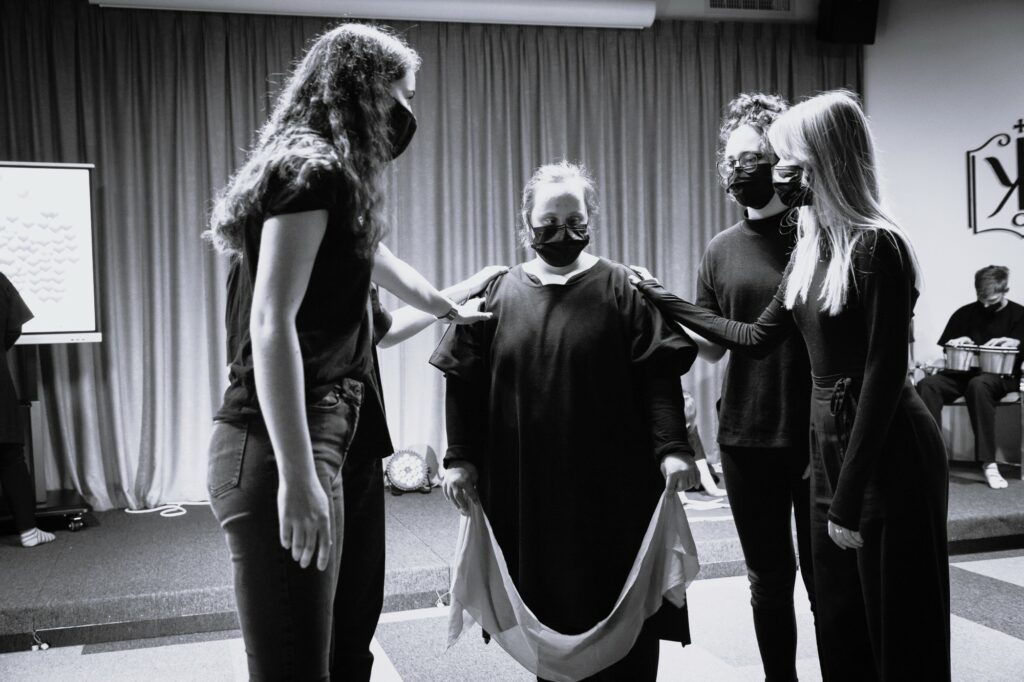
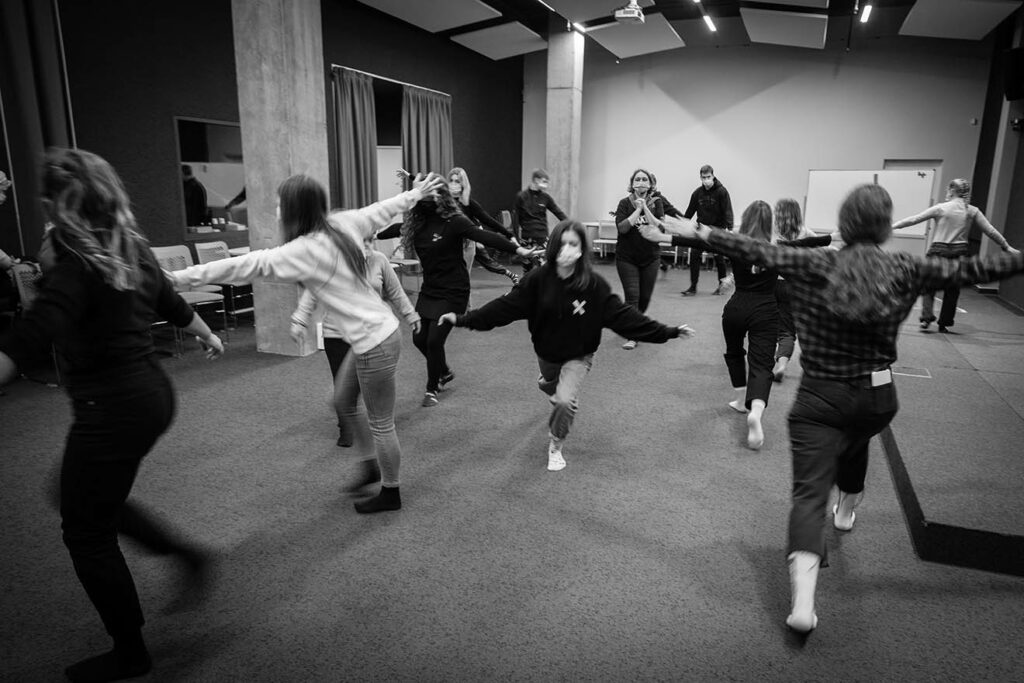
Me – The Other.This inclusive theatre initiative pairs The Theatre Lab’s Life Stories Institute in Washington, D.C., with Yuliia Vintoniv, a theologian and educator from Ukrainian Catholic University in Lviv. Yuliia is working to build a university course based on The Theatre Lab’s Life Stories method, which draws on more than 20 years of autobiographical theatre. Starting in January 2027, the pilot course will bring together about 20 to 25 students with people who have congenital disabilities or injuries from the war. Through movement, storytelling, improvisation, and writing, they will create original theatre from their own lives and challenge the stigma around disability in wartime Ukraine. The learning goes both ways. Yuliia is training with The Theatre Lab online and in person in the US, while The Theatre Lab will bring what it learns from Ukraine to its own work with US military veterans. In the long run, the team hopes to bring the course to other universities across Ukraine.
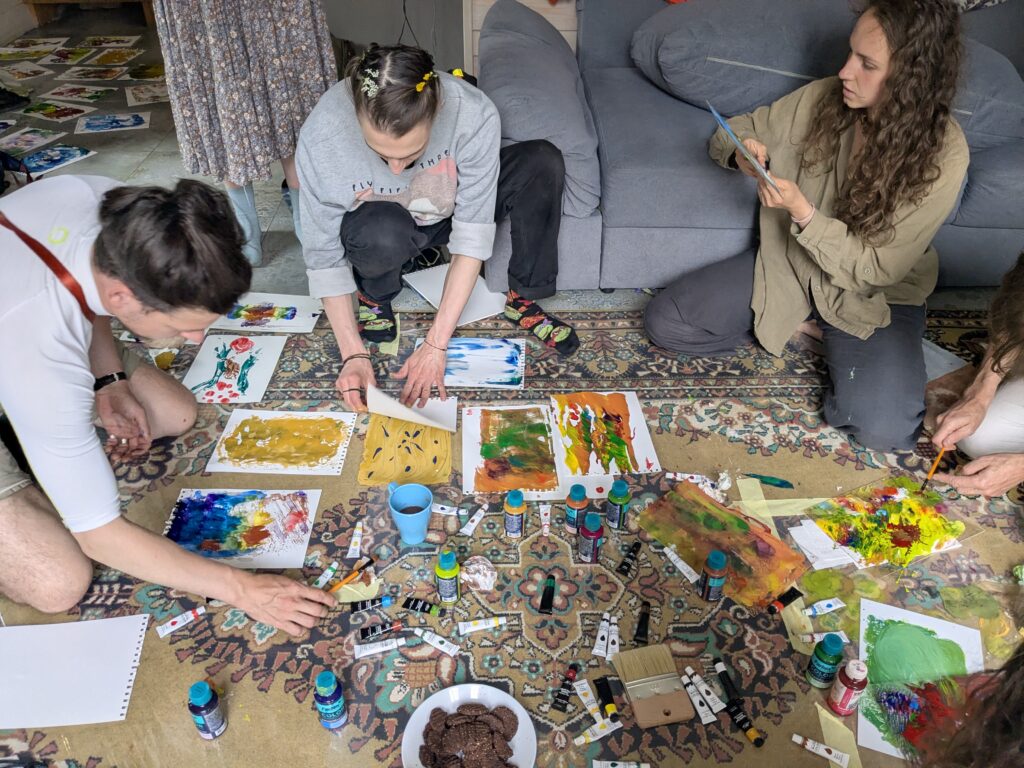
Moving, Imagining, and Unbroken.This dance and movement program for Ukrainian combat veterans is led by New York based Exit12 Dance Company, the Imagination Lab at SUNY Albany, and Lesya Ukrainka Volyn National University in Lutsk. The program combines movement with surrealism-inspired drawing and collage and is being adapted for amputees and veterans with limited mobility. The work is grounded in research: the Imagination Lab’s studies link engaging with surrealist art to resilience and emotional richness, and participants will take part in voluntary surveys before and after each workshop to measure changes in resilience, hope and wellbeing. Pilot workshops in the New York area will bring Ukrainian and American veterans into the same room.
Coming Together at Wesleyan
From November 2–7, all five partnerships will gather at Wesleyan for a week of shared programming and peer exchange. The week ends with a public Capstone Showcase on November 7 at 2 pm atFayerweather Beckham Hall in Middletown, CT. Each team will share what it built this year and how they envision bringing the work into Ukrainian hospitals, veterans’ centers, schools, and communities in 2027.
Why “I’mmortal”
The Fellowship’s name brings together two ideas: mortality, which is part of being human and the subject of medicine, and the lasting power of the arts.
In the creative arts, the healing arts, and the act of making something together, we are immortal, even when what we face is the fragility of our bodies or the difficulty of staying connected to the world.
This year, we saw it in a village hall in Nahachiv, a mountain studio in Slavsko, a hospital ward in Lviv, and a rehearsal room in New York.
Razom with You is deeply grateful to Direct Relief for its partnership and continued support of our Mental Health and Psychosocial Support Program in Ukraine. We were honored to welcome Amy Weaver, CEO of Direct Relief, and her team to our center in Lviv. They met with our psychologists and staff to learn more about our work and the mental health needs we see across Ukraine.
Direct Relief is a U.S.-based humanitarian organization working in health care in the United States and more than 80 countries worldwide. It is an important international partner for Ukraine and a major supporter of Razom with You.
The visit brought together the Razom with You team, psychologists, partners, and program participants to share firsthand how mental health needs continue to evolve during the prolonged war. It was also an opportunity to discuss how sustained investment in people and systems helps them continue functioning under extraordinary pressure.
Since the beginning of the full-scale invasion, Razom with You has evolved from emergency response efforts into a broader mental health program. It now combines individual support, psychoeducation, burnout prevention, workforce resilience, and scalable approaches designed for long-term impact.
The realities on the ground continue to shape this work. Prolonged stress, burnout, moral injury, and cumulative trauma increasingly affect not only individuals, but also healthcare workers, educators, social workers, volunteers, and other people-centered professions.
Today, the program increasingly focuses on strengthening Ukraine’s human infrastructure of care — the people carrying communities through prolonged crises: psychologists, healthcare workers, educators, social workers, caregivers, veterans’ specialists, and families.
“Our work today goes beyond therapy. We see how much pressure the people who care for others are carrying, and supporting them has become an important part of what we do,” said Iryna Gudyma, Razom with You Program Director. “When psychologists, healthcare workers, educators, social workers, and other professionals have the support they need, they are better able to continue caring for others through prolonged uncertainty.”
Razom with You works directly with people and professionals across Ukraine, bringing their experiences and needs into the development of practical mental health and psychosocial support approaches.
Amy Weaver has emphasized the importance of investing not only in immediate humanitarian response, but also in the people and systems that help Ukraine move forward.
“Seeing this work firsthand highlights the importance of supporting not only immediate response, but also the people and structures that help communities move forward,” said Amy Weaver.
Direct Relief’s partnership has helped Razom with You strengthen continuity of care, create safe spaces, support professionals working under prolonged stress, and expand long-term resilience efforts across Ukraine.
Razom with You is deeply grateful to Direct Relief for its partnership and continued support of mental health and psychosocial services as Ukraine continues strengthening recovery and resilience.
Recent weeks have brought another wave of devastating Russian attacks across Ukraine, reminding us that supporting Ukraine also means showing up for its culture and the people creating it. This October, Ukrainian stories, artists, filmmakers, and musicians are taking the stage across New York. Go see them, bring a friend, share their work, and help make sure Ukrainian voices continue to be seen and heard. Here’s what Razom recommends this month.
Solitude at New York City Ballet
October 7, 10, 11, 15 & 16 | Lincoln Center
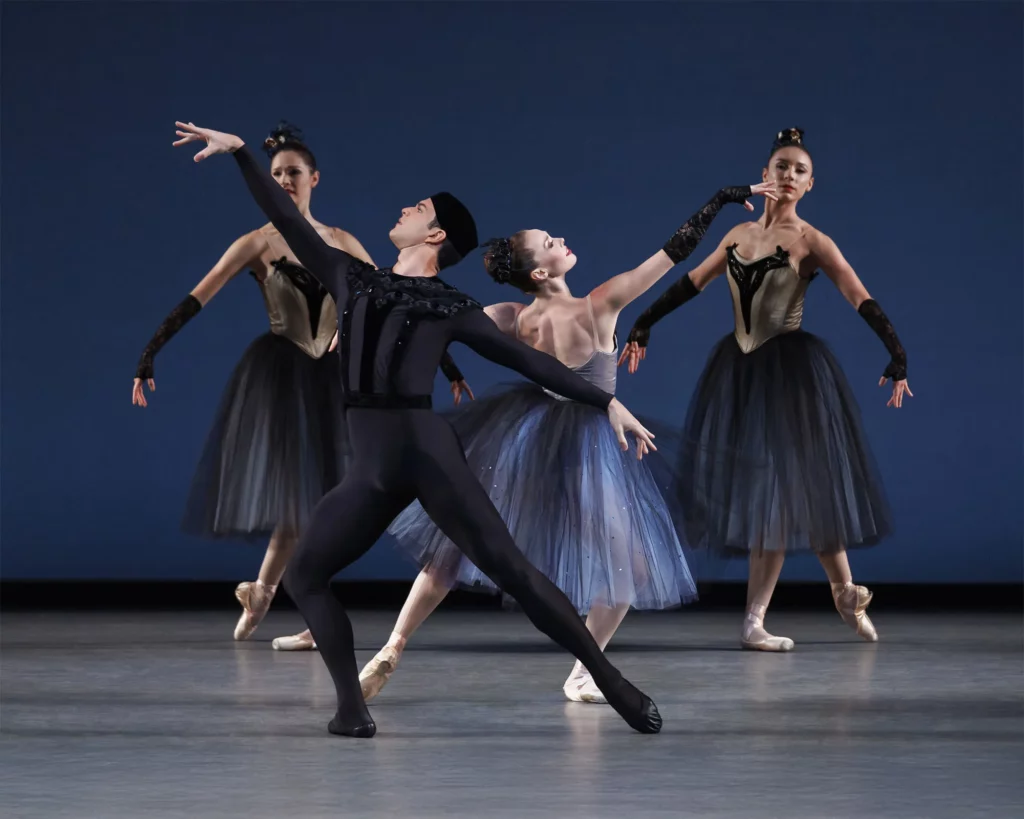
Alexei Ratmansky’s Solitude returns to New York City Ballet as part of Eclectic NYCB I.
Set to music by Gustav Mahler, the ballet is a meditation on grief inspired by Russia’s war against Ukraine. At its center is a father mourning the loss of his child, transforming the reality of war into a deeply personal work about loss, memory, and solitude.
It is also a powerful example of how Ukraine’s story continues to reach audiences on some of the world’s most prominent cultural stages.
Where: David H. Koch Theater, Lincoln Center When: October 7, 10, 11, 15 & 16
A Well for the Thirsty at the New York Film Festival
October 8 & 9 | Film at Lincoln Center
A landmark of Ukrainian poetic cinema returns to the big screen.
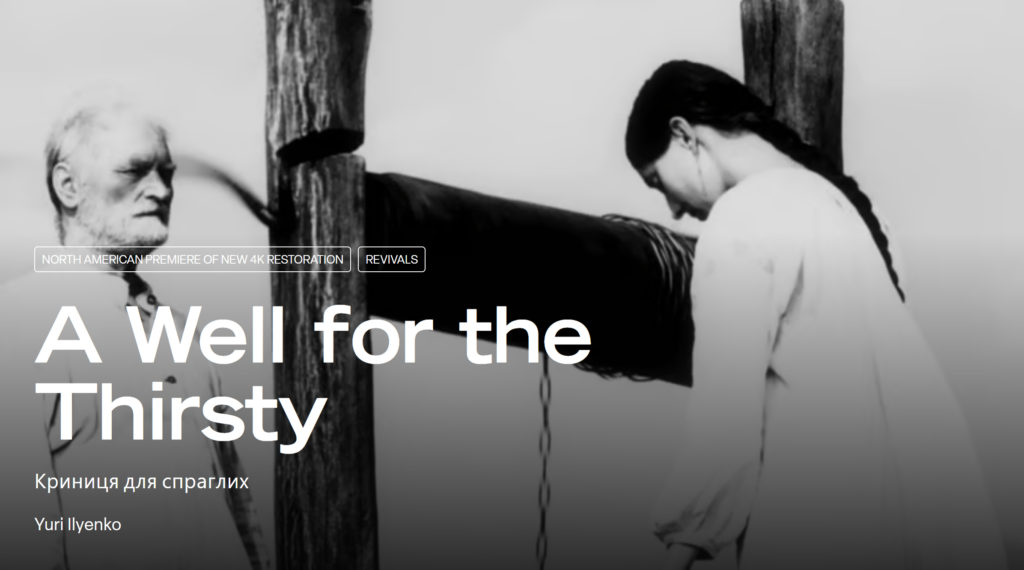
Yuri Ilyenko’s A Well for the Thirsty (Криниця для спраглих) will screen at the 64th New York Film Festival in the North American premiere of its new 4K restoration.
Completed in 1965, Ilyenko’s debut feature was suppressed by Soviet authorities and remained unreleased until 1987. Nearly without dialogue, the film follows an elderly man living alone while memories and visions of his family surround him.
The restoration was created from the original 35mm camera negative preserved by the Oleksandr Dovzhenko National Centre in Kyiv, making these screenings an opportunity to experience an essential work of Ukrainian cinema as it was meant to be seen.
Where: Film at Lincoln Center When: October 8 at 6:30 PM and October 9 at 12:45 PM
Oleksandr Dovzhenko: Earth and Empire at Metrograph
October 10–18 | Metrograph
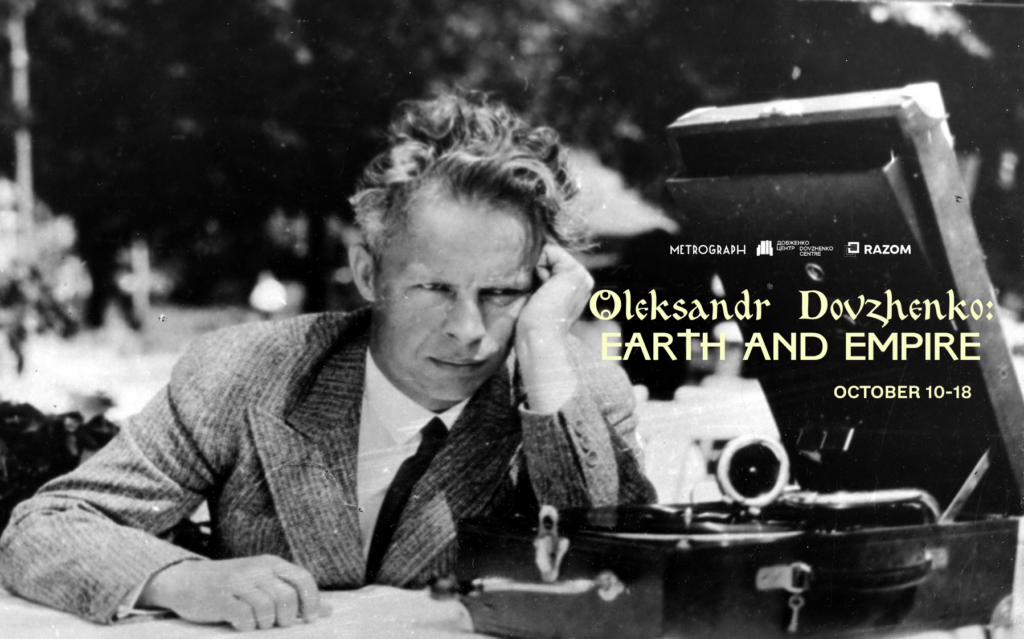
October offers another chance to dive deeper into Ukrainian film history with Oleksandr Dovzhenko: Earth and Empire, a retrospective celebrating one of Ukraine’s most influential filmmakers.
The program brings films including Earth, Arsenal, Zvenygora, Aerograd, Ivan, and Shchors back to the big screen alongside works by filmmaker Yulia Solntseva. Several titles will be presented on 35mm, with select screenings accompanied by live music.
Beyond rediscovering Dovzhenko’s extraordinary visual language, the retrospective offers audiences an opportunity to see these films through a Ukrainian lens, beyond the Soviet framework through which Ukrainian cinema has so often been presented internationally.
Where: Metrograph, 7 Ludlow Street, New York When: October 10–18
Kommuna Lux: Benefit Concerts for Ukrainian Children
October 11 | Philadelphia & October 13 | New York City
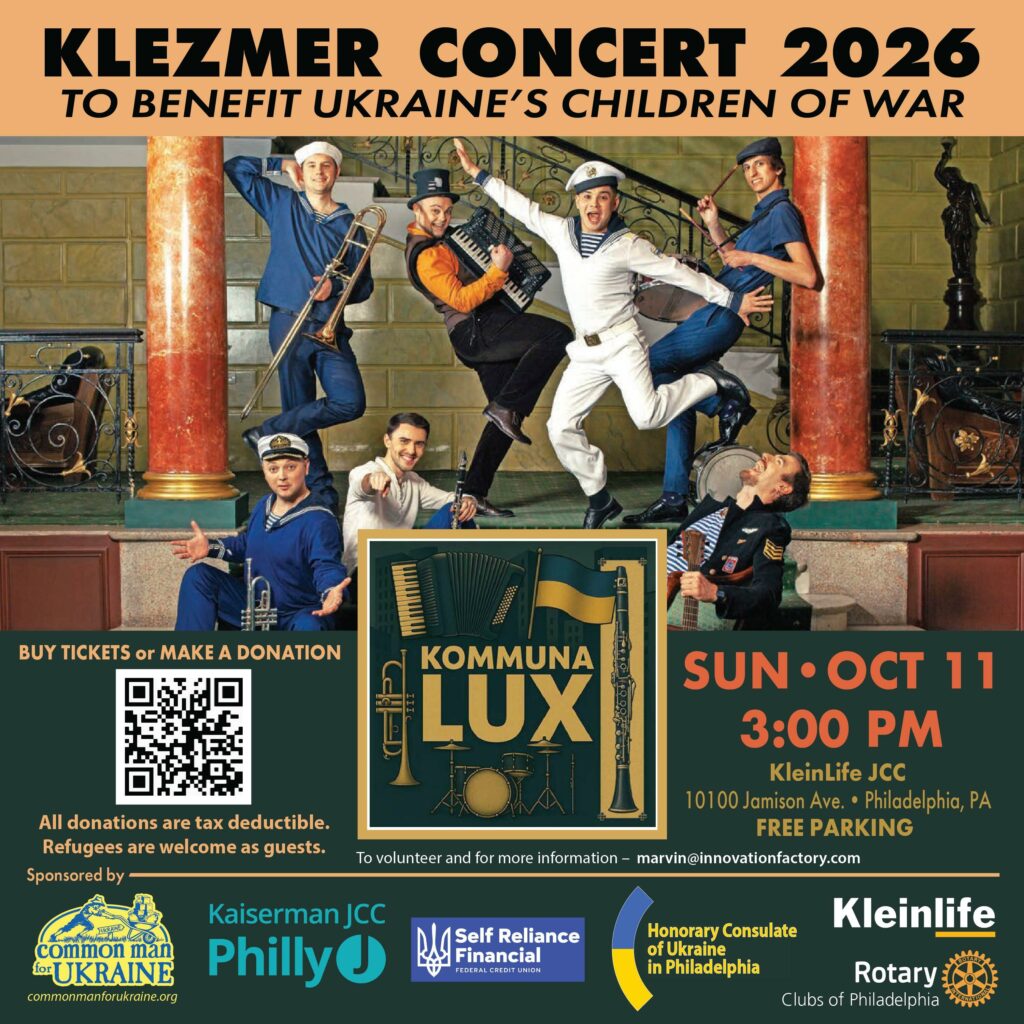
Odesa-based ensemble Kommuna Lux brings its energetic mix of klezmer and Ukrainian folk music to Philadelphia and New York City for two special benefit concerts.
The concerts support Common Man for Ukraine’s humanitarian assistance and trauma-recovery retreats for Ukrainian children who have lost a parent in the war — an opportunity to experience music from Odesa while supporting children and families affected by Russia’s war.
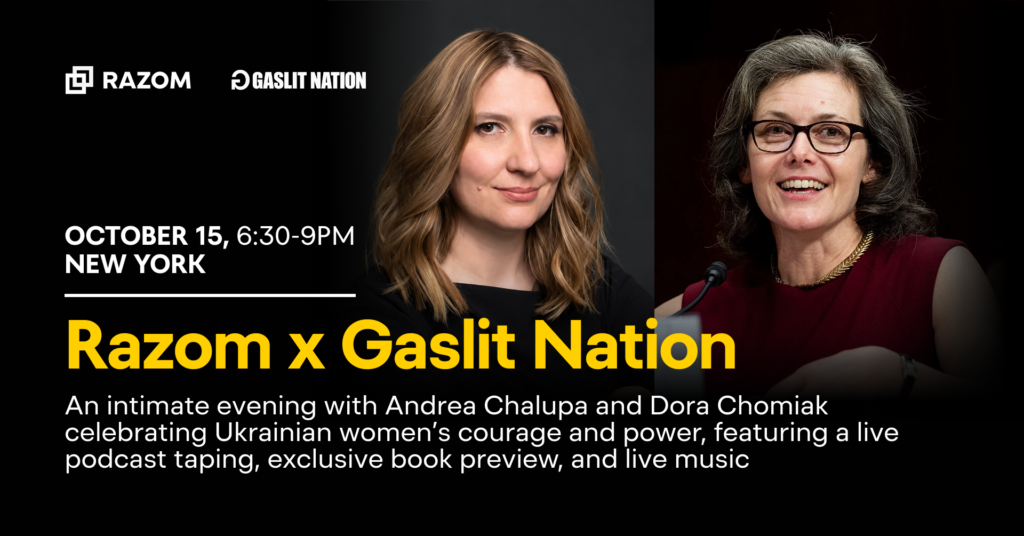
Join Razom for a special live taping of Gaslit Nation celebrating Ukrainian women and their power to lead, create, organize, and bring communities together.
Journalist, author, filmmaker, and Gaslit Nation host Andrea Chalupa joins Razom CEO Dora Chomiak for a conversation about Ukrainian women, resilience, leadership, and the power of collective action.
The evening will also include an advance preview of Chalupa’s forthcoming book, A Reasonable Guide for Unreasonable Women: 20 Steps to Find Your Purpose and Power in a World on Fire, live jazz by French singer Marine Futin, refreshments, a silent auction, and a book signing.
When: October 15, 6:30–9:00 PM Where: New York City
One of our biggest recommendations this month is also one of our biggest celebrations of Ukrainian culture.
Razom’s Ukrainian Cultural Festival returns for its fourth year, bringing Ukrainian cinema, music, theater, literature, and visual arts to venues across New York City.
The festival opens at Carnegie Hall on October 18 with the U.S. premiere of Ukrainian composer Oleh Bezborodko’s Steel, Violet, Rage. Inspired by a poem by Ukrainian soldier and poet Maksym Kryvtsov, who was killed while defending Ukraine, the work will be performed by the Shelest Piano Duo with the Brandywine Valley Symphony Chamber Orchestra.
From there, the festival moves across the city with Ukrainian films including Sanatorium, Nice Ladies, Scream of My Blood: A Gogol Bordello Story, Silent Flood, Honeymoon, To the Victory! and Cuba & Alaska, alongside documentary and animated shorts.
The program also includes The Reckoning, developed from verified witness testimony gathered by The Reckoning Project; Poet as Witness at Poets House; programming dedicated to Lesia Ukrainka at the New York Public Library; and much more.
The festival continues into November and concludes at Carnegie Hall on November 6 with Unbreakable Harmony, featuring the Kyiv Lysenko State Music Lyceum Chamber Girls Choir and the Westchester Children’s Chorus.
There is a lot to choose from, so pick an event, invite someone who may not know much about Ukrainian culture, and experience it together.
When: October 18–November 6 Where: Venues across New York City
Coming next: Oksana Lyniv conducts Tosca at the Met
Beginning November 1 | Metropolitan Opera
And one final recommendation to put on your calendar now.
Ukrainian conductor Oksana Lyniv returns to the Metropolitan Opera this November to conduct Puccini’s Tosca.
Lyniv, who made her Met debut conducting Turandot in 2024, will lead six performances beginning November 1. Her return to one of the world’s most important opera stages is another moment to celebrate Ukrainian talent at the highest level of international culture.
Where: Metropolitan Opera, Lincoln Center When: November 1, 6, 9, 14, 17 & 20
Ukraine needs continued international support as Russia continues its war and attacks on Ukrainian communities. But supporting Ukraine also means knowing what Ukrainians are fighting to protect.
Culture is part of that story.
This month, watch a Ukrainian film. Hear Ukrainian music. Support Ukrainian artists. Bring a friend. Share what you discover.
Every audience matters. Every conversation helps keep Ukraine seen, heard, and understood.
“Now, new jet-powered Shaheds are so fast that even the Telegram channels you rely on can’t warn you in time,” Hanna, Operations Manager for Razom’s mental health program, shares. “Before, there were a few hours of quiet. Now, non-stop exhaustion without sleep affects everything.” Every day across Ukraine, people are still going to work, taking care of their families, running businesses, teaching children, treating patients, and helping their communities through another day of war. This is what keeps the country functioning, even as the conditions around them become increasingly difficult.
After more than four years of full-scale war, another headline about an attack on Ukraine can be easy to scroll past. Some of our colleagues have even heard people abroad ask whether the war is still going on.
The reality is the opposite of a war fading away. In the first eight months of 2026, the UN recorded more civilian casualties in Ukraine than during all of 2025.
But numbers tell only part of the story. What can look from abroad like another week of “war in Ukraine” is, in everyday life, a humanitarian crisis that reaches far beyond the front line. A destroyed business means more than a damaged building. A strike on a medical warehouse means supplies may never reach the patients waiting for them. When a school, hospital, communications network, or workplace is hit, the consequences continue long after the attack disappears from the news.
At Razom, we see those consequences through our own colleagues, grantees, and partners across Ukraine. They are treating patients, delivering aid, supporting communities, running organizations, and building for the future while navigating the same attacks as everyone around them. And over the past weeks, doing that work has become even harder.
The people behind the headlines
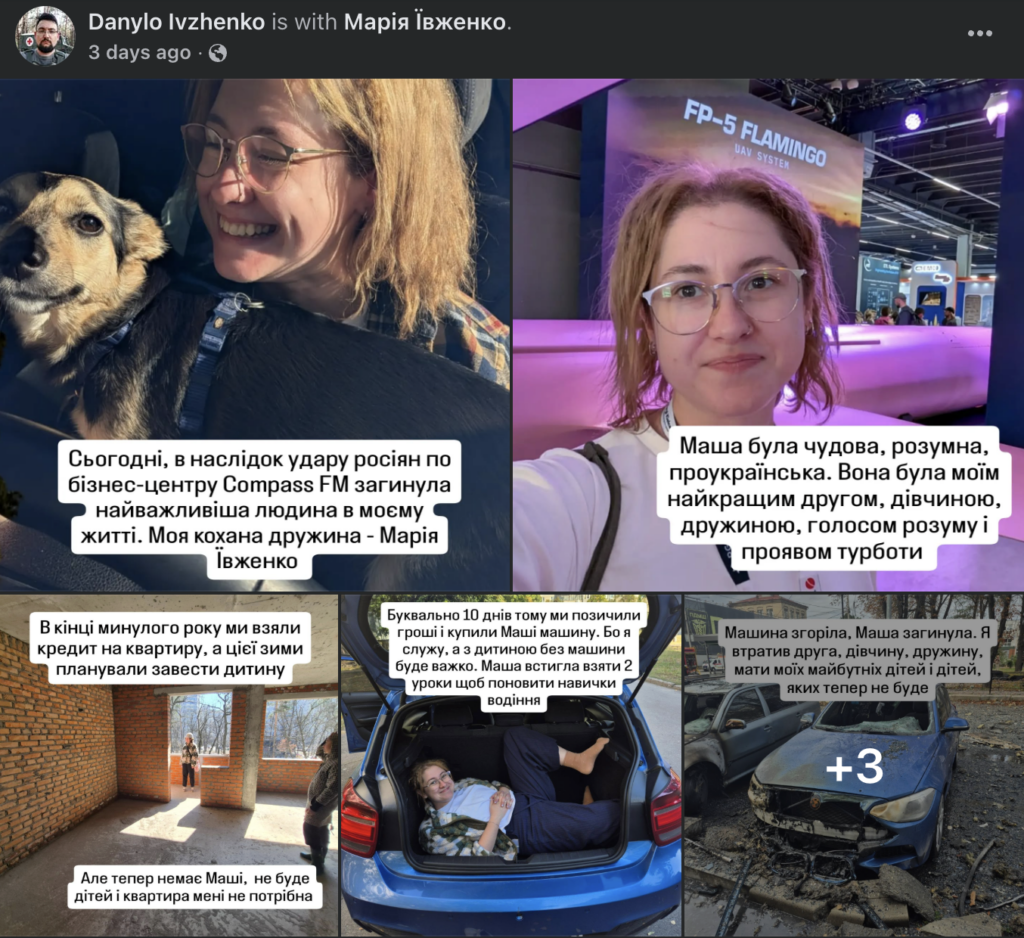
Kyiv has faced repeated attacks throughout September. On September 25, a Russian strike hit the Compass FM business center during the workday. Among those killed was journalist Mariia Ivzhenko, the wife of Danylo Ivzhenko, who is currently serving with Ukraine’s Third Army Corps. We know Danylo through his work with Razom on tourniquet training and other medical education initiatives in Ukraine. He is trained to save lives on the front line, yet this war reached his own family far from it. In a public post after Mariia’s death, Danylo shared that they had recently bought an apartment and were planning to start a family this winter. Our deepest condolences go to Danylo, Mariia’s family, and everyone who knew and loved her.
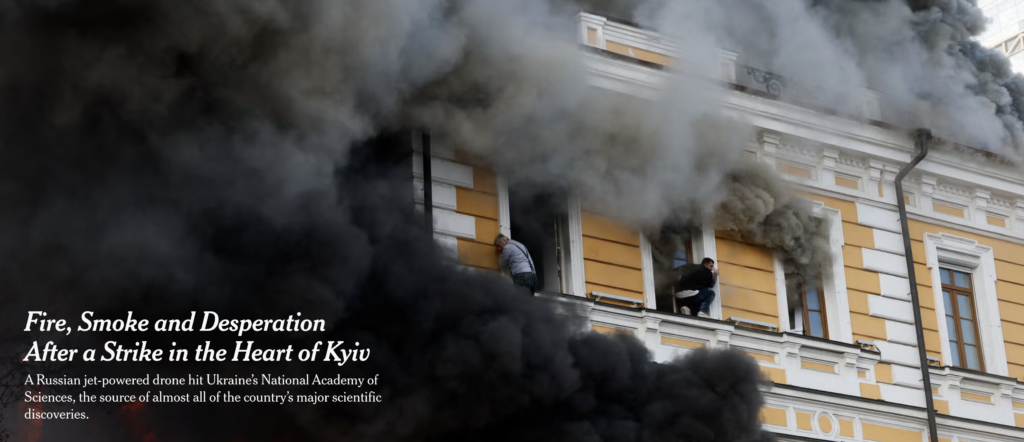
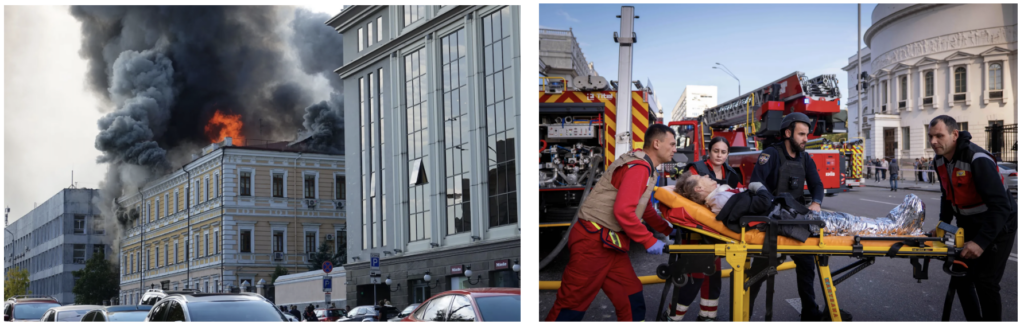
Three days later, on September 28, Russian attacks hit two more places at the center of civilian life in Kyiv. A Russian drone struck the National Academy of Sciences of Ukraine, killing people while they were at work inside. Later that day, another strike hit a Dobrobut medical center, damaging the clinic and injuring patients and staff.
A scientific institution. A medical center. A business. Homes, schools, warehouses, and communications infrastructure. These are not places on a distant front line. They are the places where Ukrainians work, learn, receive care, and try to live their lives.
For our colleagues in Kyiv, these are not distant news stories. They are people they know, streets they travel, workplaces they pass, and neighborhoods where their families and friends live.
The growing pressure on Ukrainian businesses
There is another part of this story that receives less attention: the growing pressure on the businesses and infrastructure that keep Ukraine functioning.
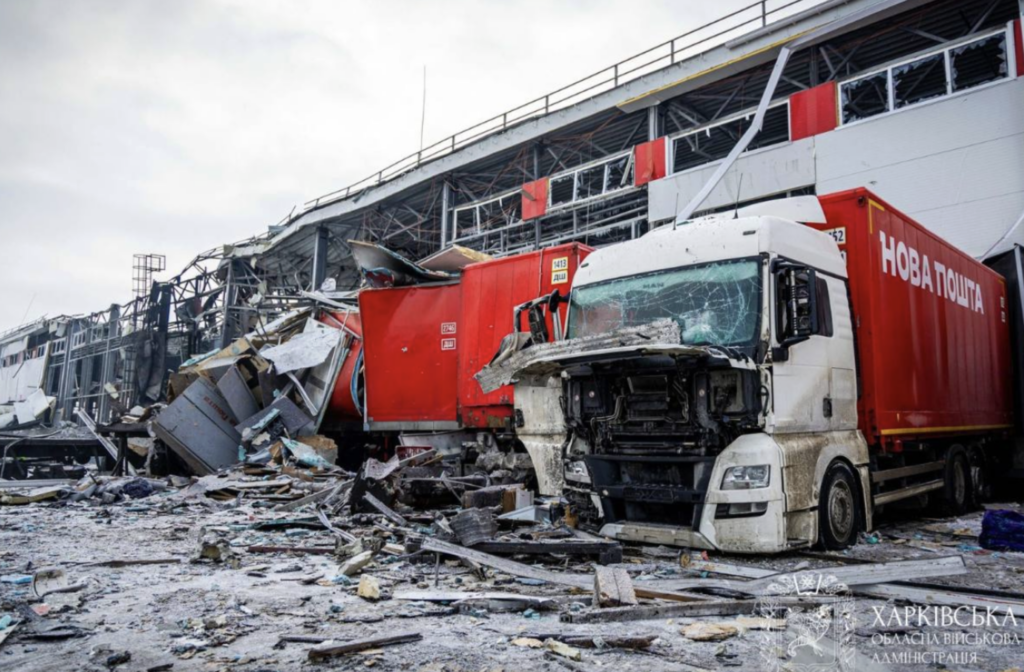
In August, the UN documented 32 attacks against facilities belonging to six major Ukrainian food, retail, and logistics companies, nearly three times the number recorded in July. Warehouses and distribution centers have been damaged, disrupting the systems Ukrainians depend on for food, deliveries, jobs, and everyday services.
The Nova Poshta Kyiv Innovation Terminal after a Russian strike in 2026.
For Razom, we see another consequence through our partners on the ground.
Ukrainian businesses have been important donors to civil society organizations providing essential relief and recovery services in their communities. Our partners are telling us that as businesses are hit and lose revenue, some of that support is disappearing too, putting funding for critical programs under pressure.
A damaged business affects its employees and their families, the local economy, the organizations it supports, and ultimately the people who depend on those organizations.
The same is true for humanitarian and medical infrastructure. In only three months this summer, airstrikes destroyed three warehouses used by the World Health Organization, including a Dnipro facility where half of the medical supplies and equipment intended to support approximately 225,000 people in frontline and hard-to-reach communities were lost. At least 20 attacks have affected warehouses storing humanitarian supplies in Ukraine so far this year.
This is what a humanitarian crisis looks like beyond the immediate moment of an attack: the systems designed to help people survive and recover are themselves placed under enormous pressure.
Oleshky: Hell on Earth Under Russian Occupation
The pressure on civilian life is not limited to the cities and infrastructure being hit by Russian attacks. In Russian-occupied Oleshky in Kherson Oblast, the same humanitarian crisis has reached an extreme.
Civilians, including children, are trapped without sufficient food, medicine, medical care, running water, or electricity. The Council of Europe Commissioner for Human Rights has warned that residents face a high risk of death and called for humanitarian access and safe evacuation.
With conventional humanitarian access severely restricted, Ukrainian defenders are still trying to reach those trapped there. In one recent operation, Ukrainian forces used drones to deliver around four tons of food and medicine to 100 locations across Oleshky.
Oleshky shows the humanitarian catastrophe Russia’s war and occupation have created in its most extreme form: people cut off from the basic conditions they need to survive. And it is happening right now, alongside the attacks on homes, businesses, hospitals, schools, and infrastructure across Ukraine.
This is what gets lost when all of it becomes simply “the war in Ukraine.”
Ukrainians are still doing the work
And still, life continues. Doctors go to work after sleepless nights. Businesses reopen after attacks. Teachers keep classrooms running, volunteers keep aid moving, and communities continue taking care of one another. But Ukrainians should not be expected to endlessly adapt to destruction. Resilience is not protection, and it cannot replace the support people need to keep going.
For Razom, that is why responding to the immediate crisis and investing in Ukraine’s future have always been connected. We help provide urgent humanitarian and medical support while strengthening the people, organizations, and communities that will carry Ukraine forward.
The international community has tools to act. The recently enacted Lindsey O. Graham Sanctioning Russia and Iran Act gives the United States additional authorities to increase economic pressure on Russia and those helping finance its war. These tools must be used to their fullest extent. Contact your representatives in Congress and urge them to call on the White House to increase pressure on Russia and ensure continued support for Ukraine.
Ukrainians are already doing the work: saving lives, keeping businesses open, caring for their communities, and building a future in Ukraine. What they need now is not for the world to admire their resilience, but to stand behind it. Join us. Support Ukraine.